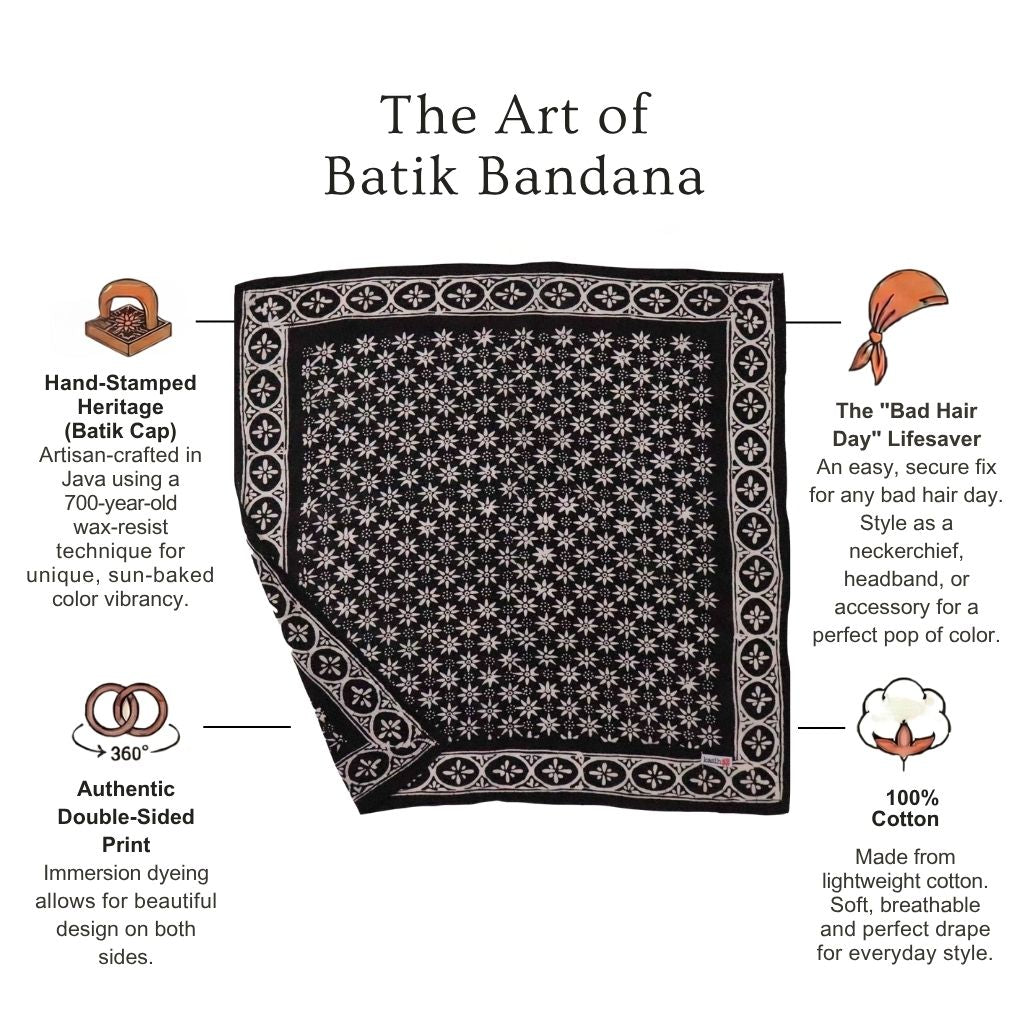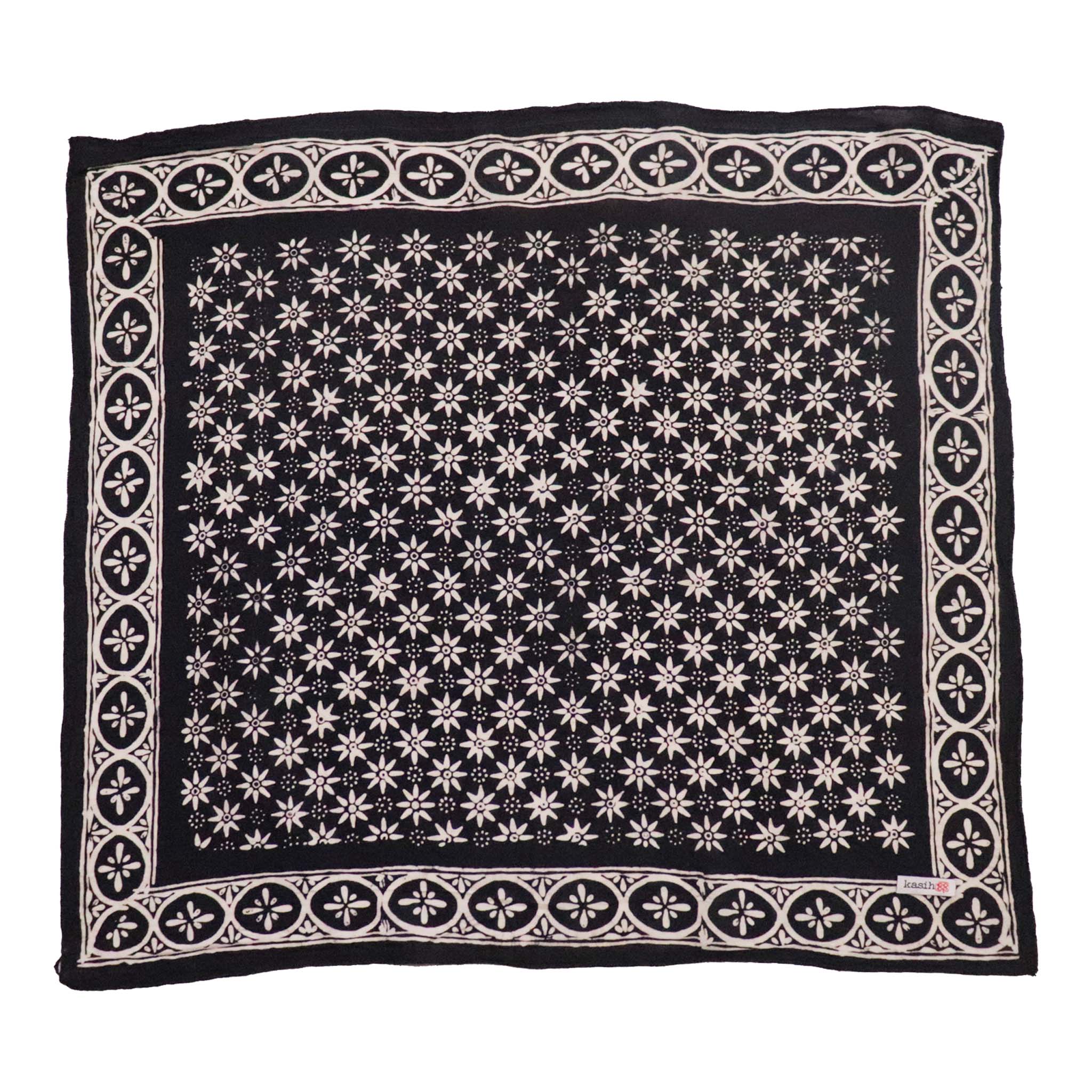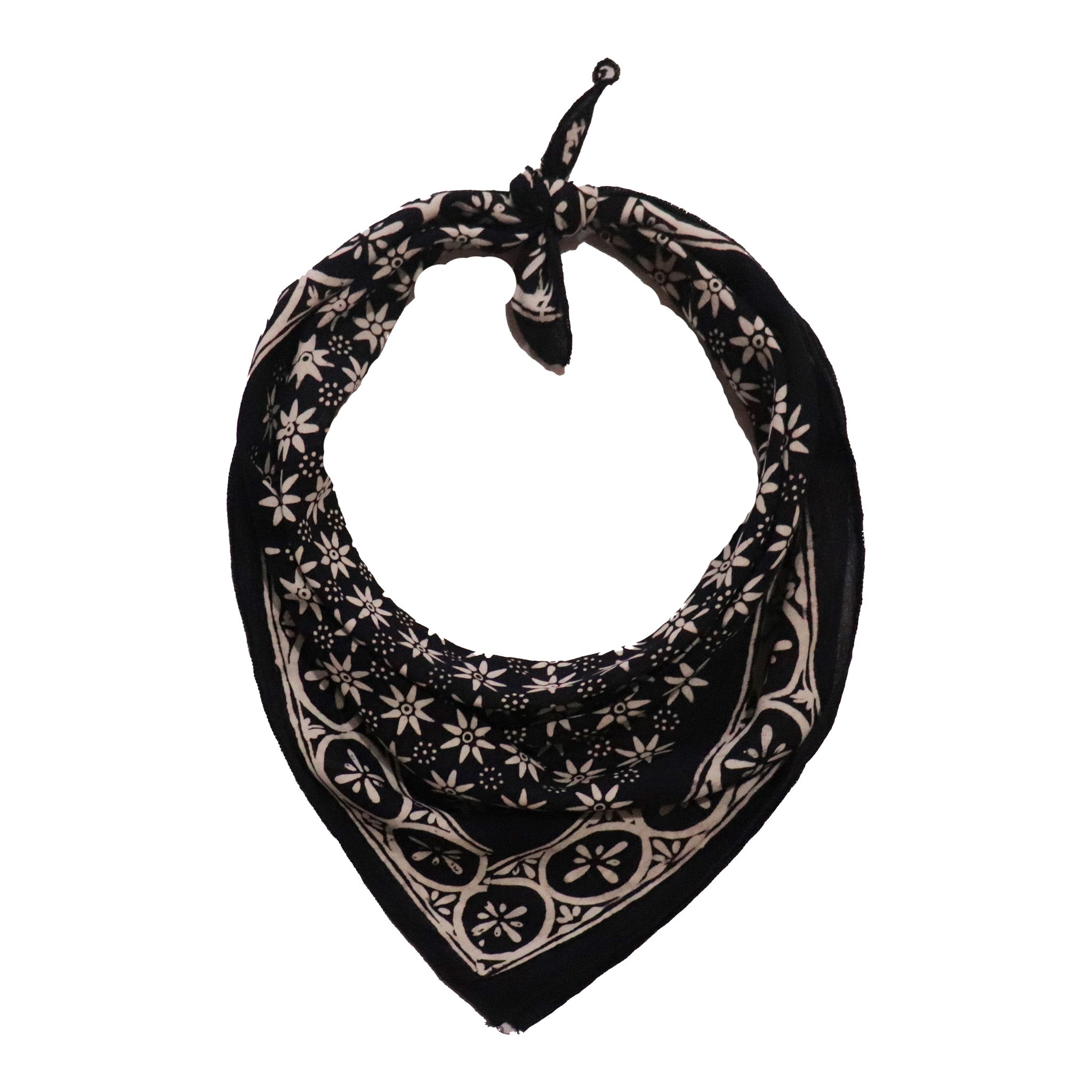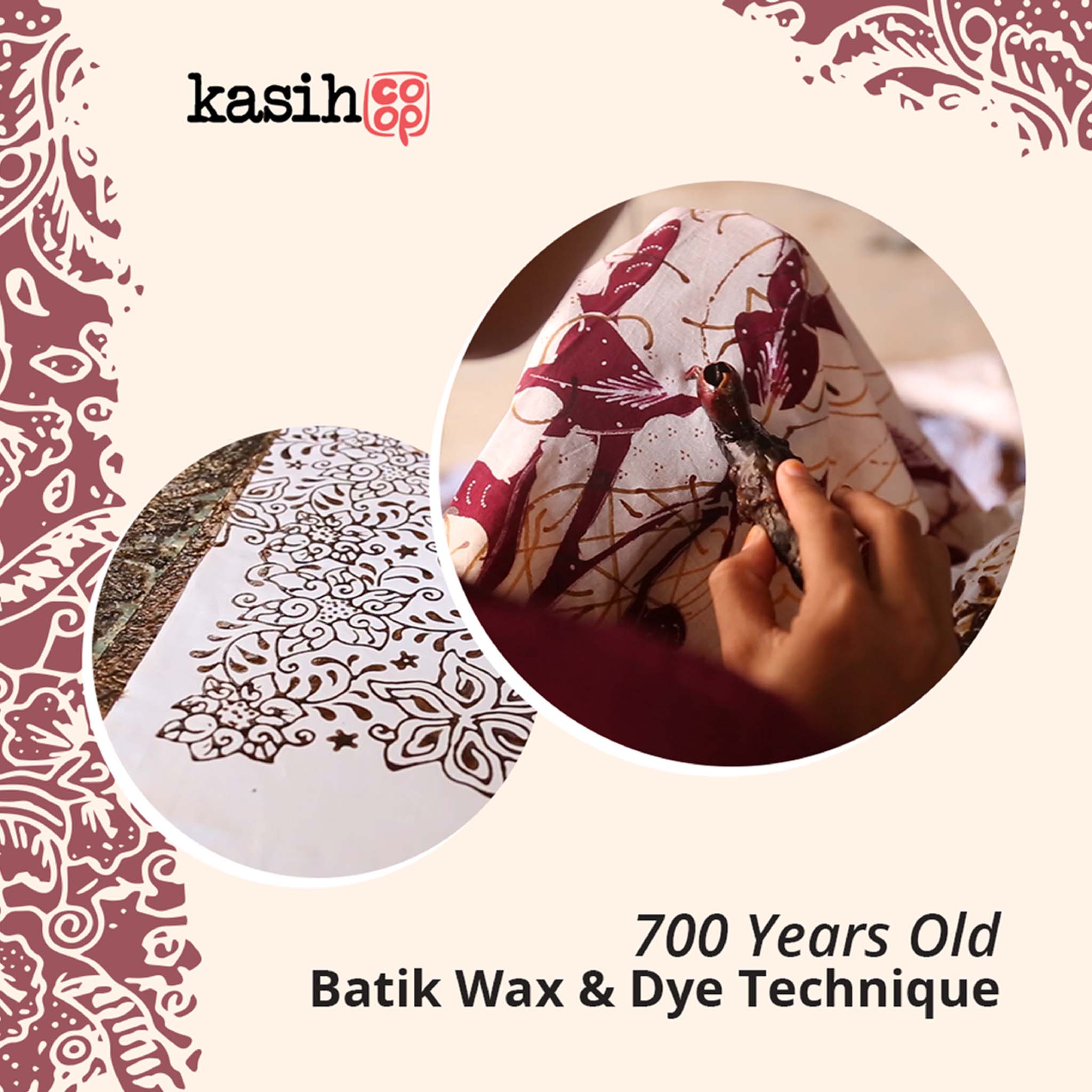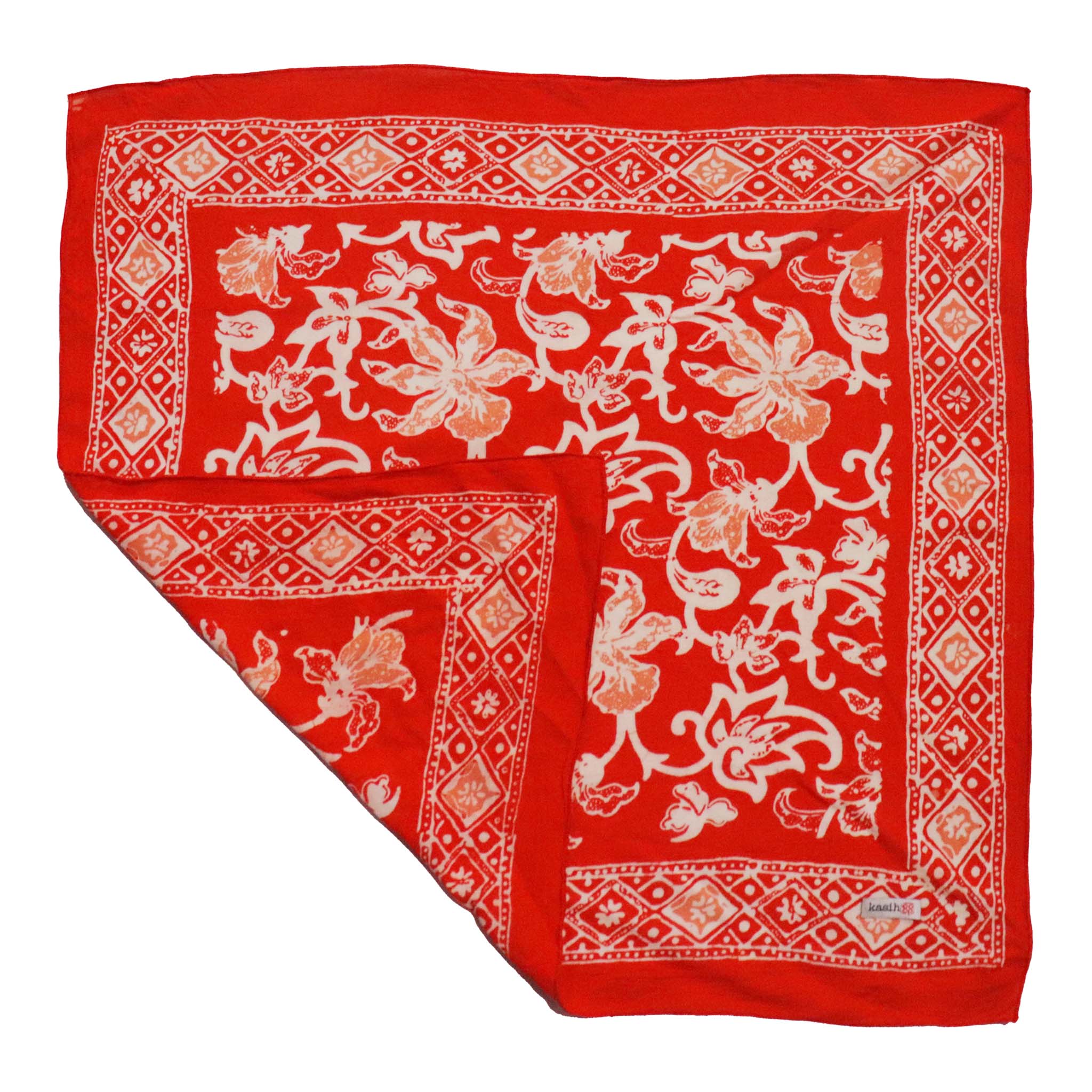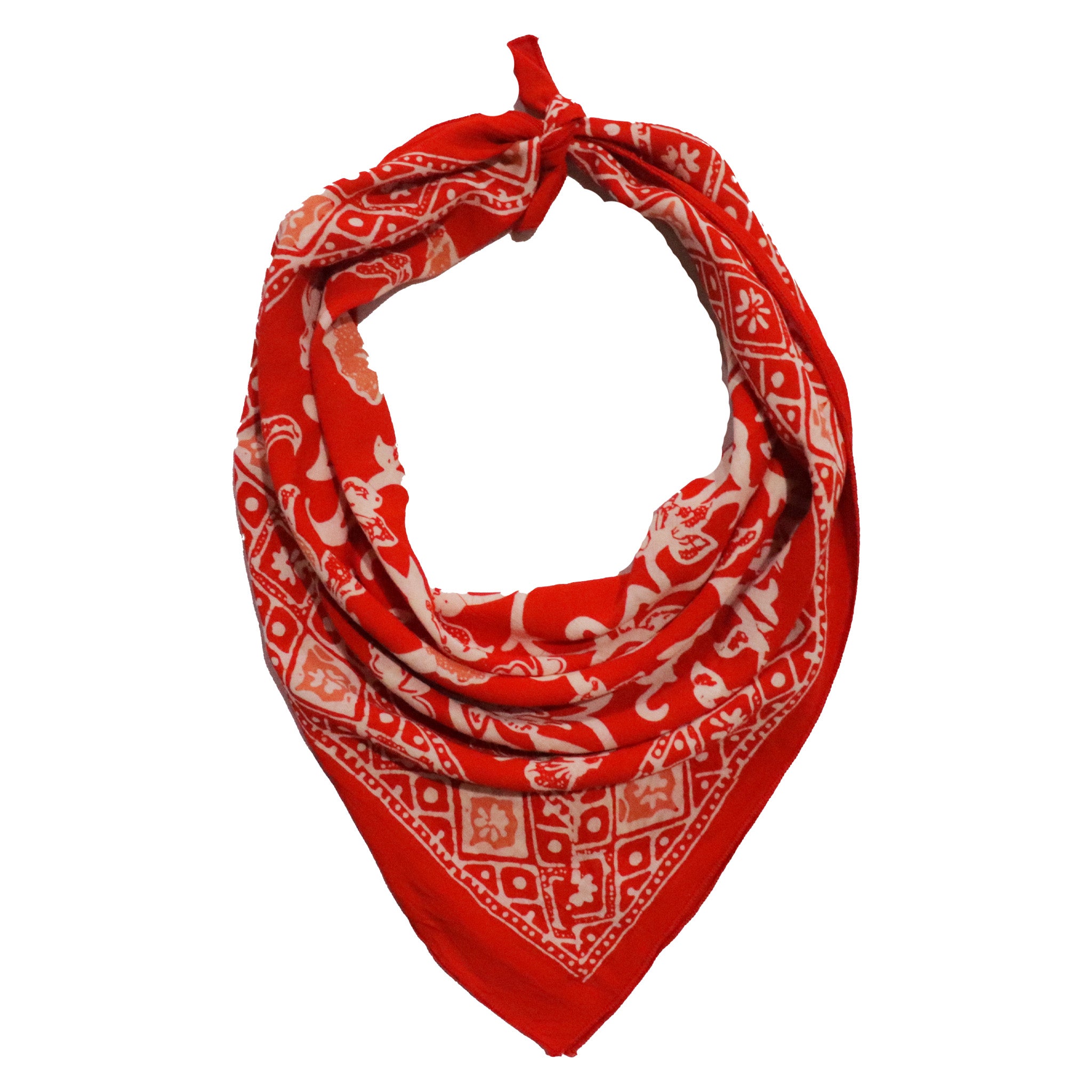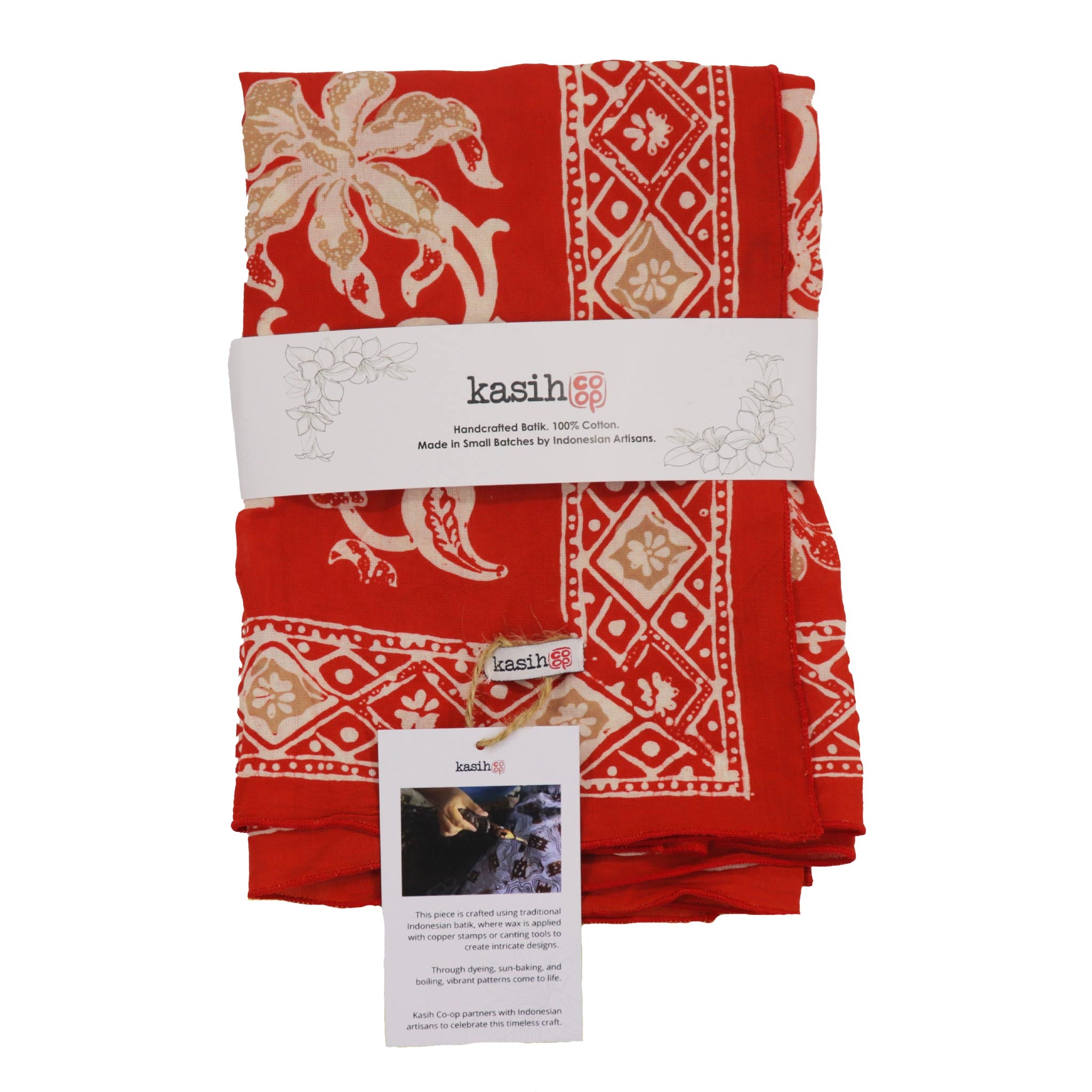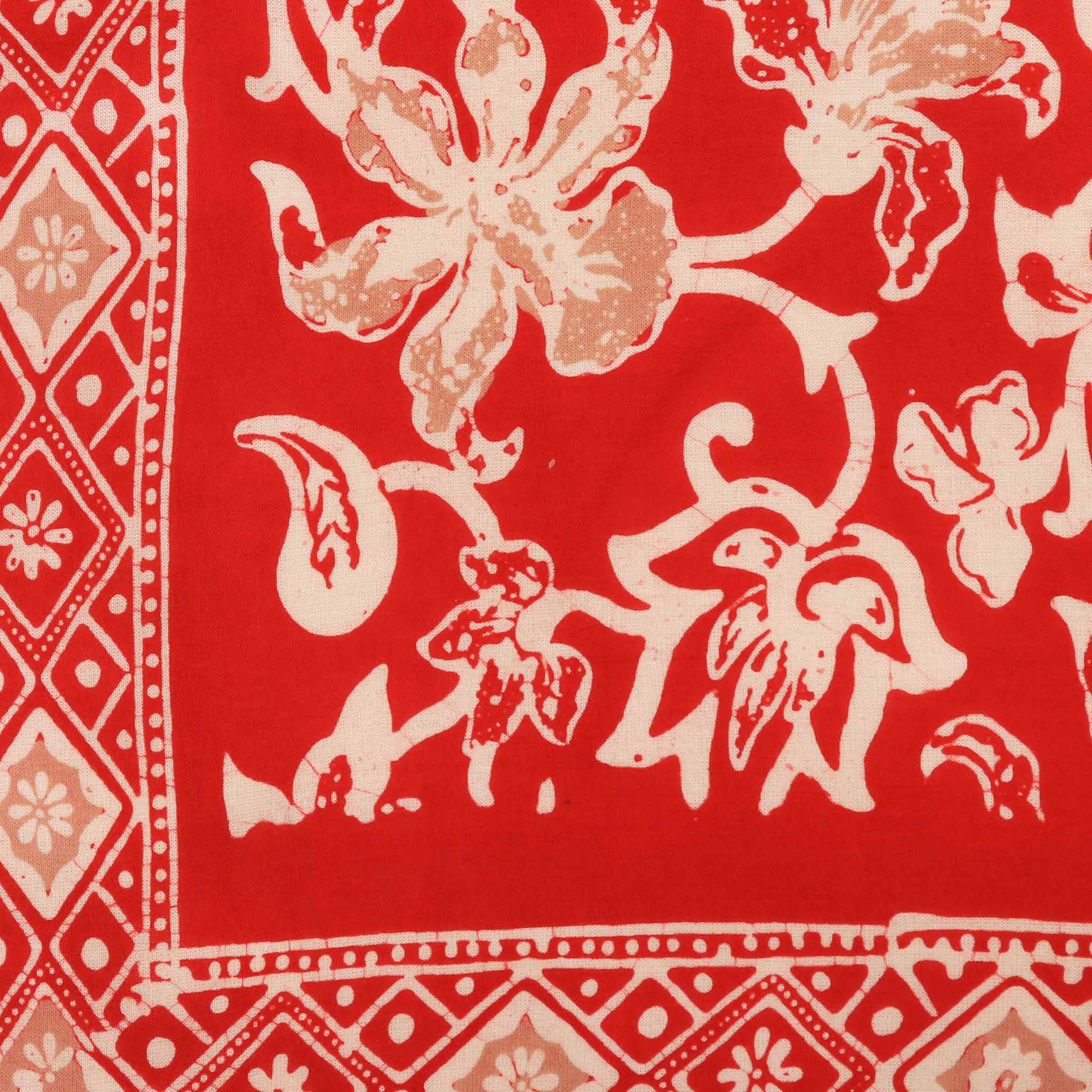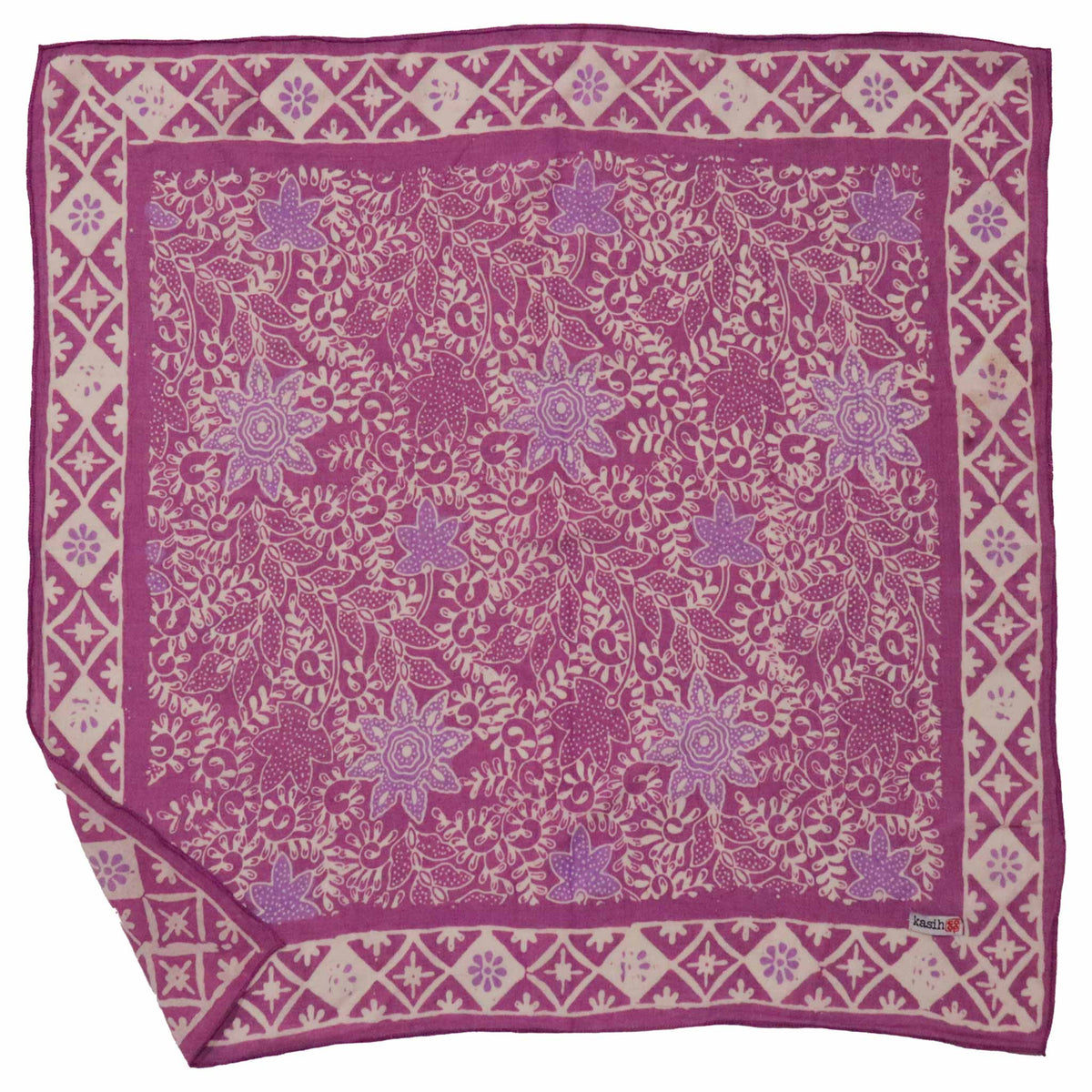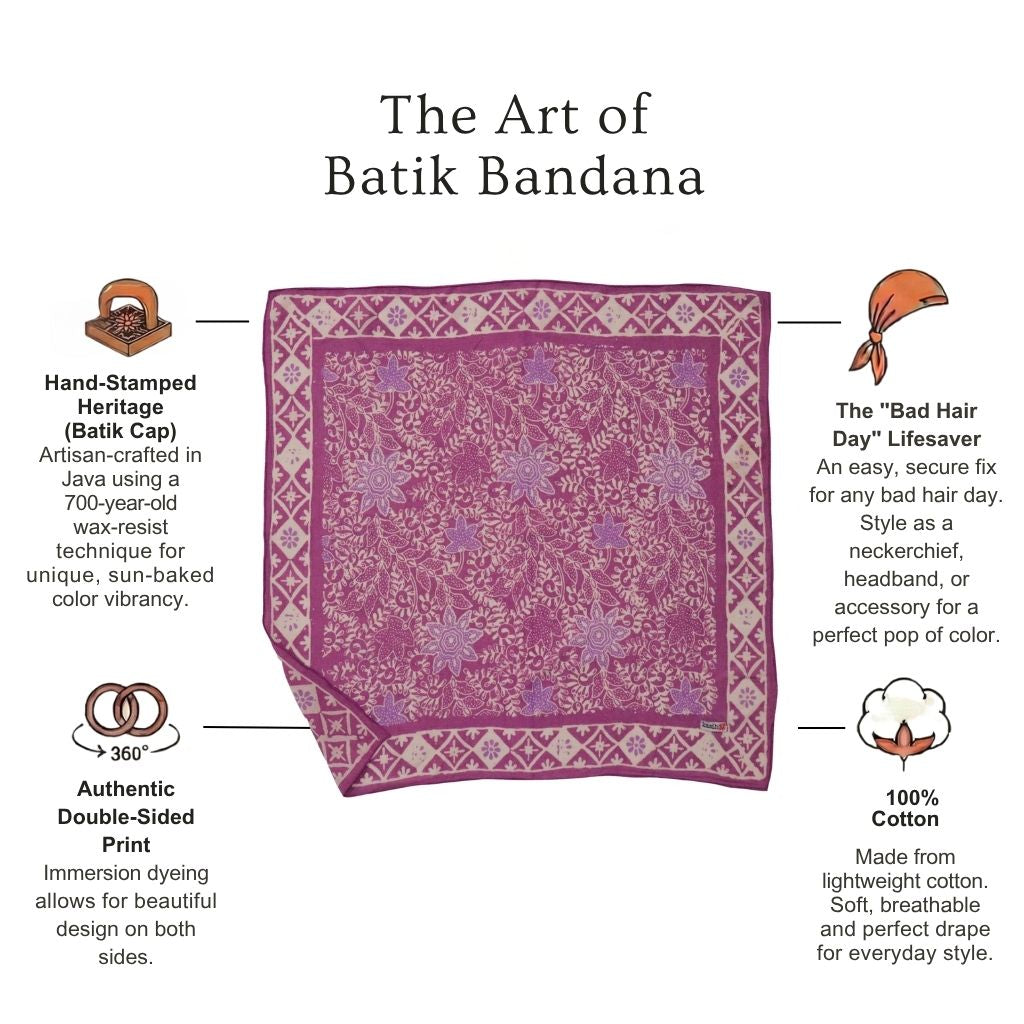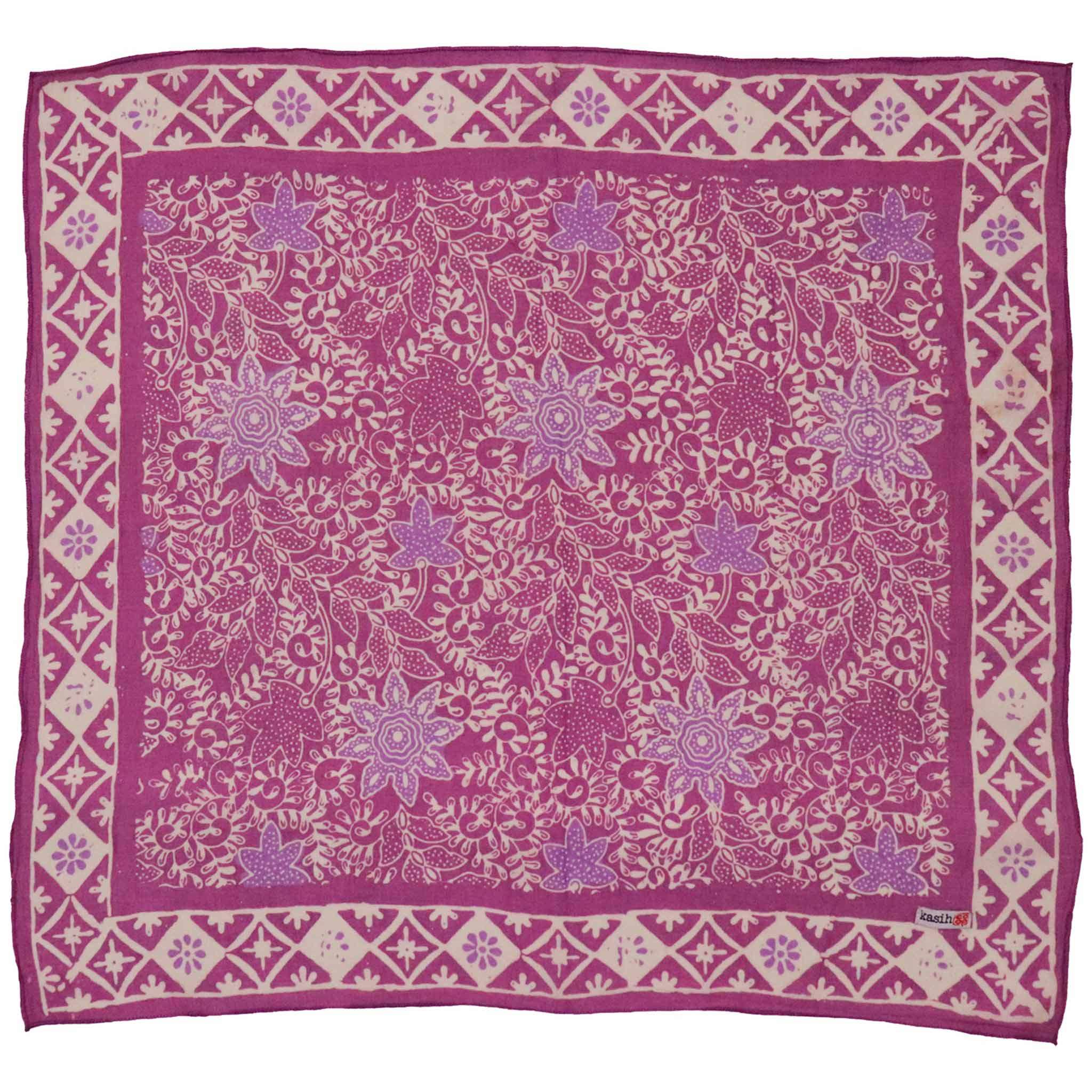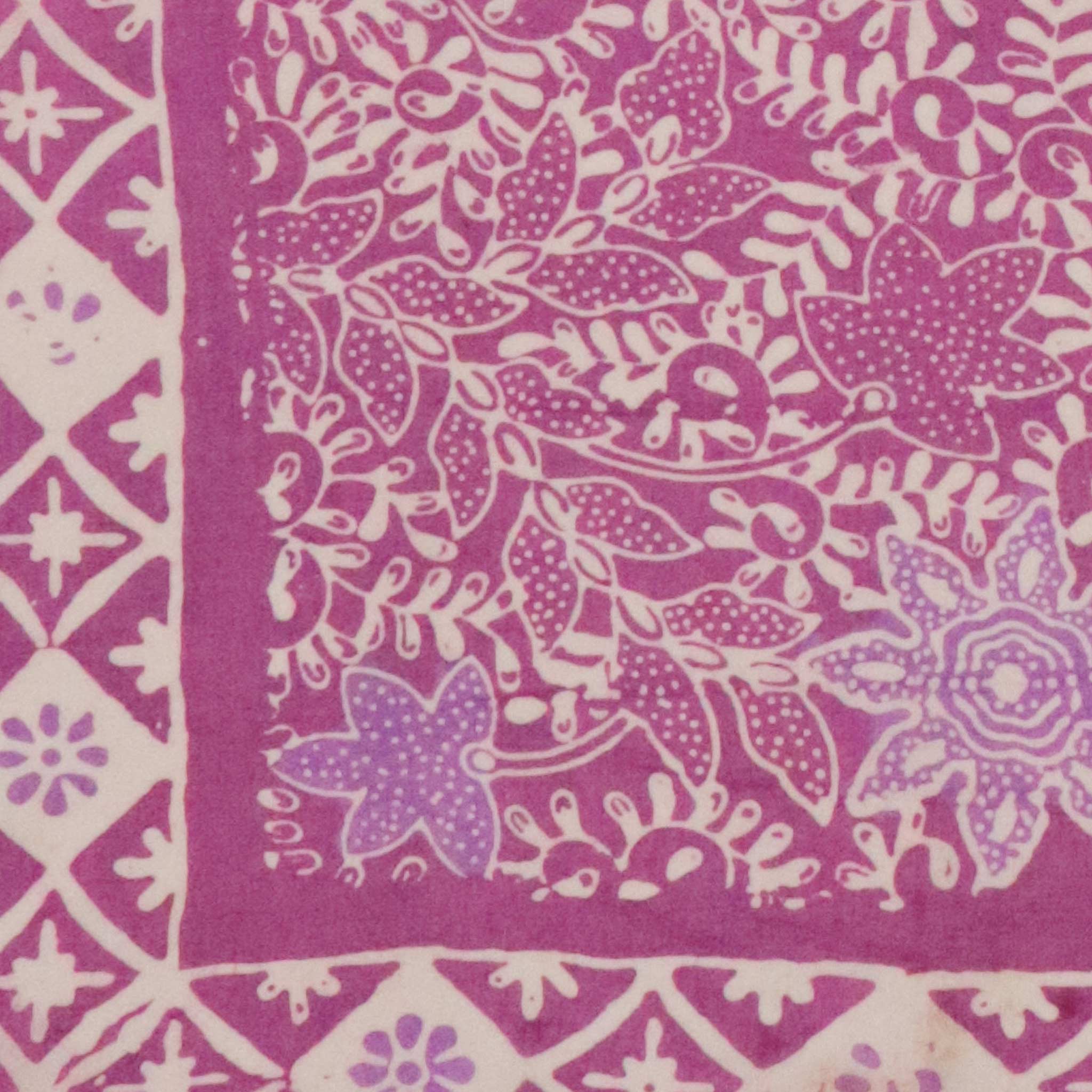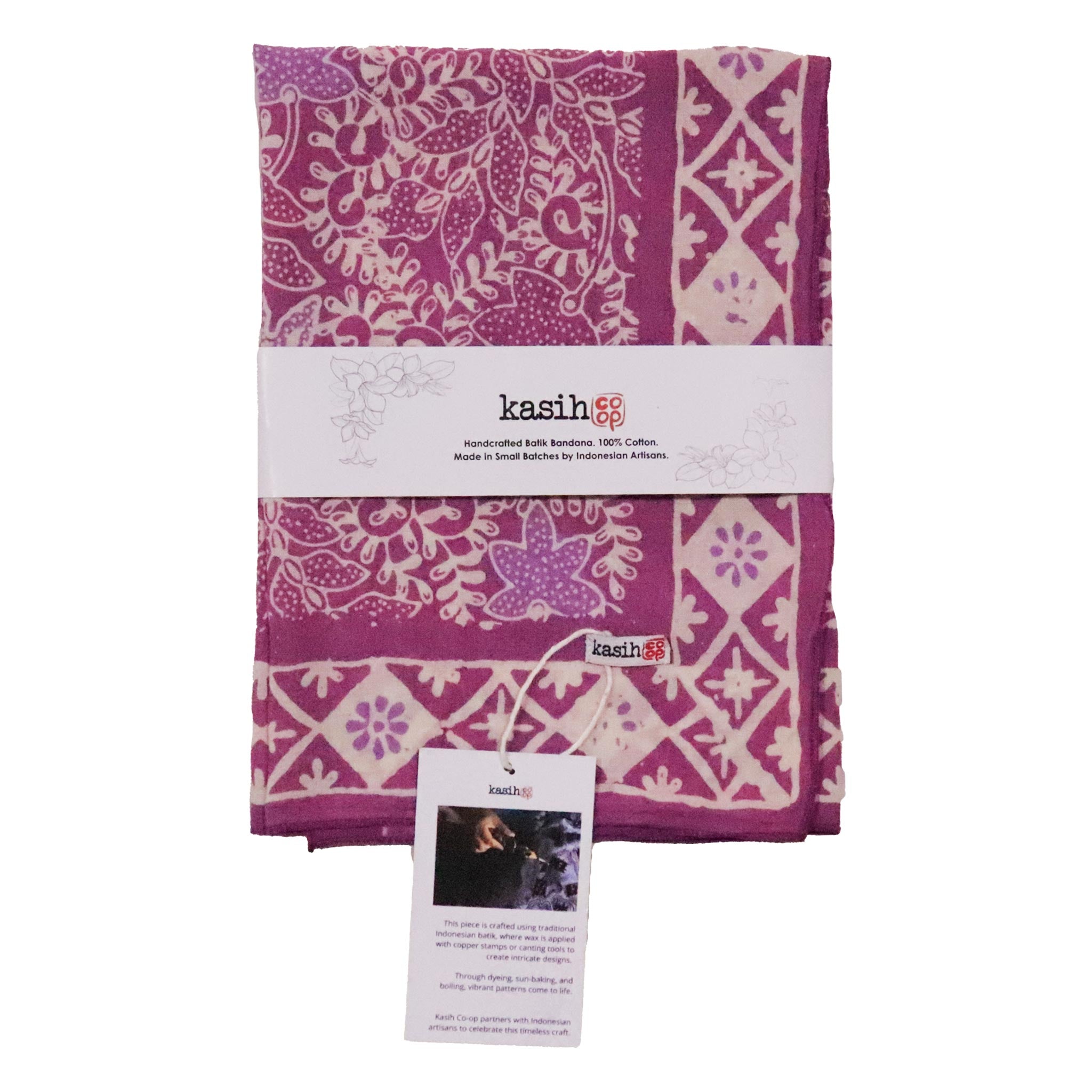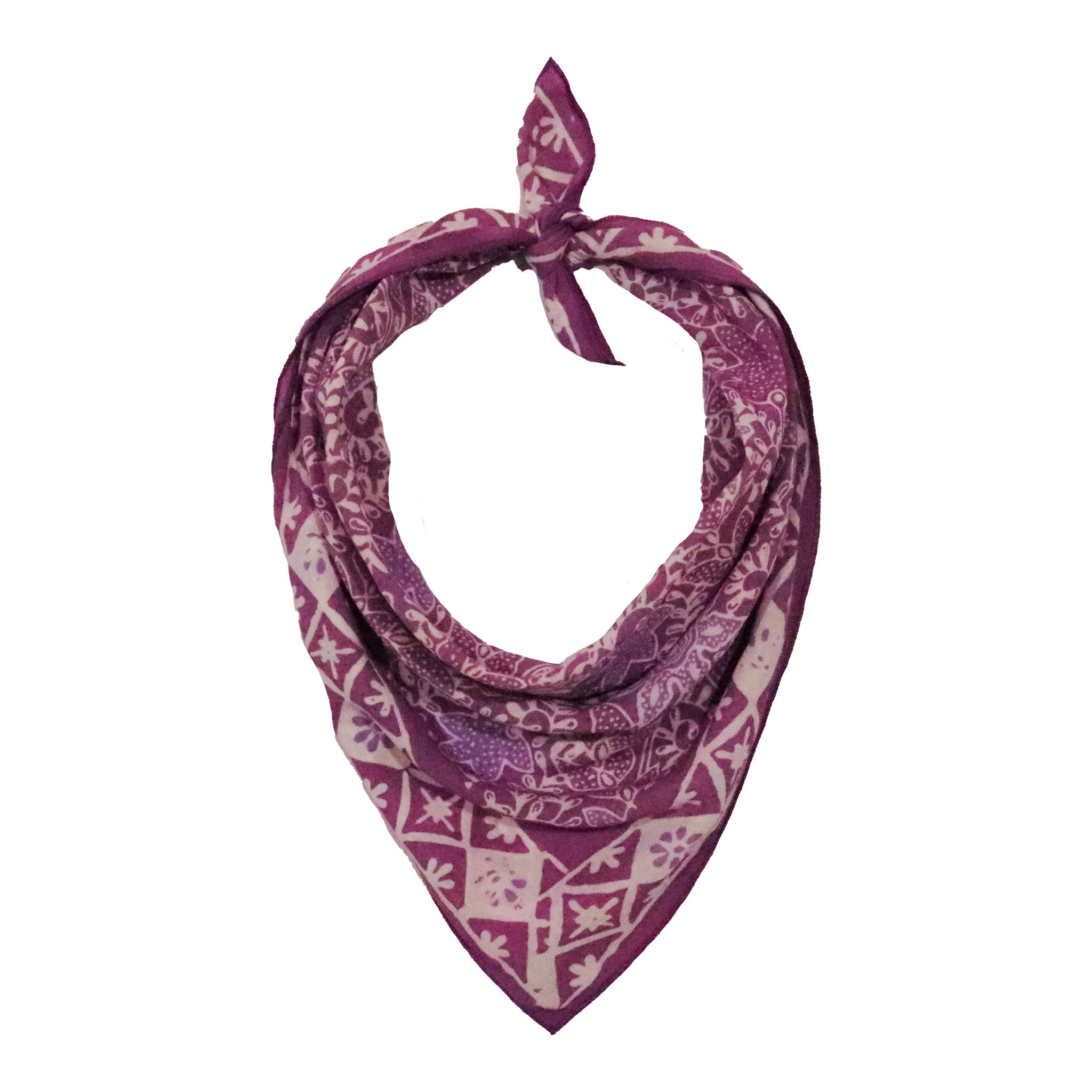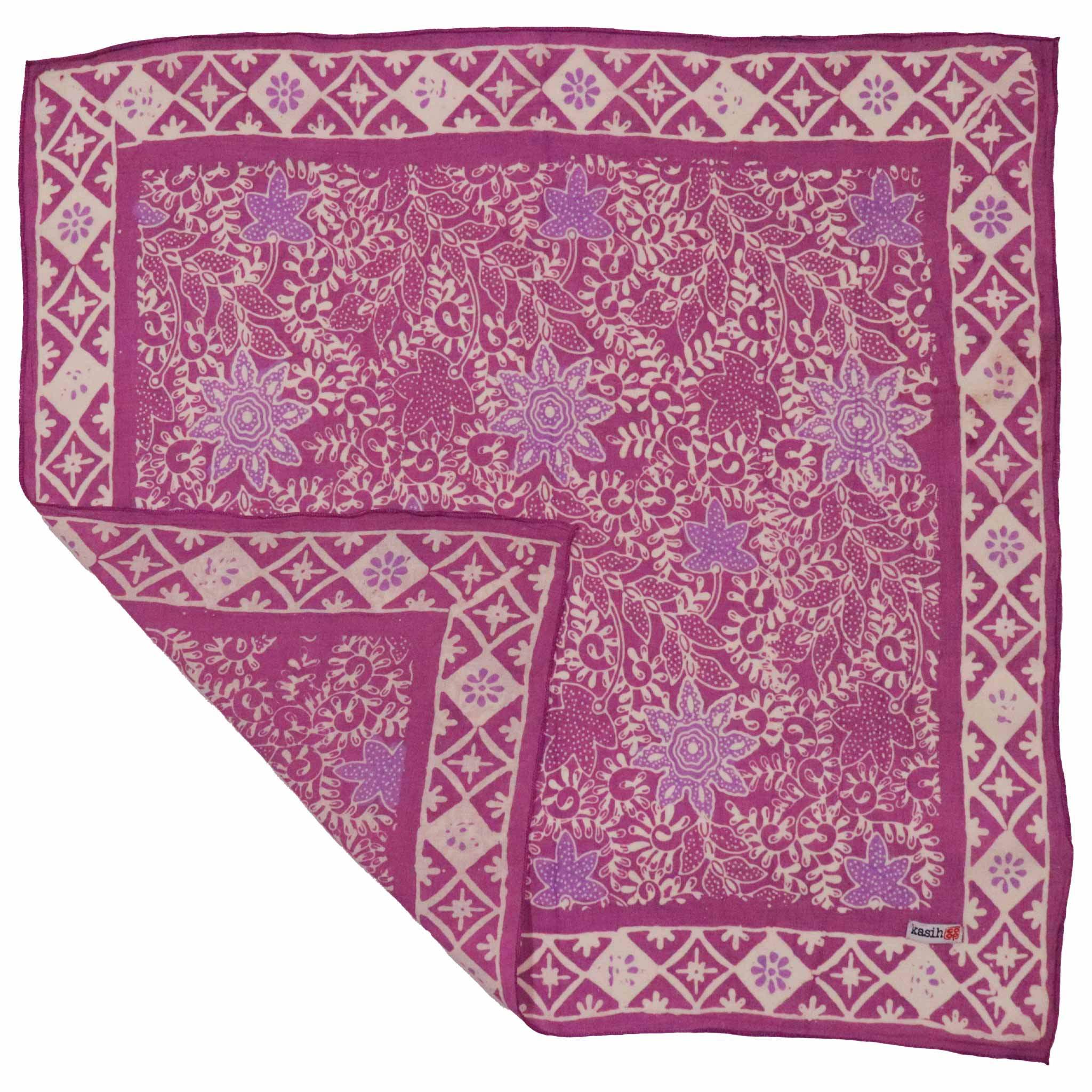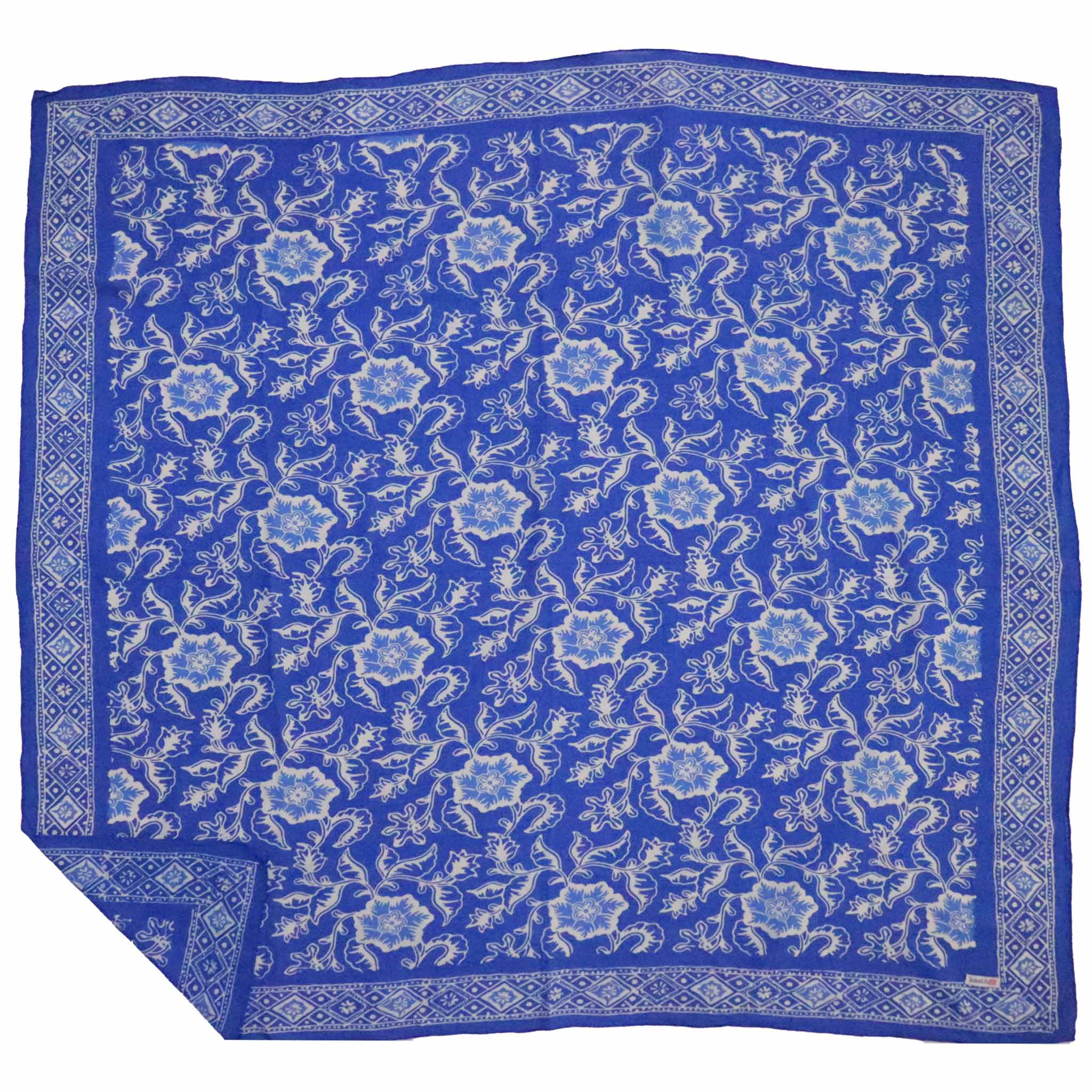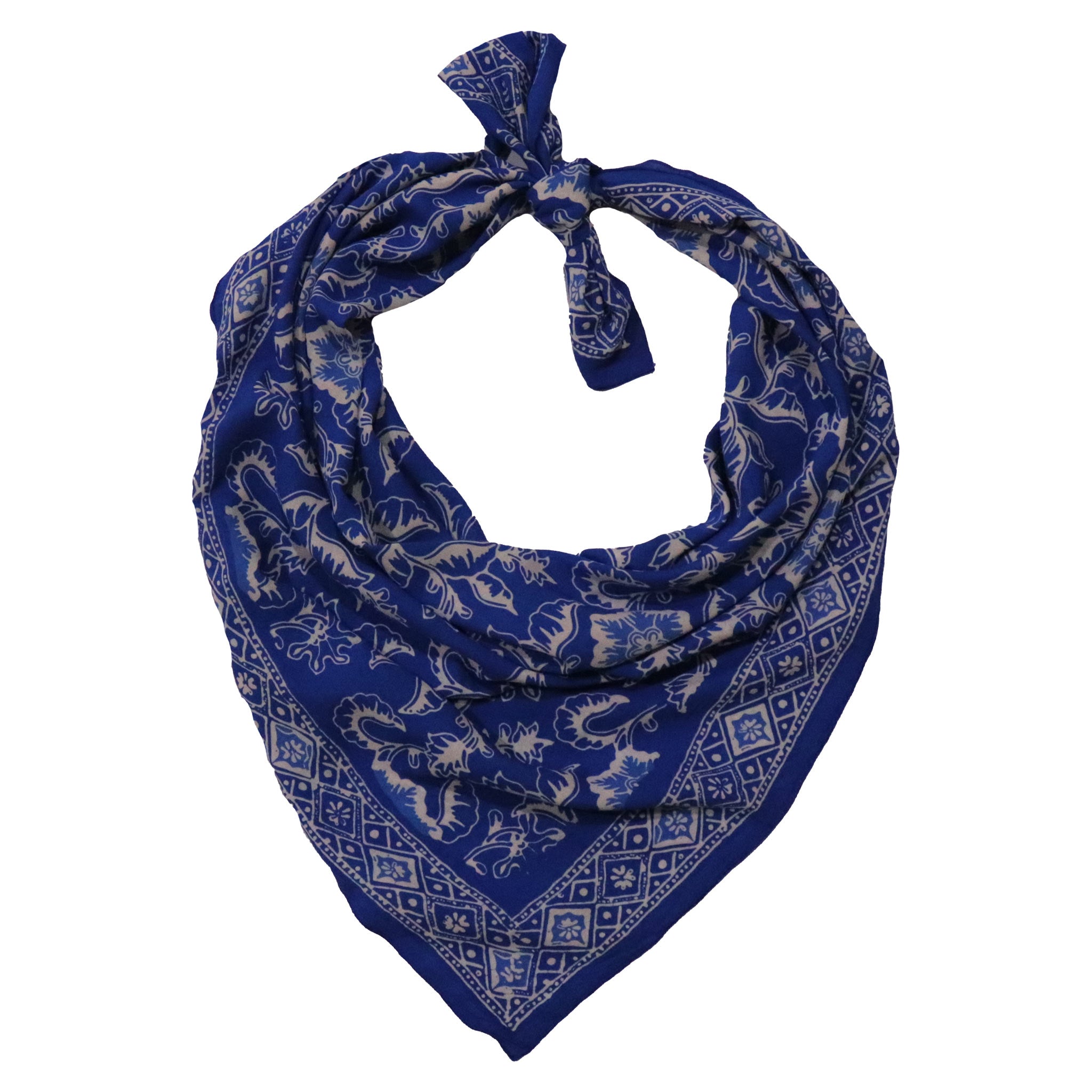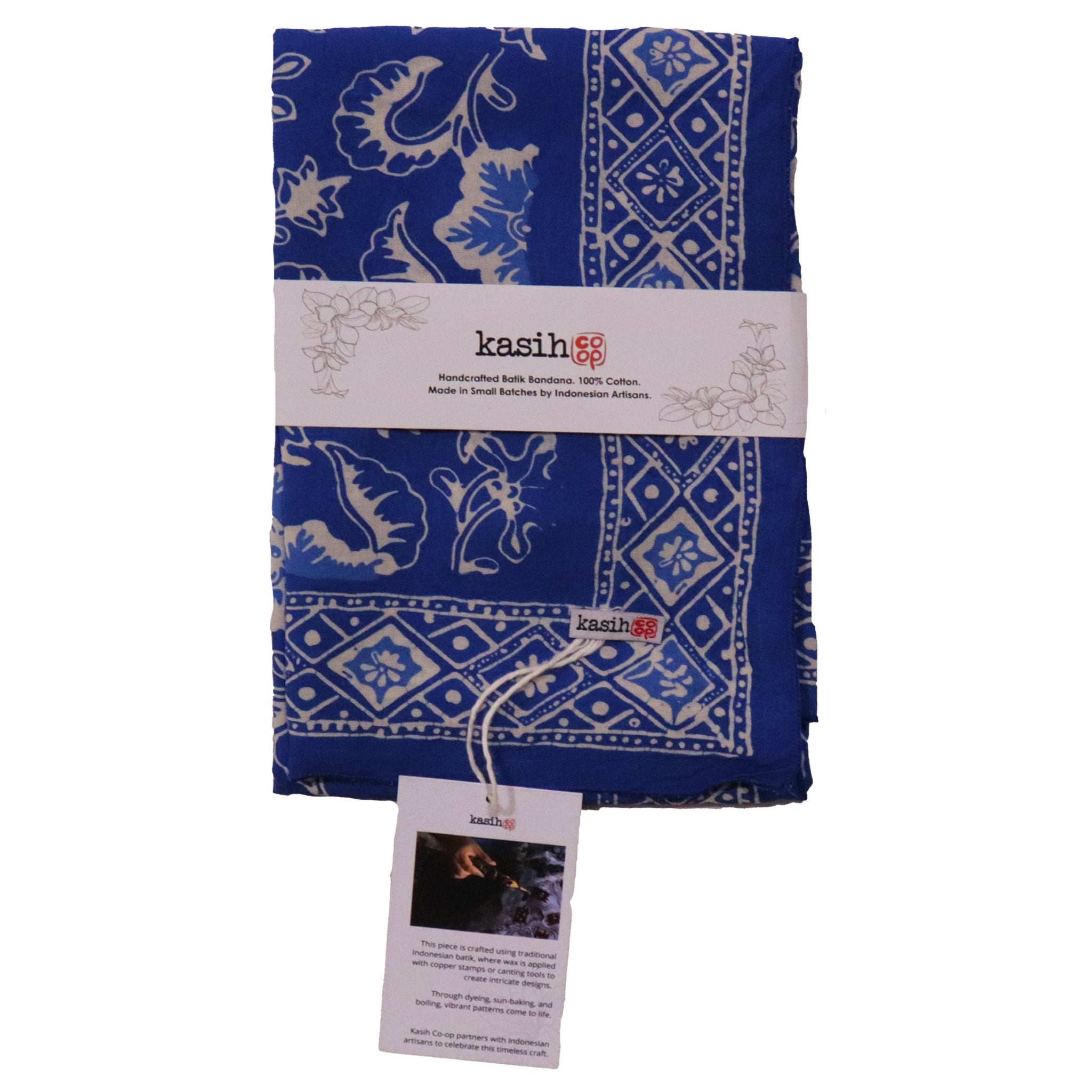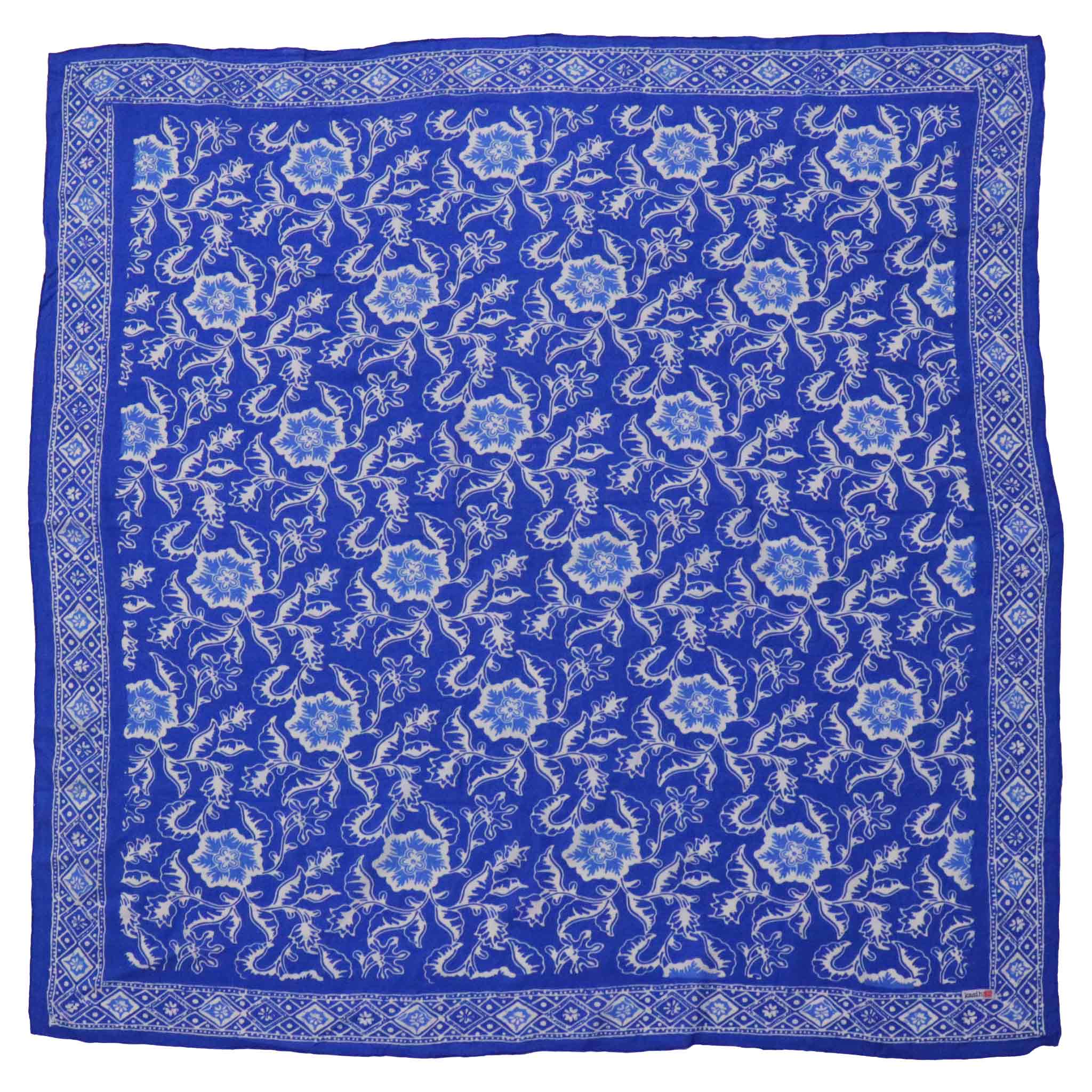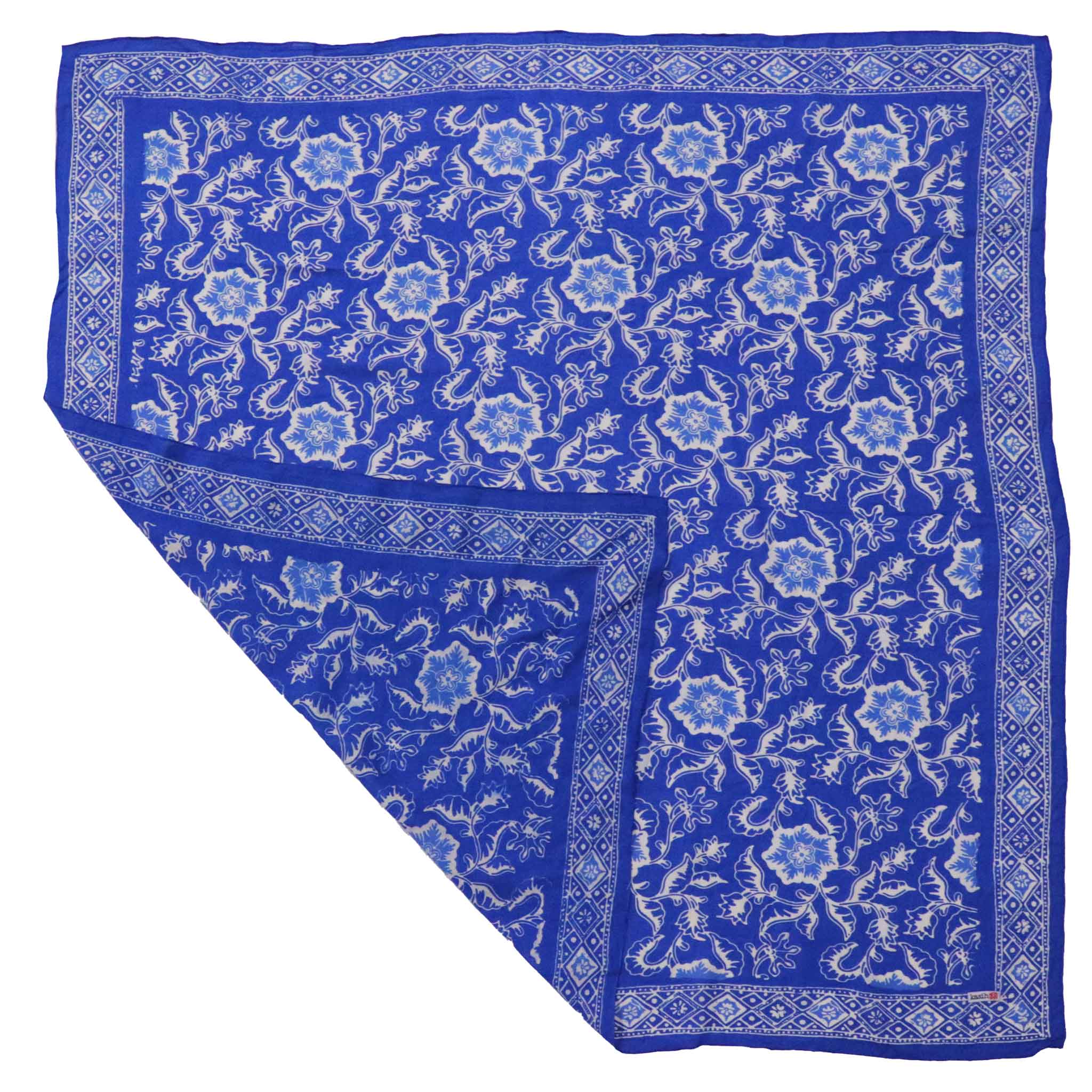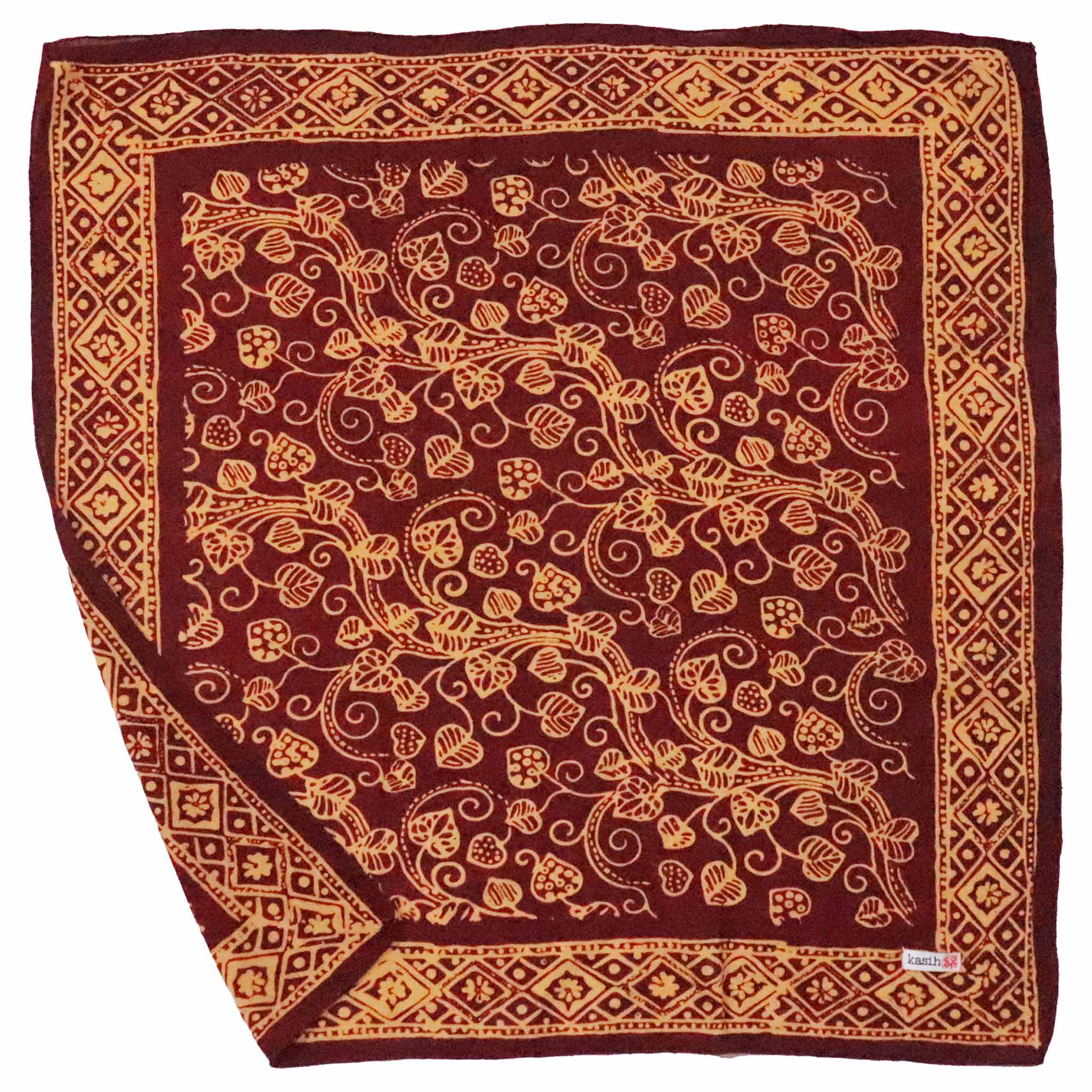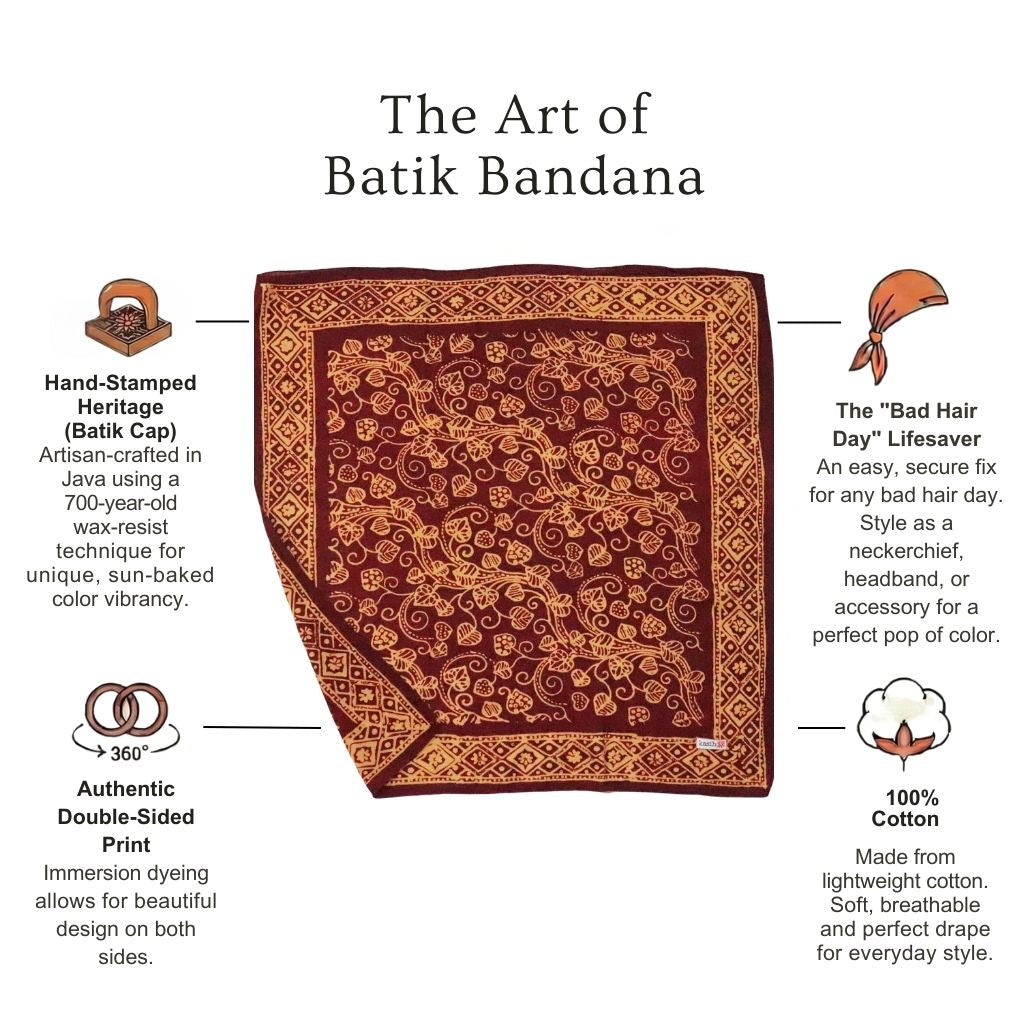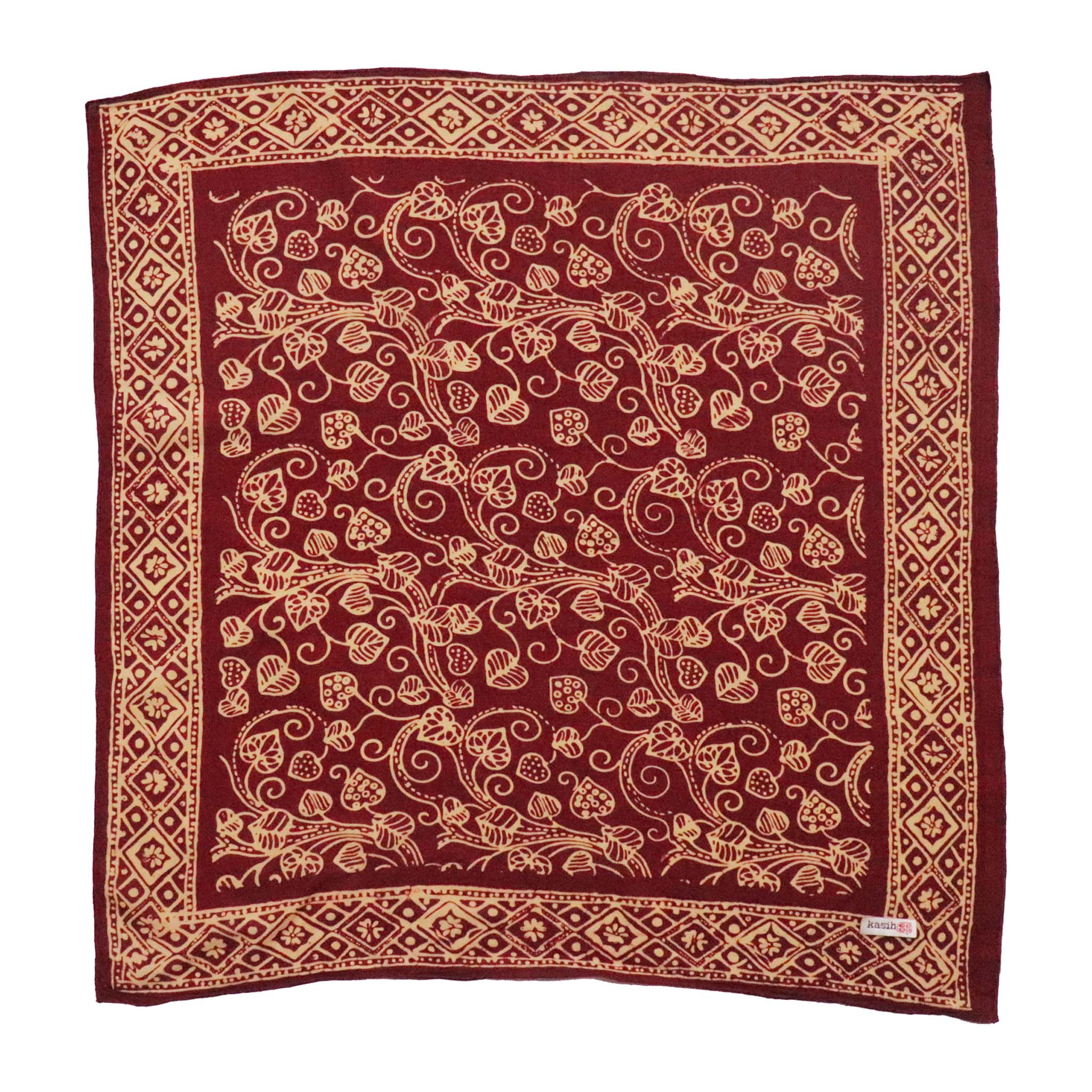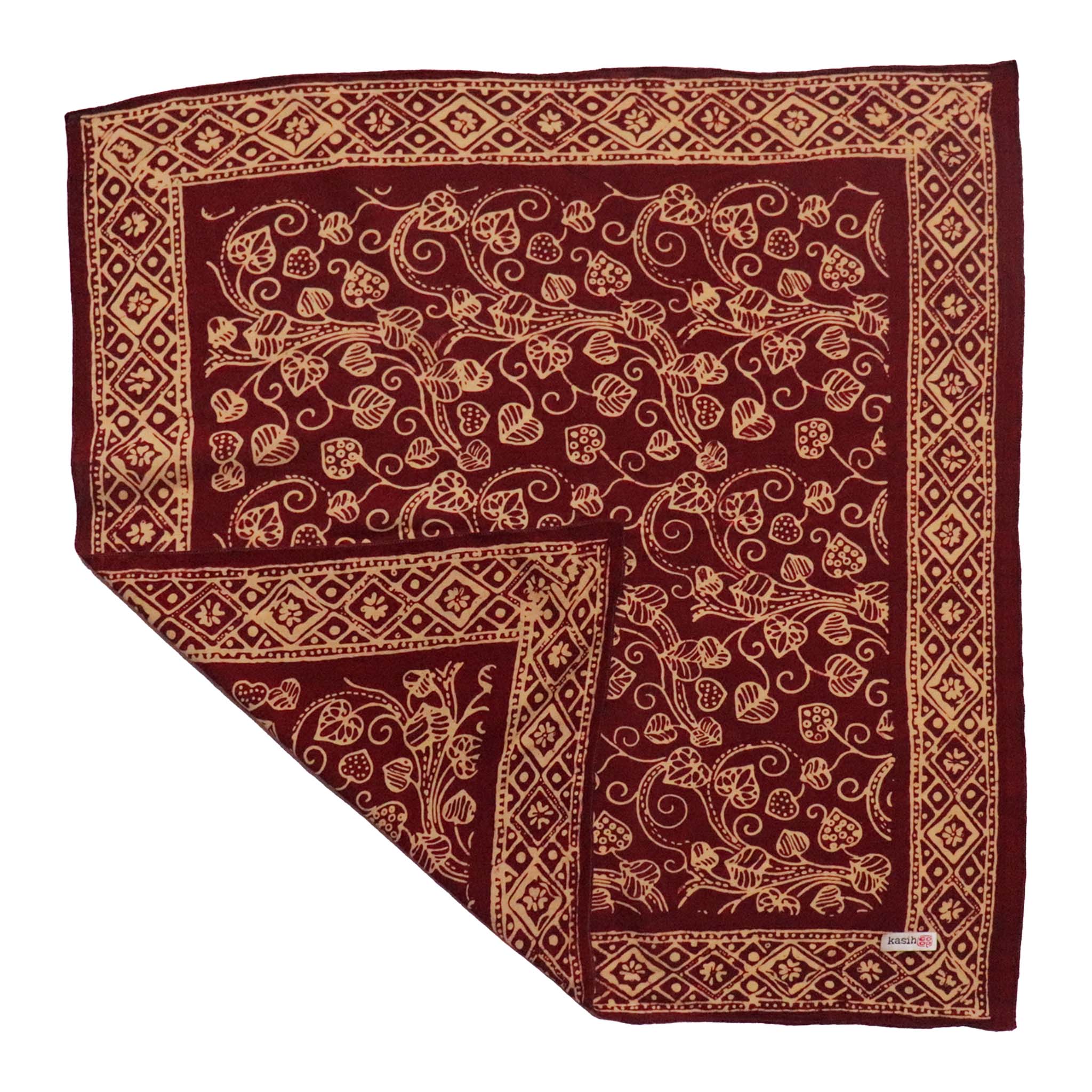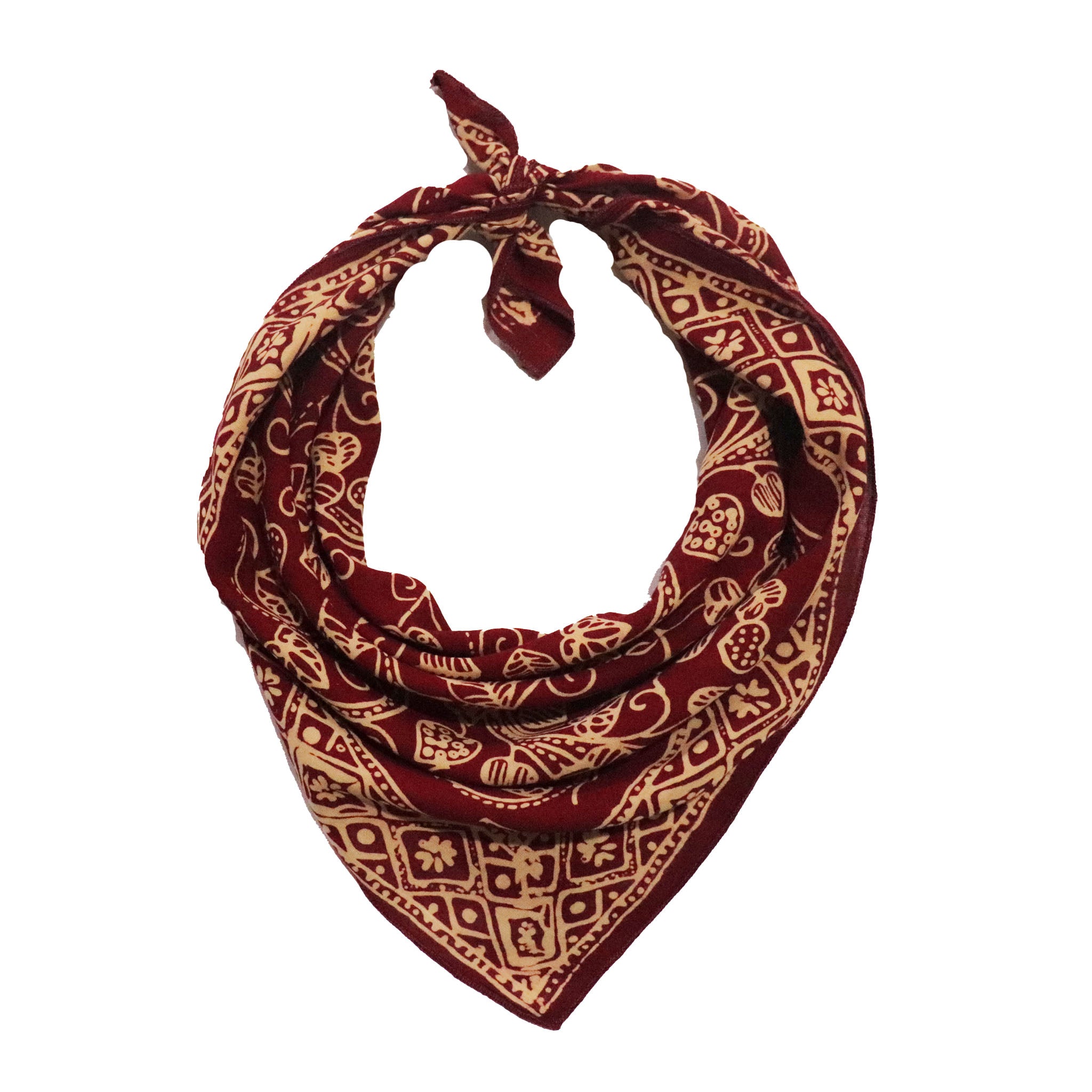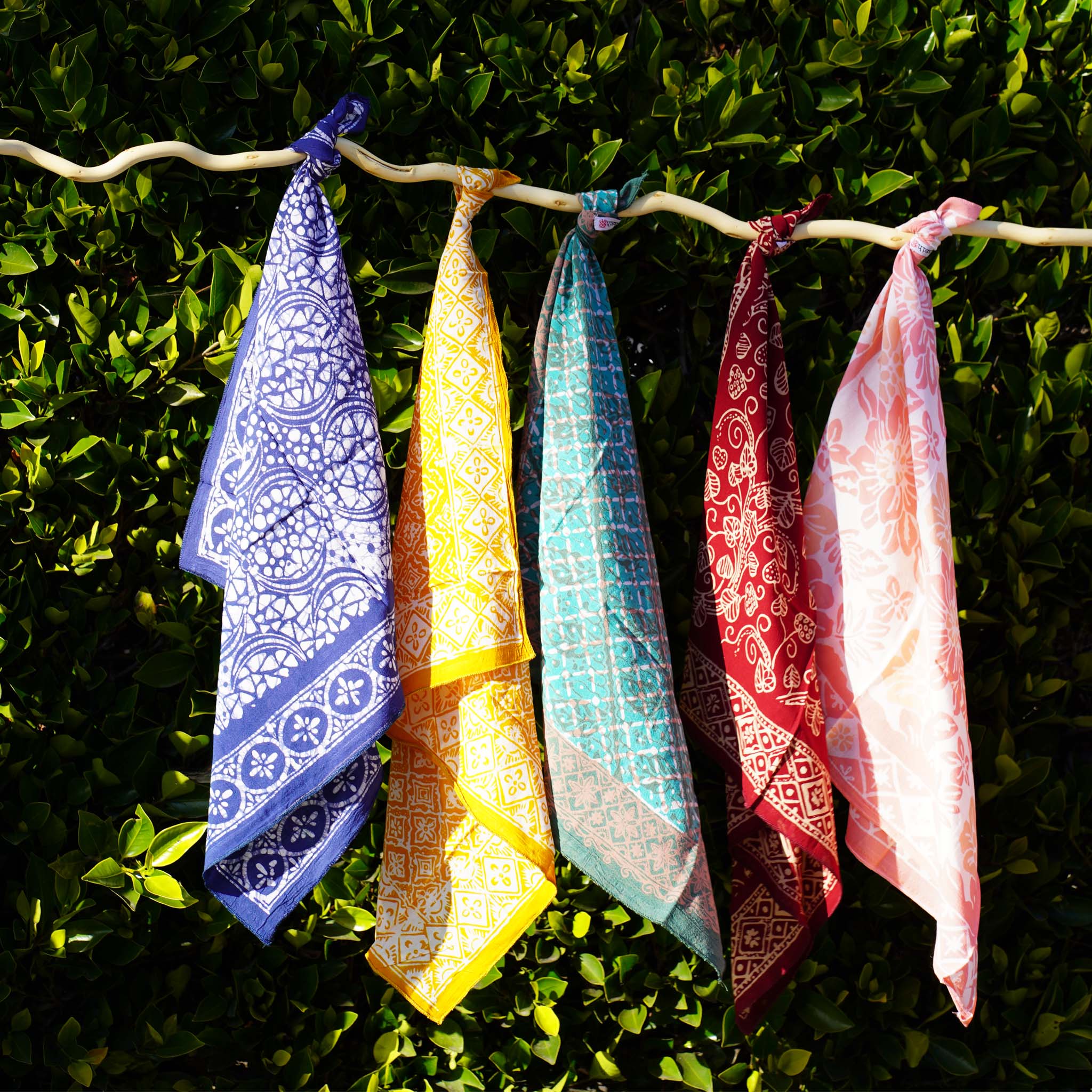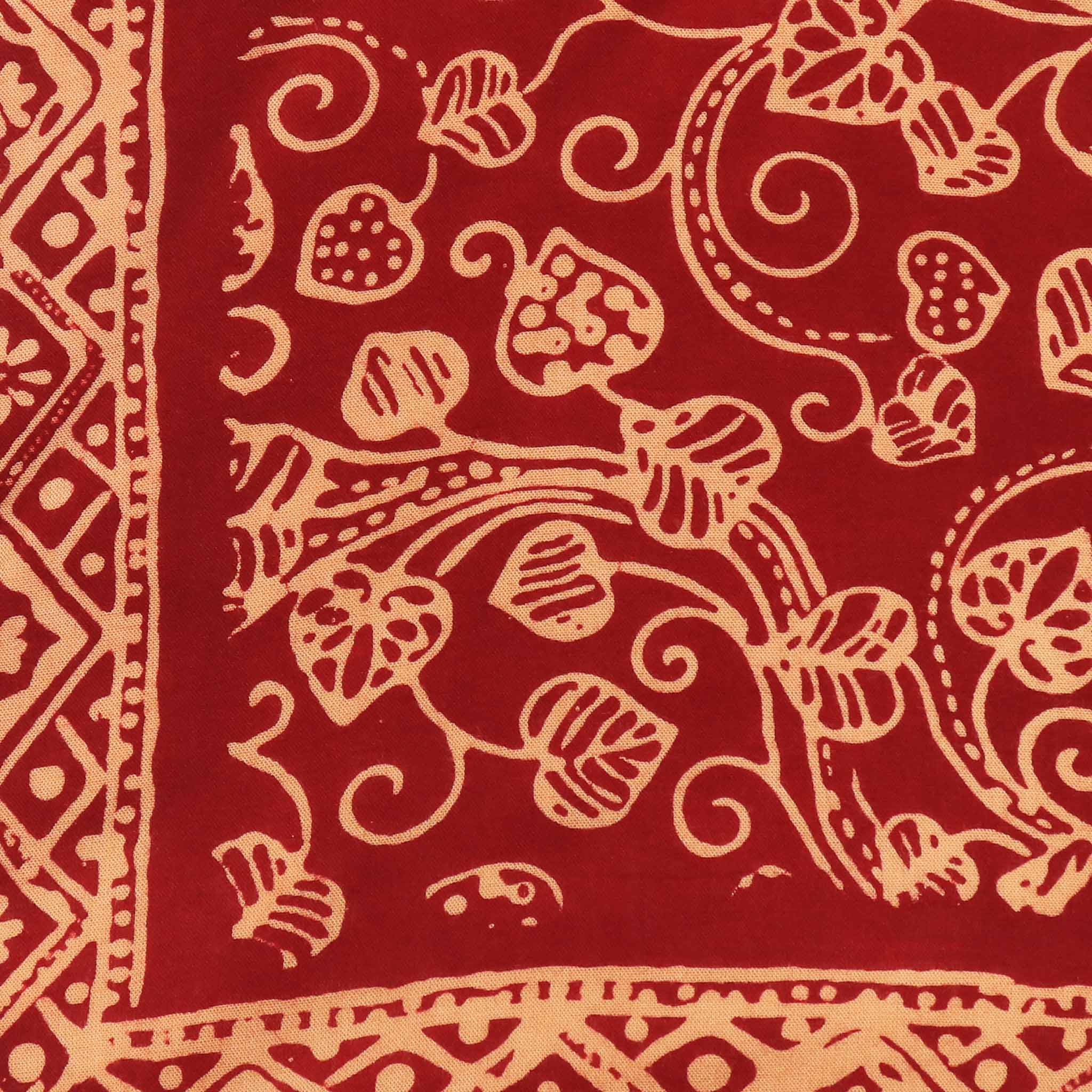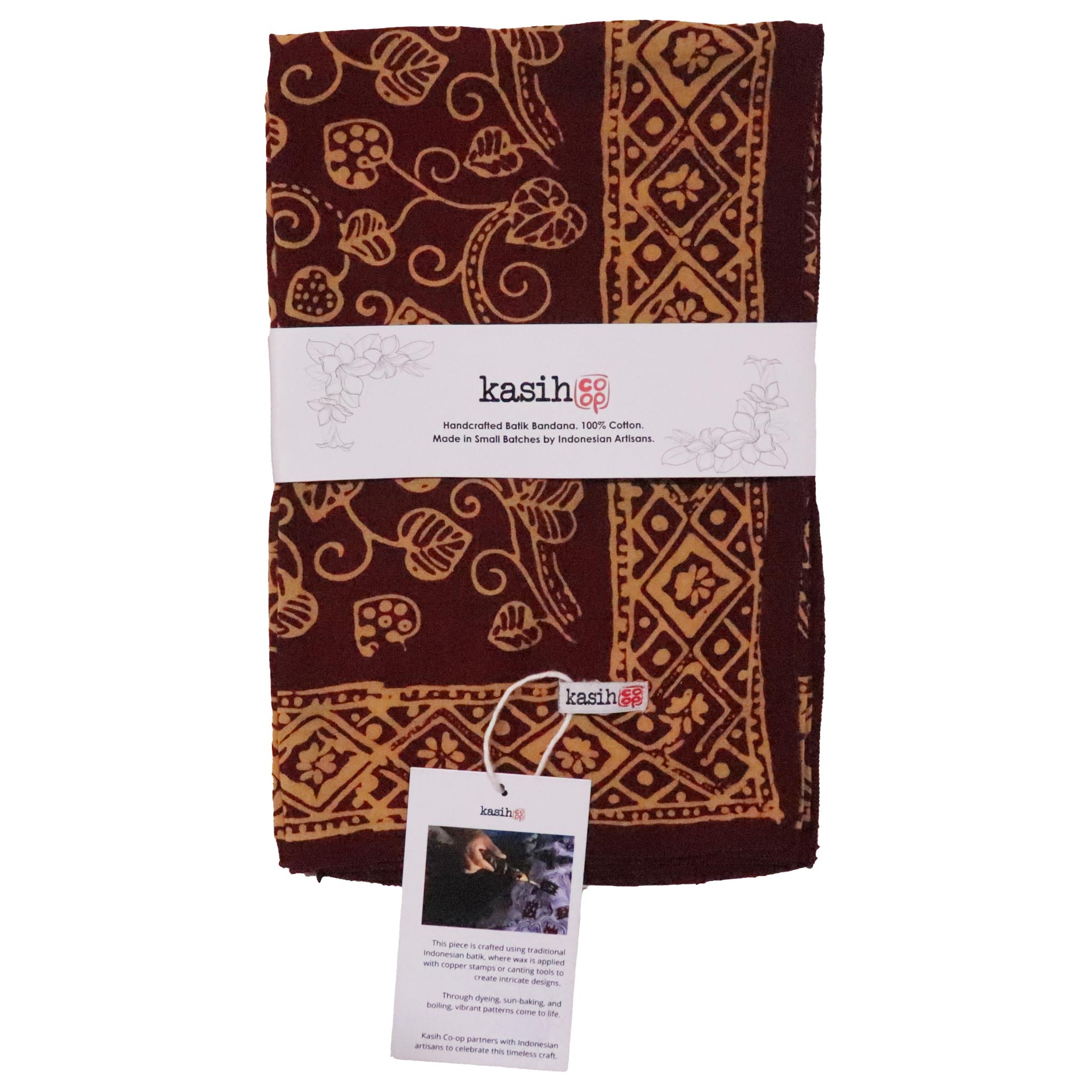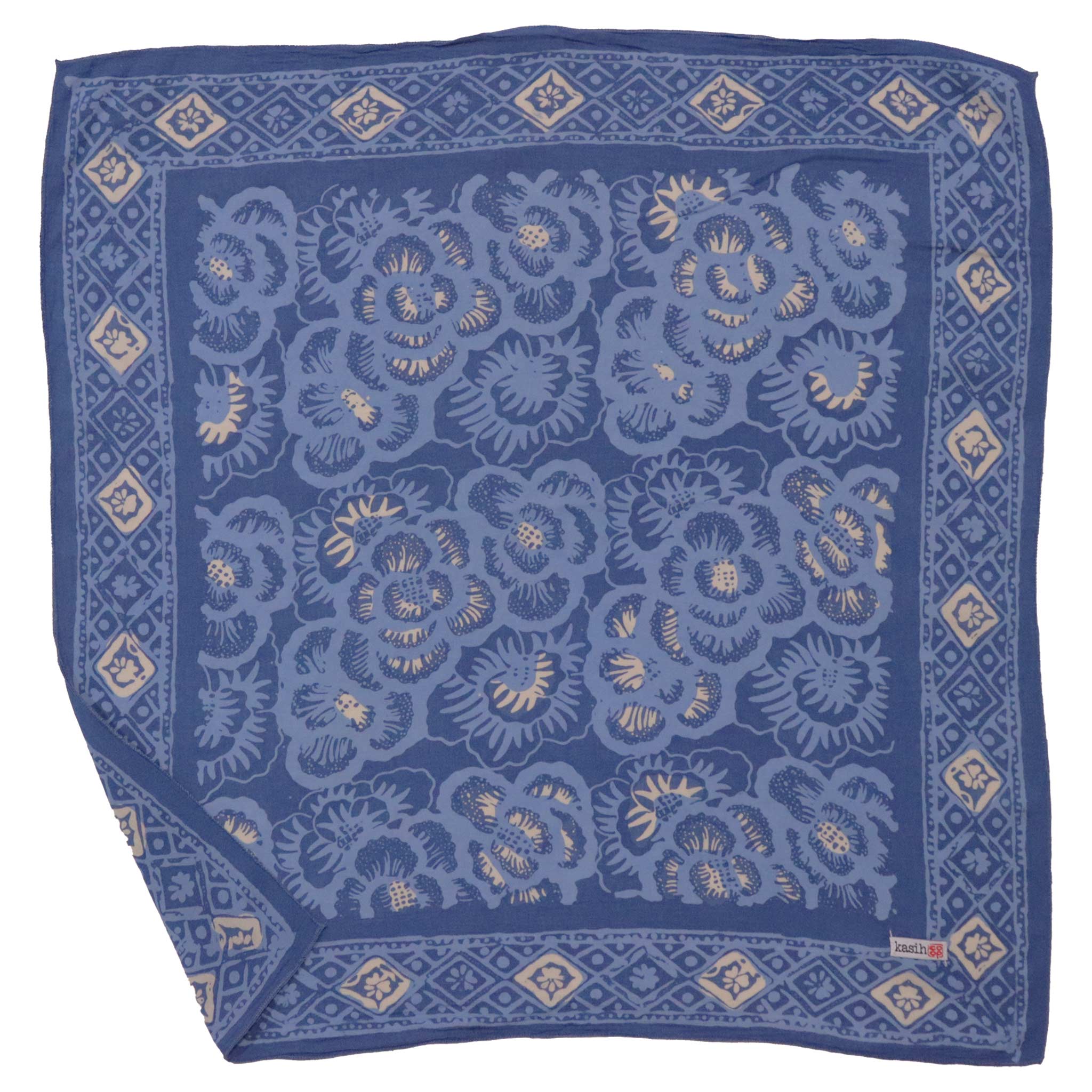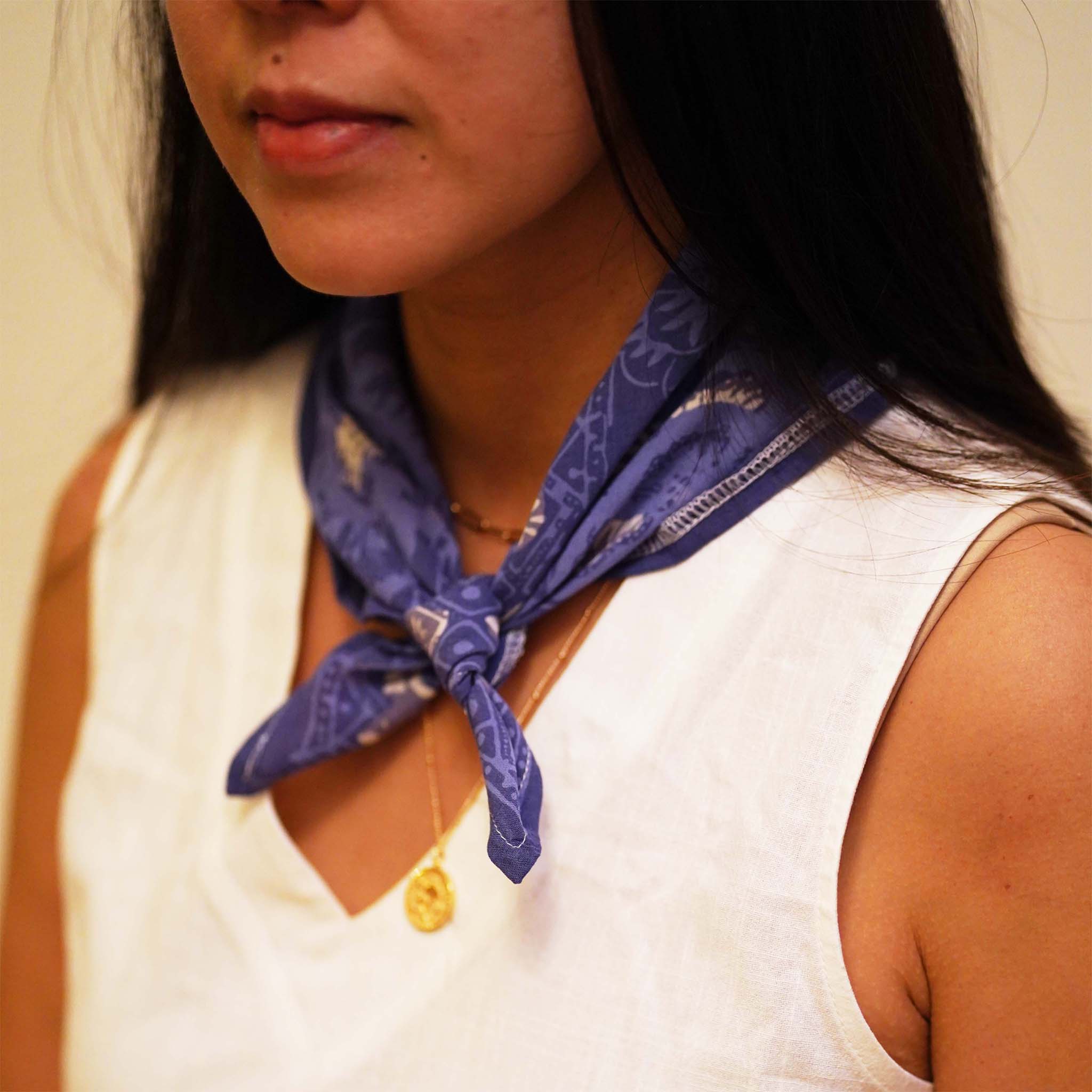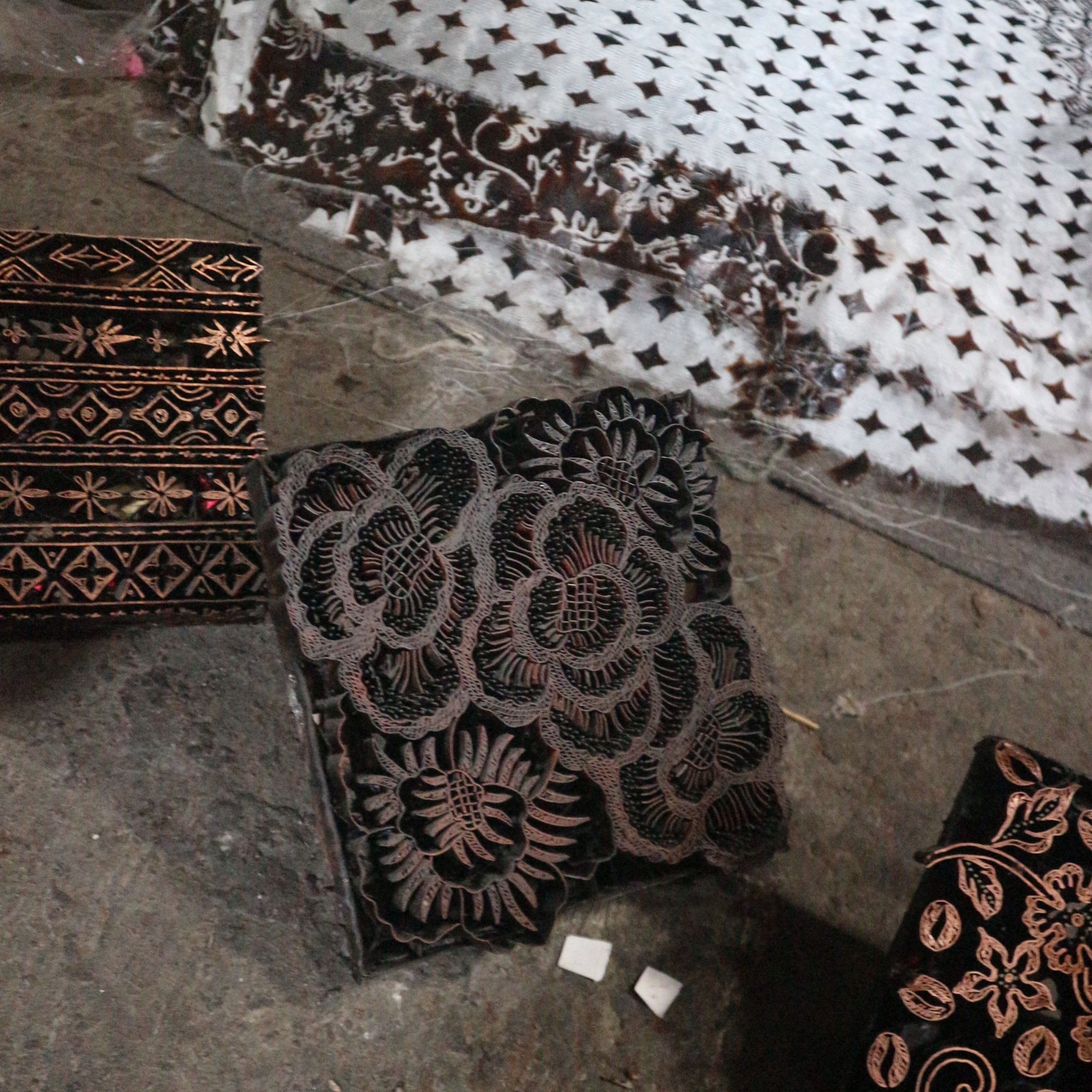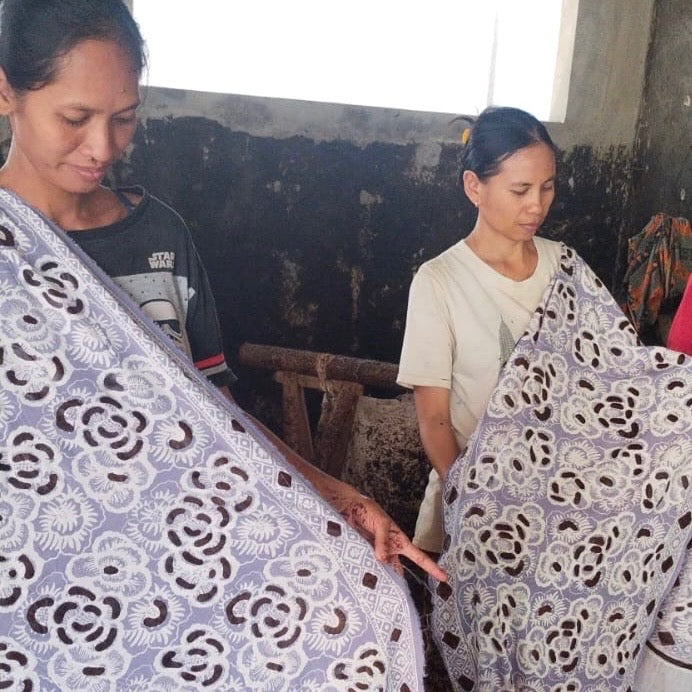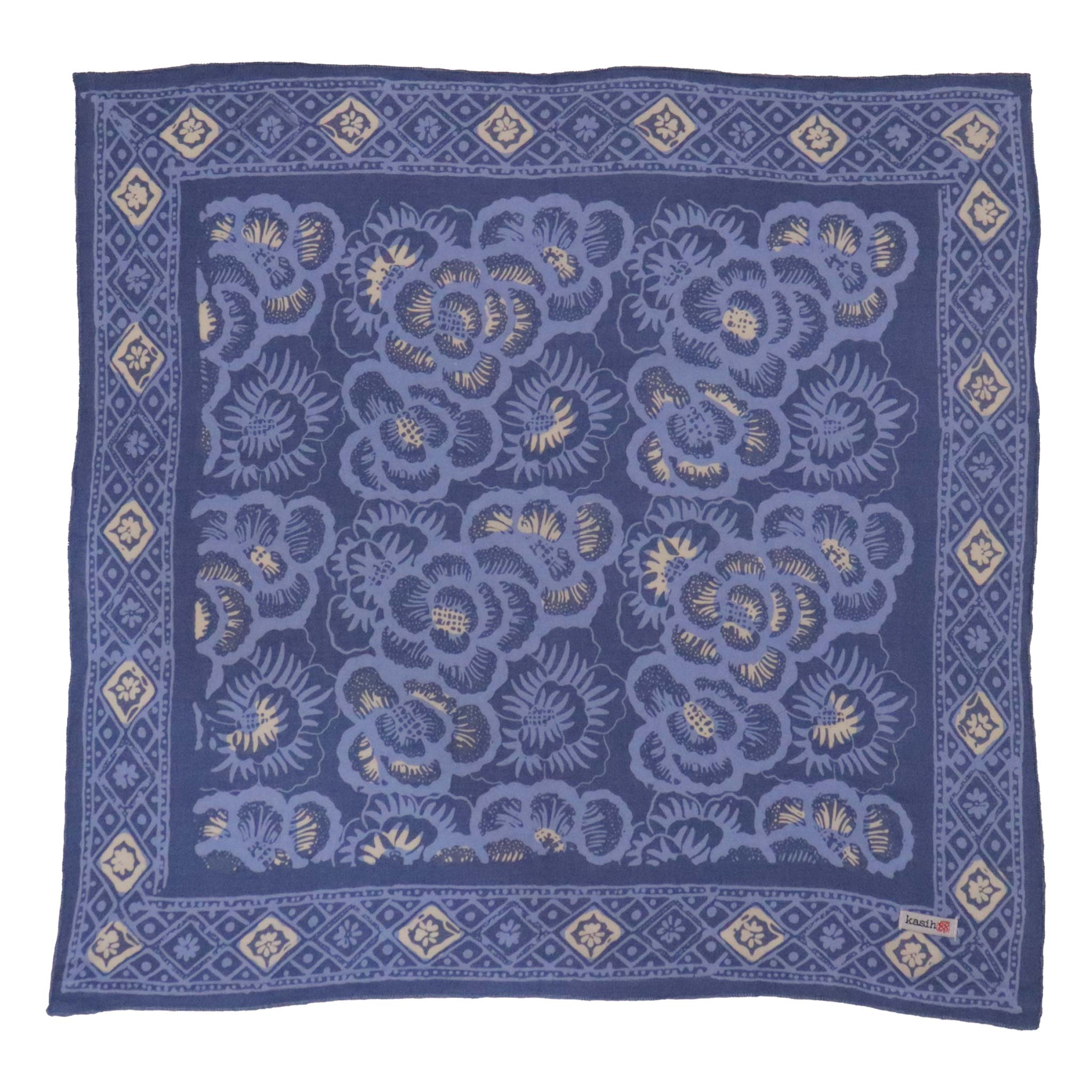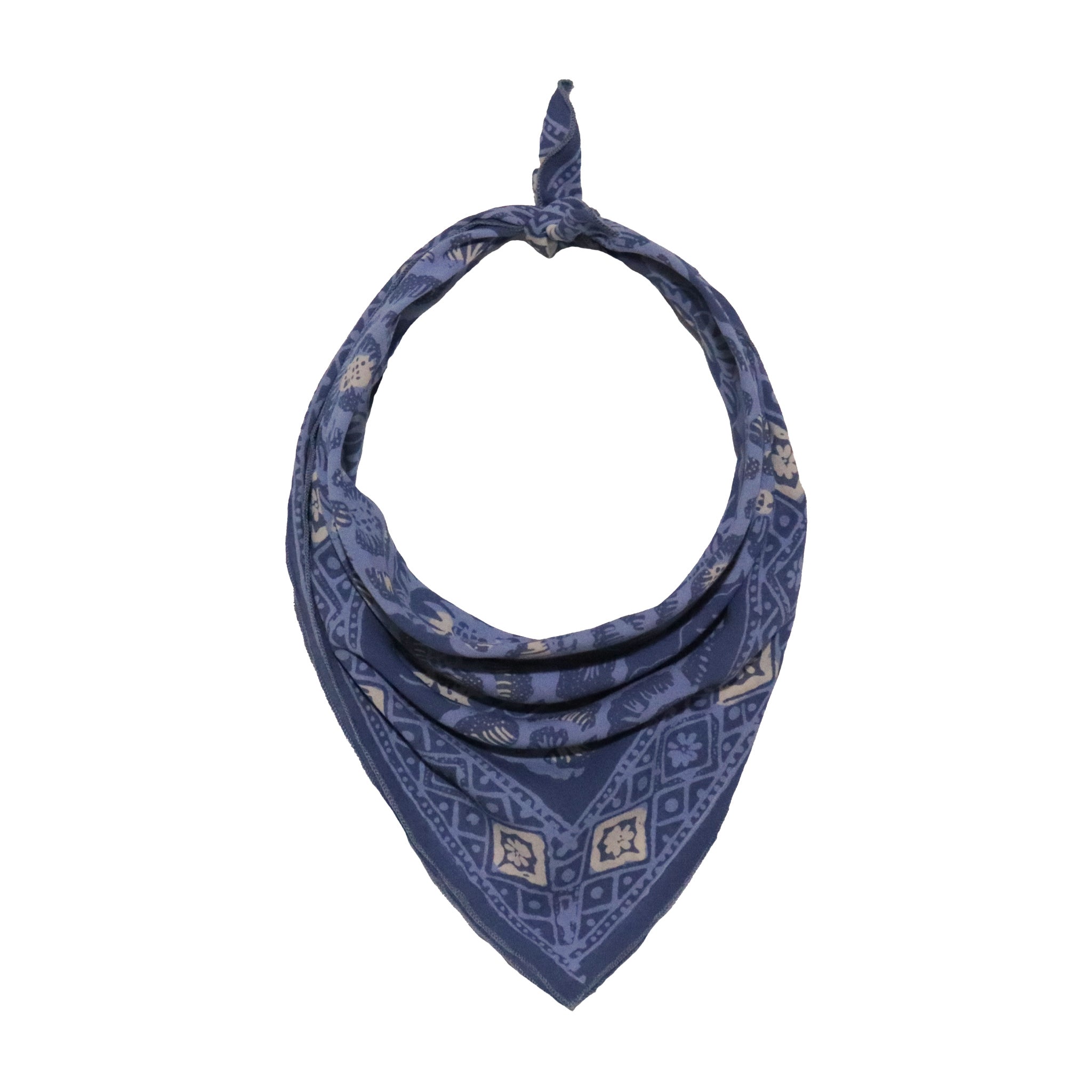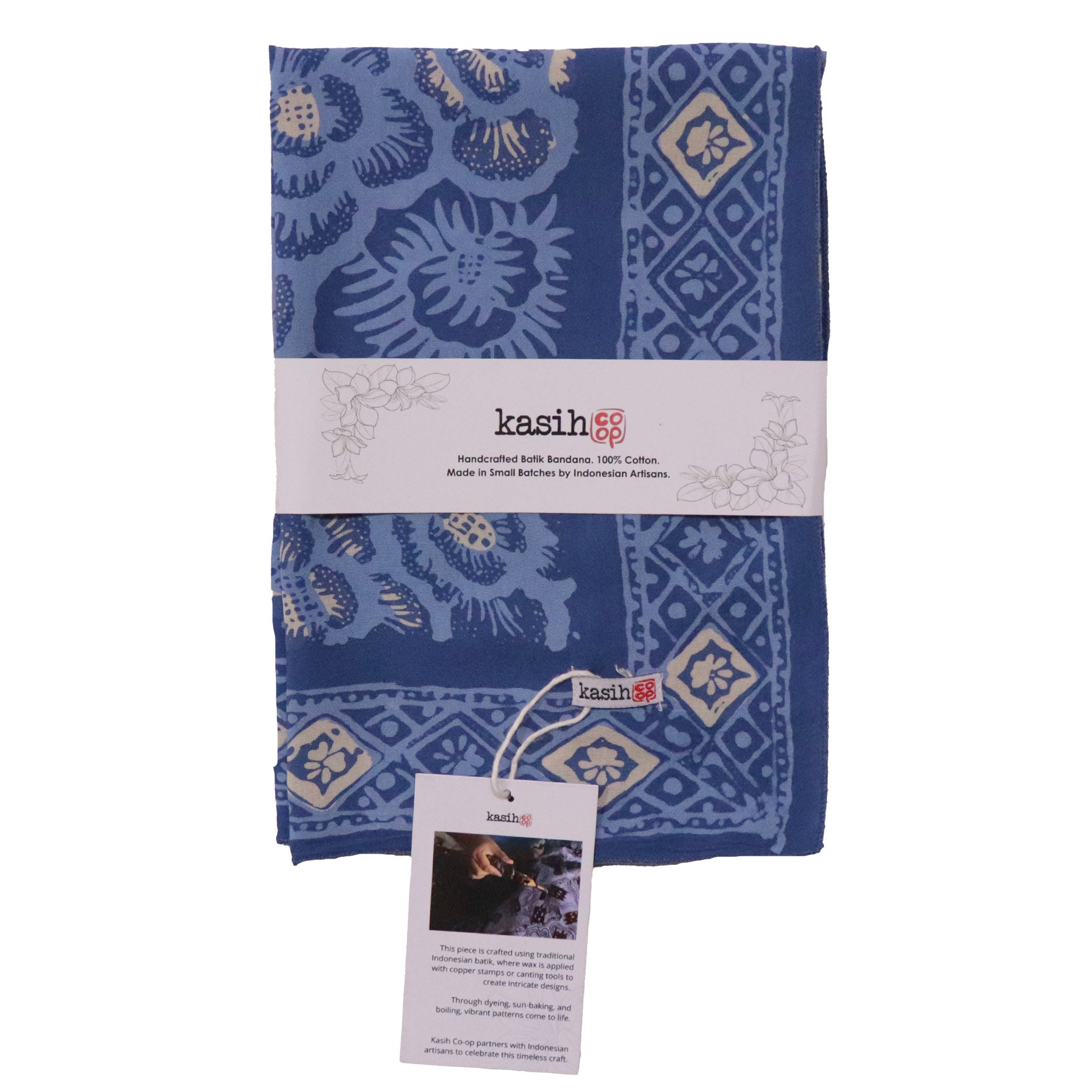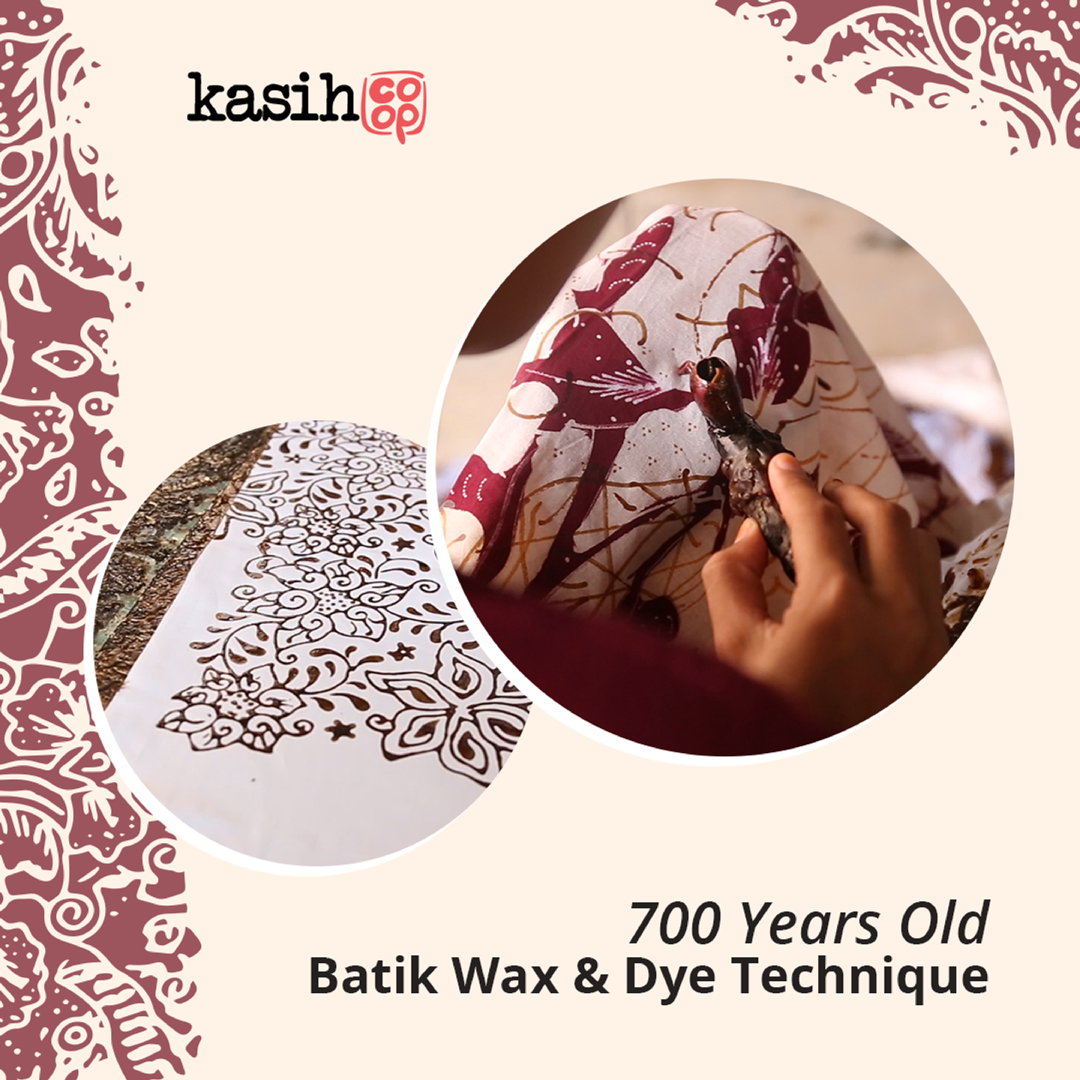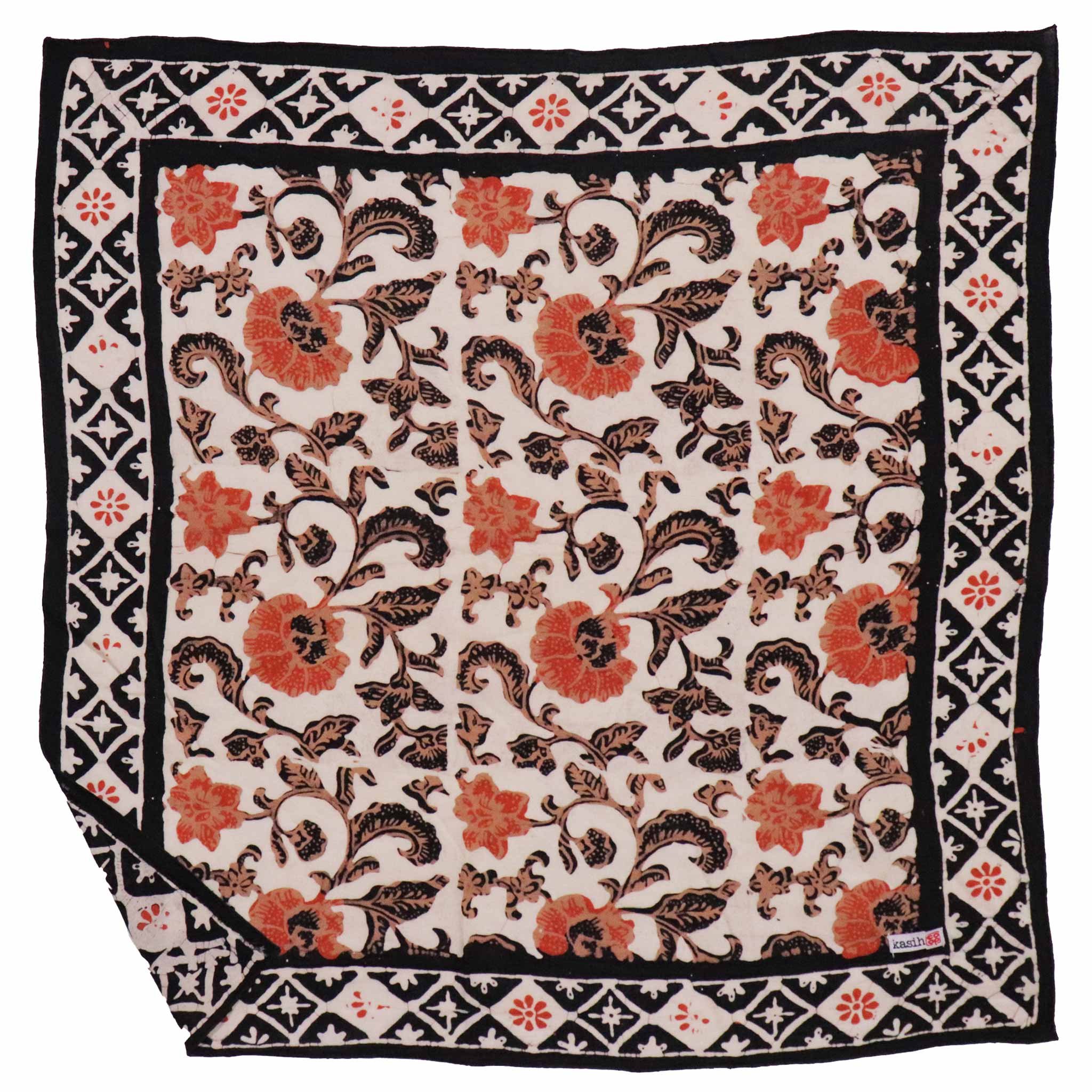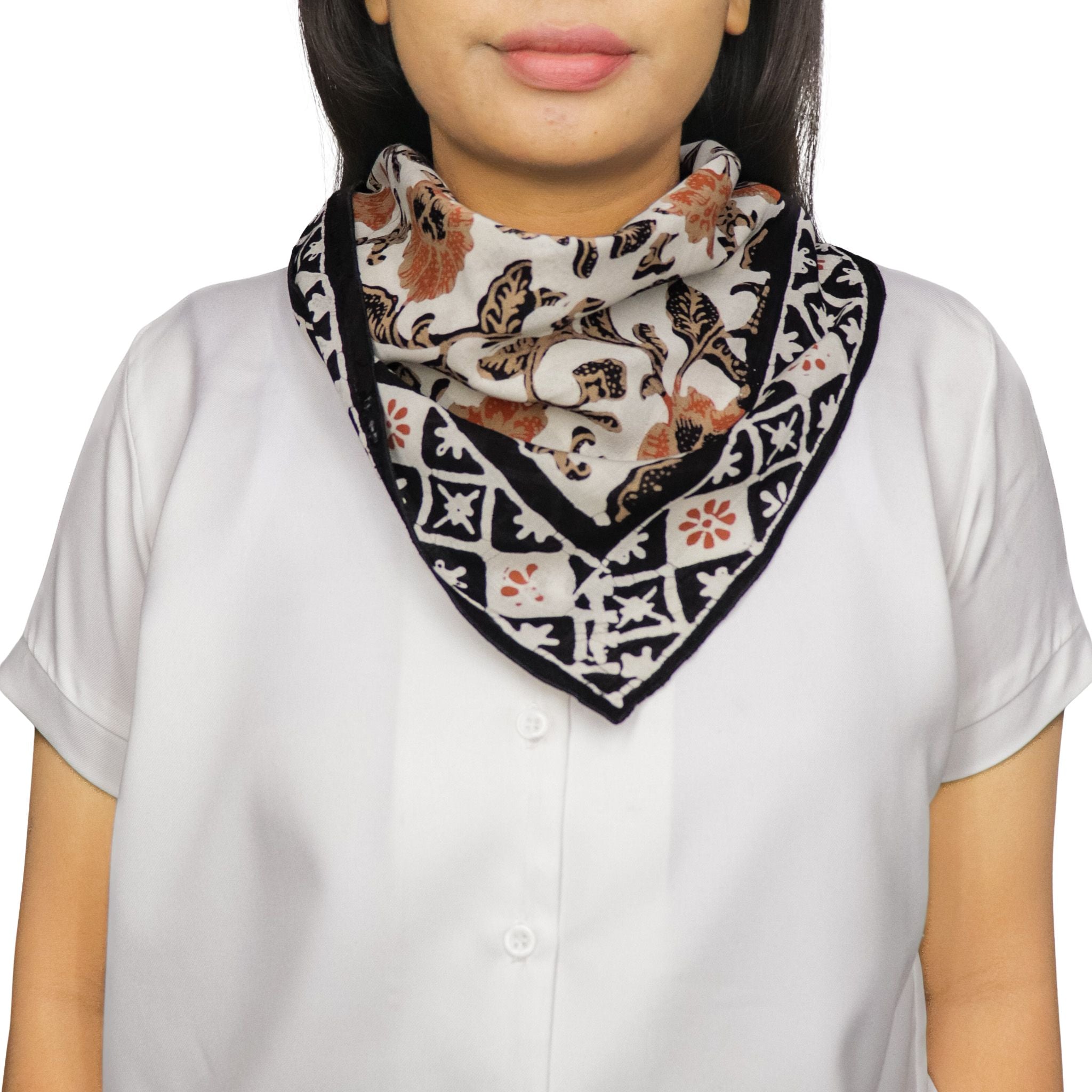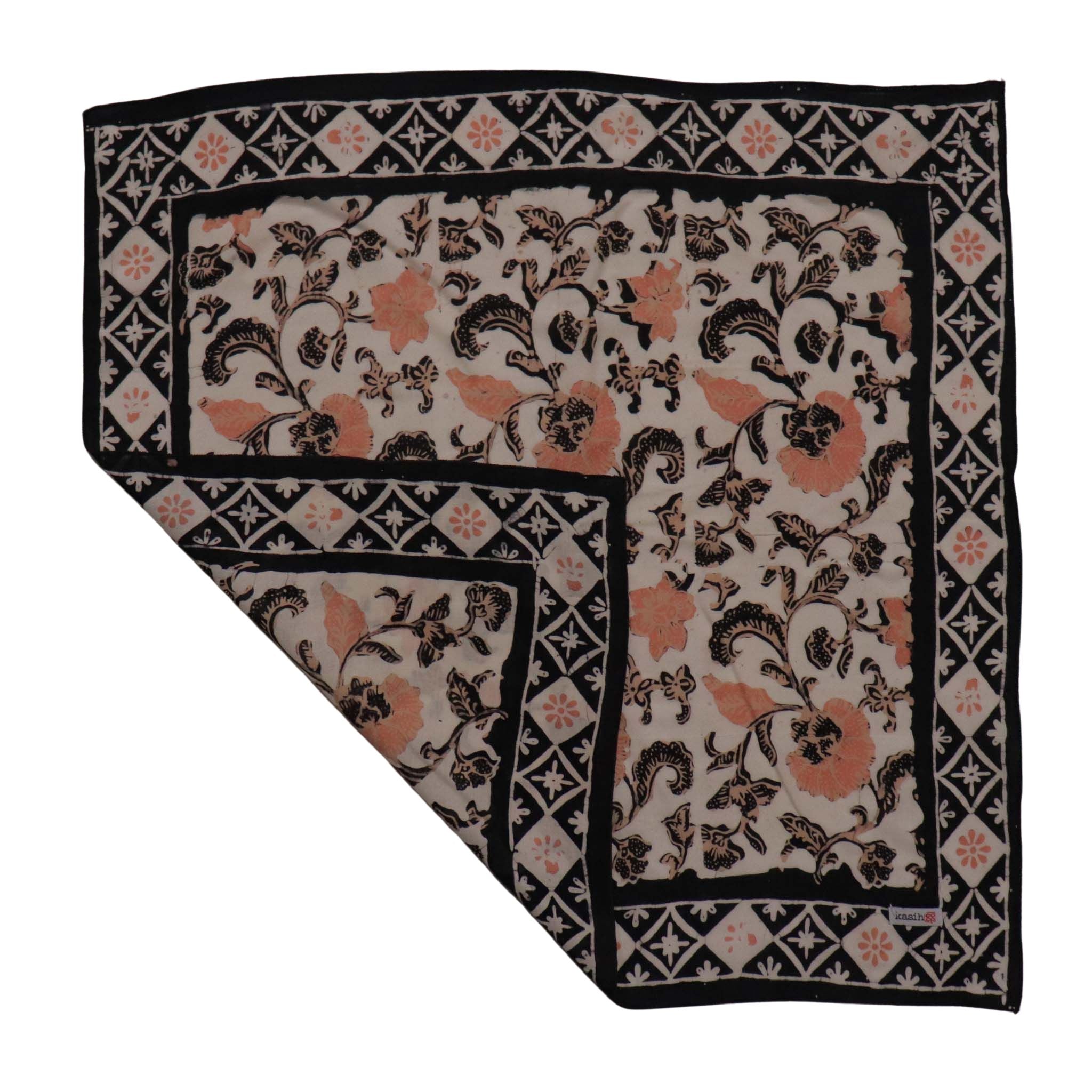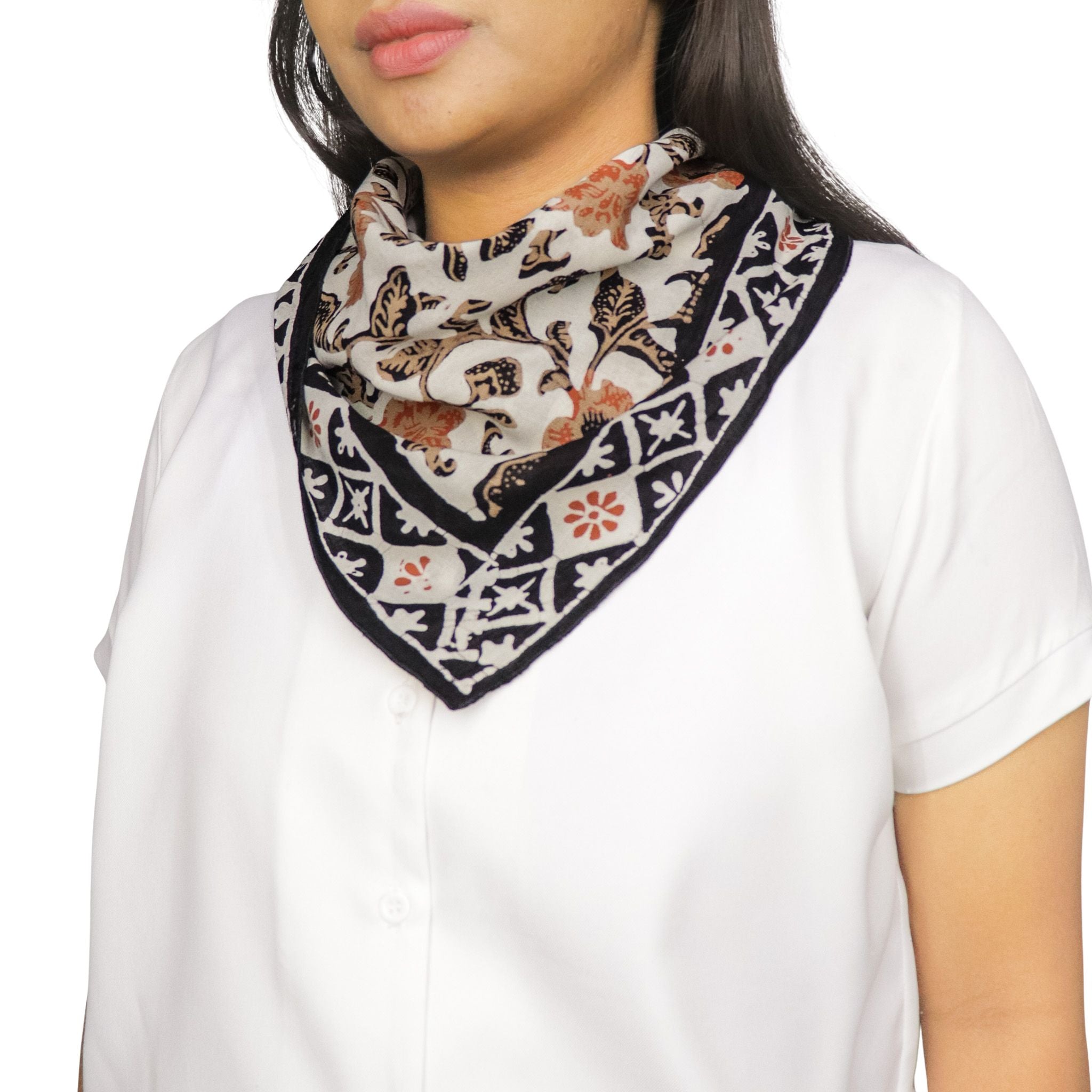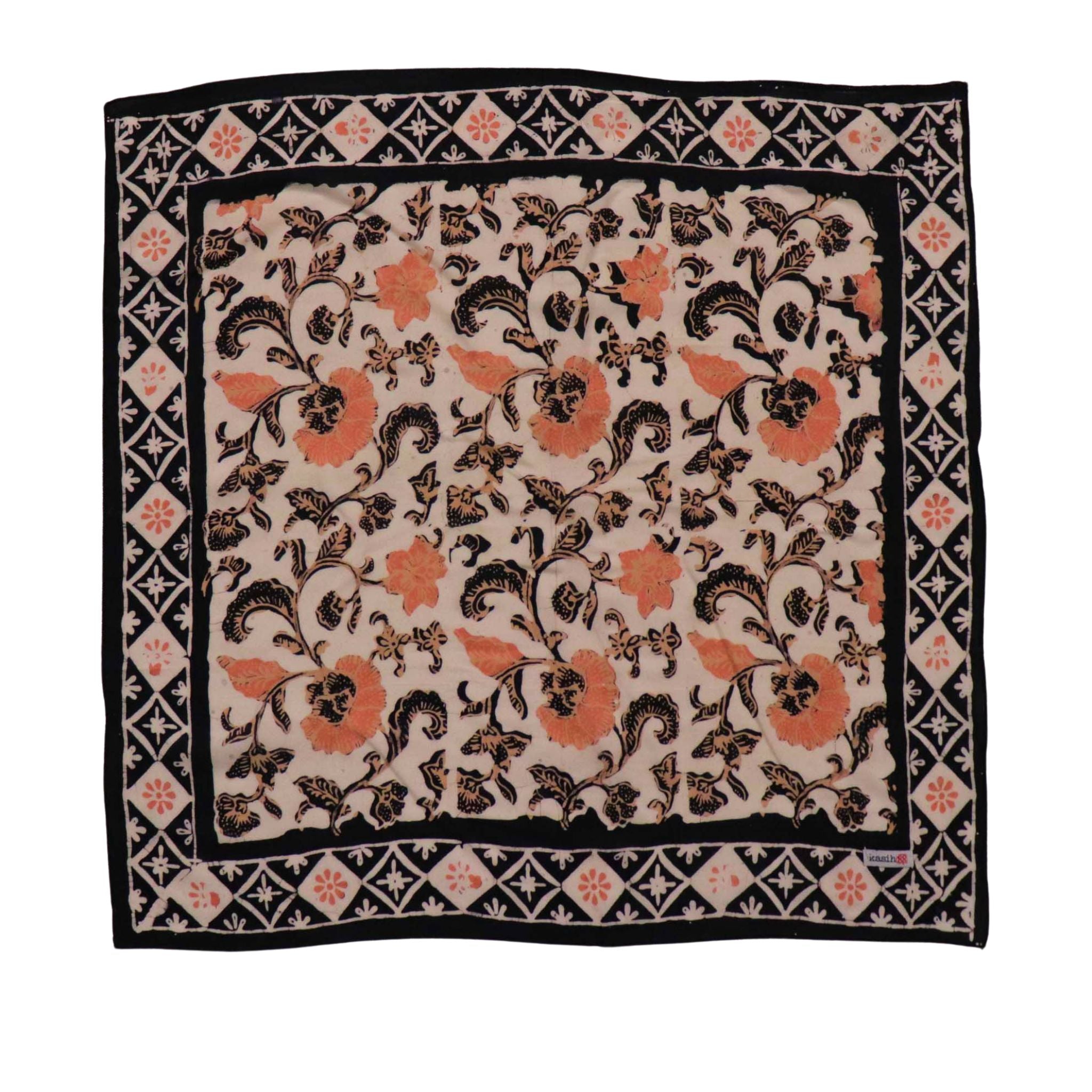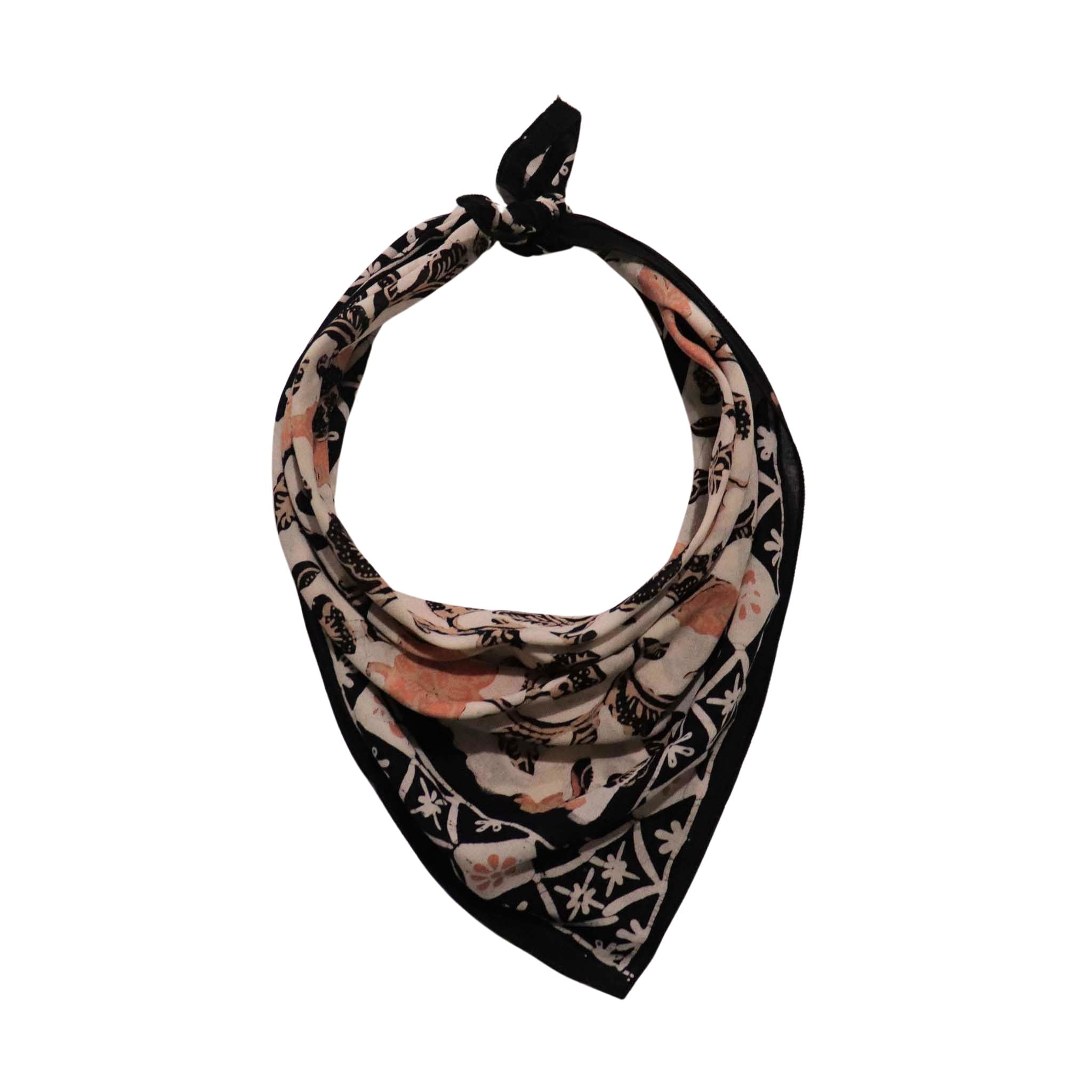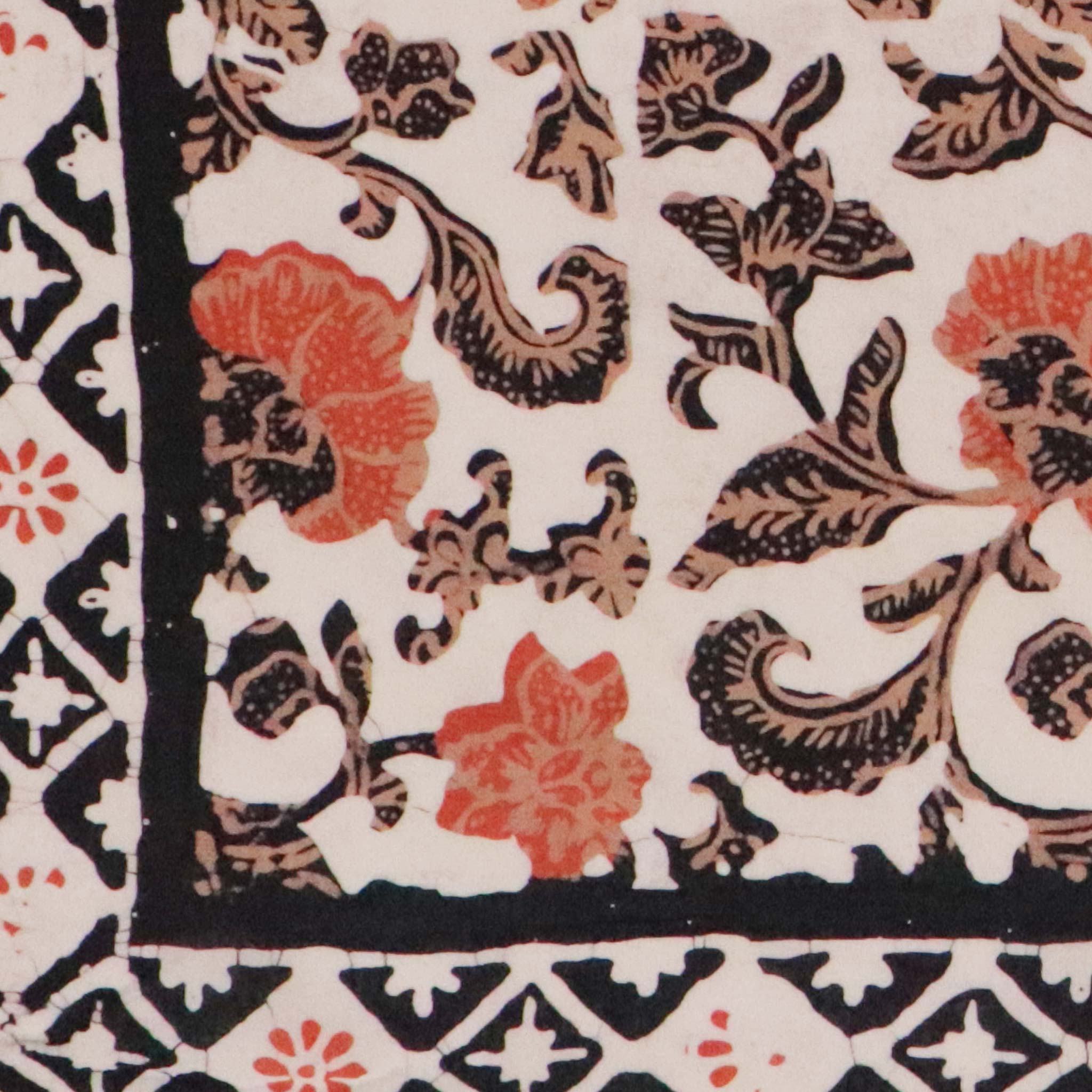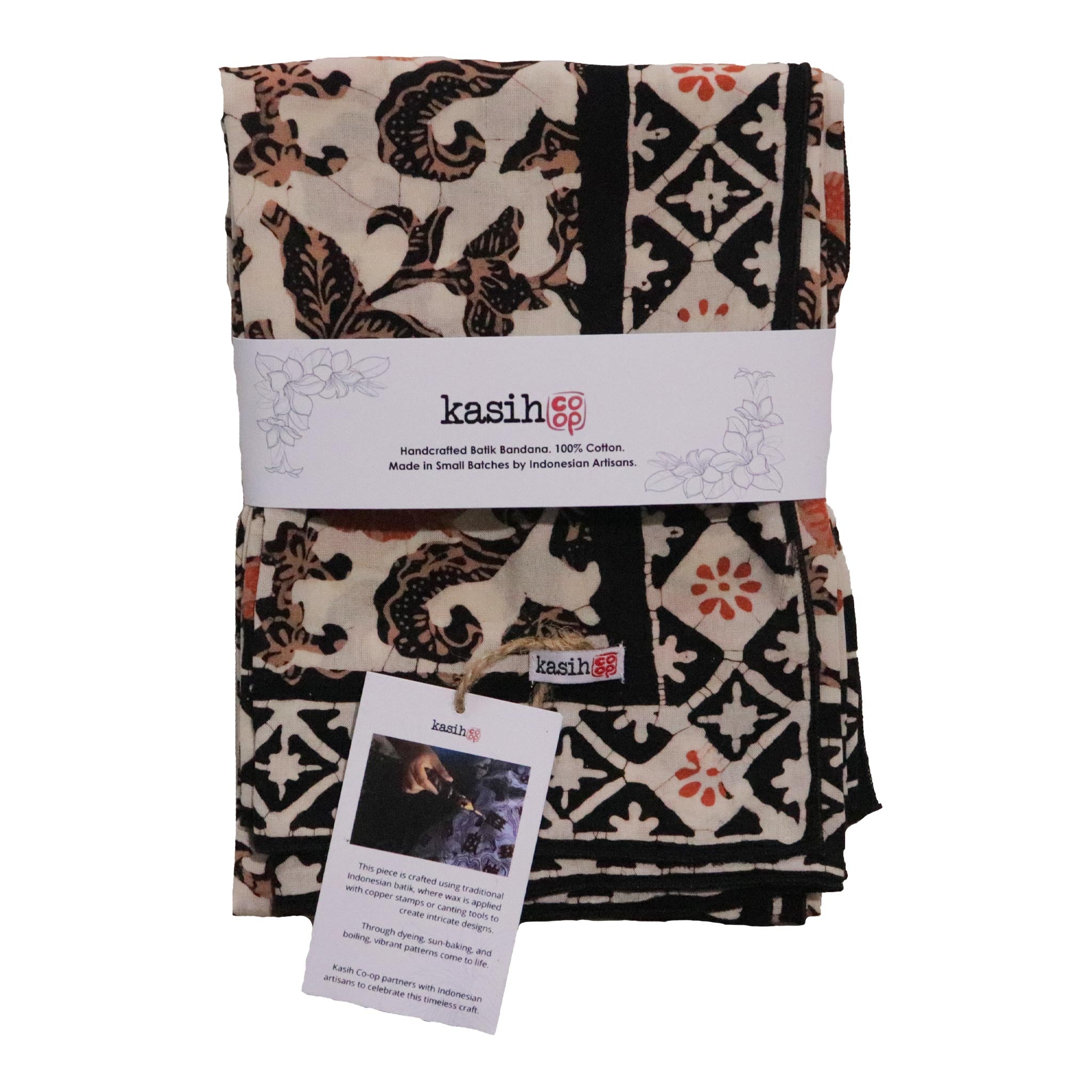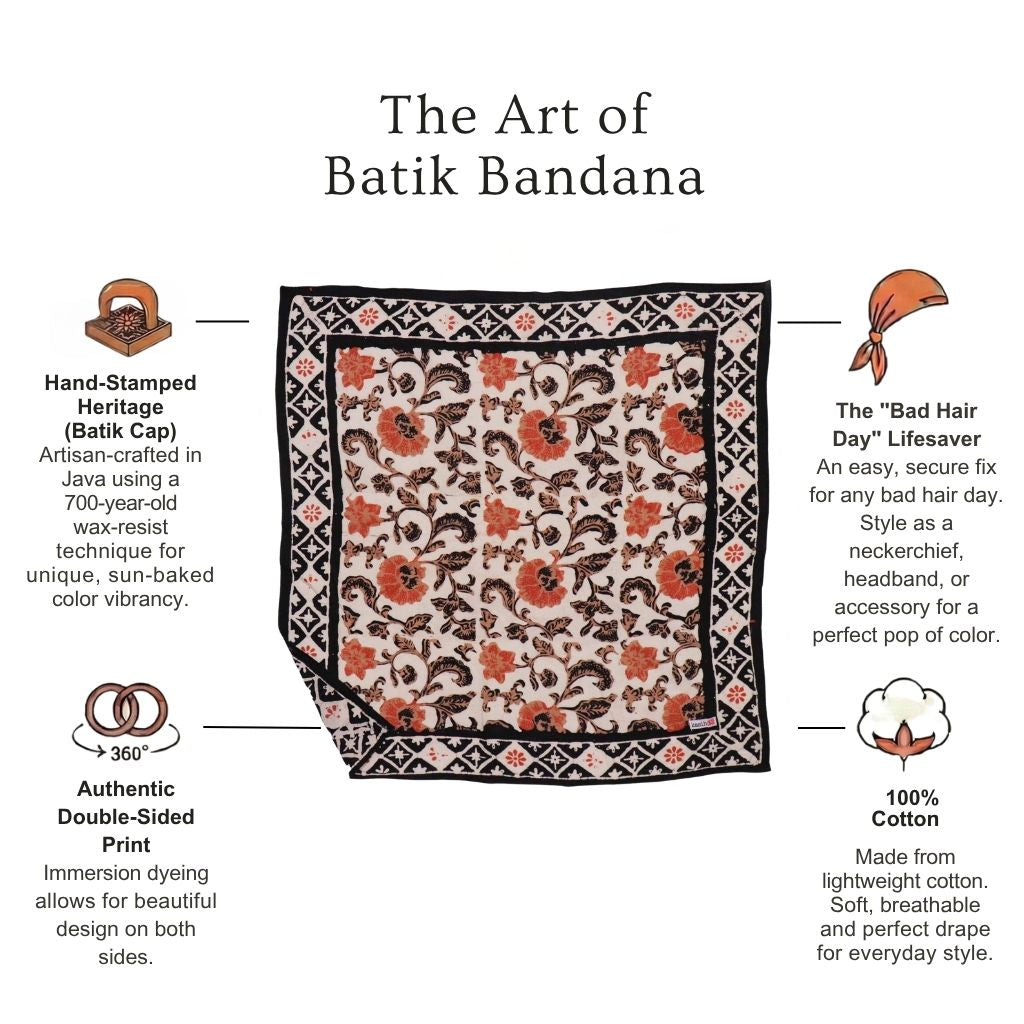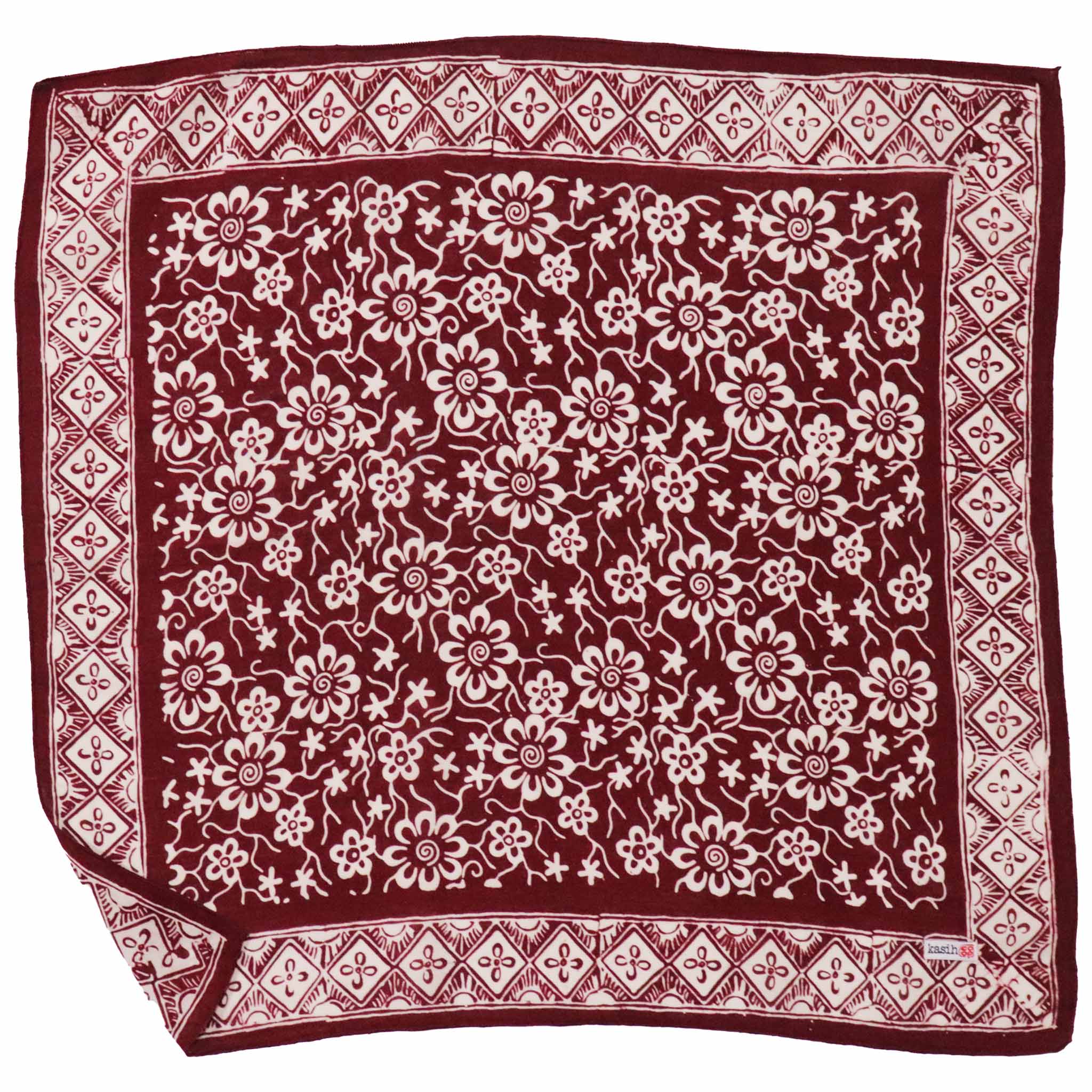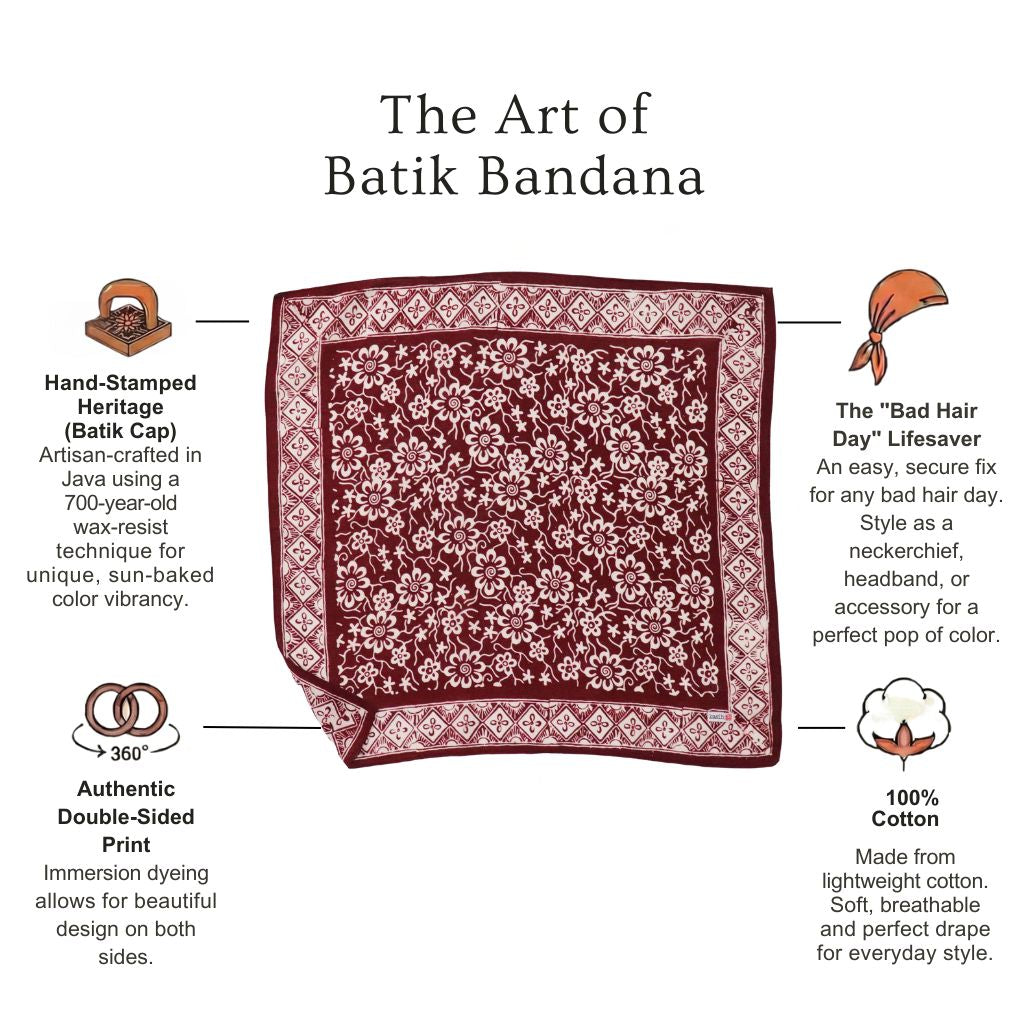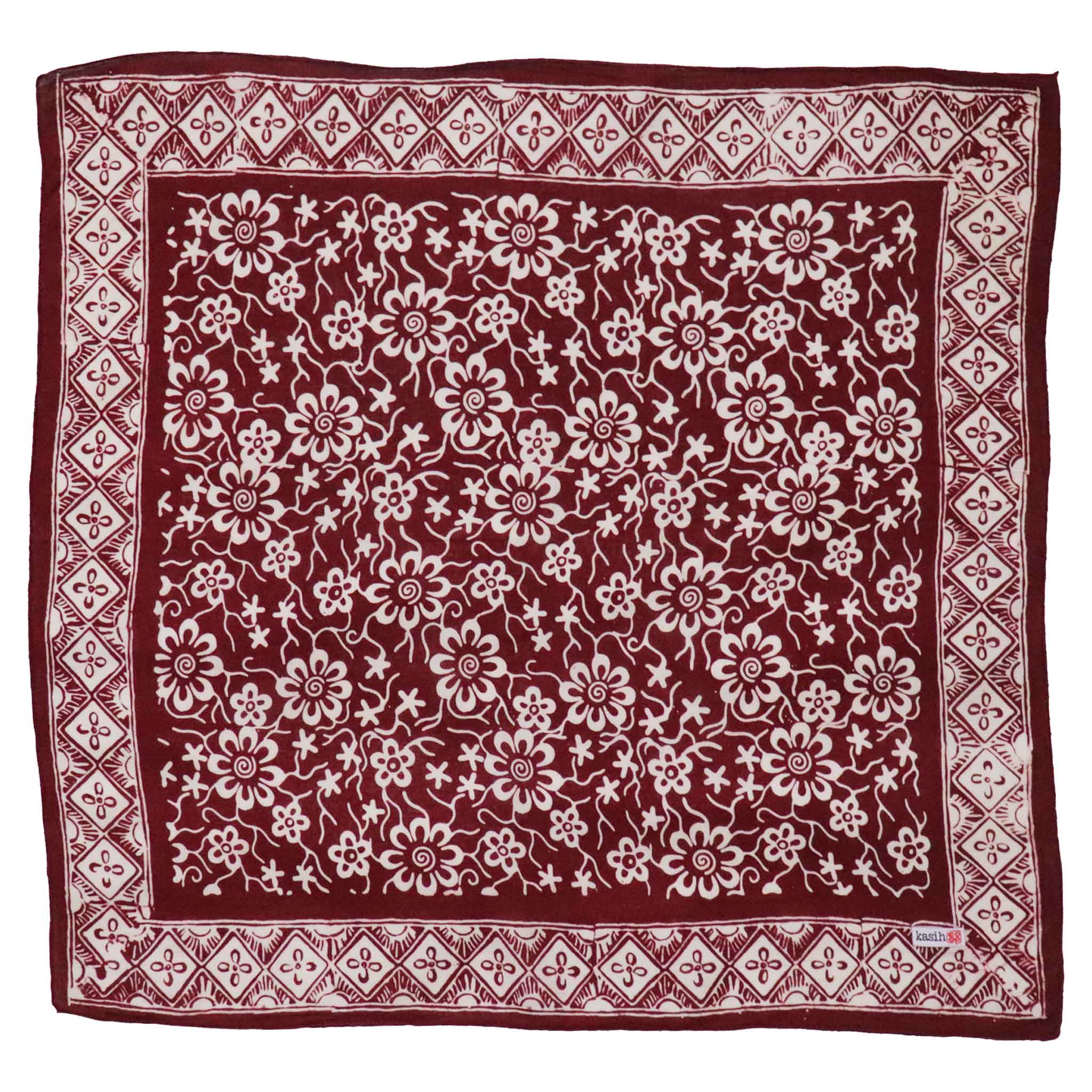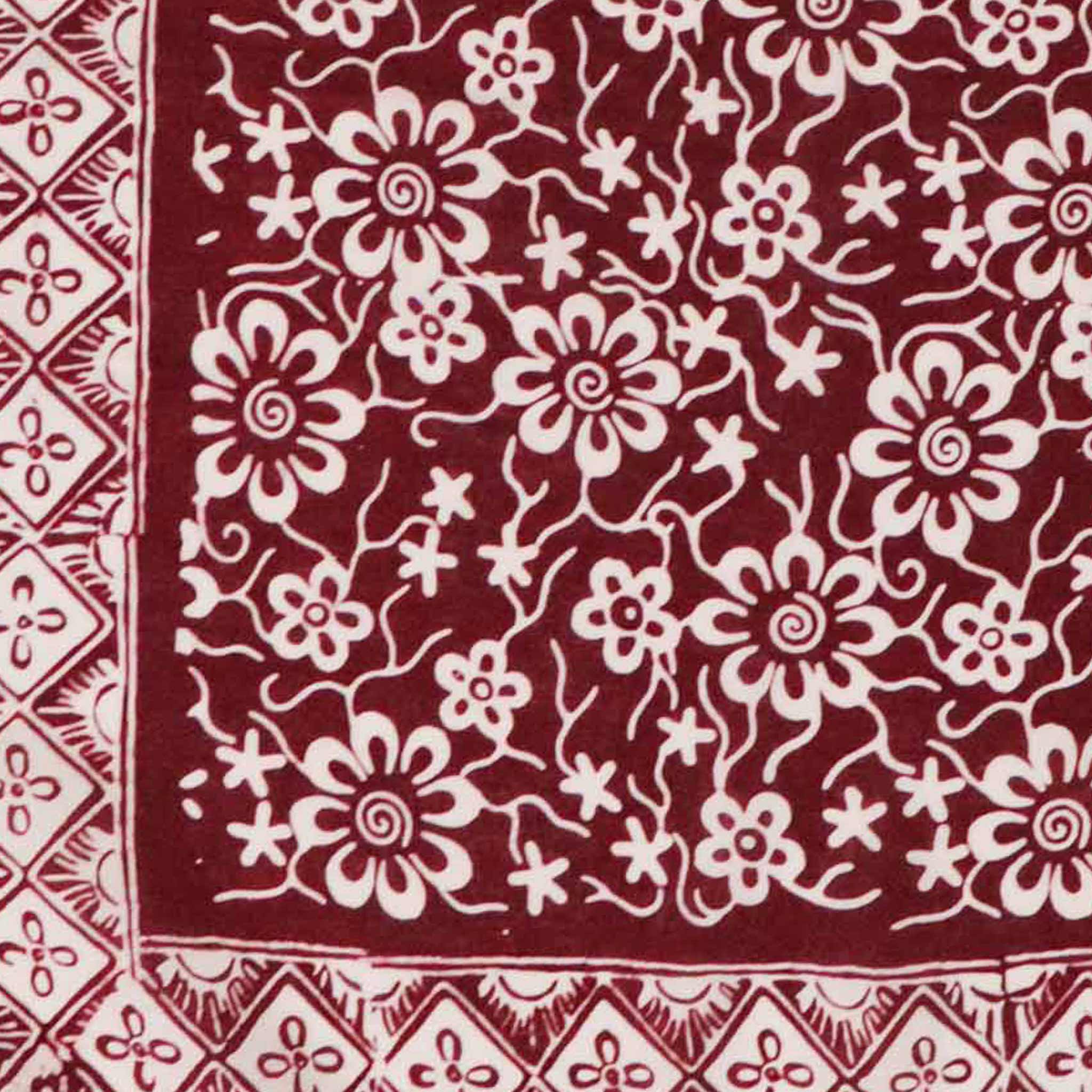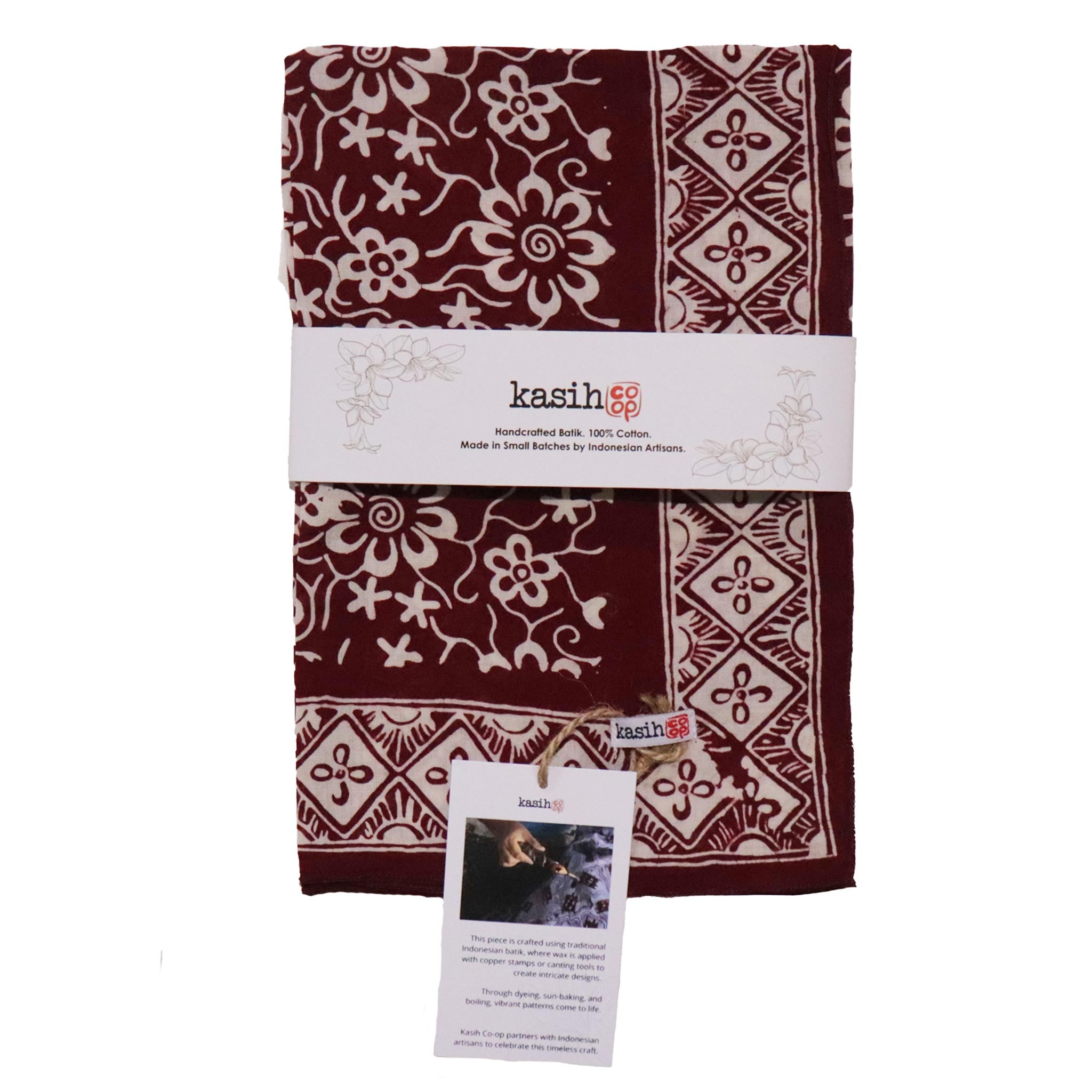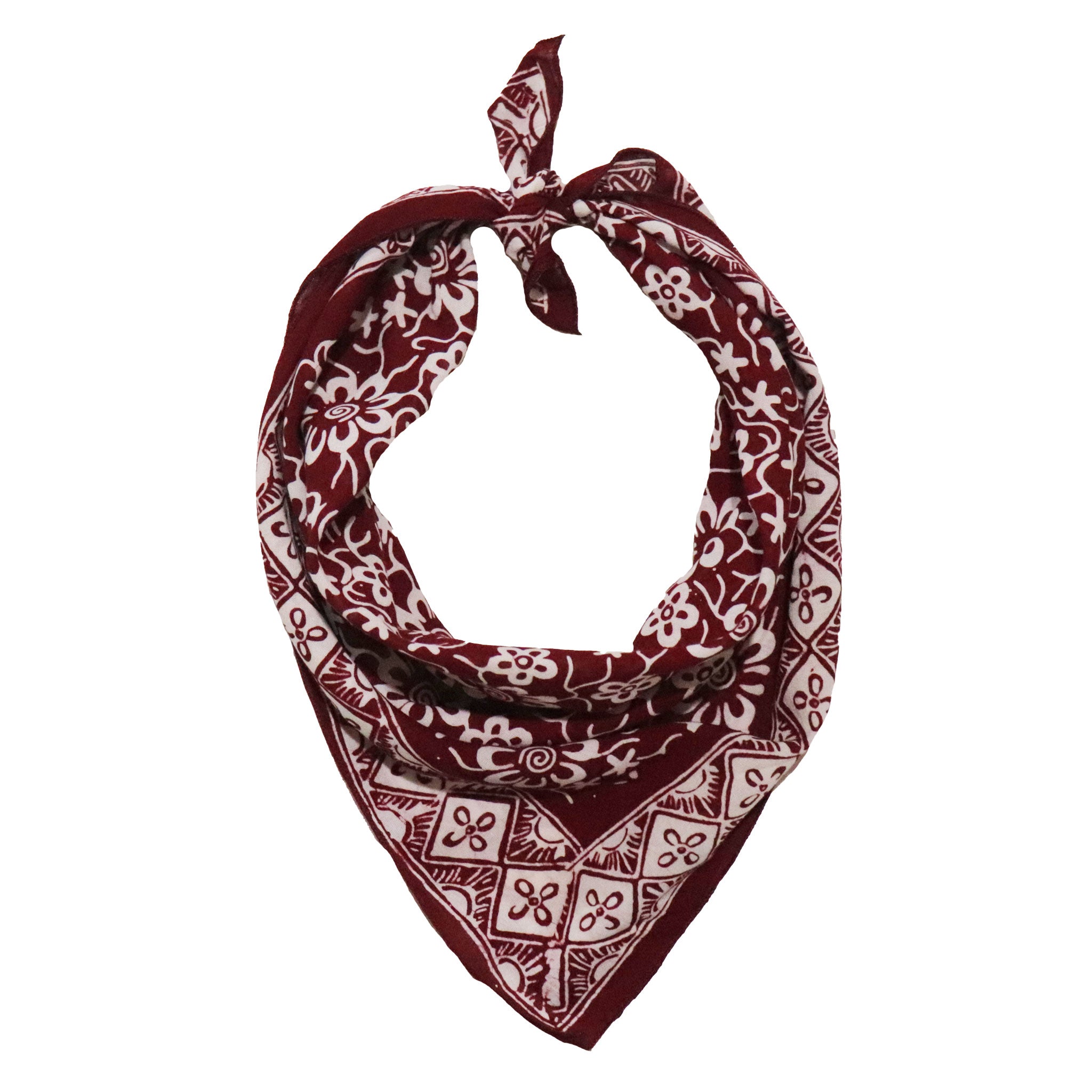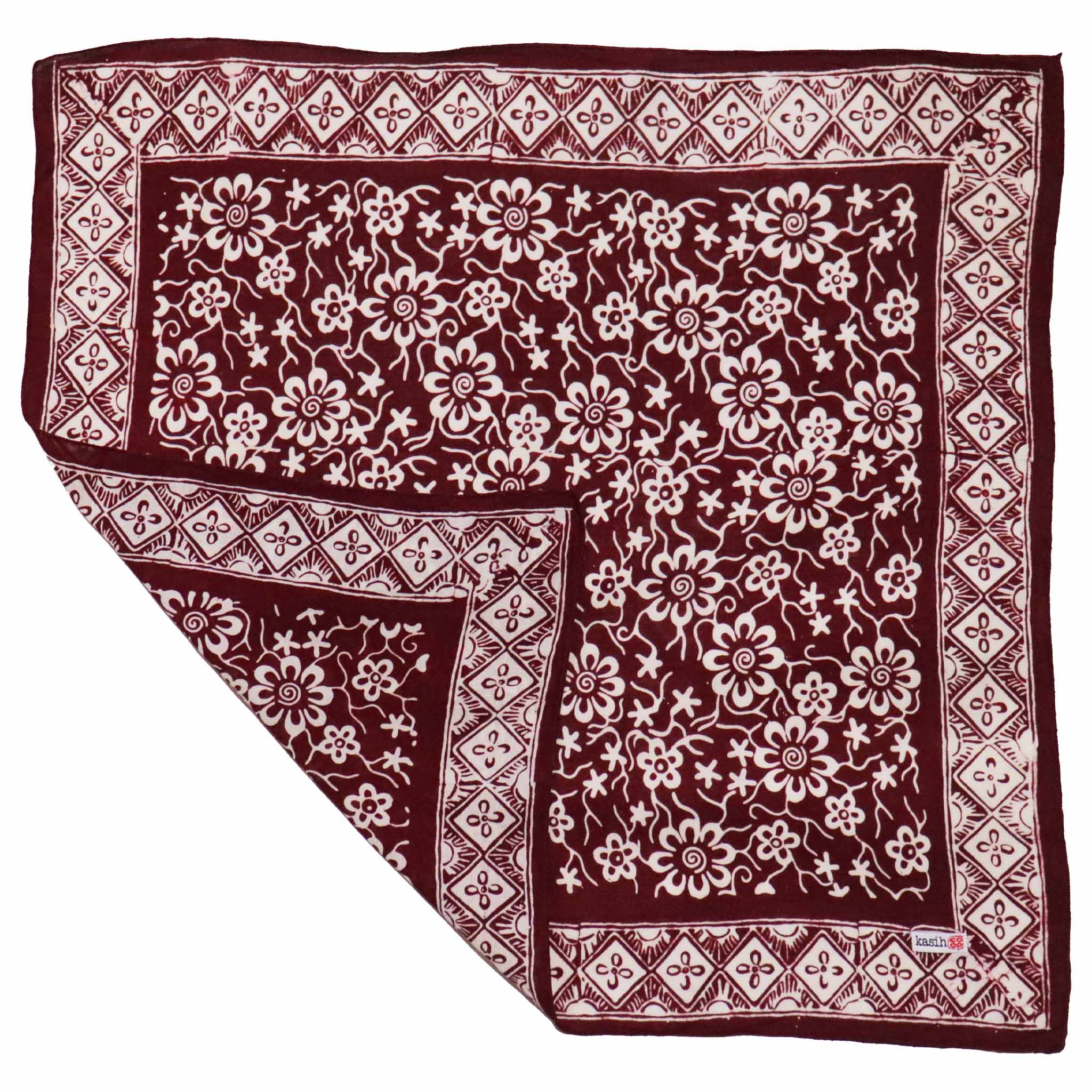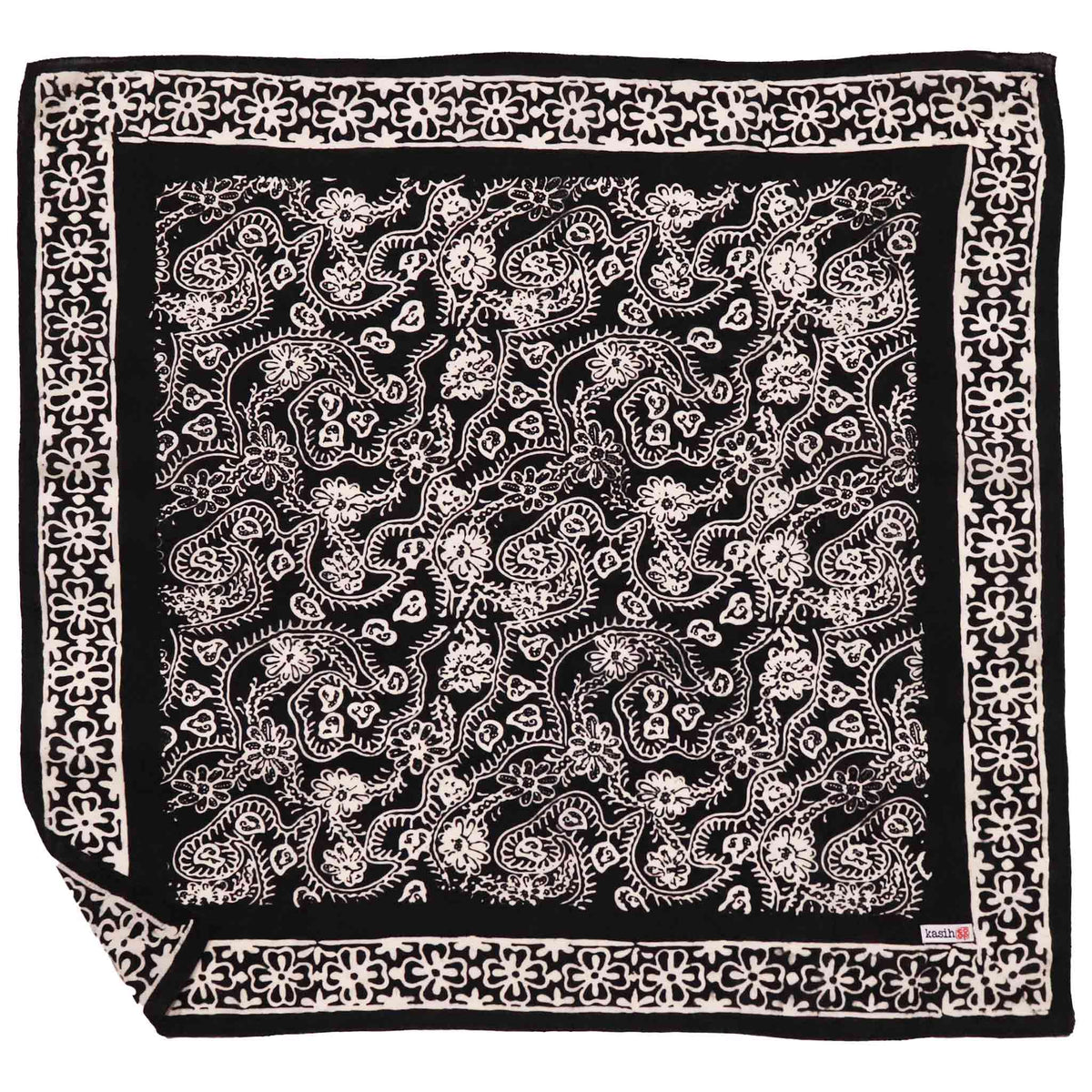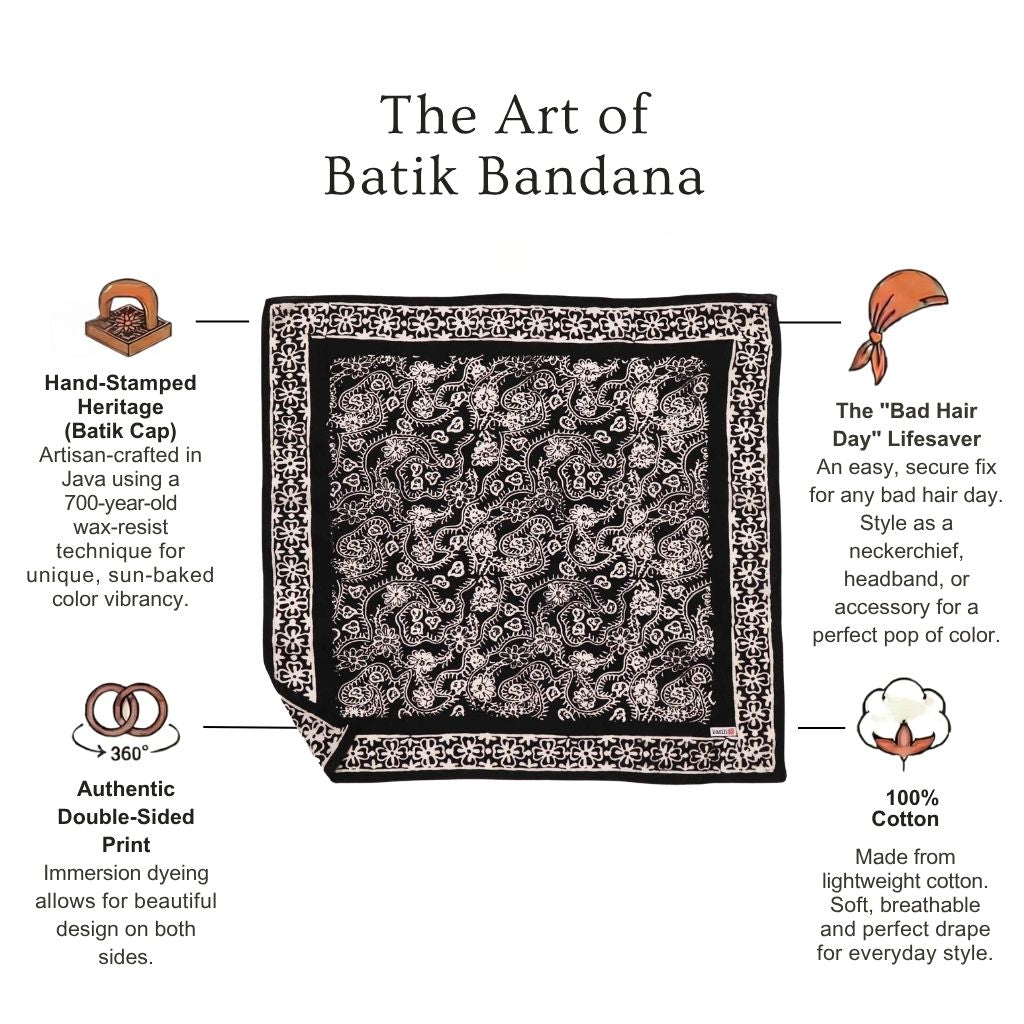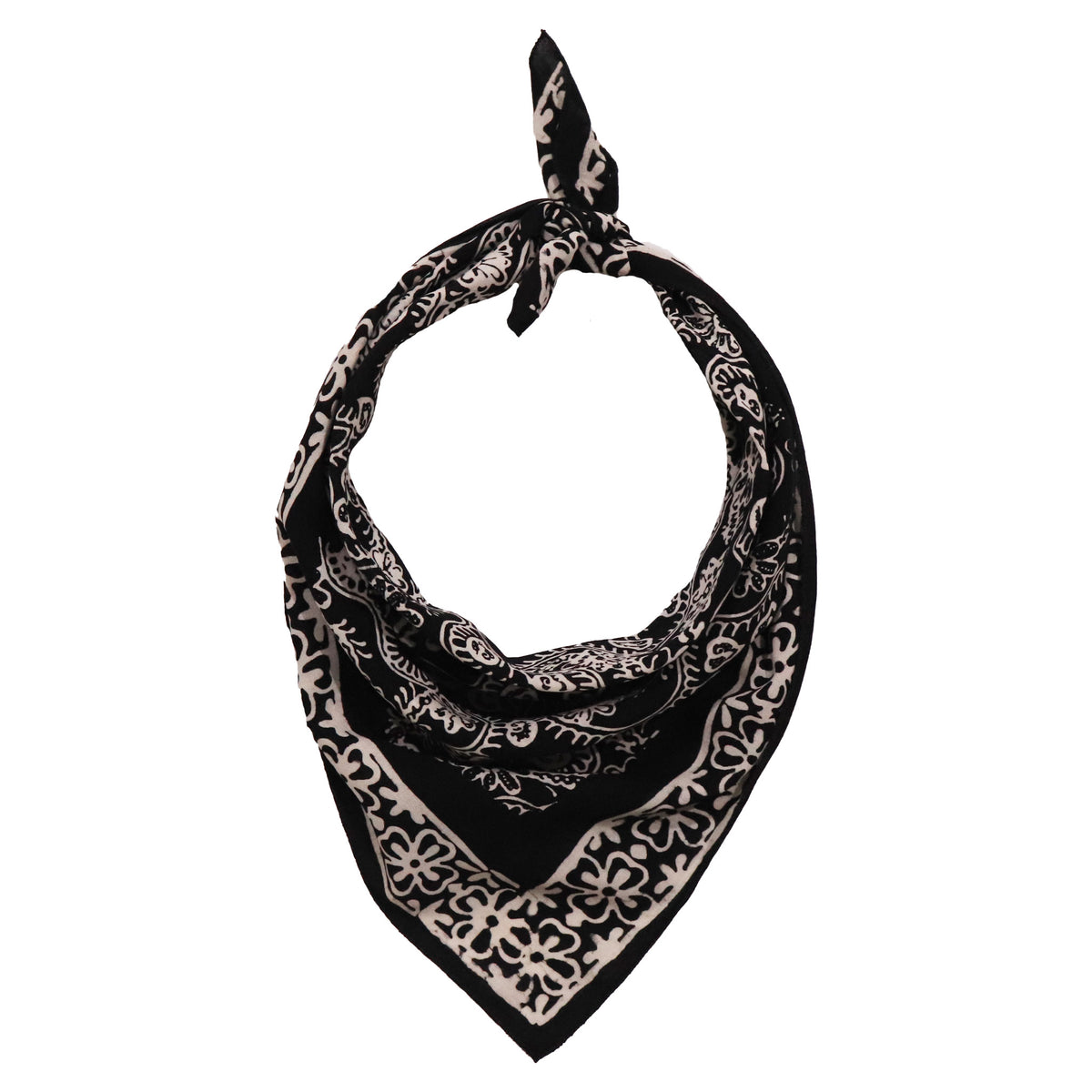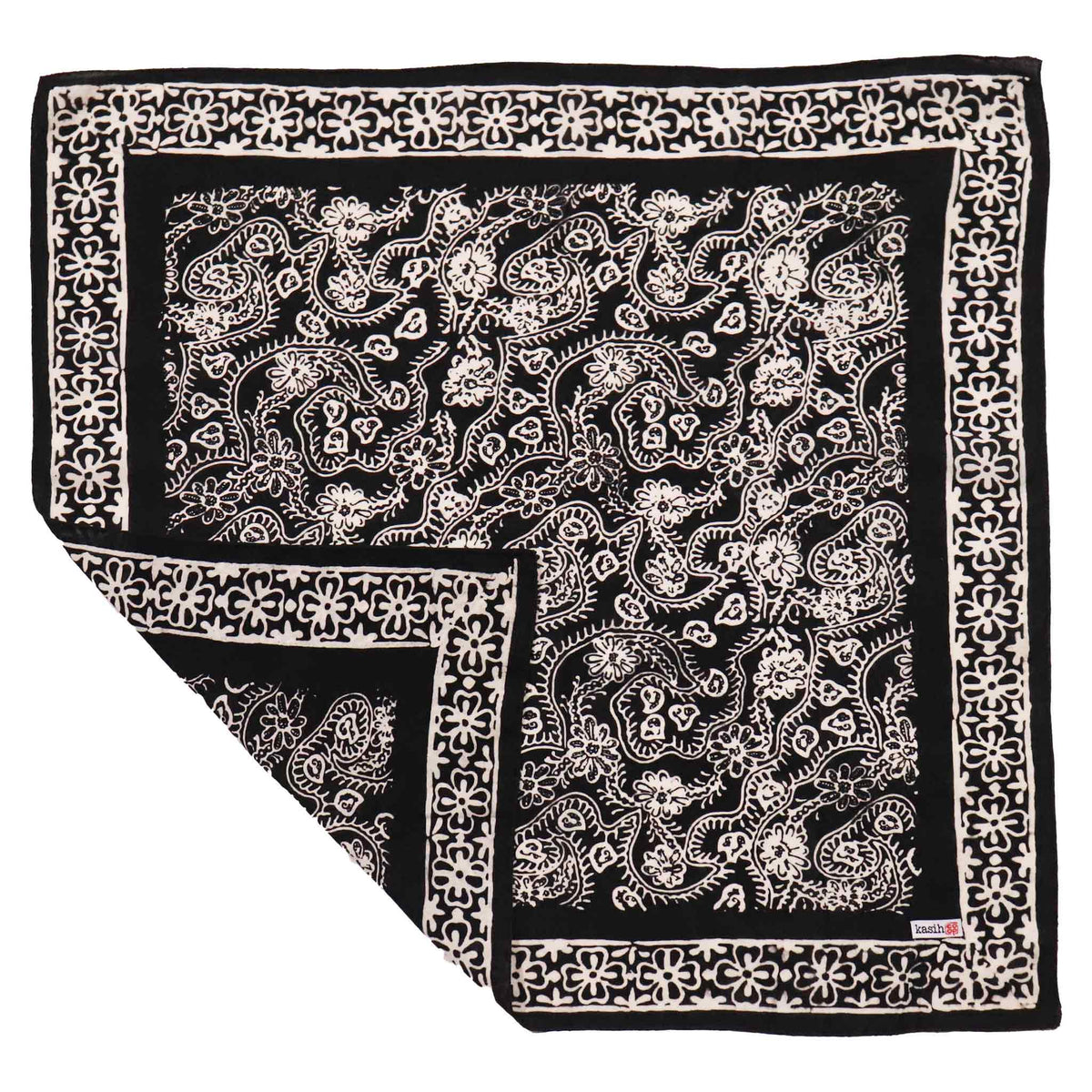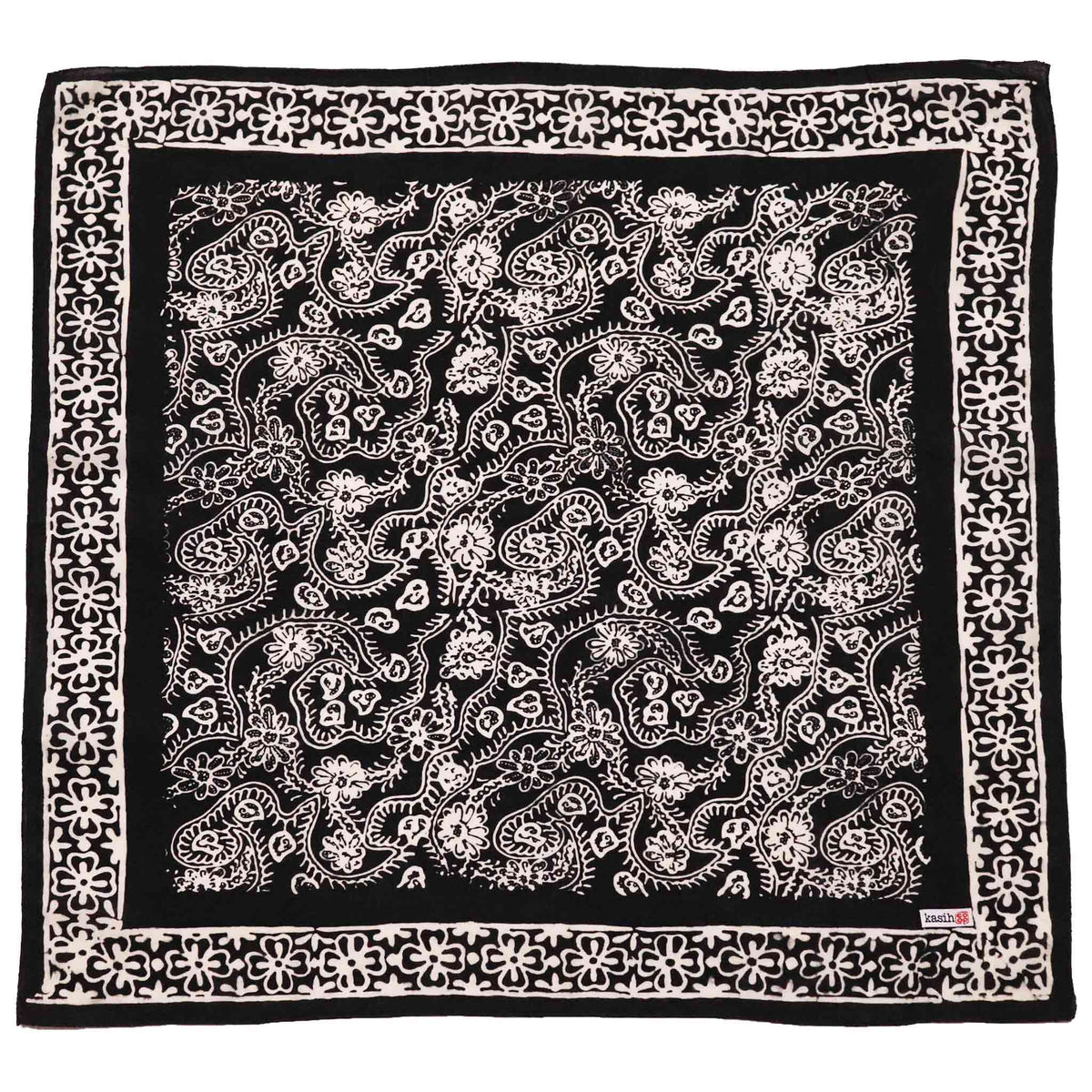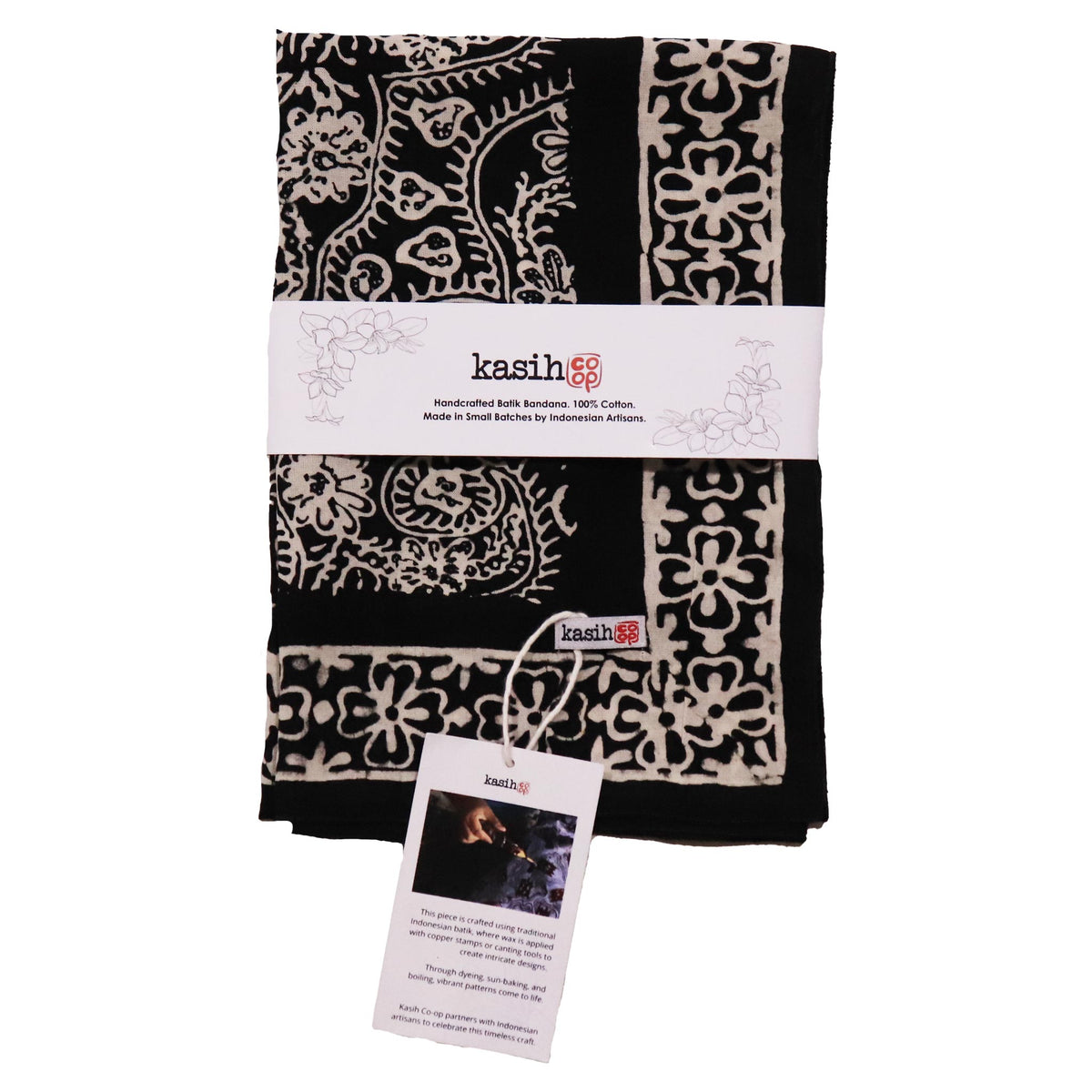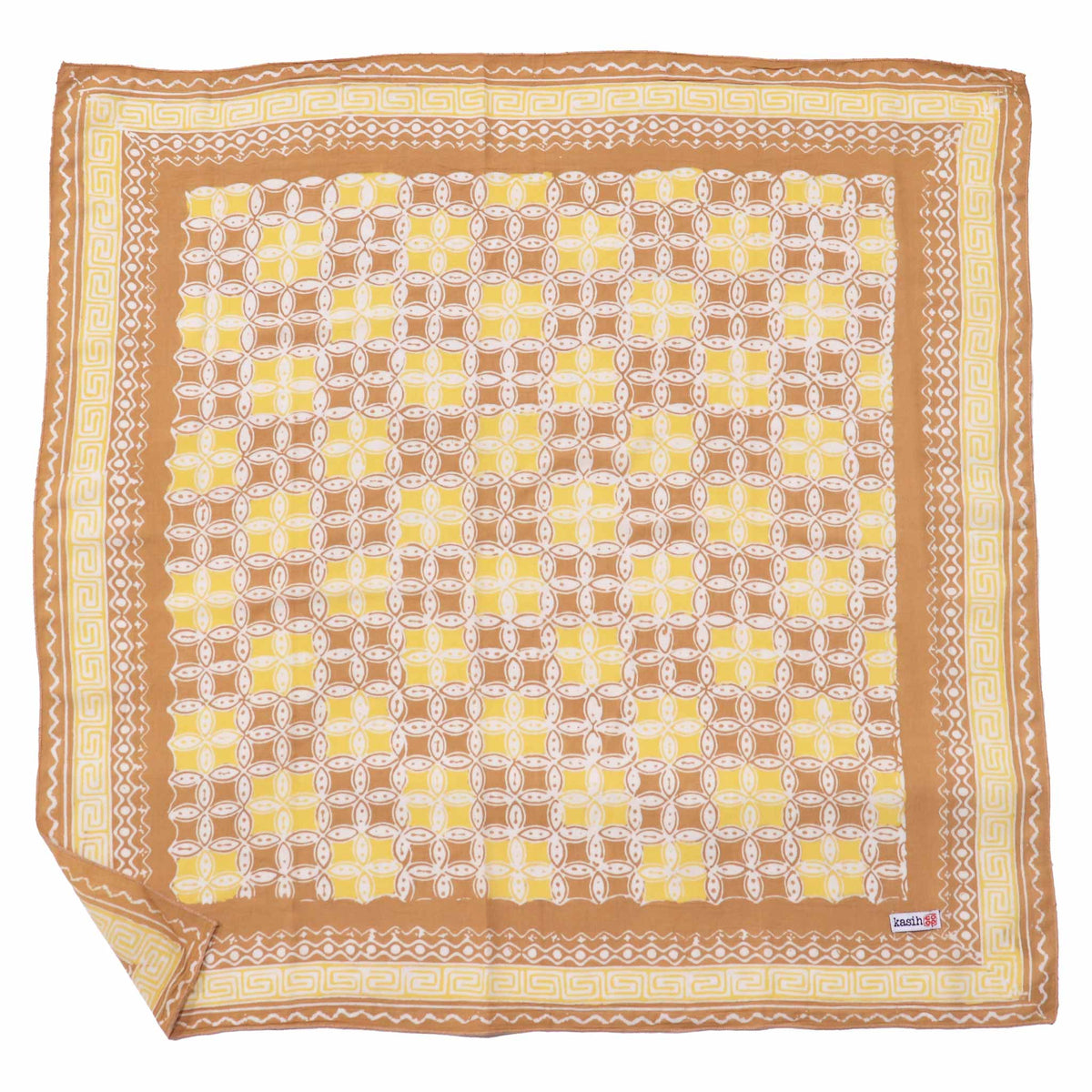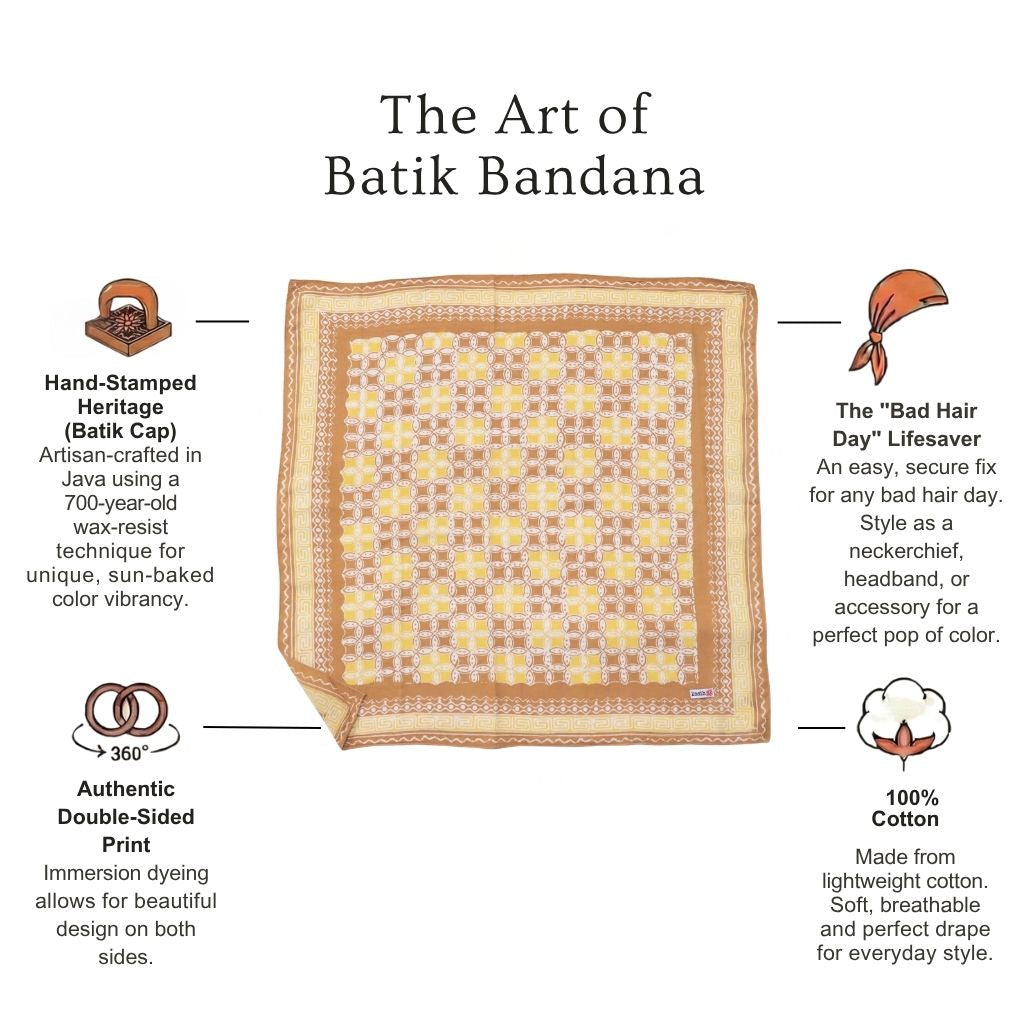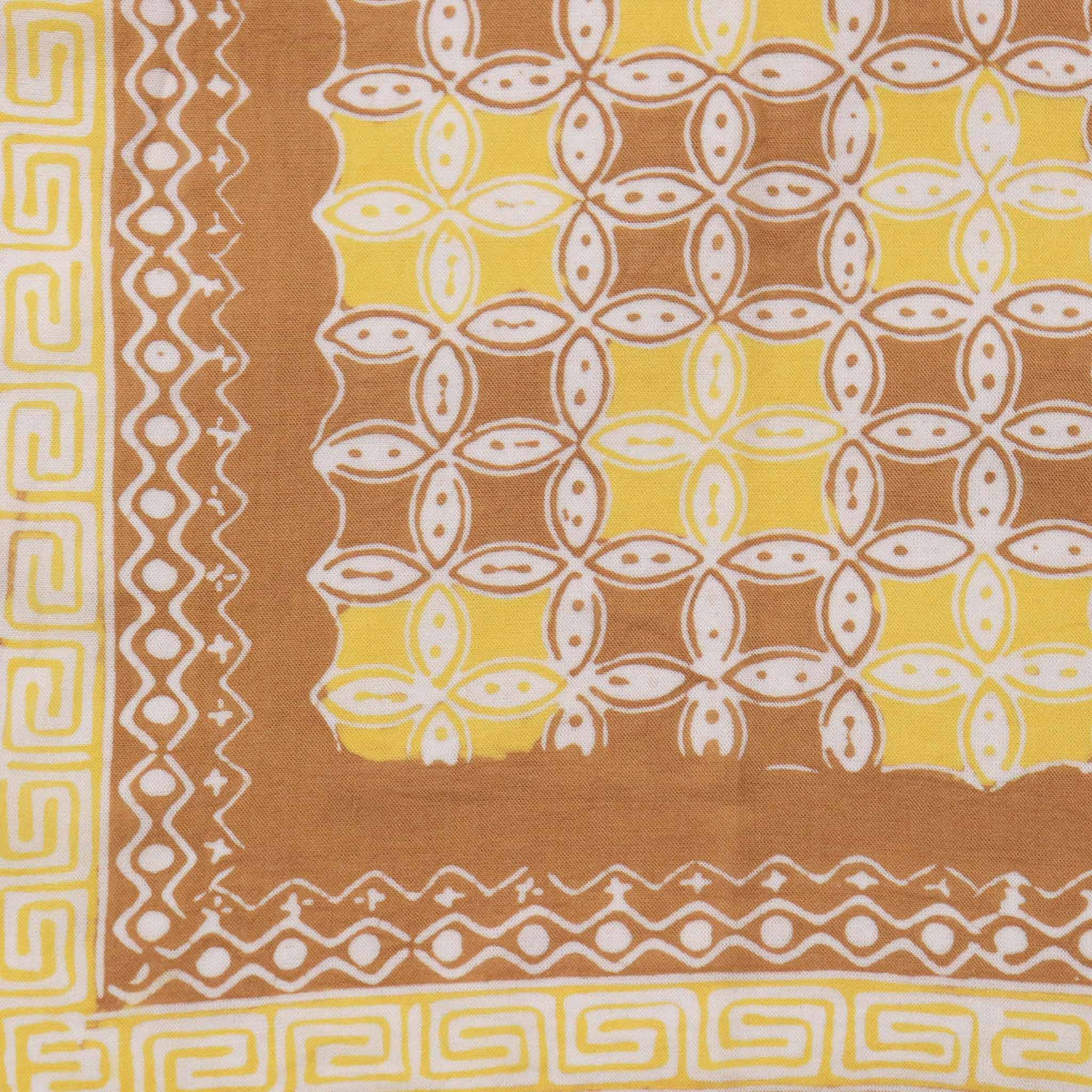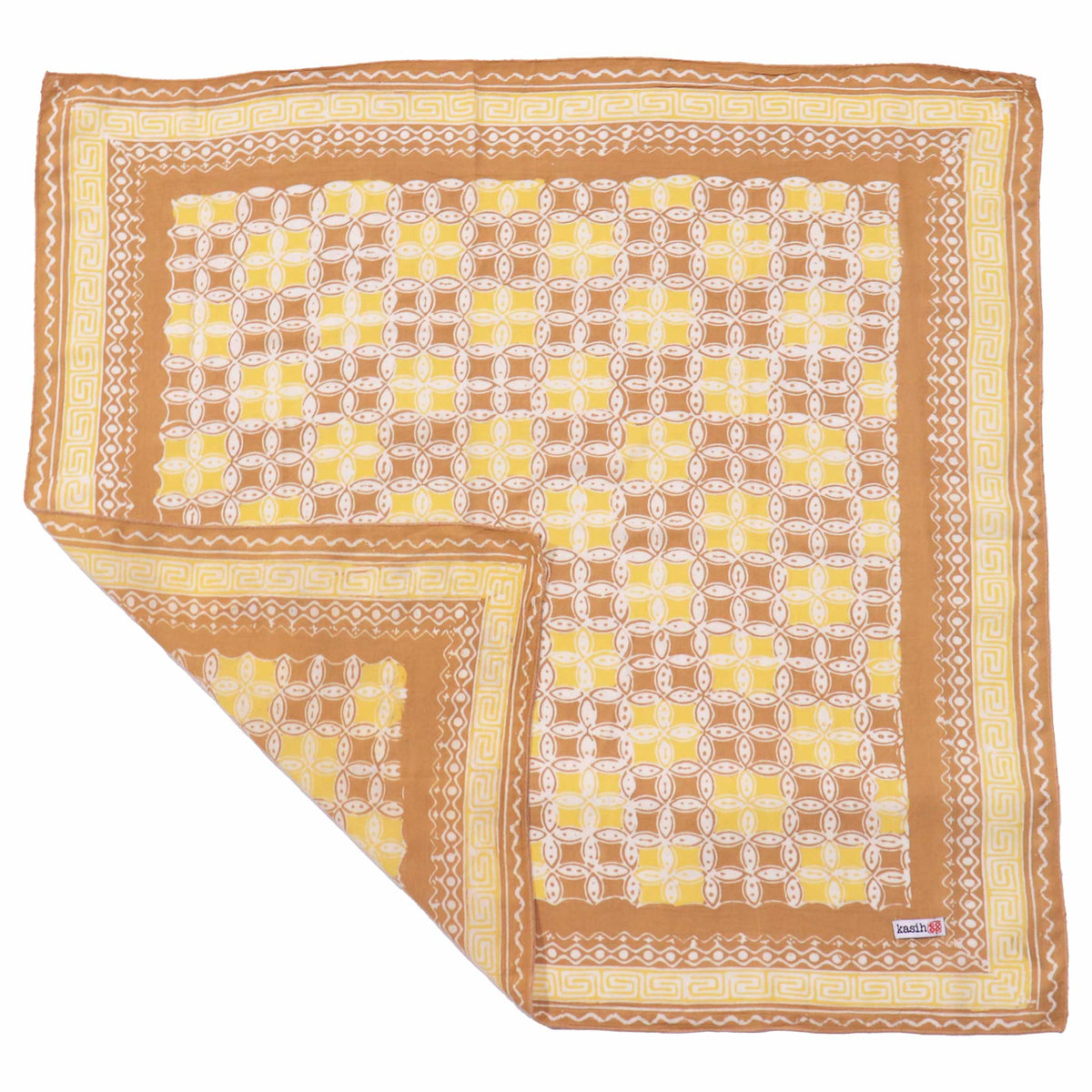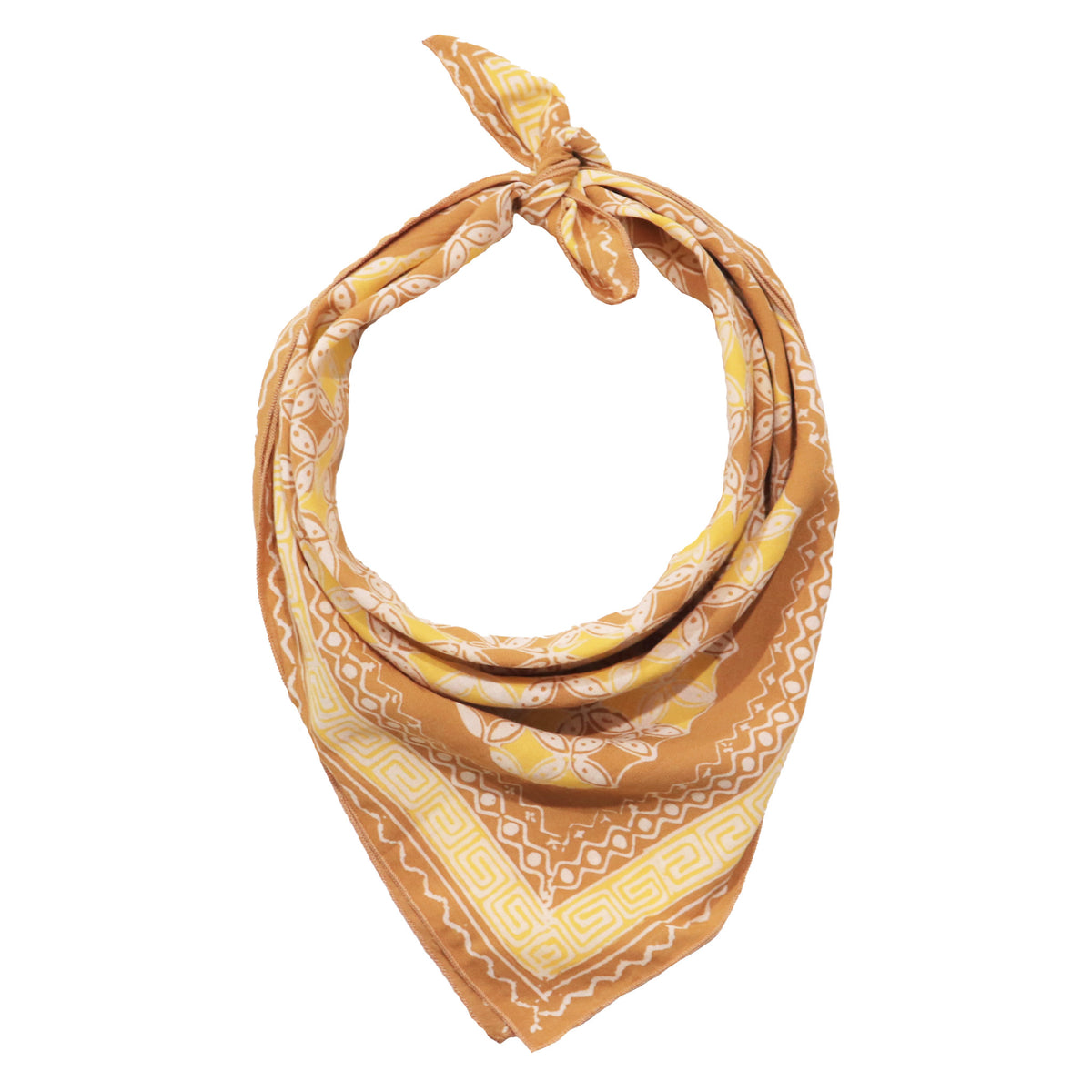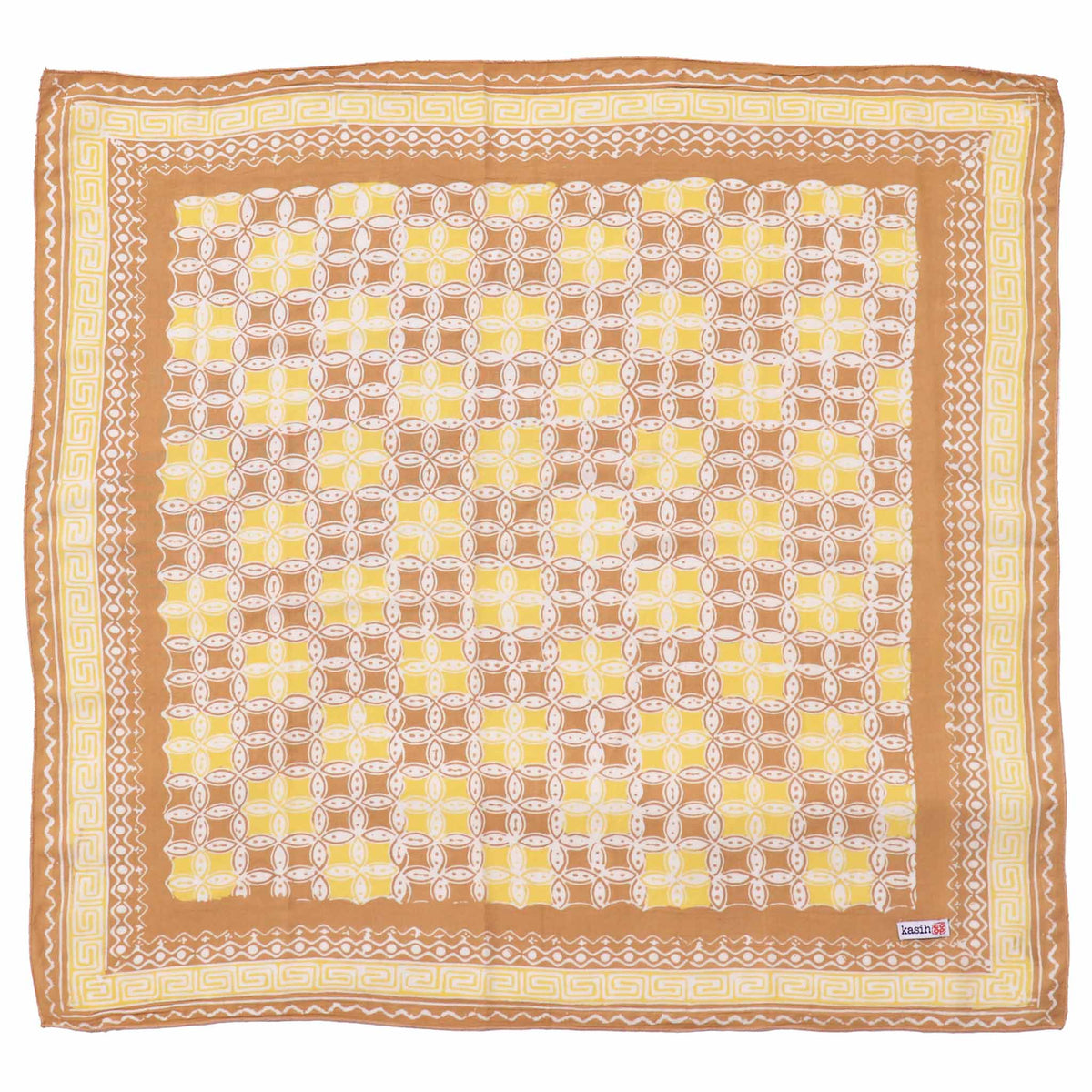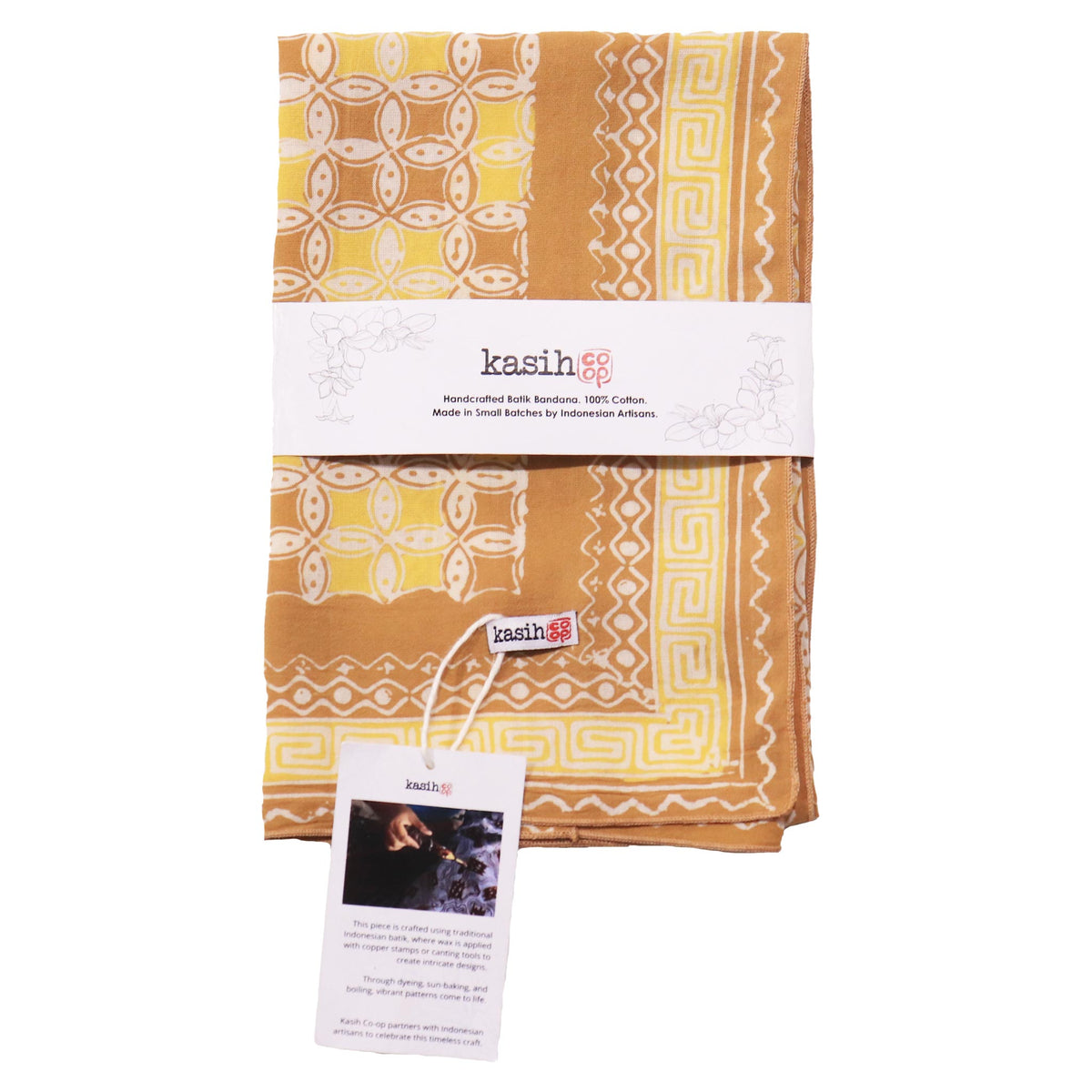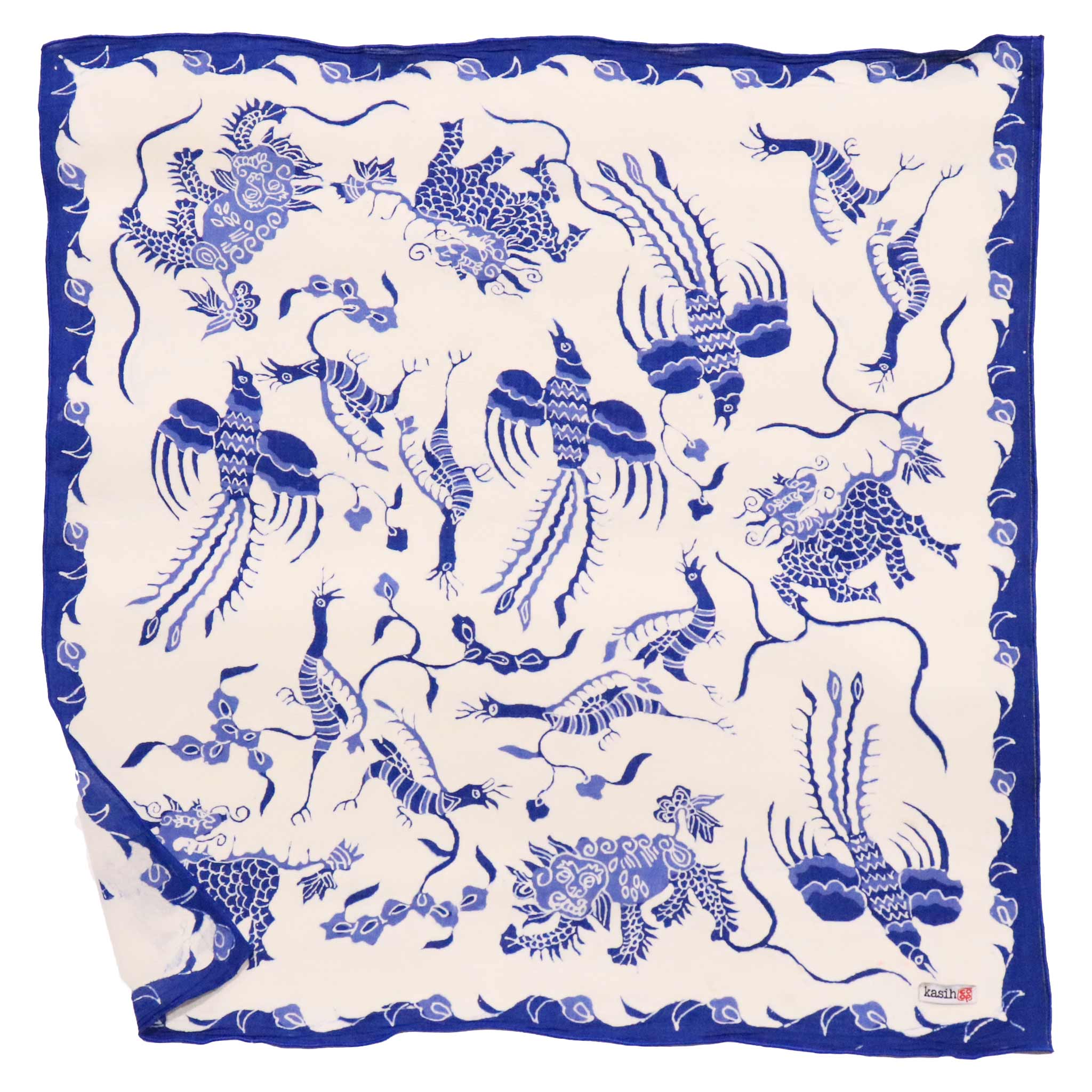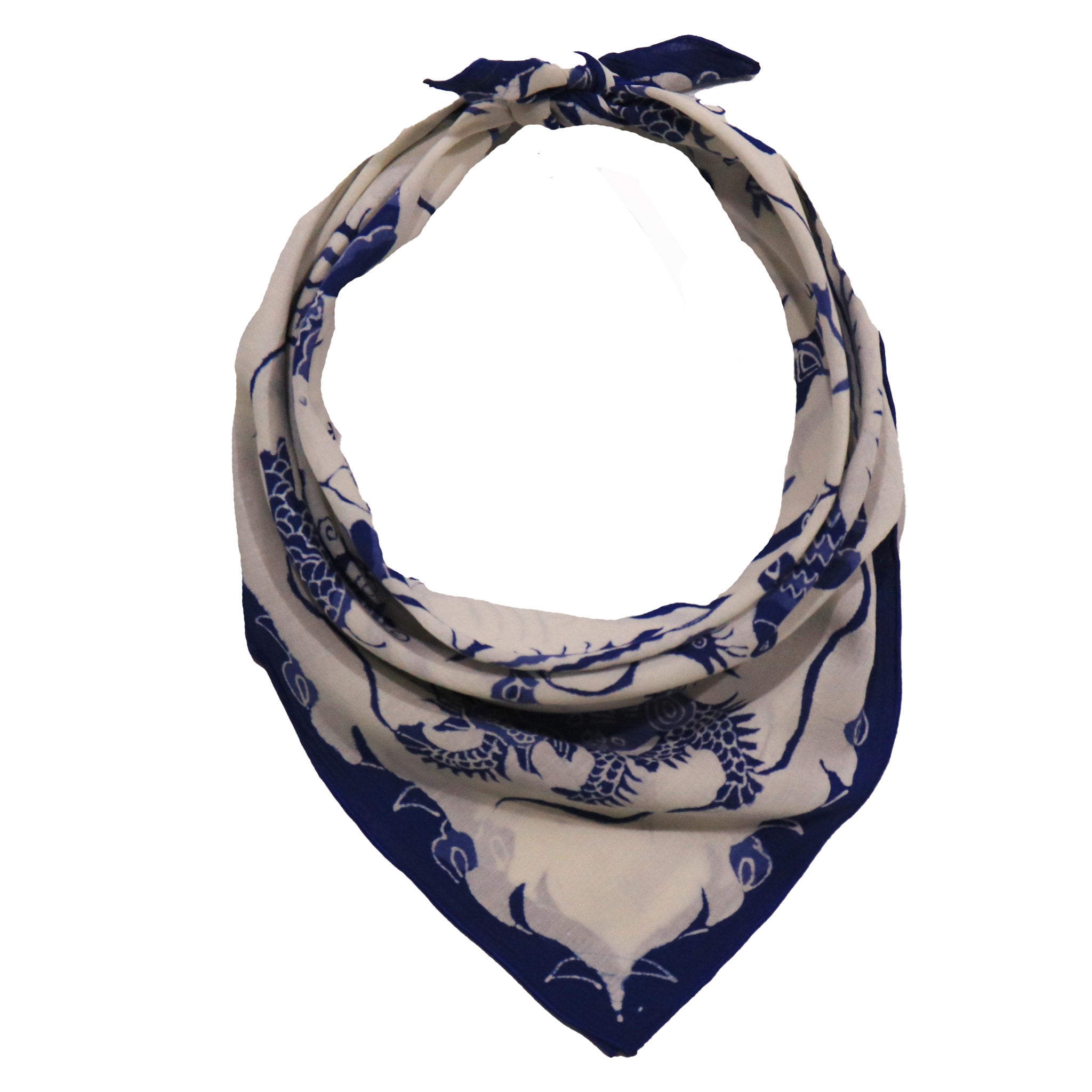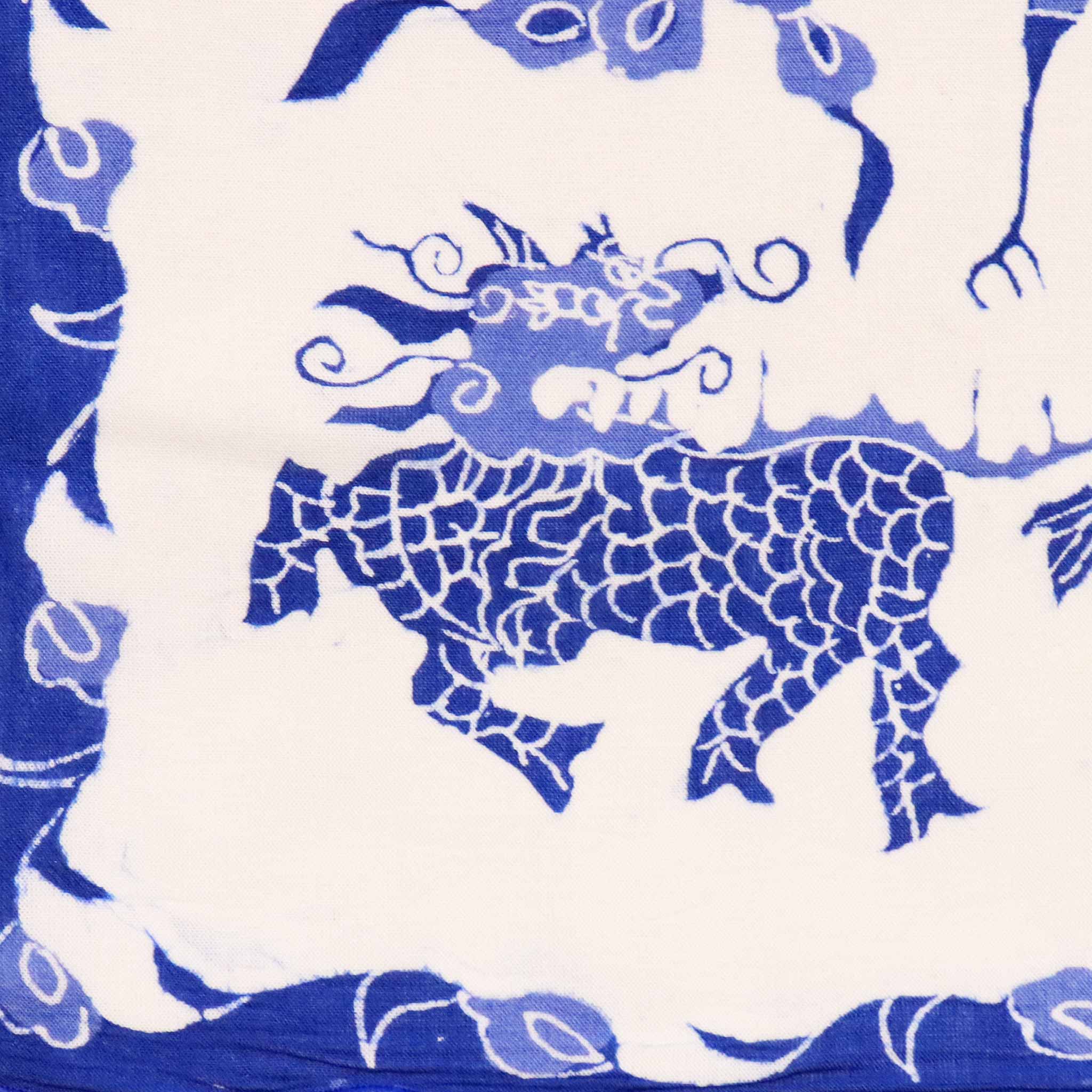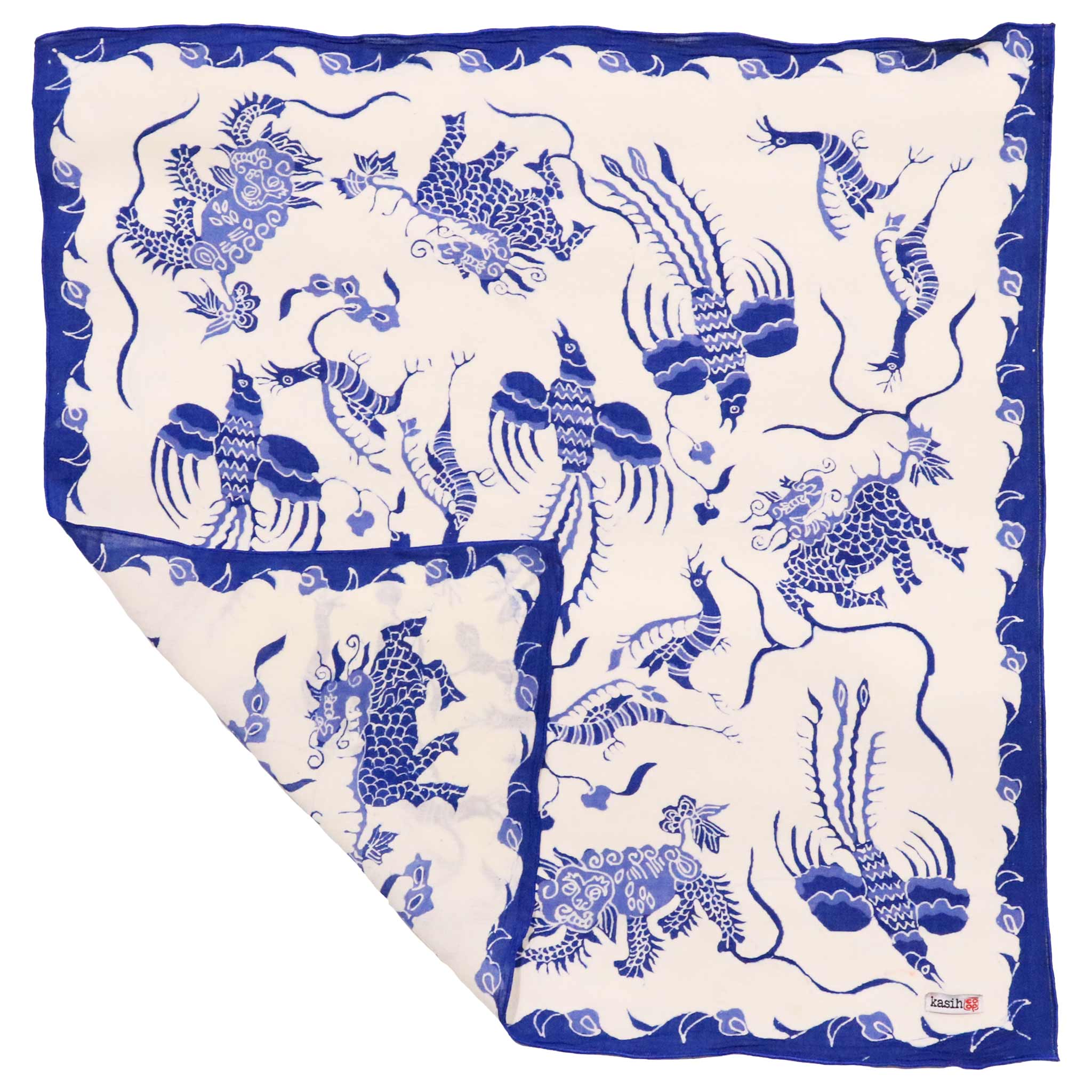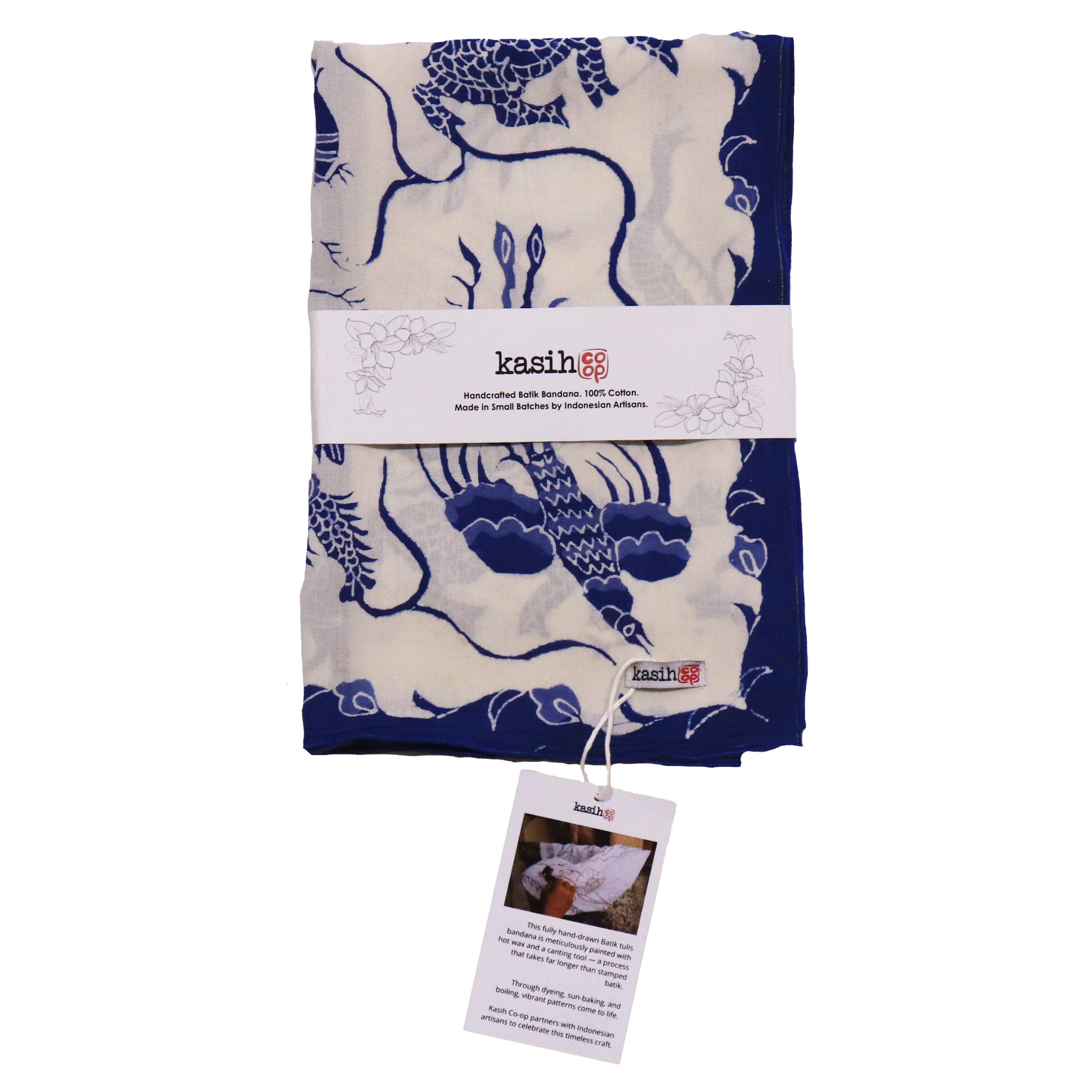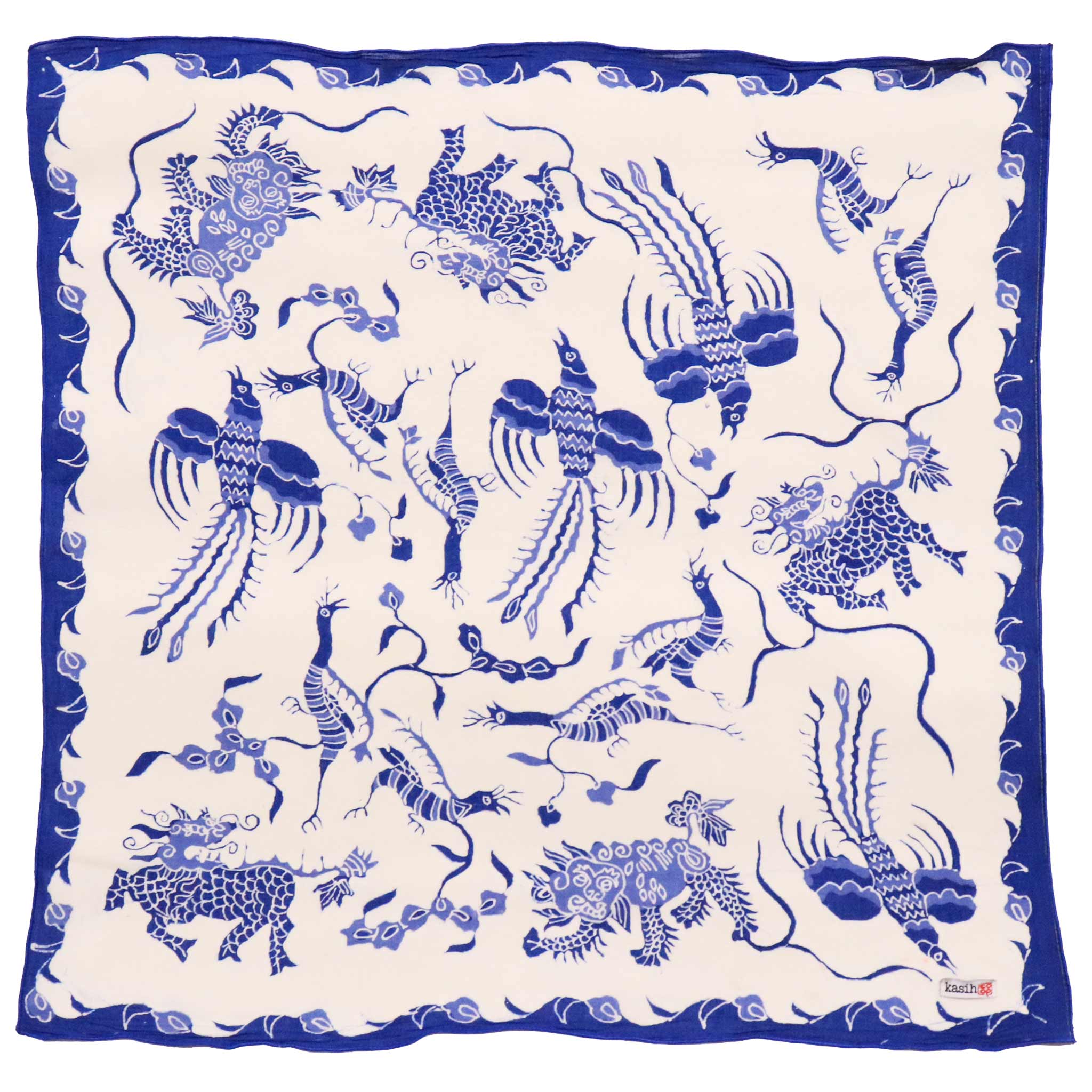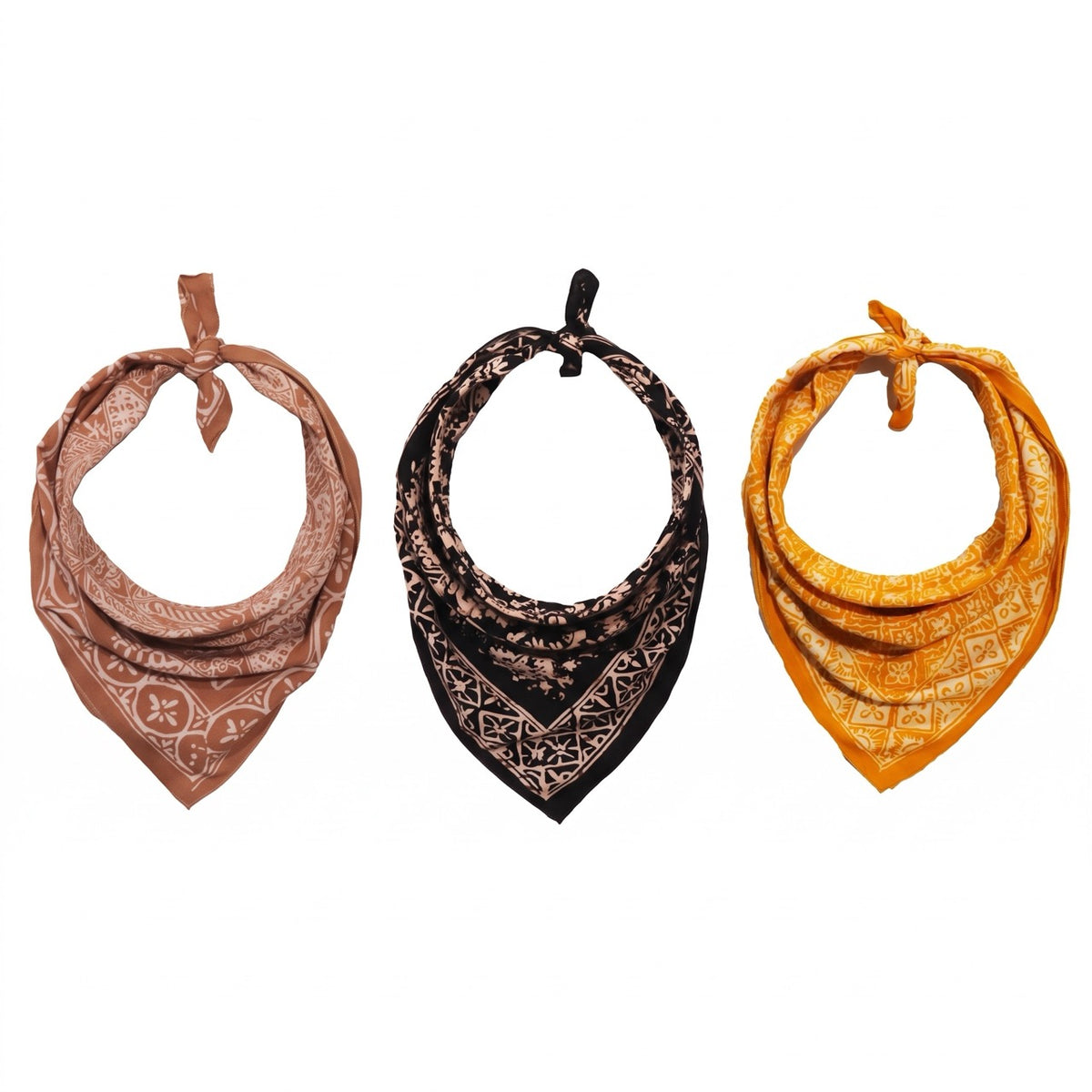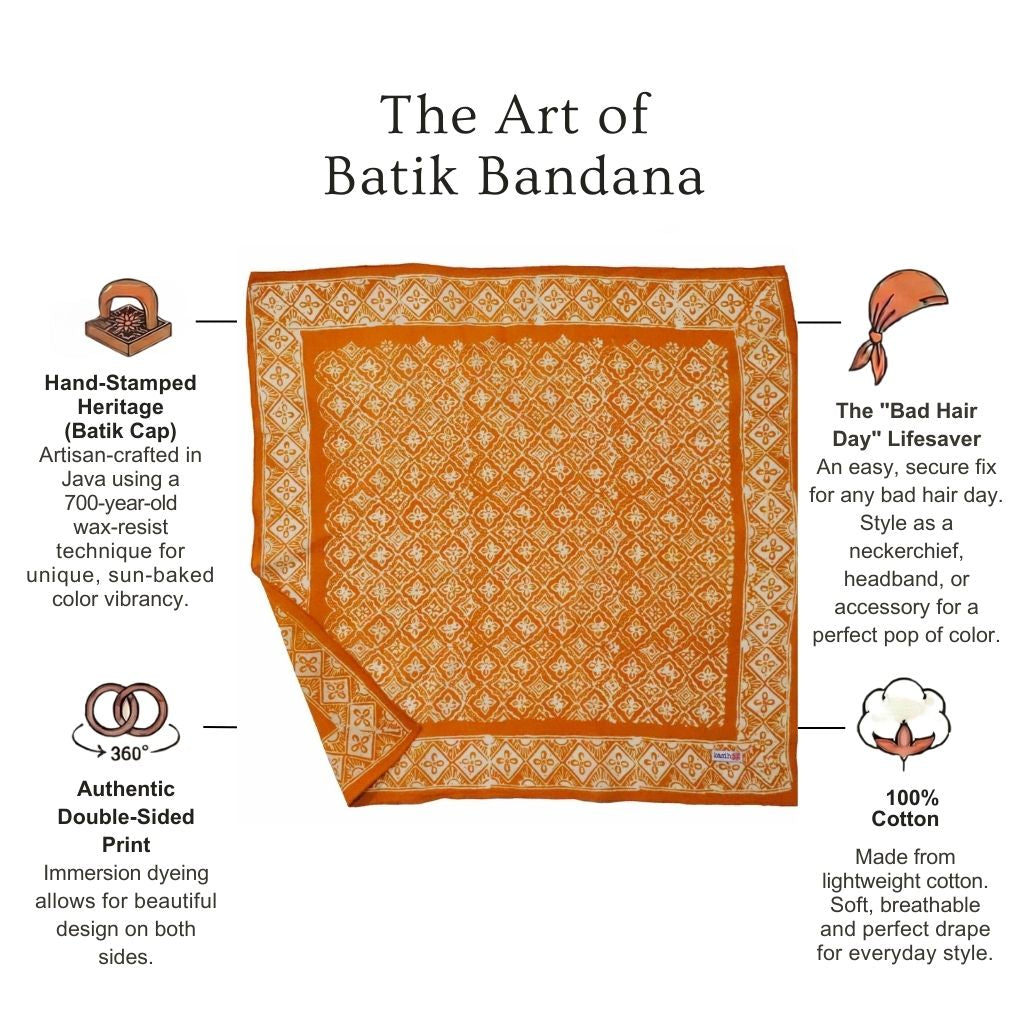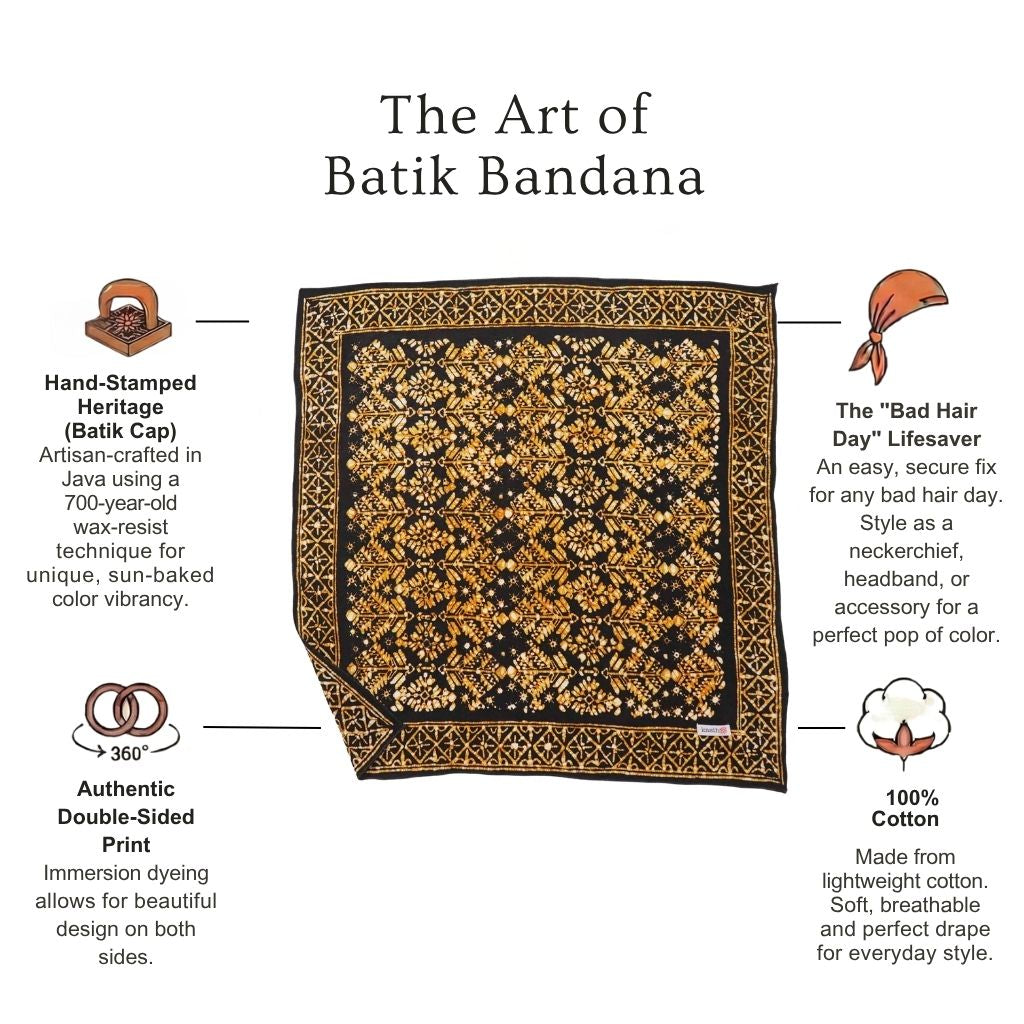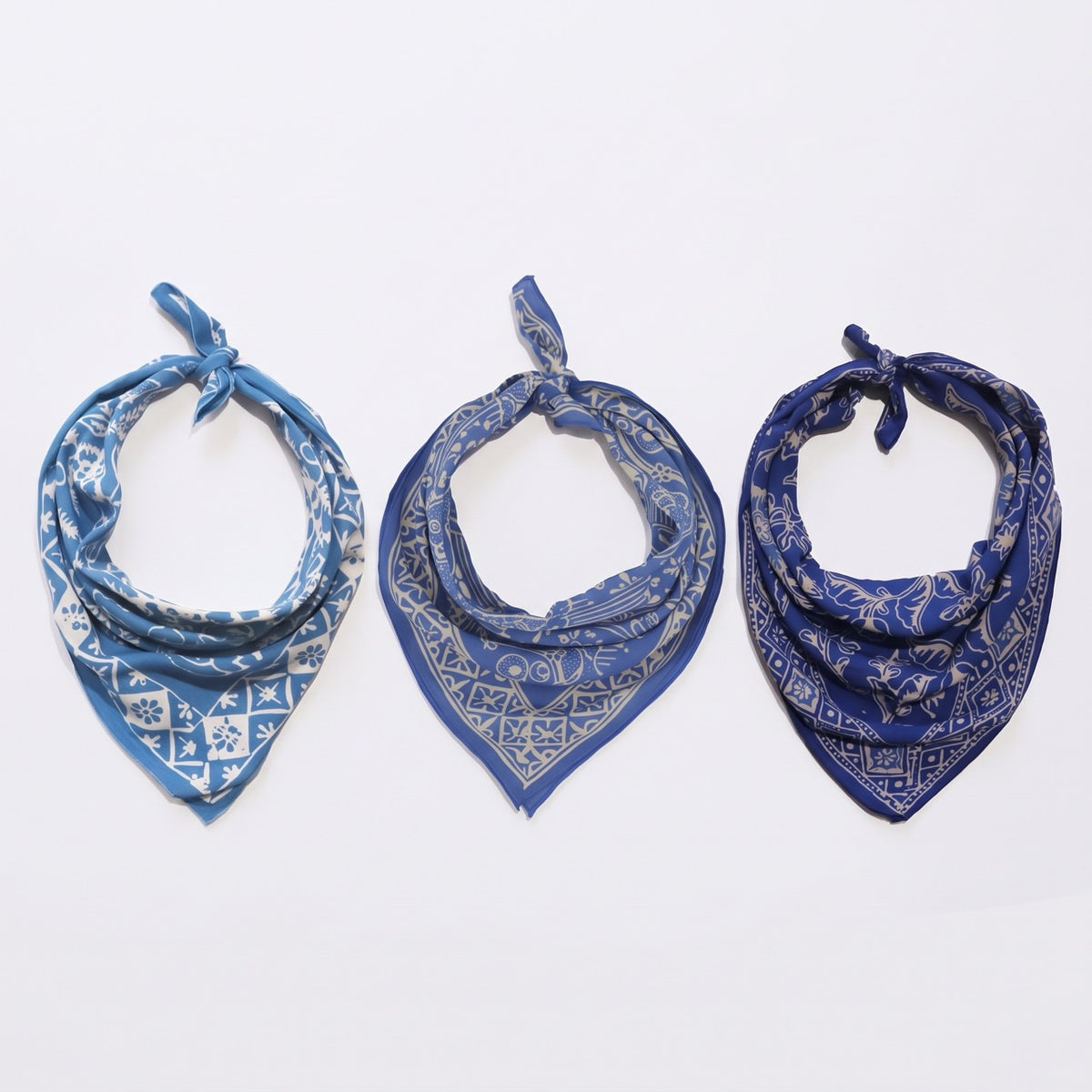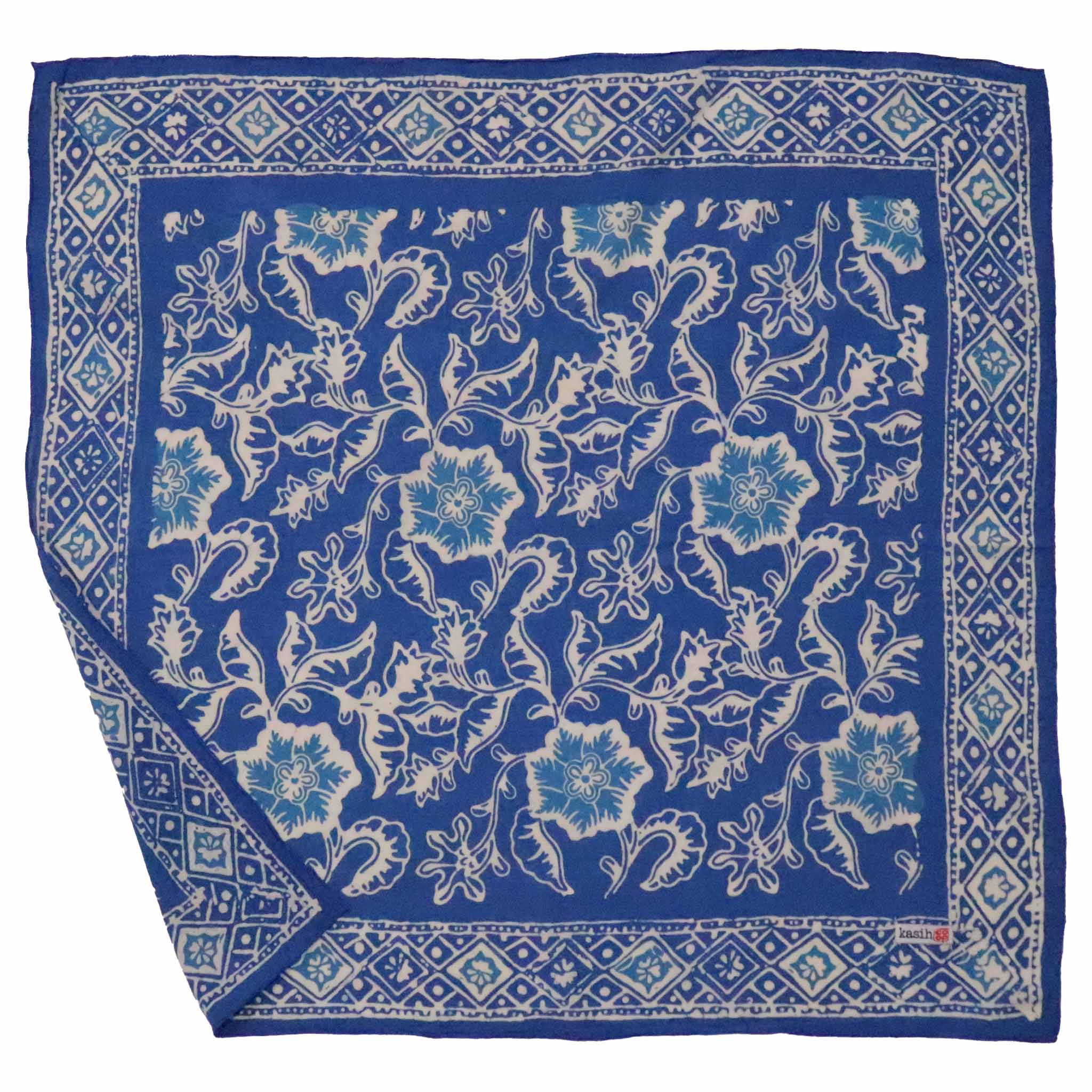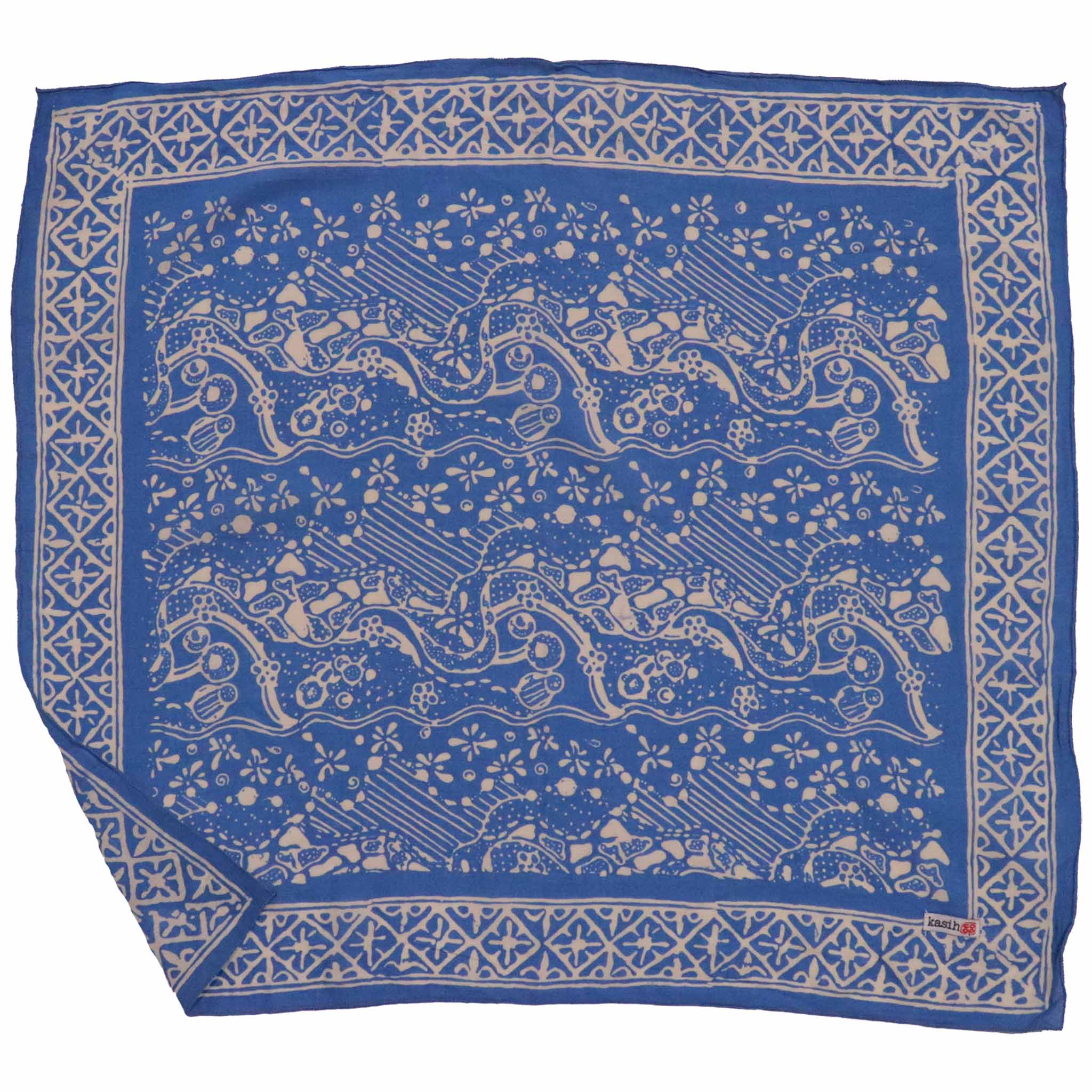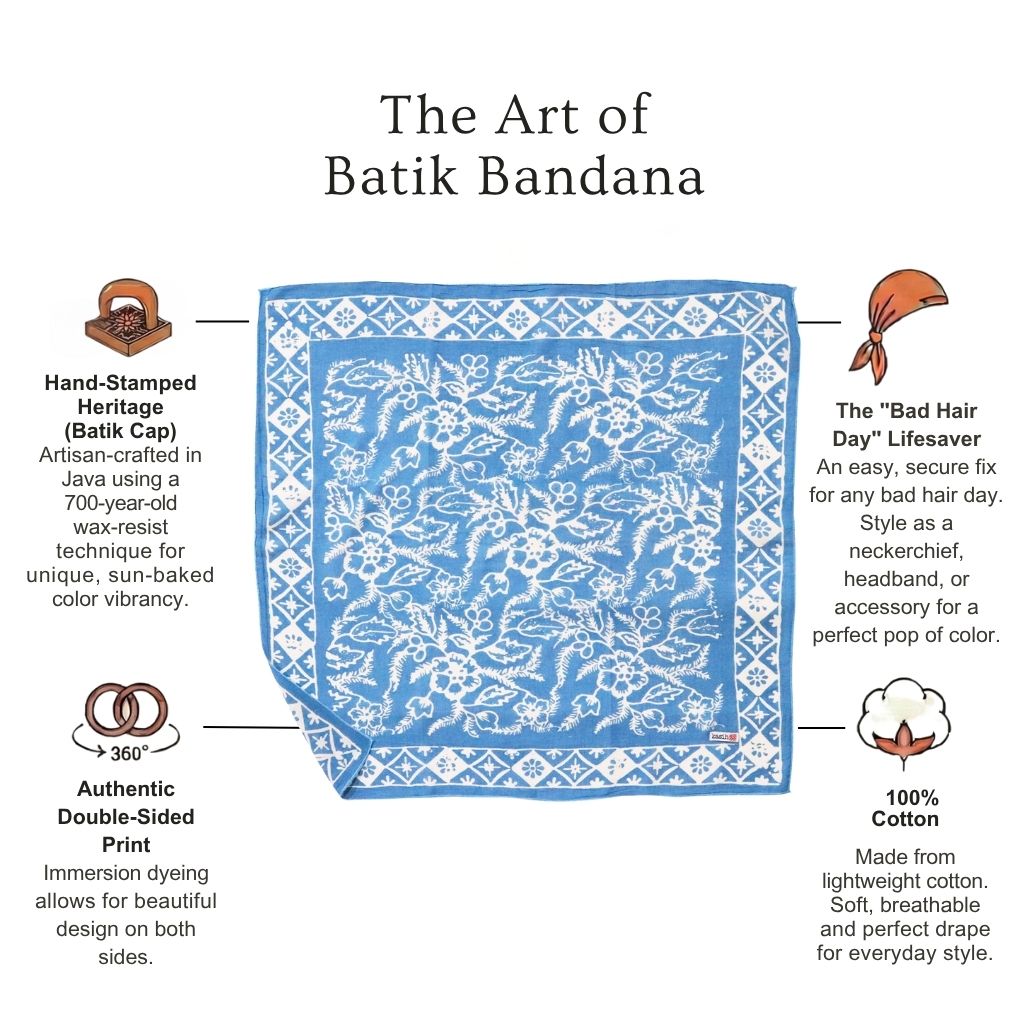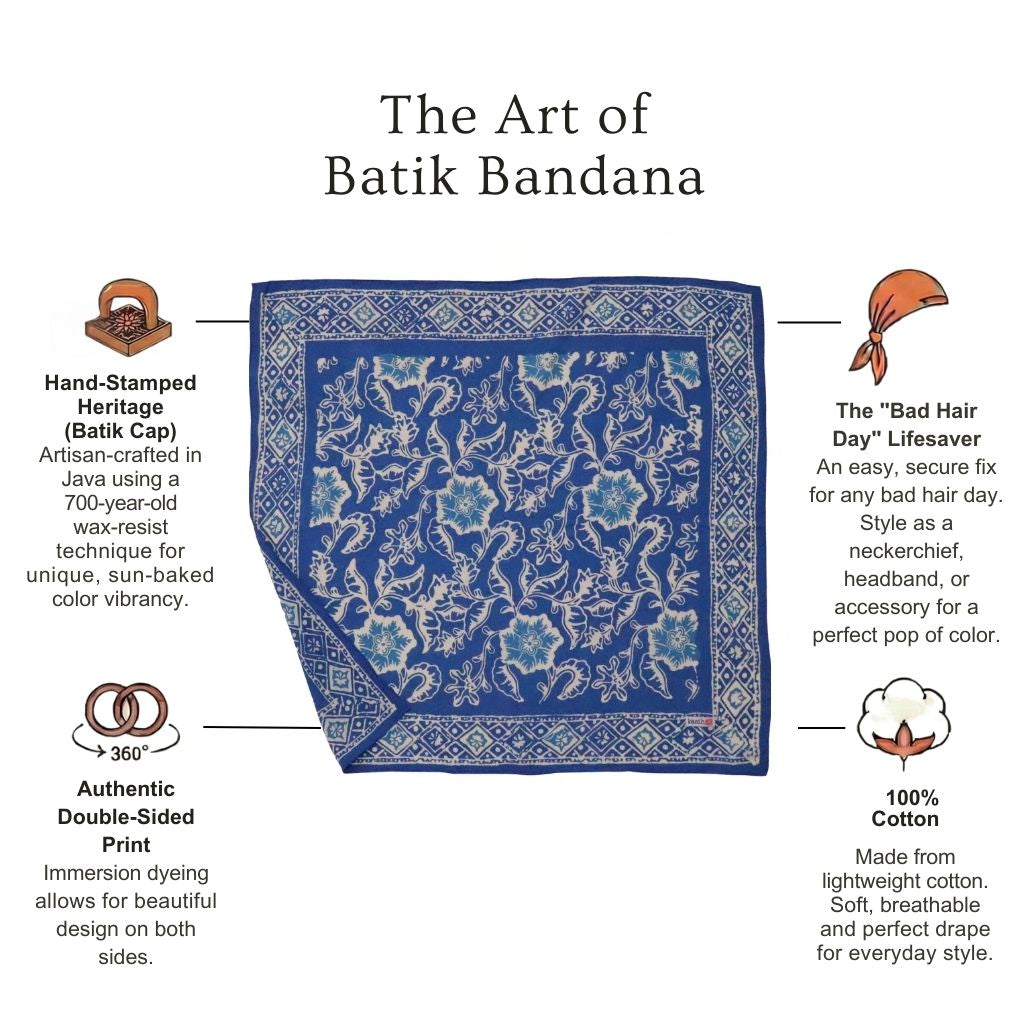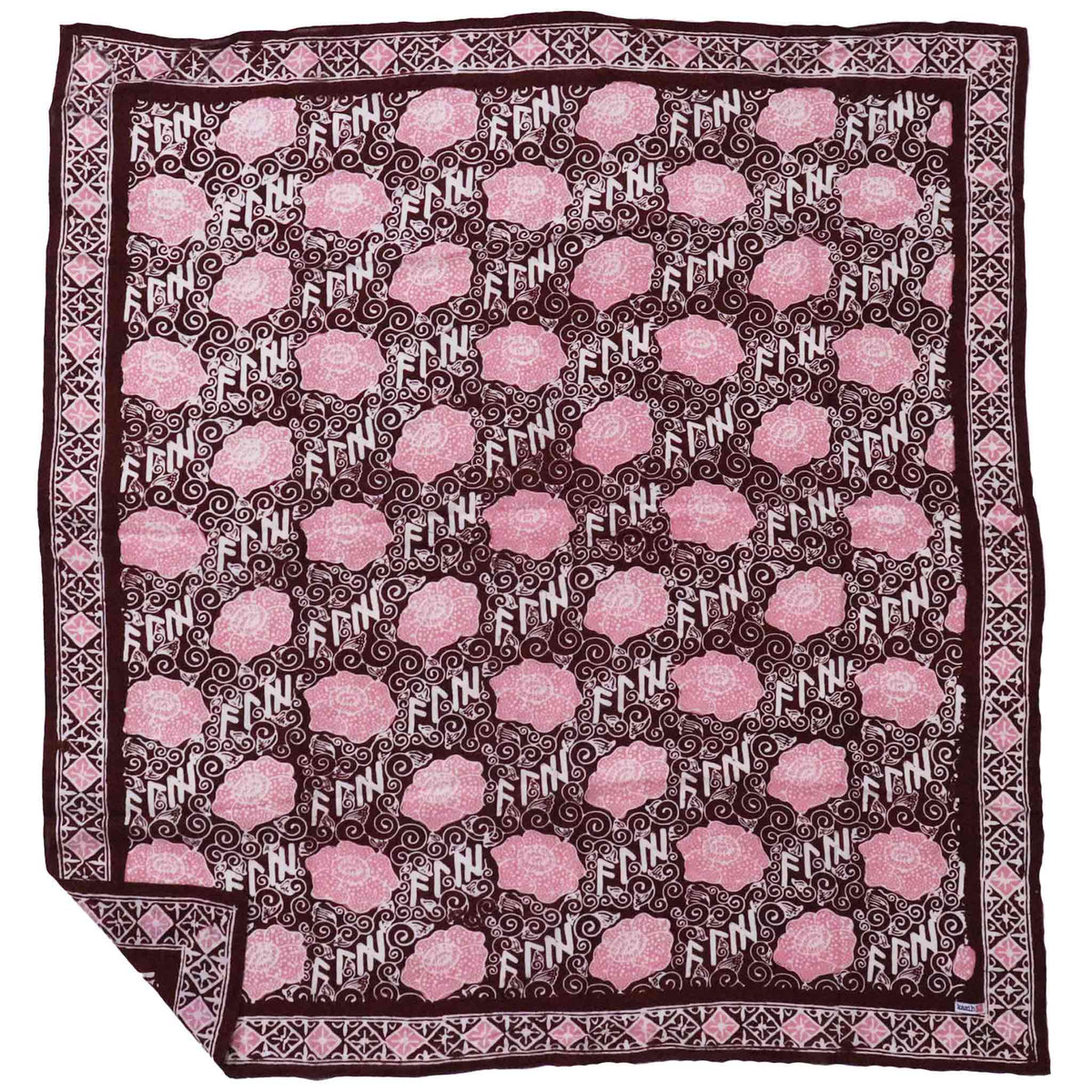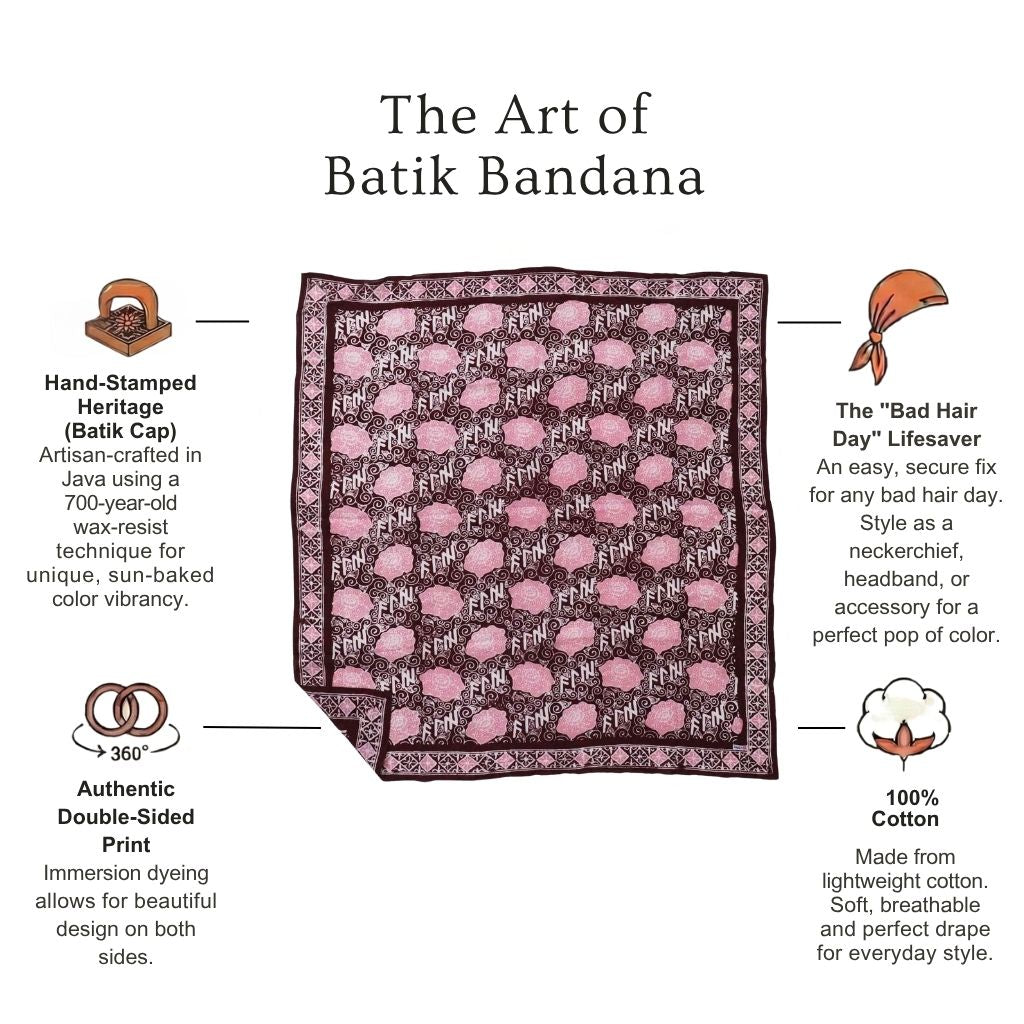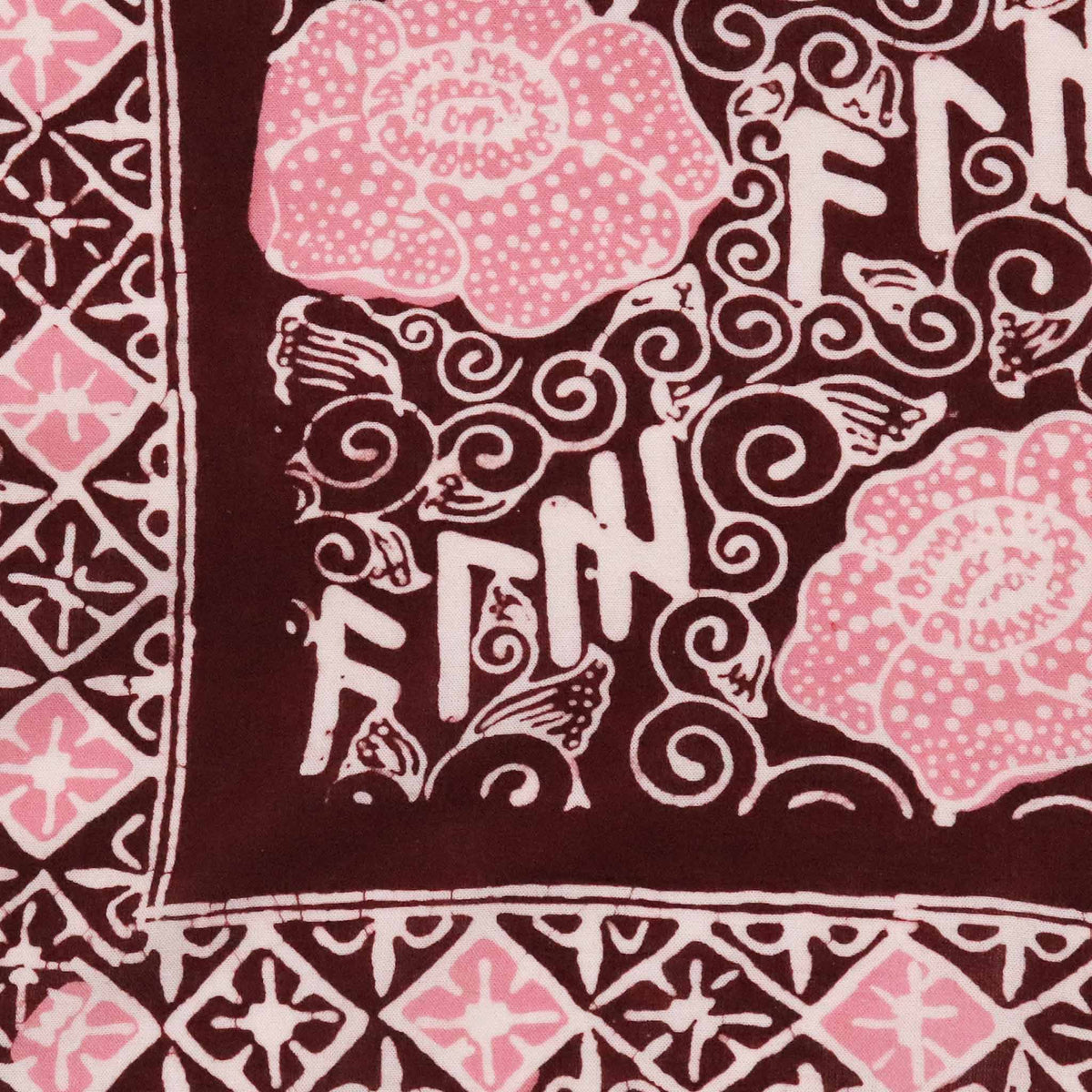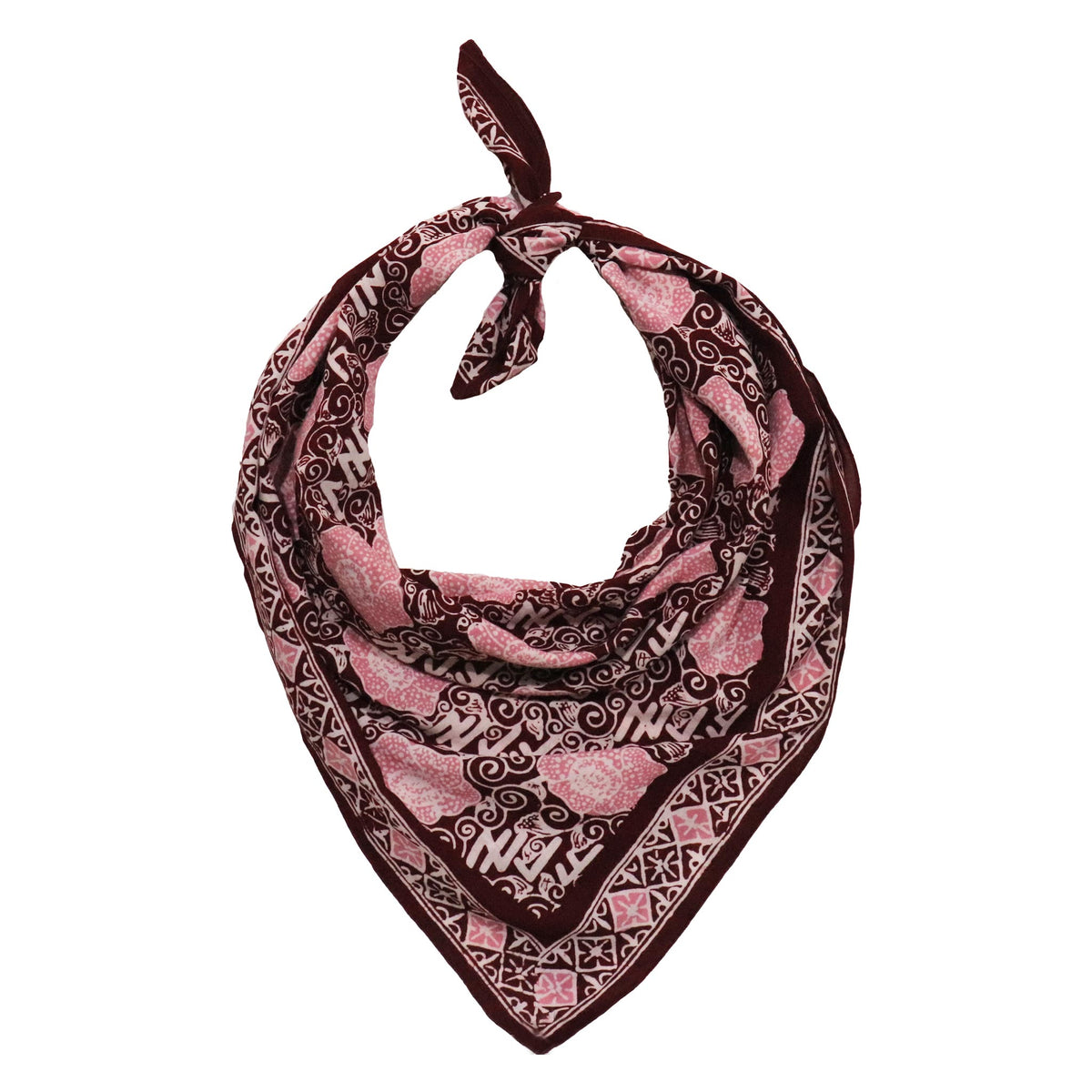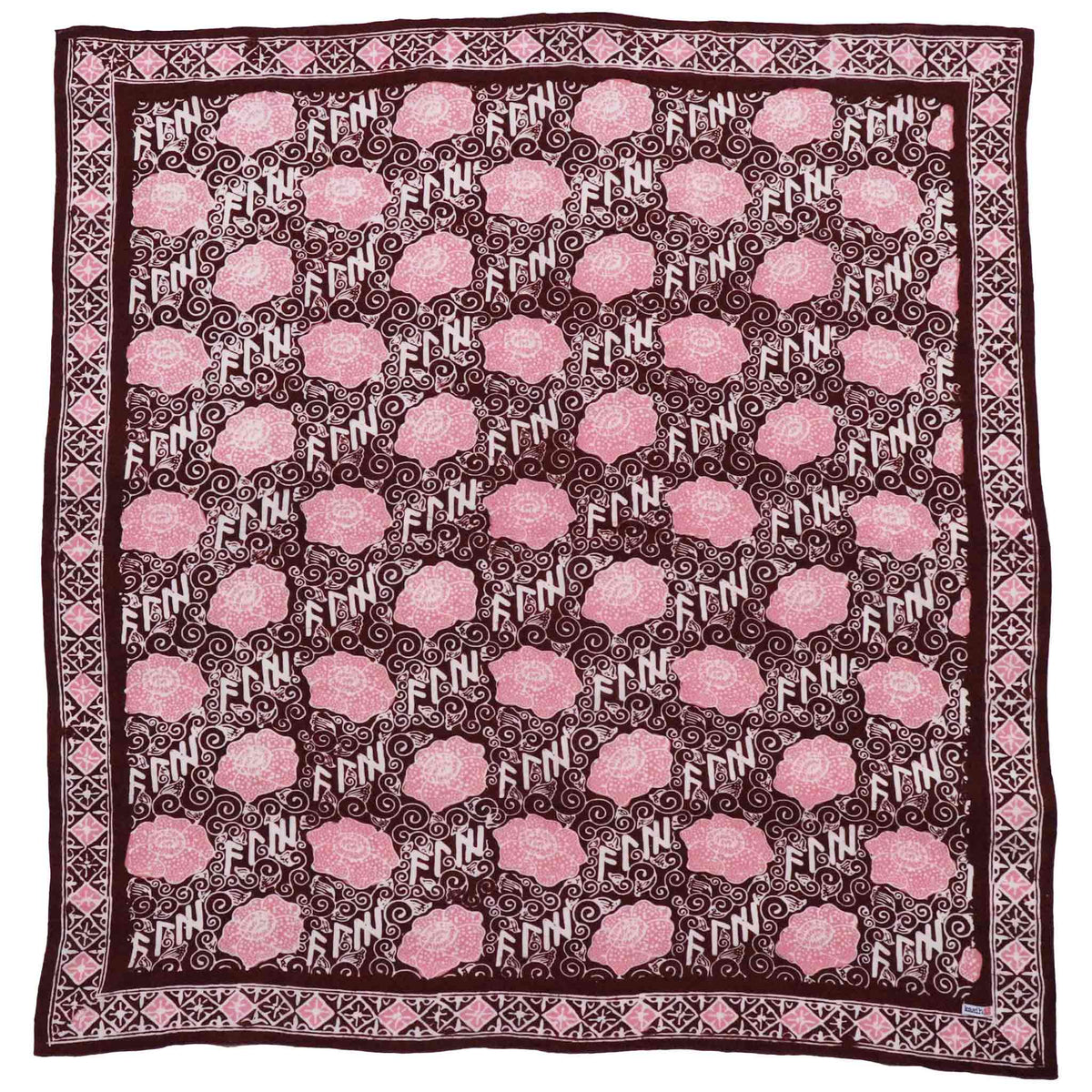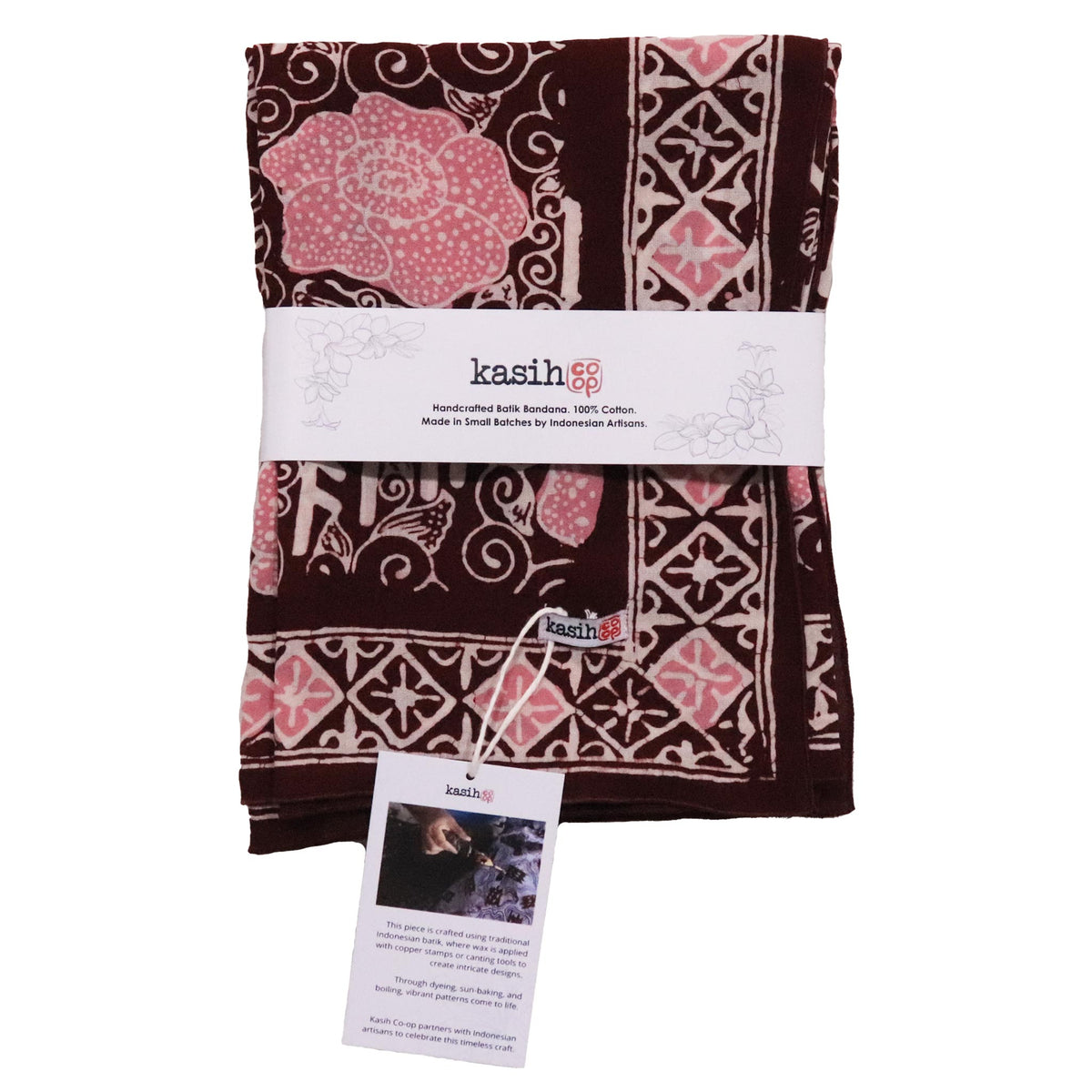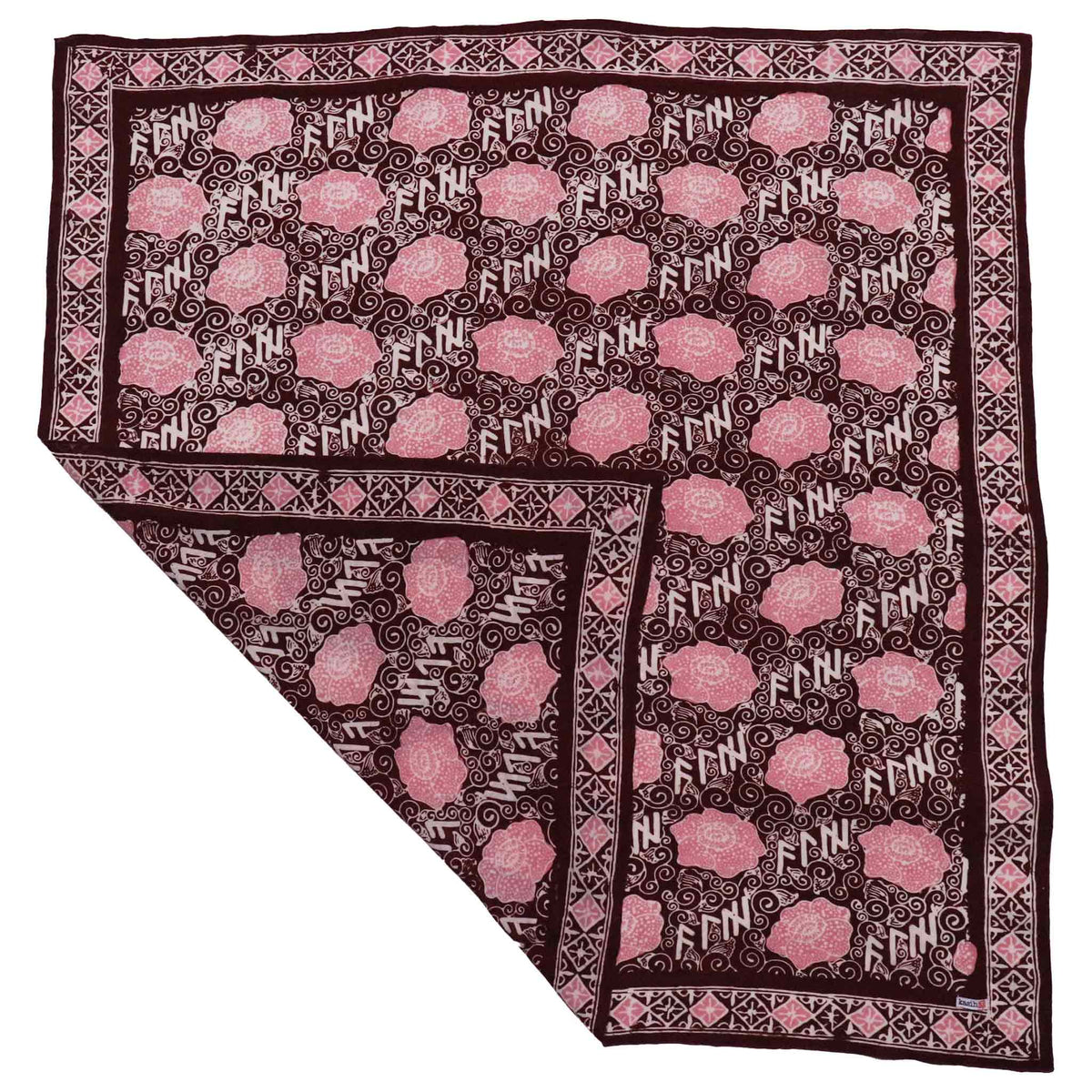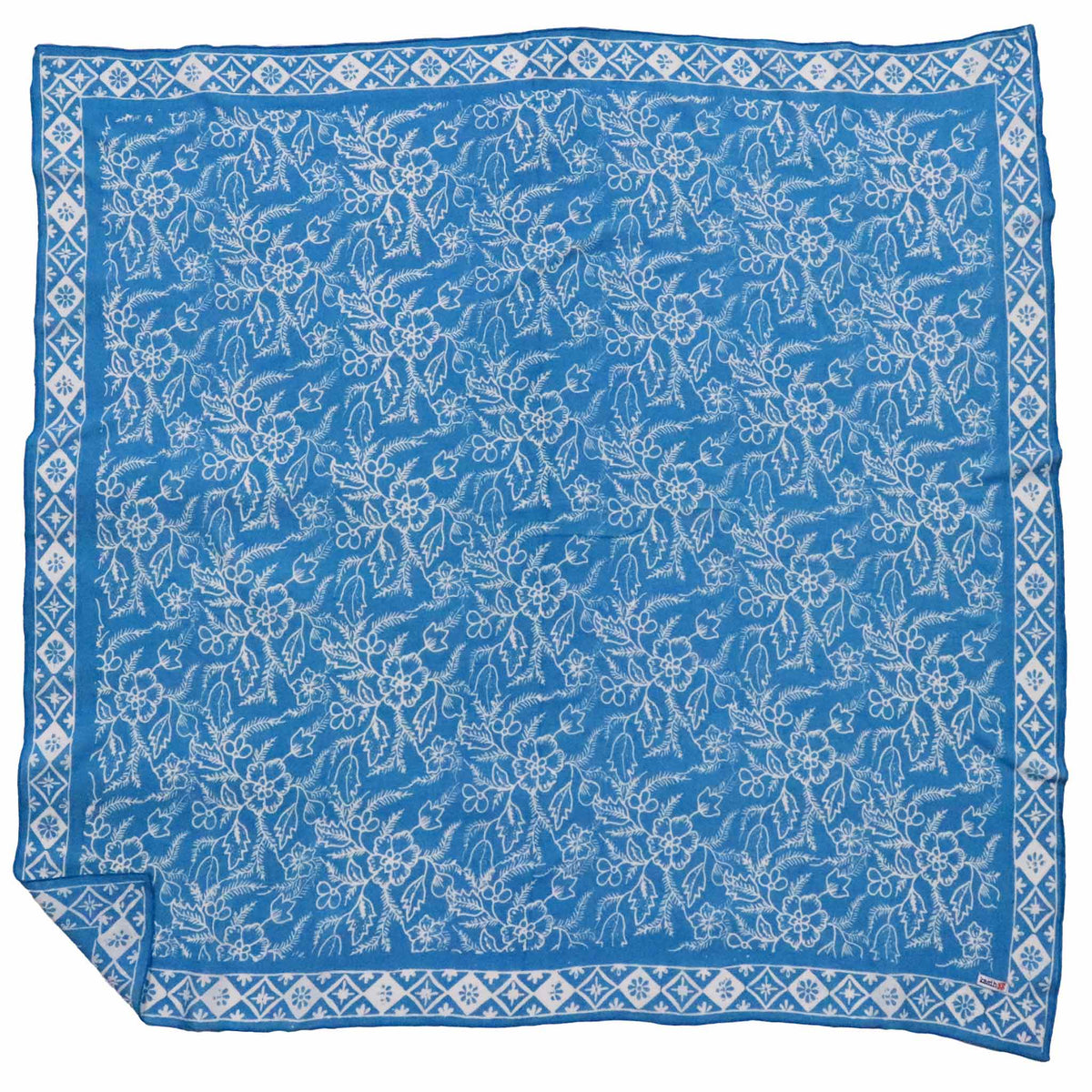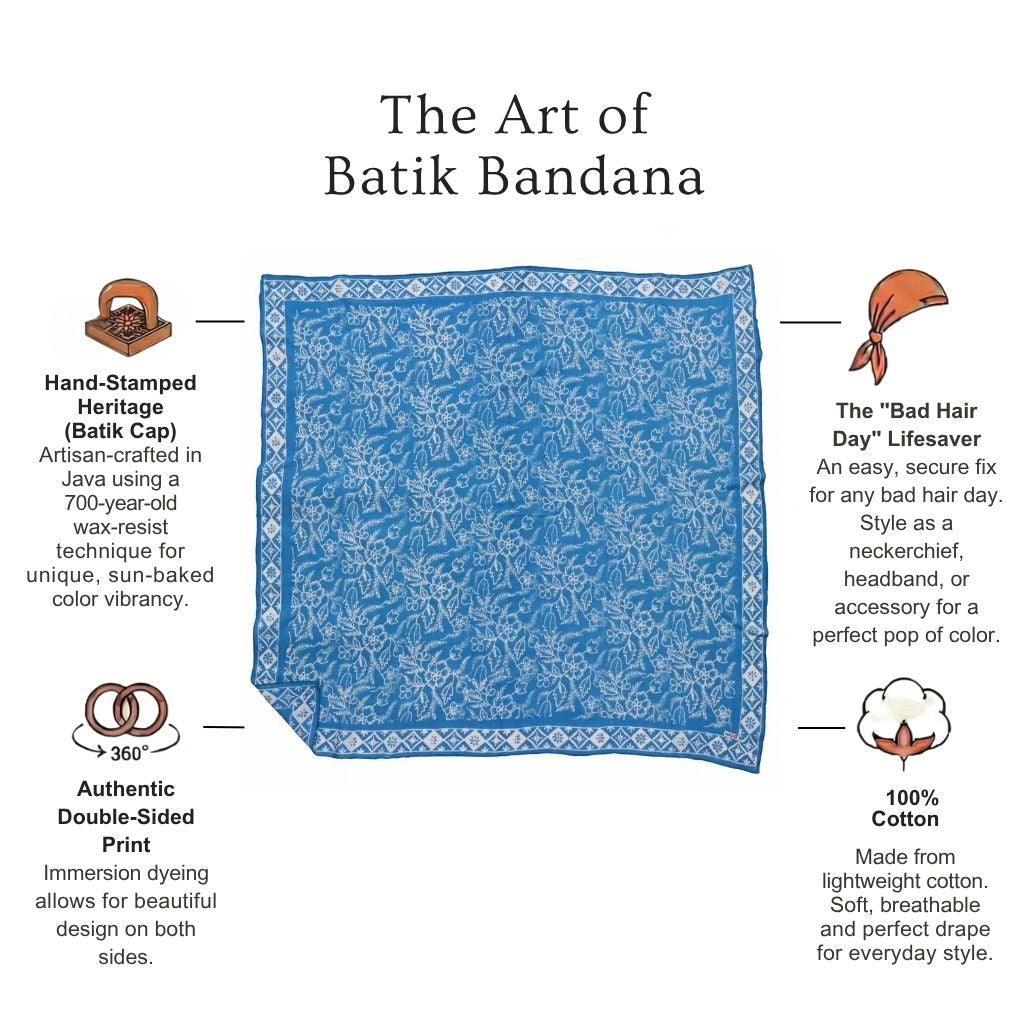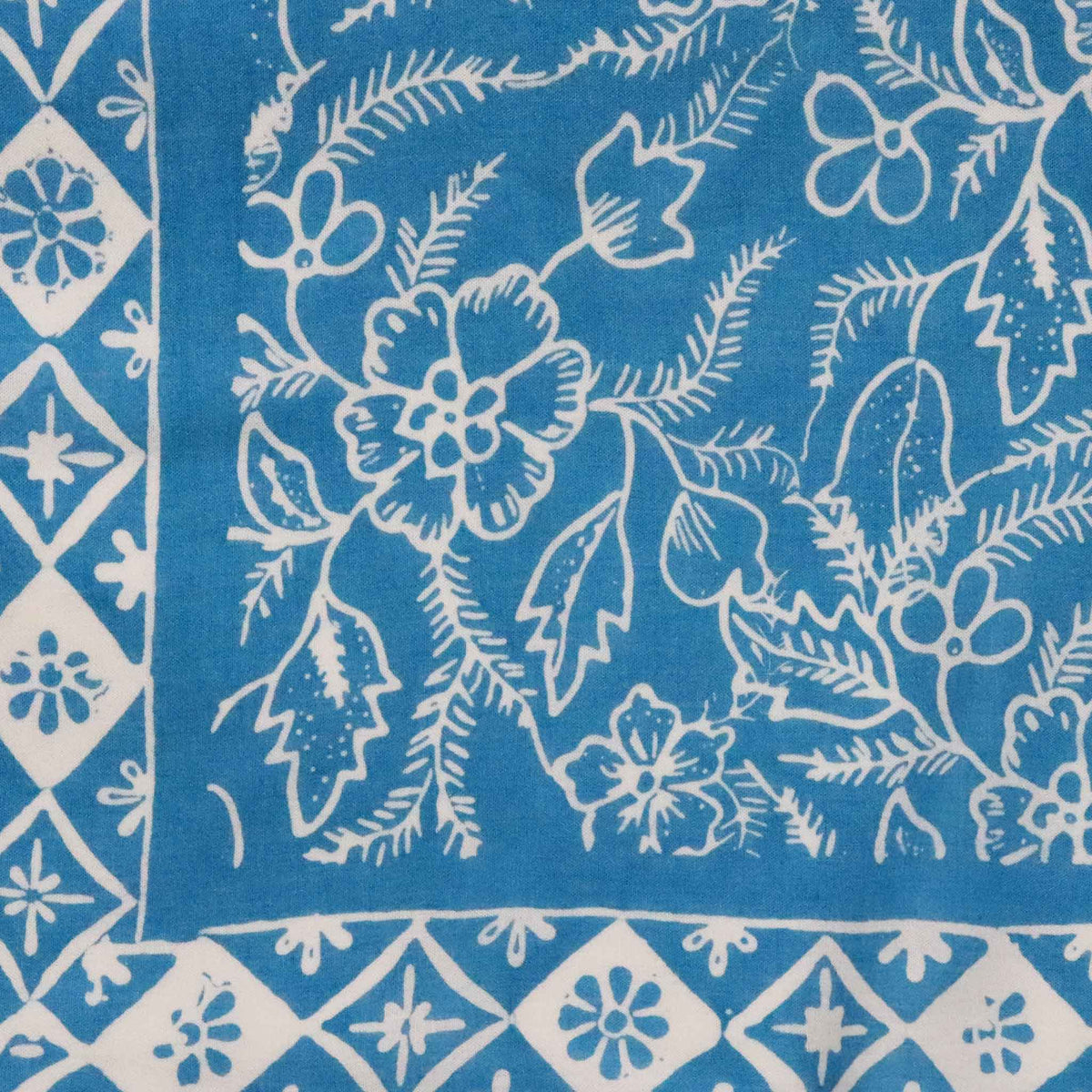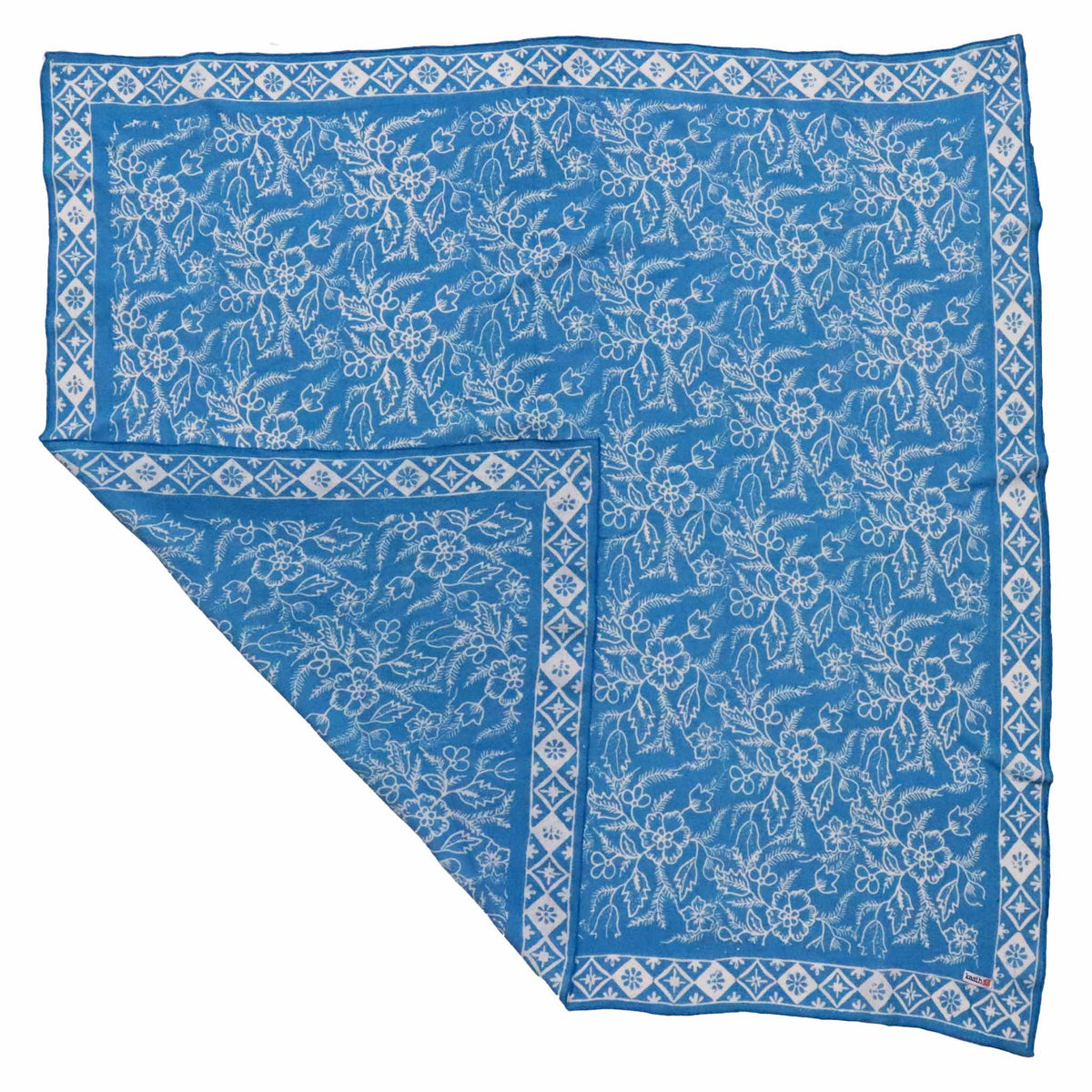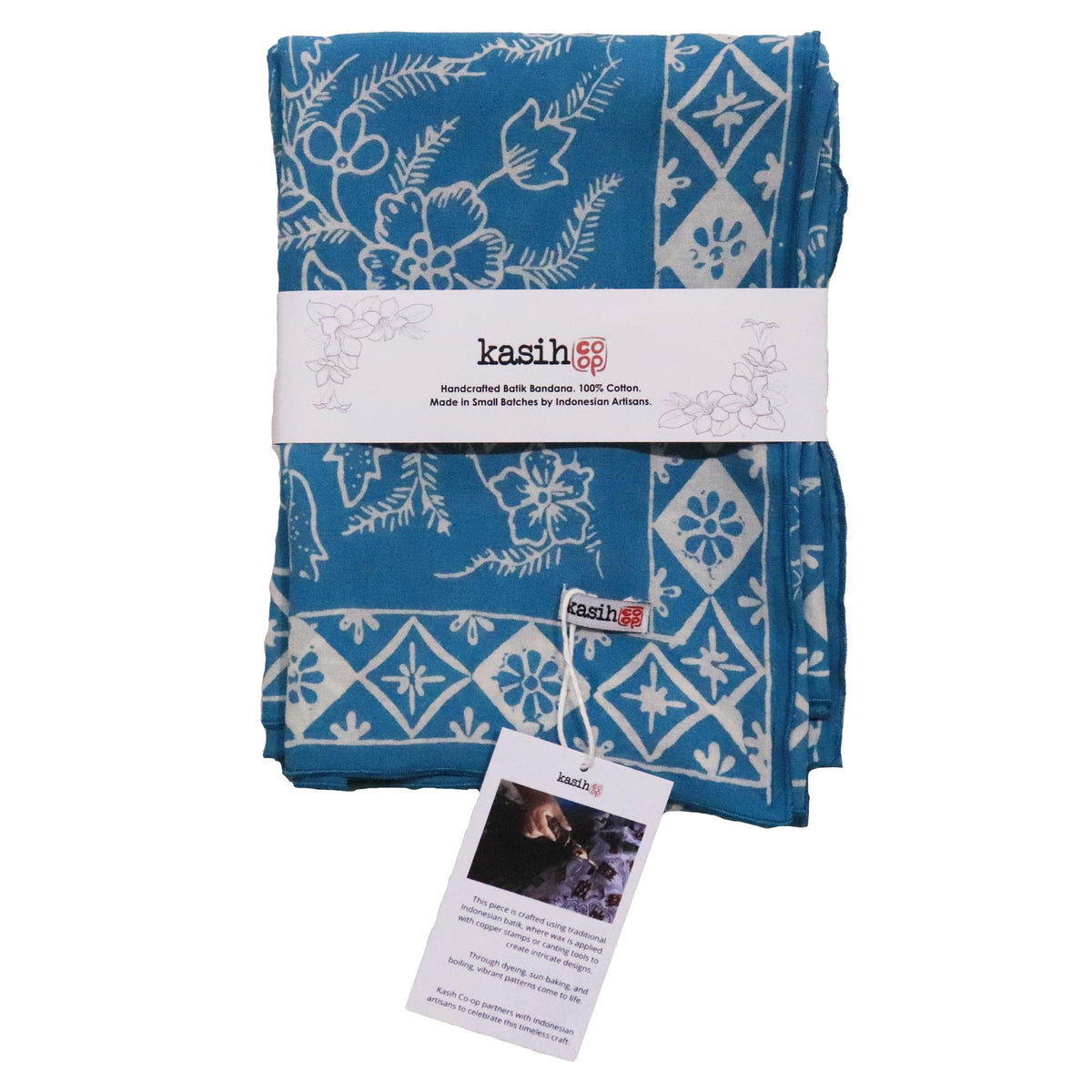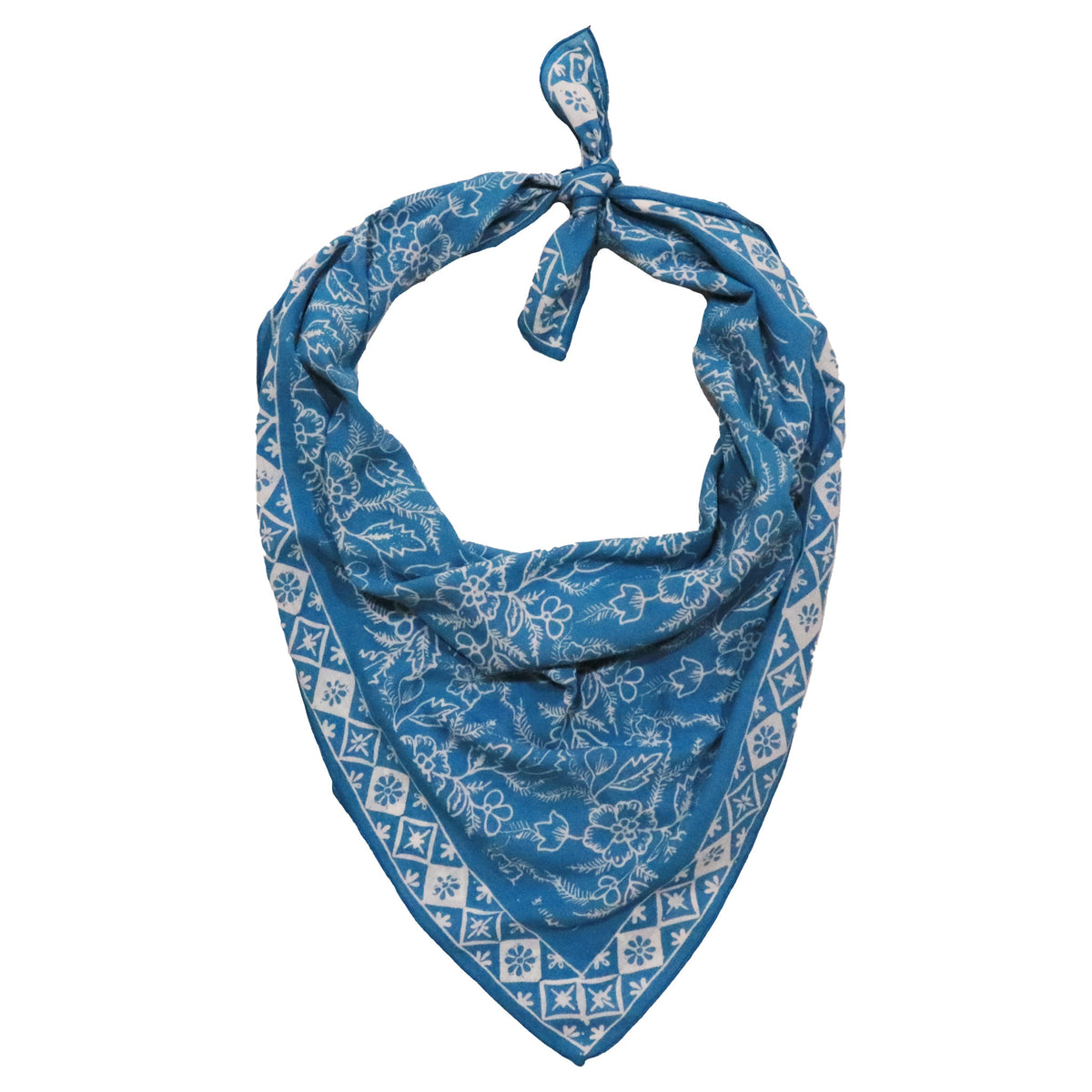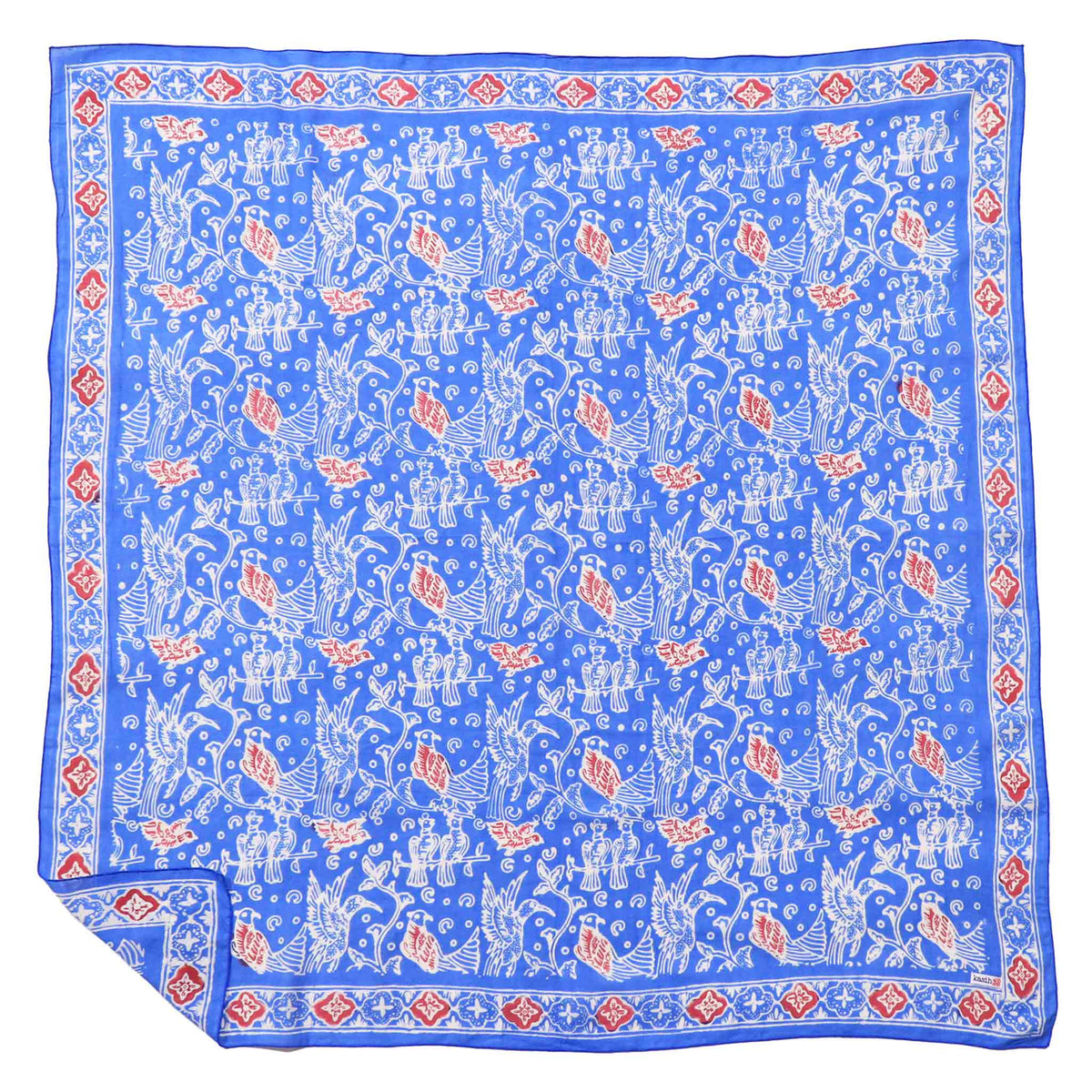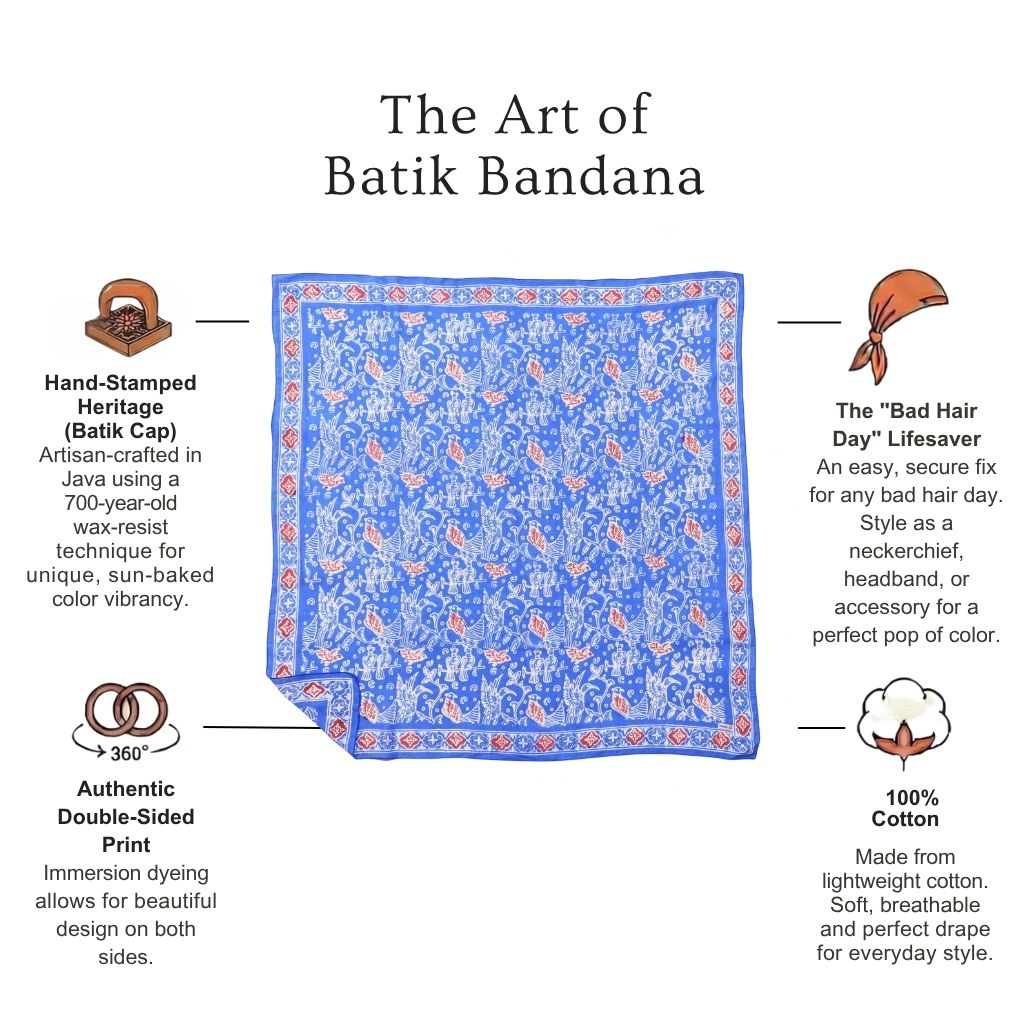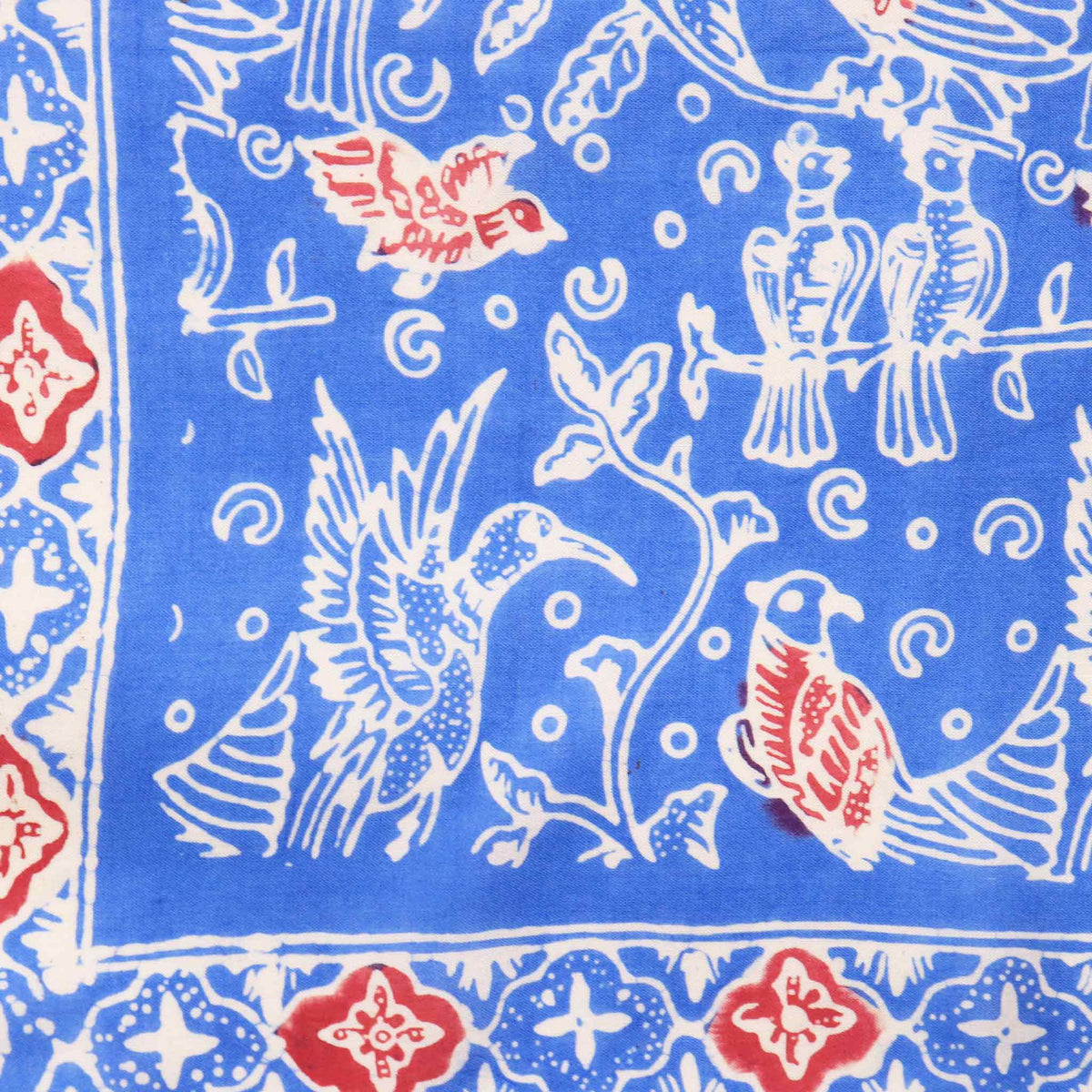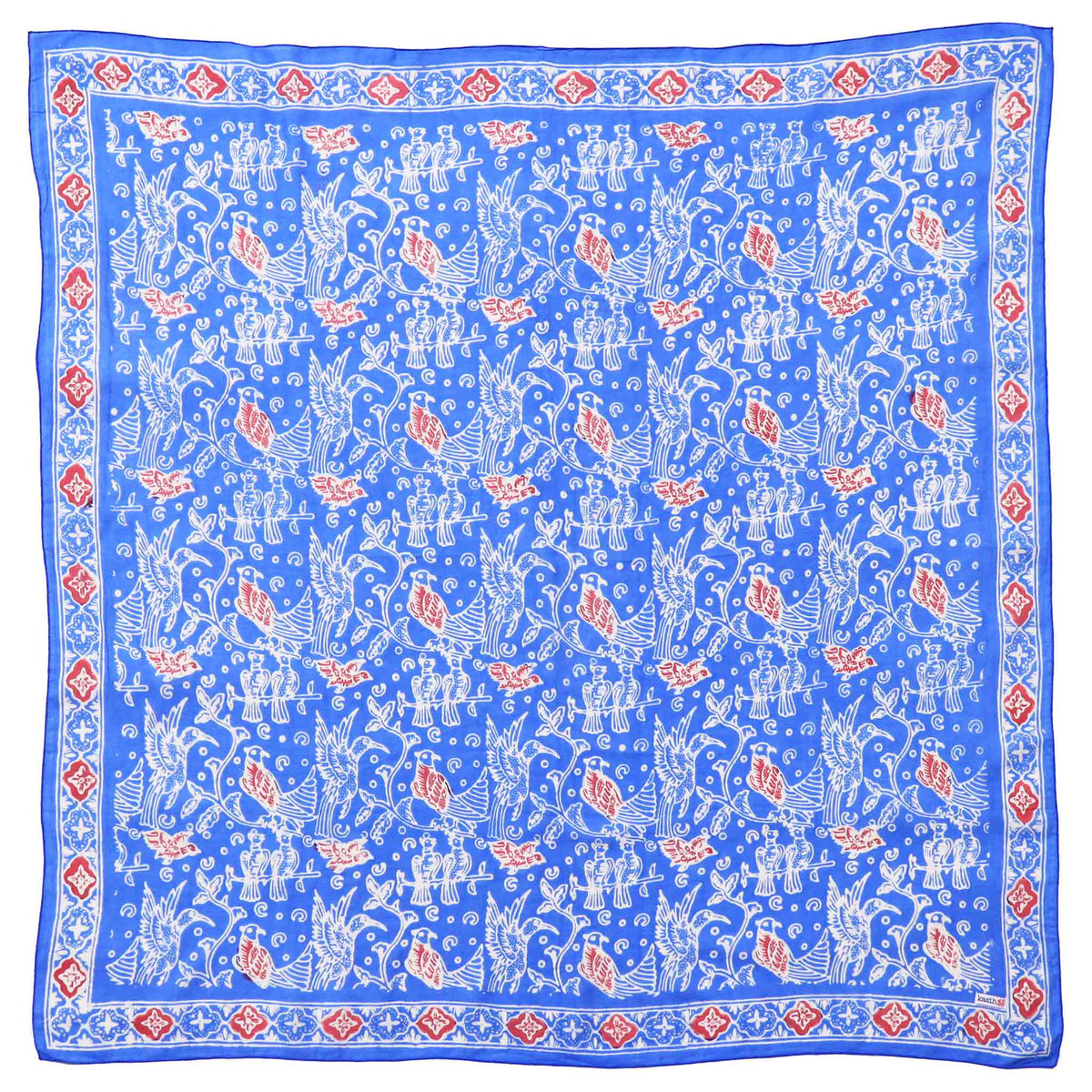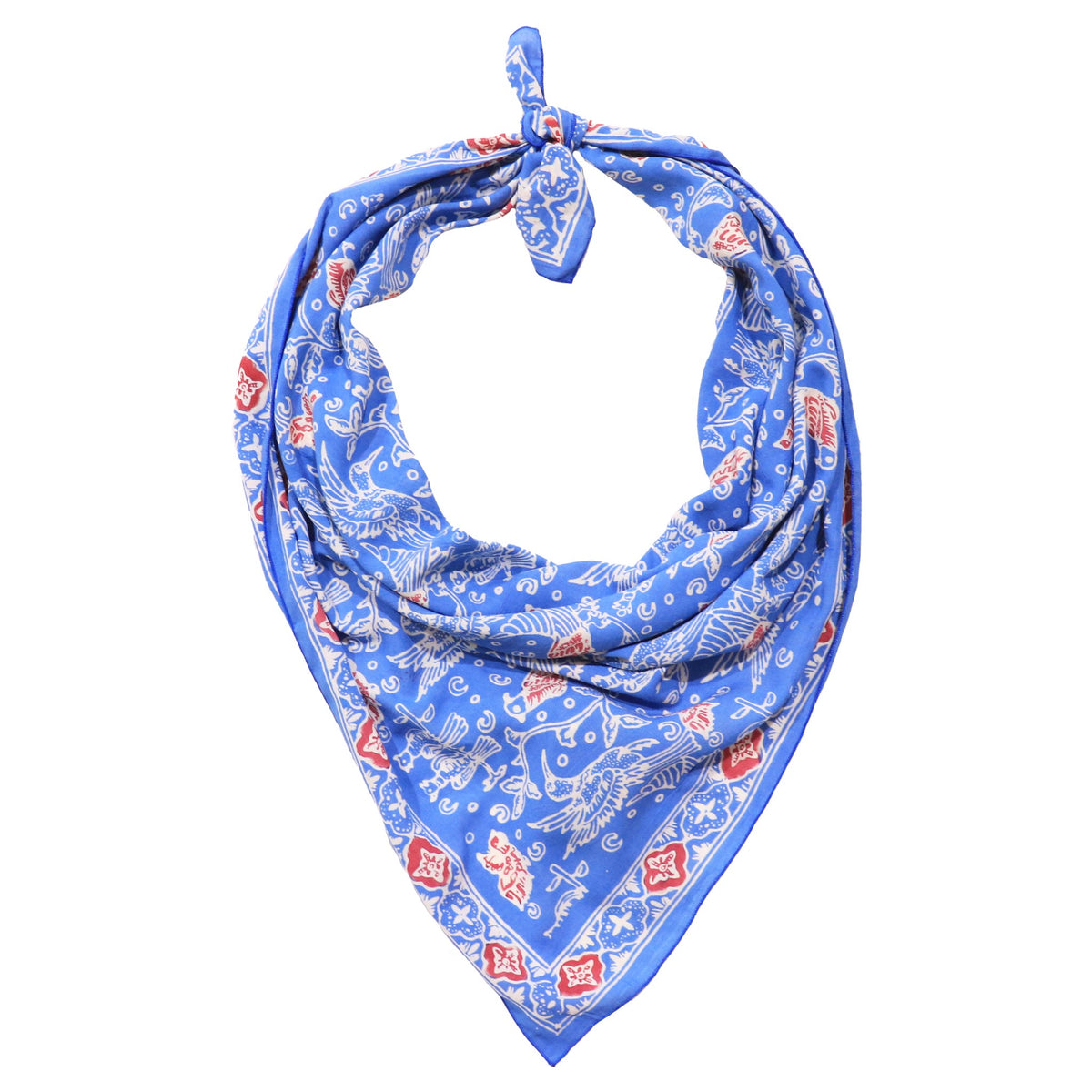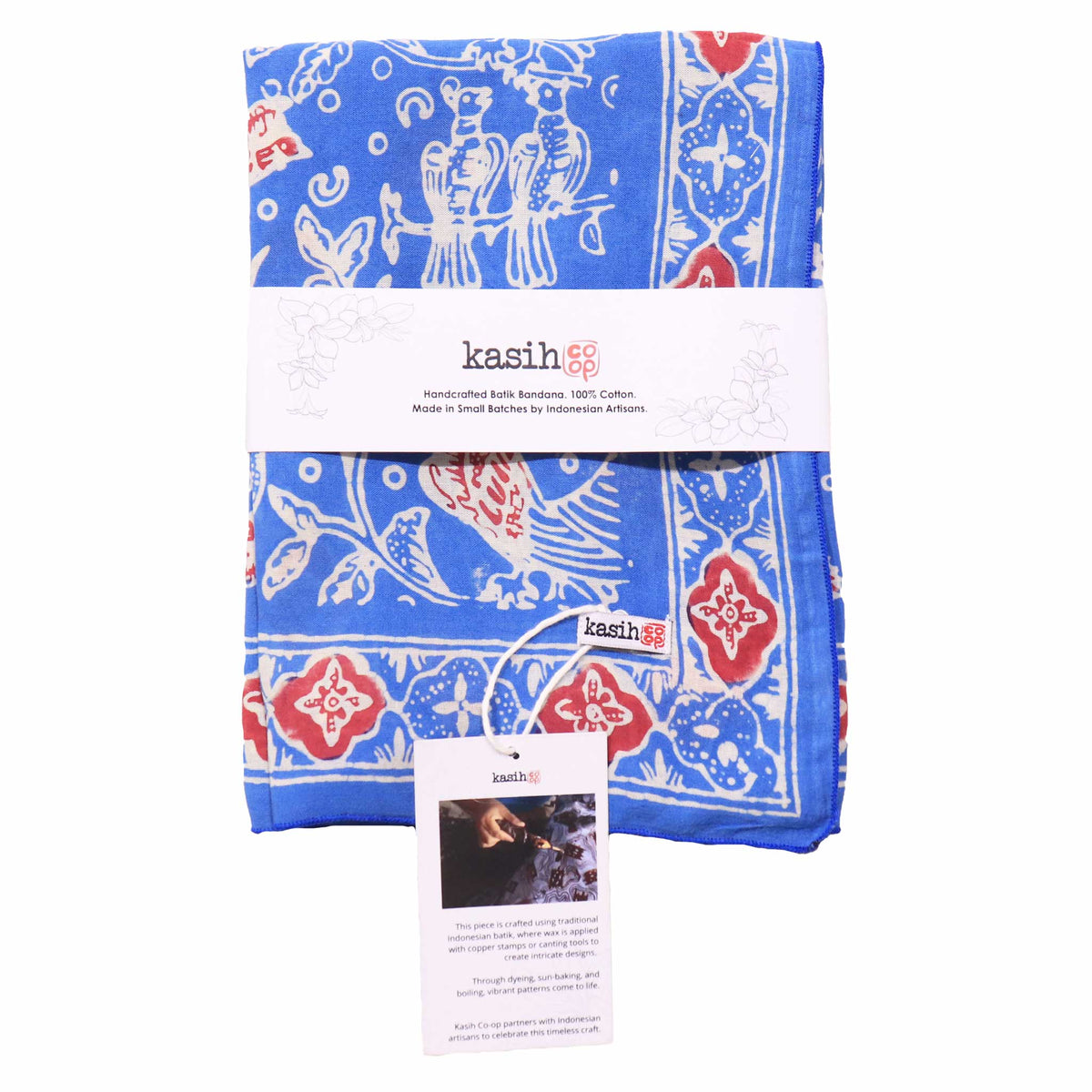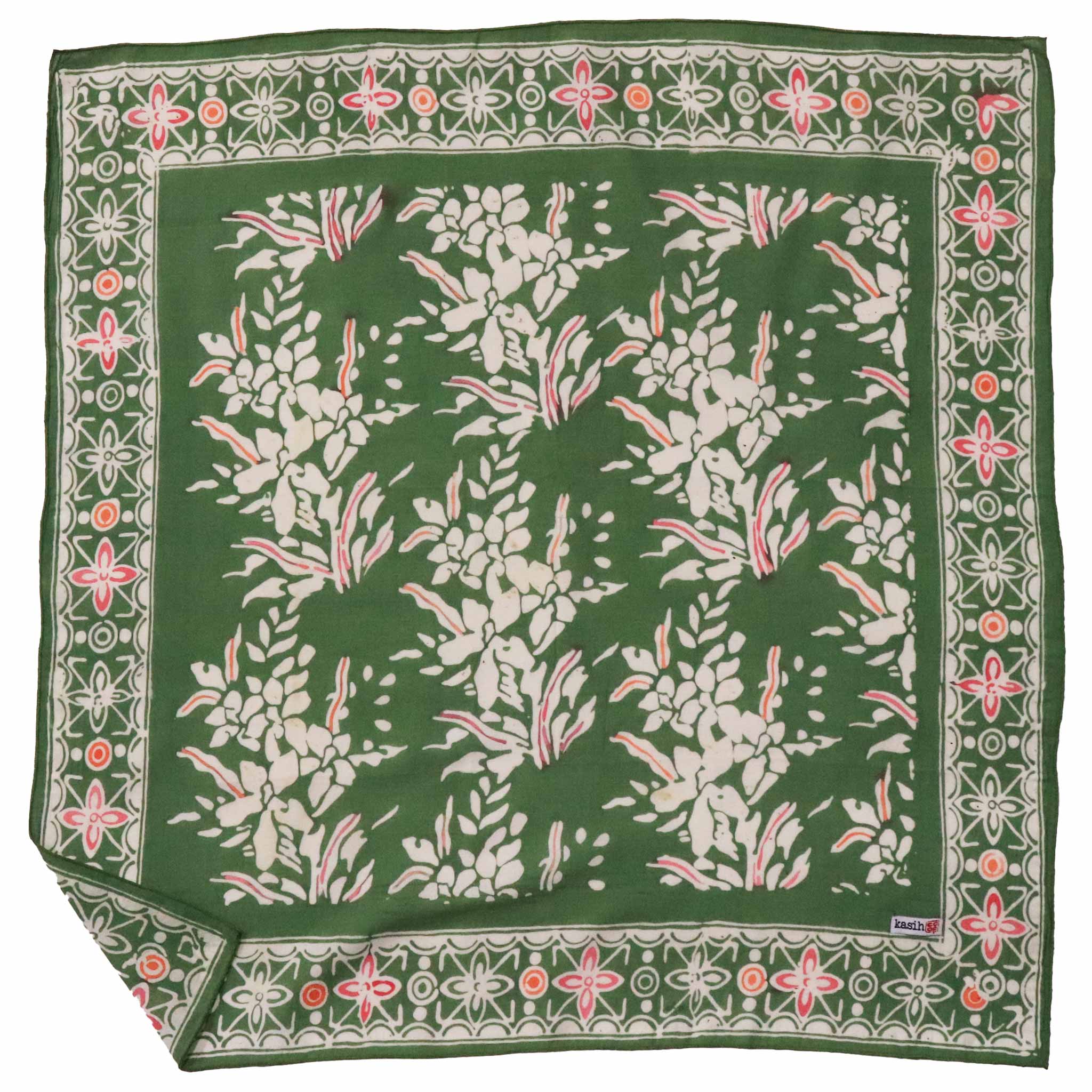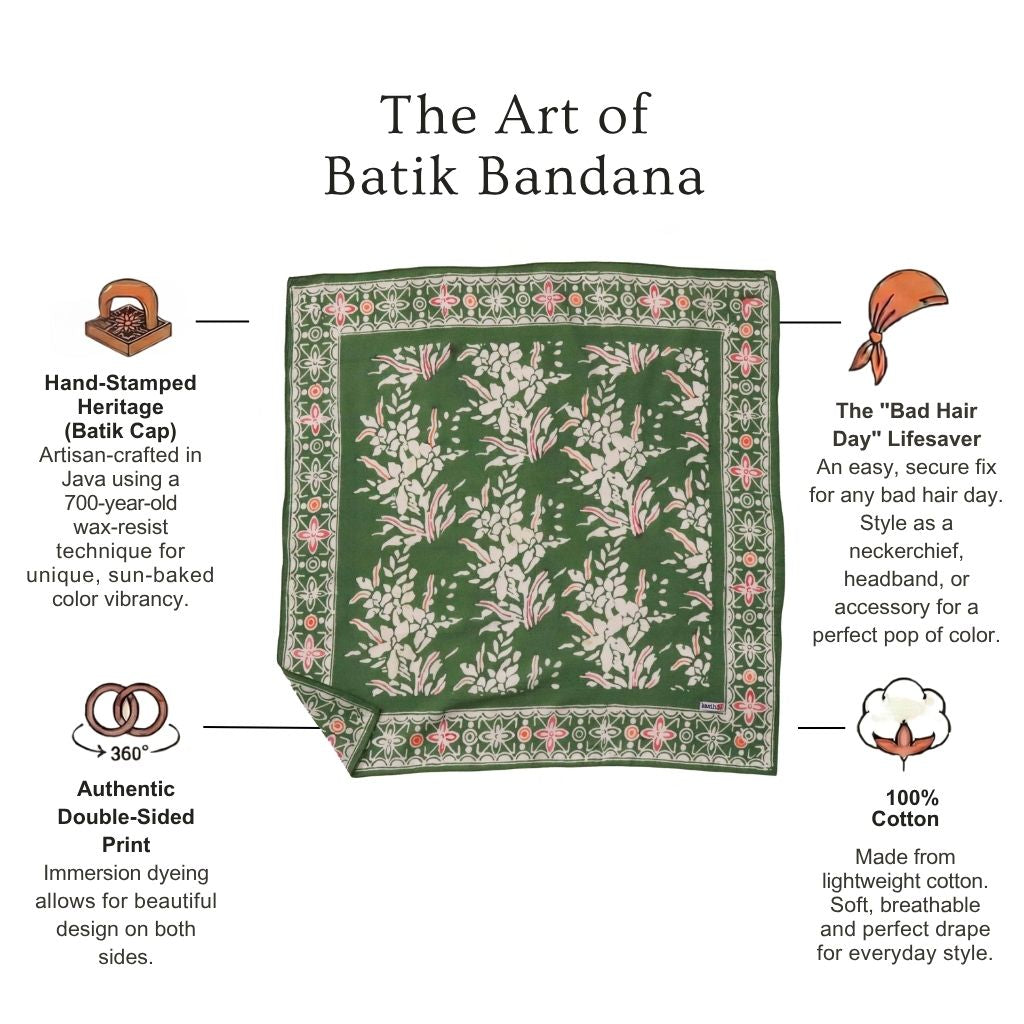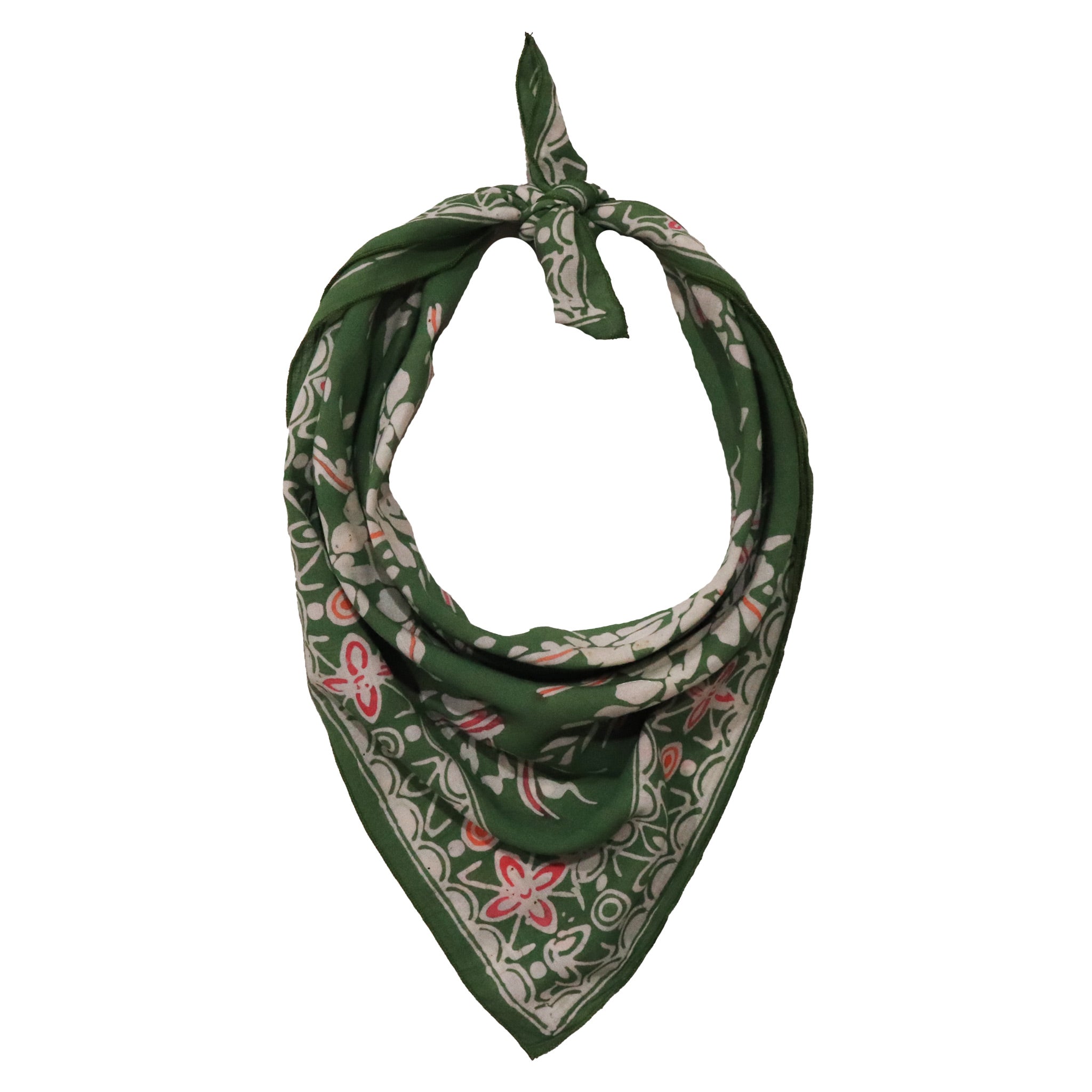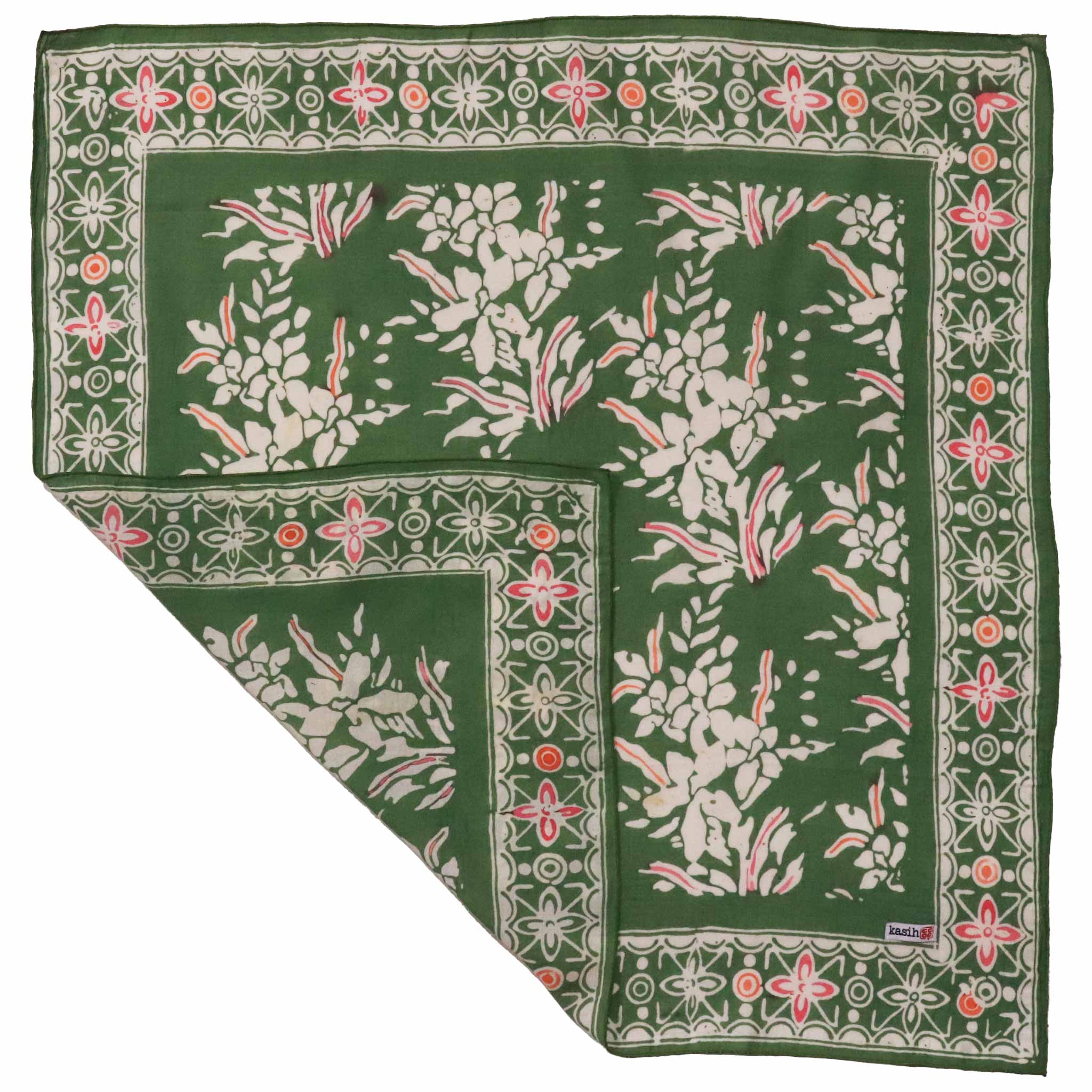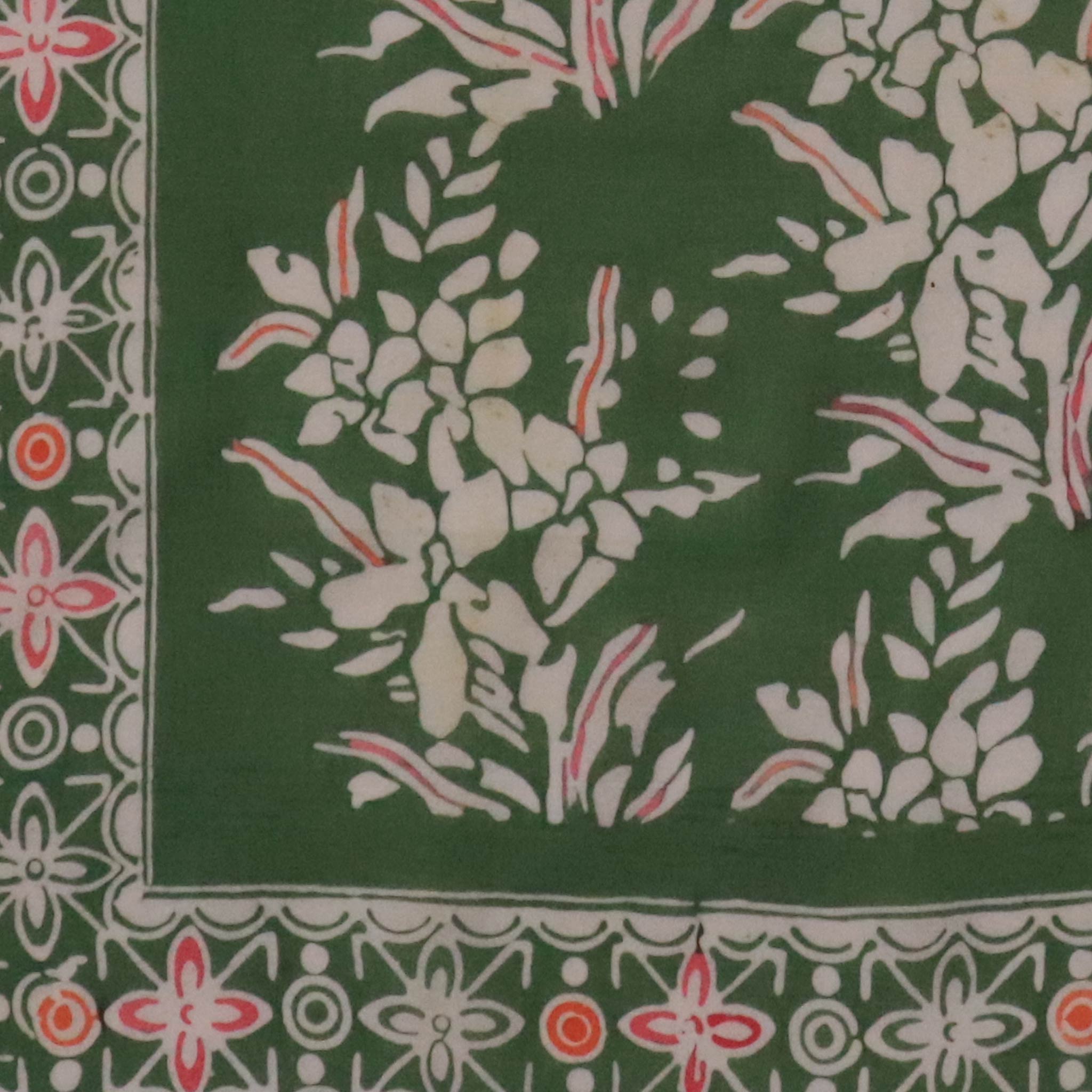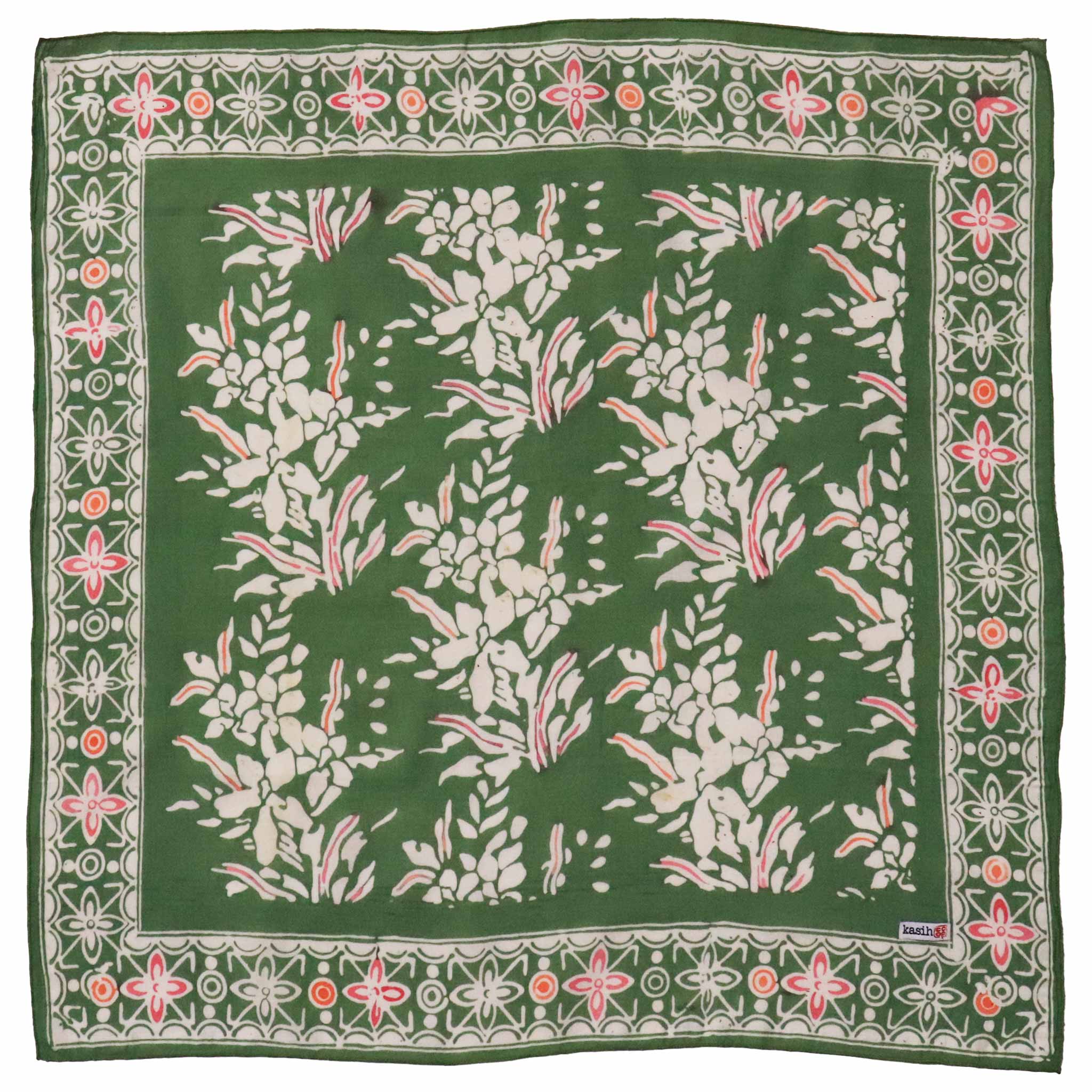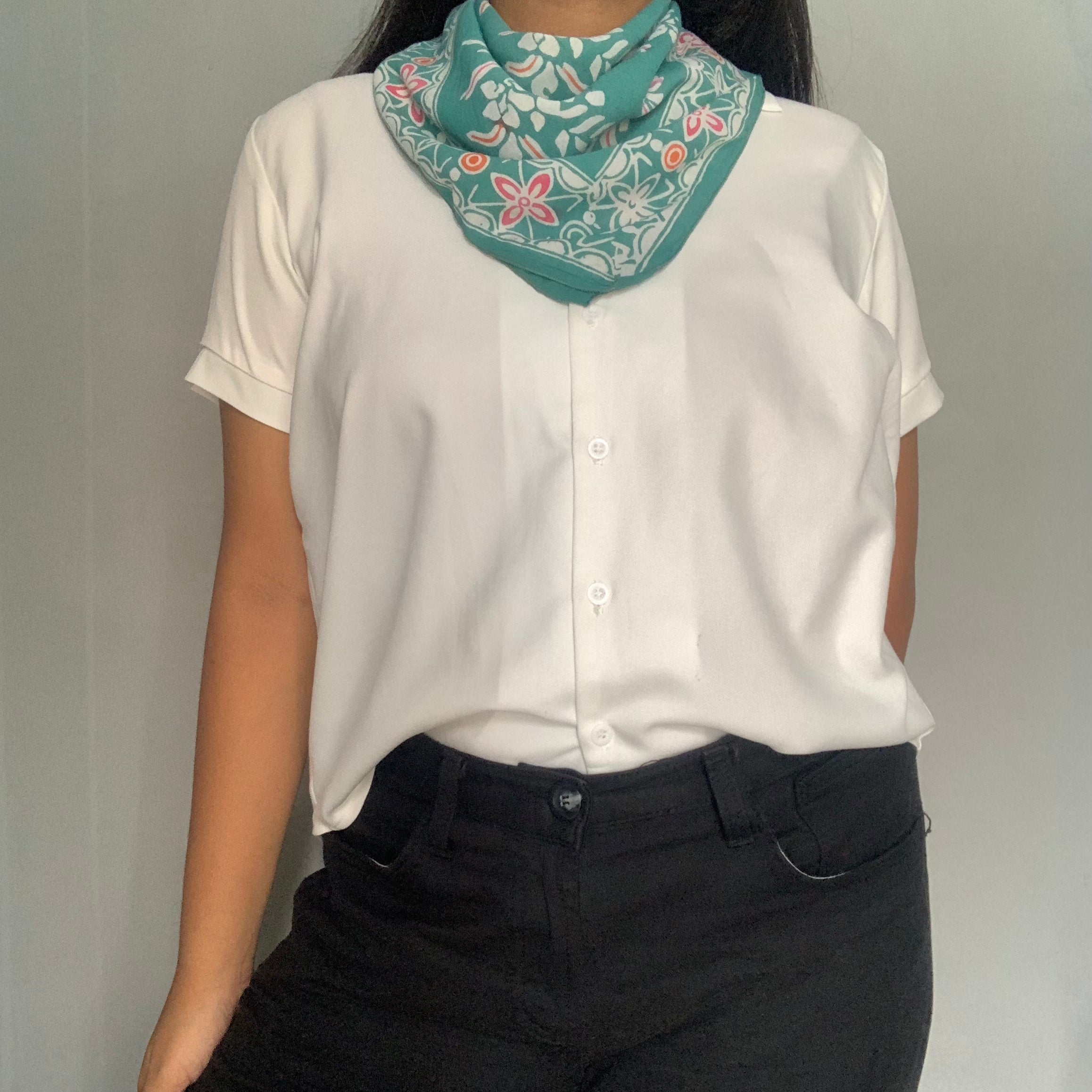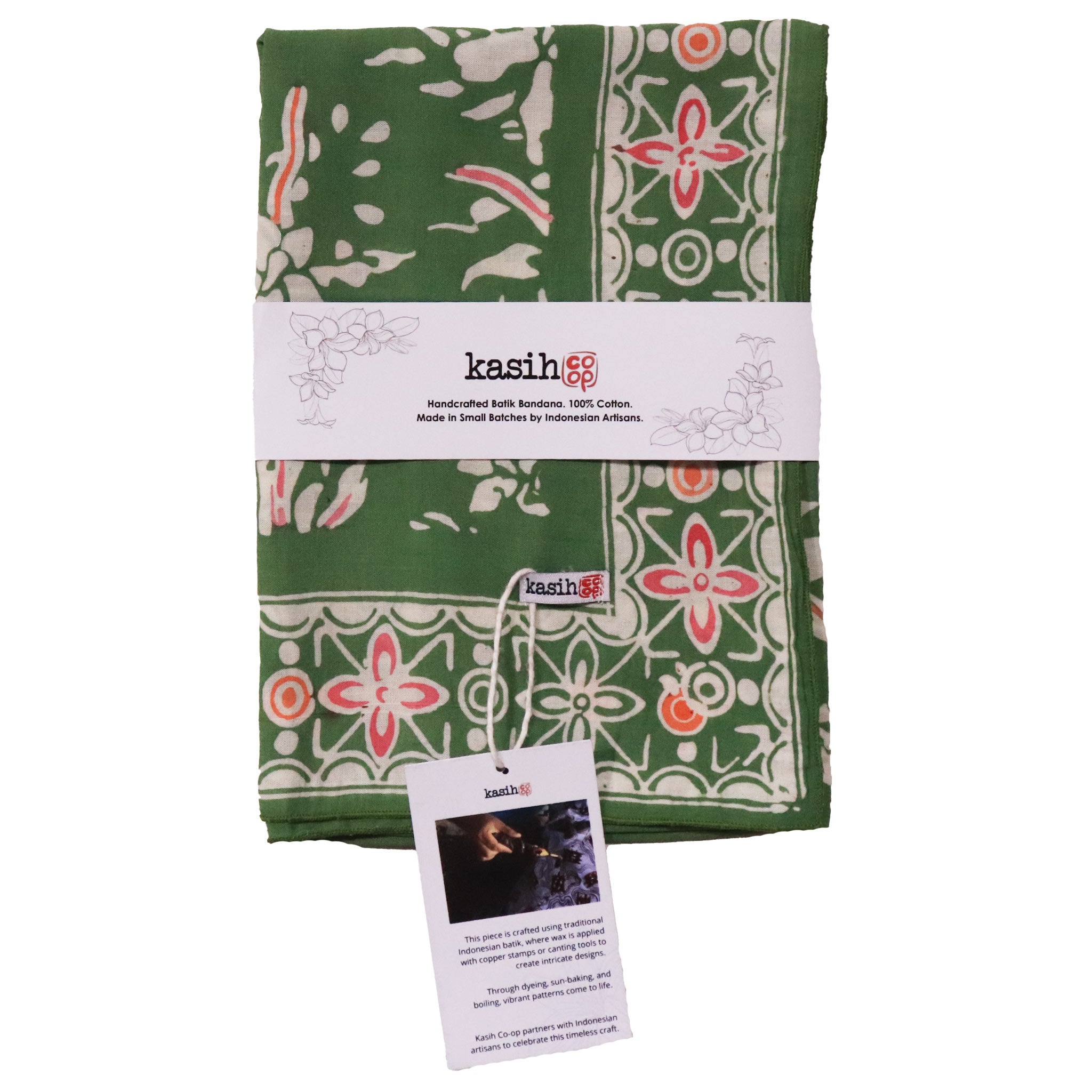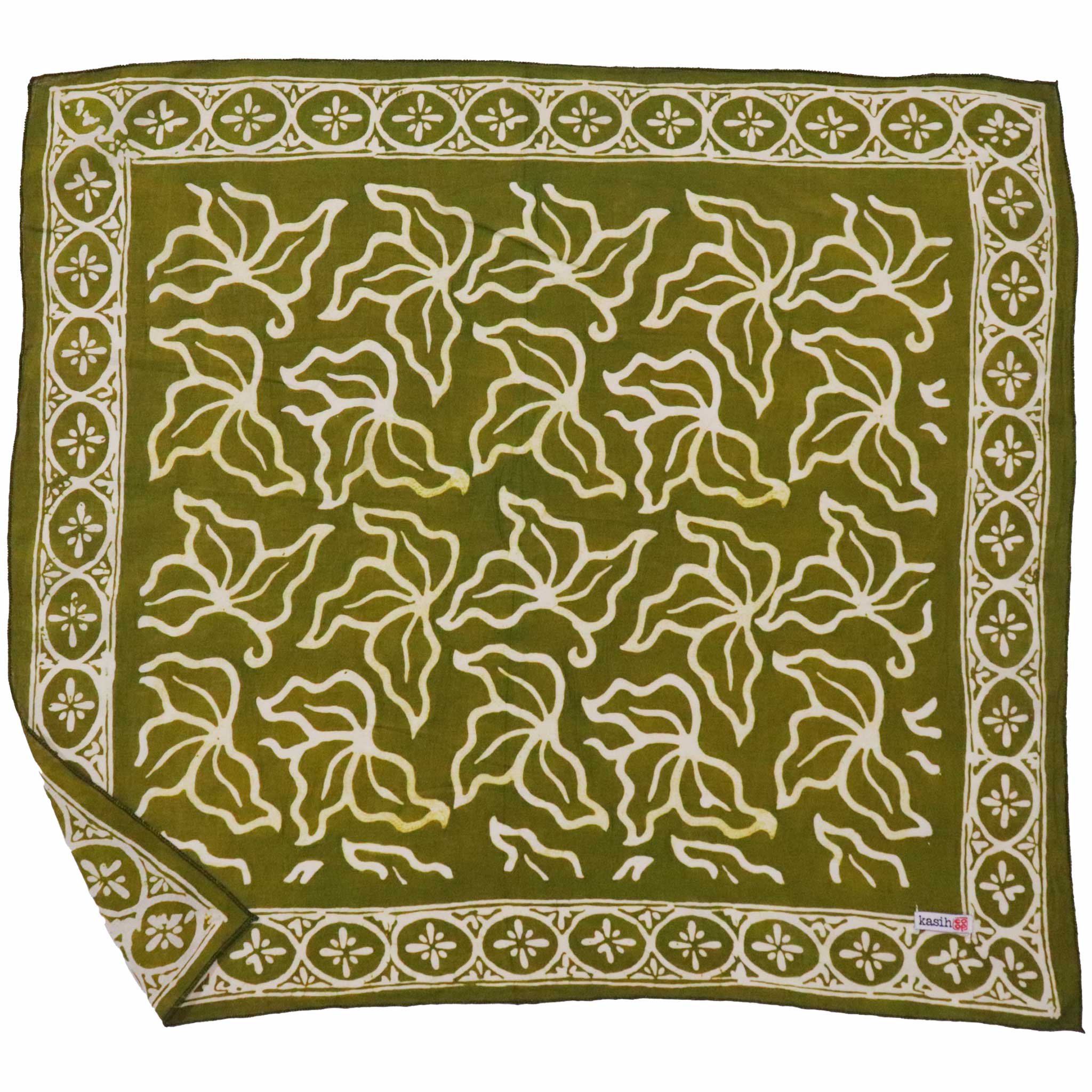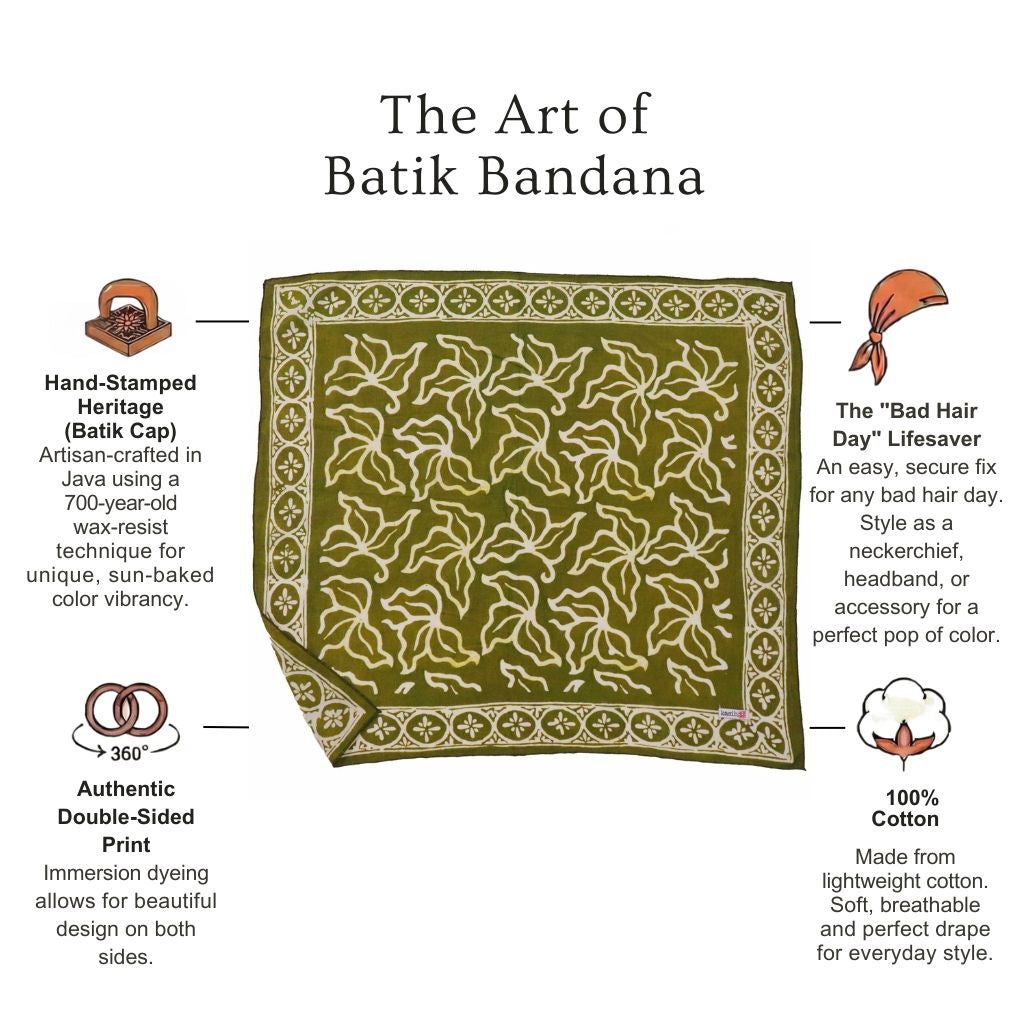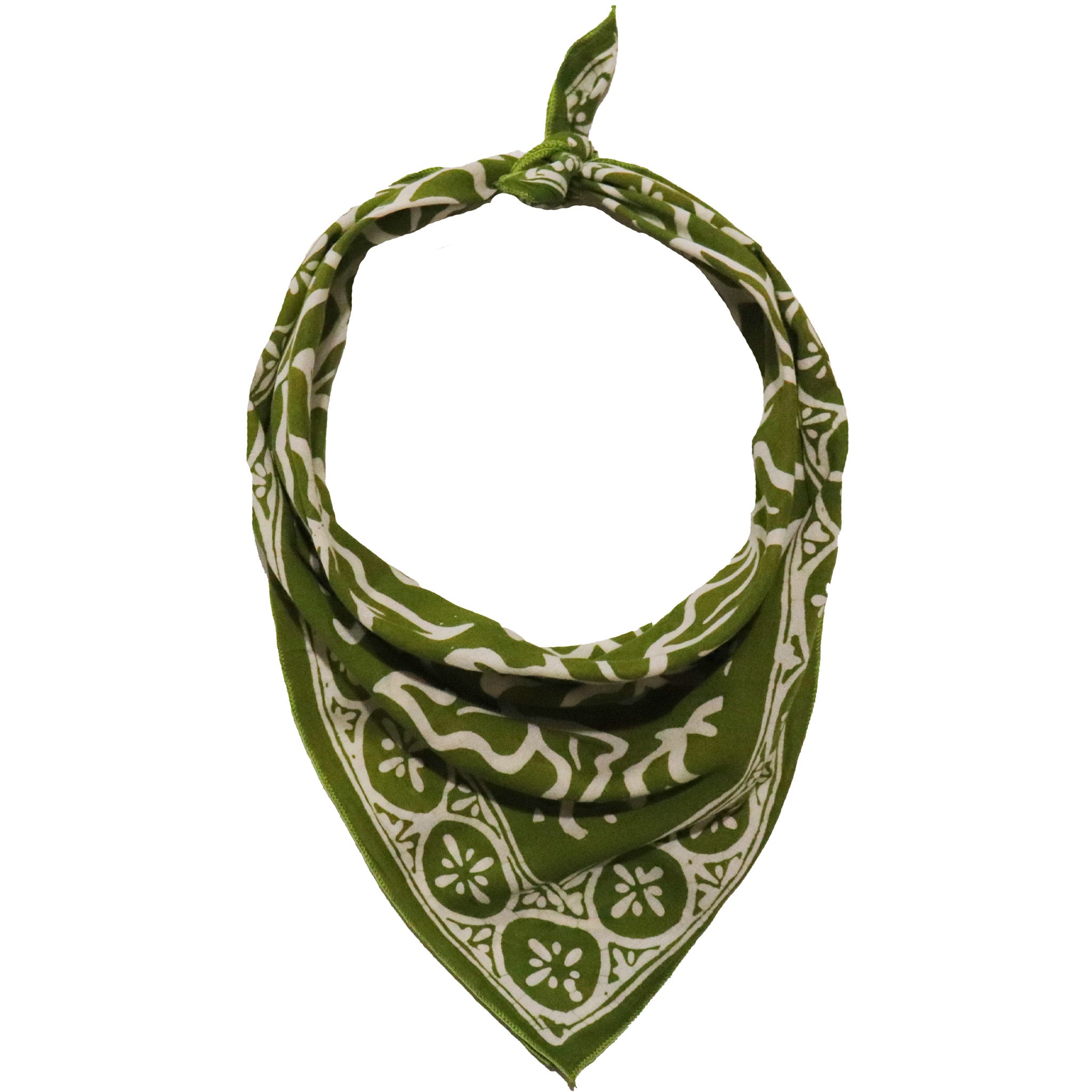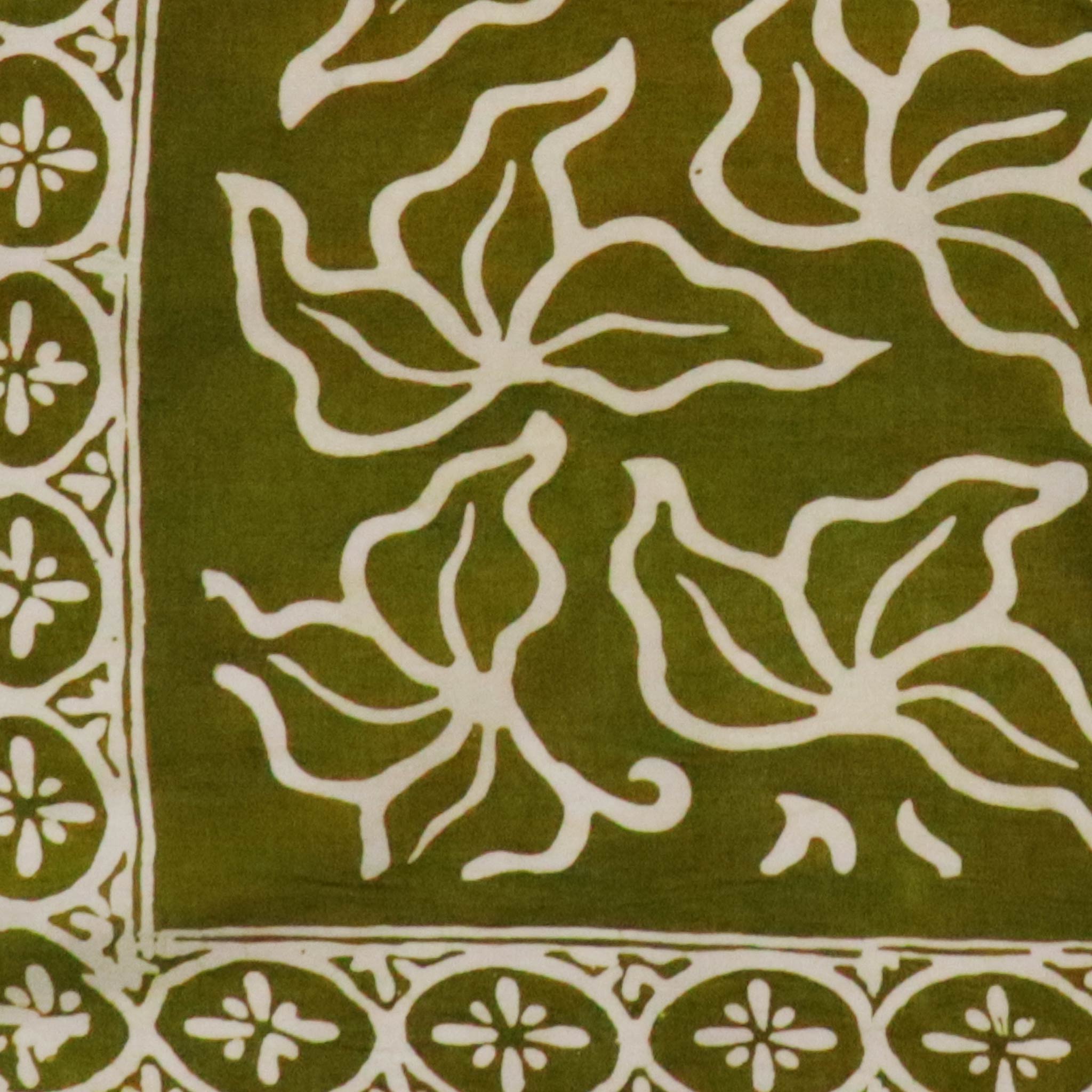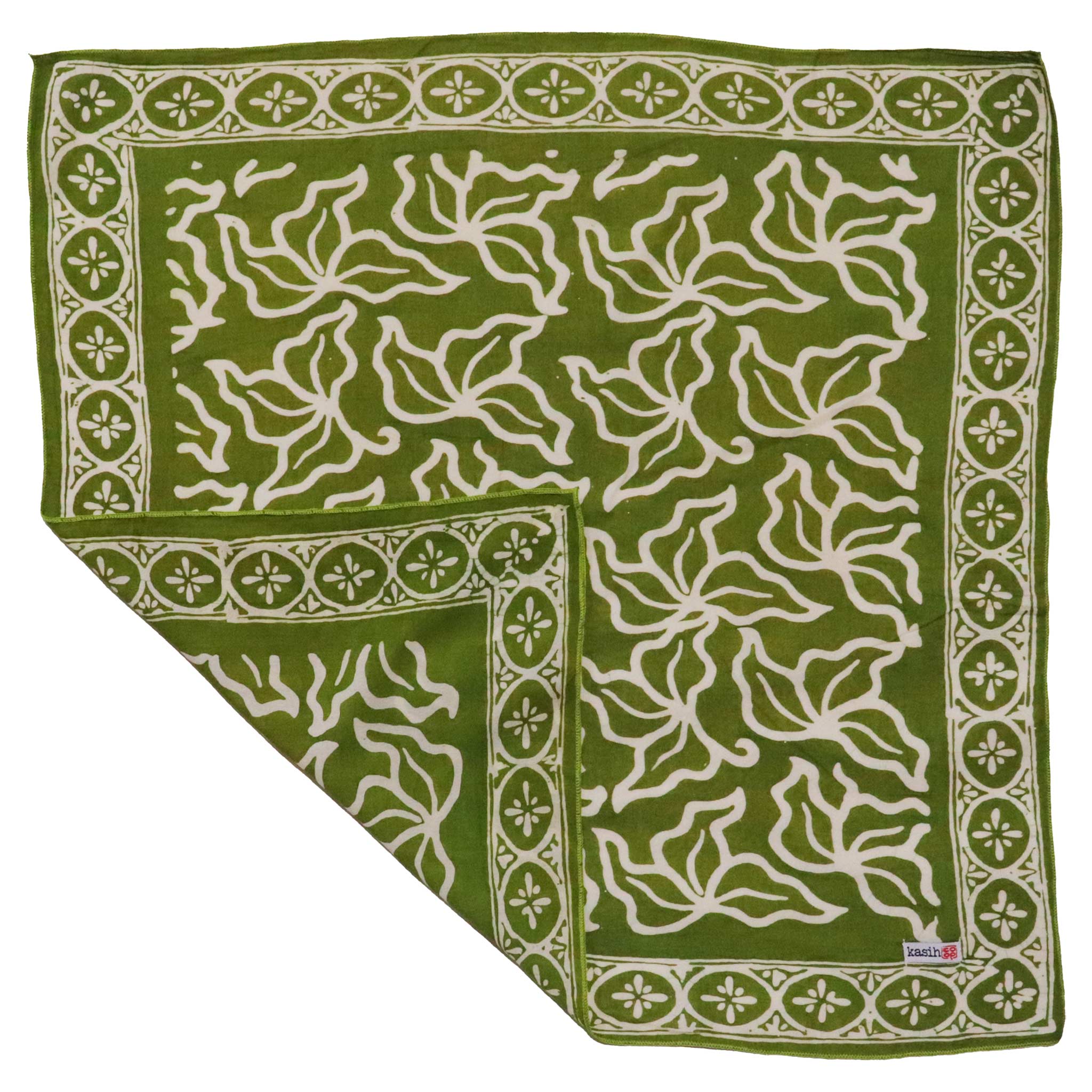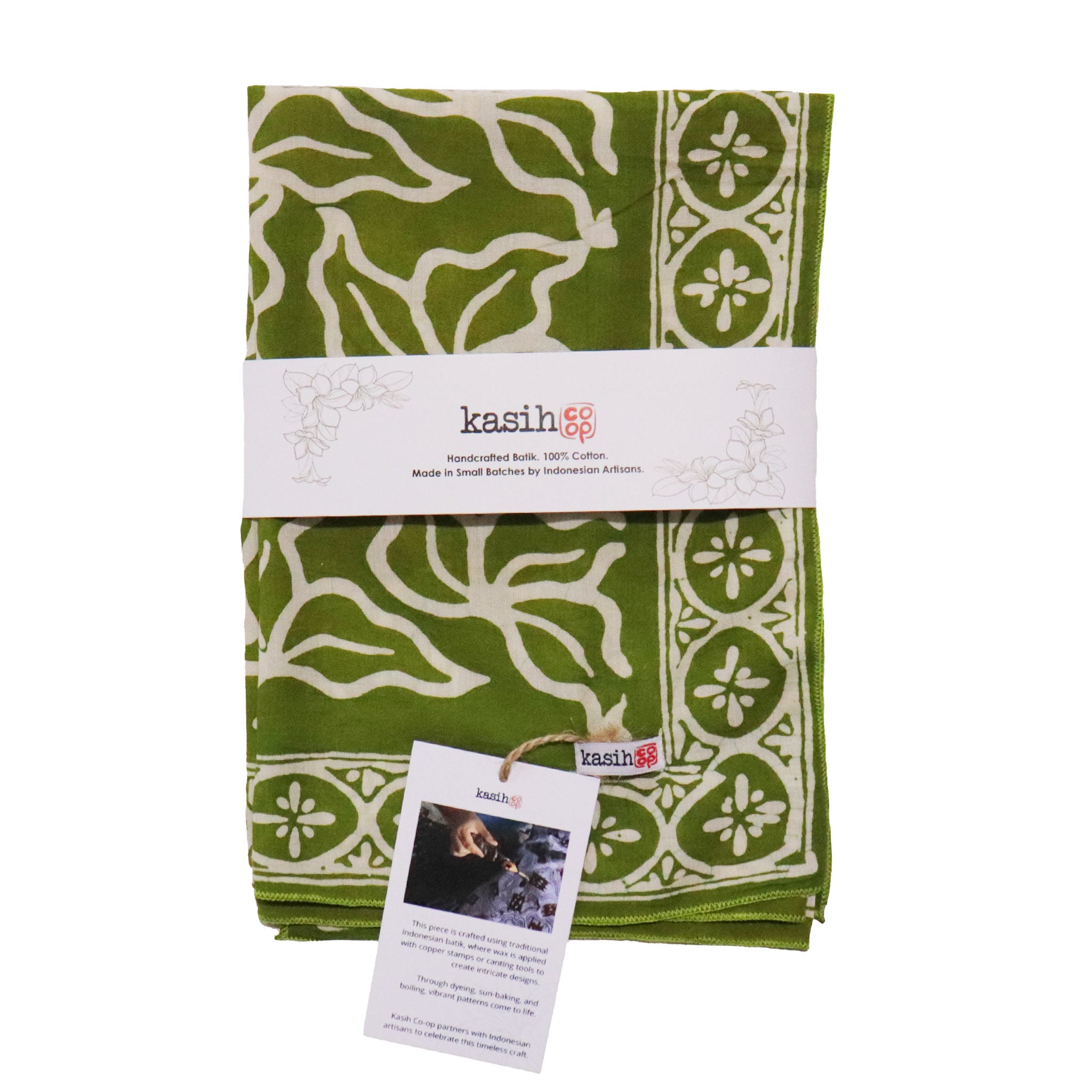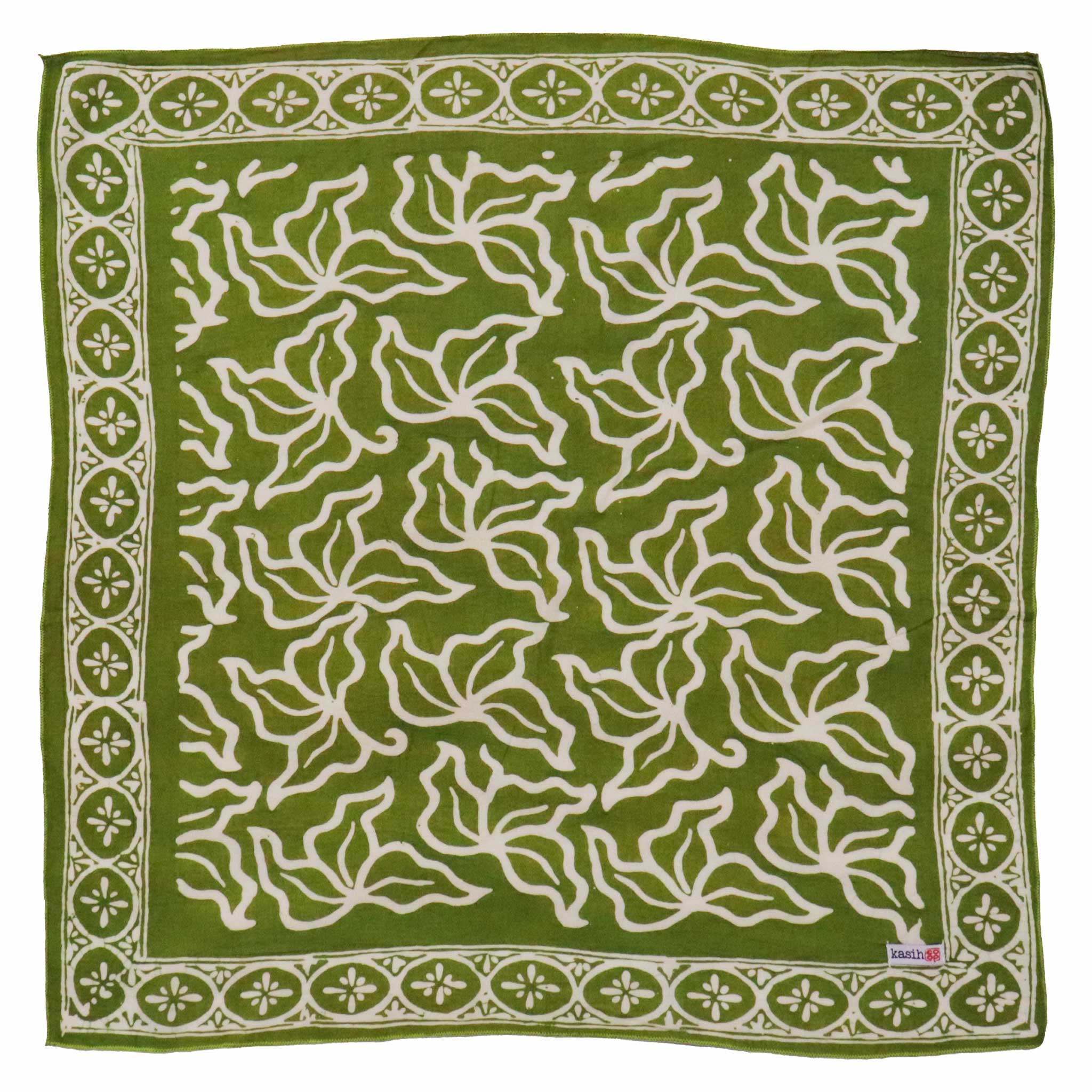

A batik bandana is made to be worn, in your hair, around your neck, tied to a bag. But every so often a pattern is too good to keep folded in a drawer. Hand-dyed batik is a small work of textile art: each piece is waxed, dyed, and boiled by artisans in Java, and many of the motifs carry centuries of meaning. Framing one turns a $23 accessory into a piece of wall art with a story behind it.
Here's how to frame a bandana so it looks polished and stays beautiful for years.
What You'll Need
- Your bandana (a standard bandana is roughly 21–22 inches square; our Large is 39 inches)
- A frame with at least 1–2 inches of depth if you want a floating look, or a shadow box
- Acid-free backing board or mat board, cut to fit the frame
- Plain cotton or linen fabric to cover the board (optional, but a nice finish)
- Cotton thread and a needle, or rust-proof stainless steel pins
- An iron and a pressing cloth
Step 1: Choose Your Frame Size
Measure your bandana edge to edge, then decide on the look:
- Floating: the bandana sits on a solid background with a border of space around it. Add 2–4 inches to every side. A standard bandana floats nicely in a 24 x 24 or 26 x 26 inch frame.
- Edge to edge: the pattern fills the frame completely, like a print. Choose a frame just slightly smaller than the bandana and fold the excess edge behind the board.
- Matted: a mat window frames the center of the design. Good if your bandana has a strong central medallion or border you want to highlight.
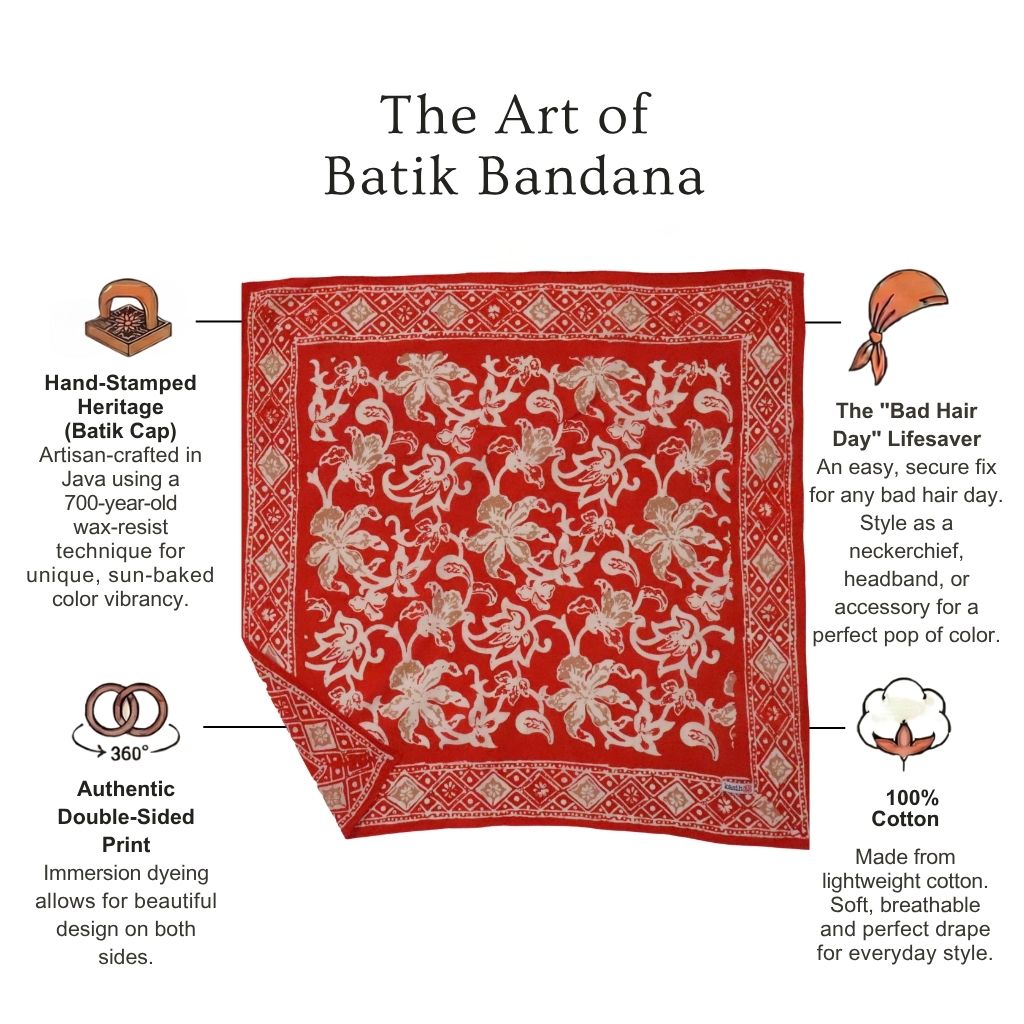
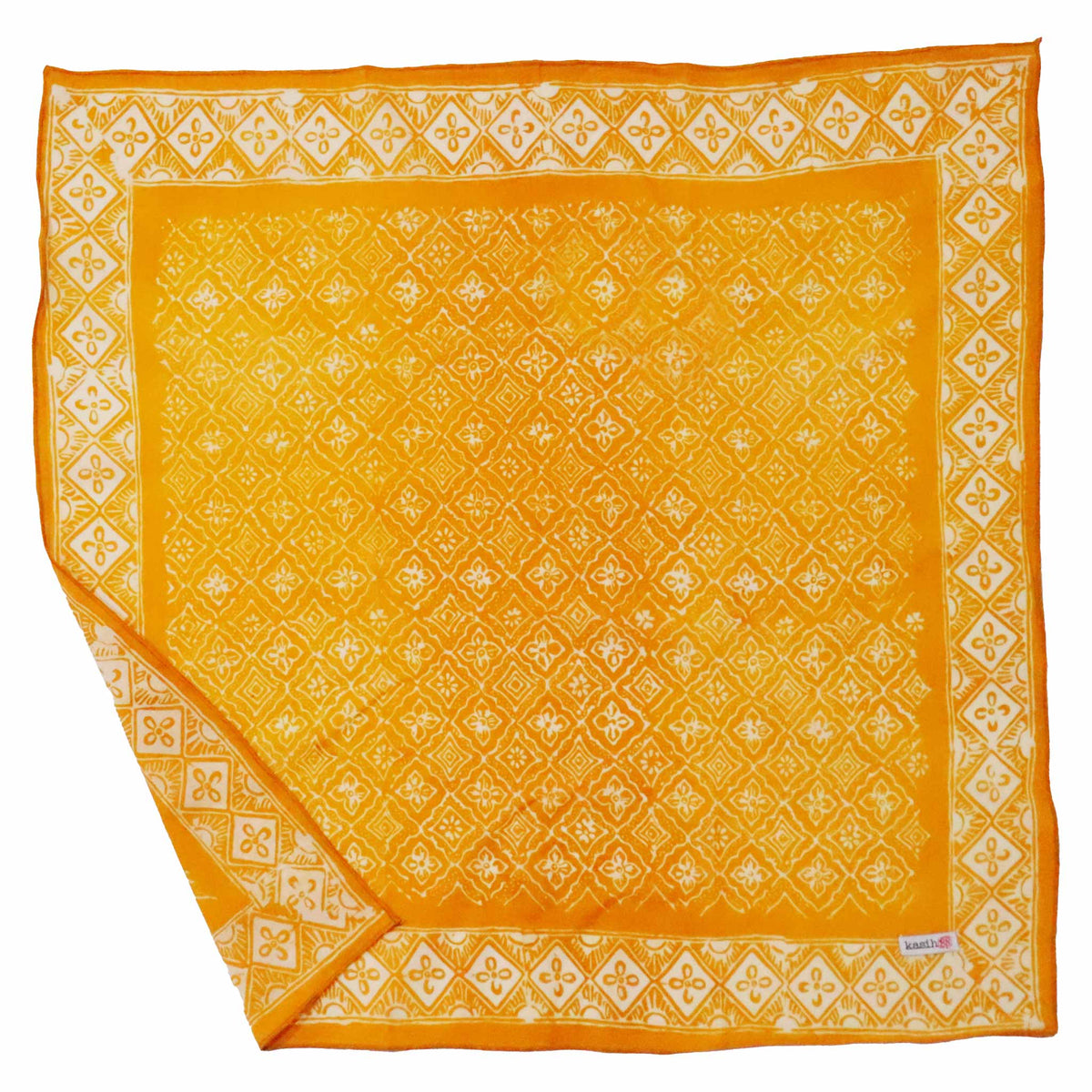
Batik bandanas have a hand-rolled hem, so we usually recommend floating. The hem is part of what makes it handmade, and it's worth showing off.
Step 2: Press the Bandana
Lay the bandana face down on an ironing board, cover it with a thin pressing cloth, and iron on a medium cotton setting. Work from the center out to remove fold lines. Skip the spray starch, since residue can attract dust and discolor over time.
Because batik dye penetrates the cotton, most of our bandanas look good on both sides. Hold it up to the light and choose the side you like best before mounting.
Step 3: Prepare the Backing
Use acid-free board. Regular cardboard and foam core contain acids that can yellow and weaken cotton over the years. For a clean, gallery-style finish, wrap the board in plain cotton or linen and secure the fabric on the back with tape. A neutral background like cream, white, charcoal, or natural linen lets the pattern do the talking.
Step 4: Mount Without Glue
This is the most important step. Never use glue, spray adhesive, or tape on the bandana itself. Adhesives stain fabric and make the piece impossible to remove later.
Instead, center the bandana on the board and secure it one of two ways:
- Stitching (best): Using cotton thread in a matching color, make small stitches every few inches along the hem, passing through the bandana and the fabric-covered board. Tie off on the back. This is the method museums use, and the stitches are almost invisible.
- Pinning (quicker): Push stainless steel pins through the hem into a thick foam board at a slight angle. Use rust-proof pins only; regular pins can leave rust marks.
Start with the four corners, then the middle of each side, then fill in. Smooth gently as you go so the fabric sits flat without stretching.
Step 5: Glaze and Close the Frame
Make sure the glass or acrylic doesn't touch the fabric. A shadow box or spacers keep a small gap so the cotton can breathe and won't trap moisture. If your budget allows, choose UV-filtering glazing: it's the single best way to keep natural and hand-dyed colors from fading.
Where to Hang It
- Away from direct sunlight, which fades even the best dyes over time
- Out of humid rooms like bathrooms
- Not directly above a radiator, fireplace, or heating vent
Choosing a Bandana Worth Framing
Bold, graphic patterns read best from across a room. A few of our favorites for the wall:
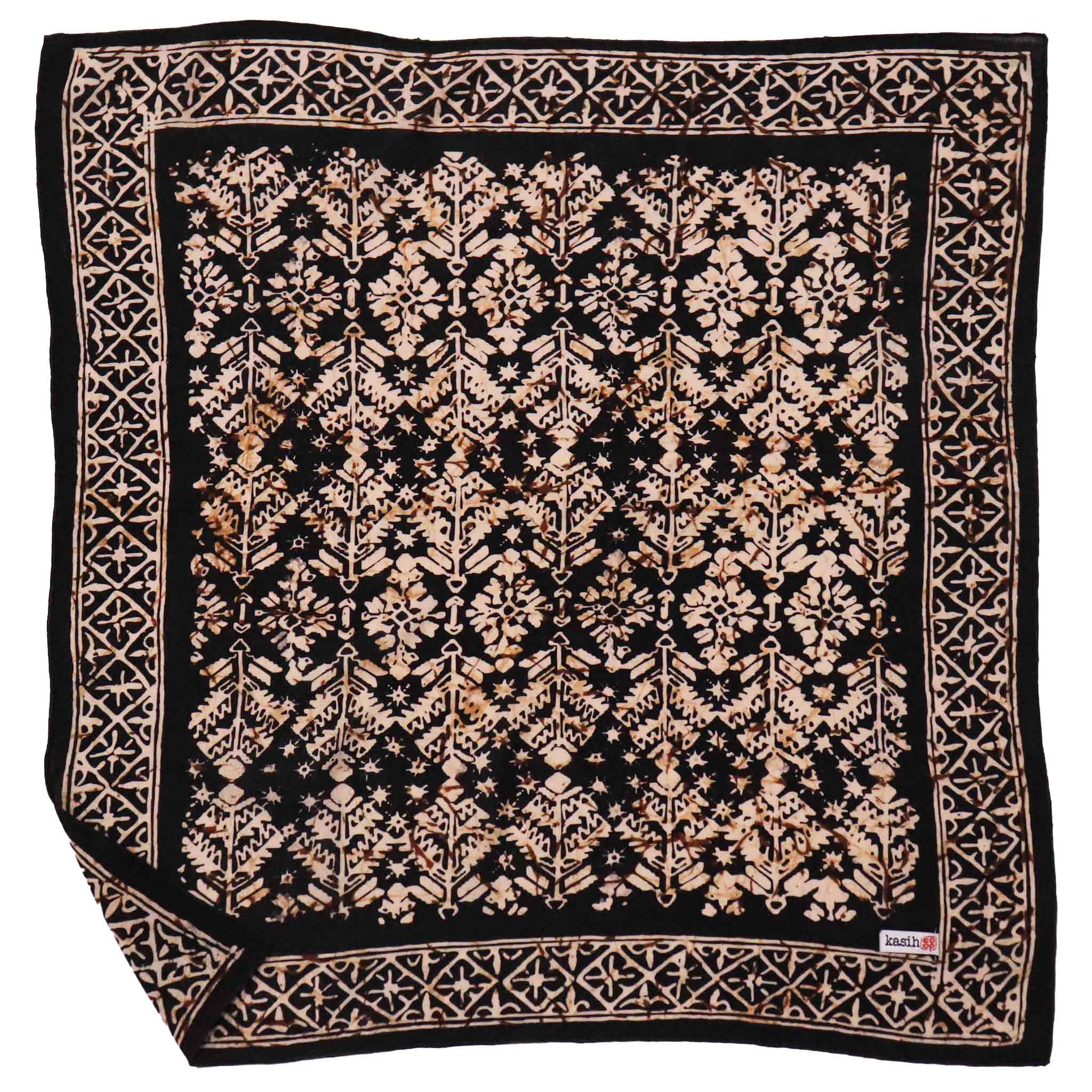
Black Mirage (Truntum)

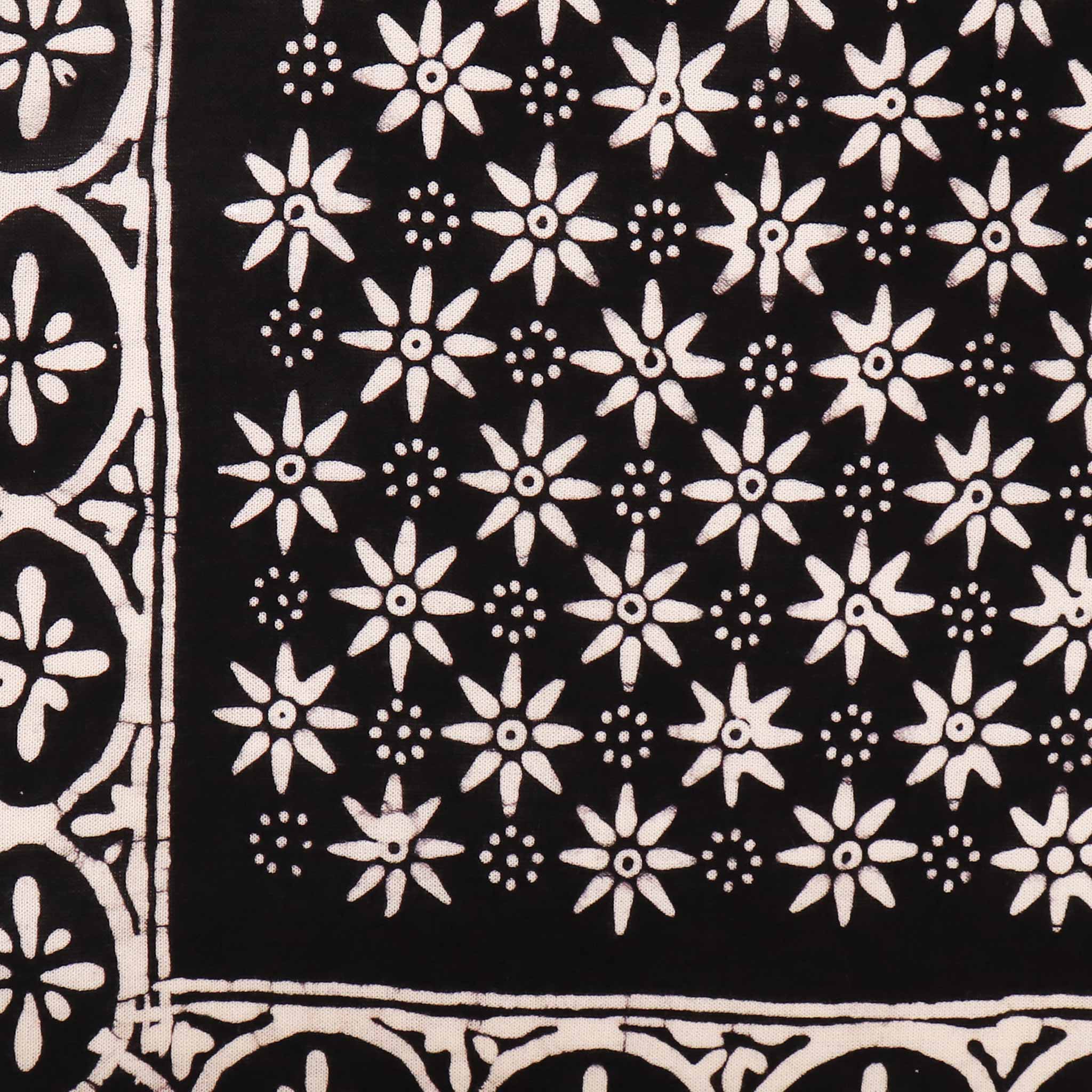
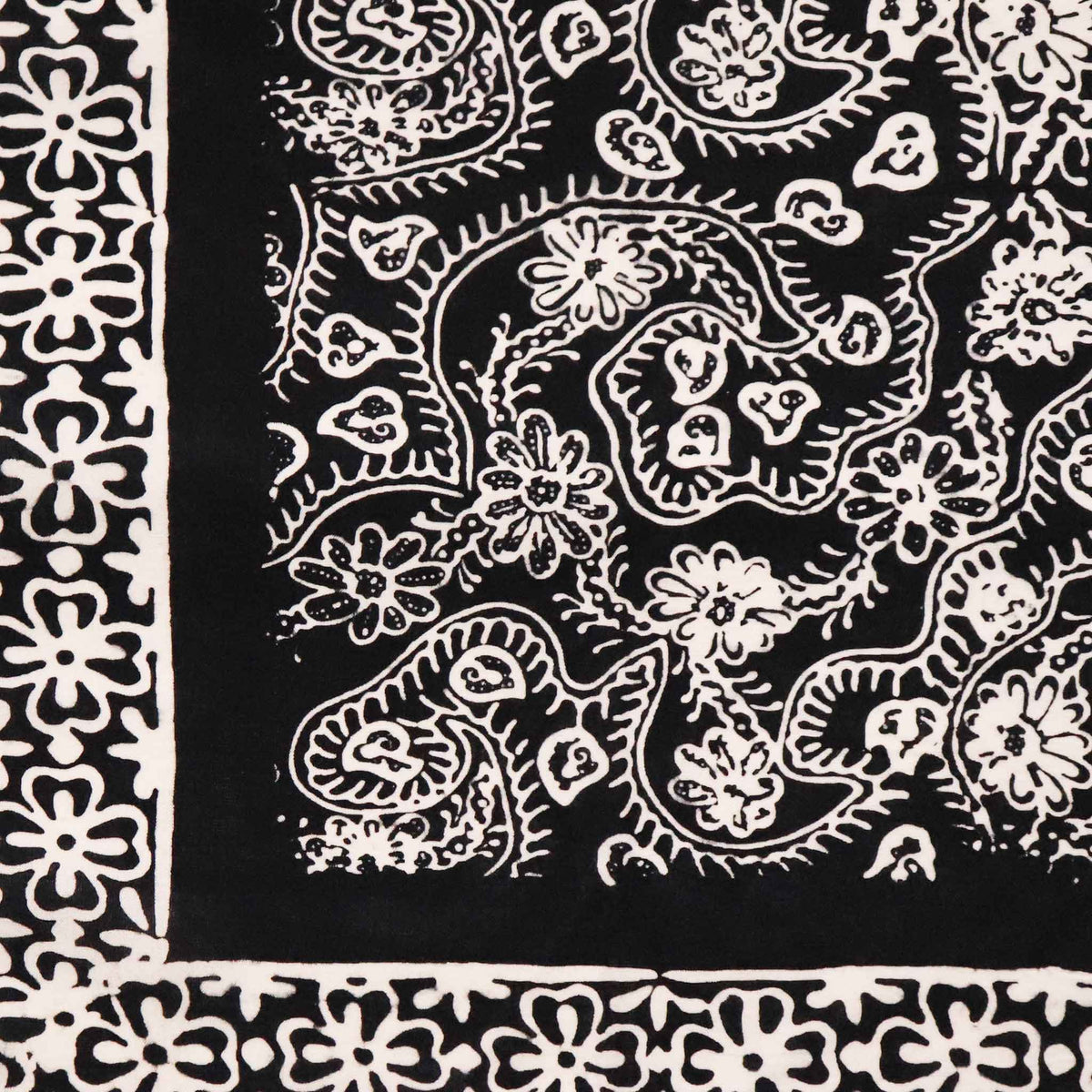
Our bestselling bandana is also our top pick for framing. The black-and-white Truntum motif is crisp and graphic, so it works in almost any room, and it carries a lovely meaning: Truntum symbolizes everlasting love and is traditionally worn at Javanese weddings. A framed Black Mirage makes a thoughtful wedding or anniversary gift.
Shop the Black Mirage Batik Bandana →
Large 39" Black Mirage

Want a true statement piece? At 39 inches square, our Large bandana fills a wall above a sofa or bed the way a tapestry would. Pieces this size usually need a custom frame, so bring it to a local framer and ask for a float mount with acid-free materials.
Shop the Large 39" Black Mirage Bandana →
Hibiscus Poppy, Hand-Drawn Batik Tulis

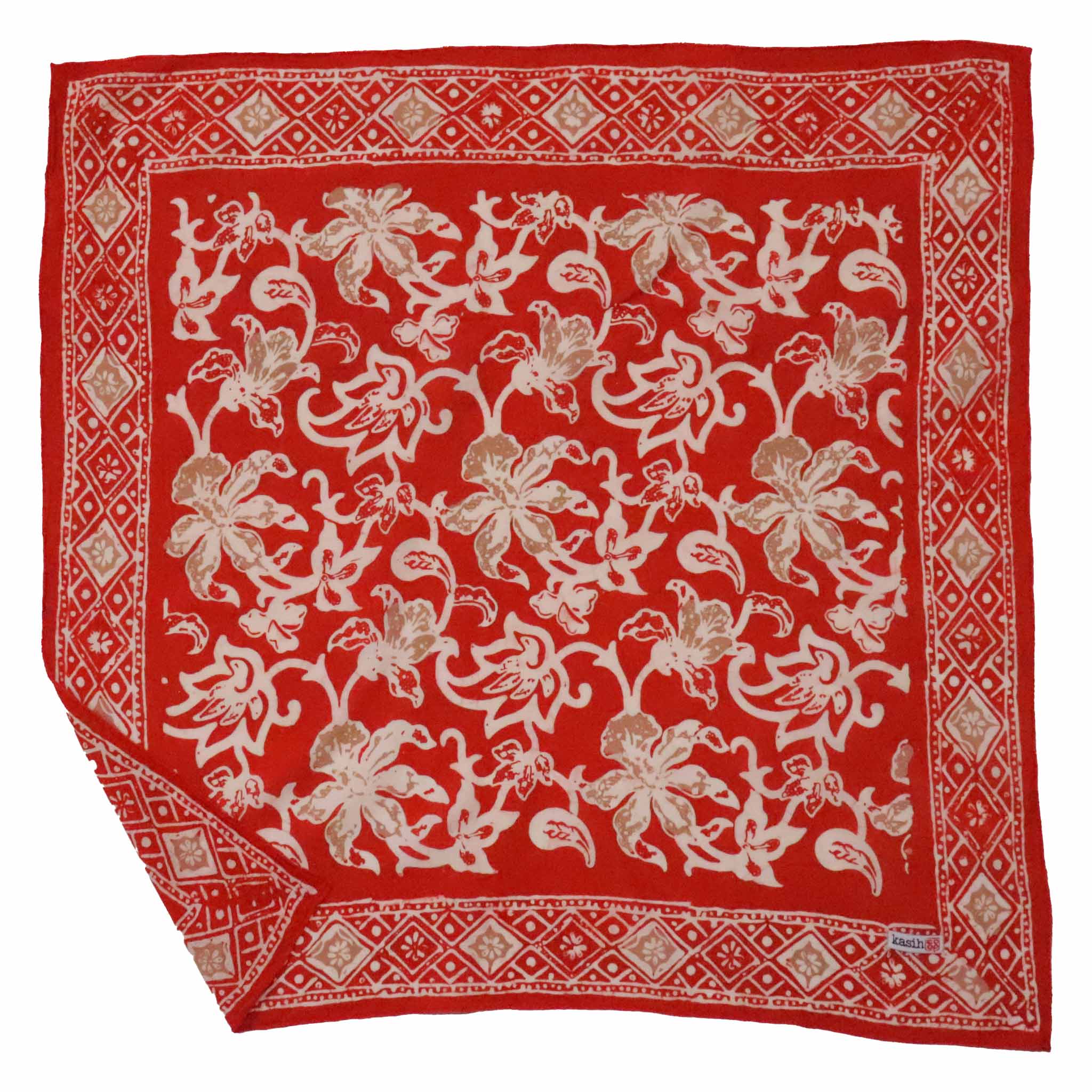
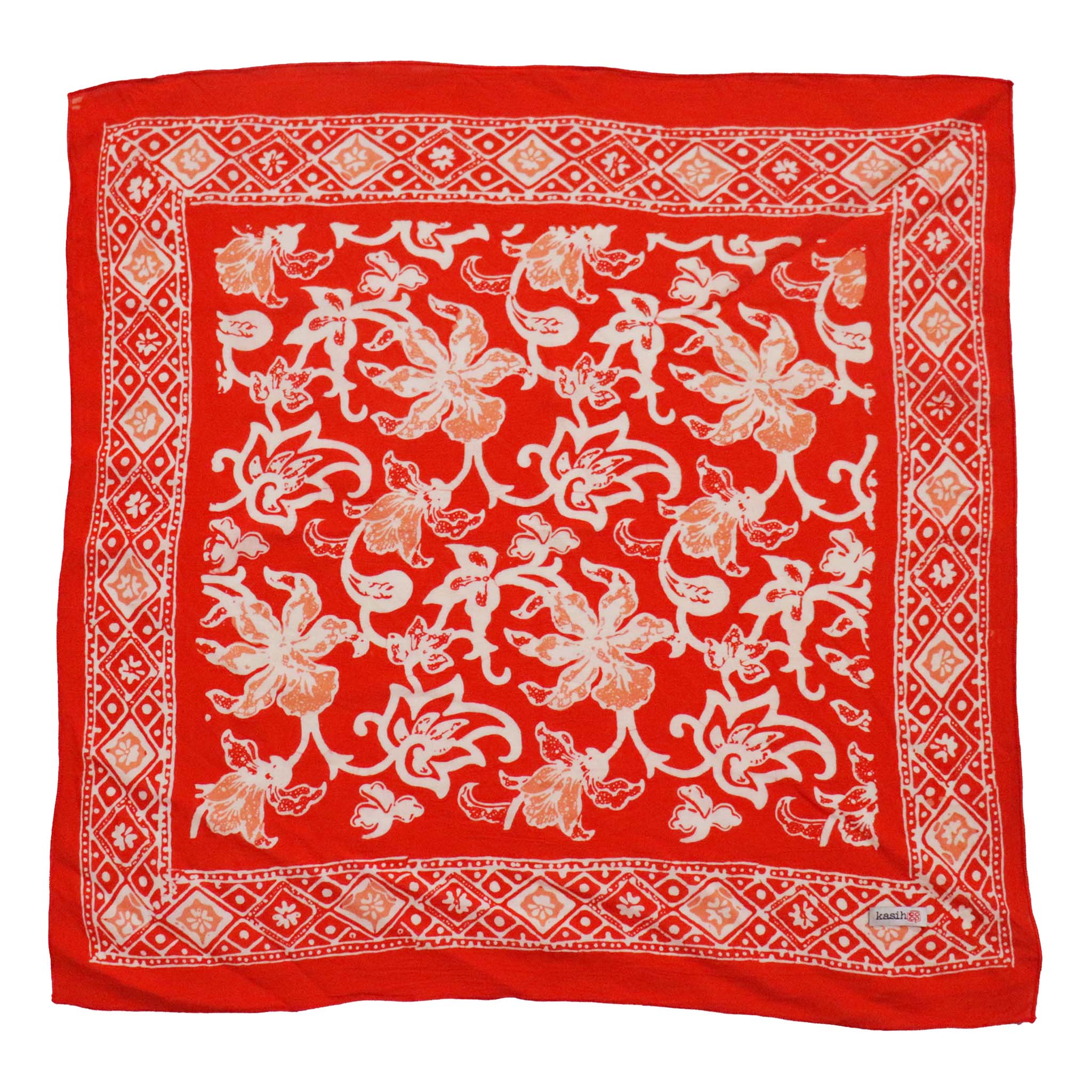
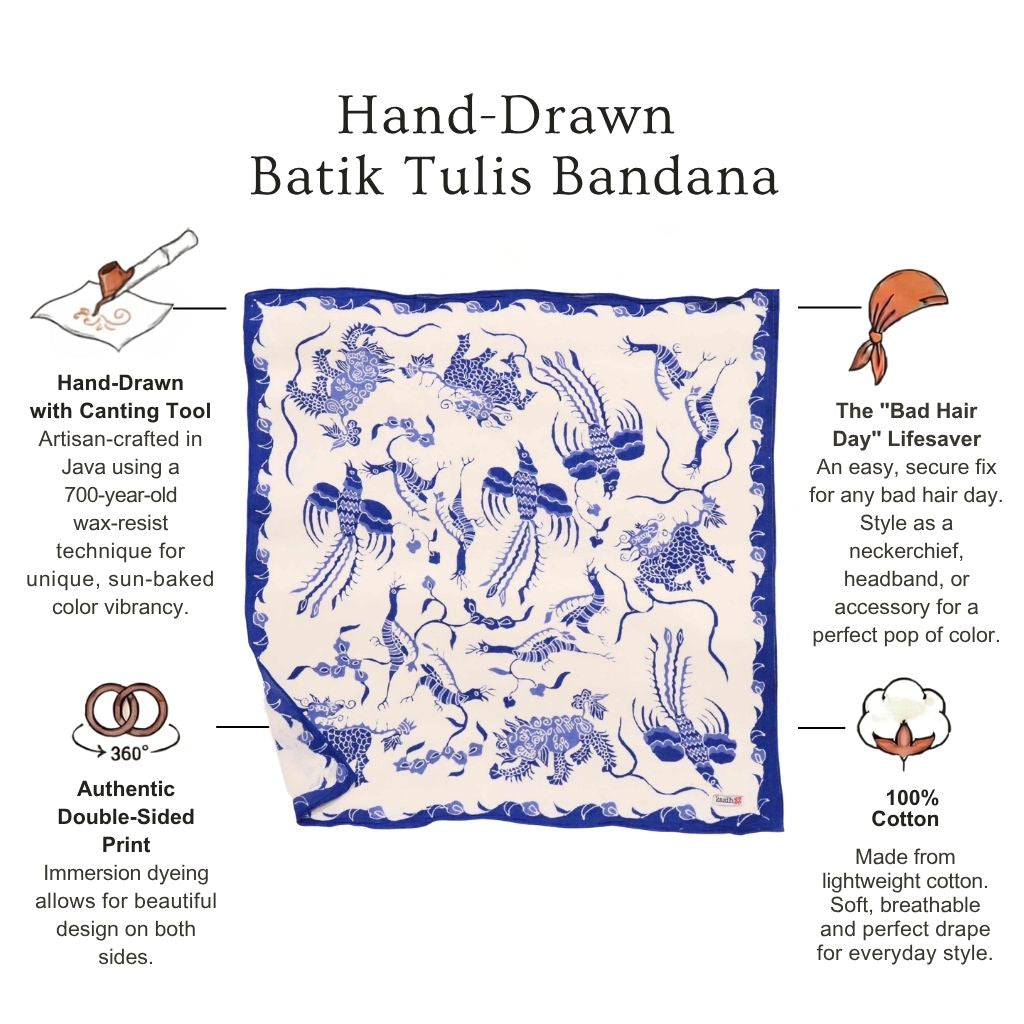
For an heirloom, frame a batik tulis. Every line on these bandanas is drawn by hand with a canting, a small copper wax pen, so no two are exactly alike. This one is a pagi sore design, meaning "morning, evening": the cloth carries two different patterns so it could traditionally be worn one way by day and the other by night. Framed, you get to choose which side of the day to display.
Shop the Hibiscus Poppy Batik Tulis Bandana →
More Ideas
- Make a gallery wall: frame three bandanas in matching frames, either the same pattern in different colorways or three motifs in one color family.
- Tell the story: tuck a small card into the corner of the frame with the pattern's name and meaning. Our guide to the meaning behind batik motifs is a good place to start.
- Keep it reversible: because stitched mounting doesn't damage the fabric, you can always unframe your bandana and wear it again.
Every Kasih Co-op bandana is handmade by women-led artisan groups in Java, Indonesia. Browse our full batik bandana collection to find the one you want to live with every day.