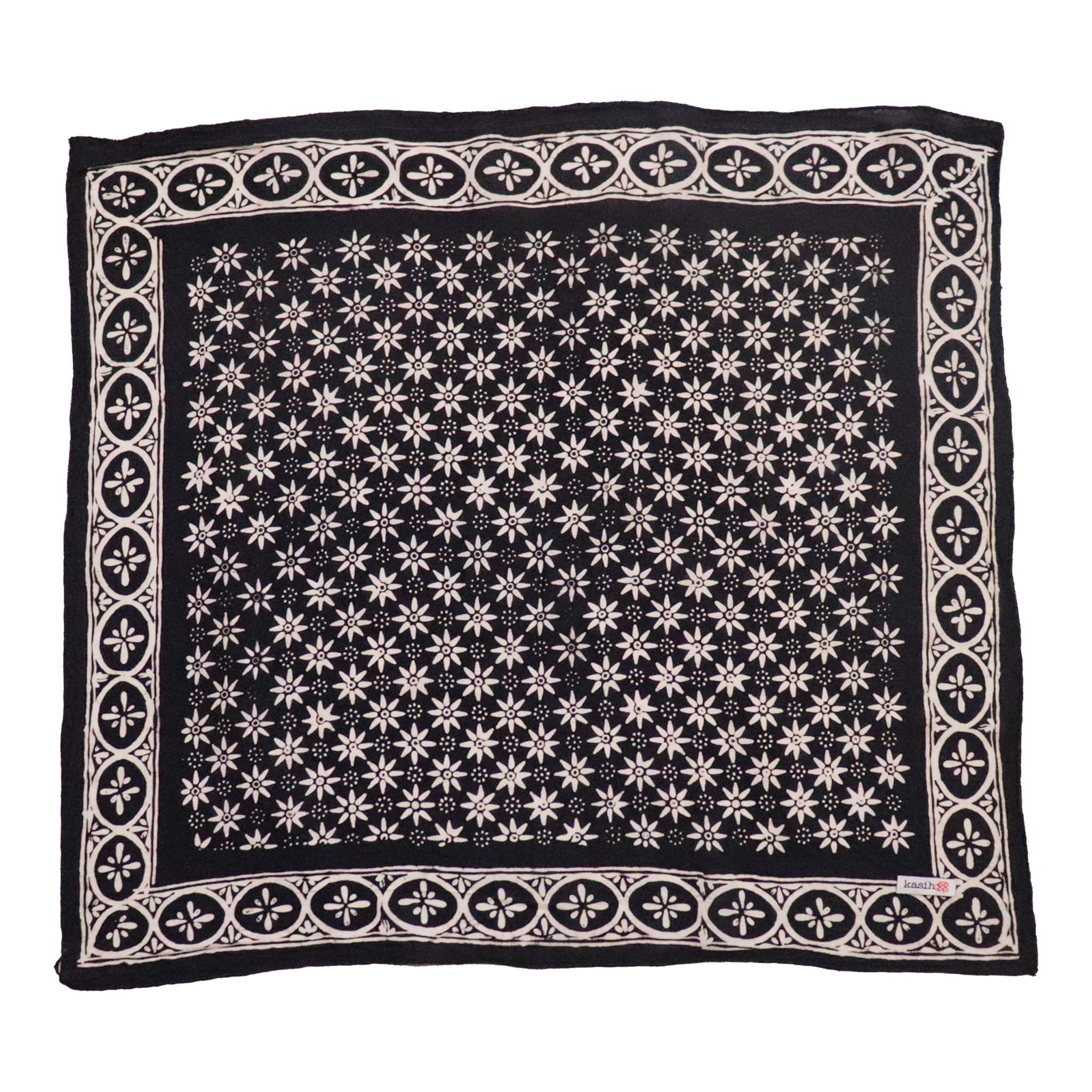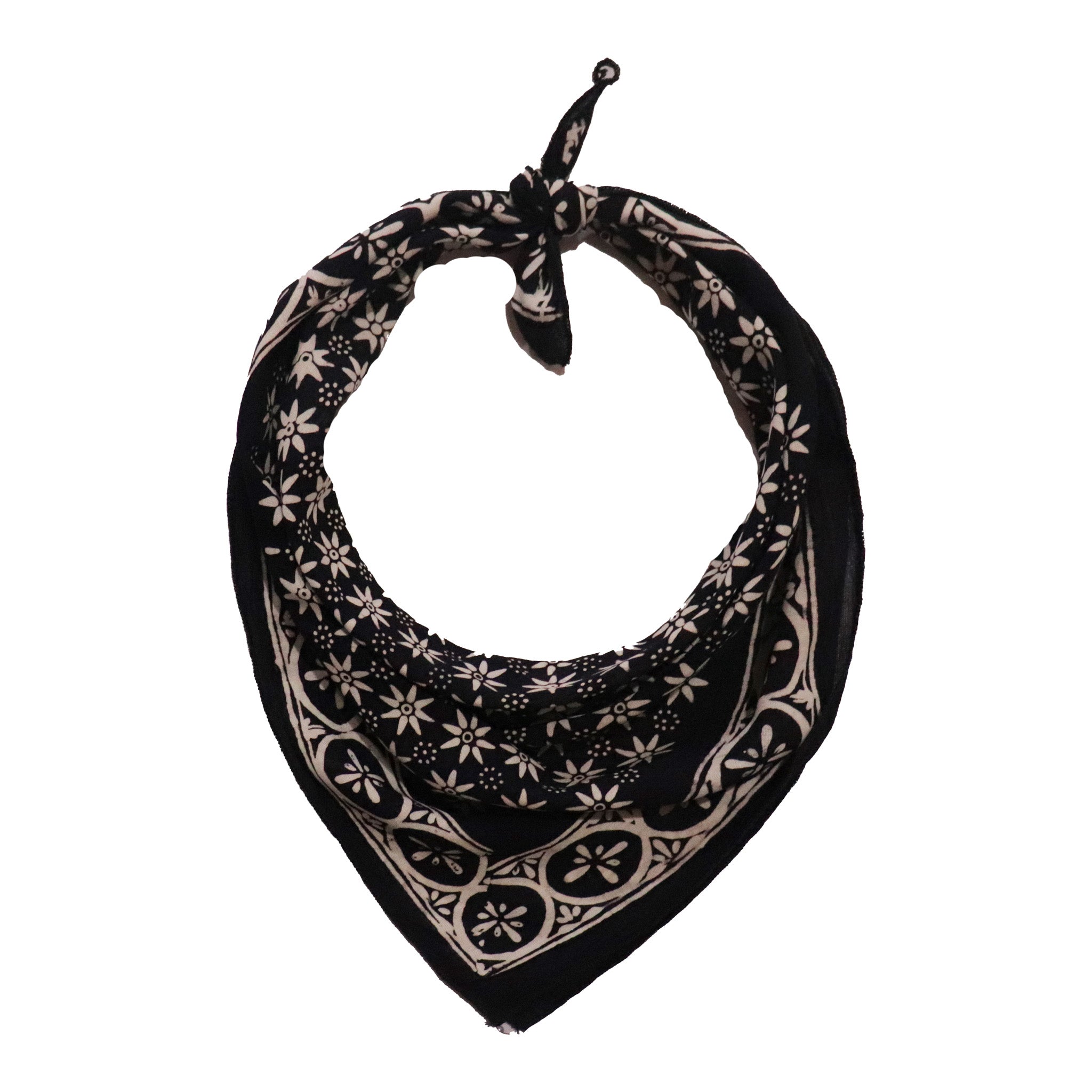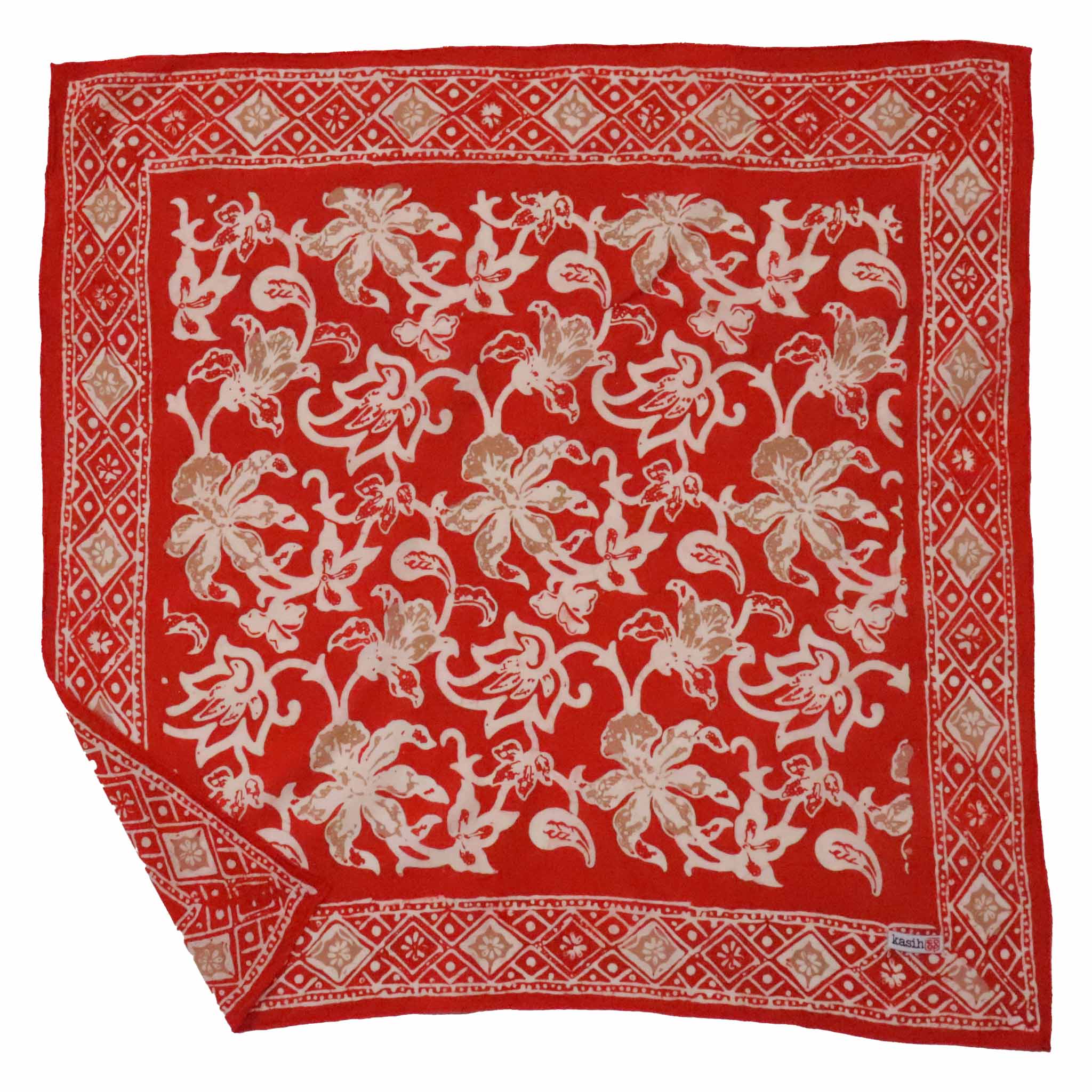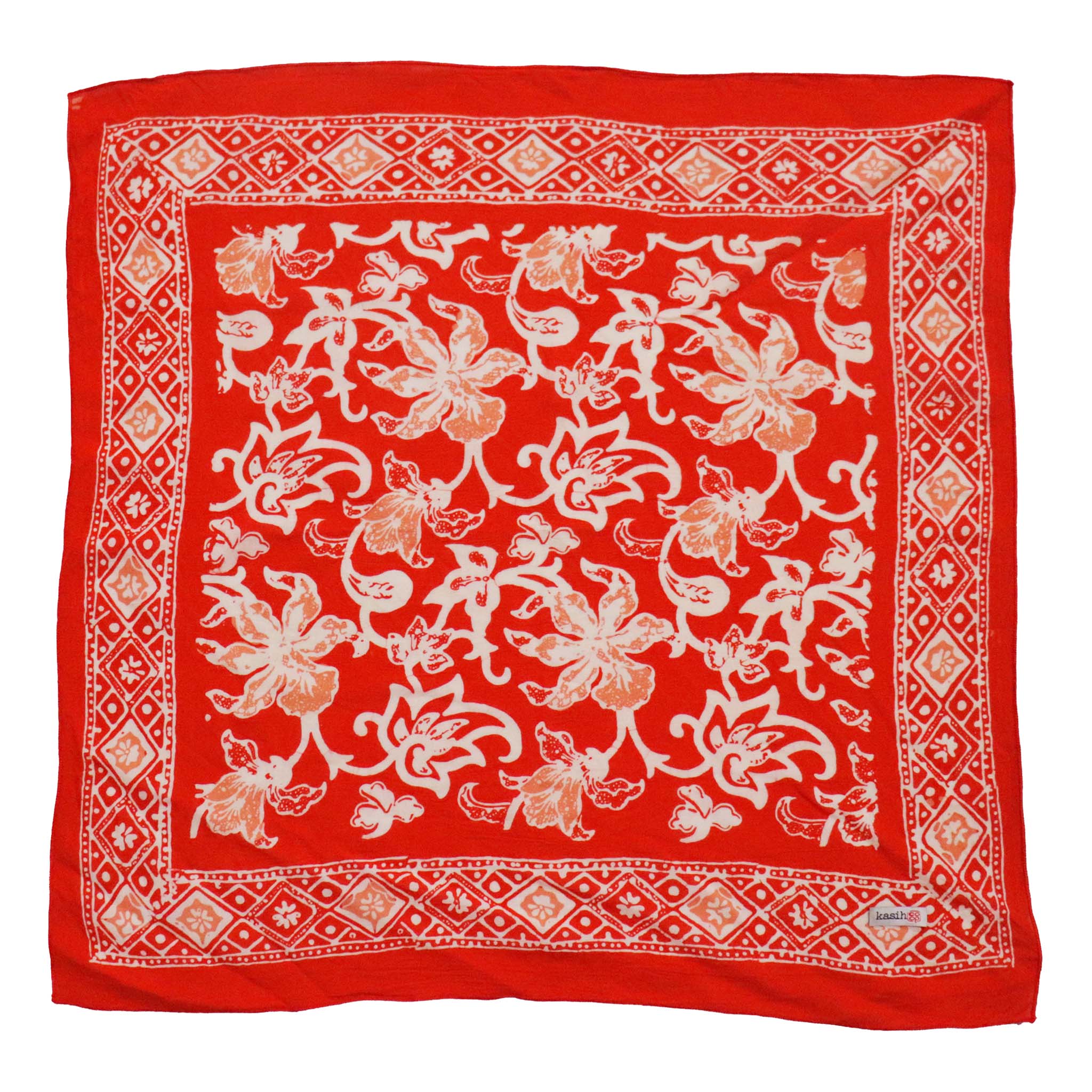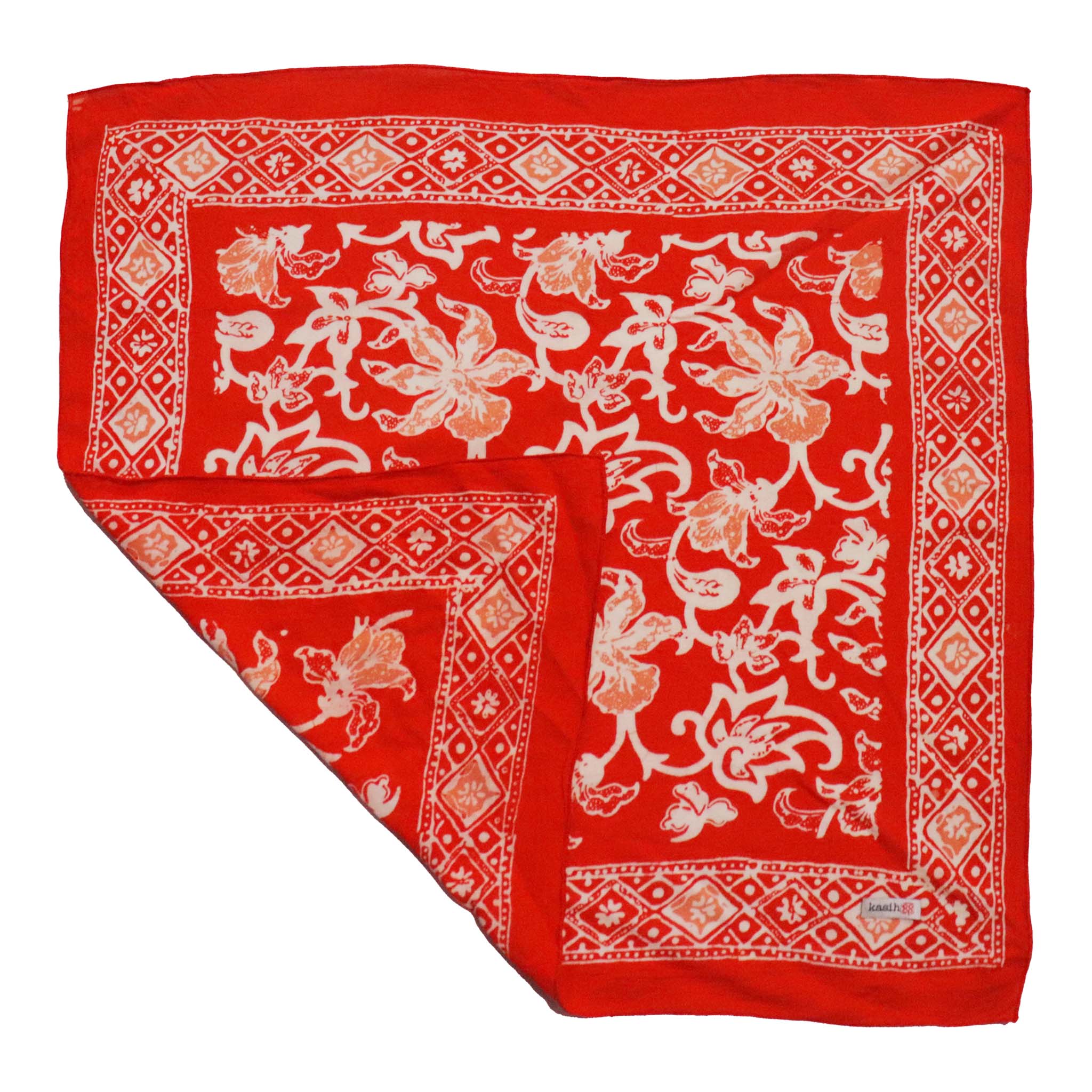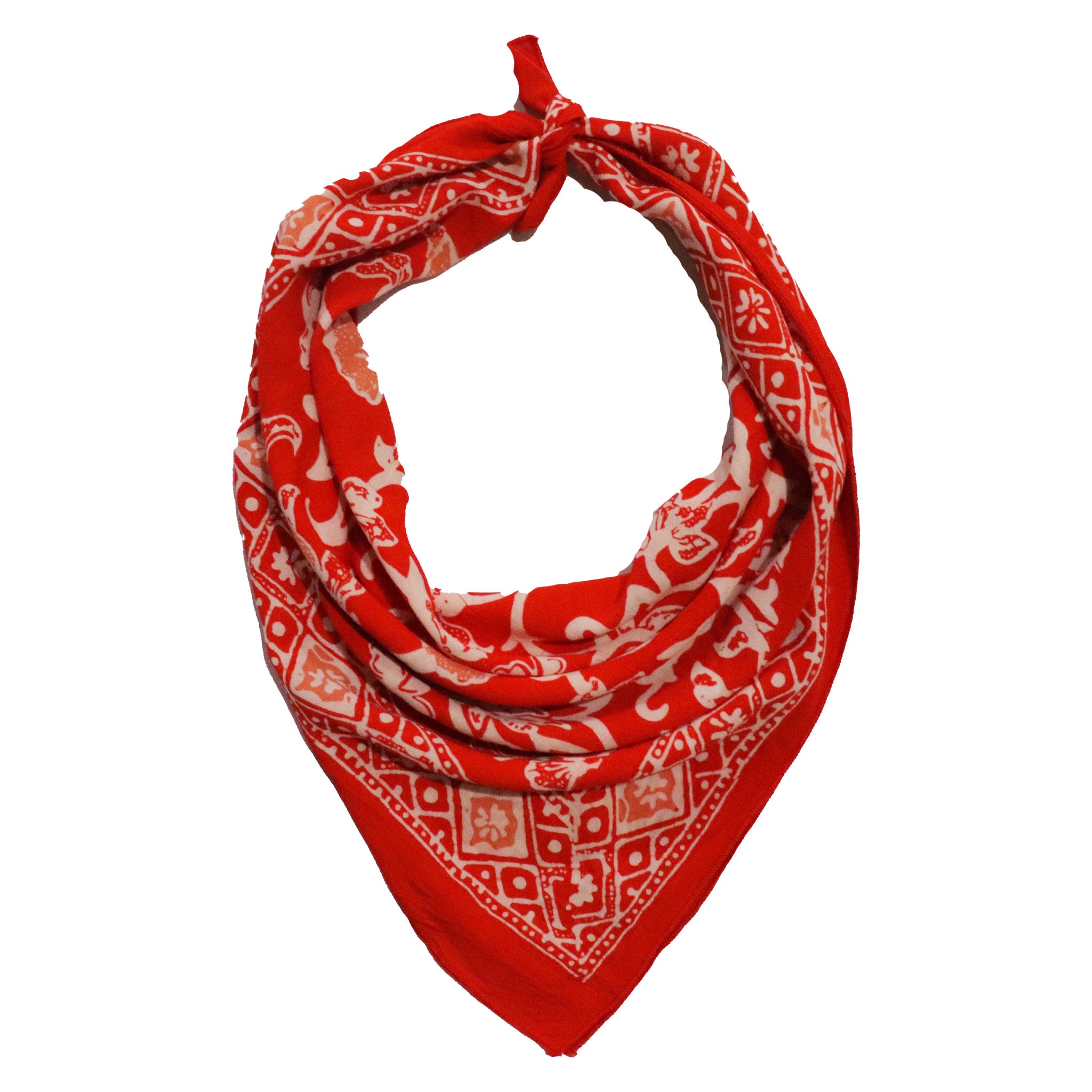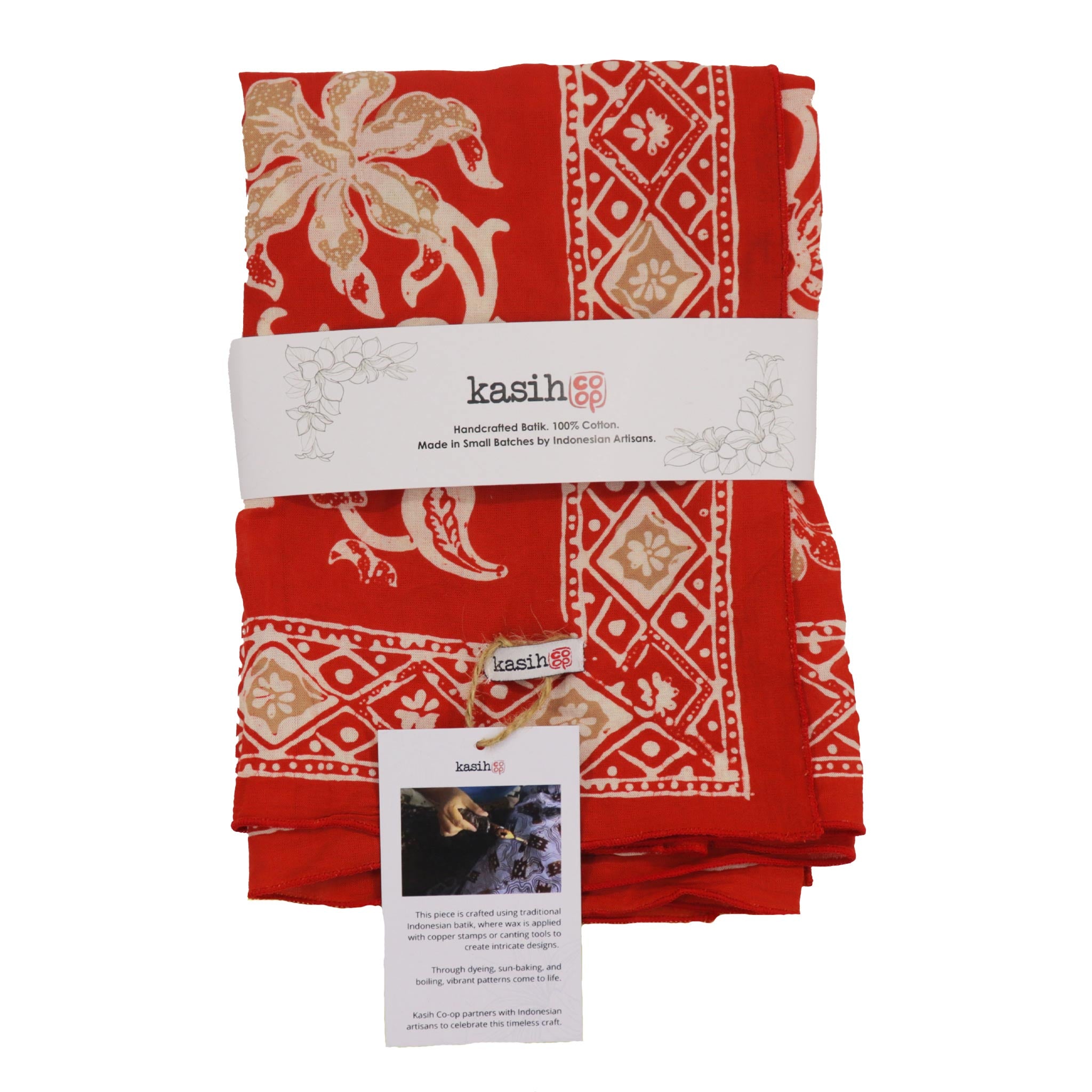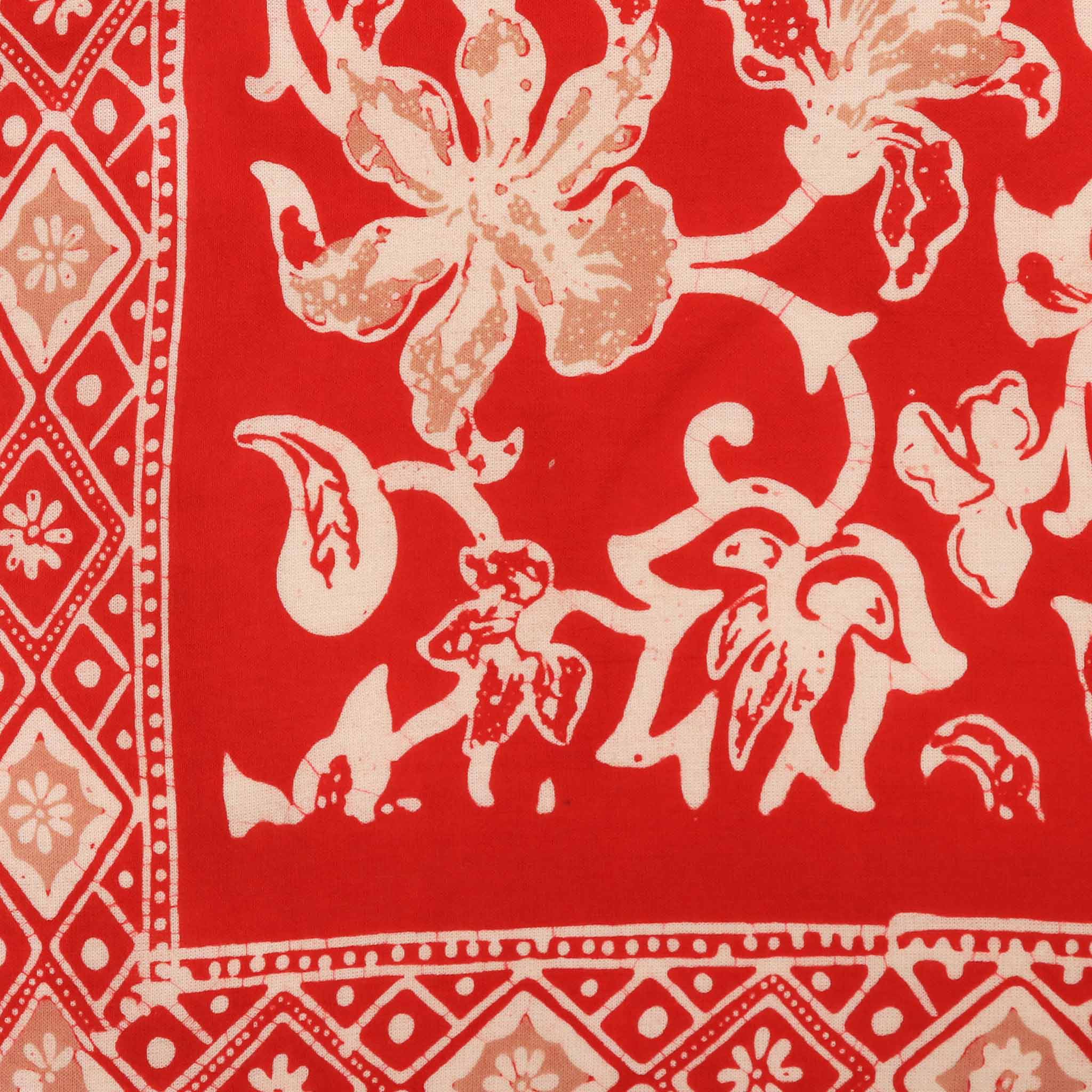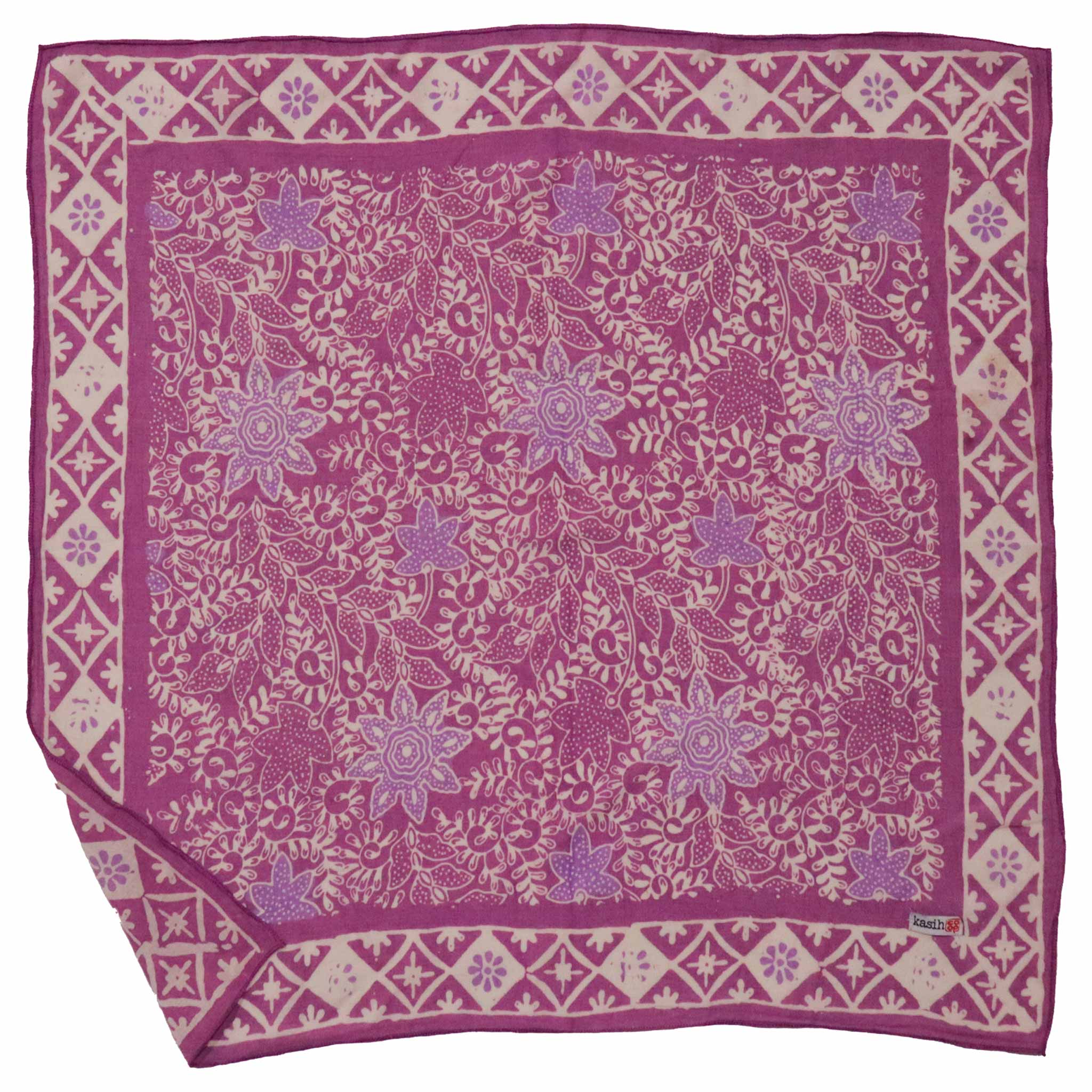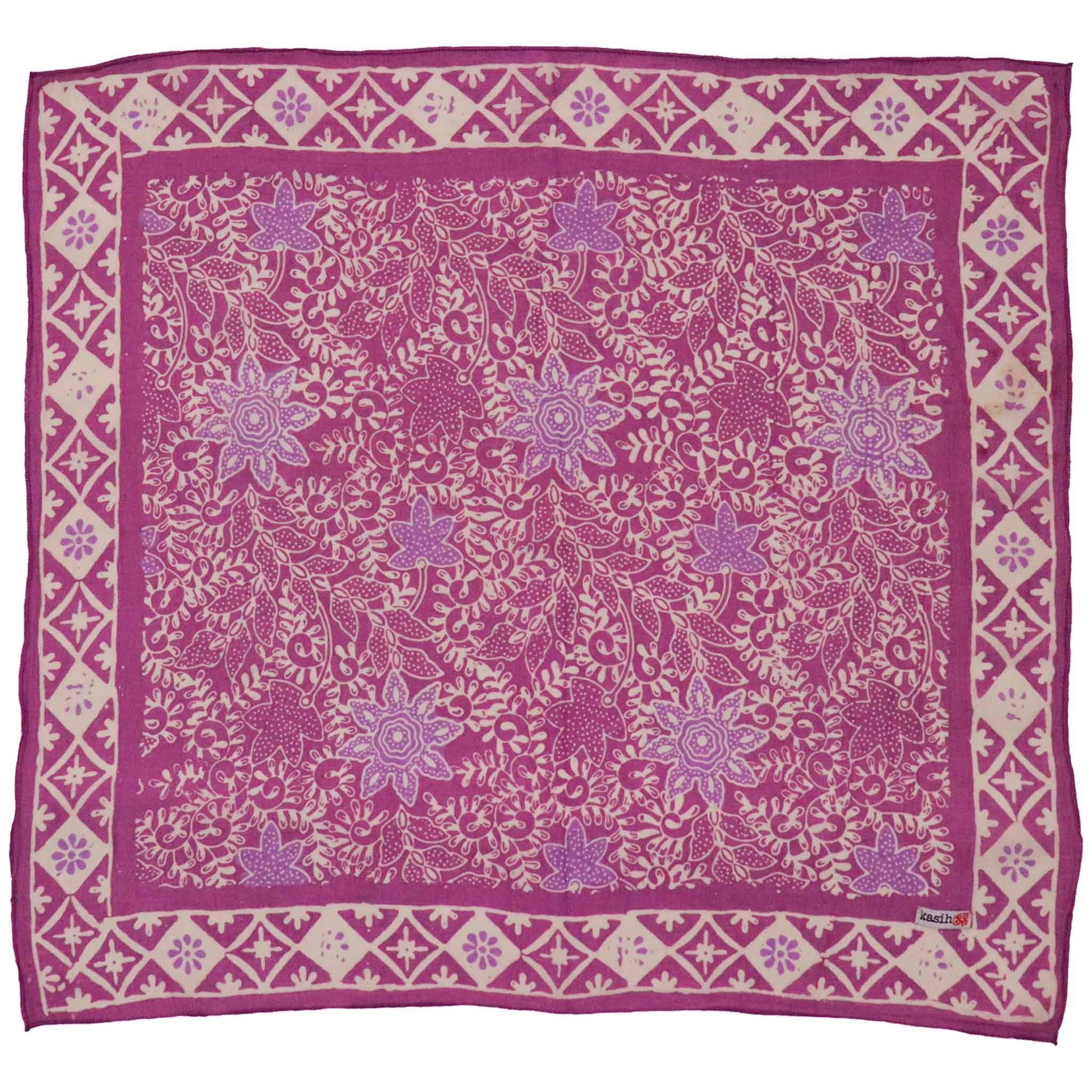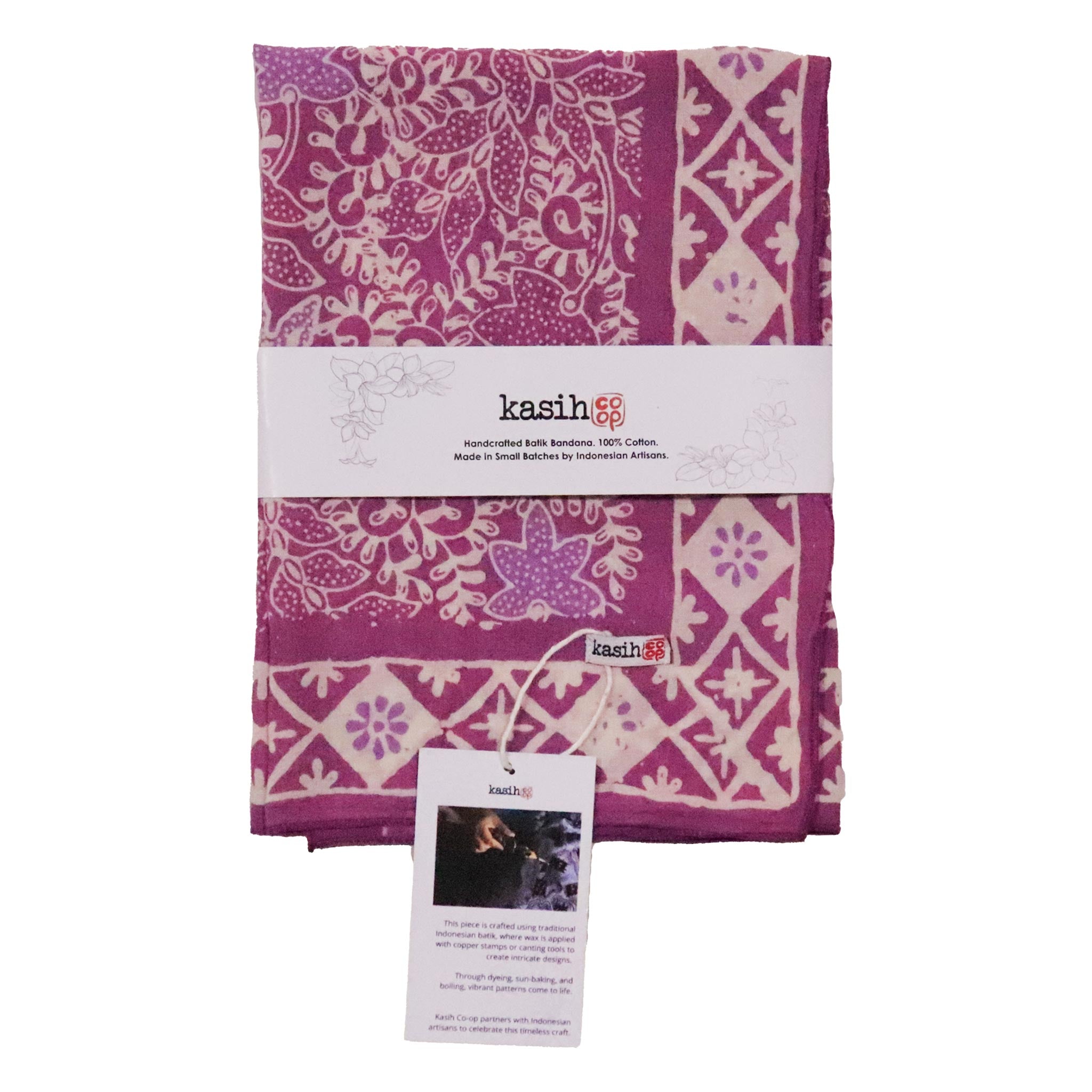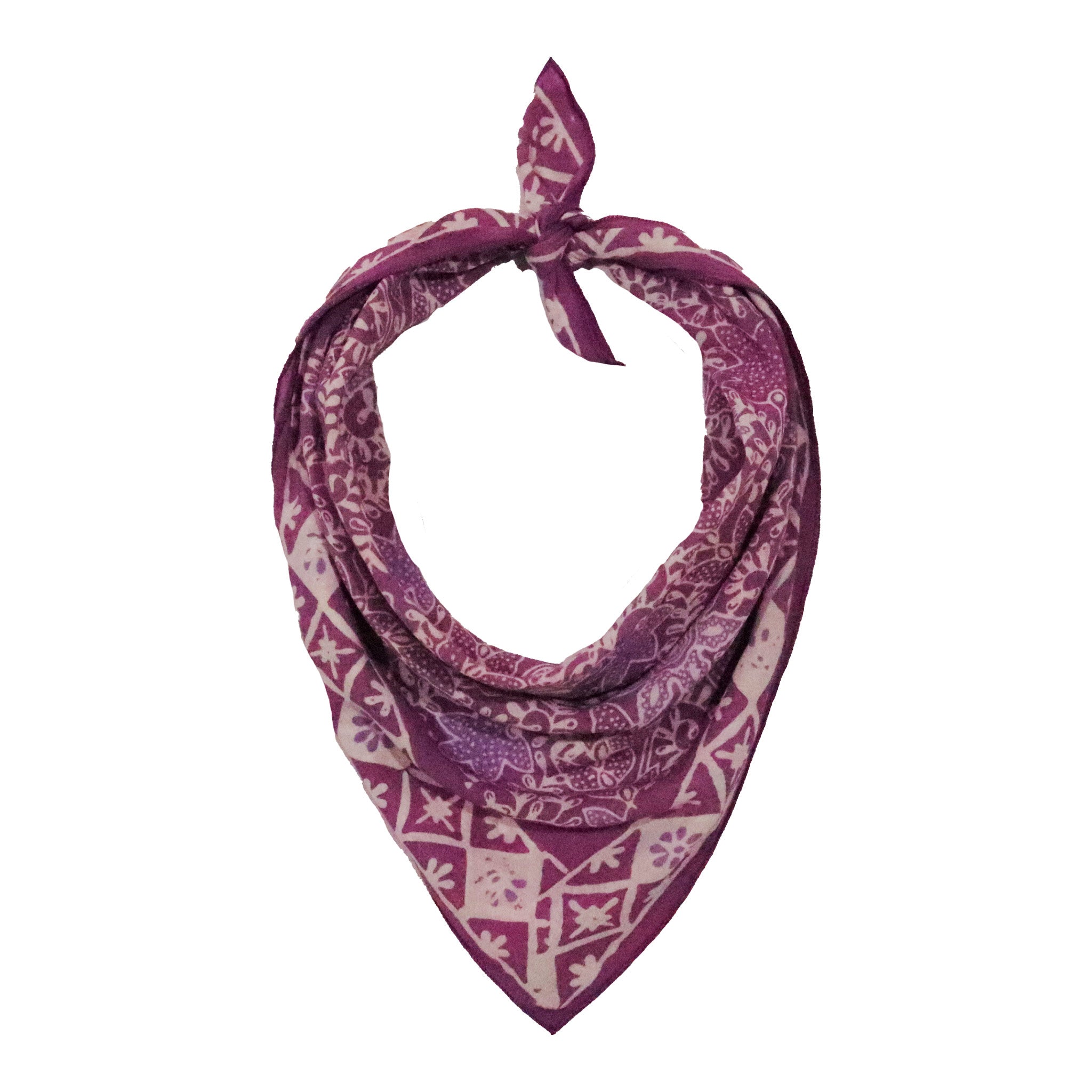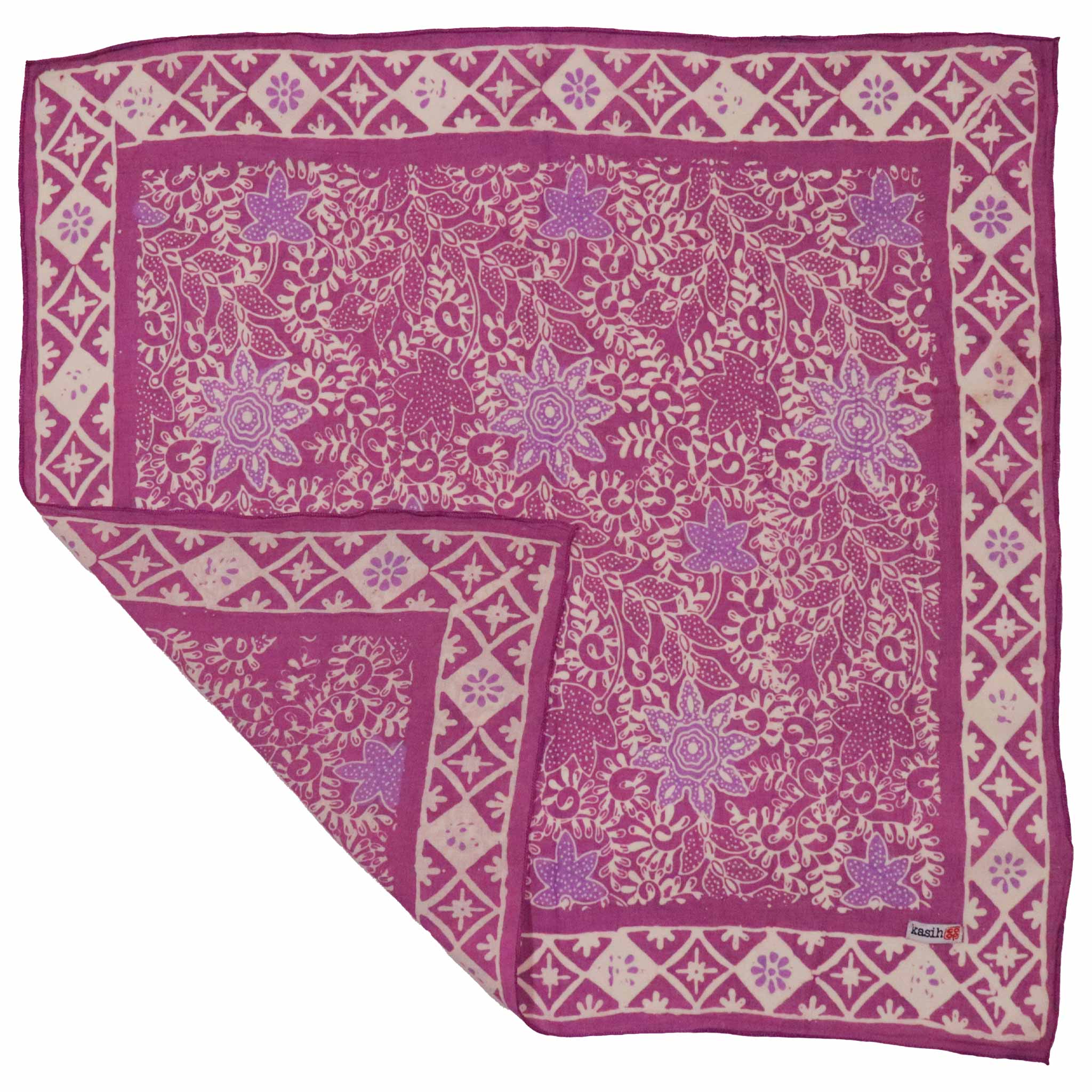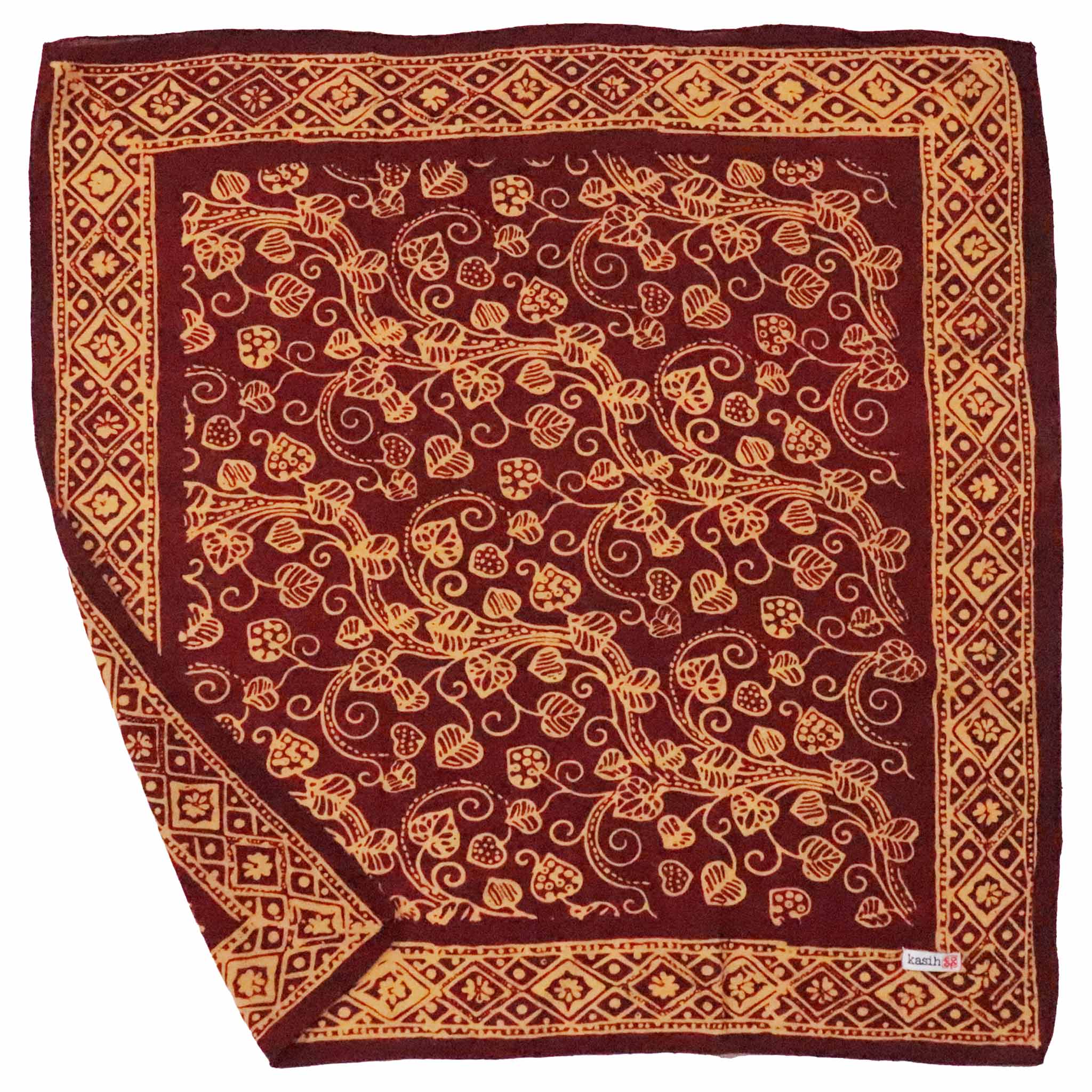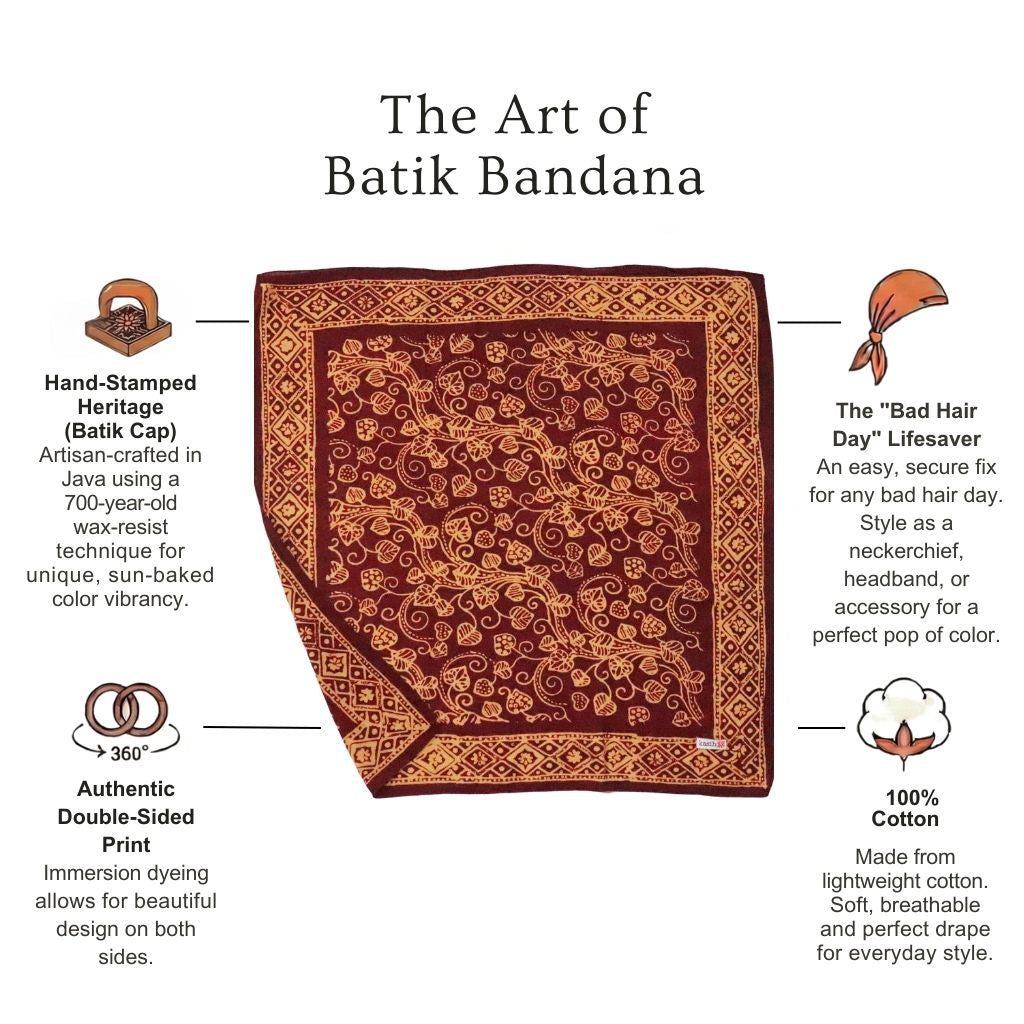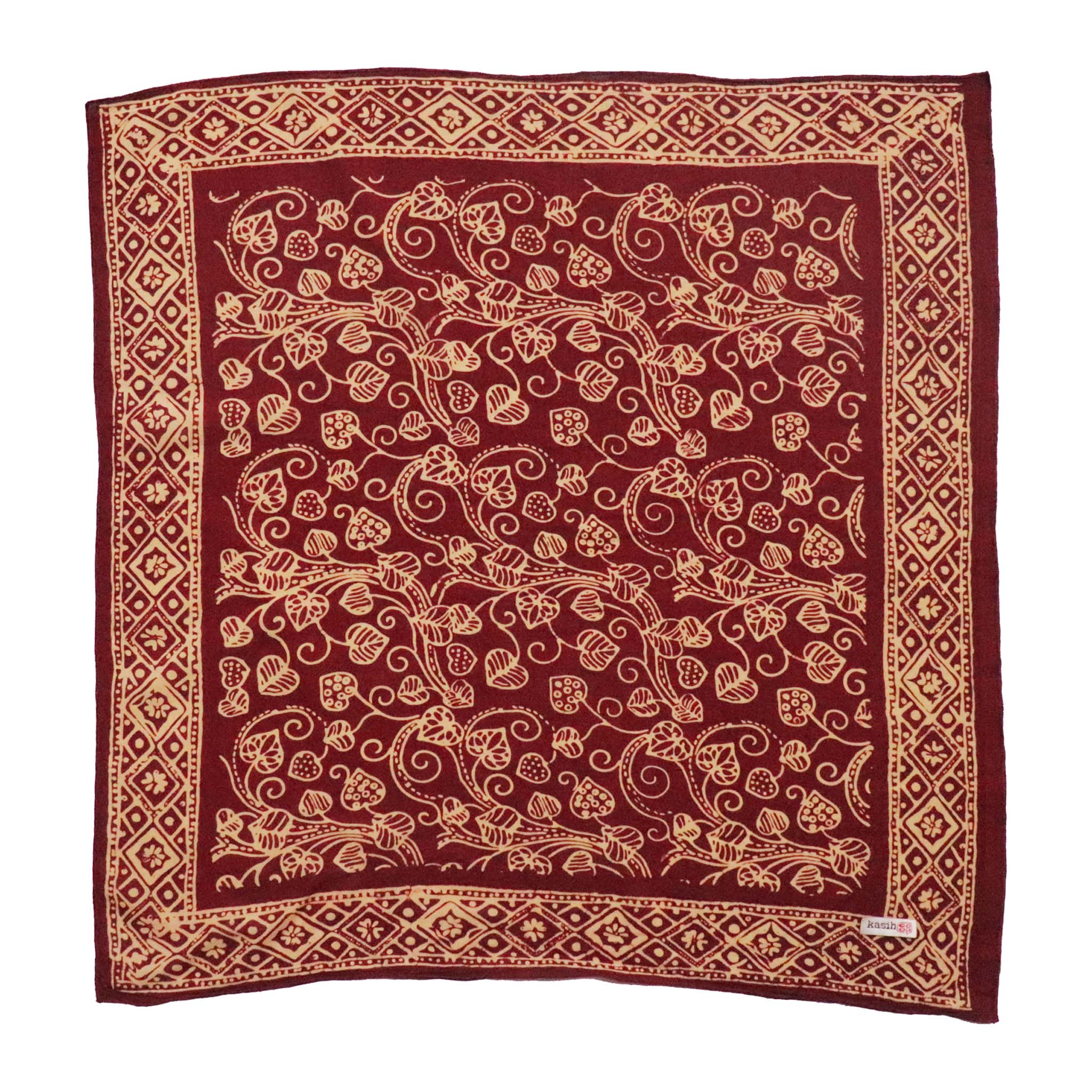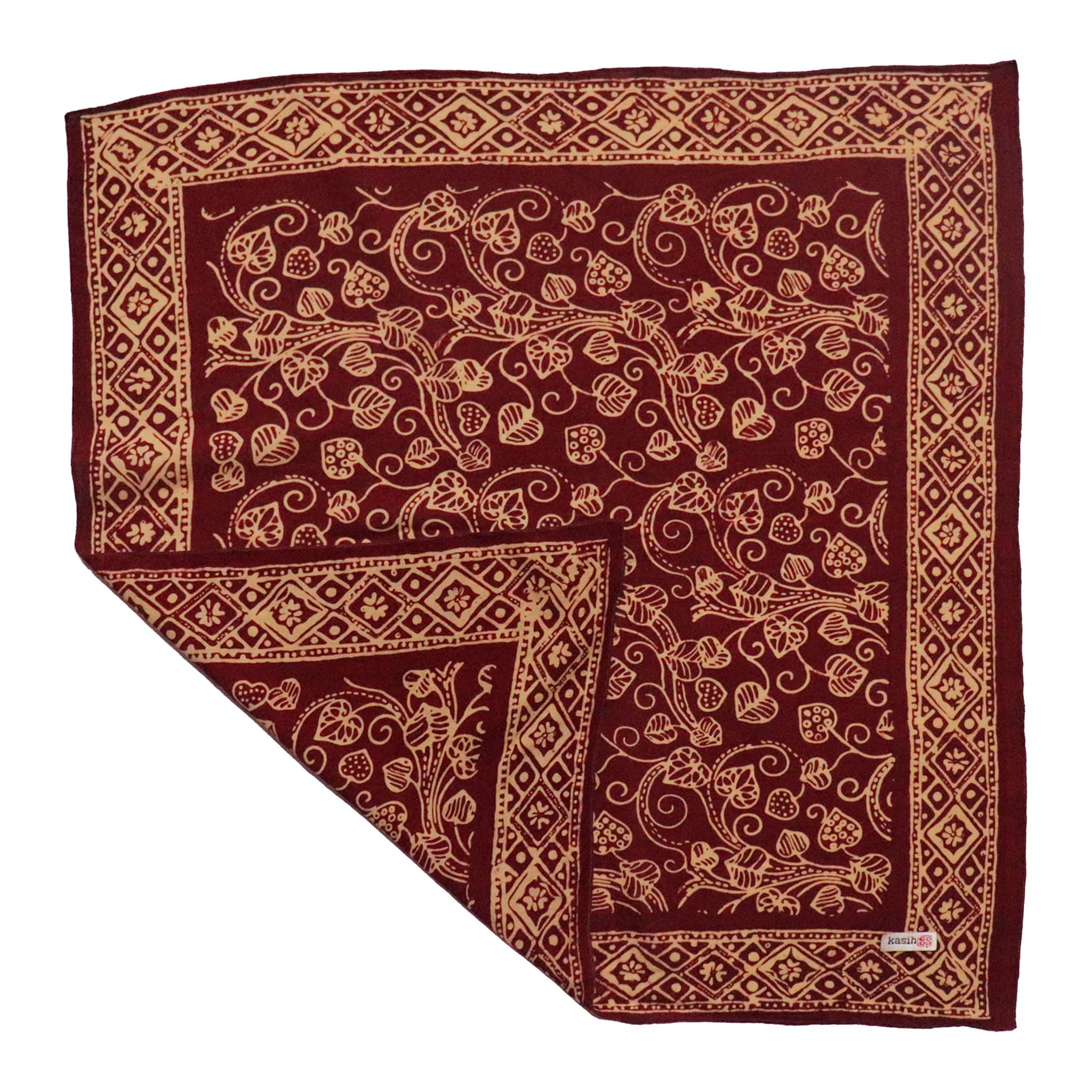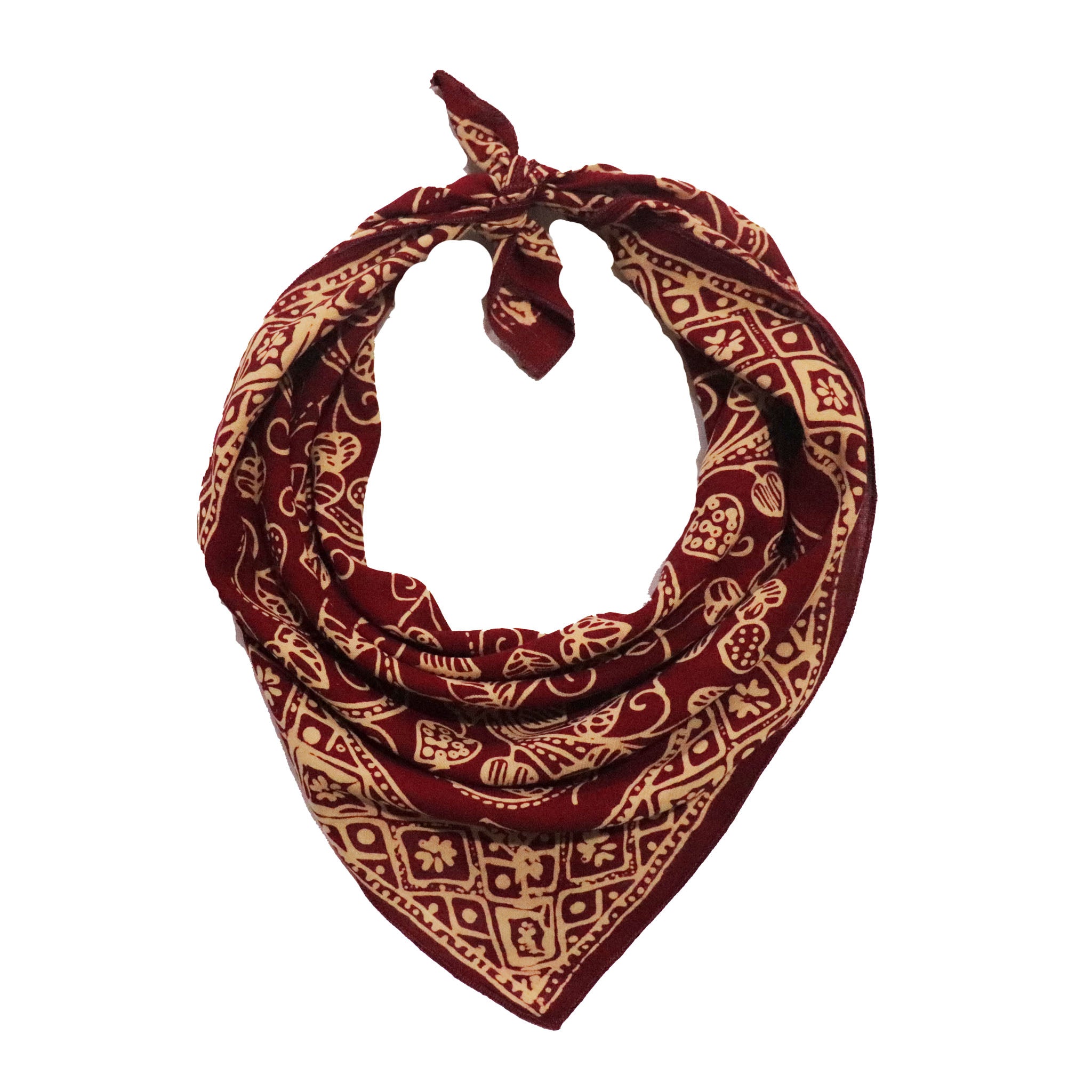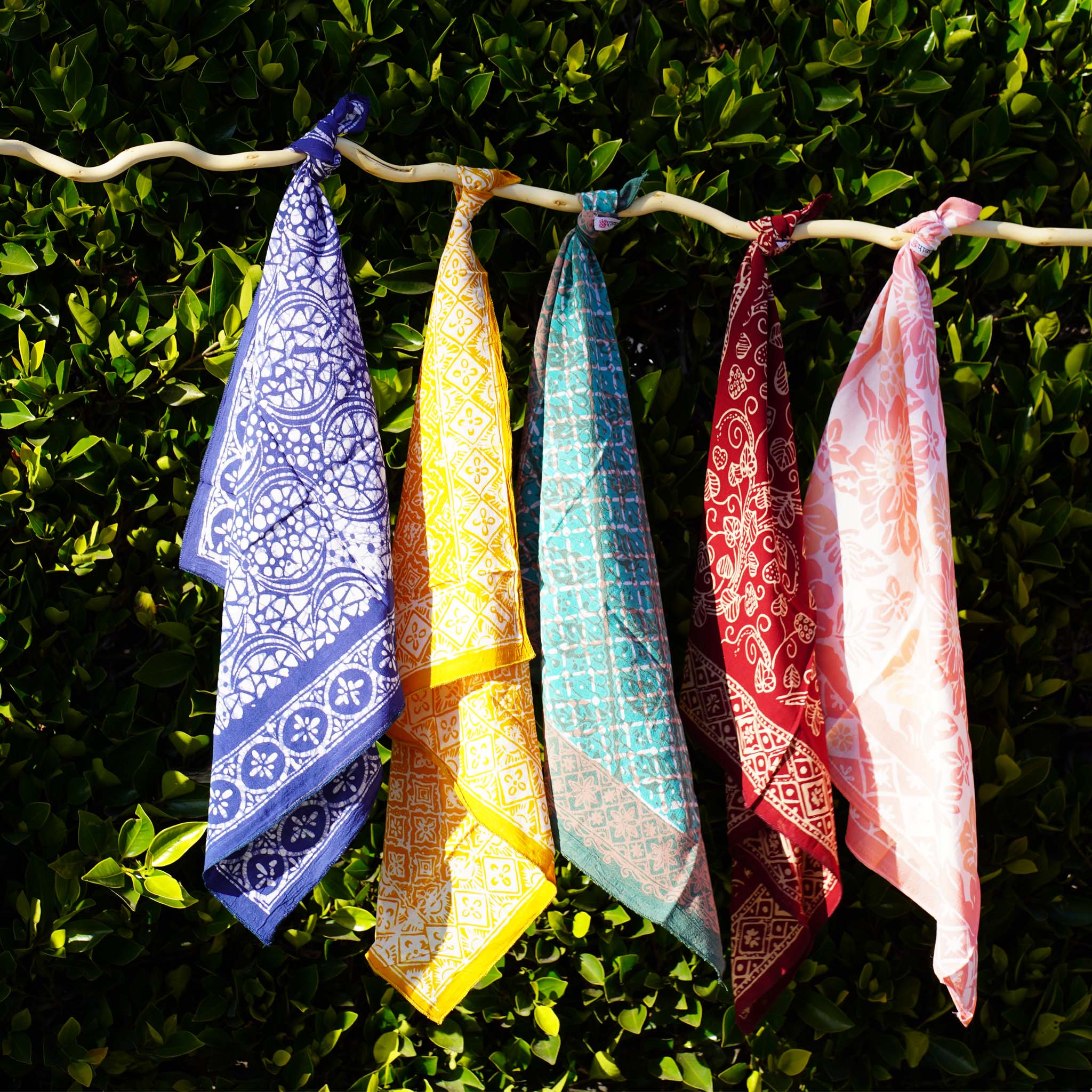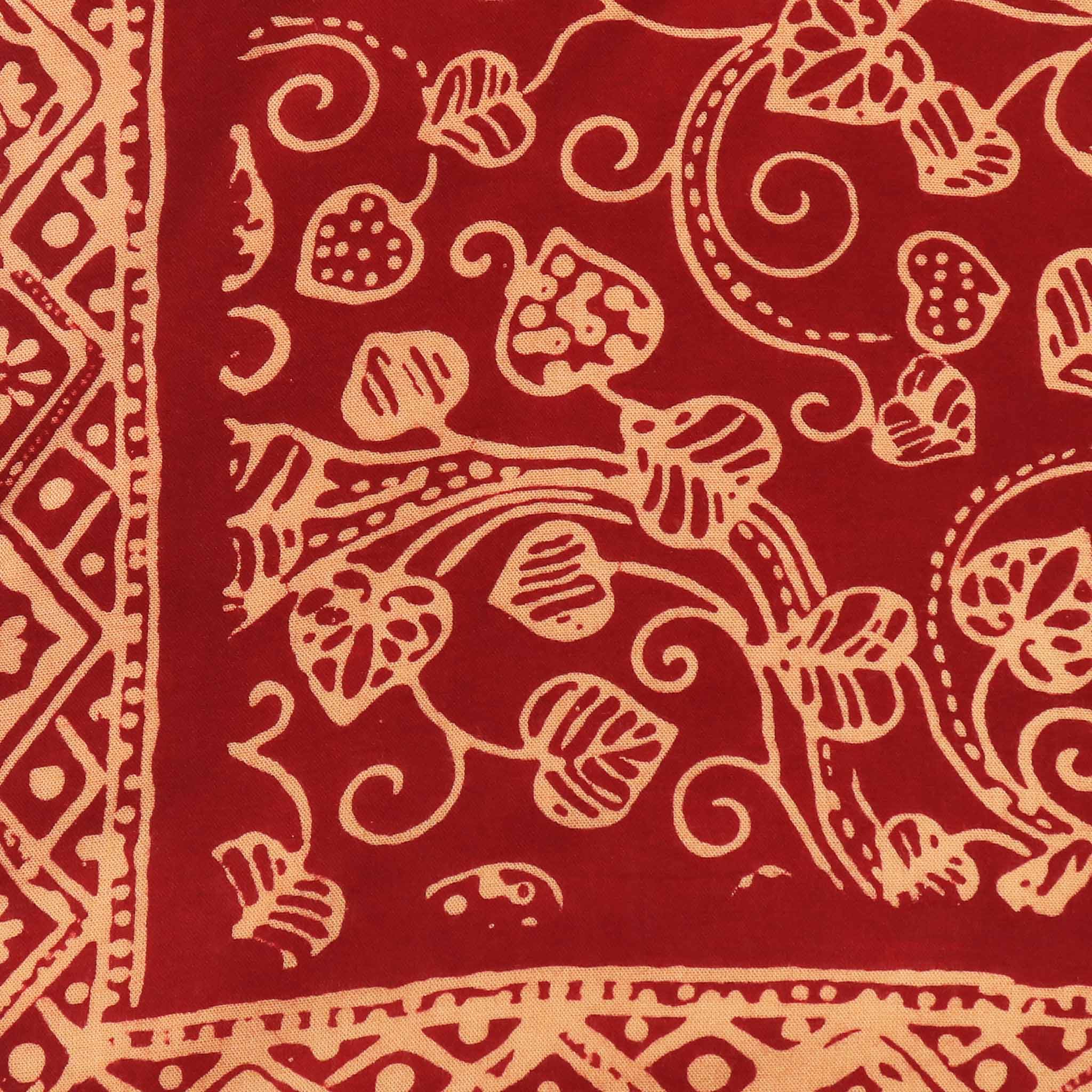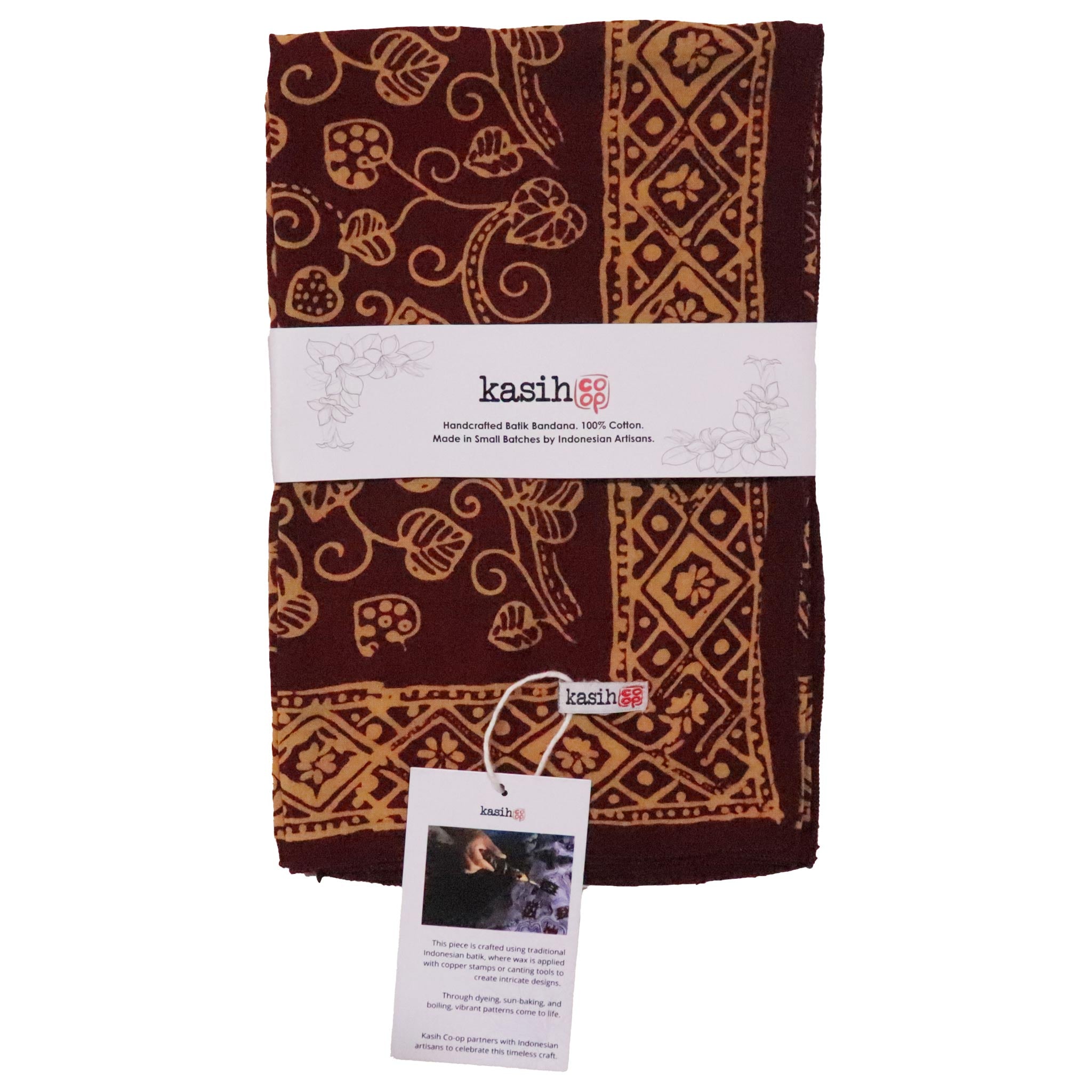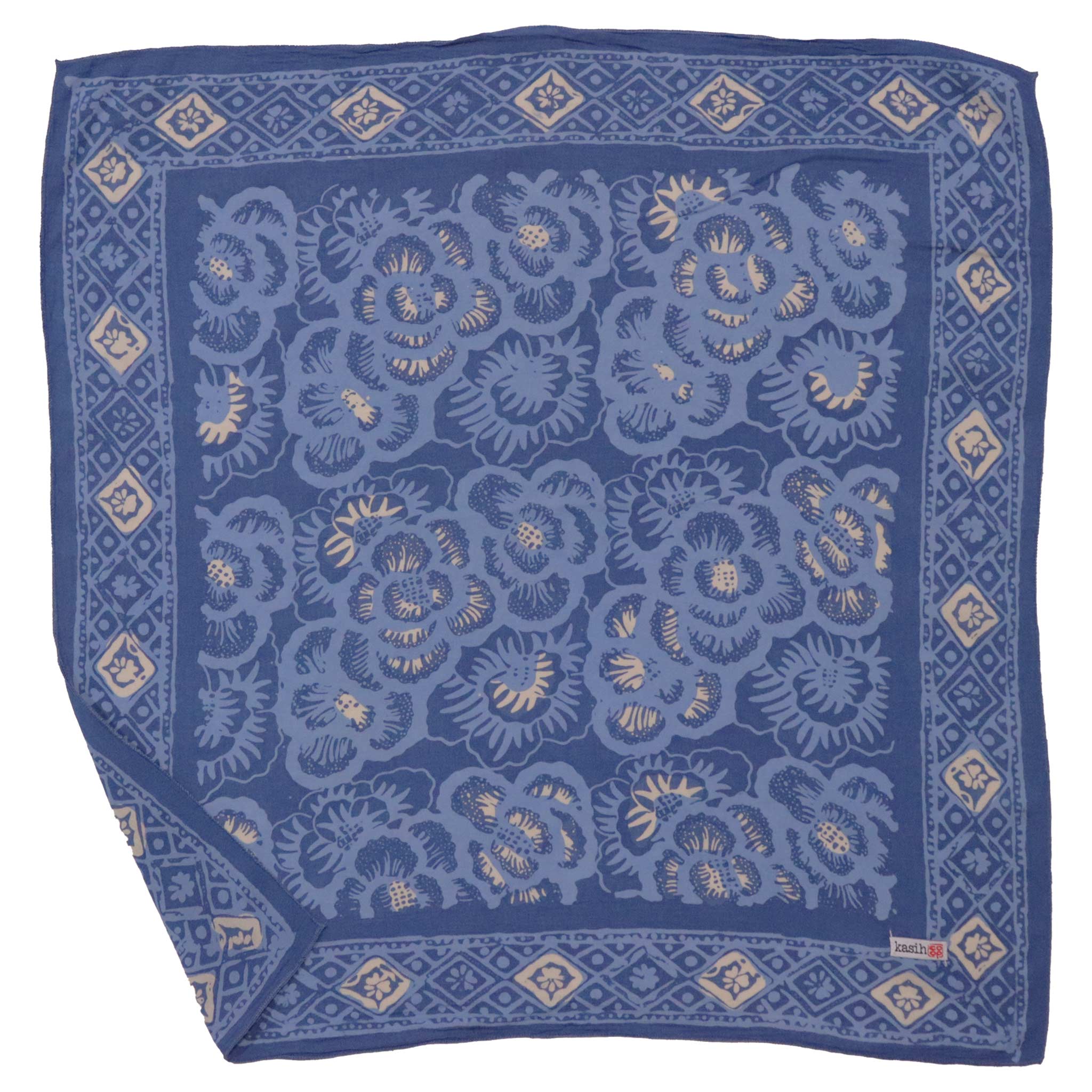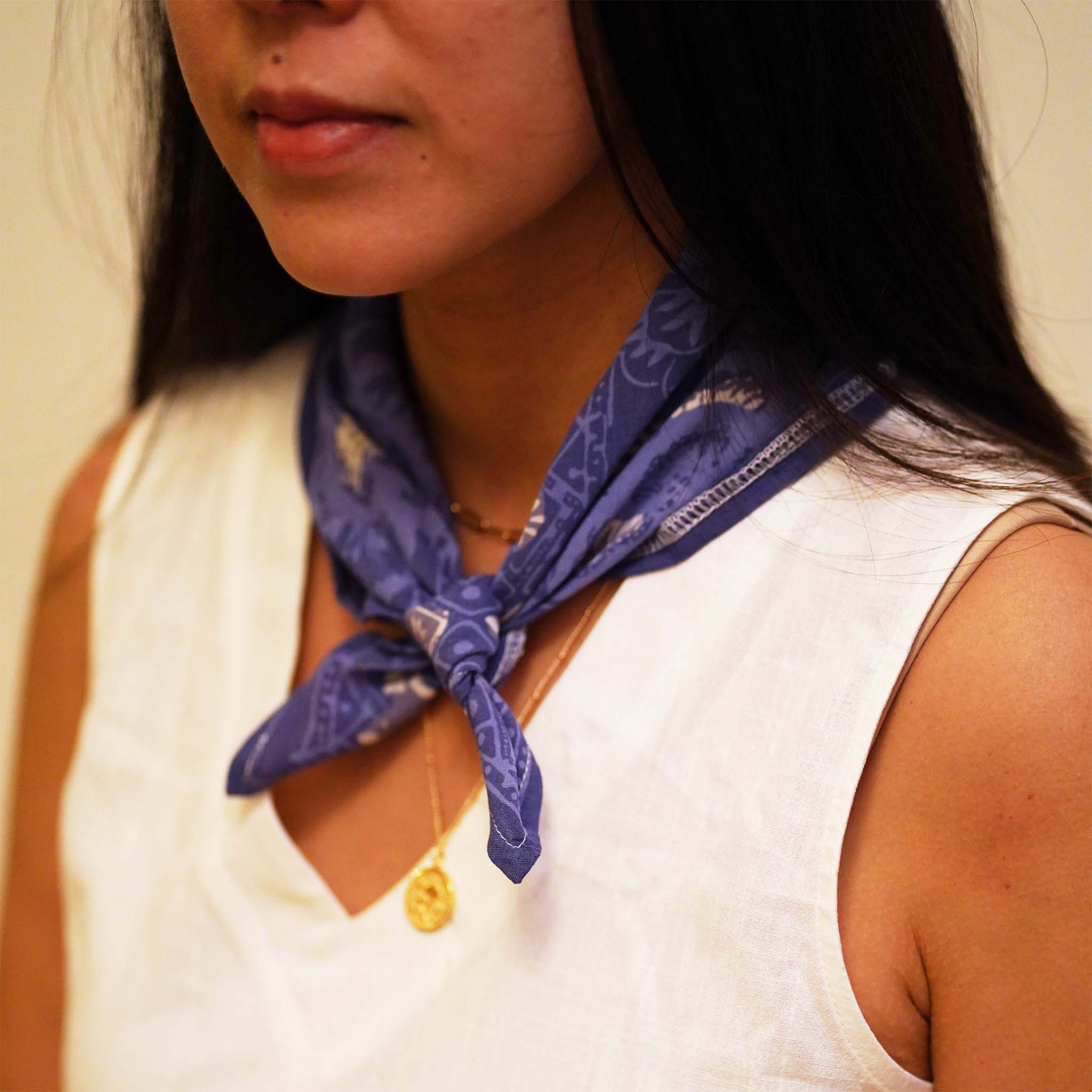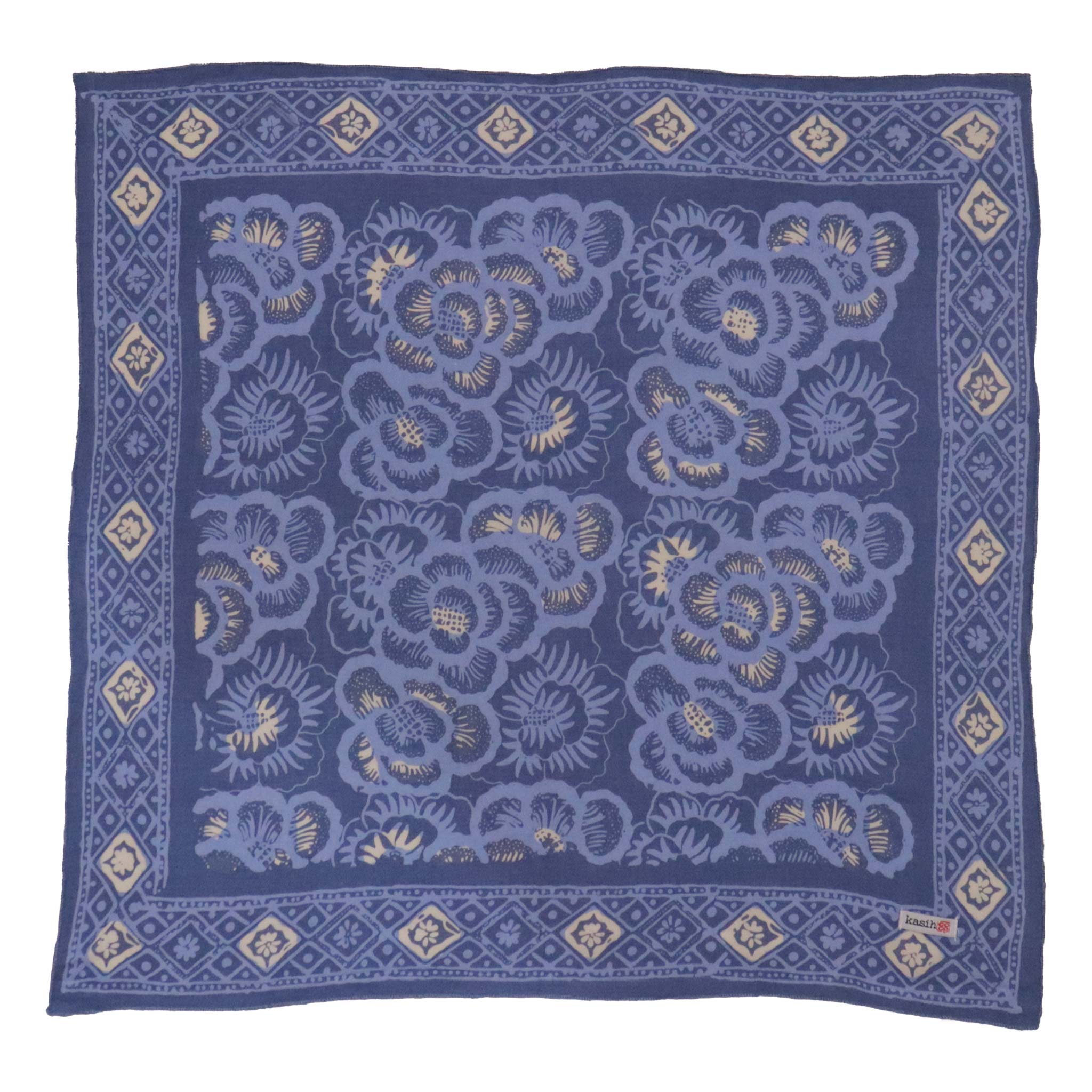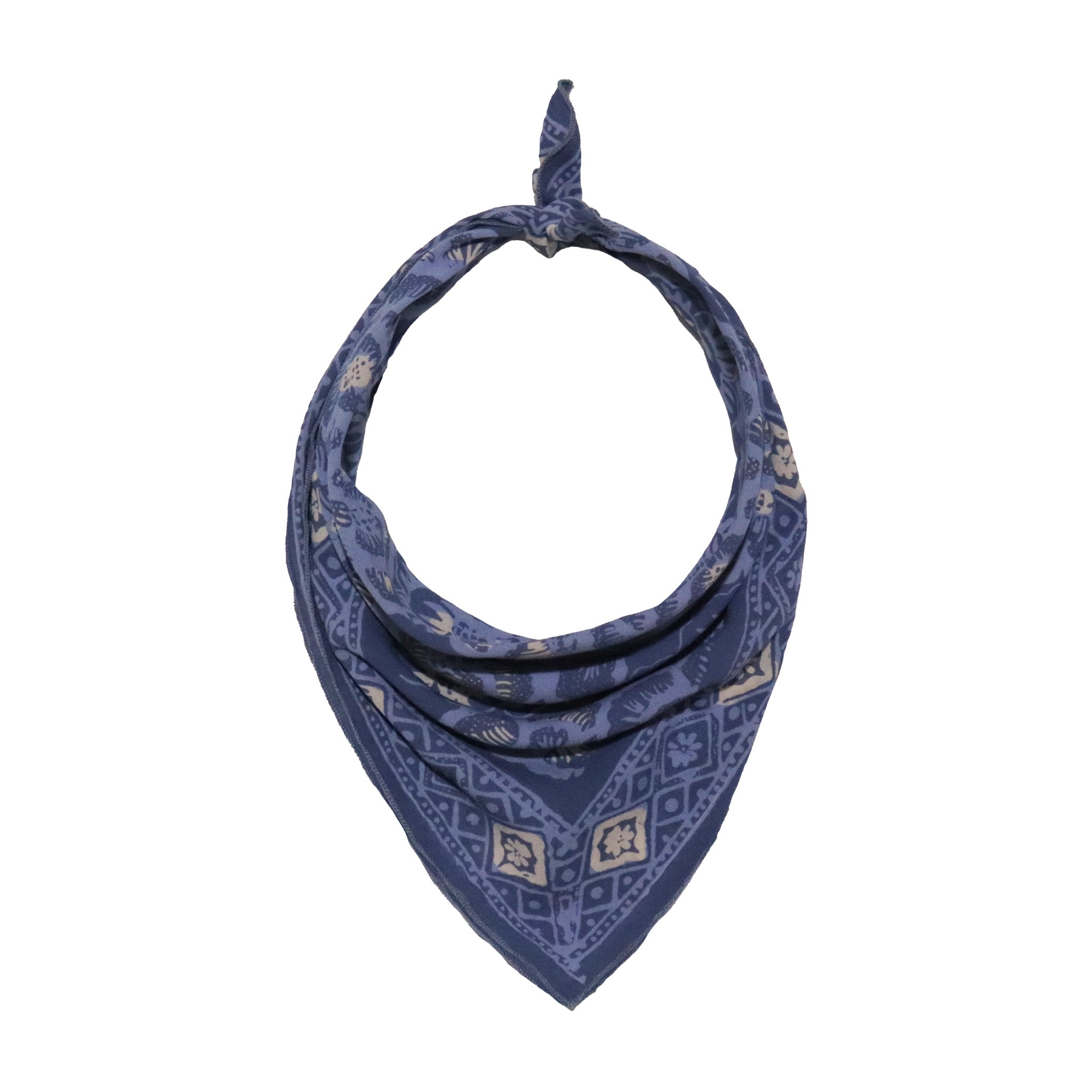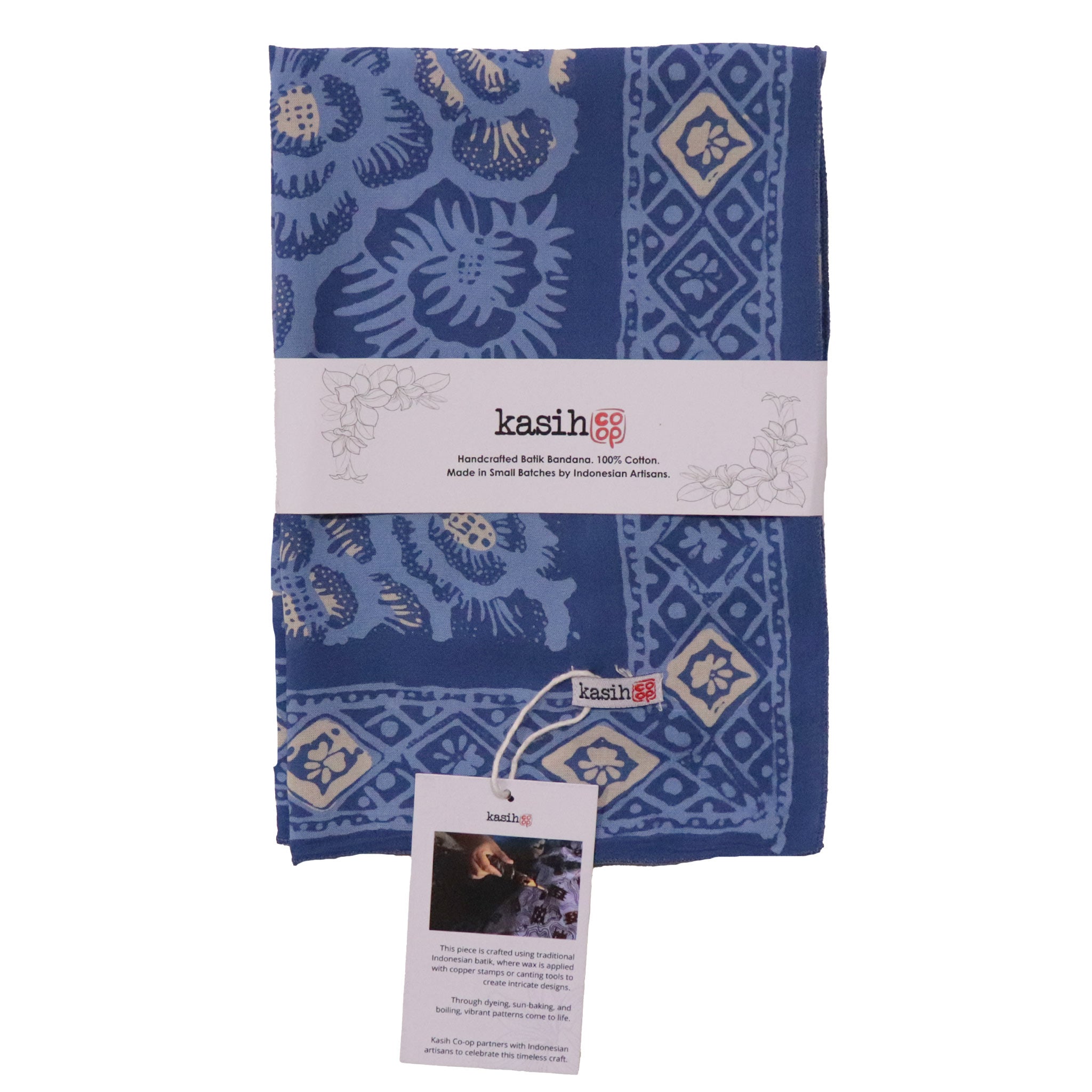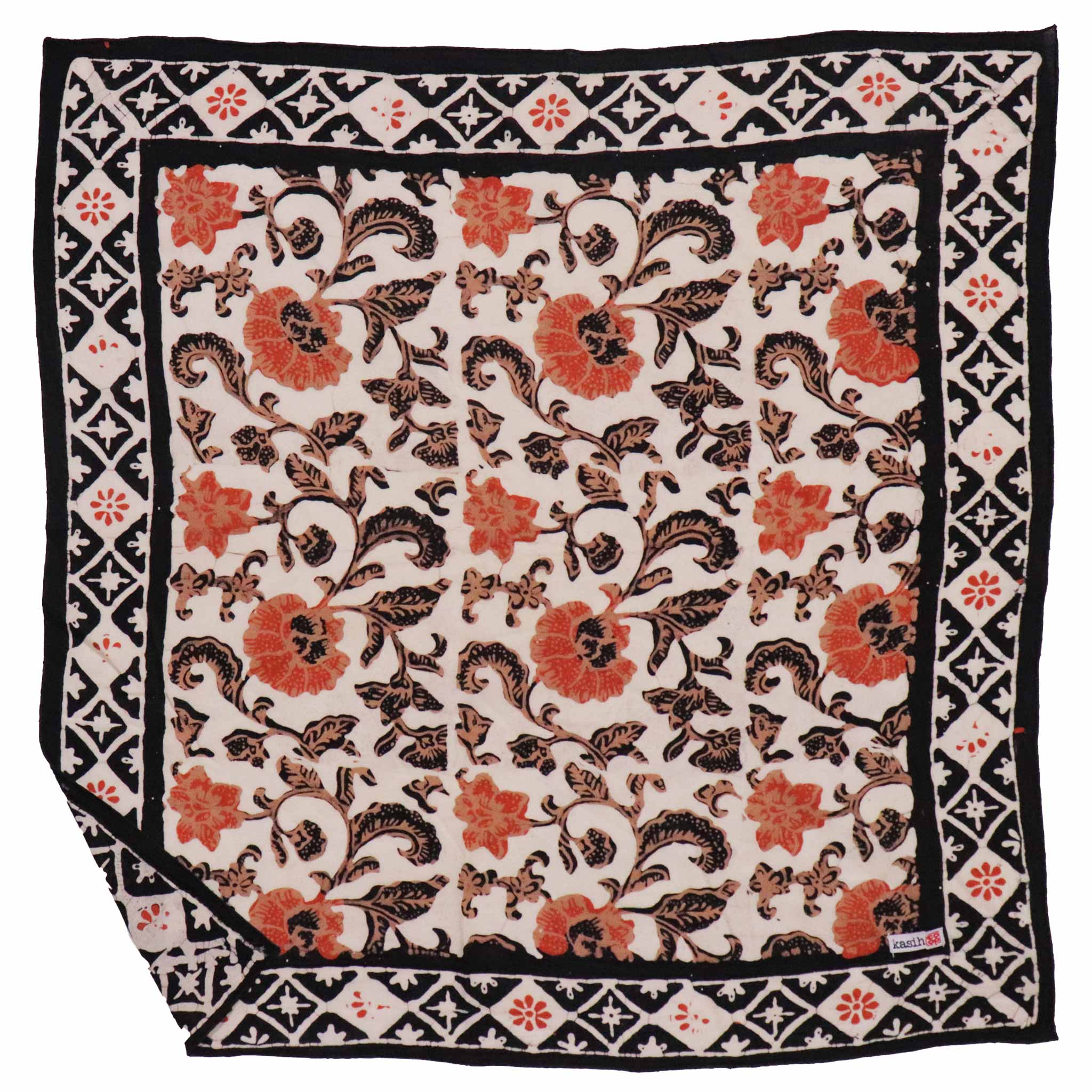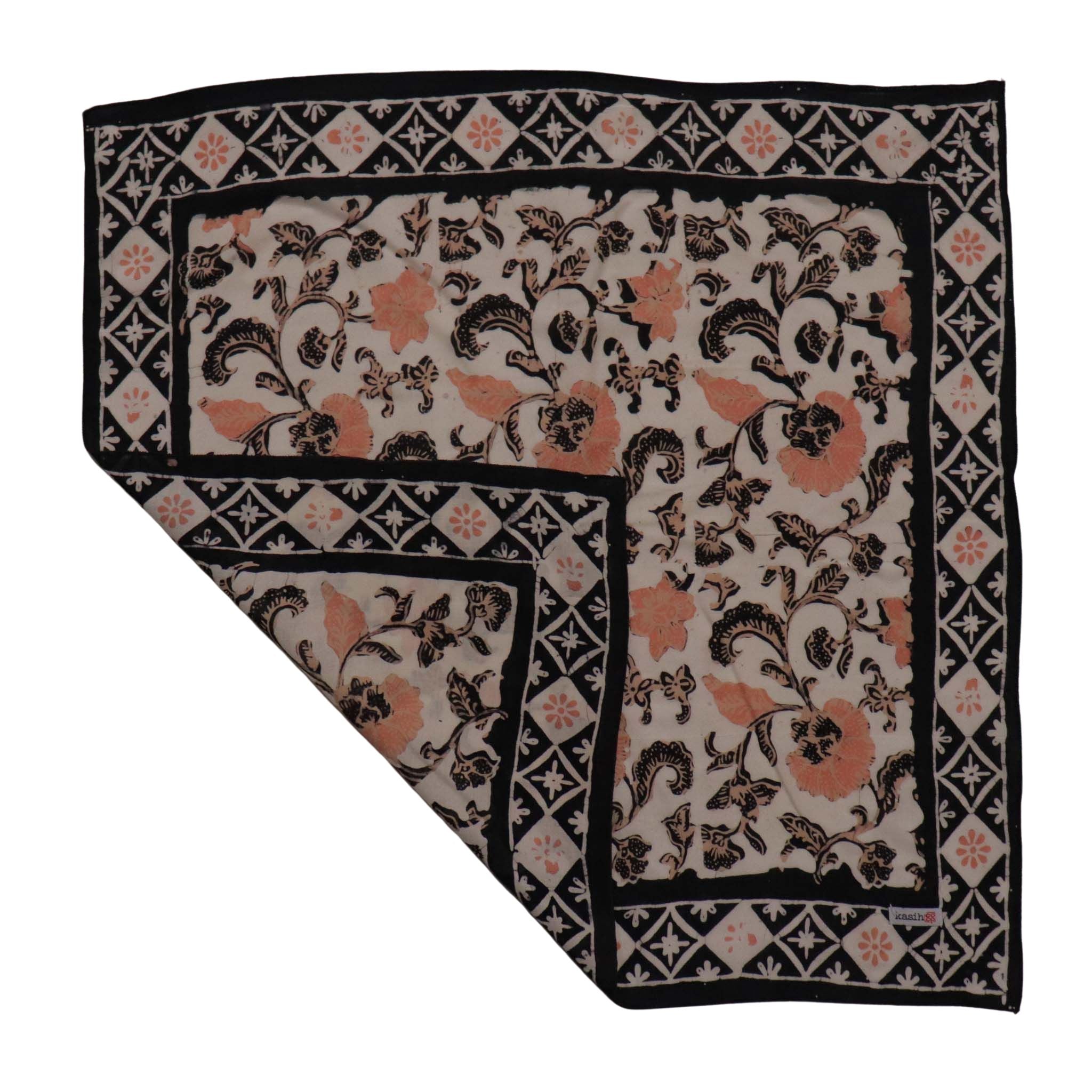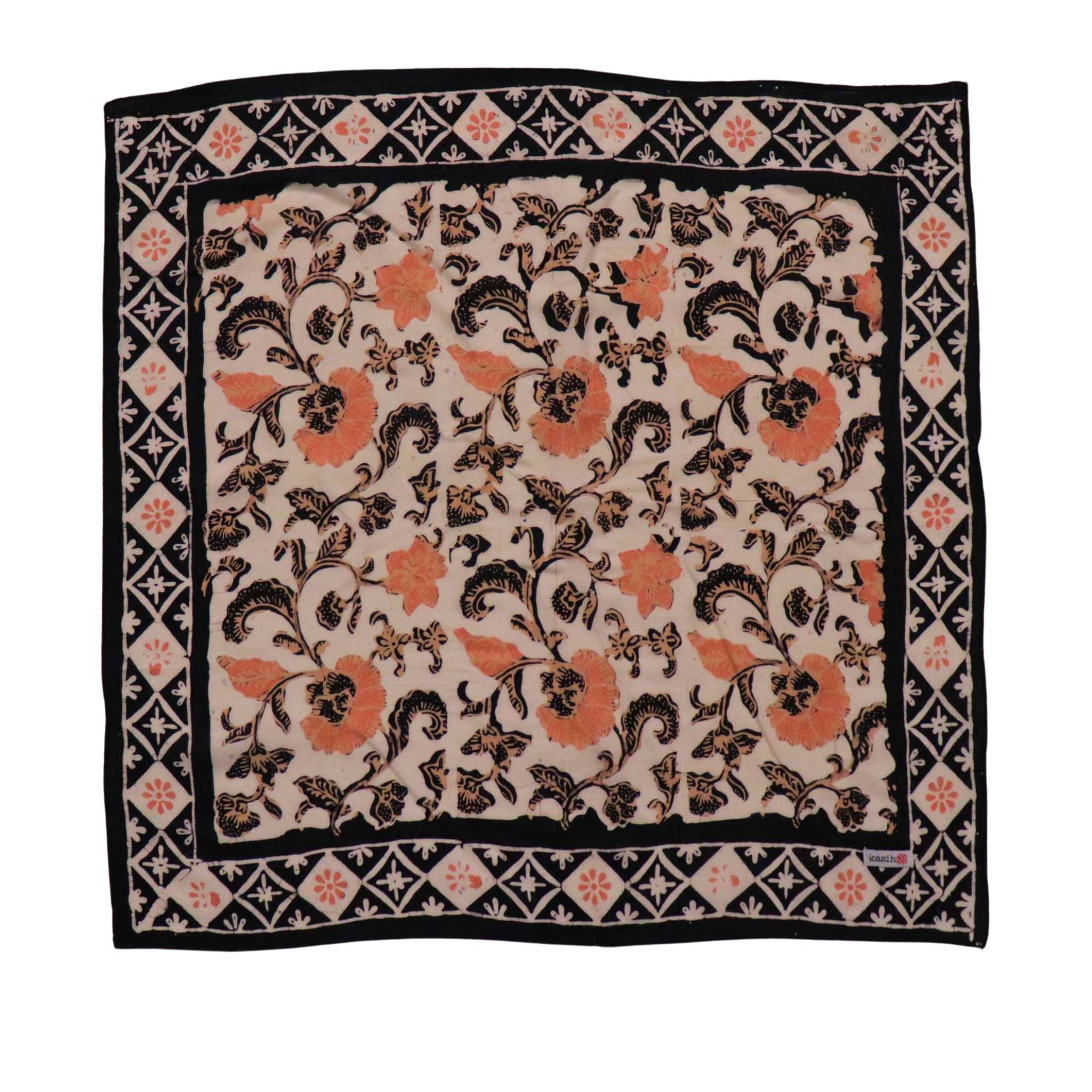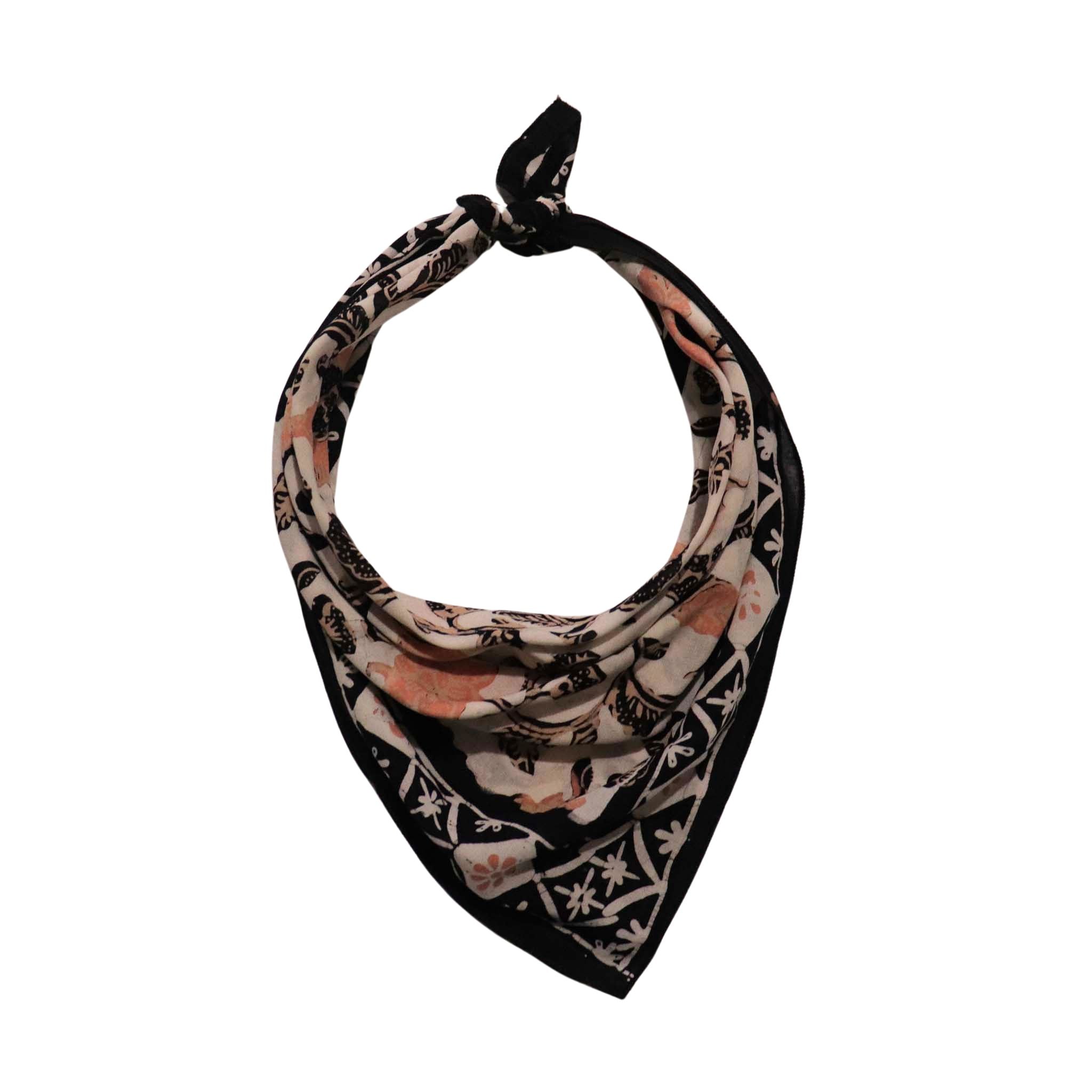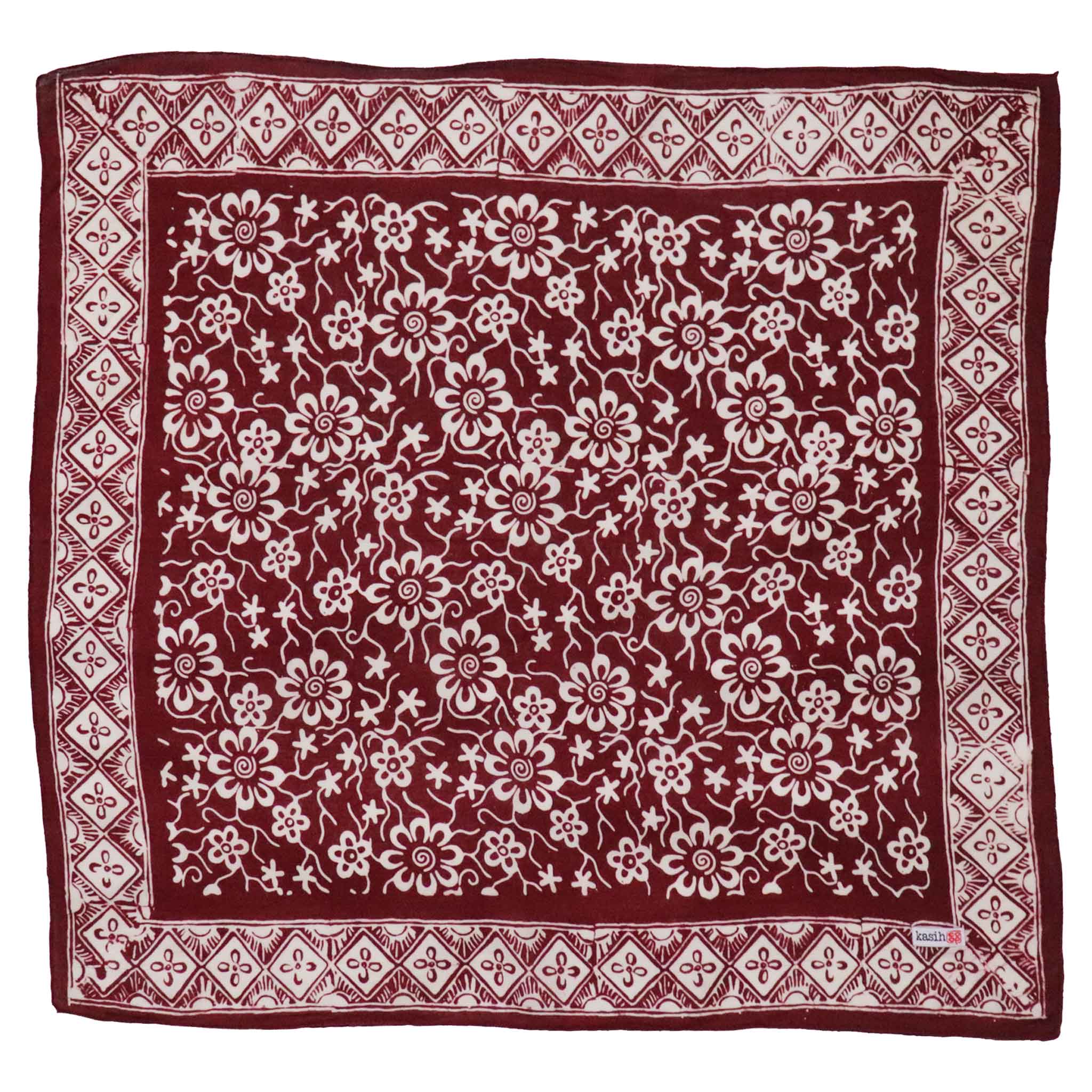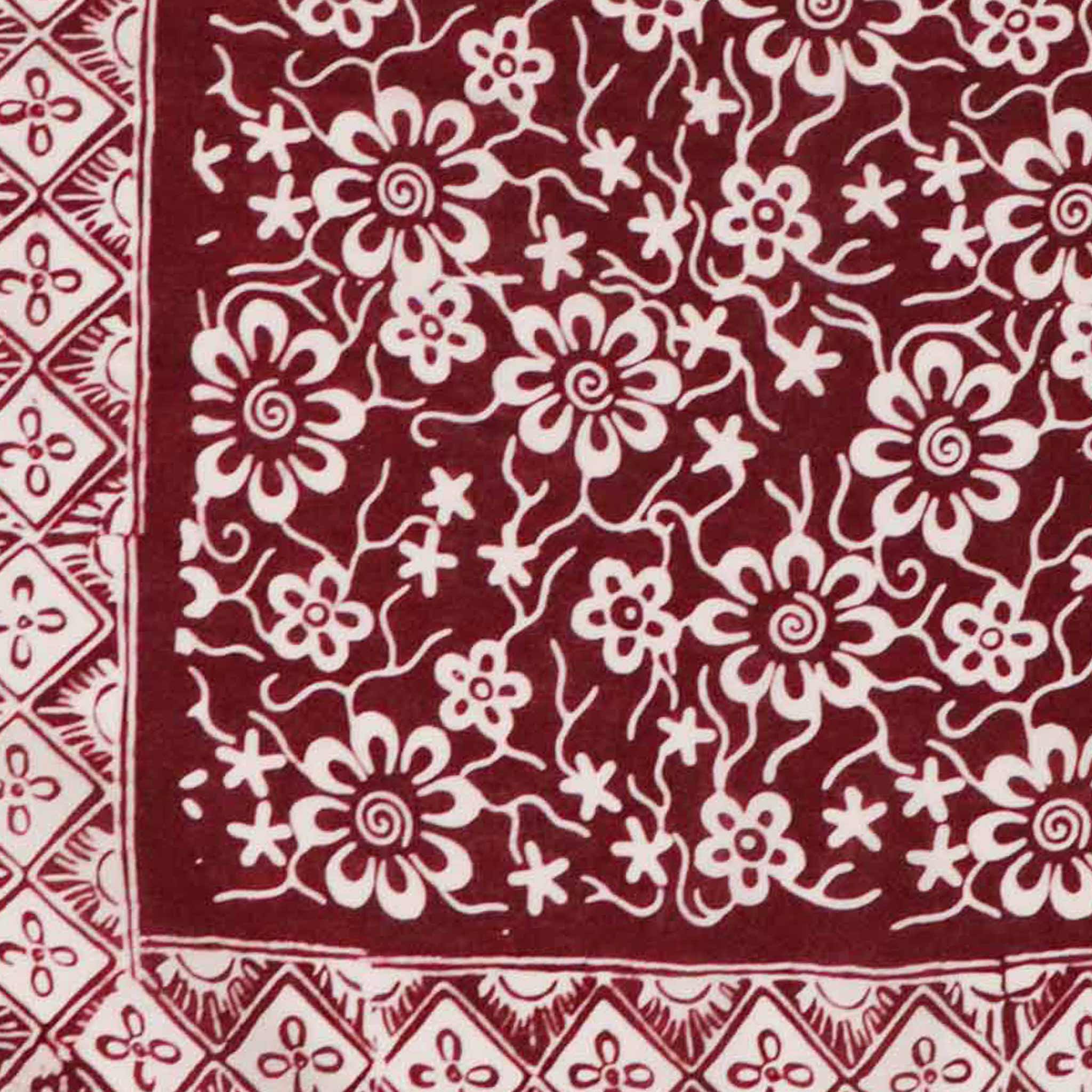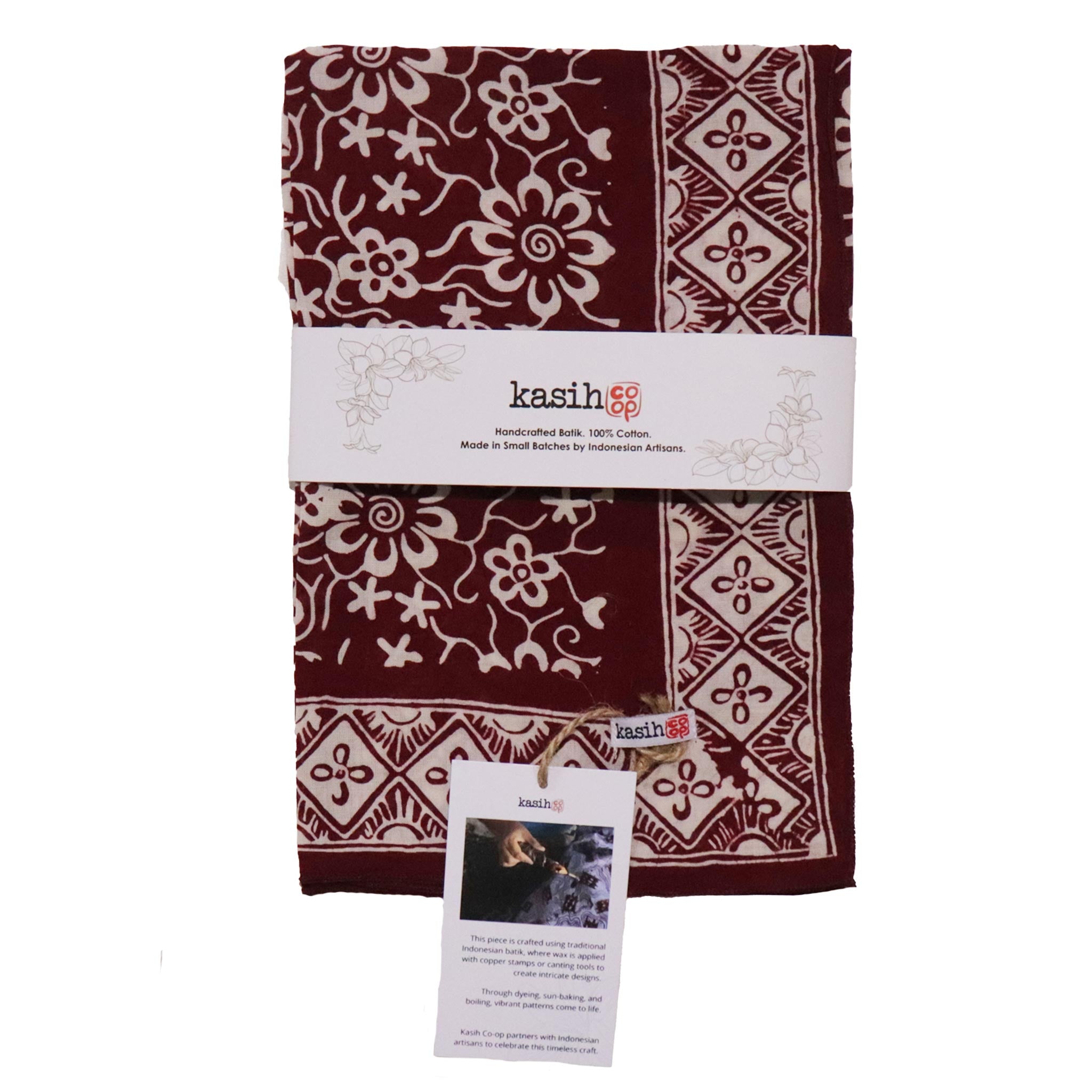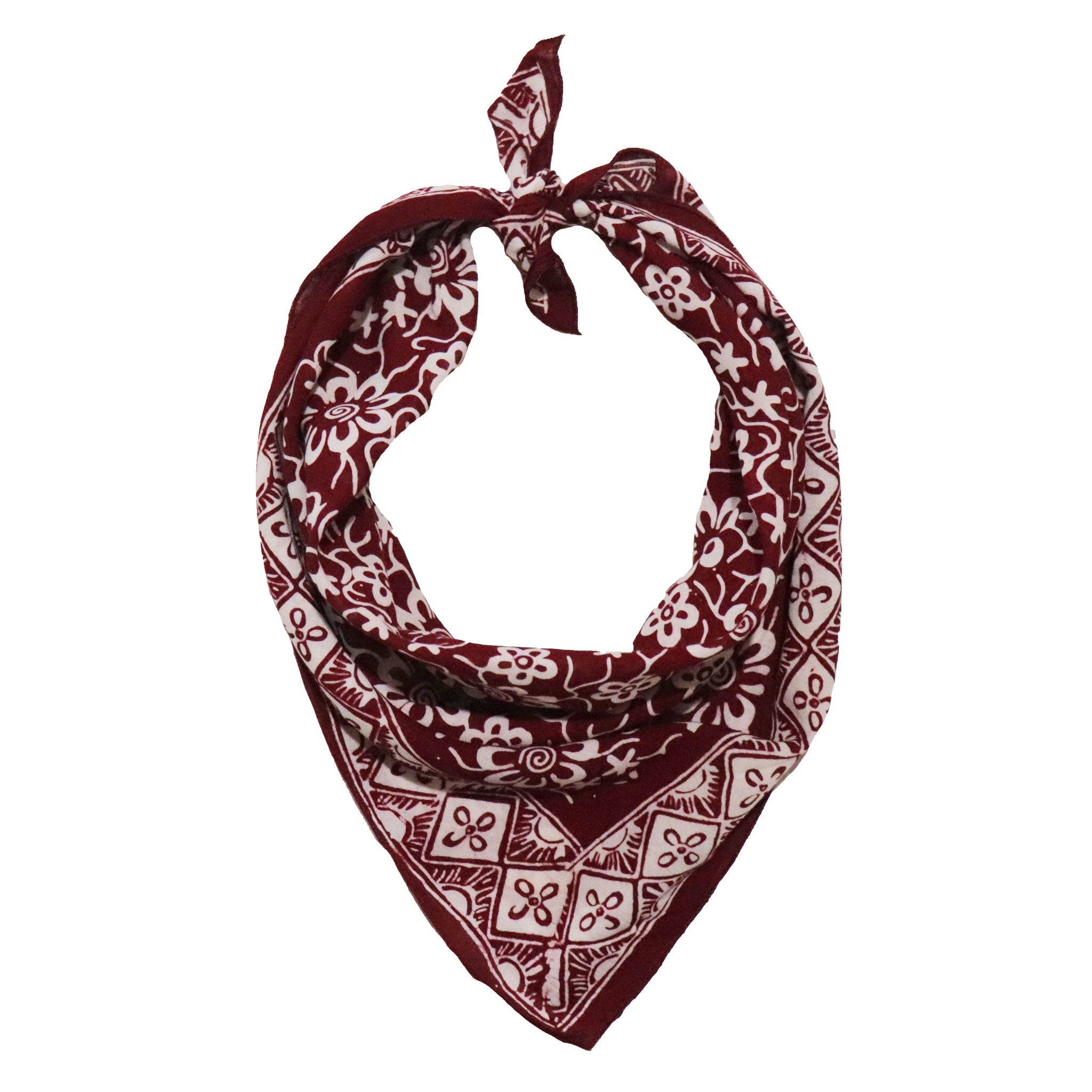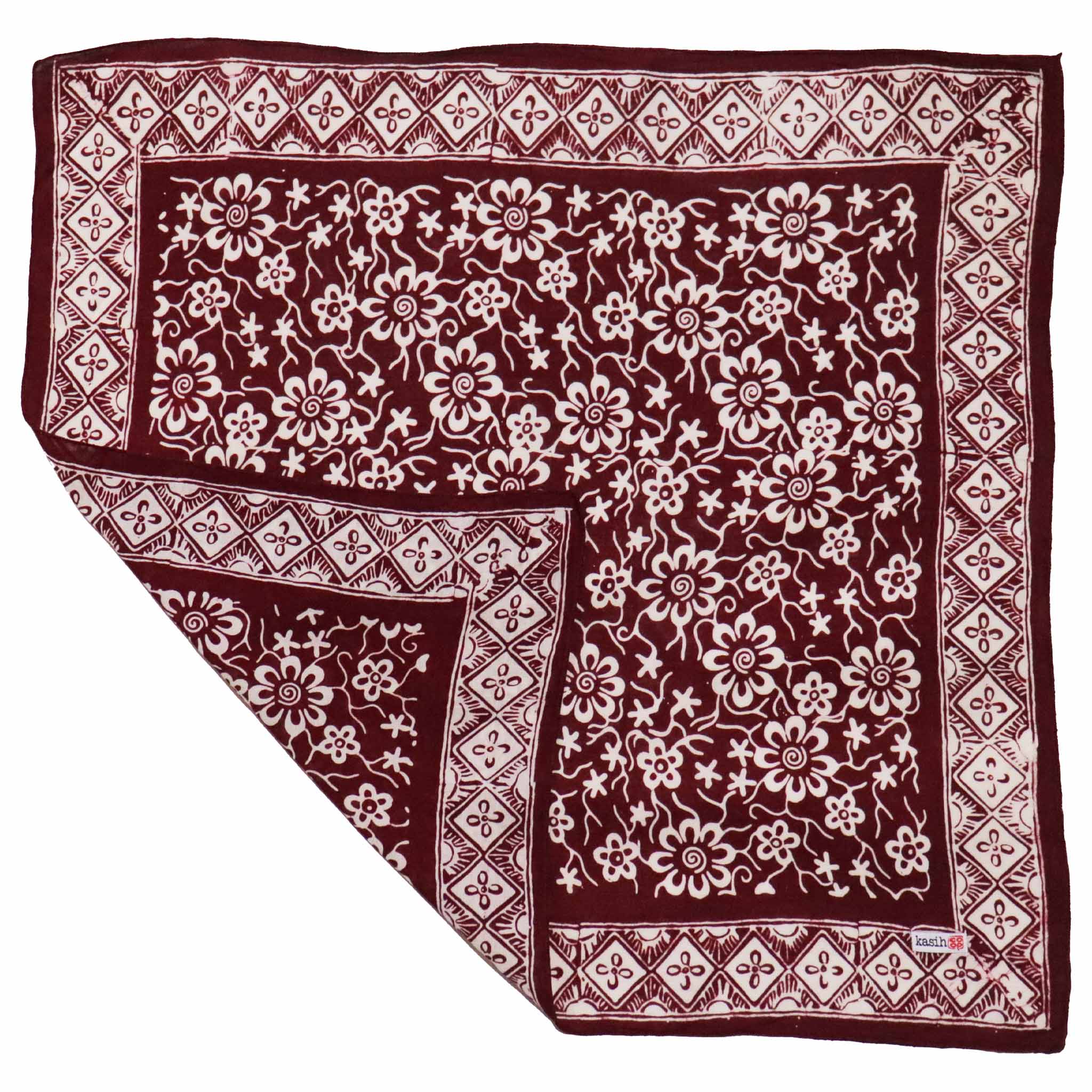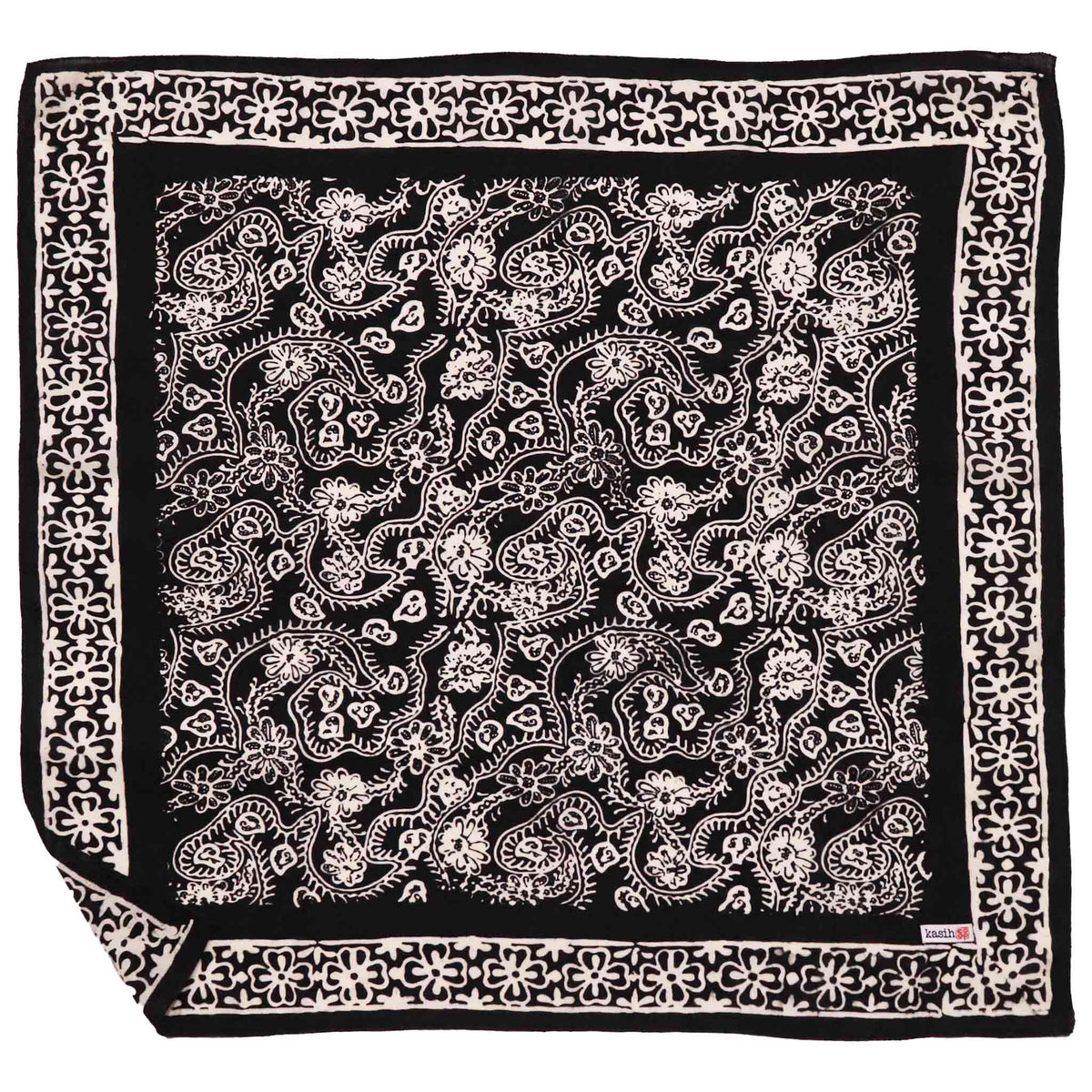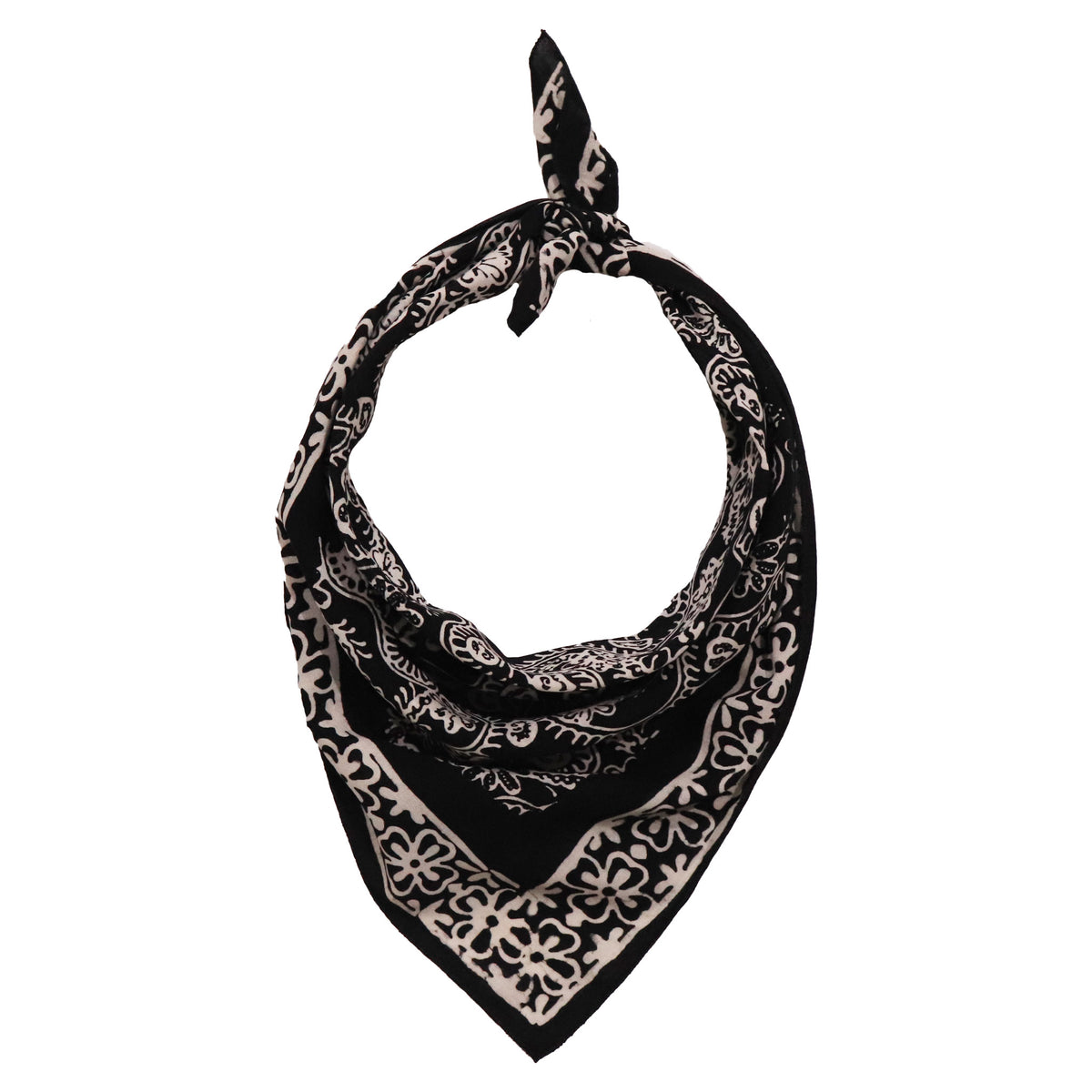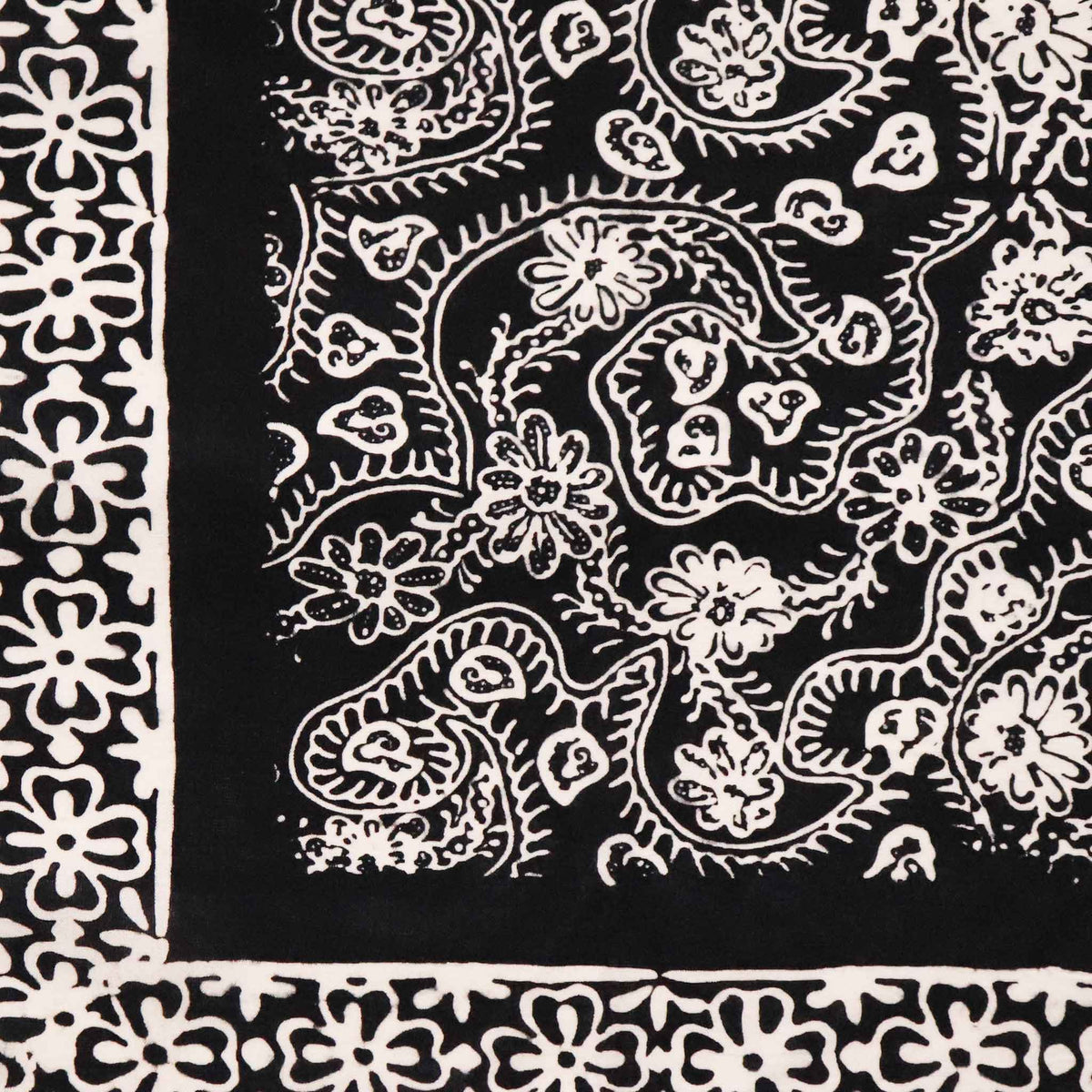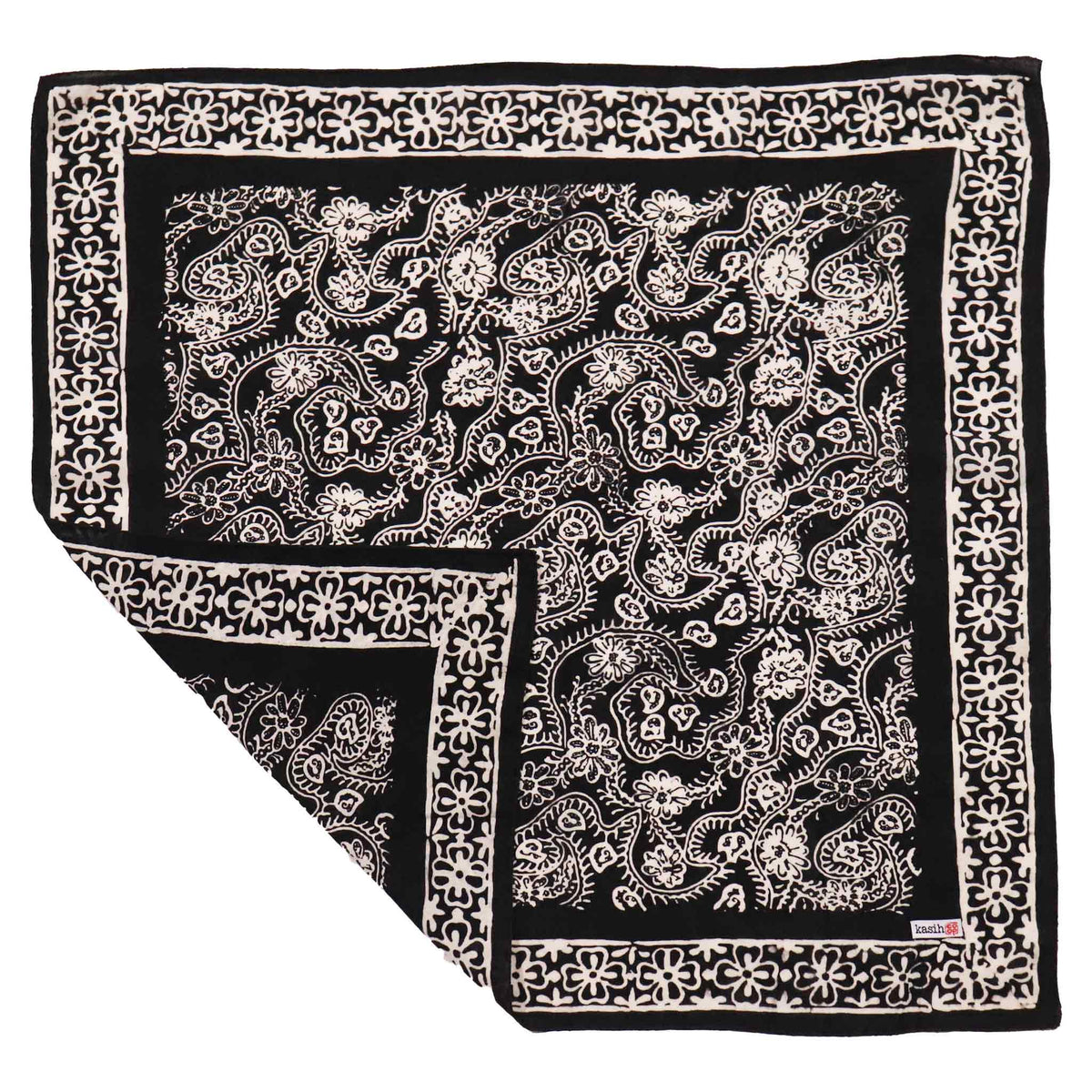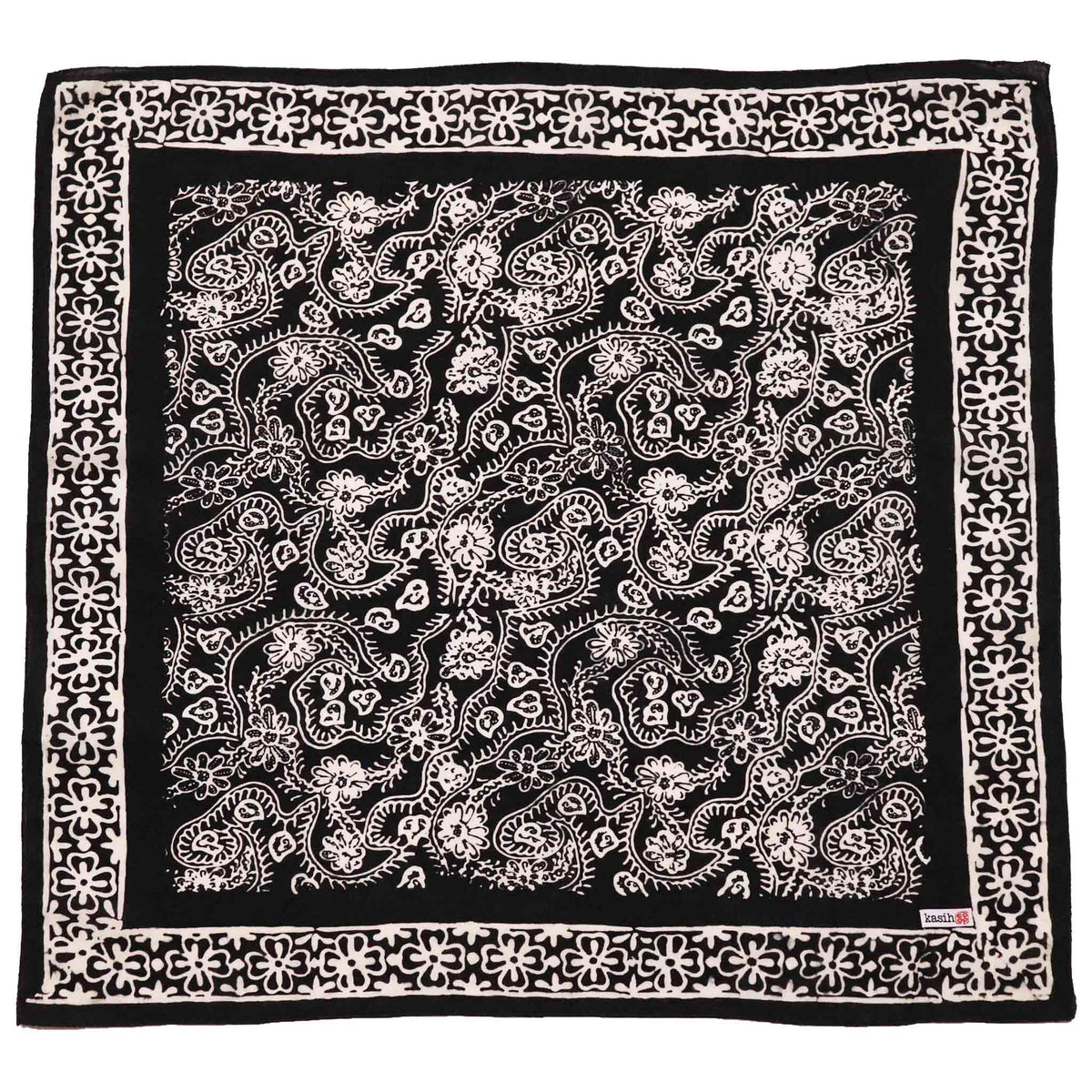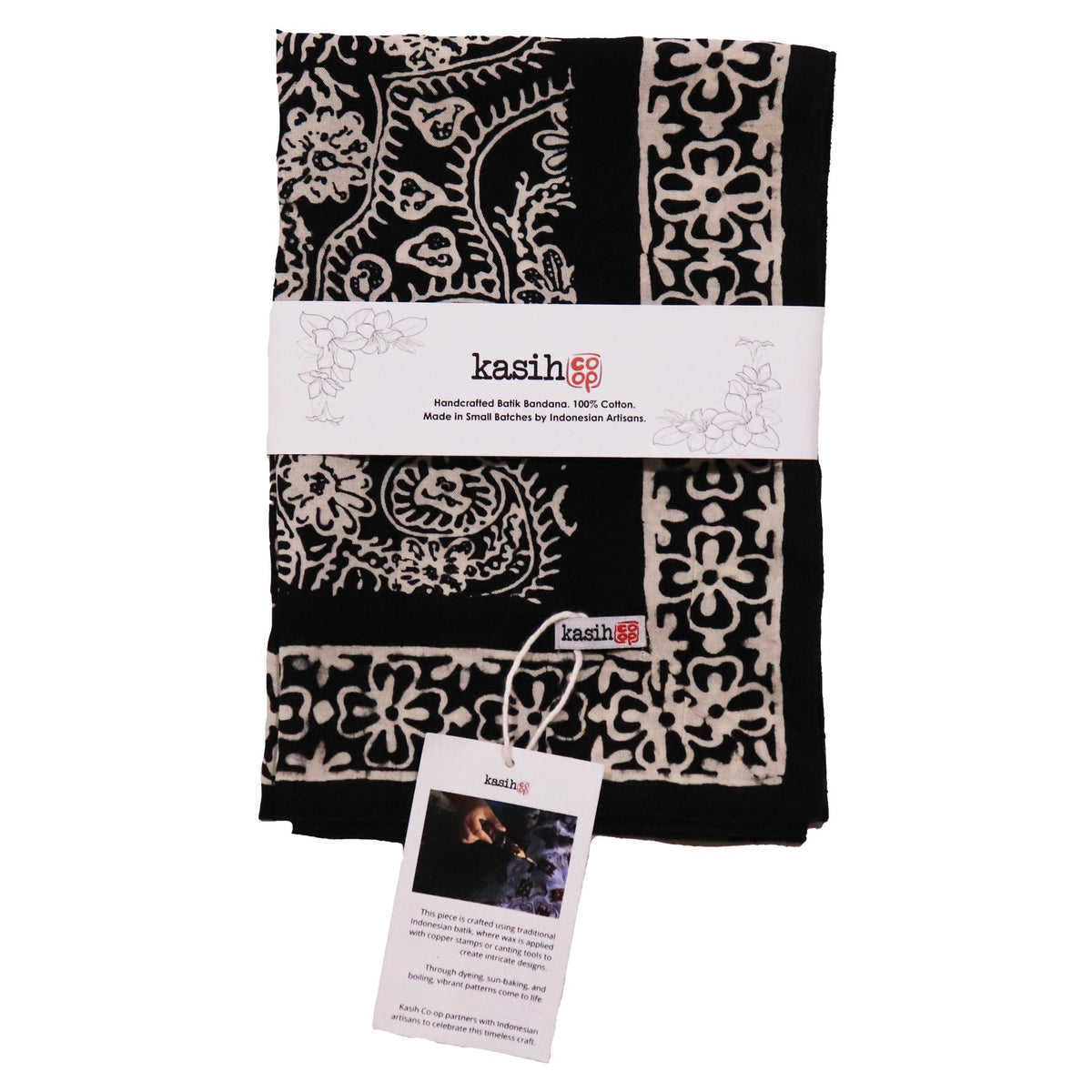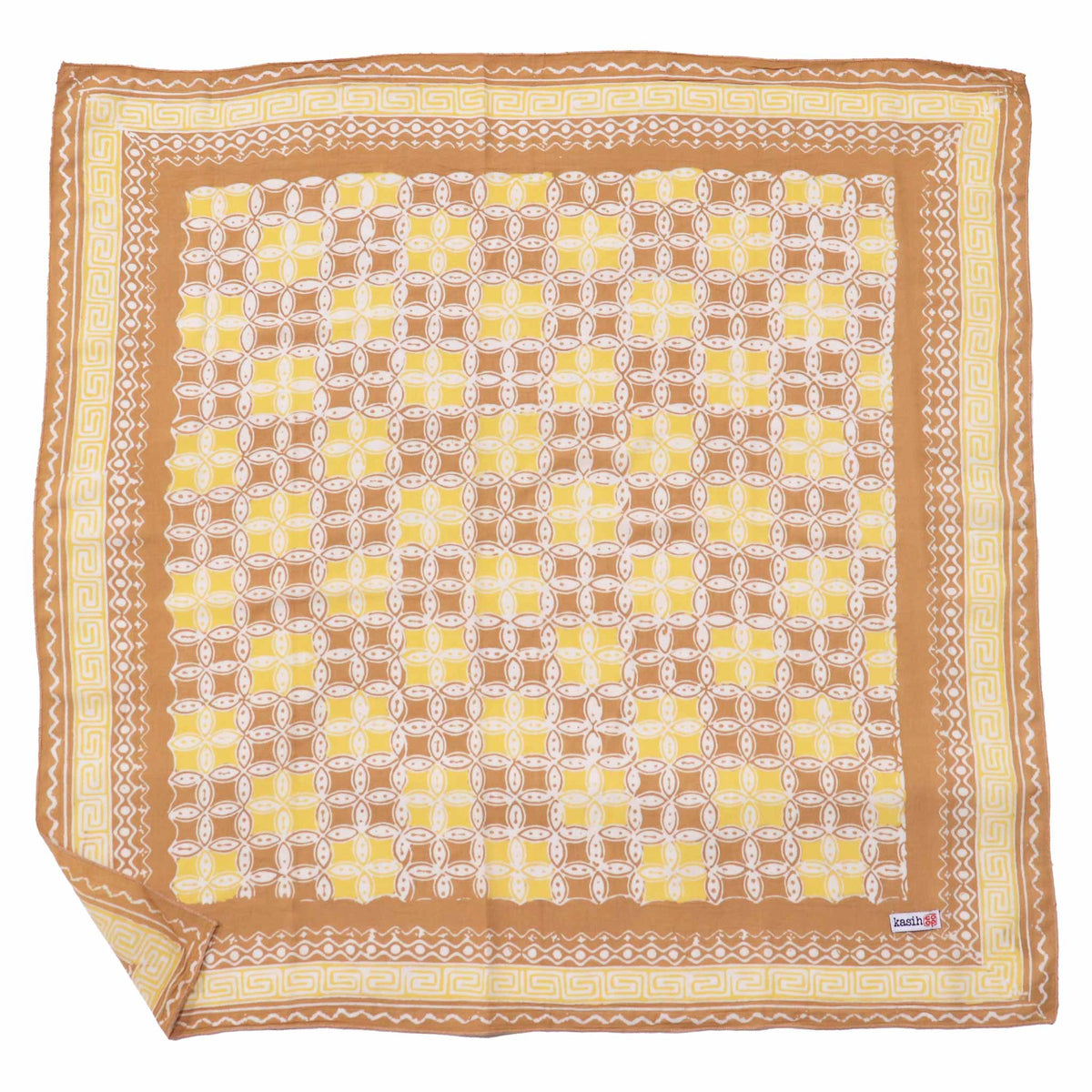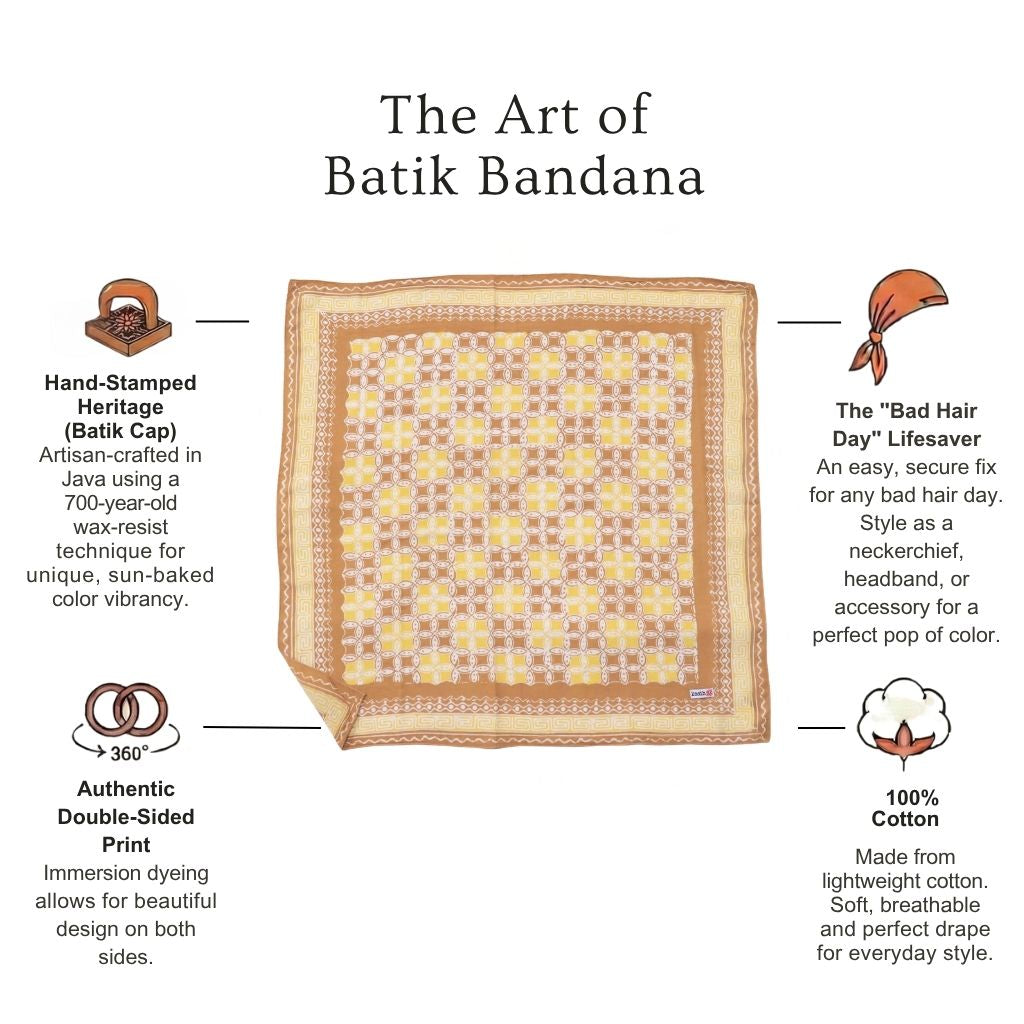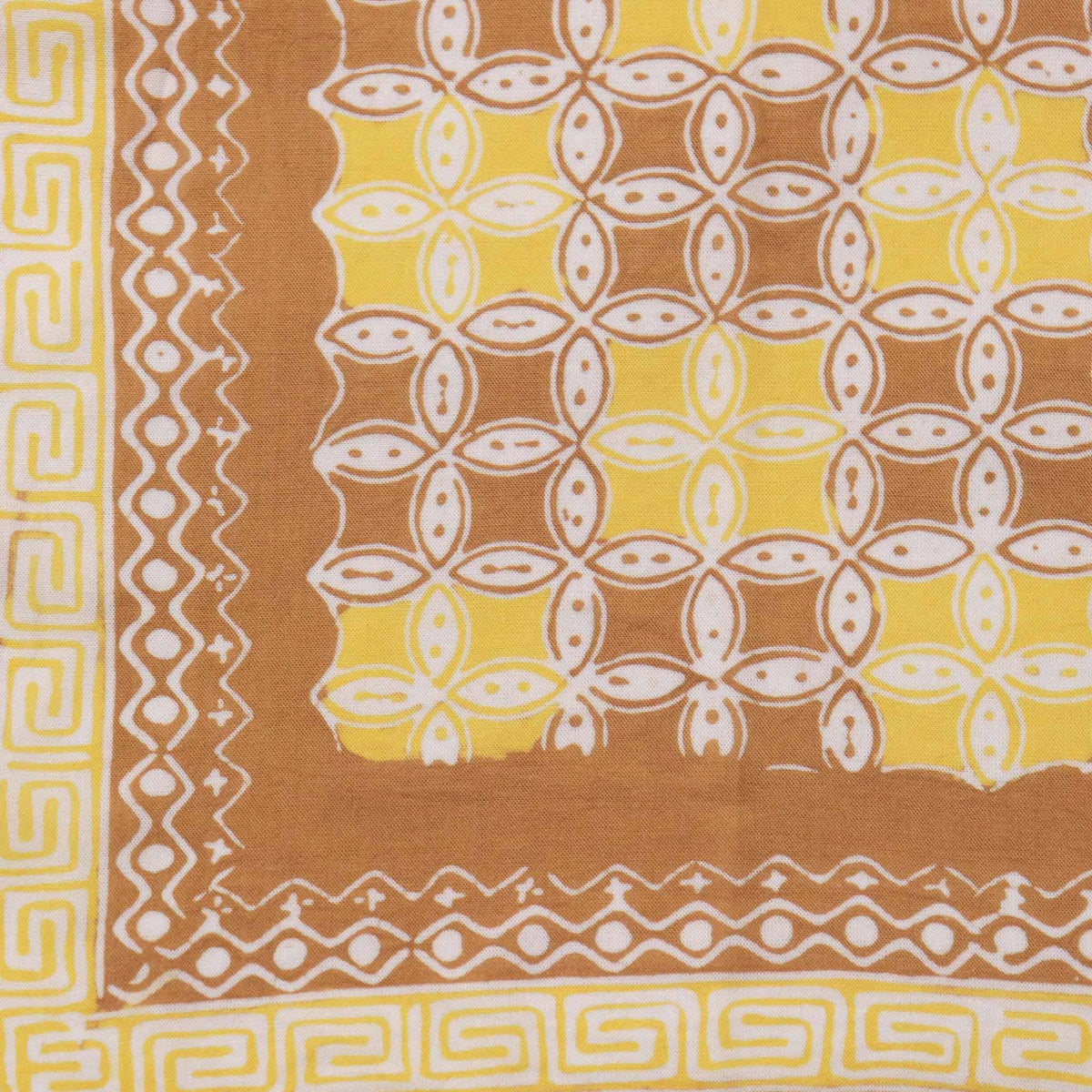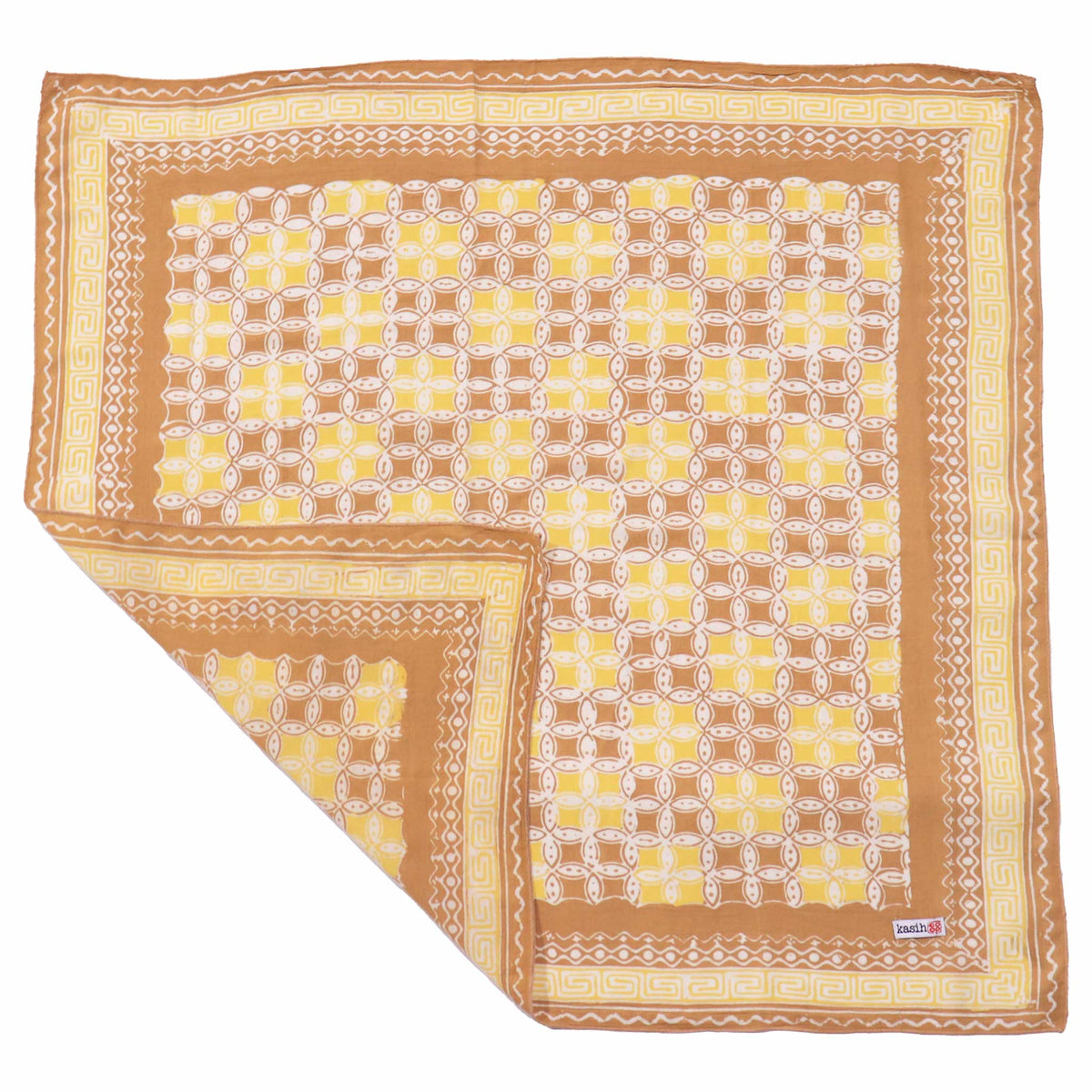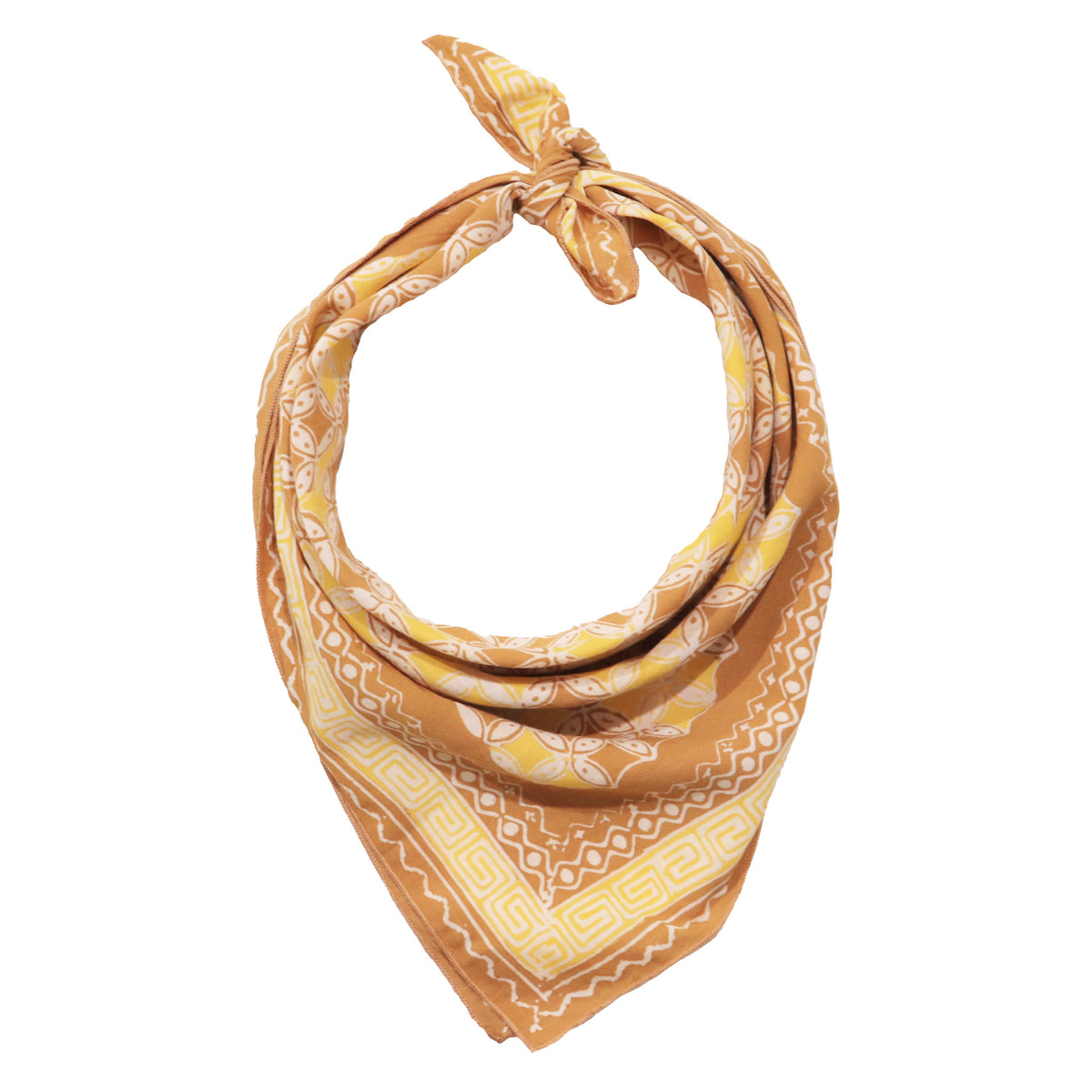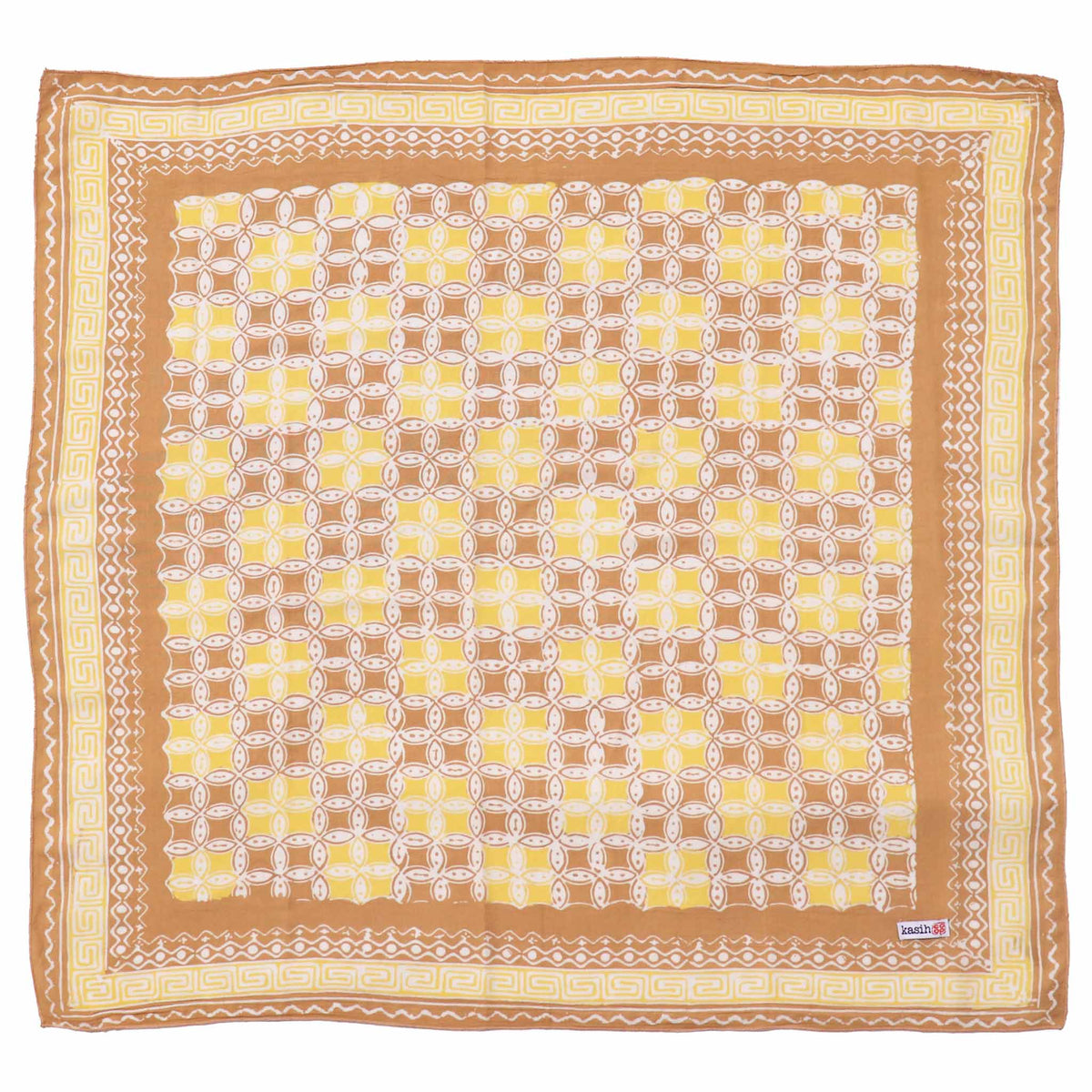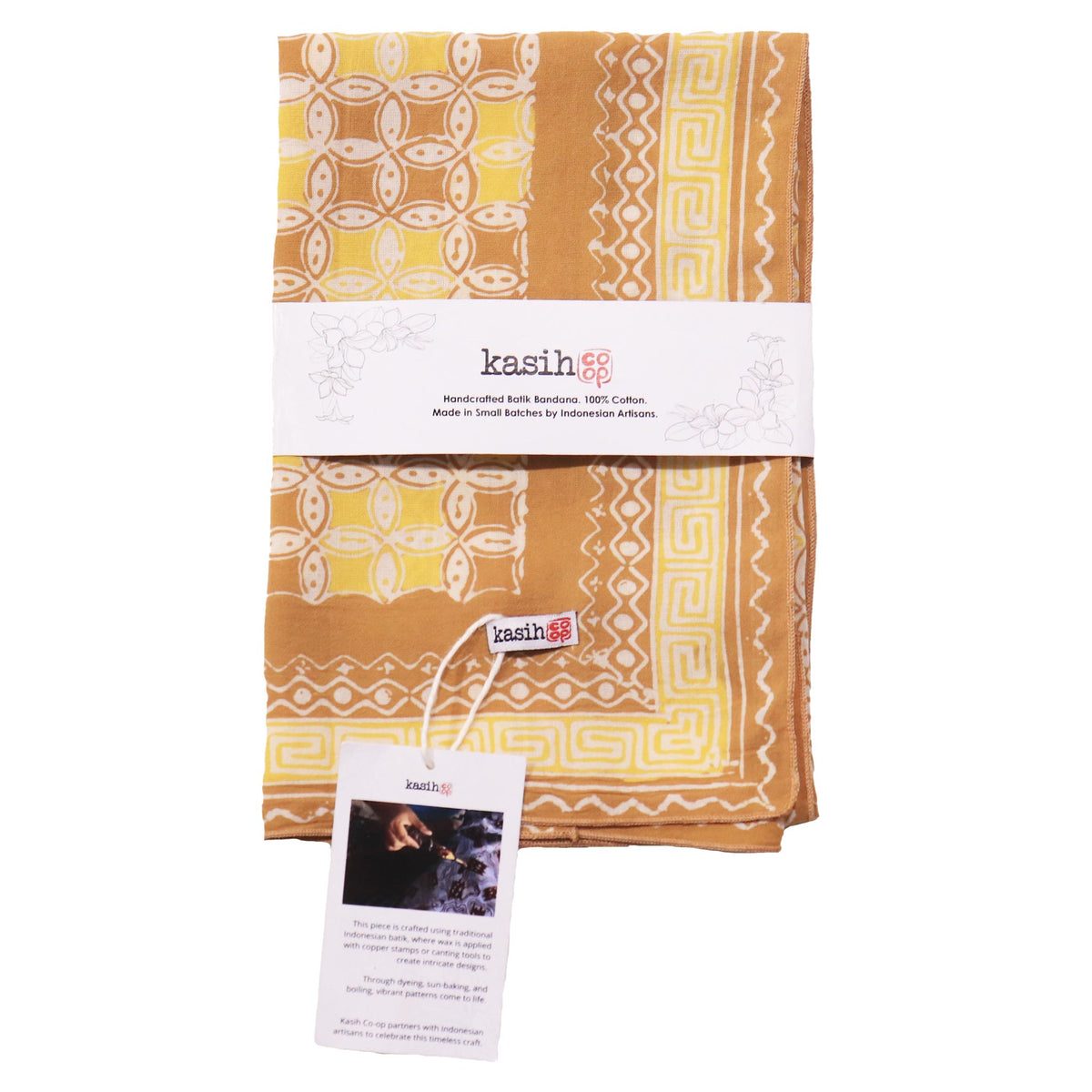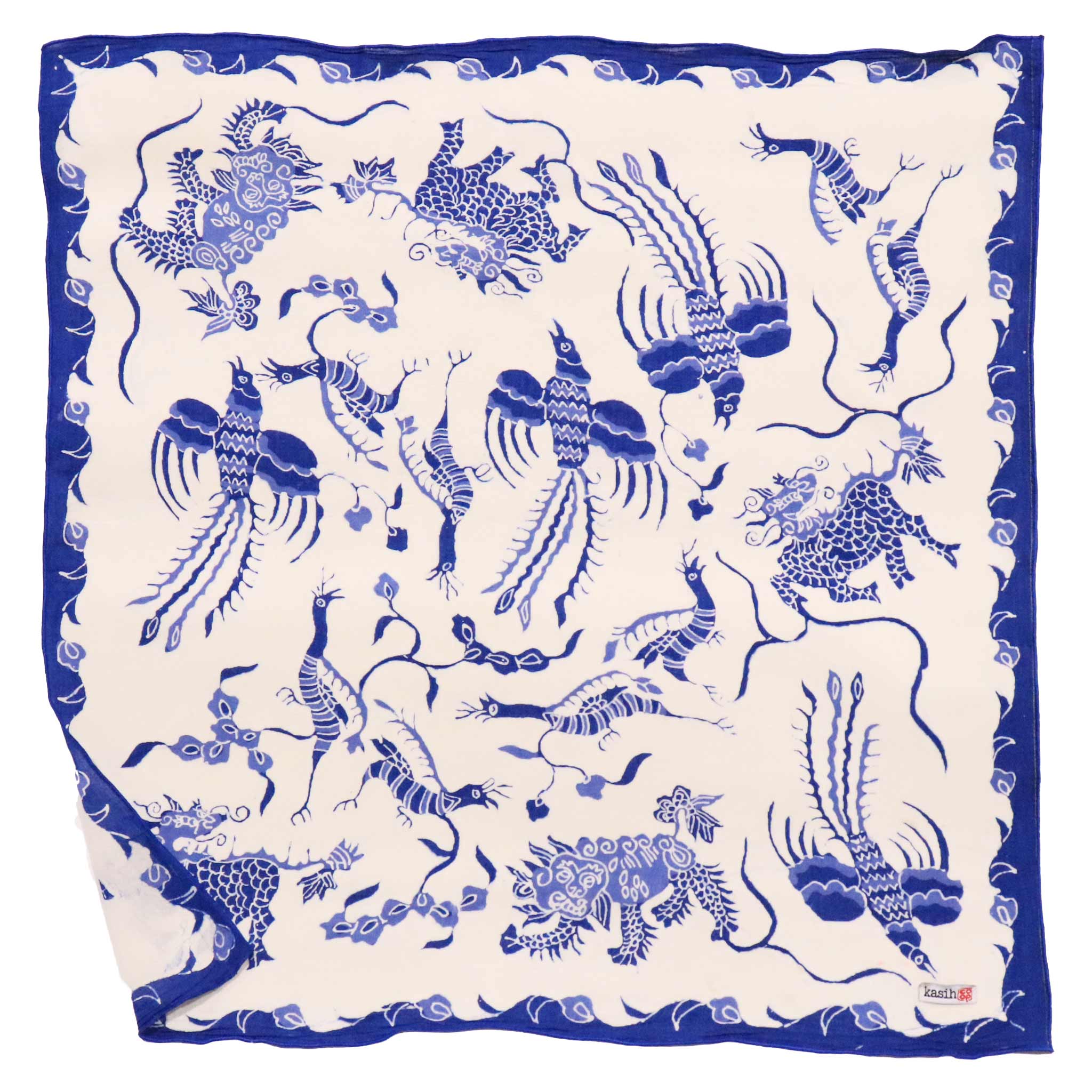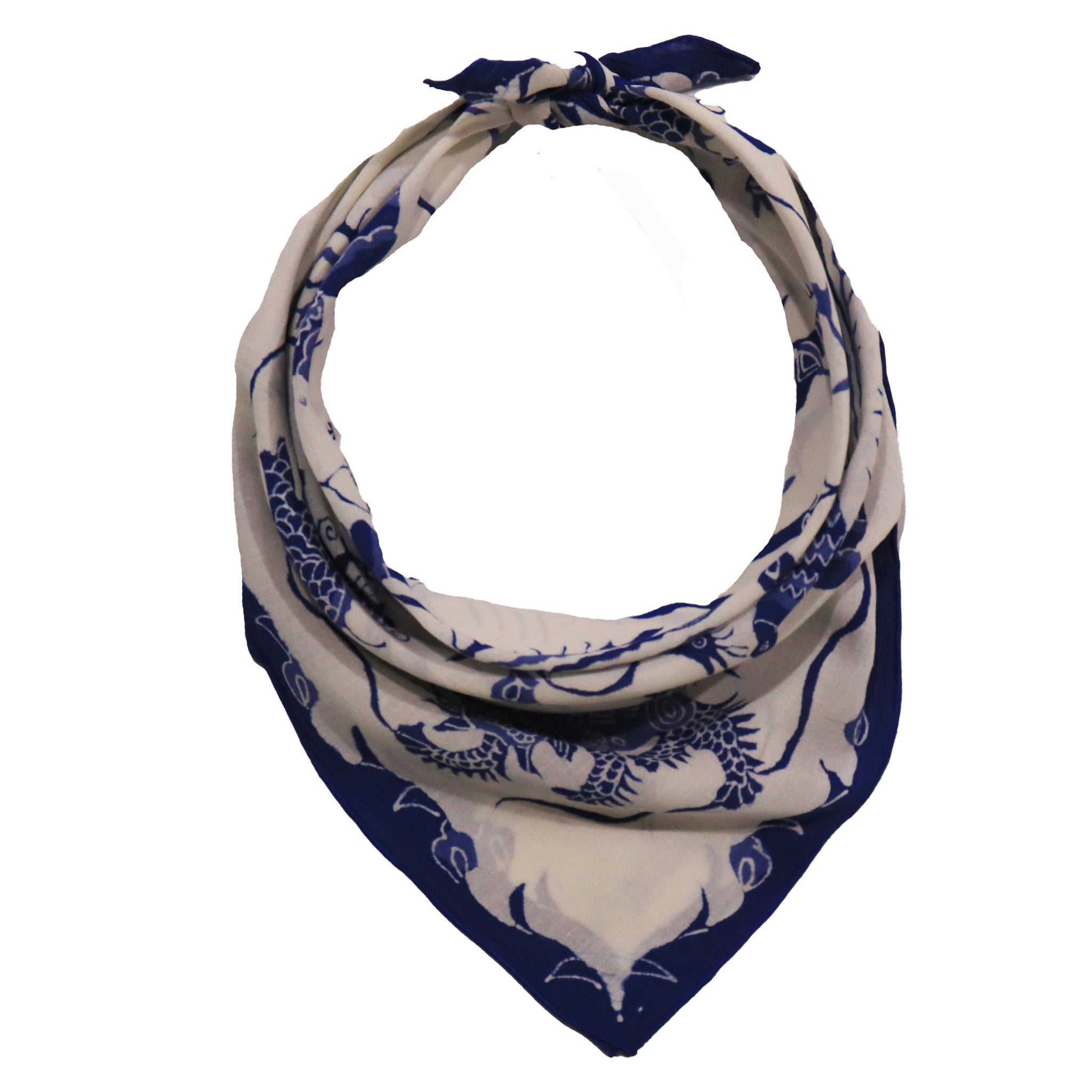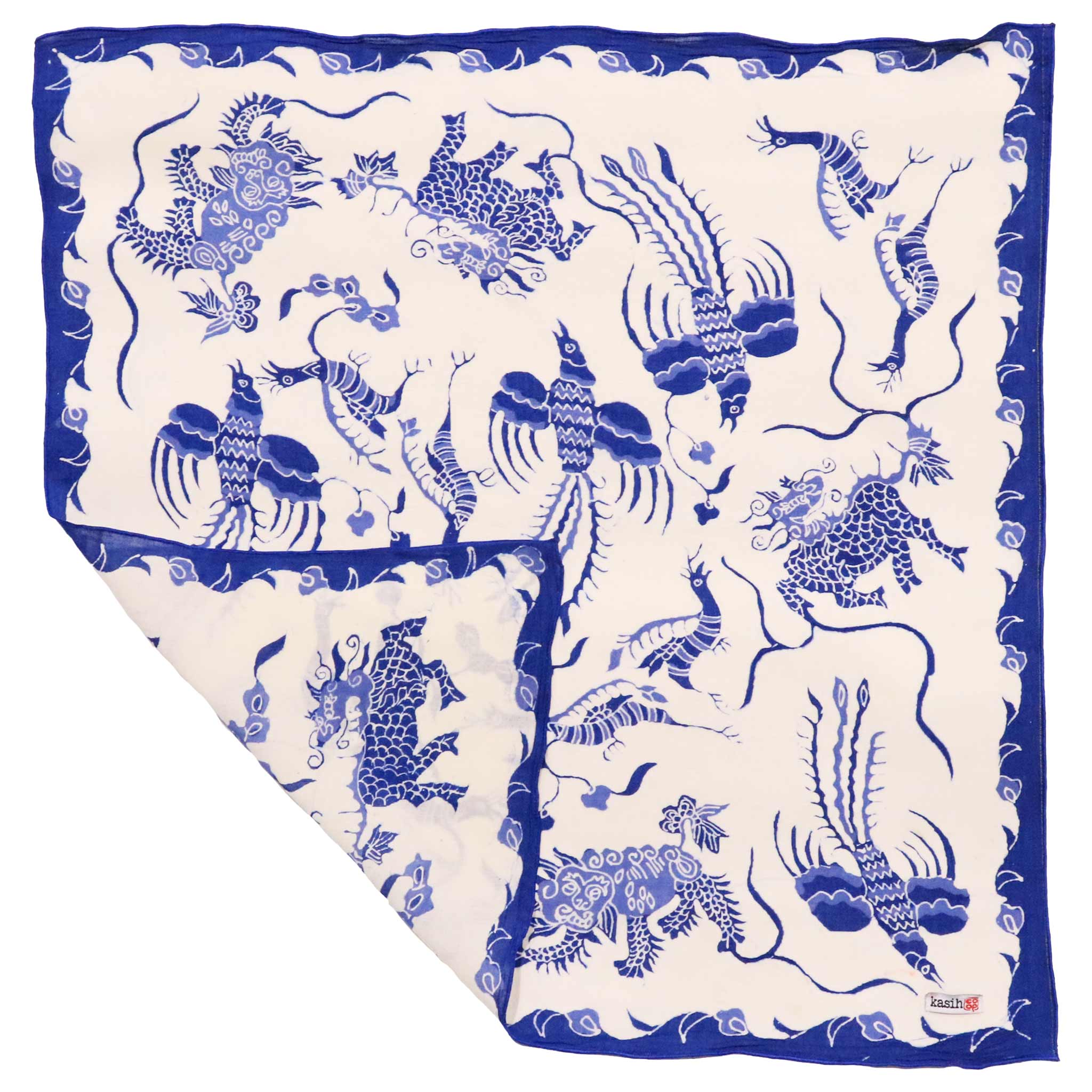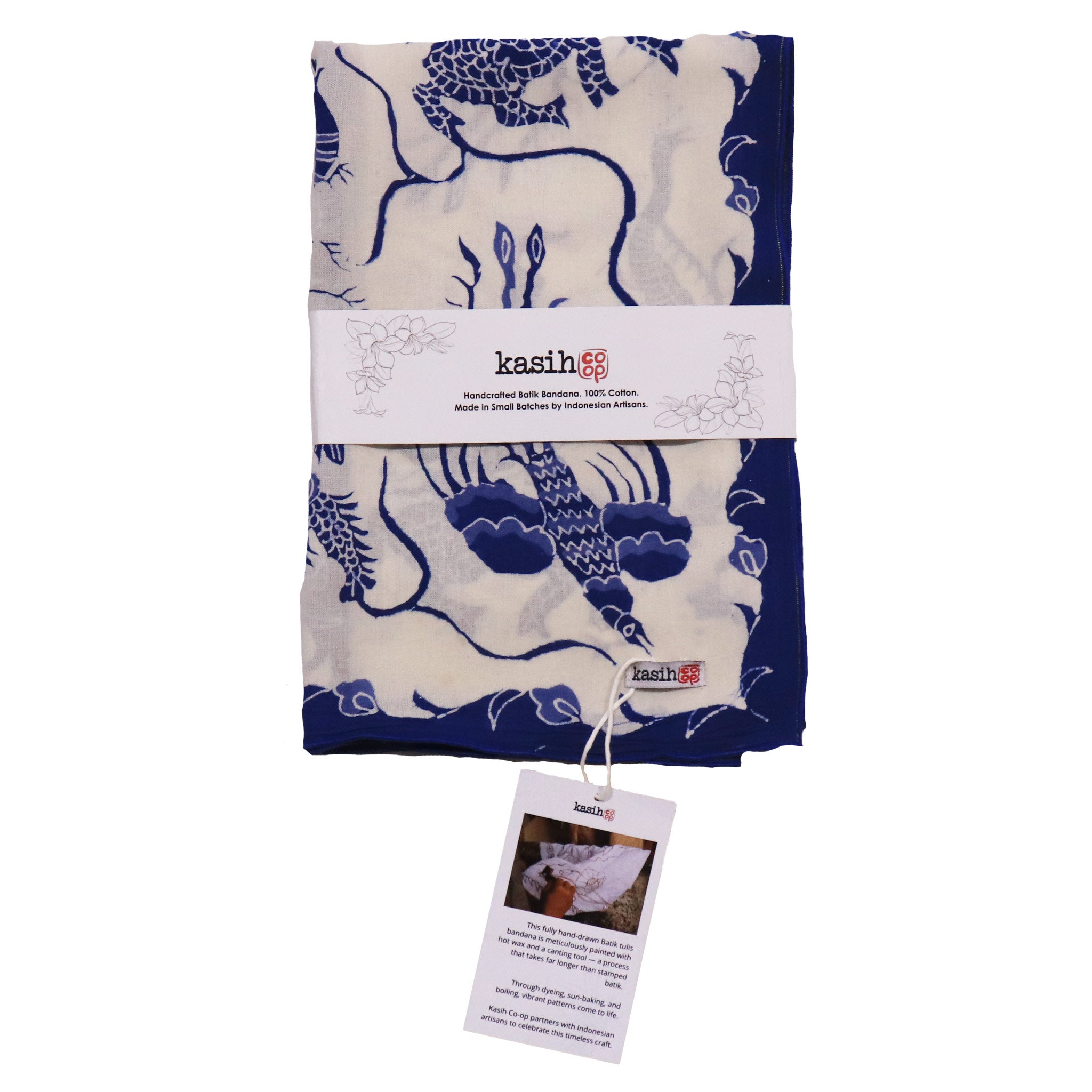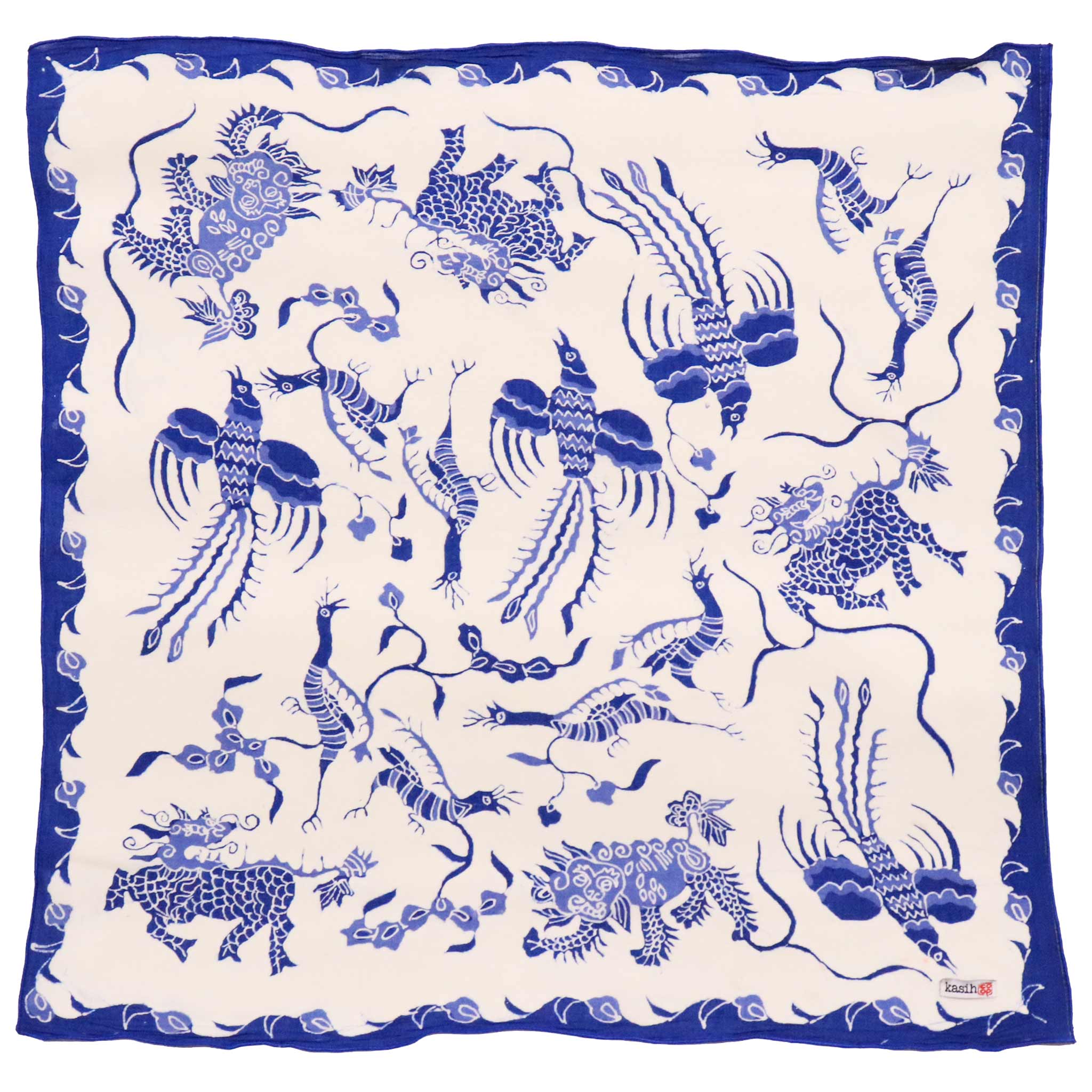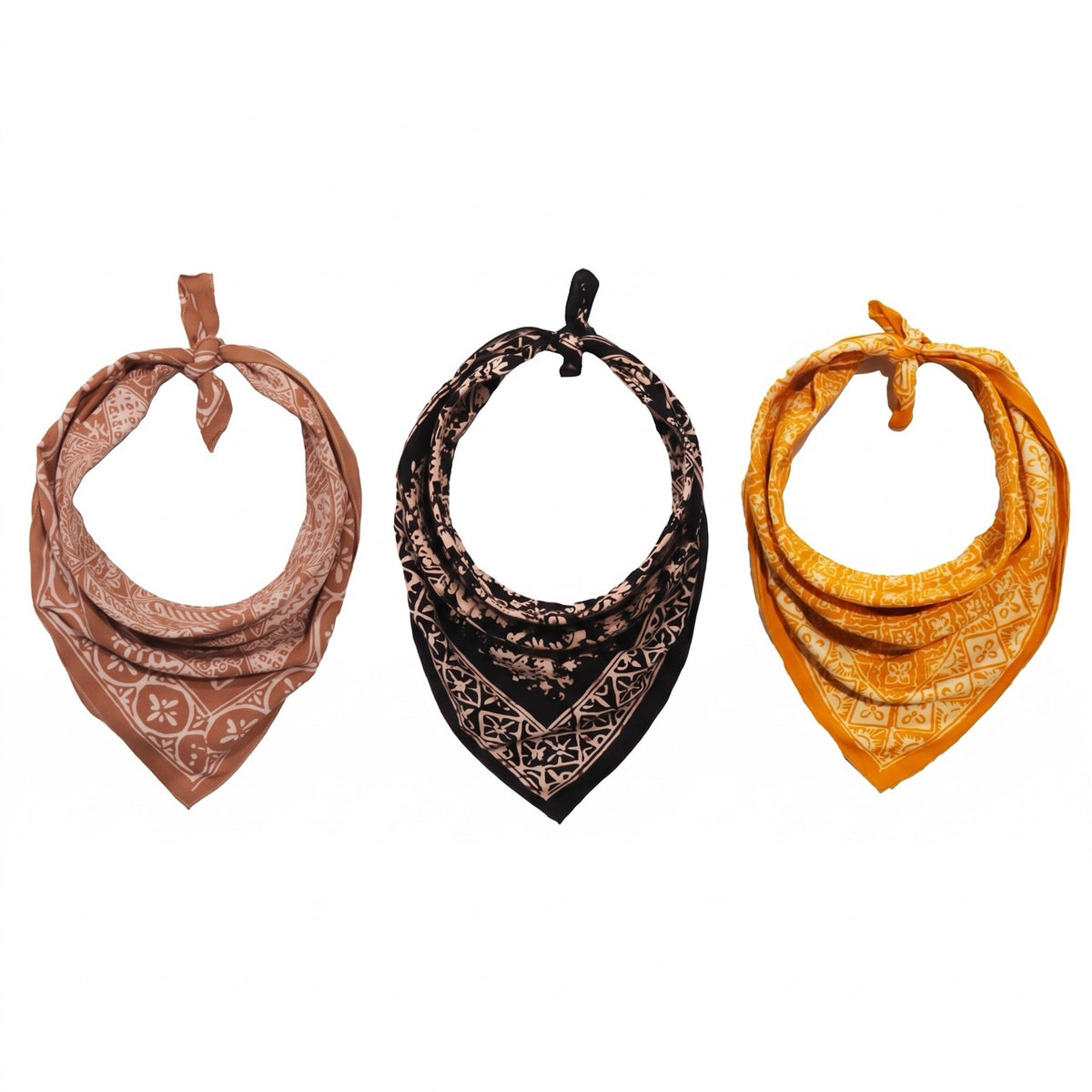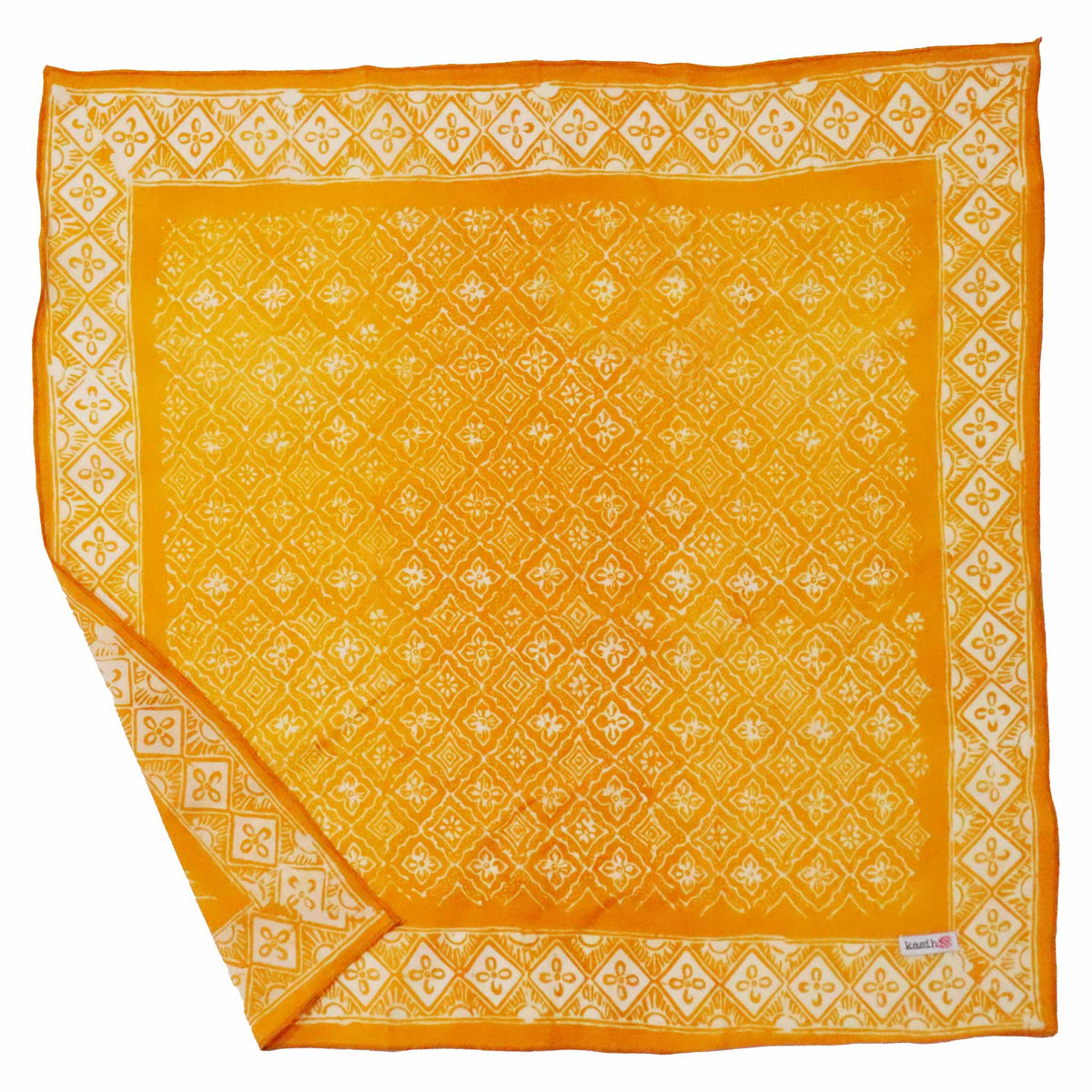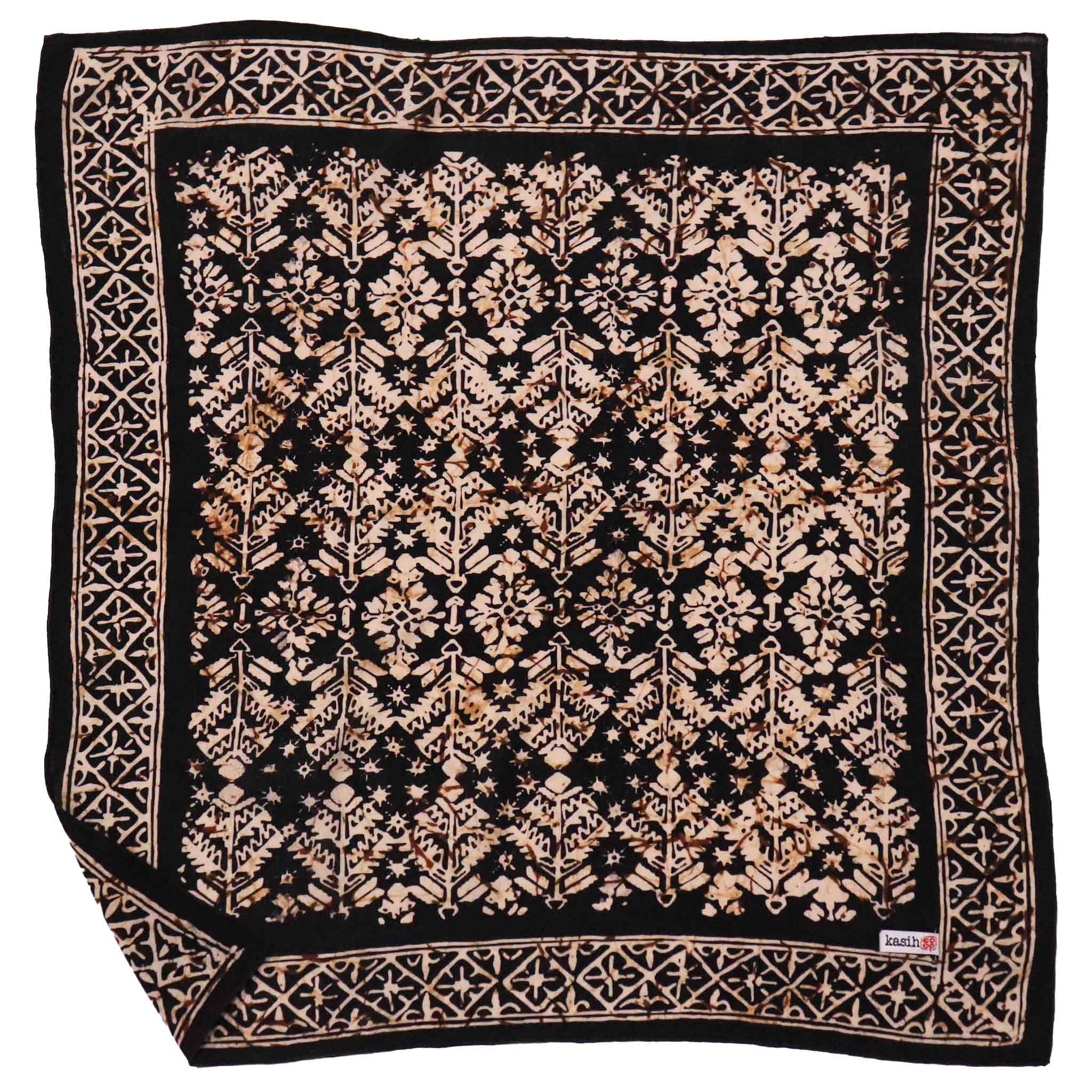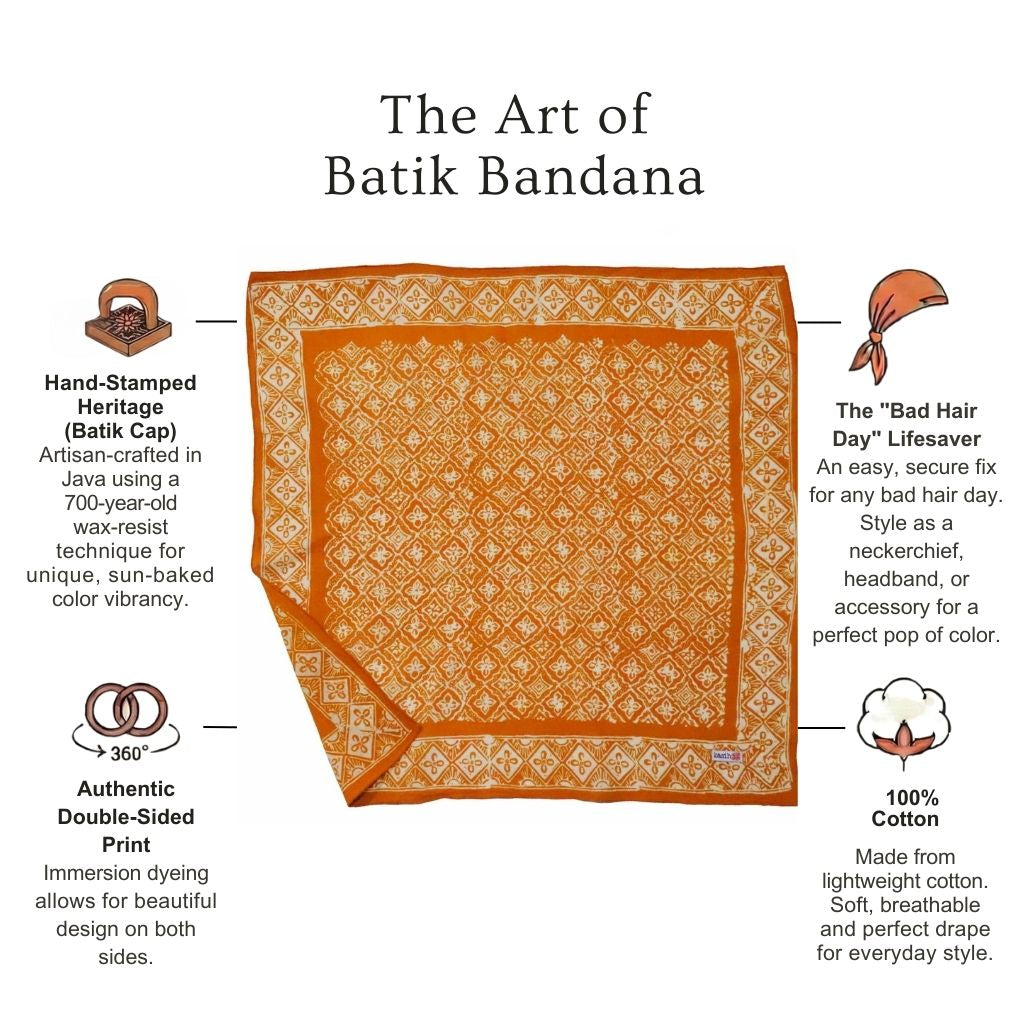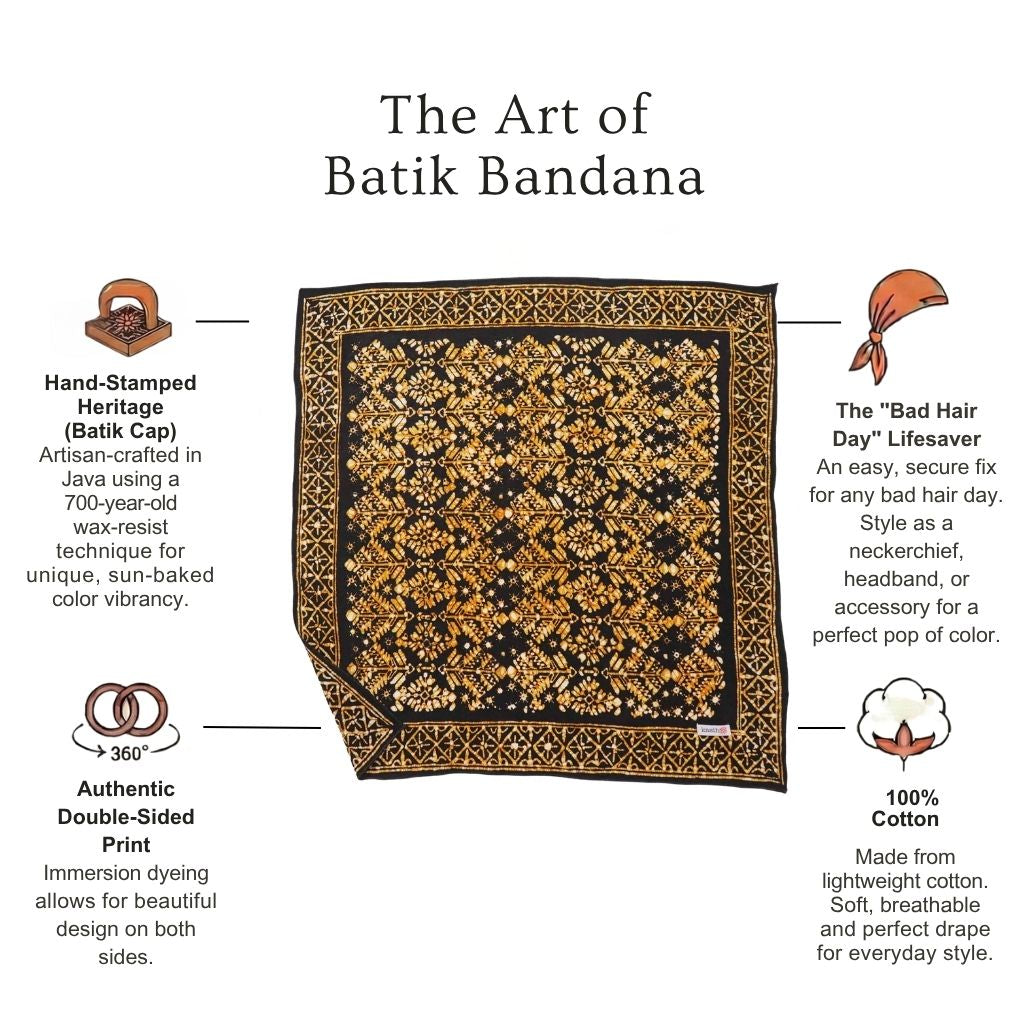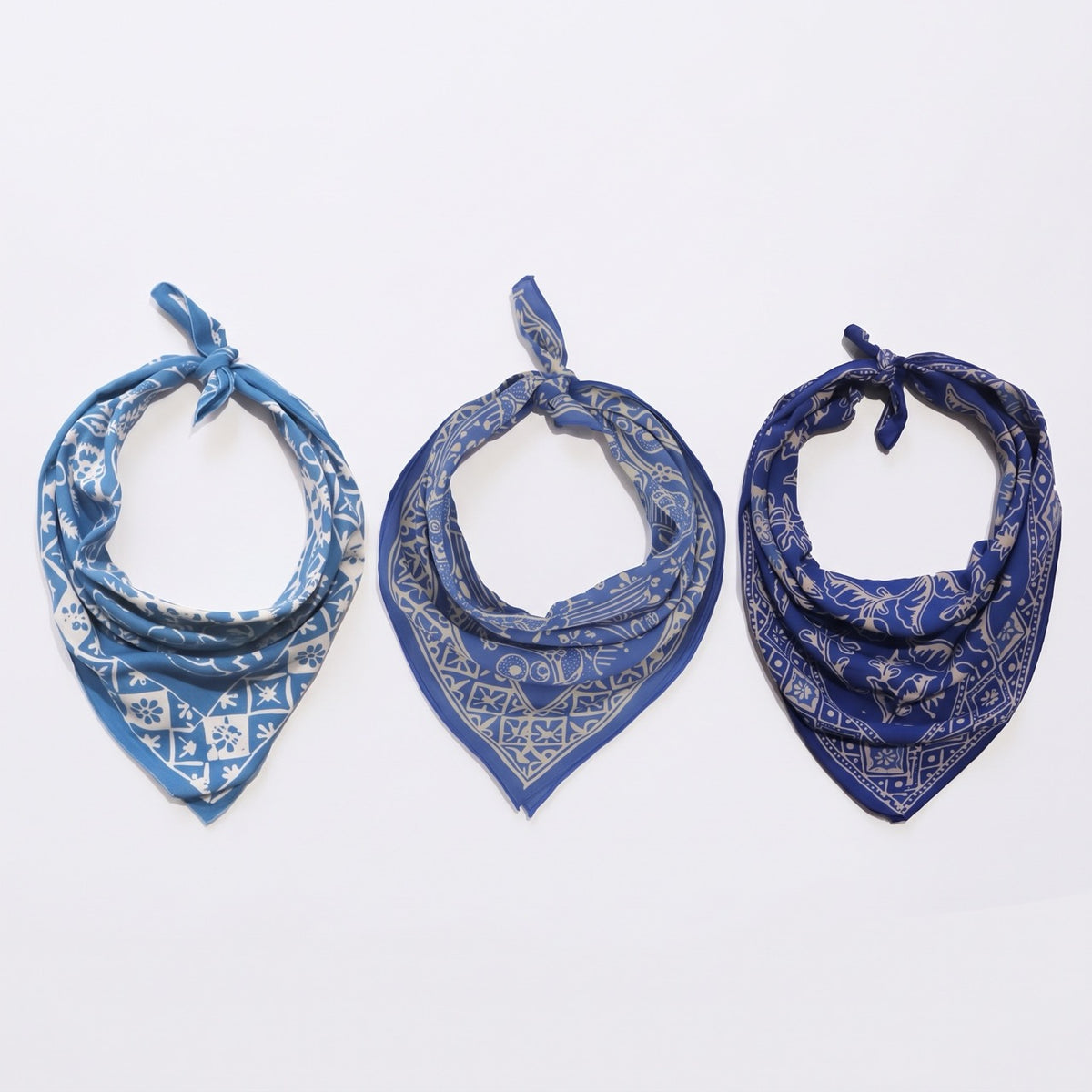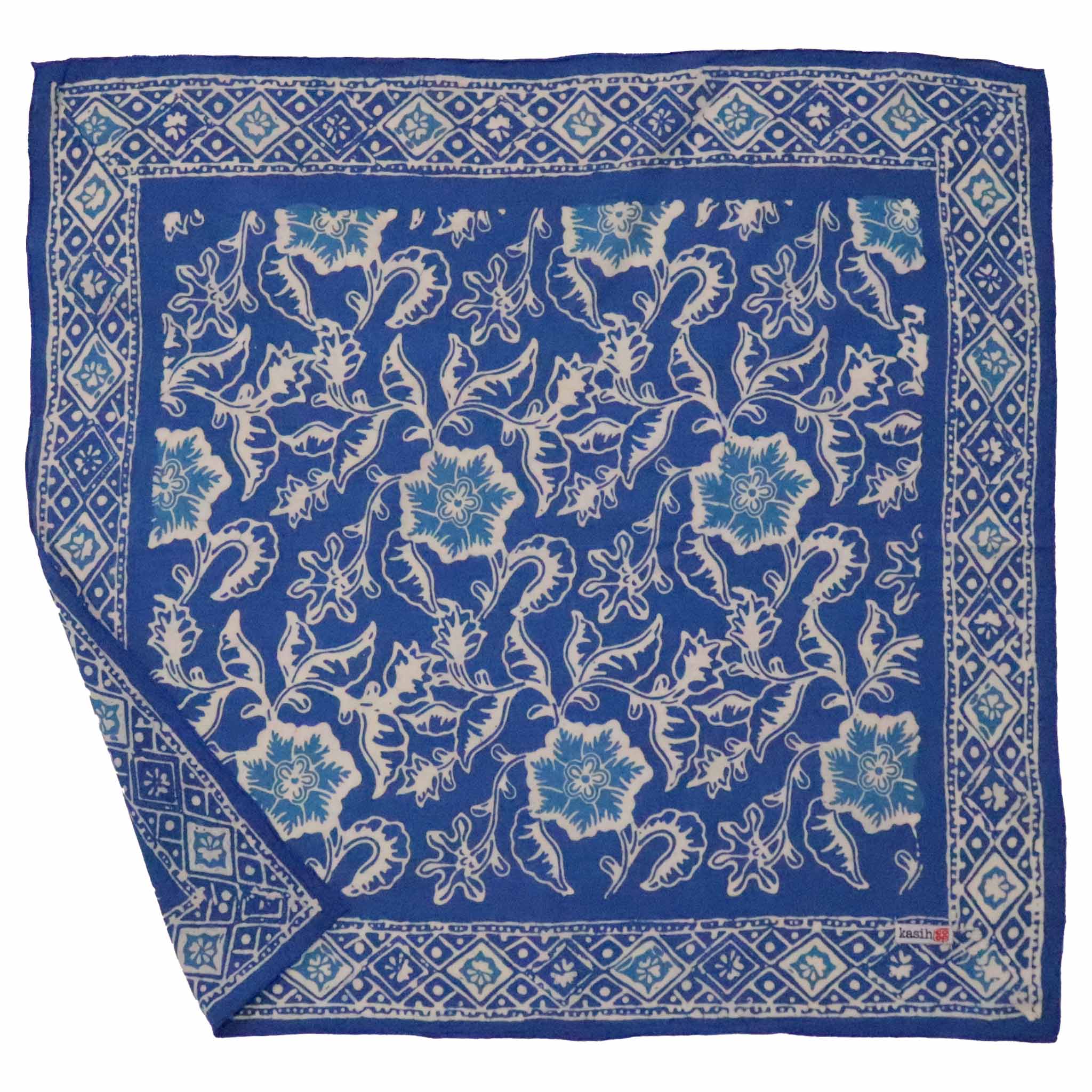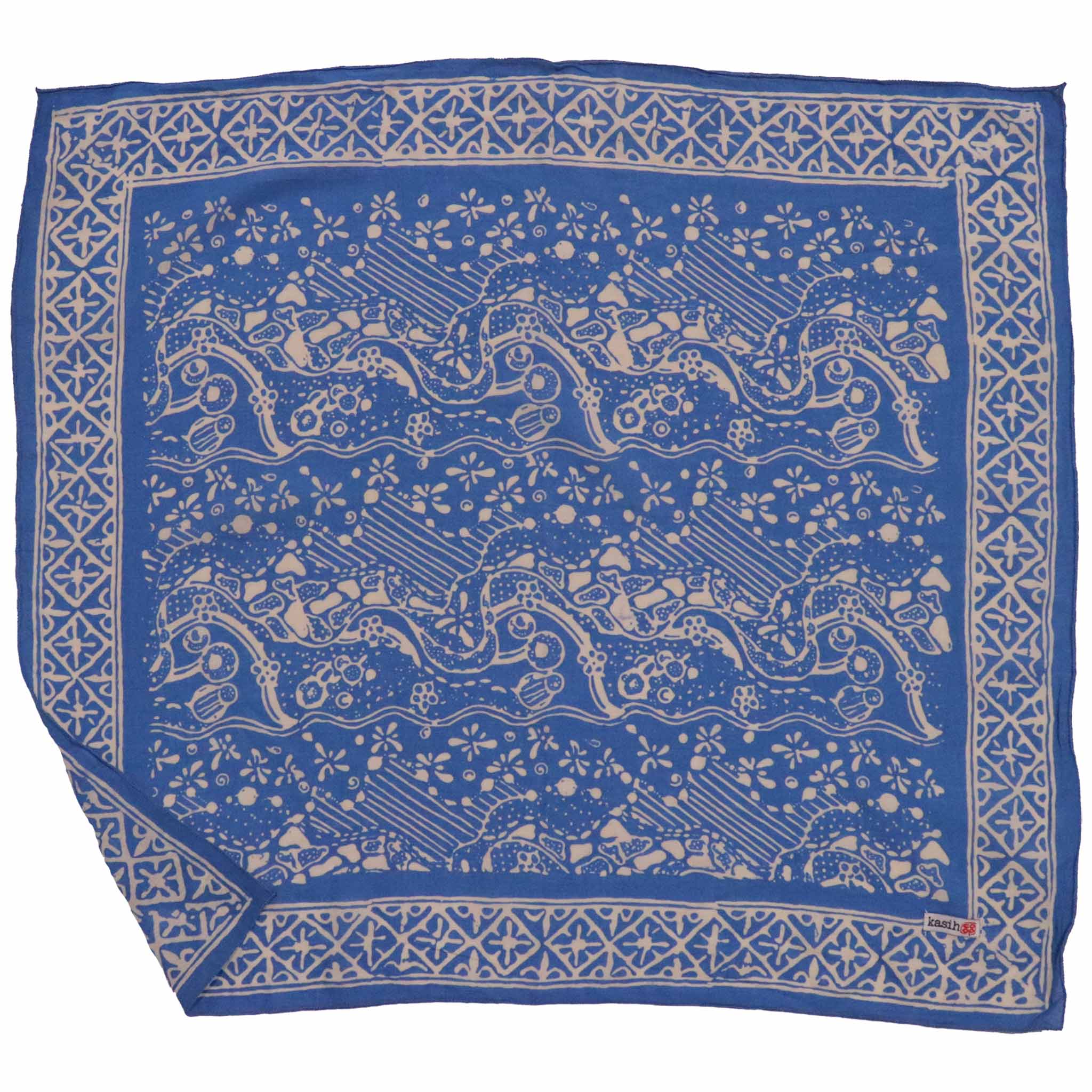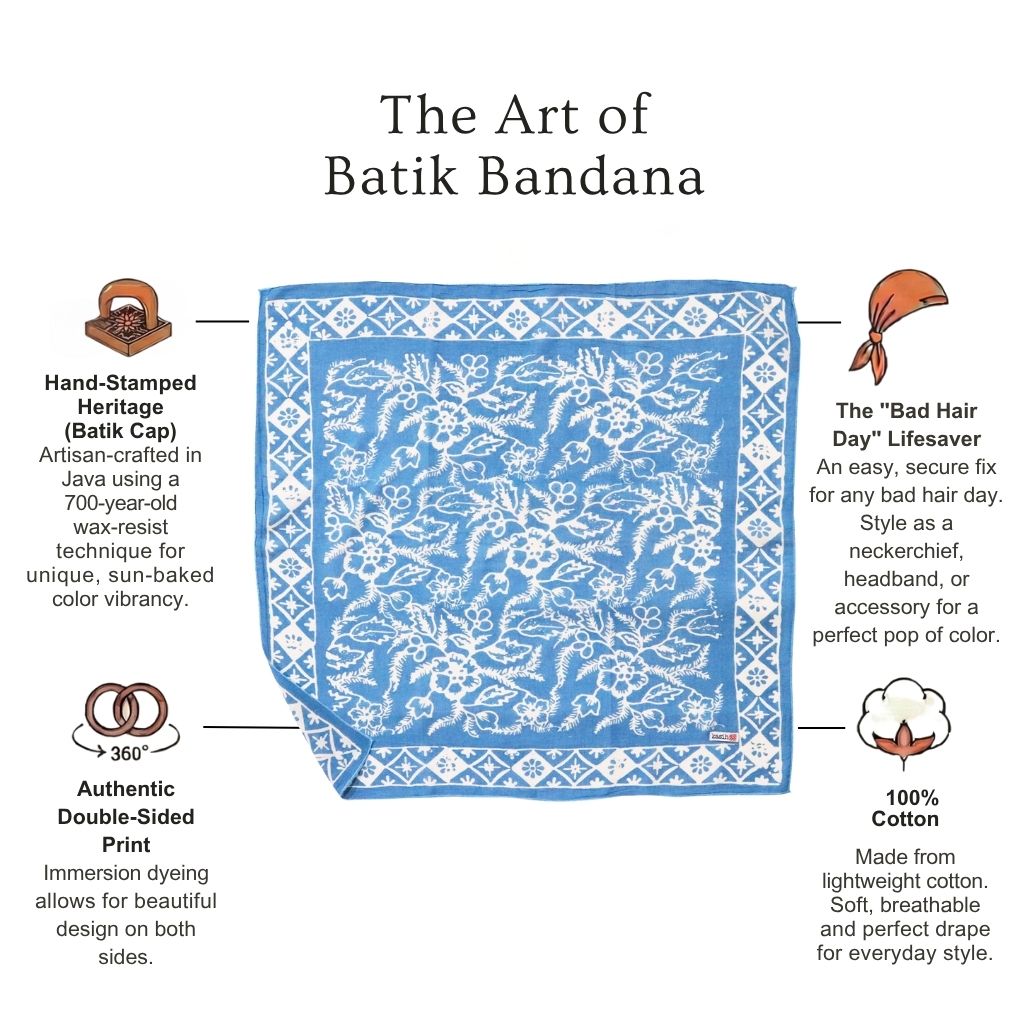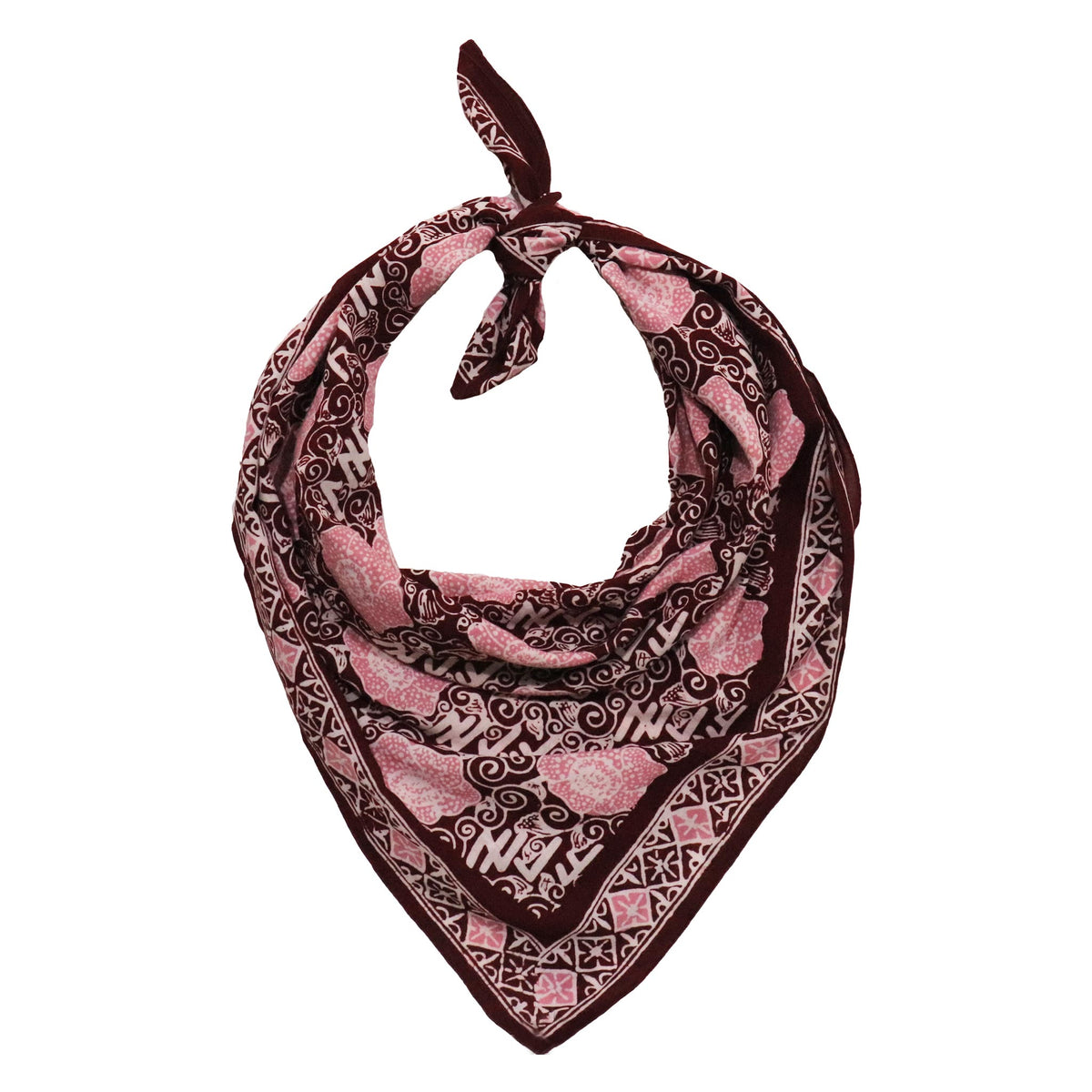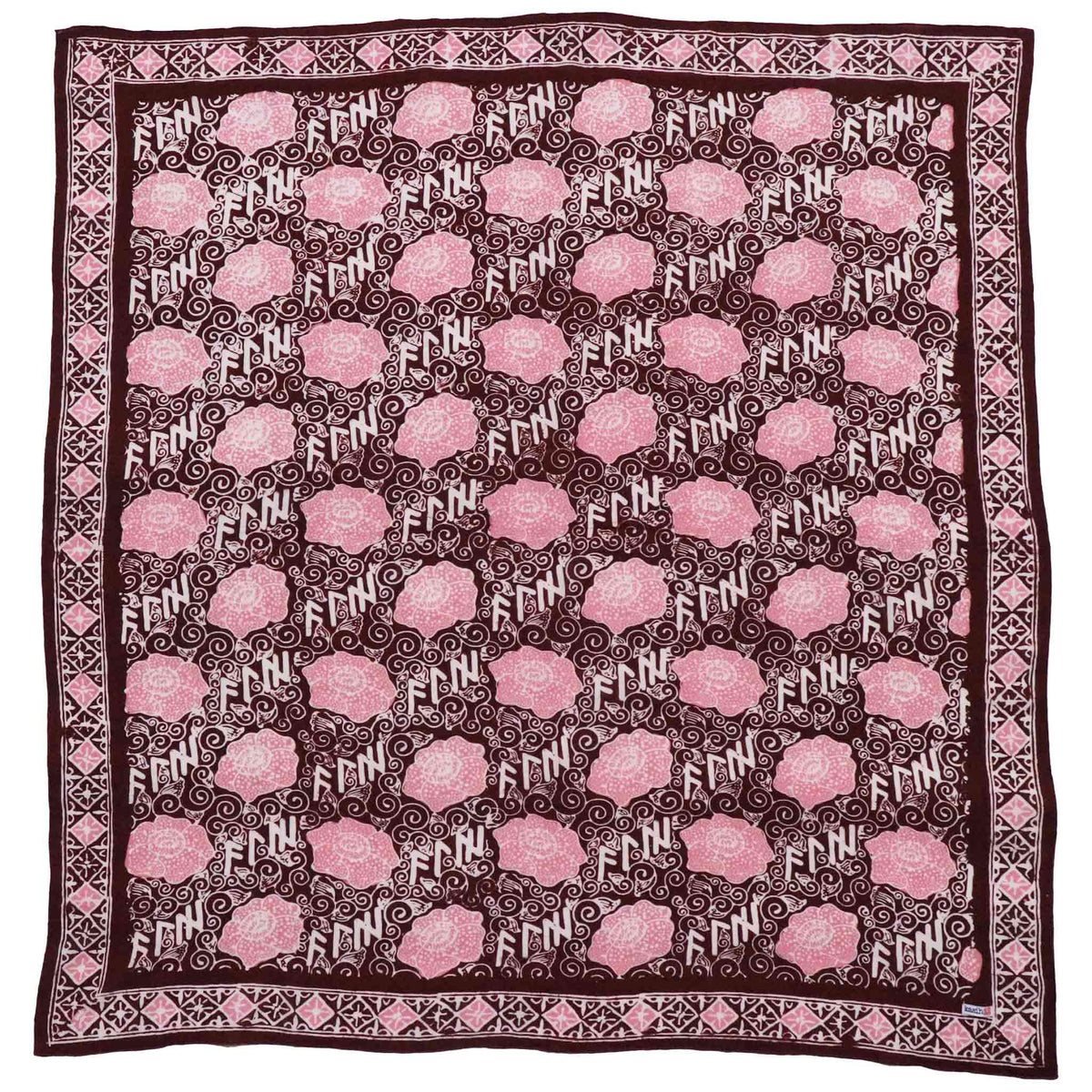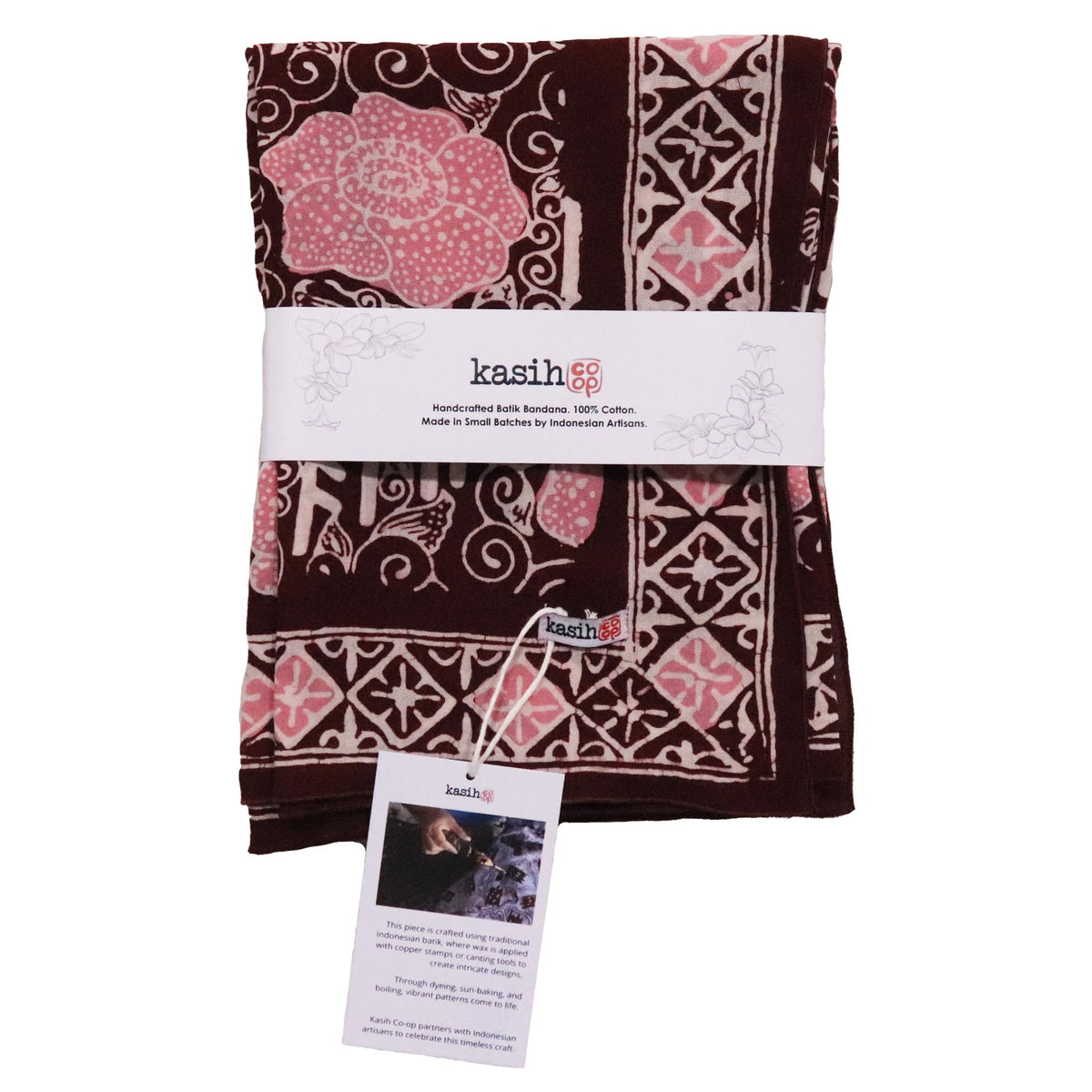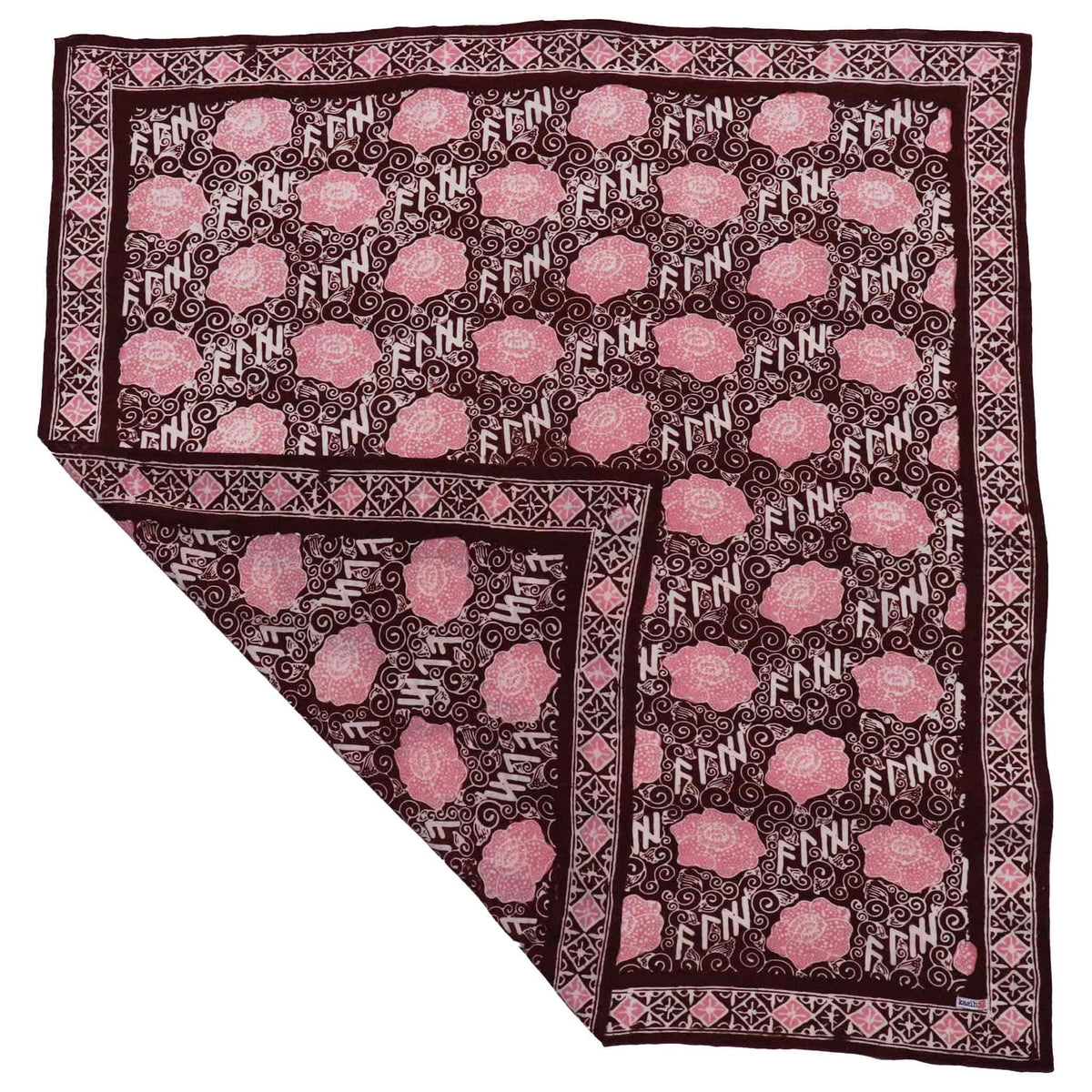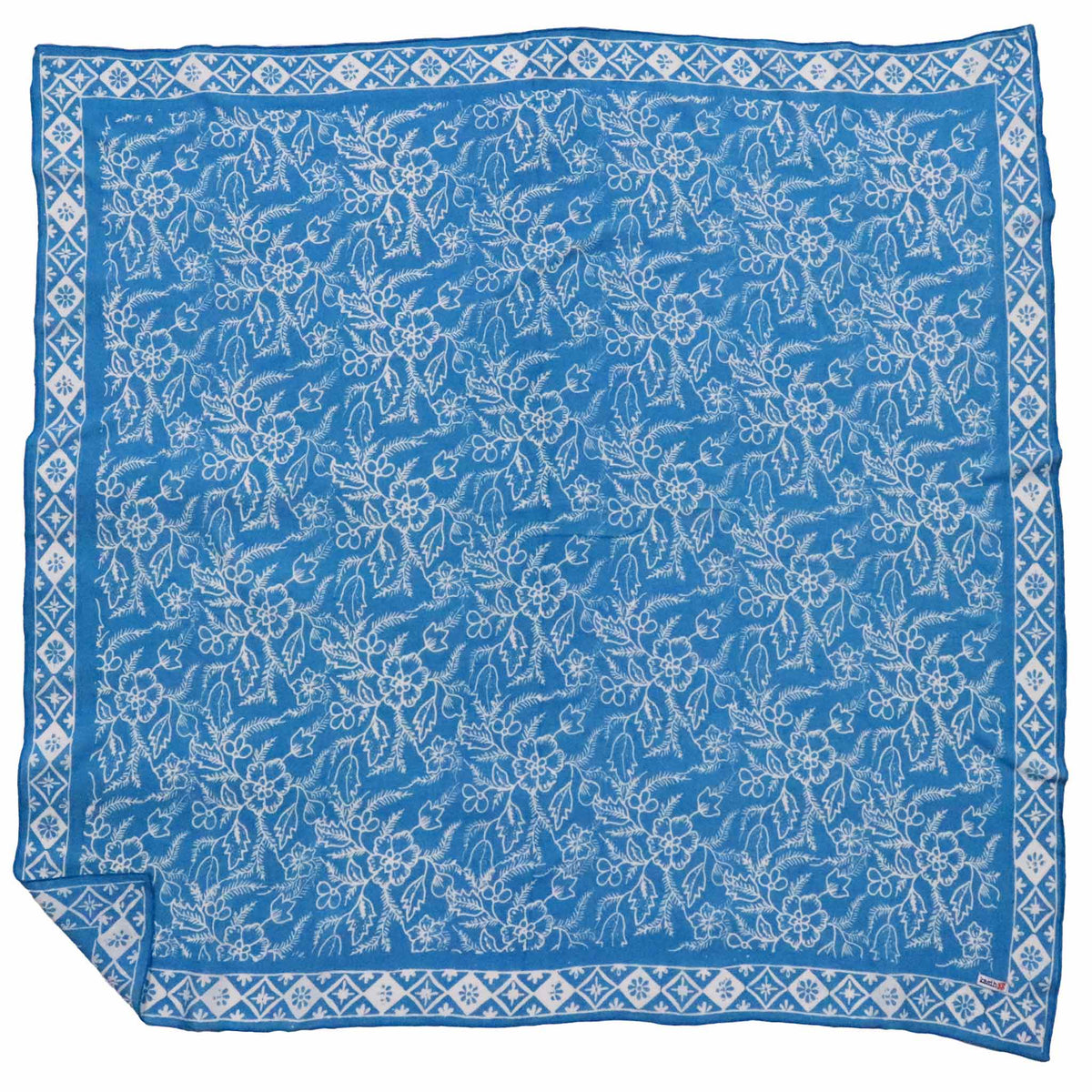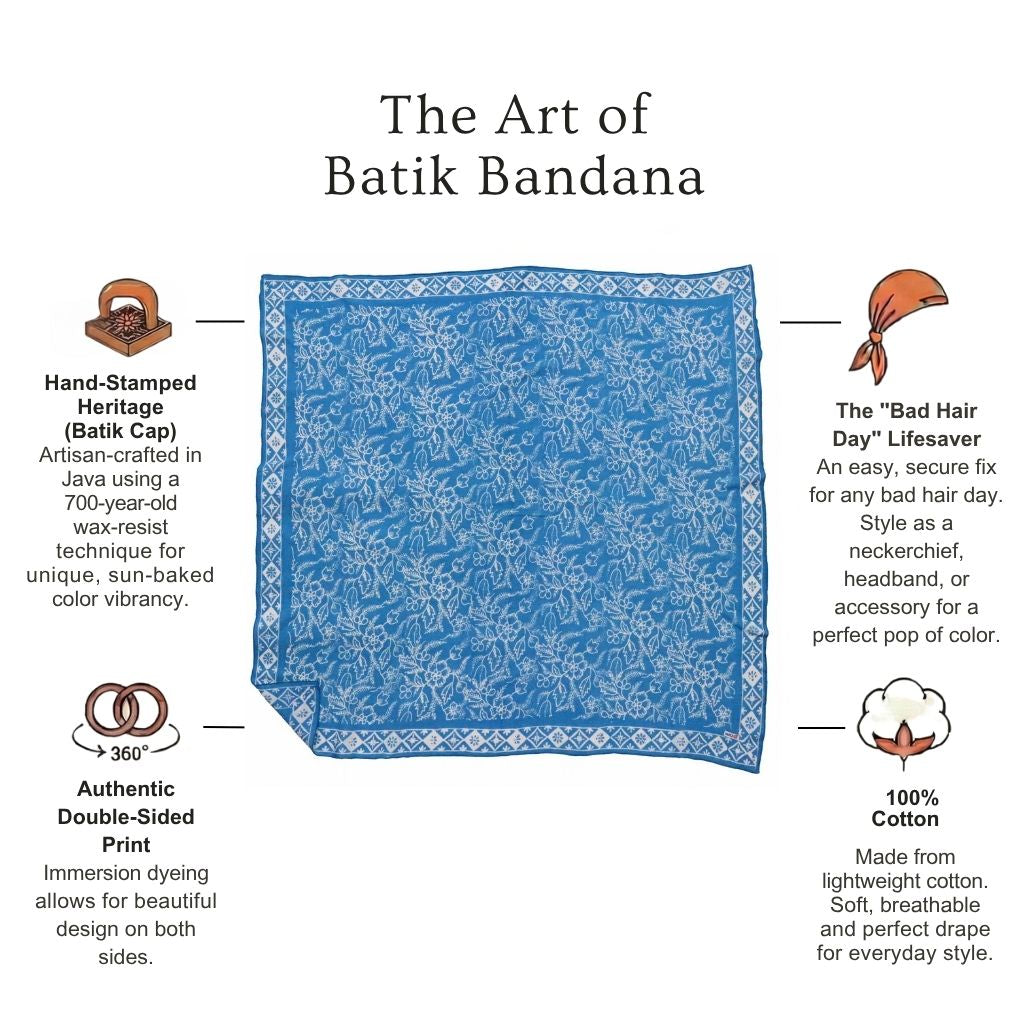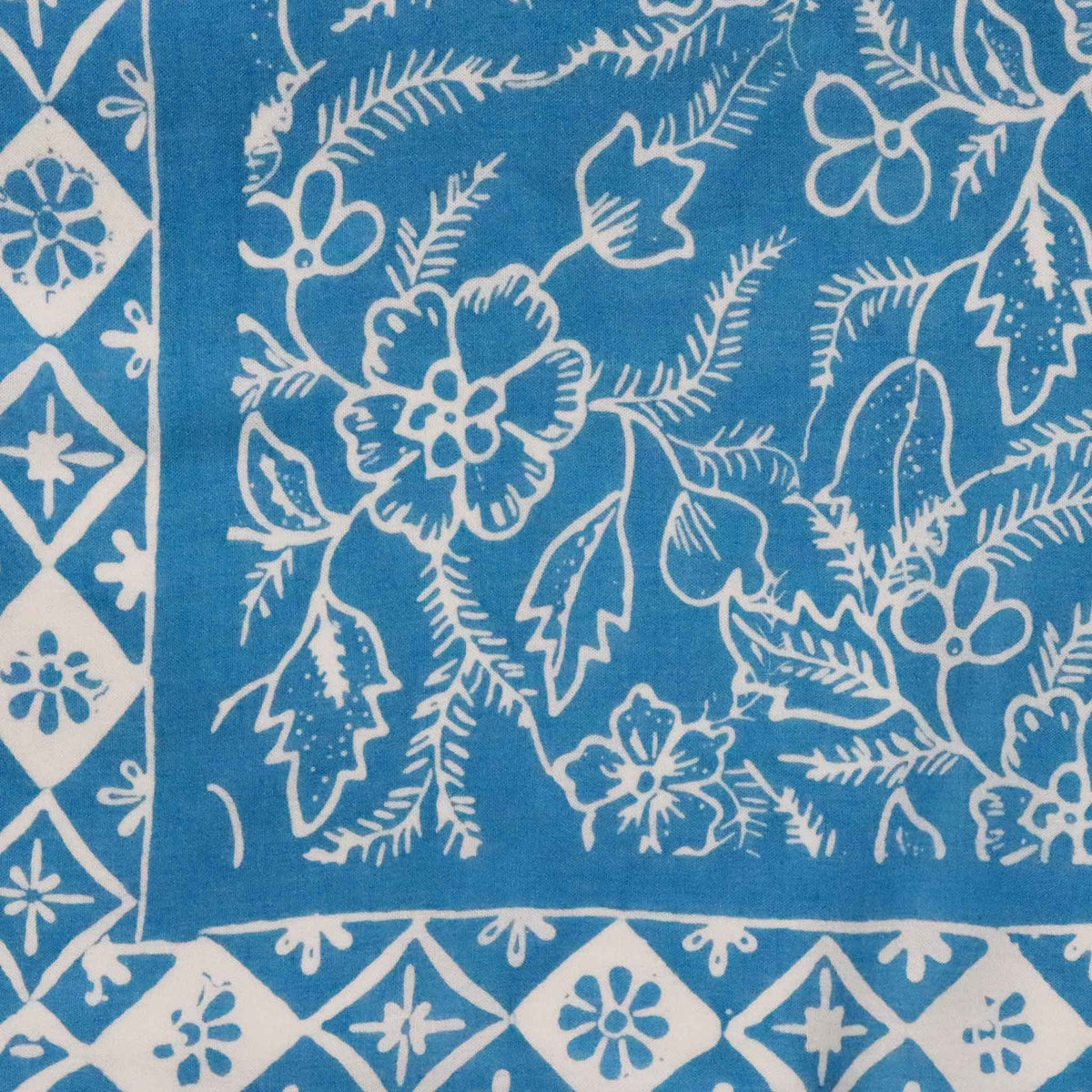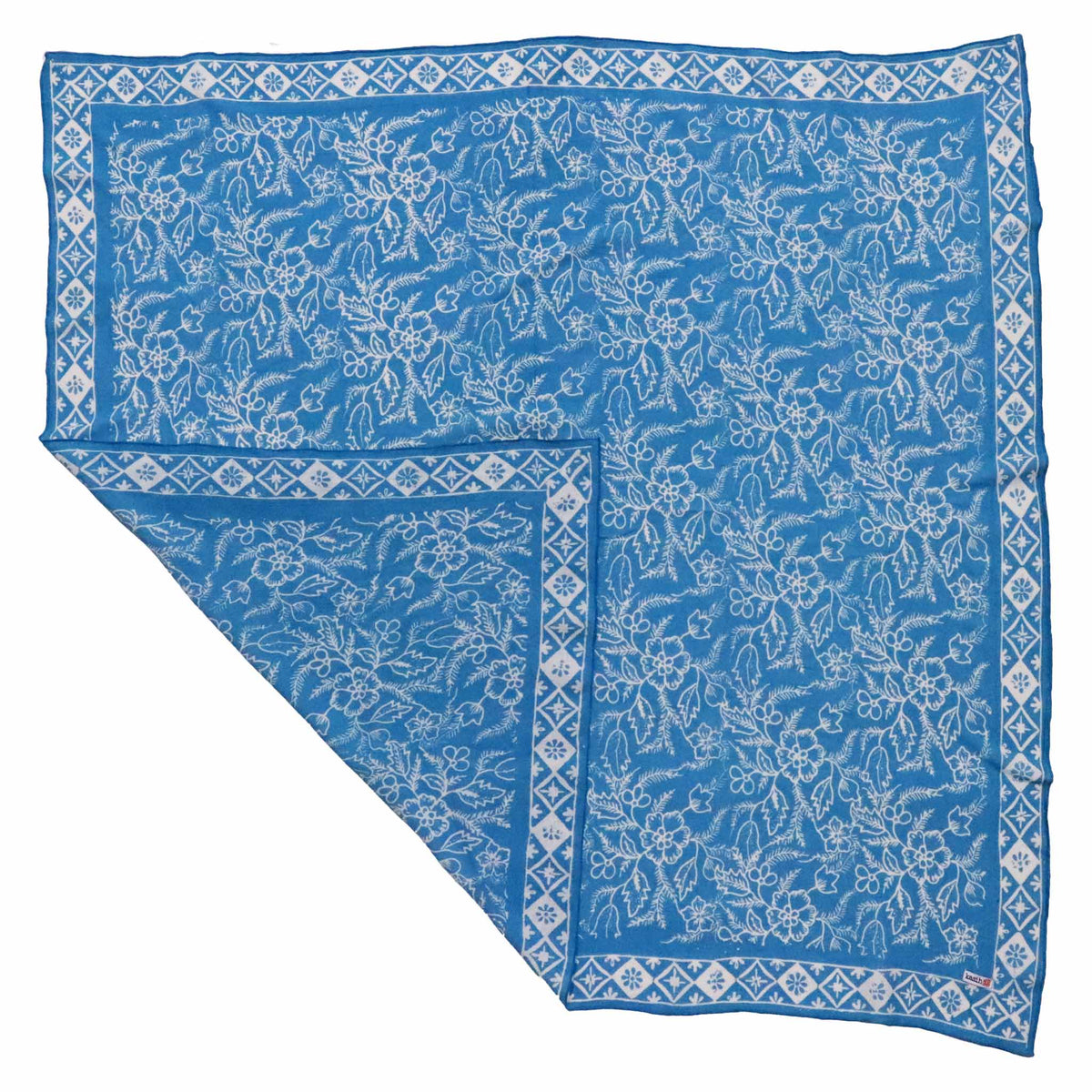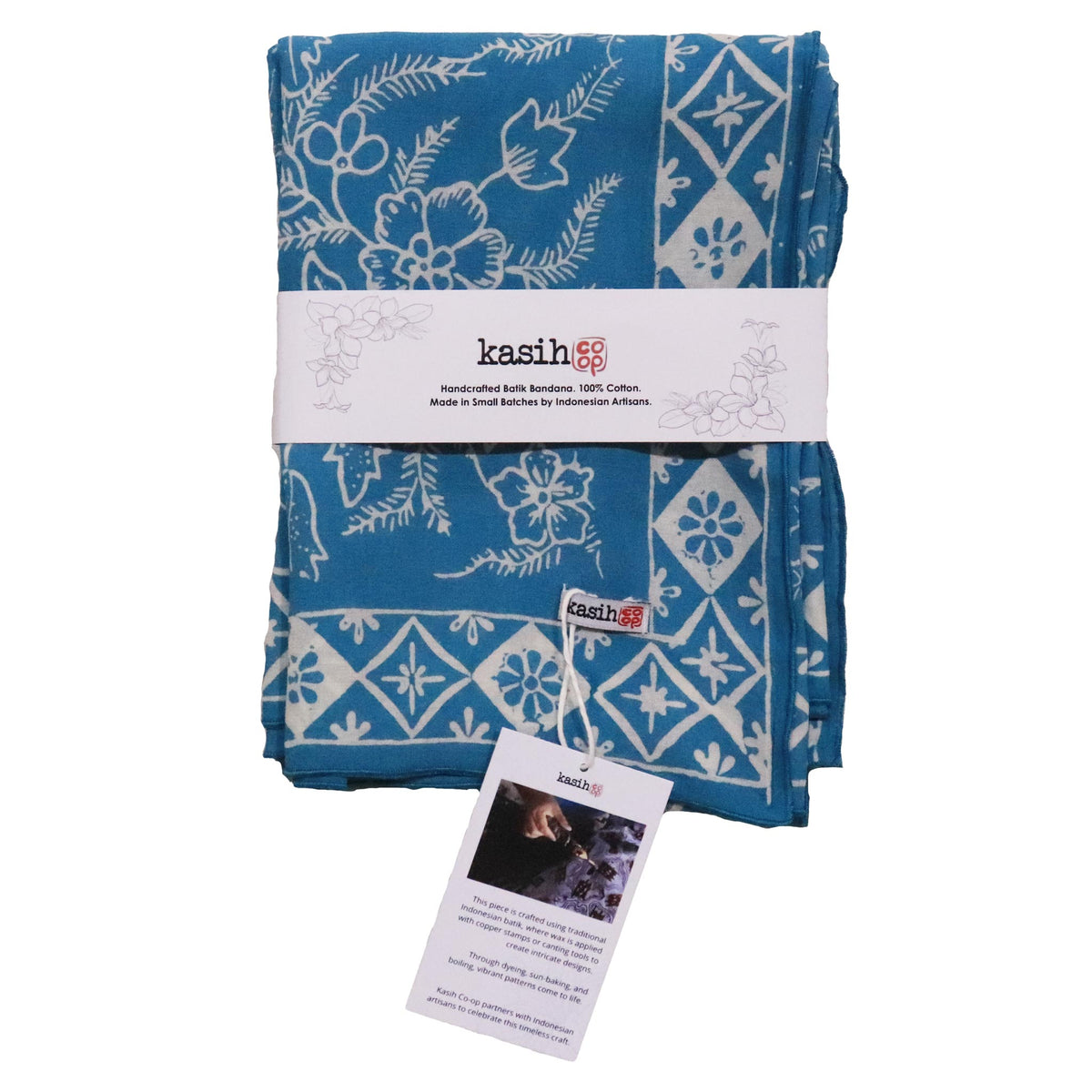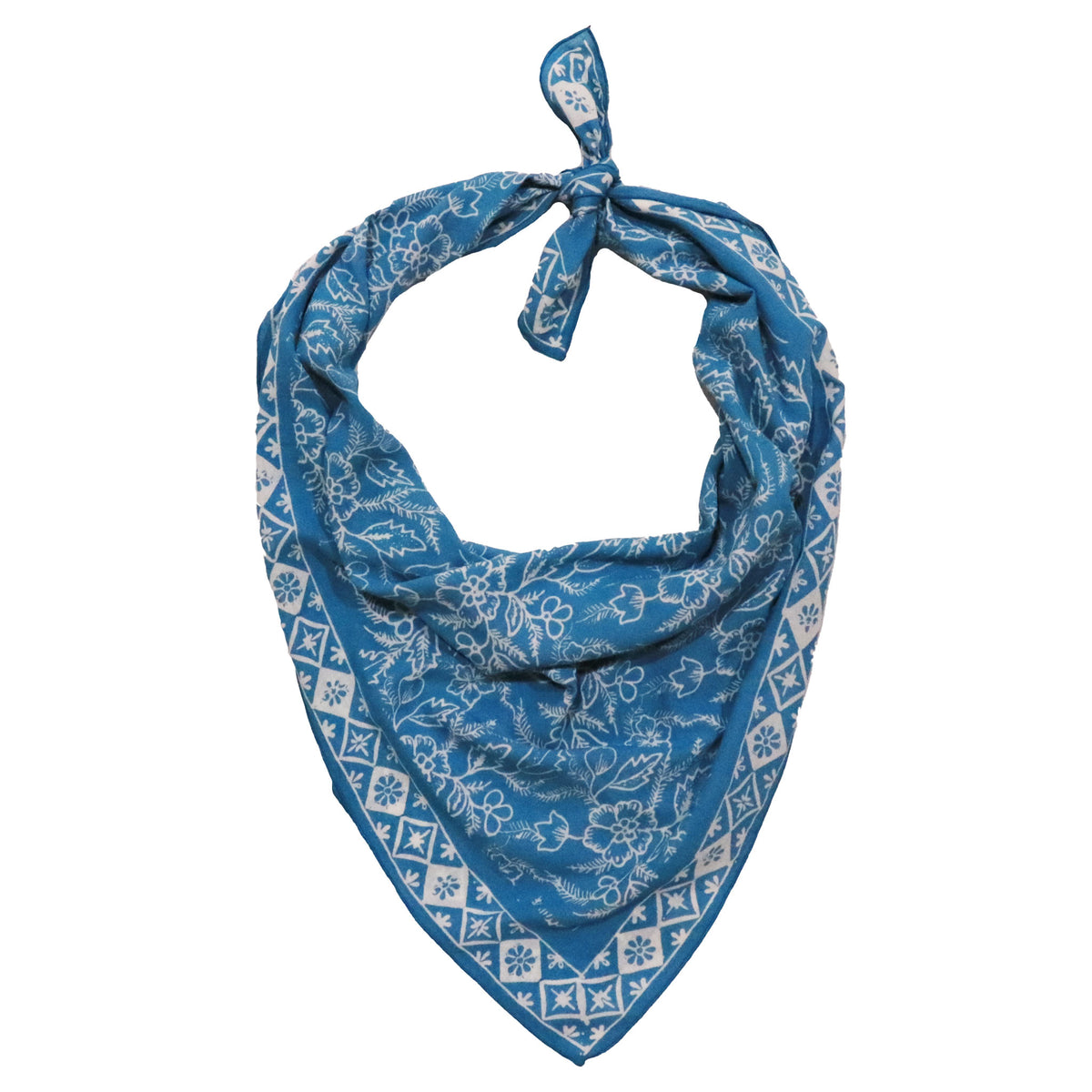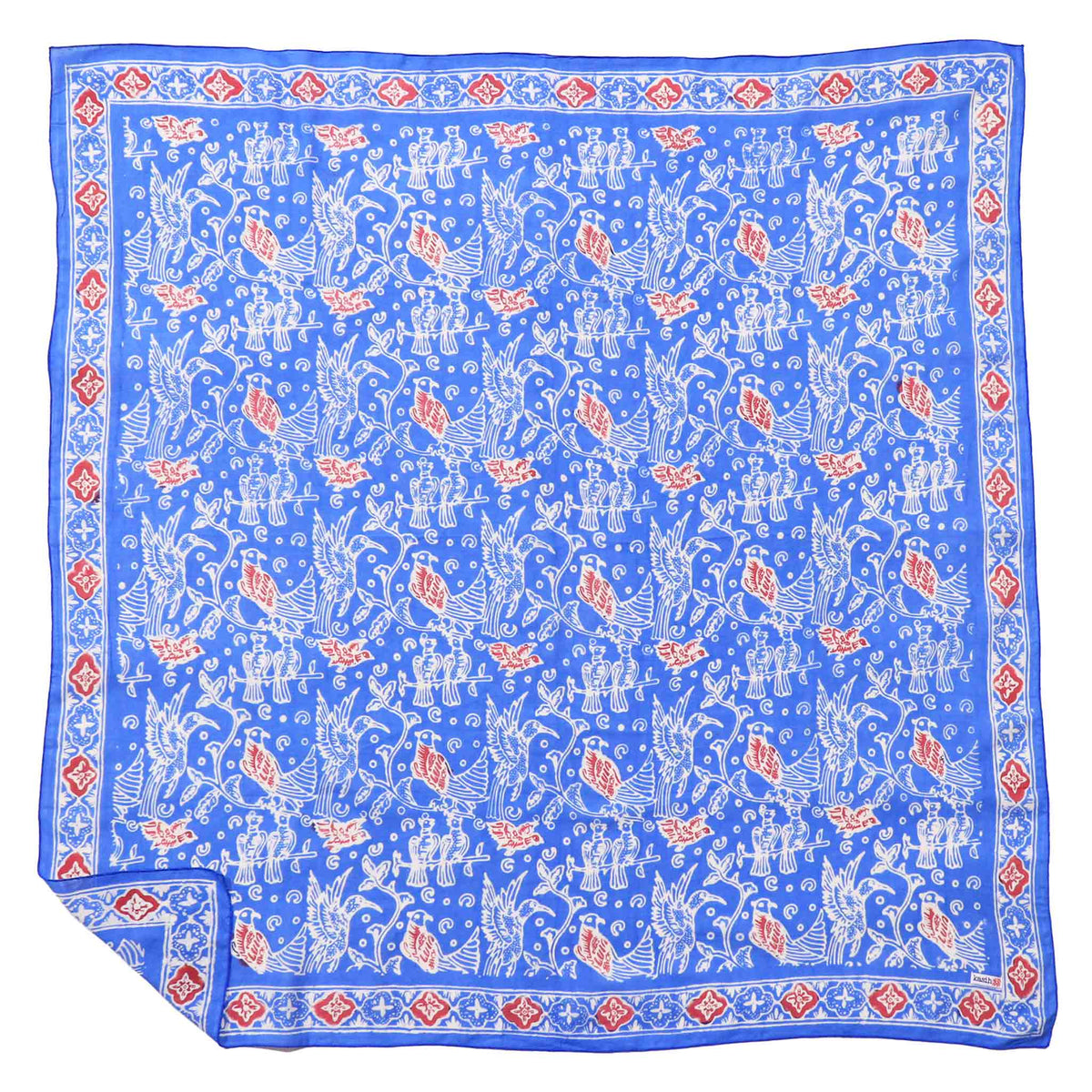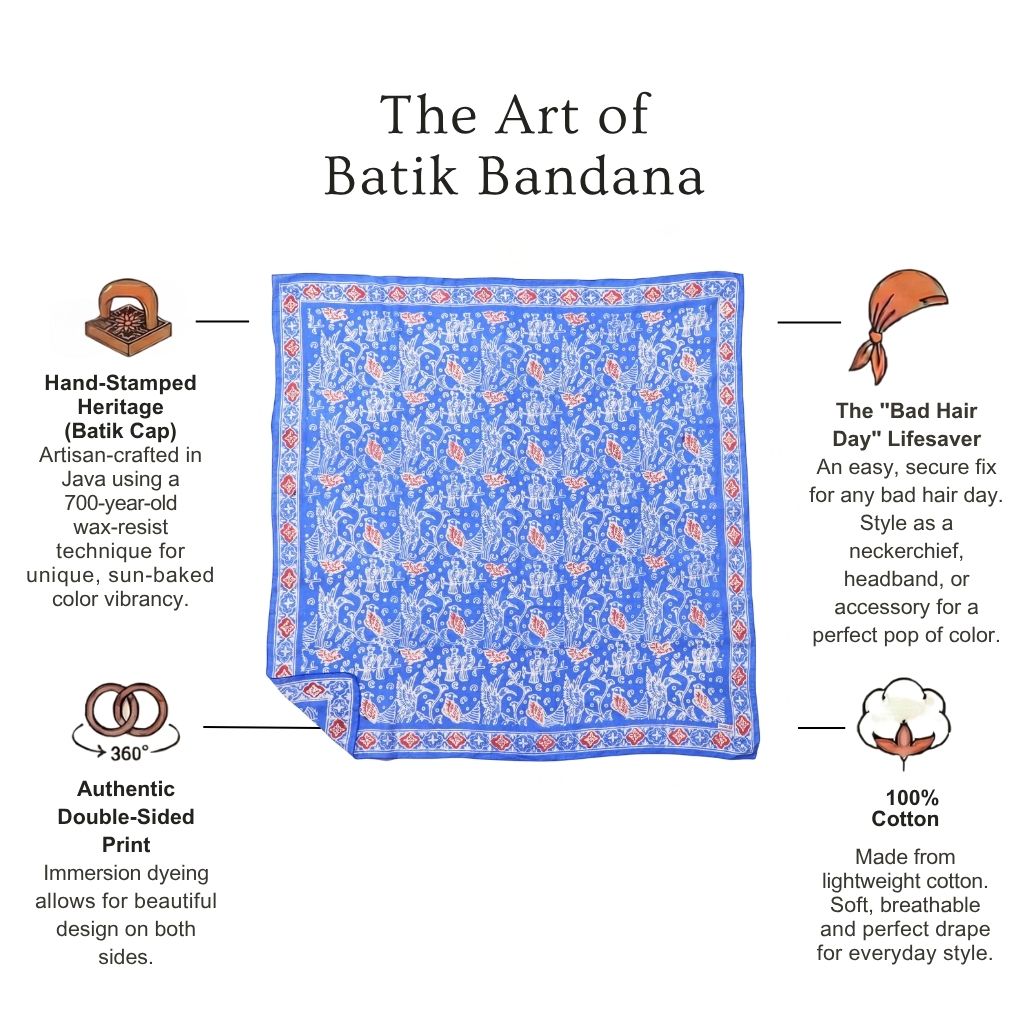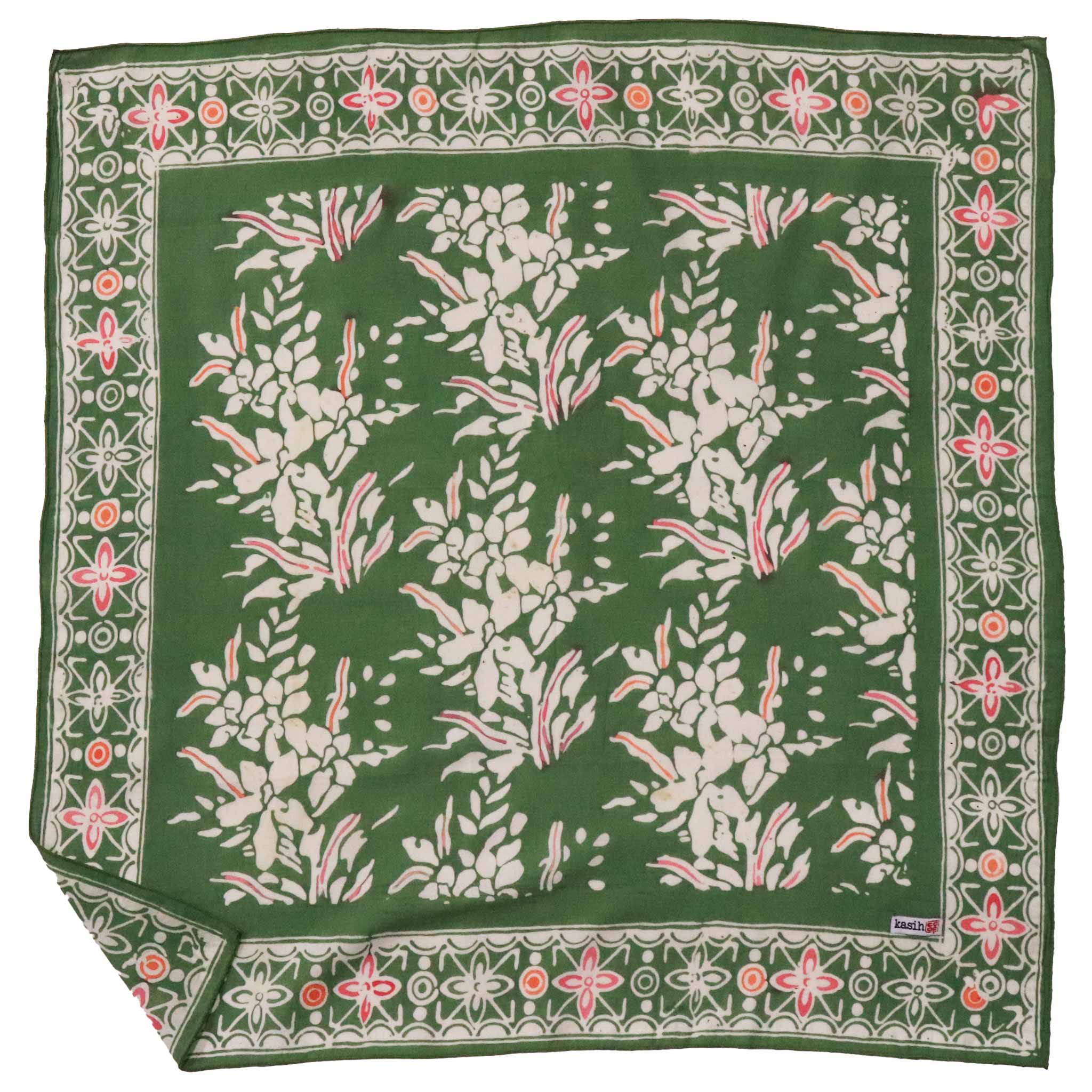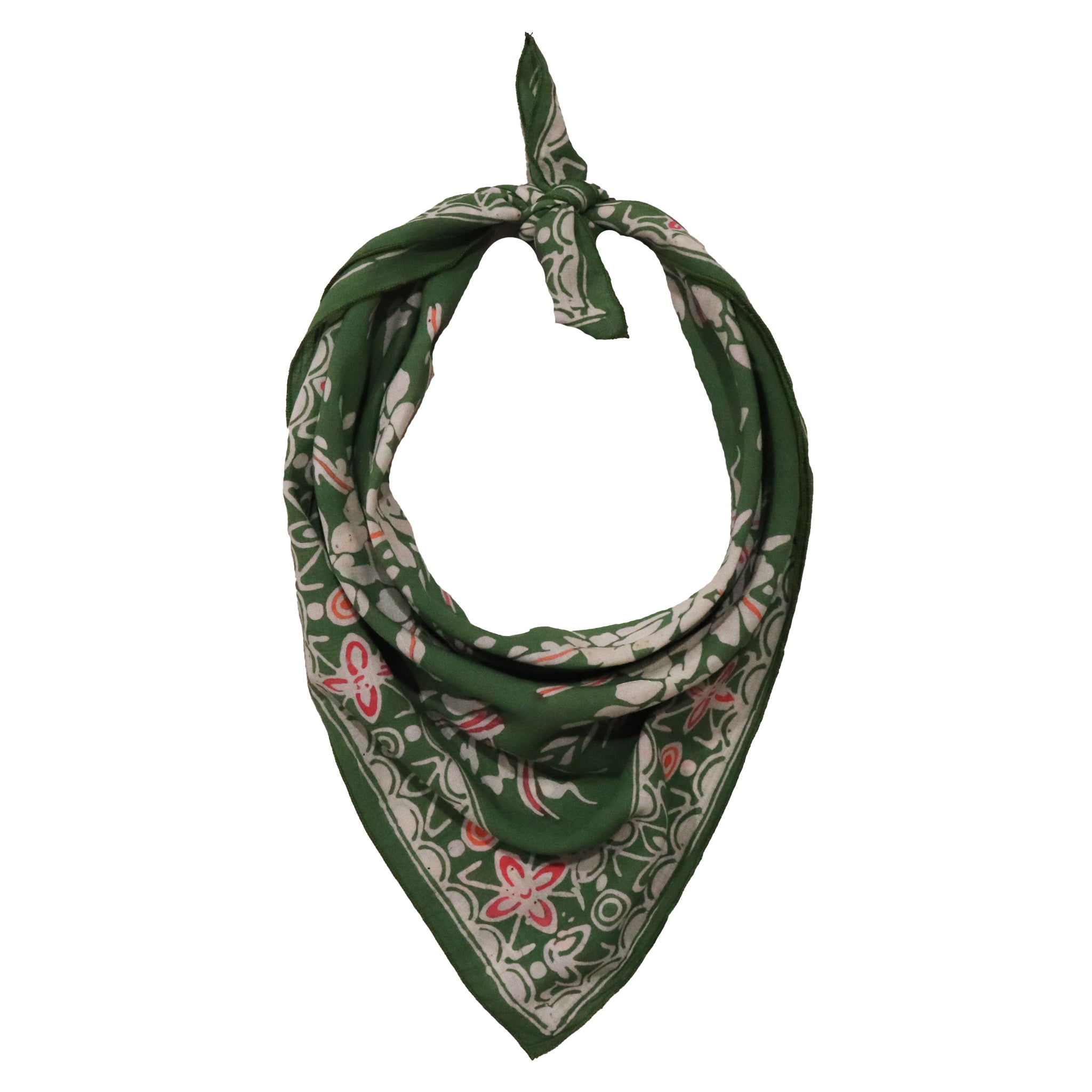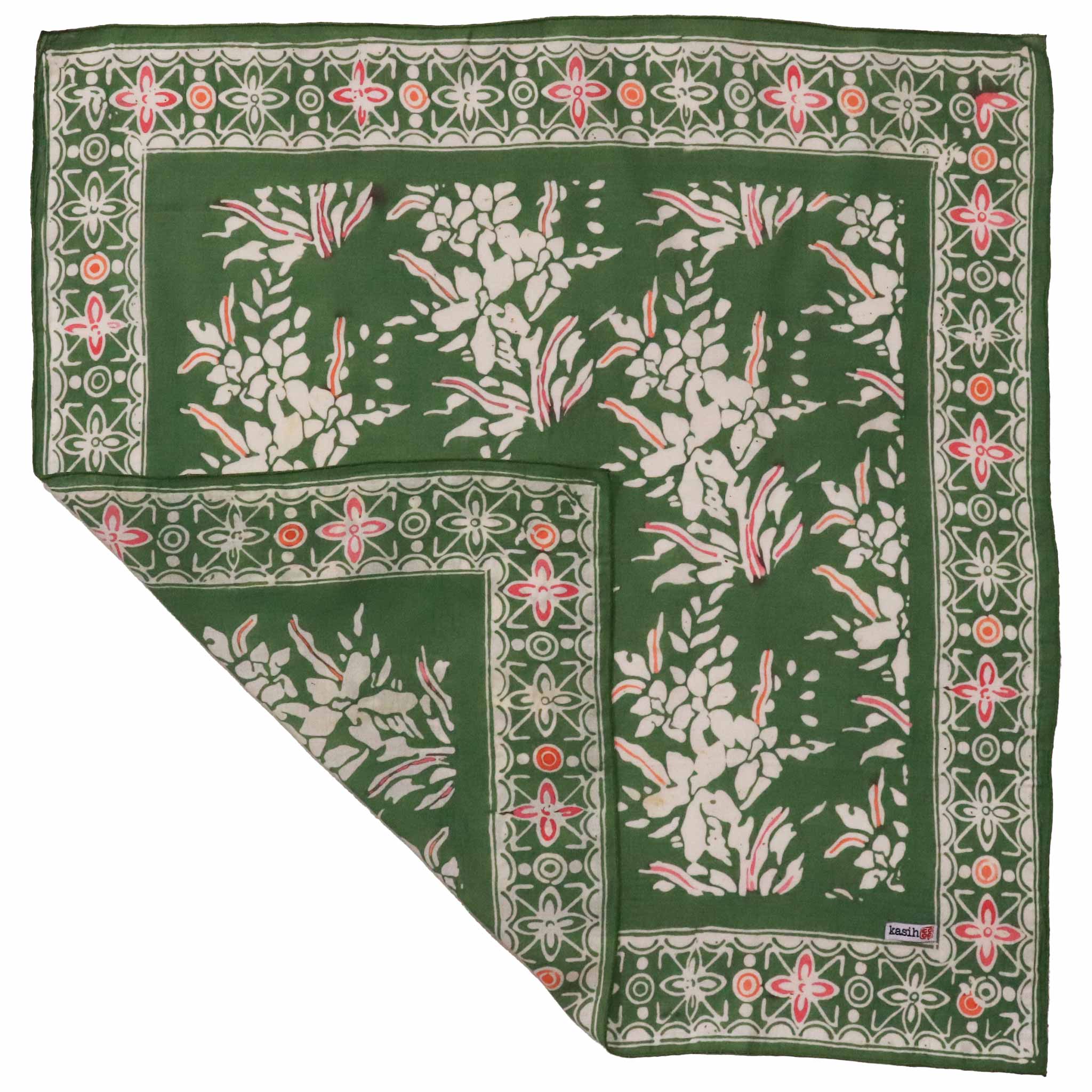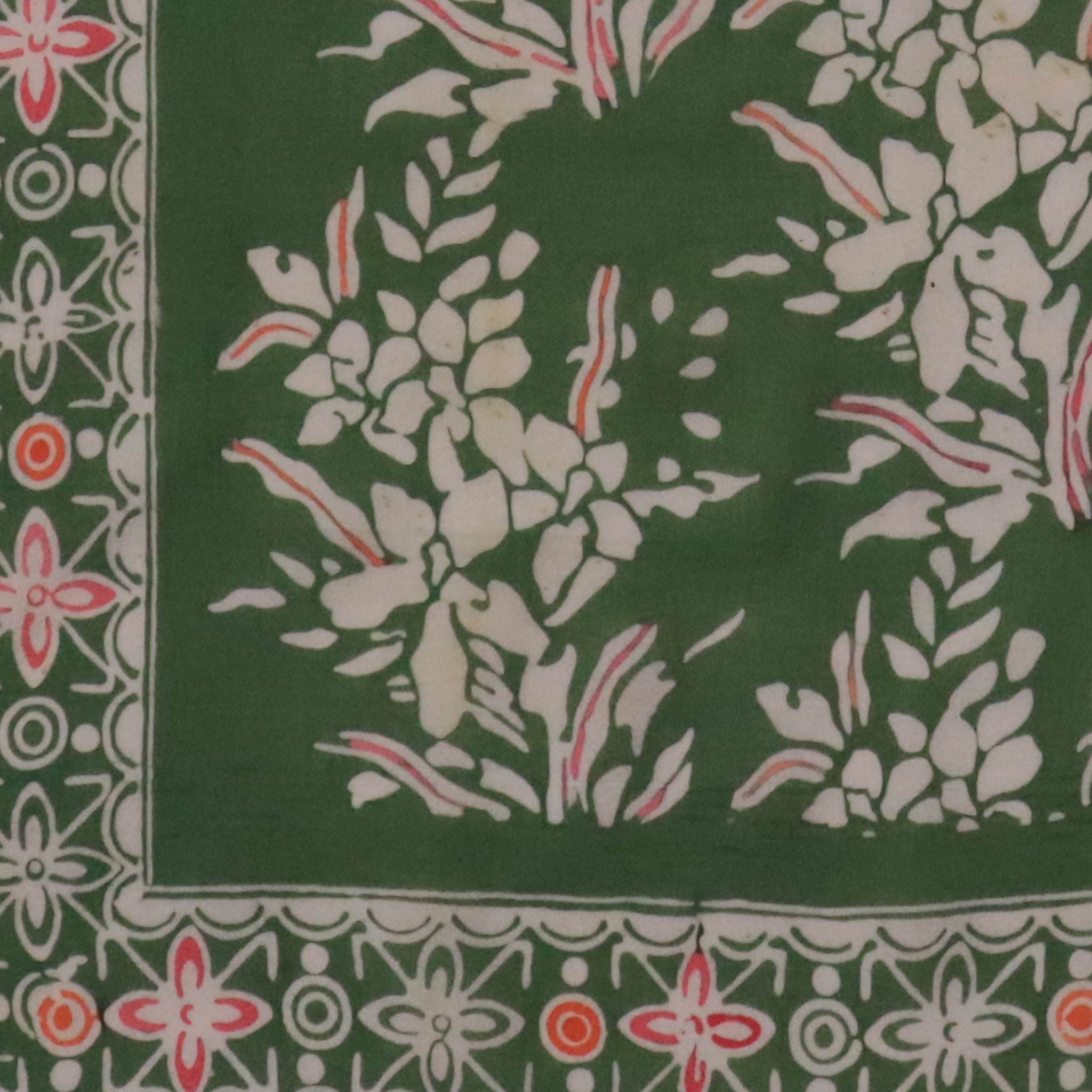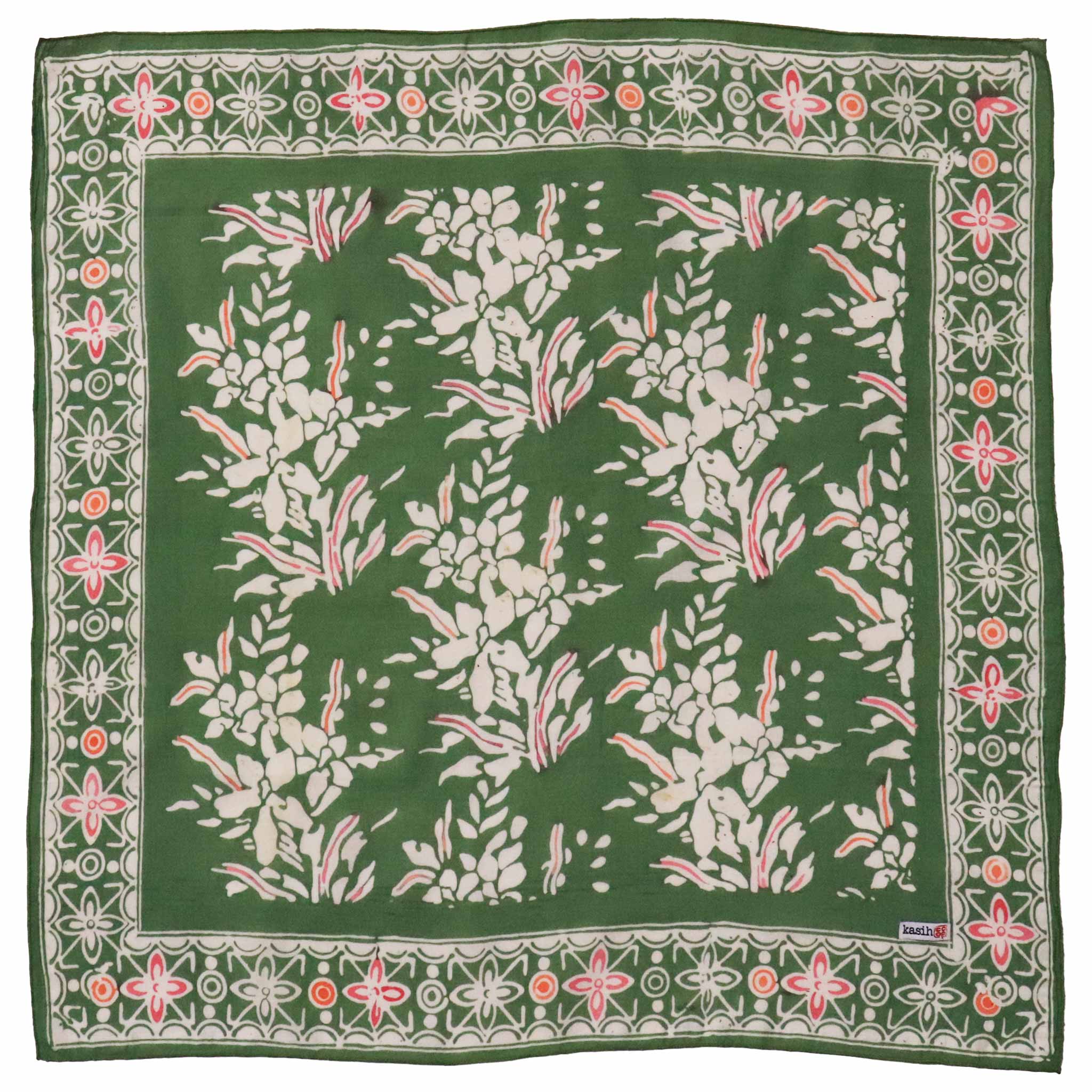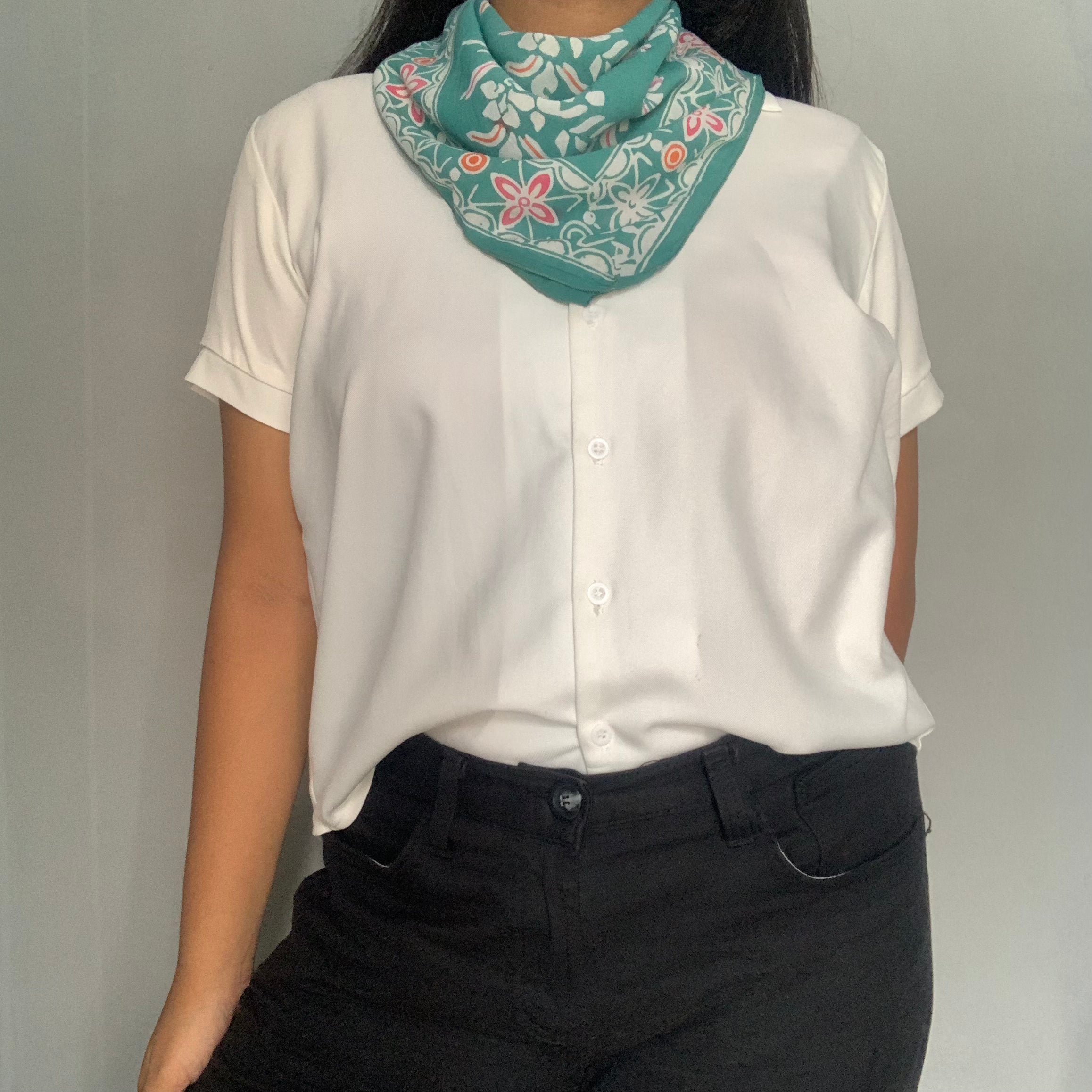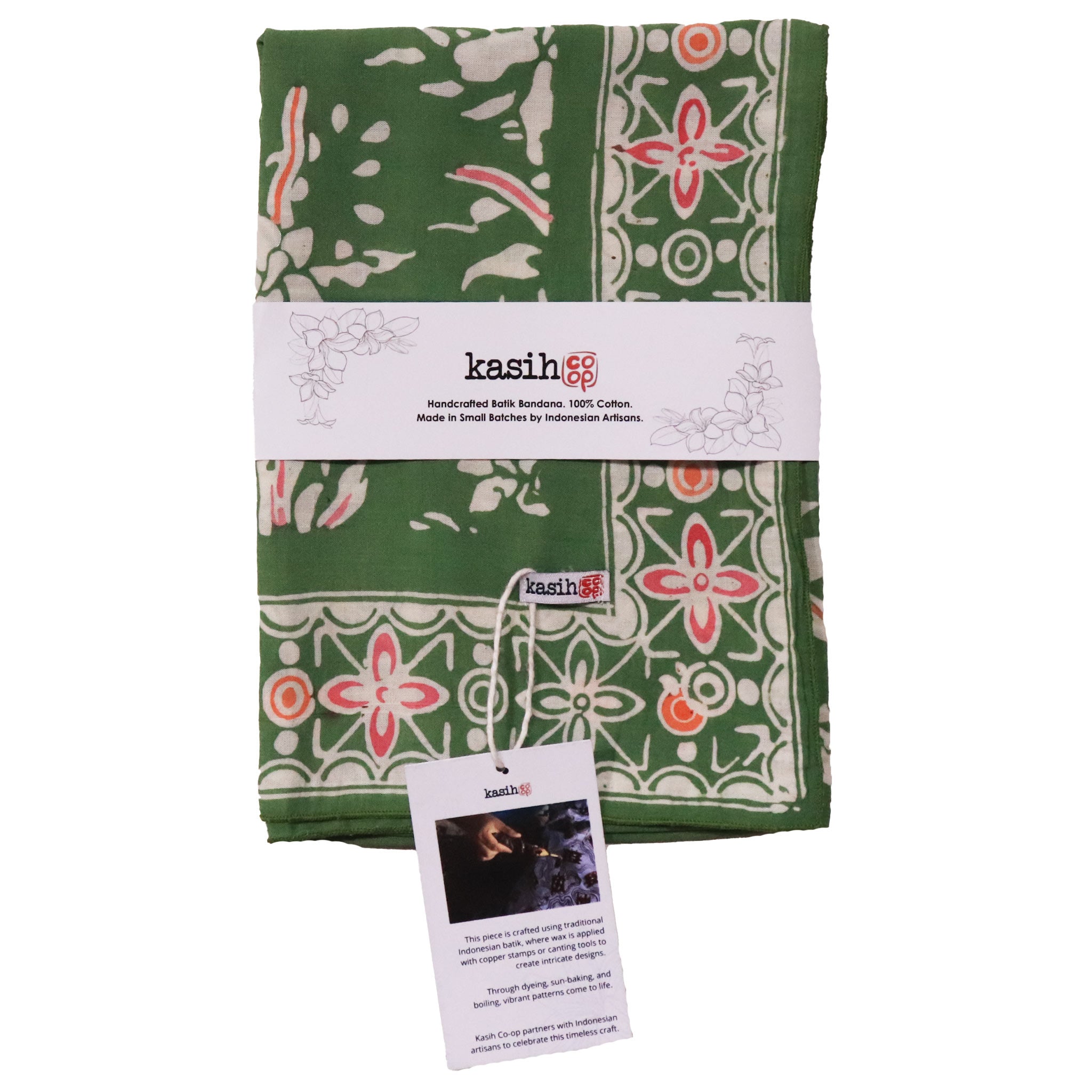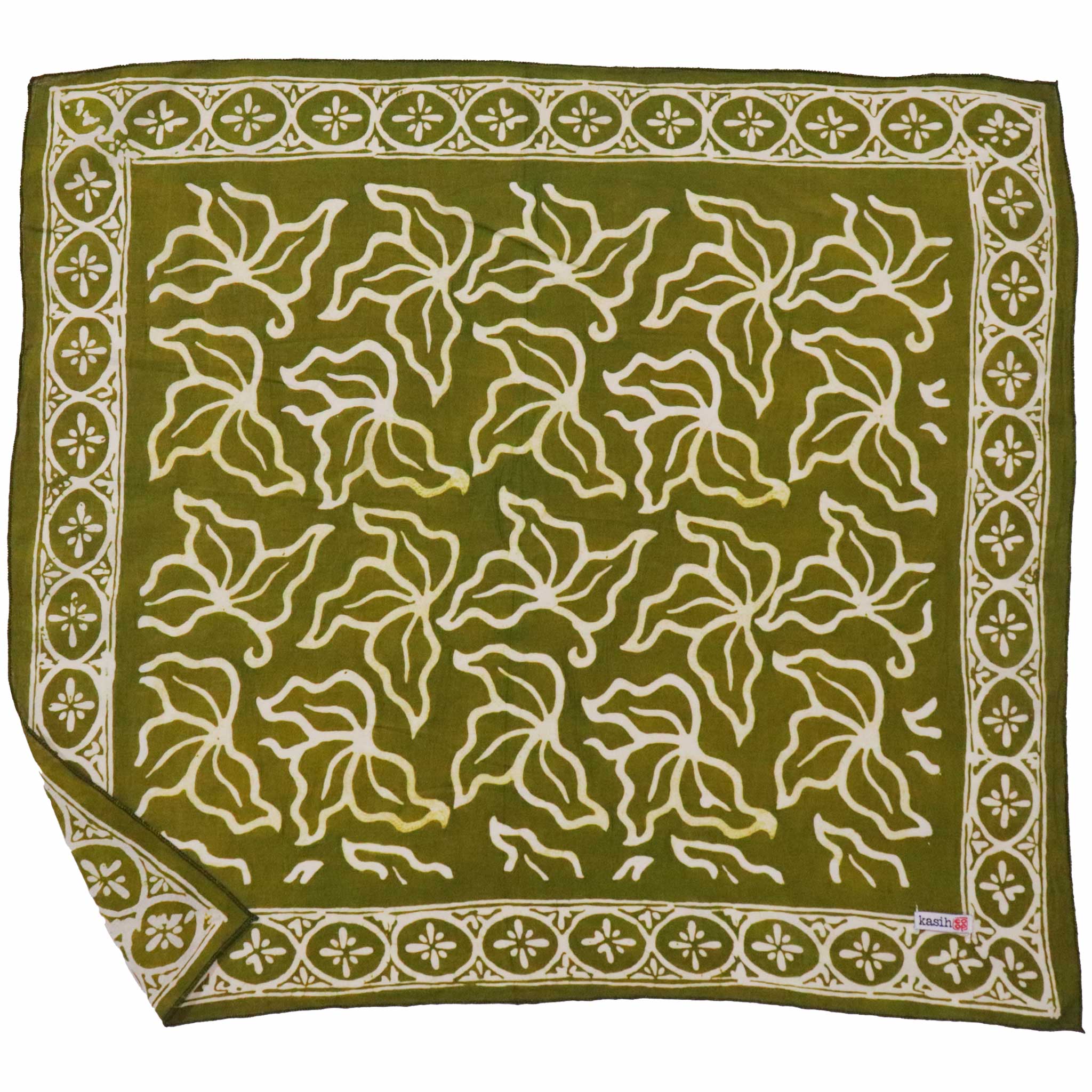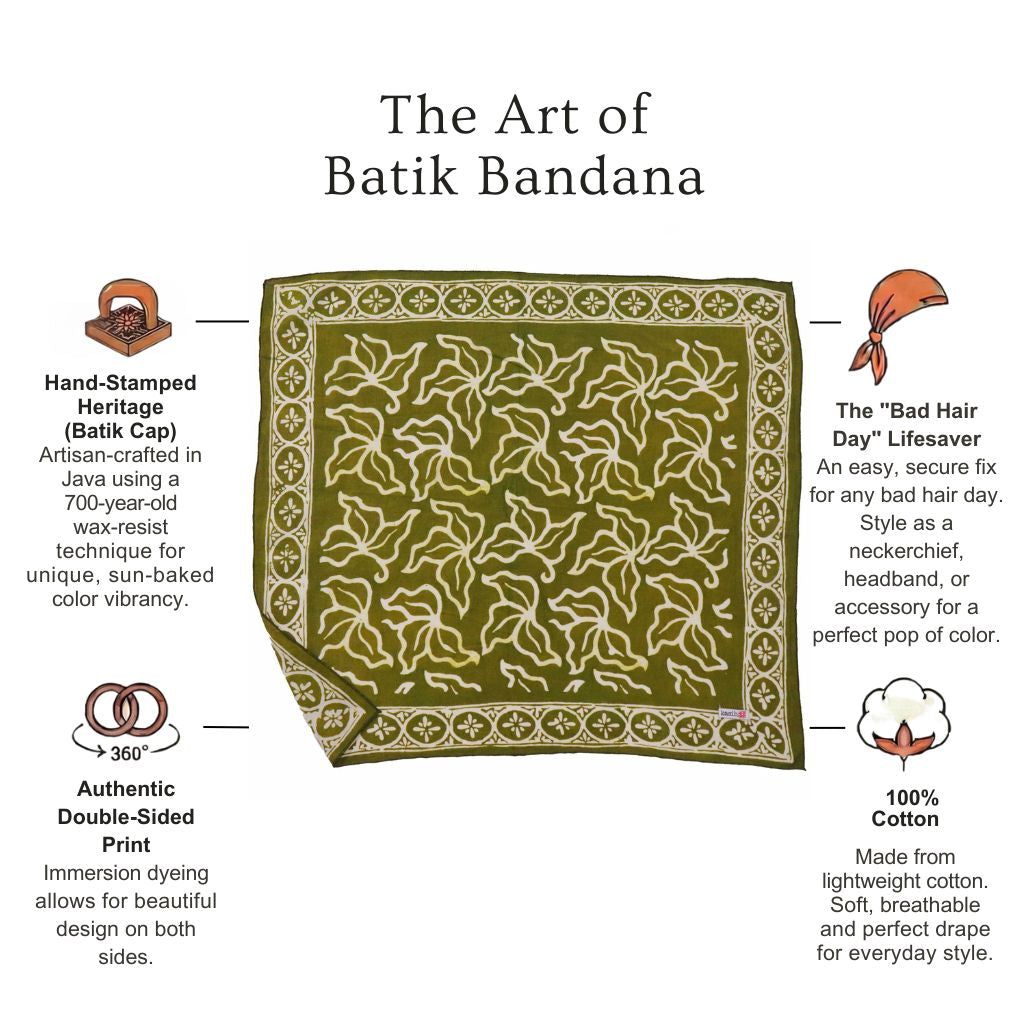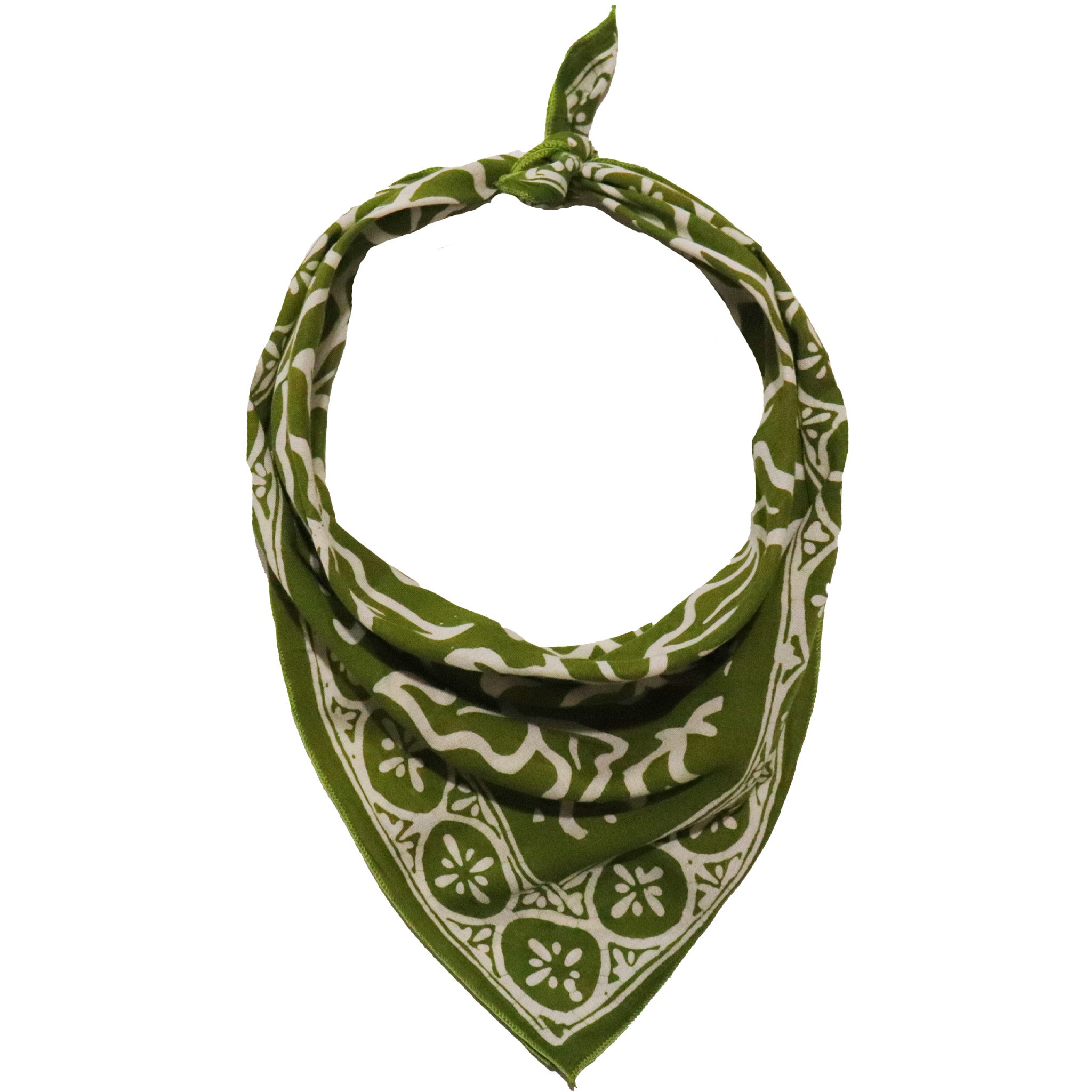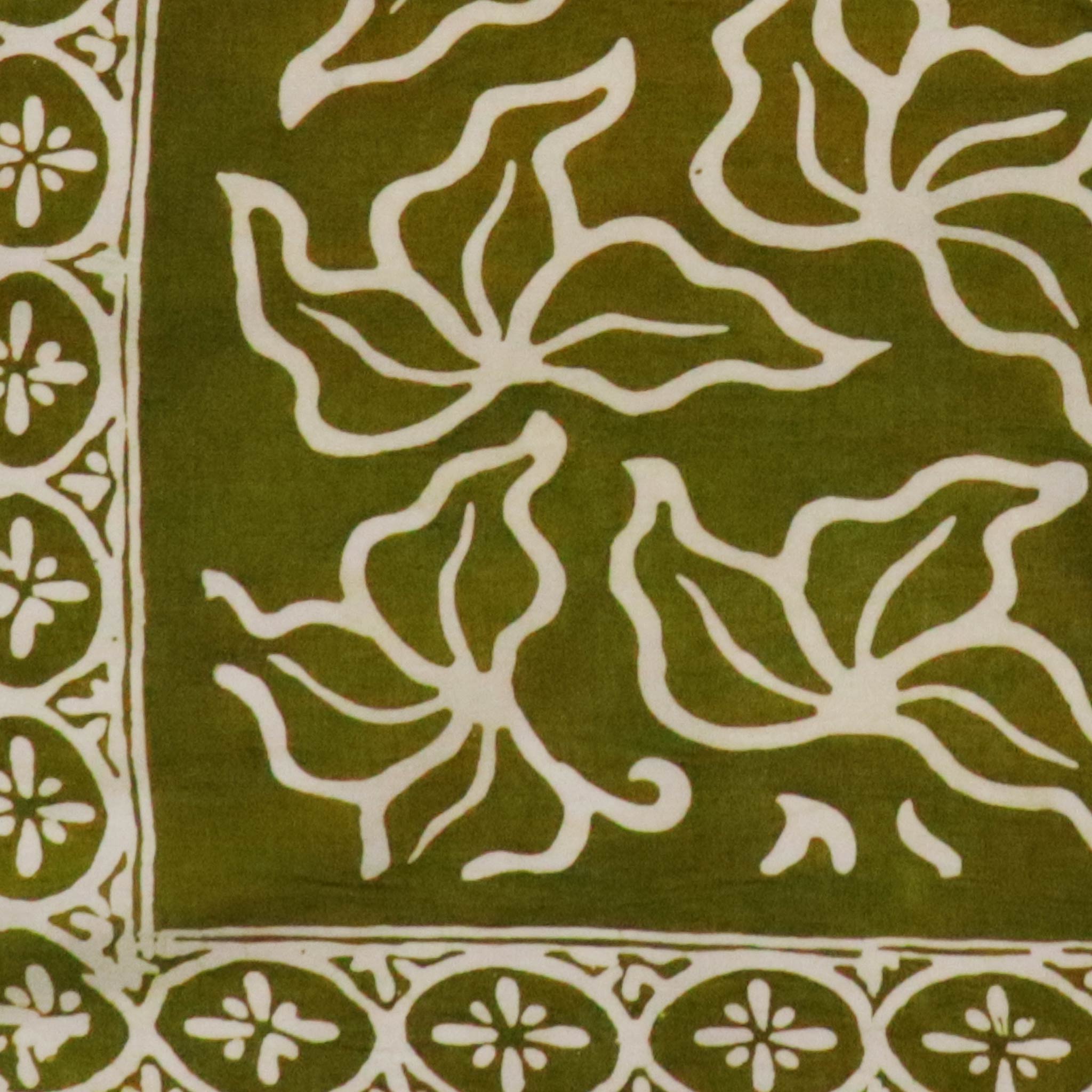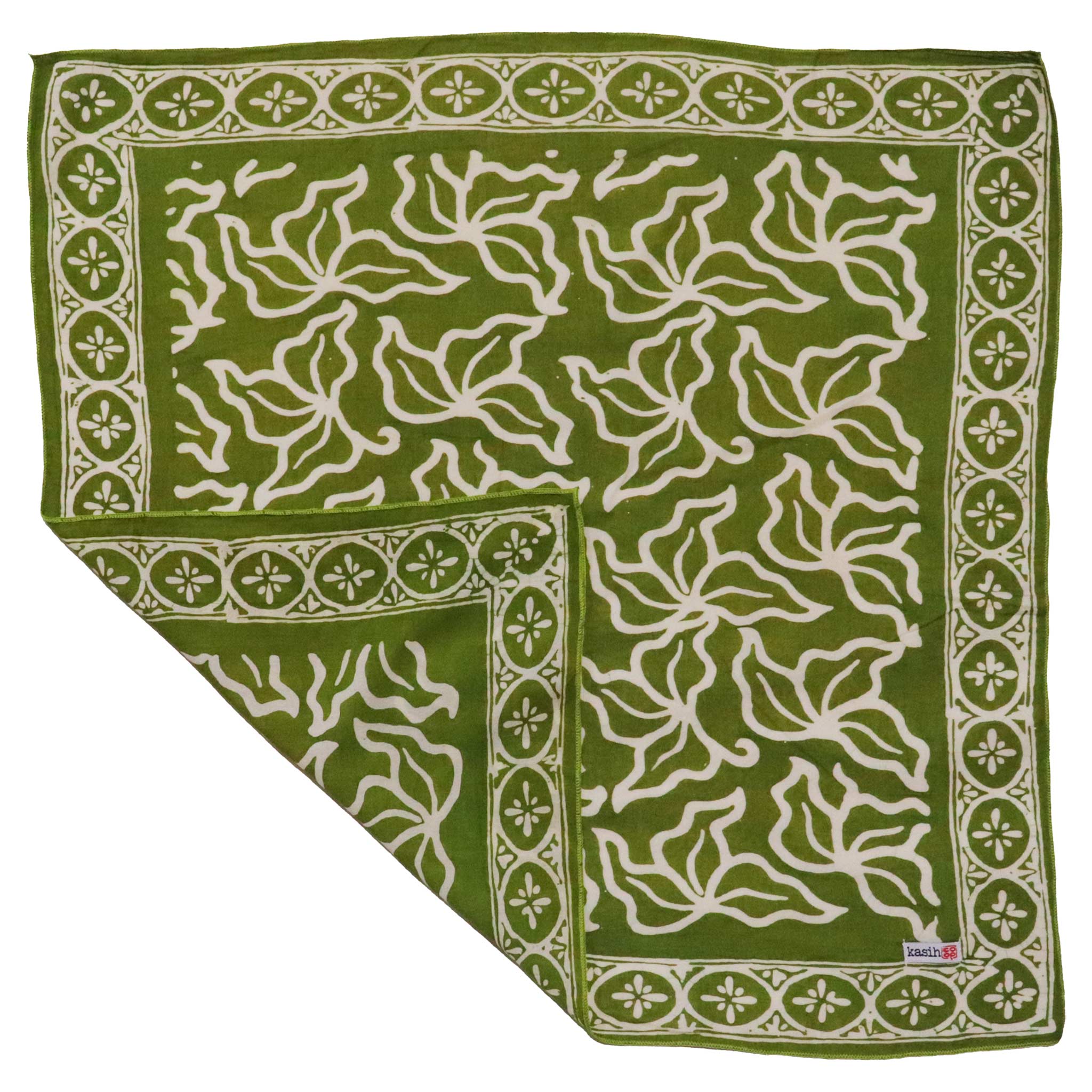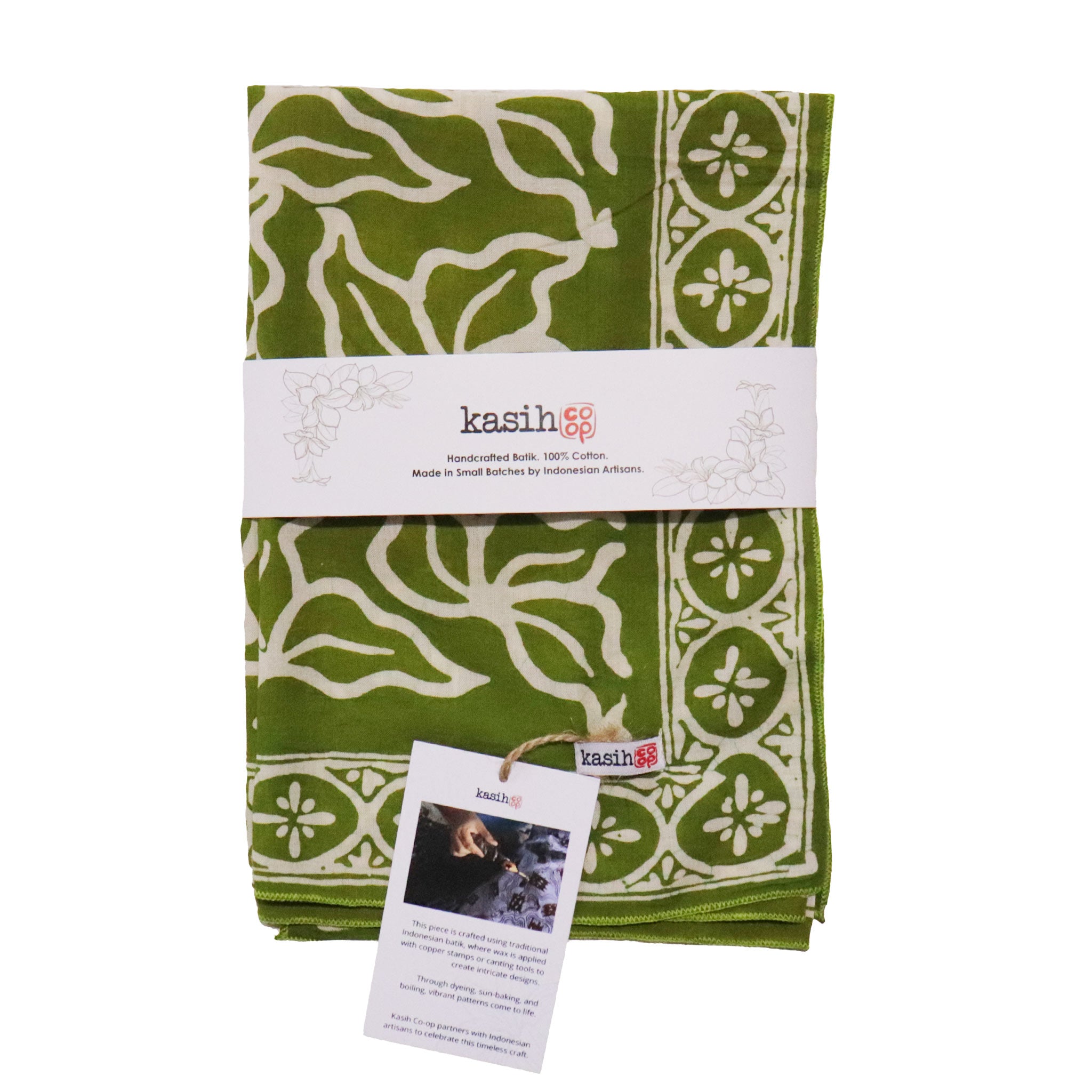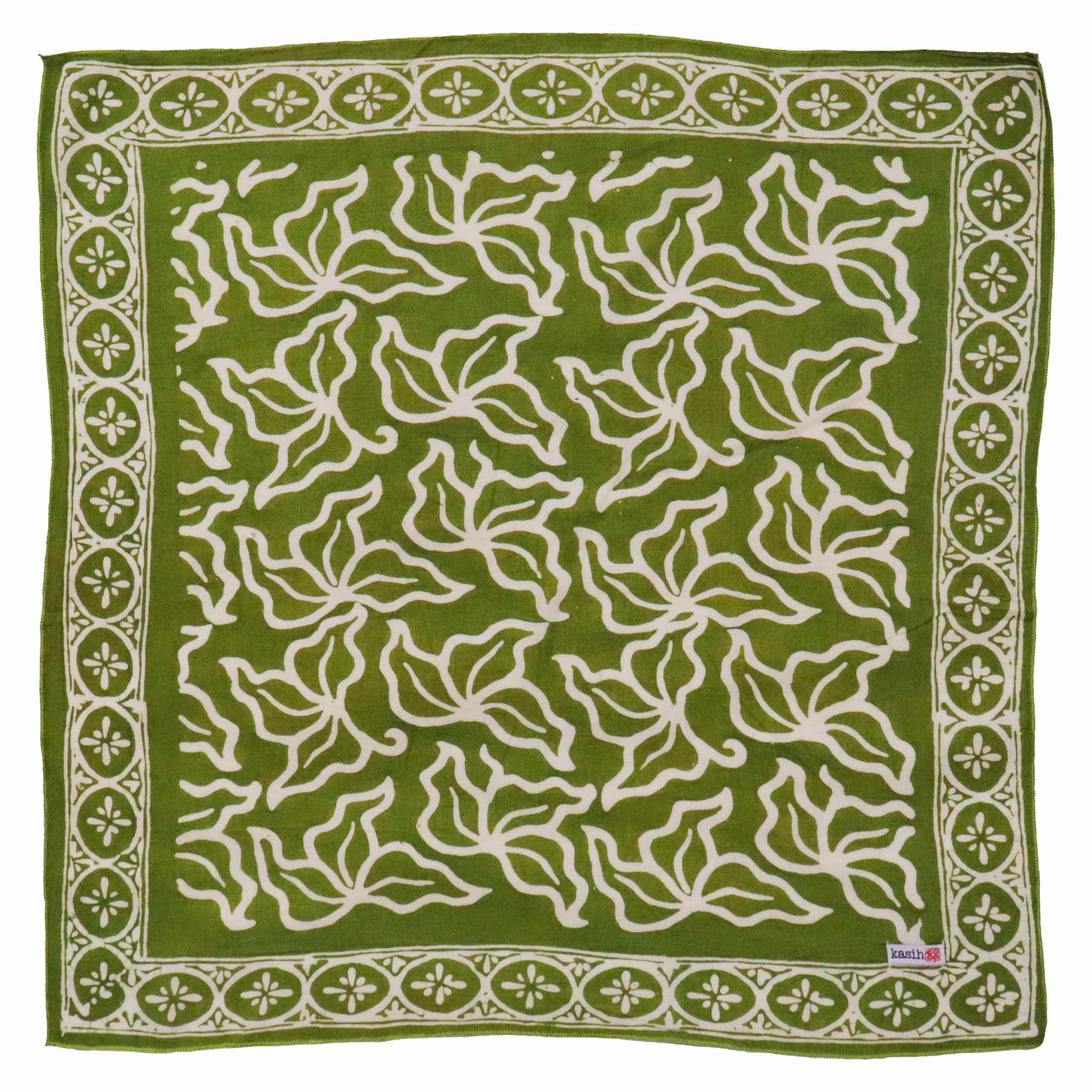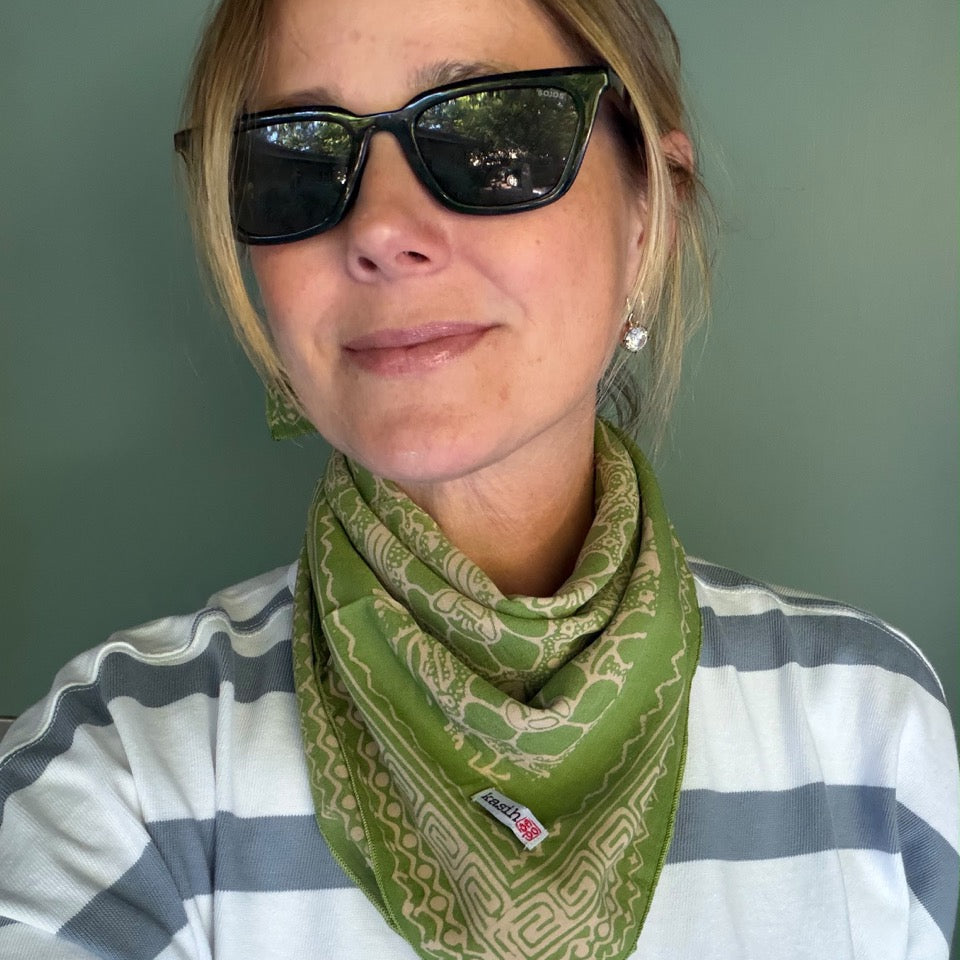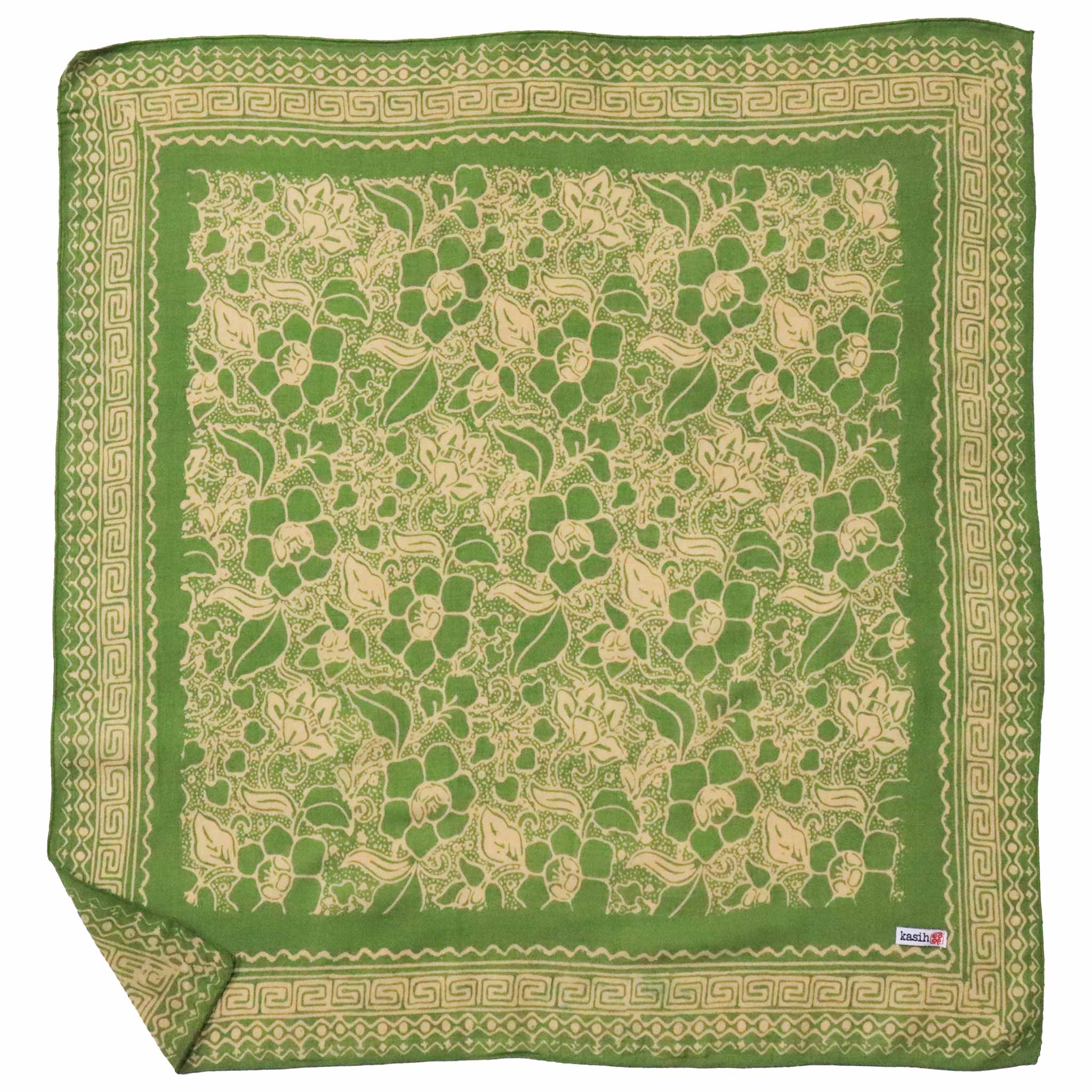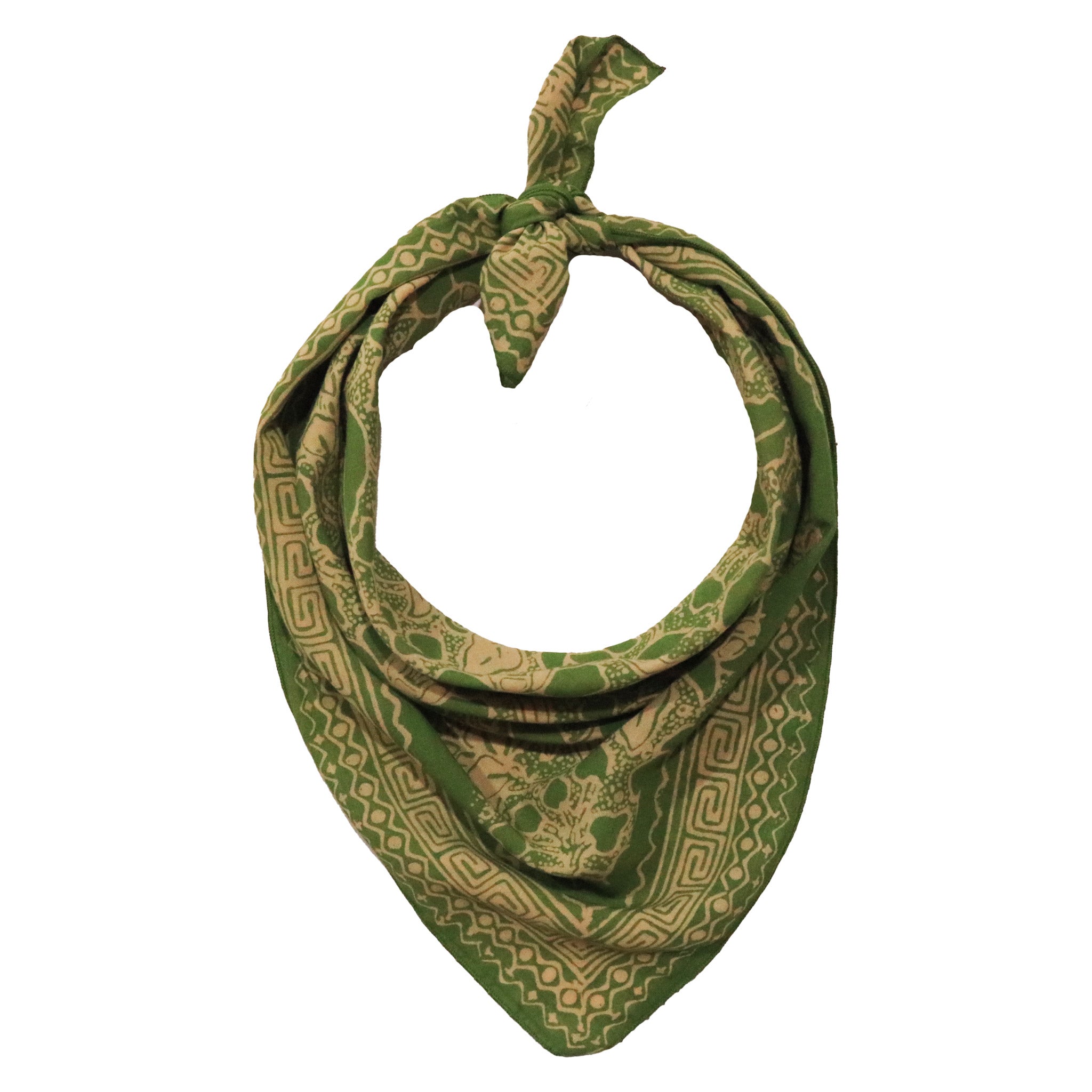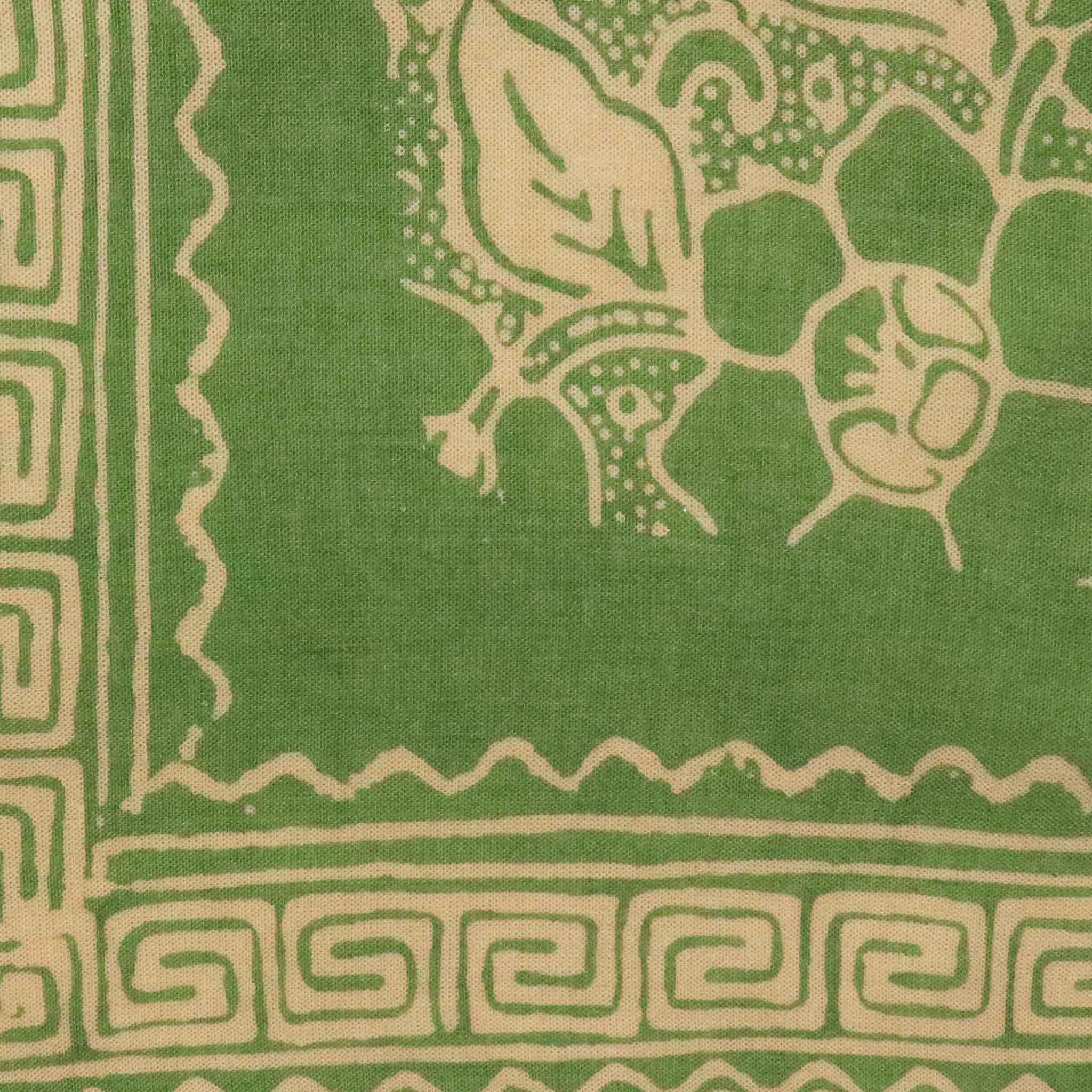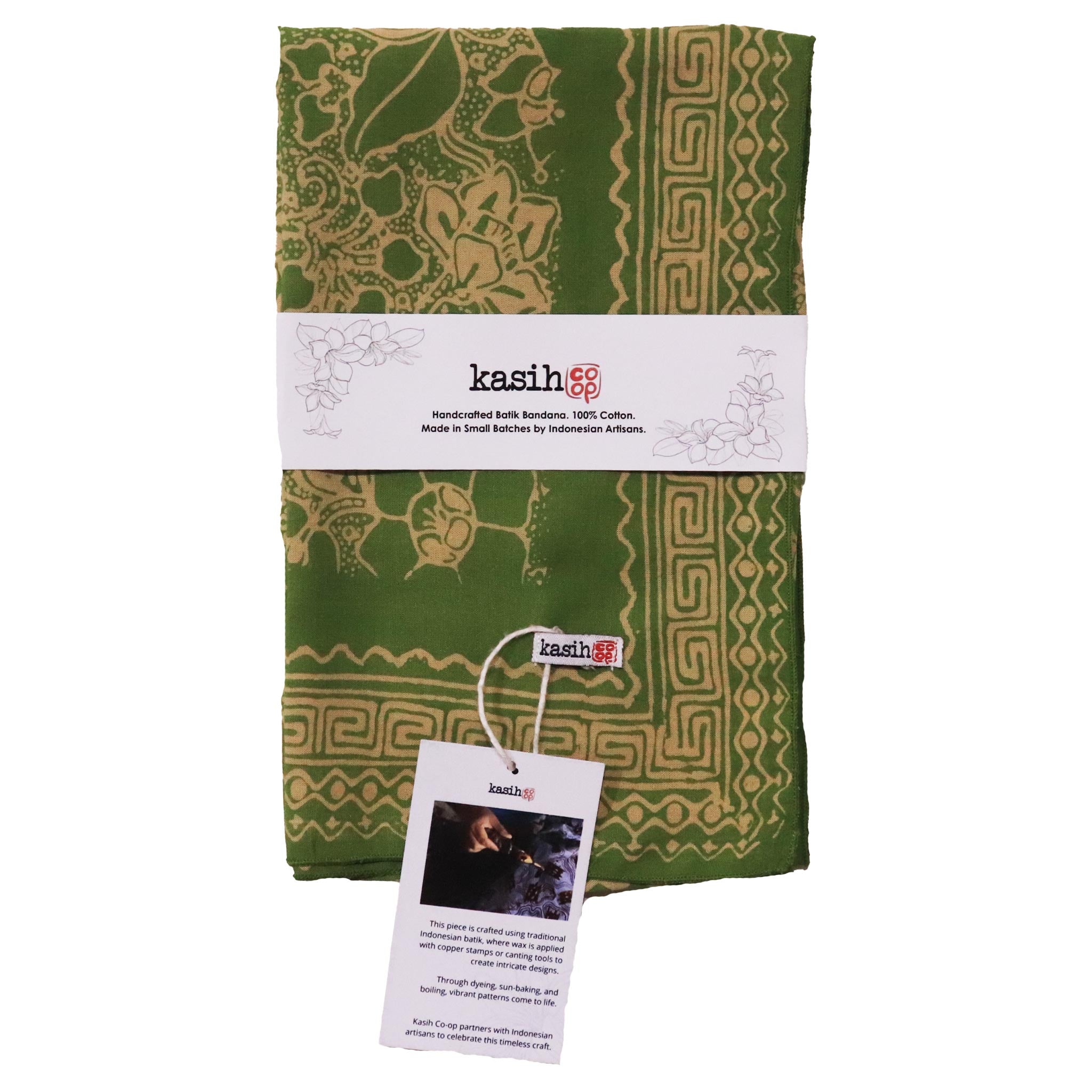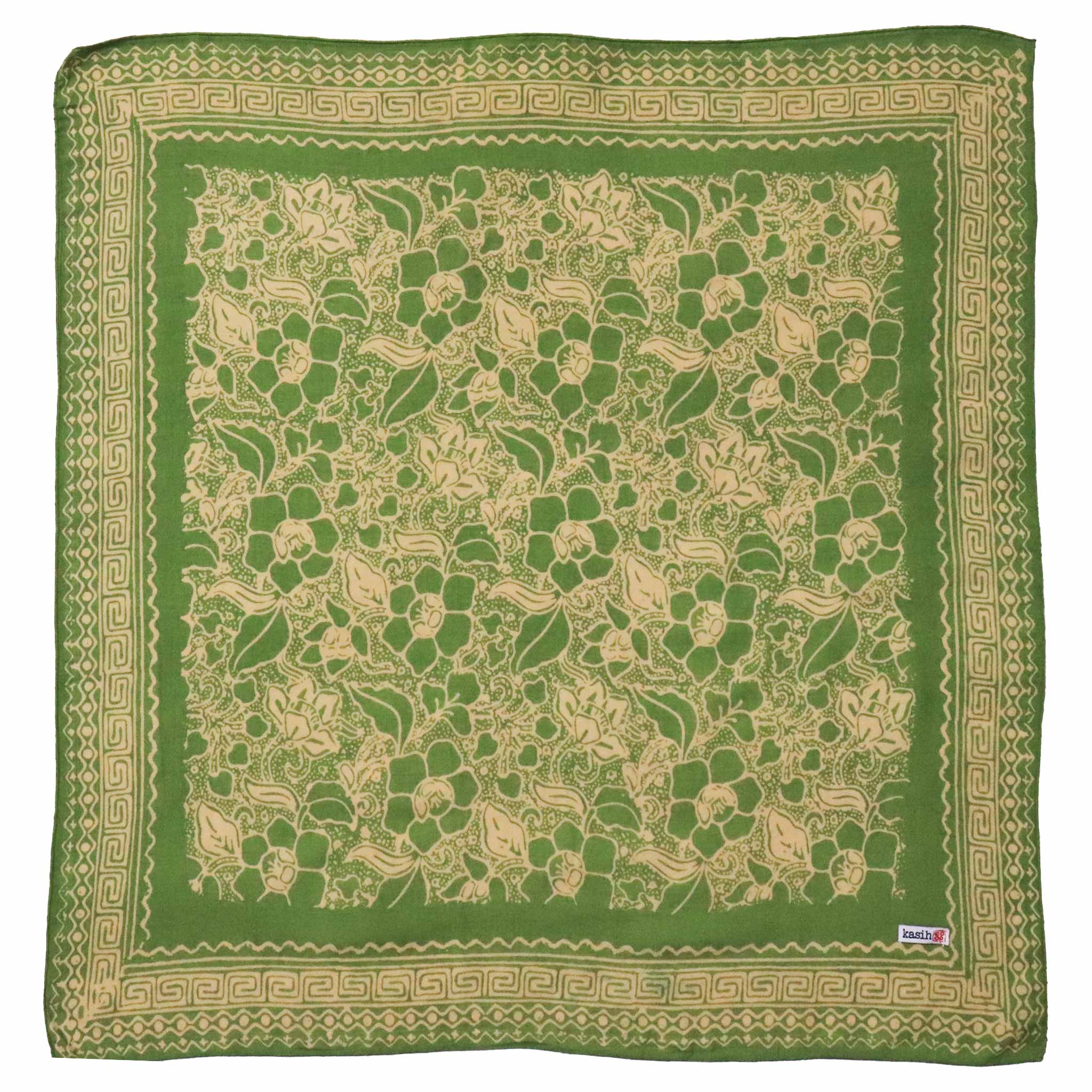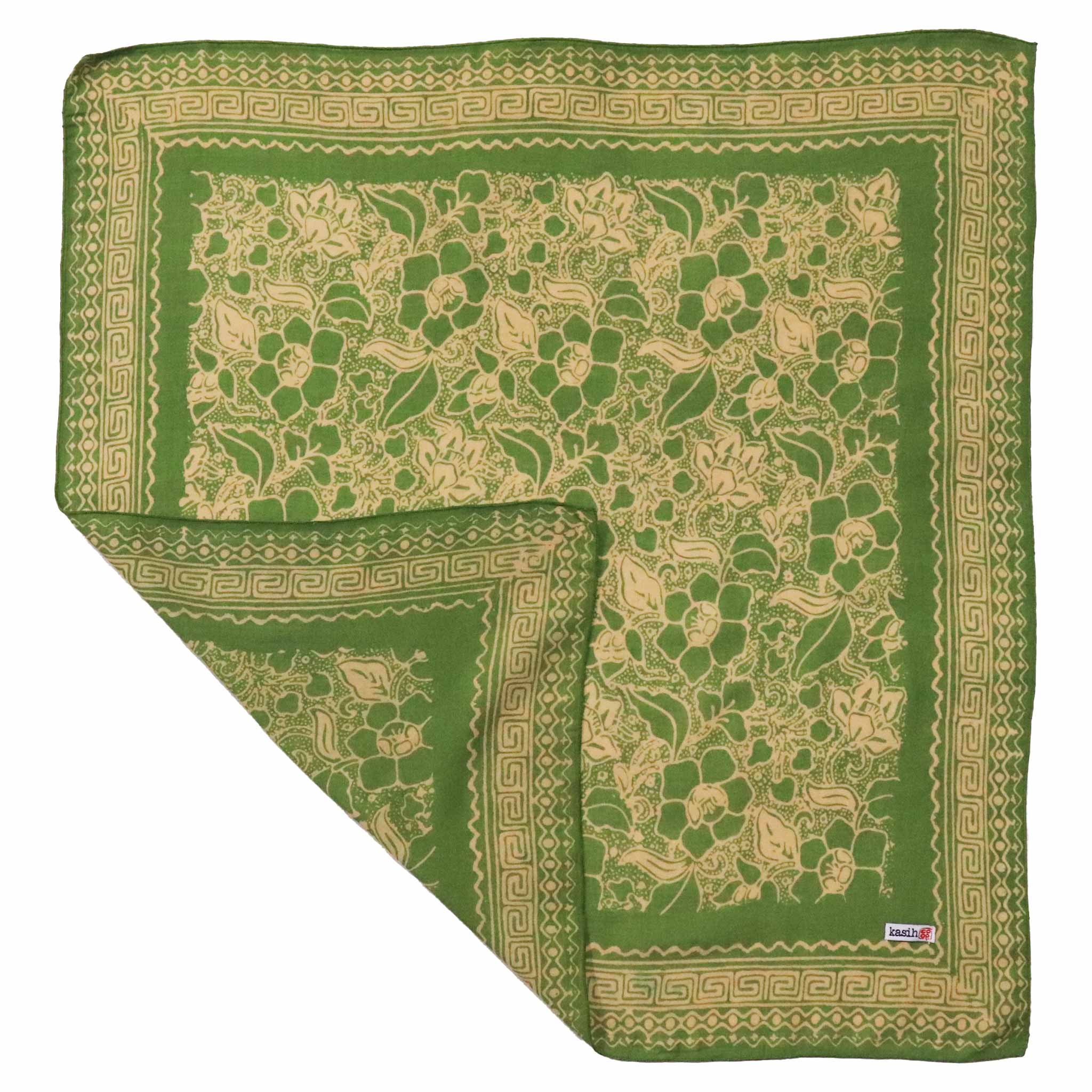
You opened the package. You pulled out your new bandana. And then, you noticed it. A smell. Earthy. A little waxy. Maybe faintly smoky. Definitely not like anything from a mall. Before you Google "is this normal", yes, it is. And honestly? That smell is one of the best things about it.
Let's Talk About What's Actually on Your Bandana
When a batik bandana comes off the artisan's worktable, it's been through a lot. Hot wax. Natural dye baths. Boiling water to strip the wax. Sometimes multiple rounds of all three.
The fibers of the fabric have absorbed all of it, the dye, the wax residue, the minerals in the water, the smoke from the workshop. What you're smelling is the process itself.
The Wax
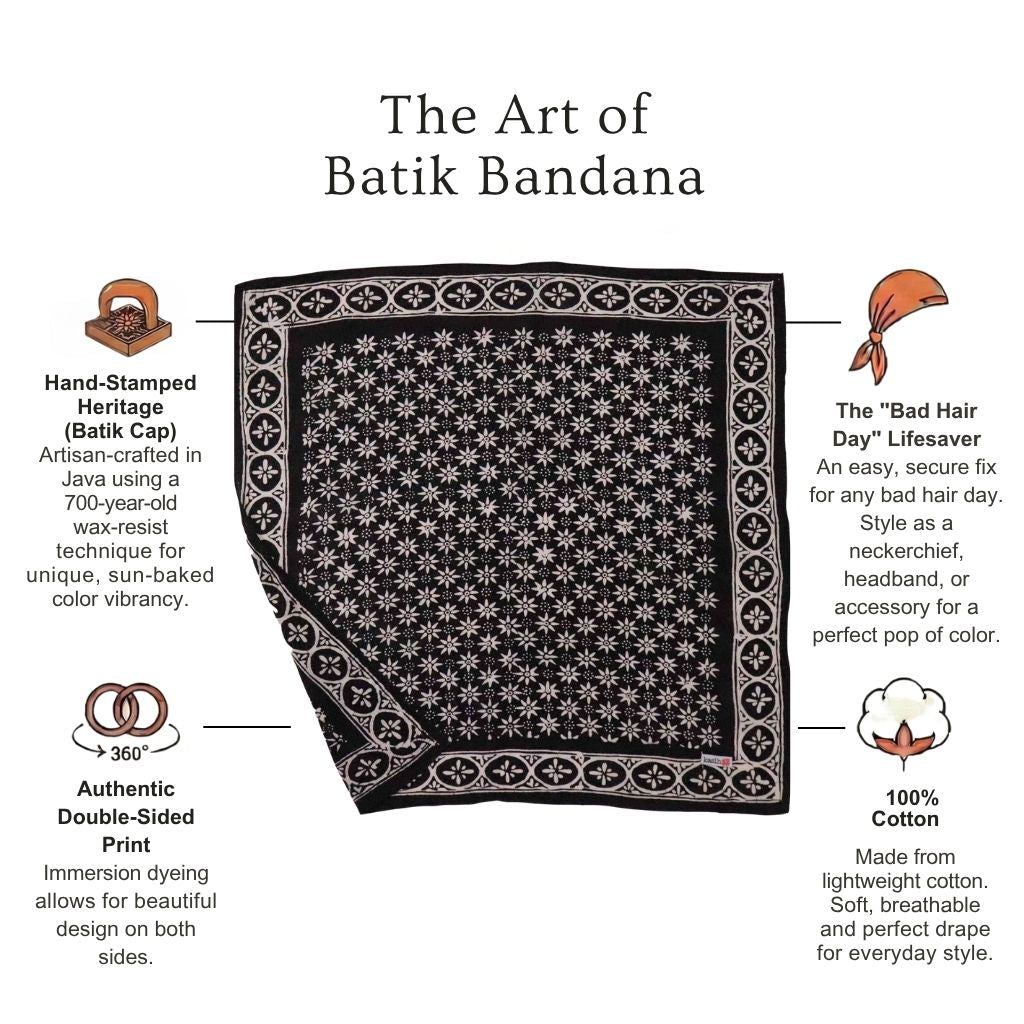
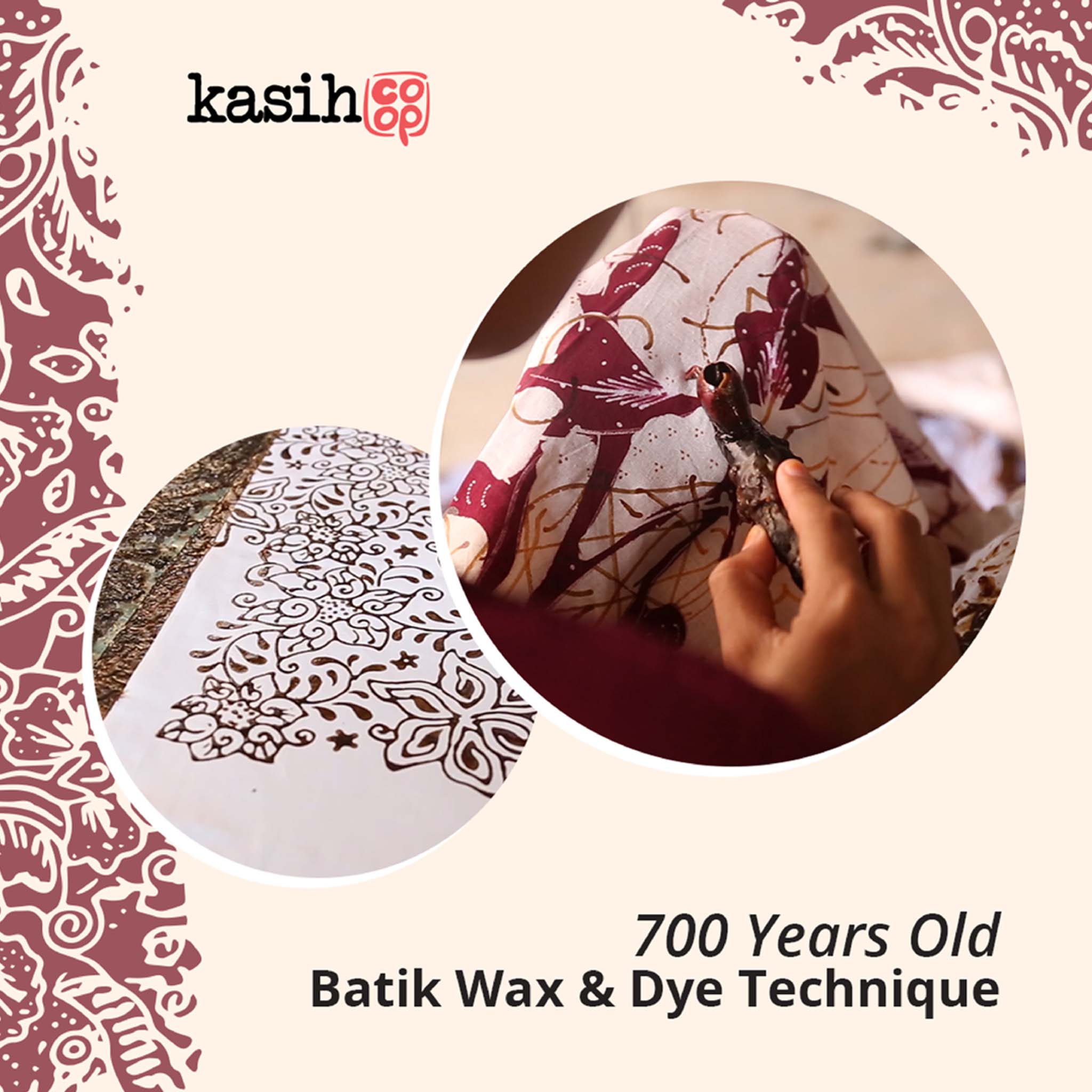
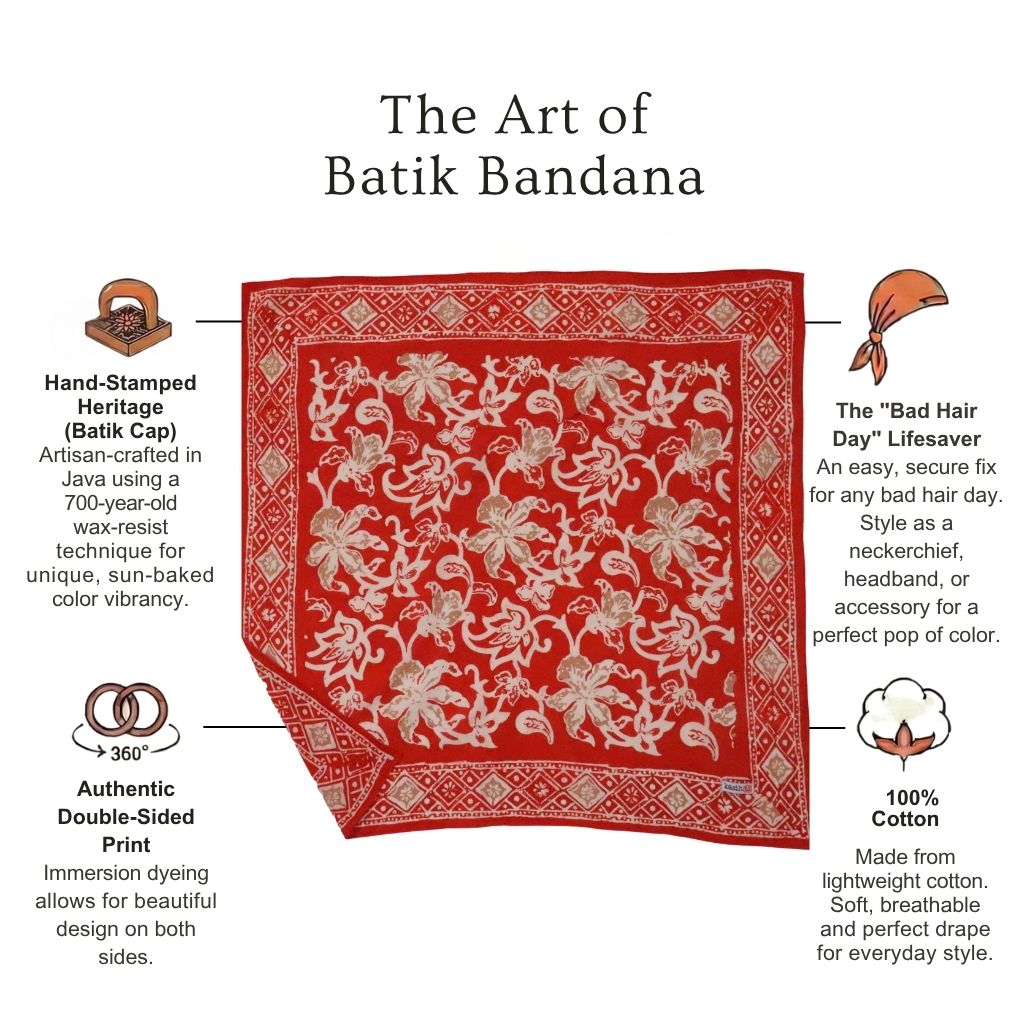
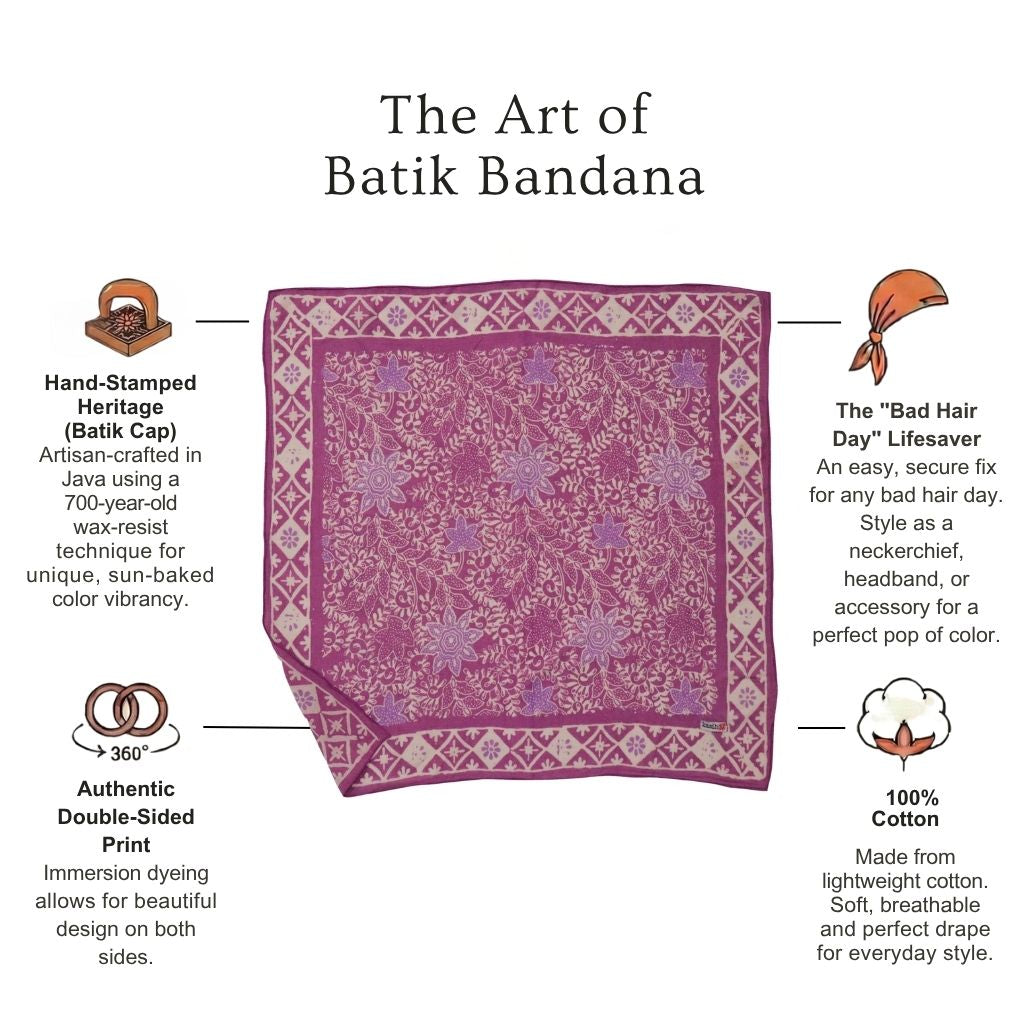
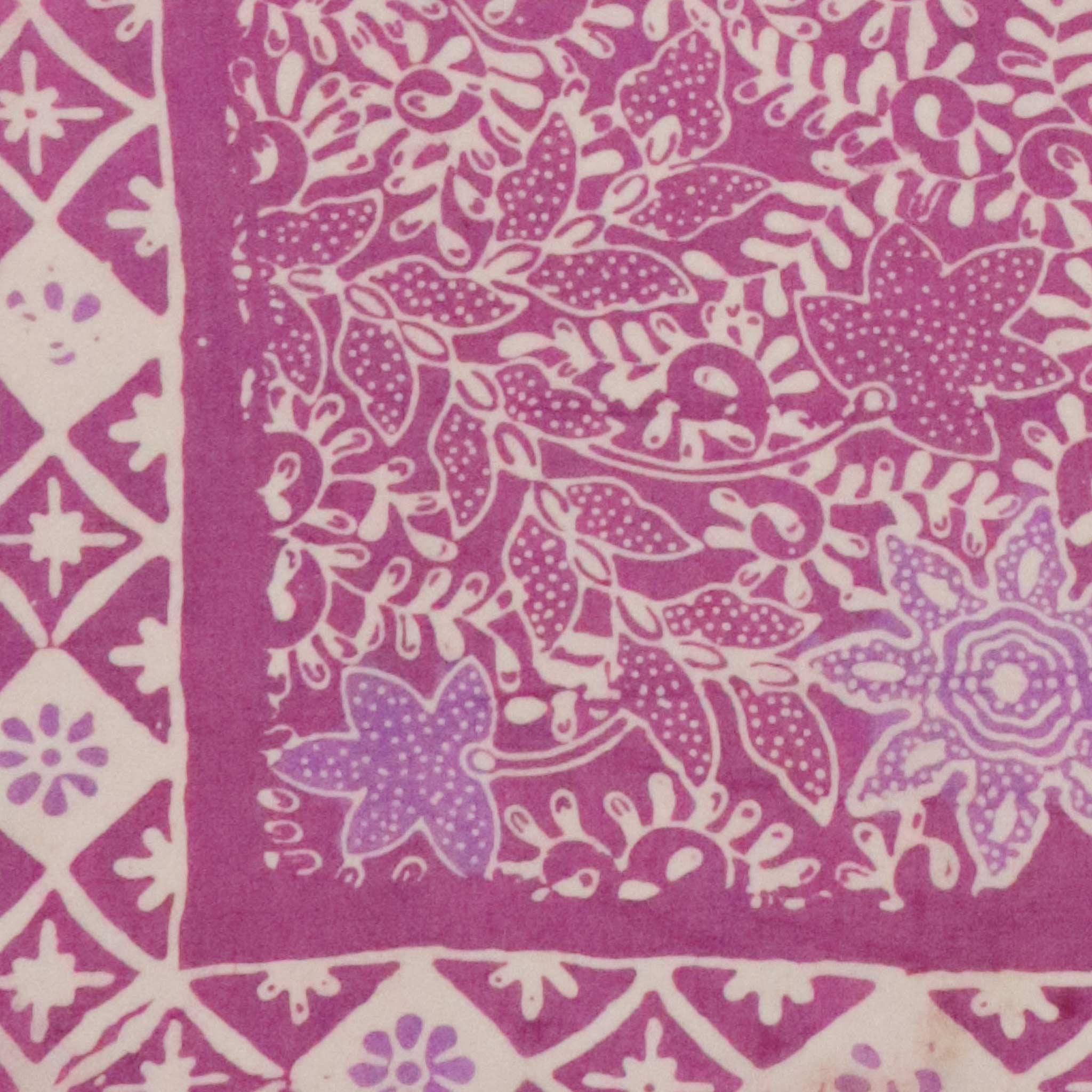
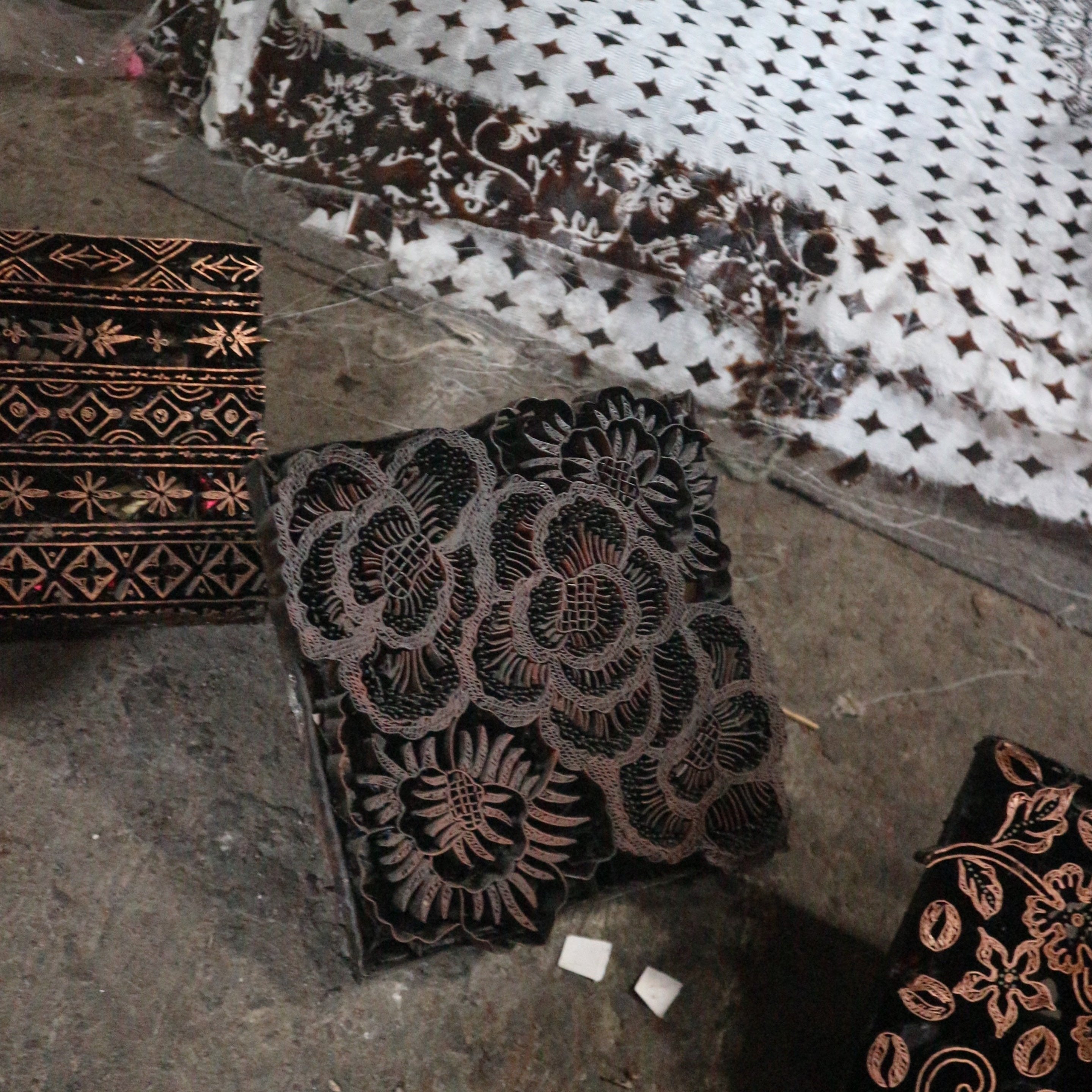
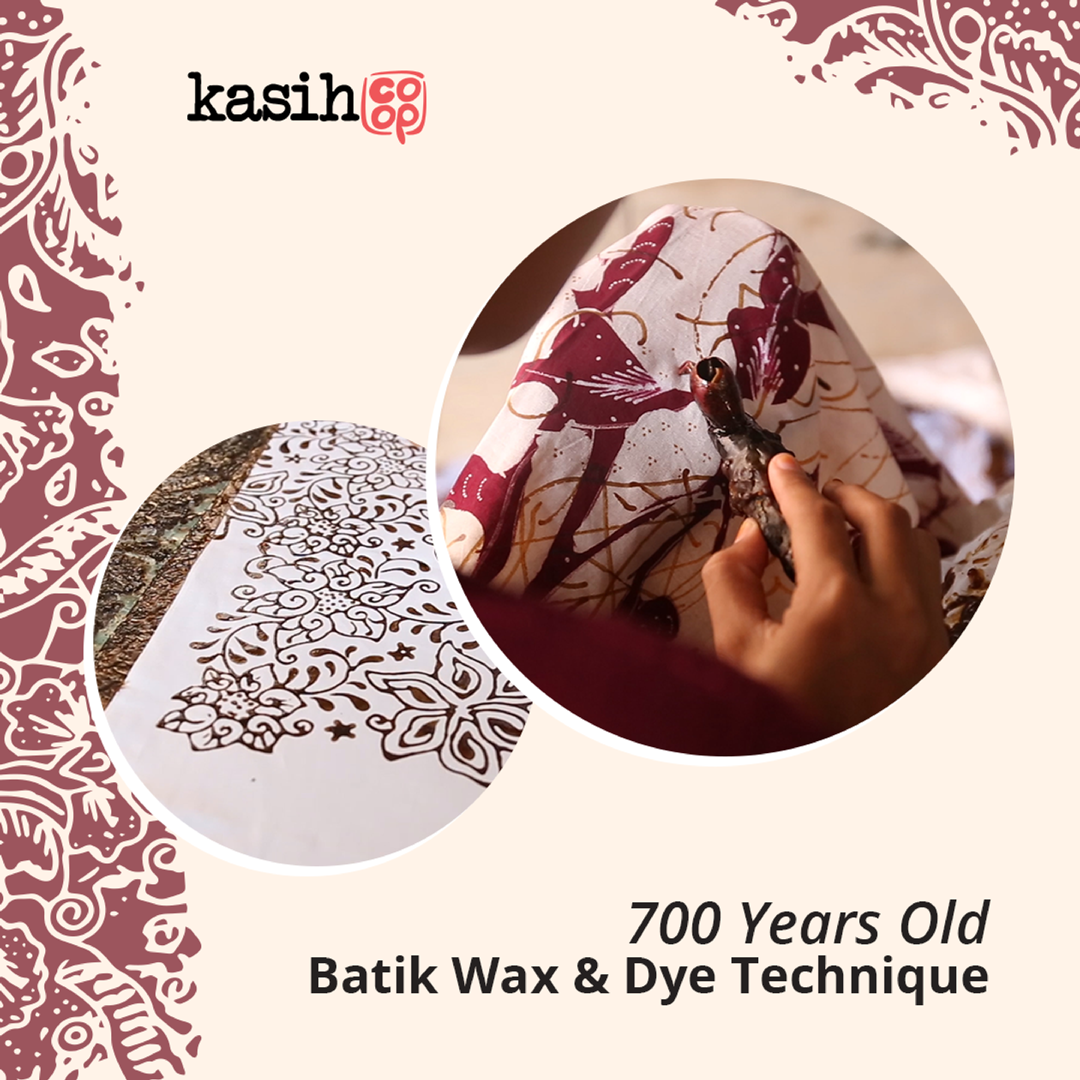
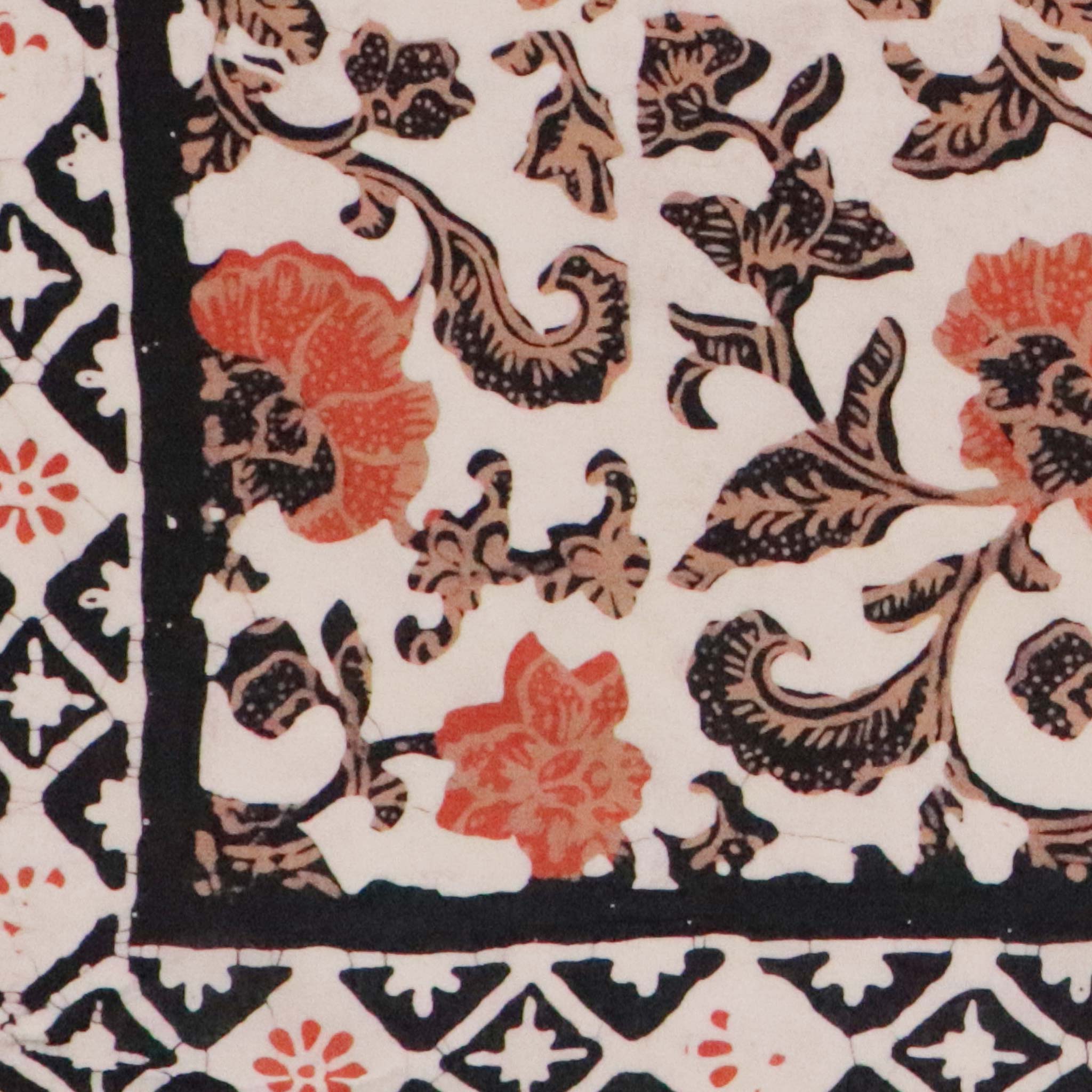
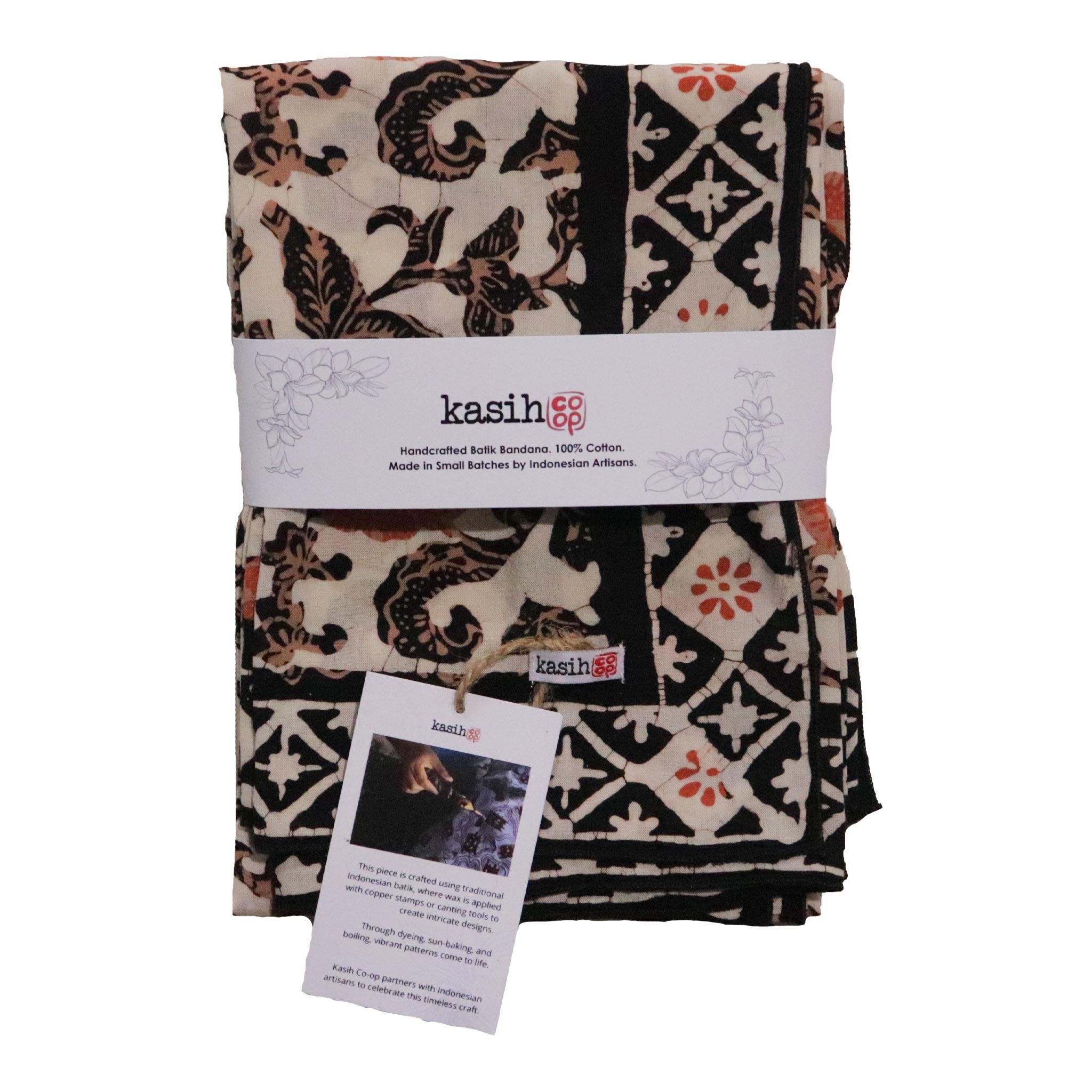
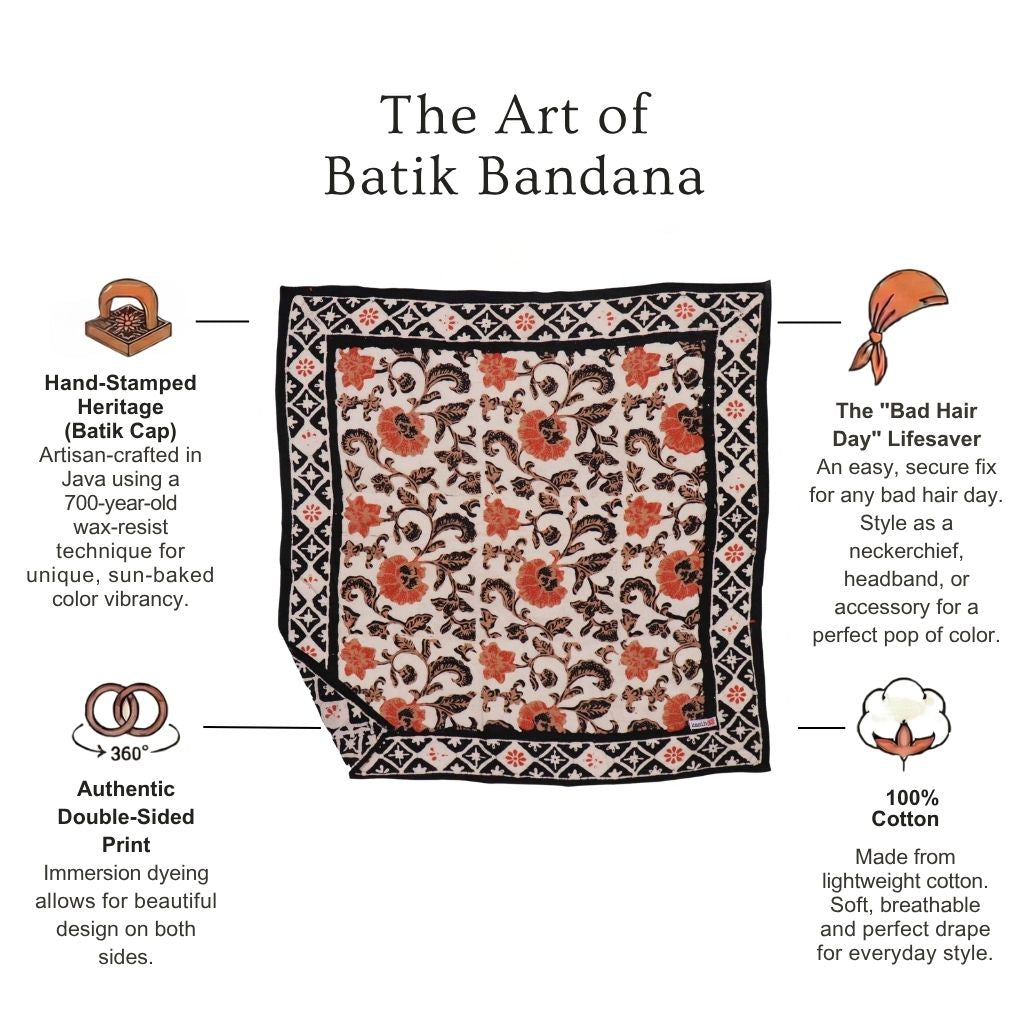
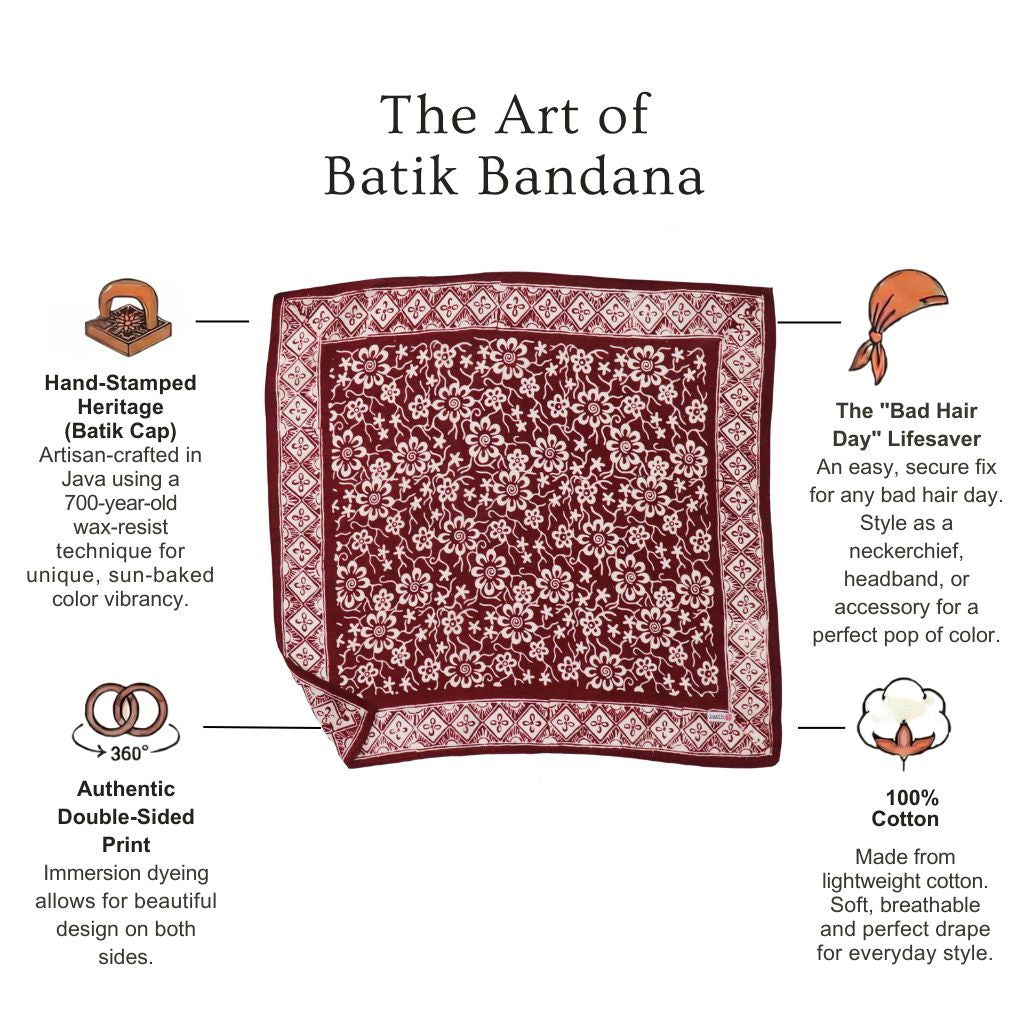
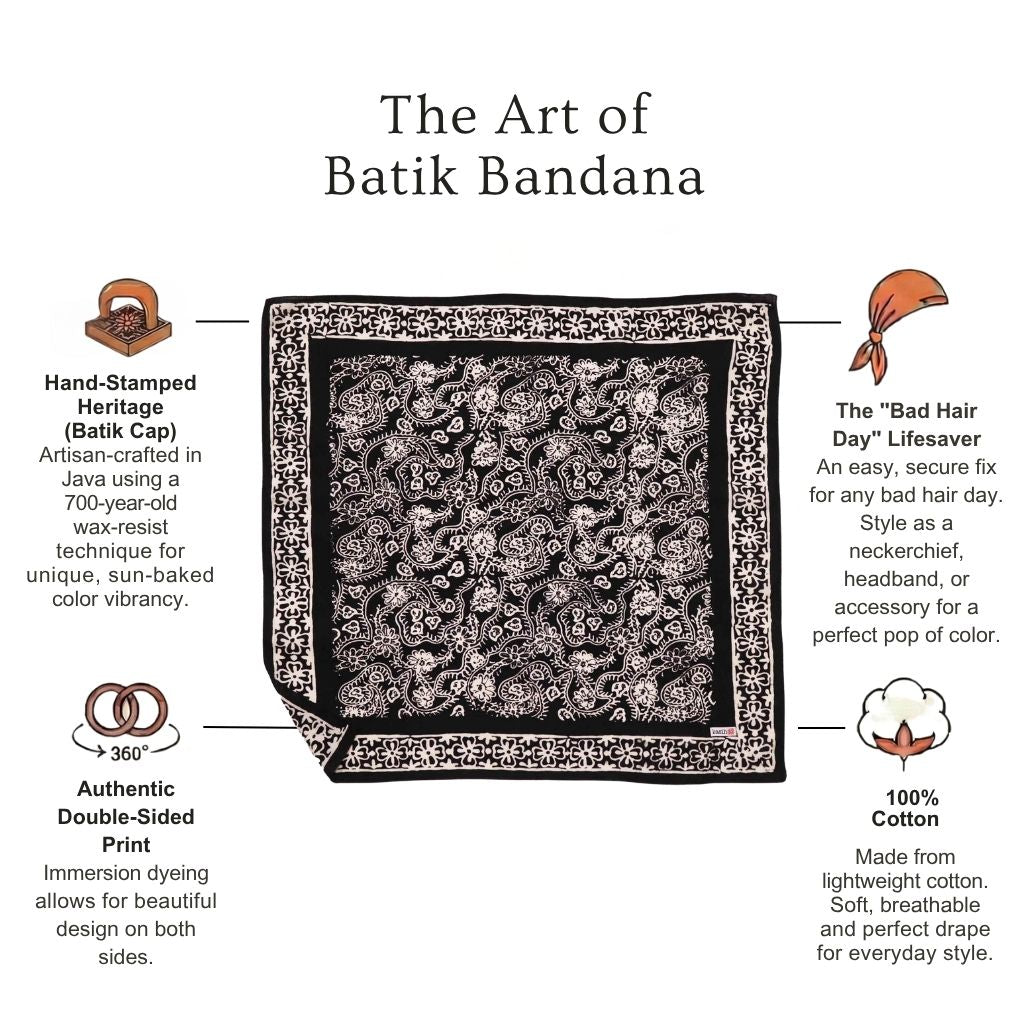
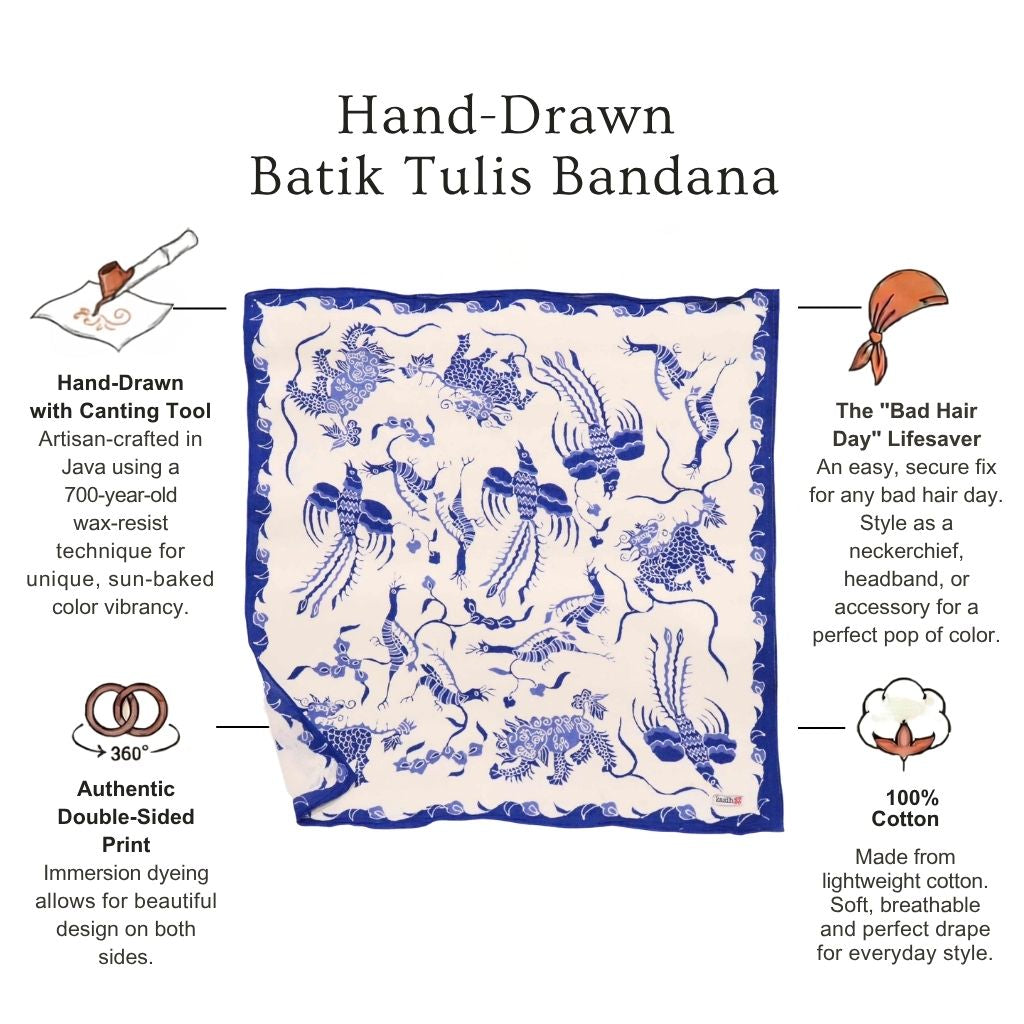
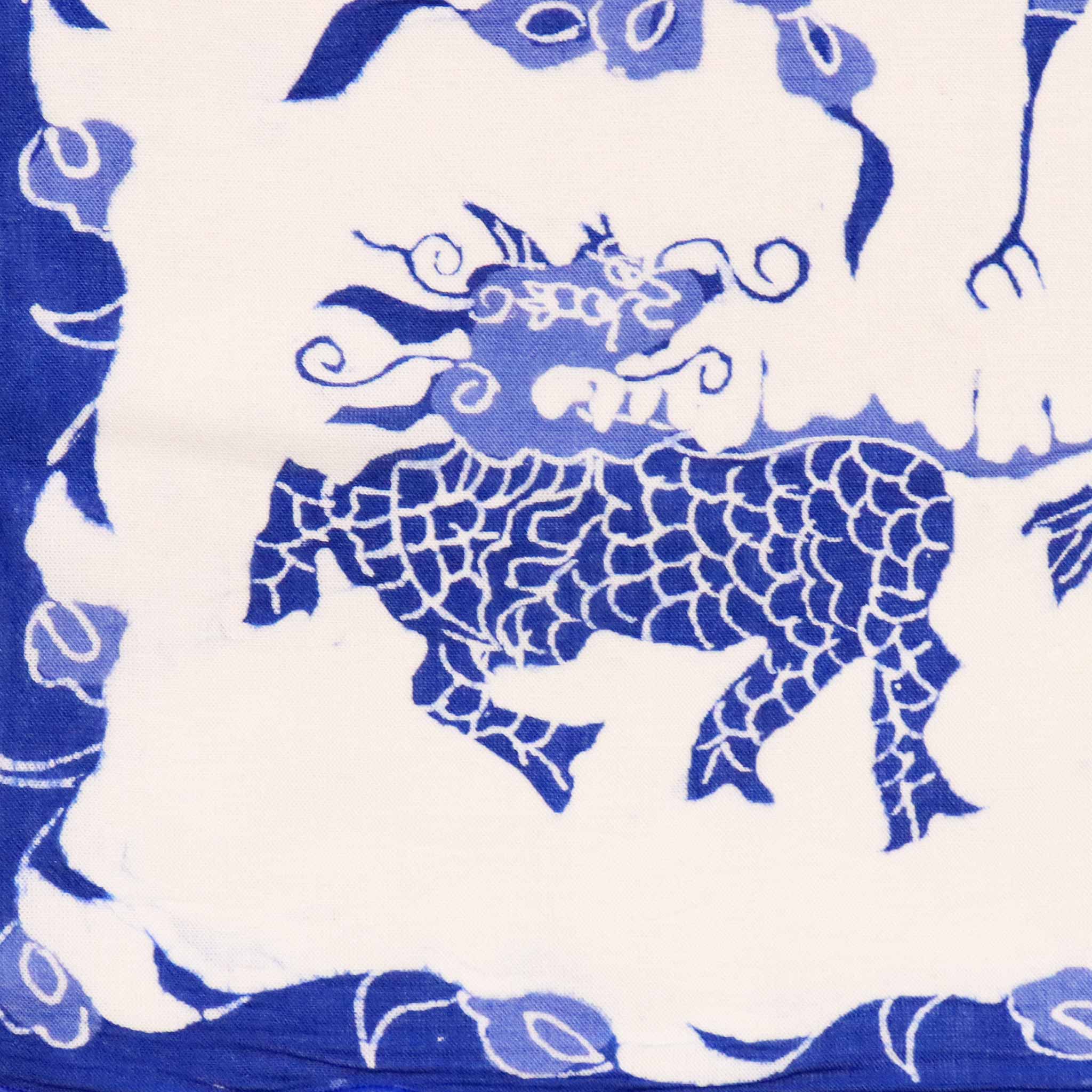
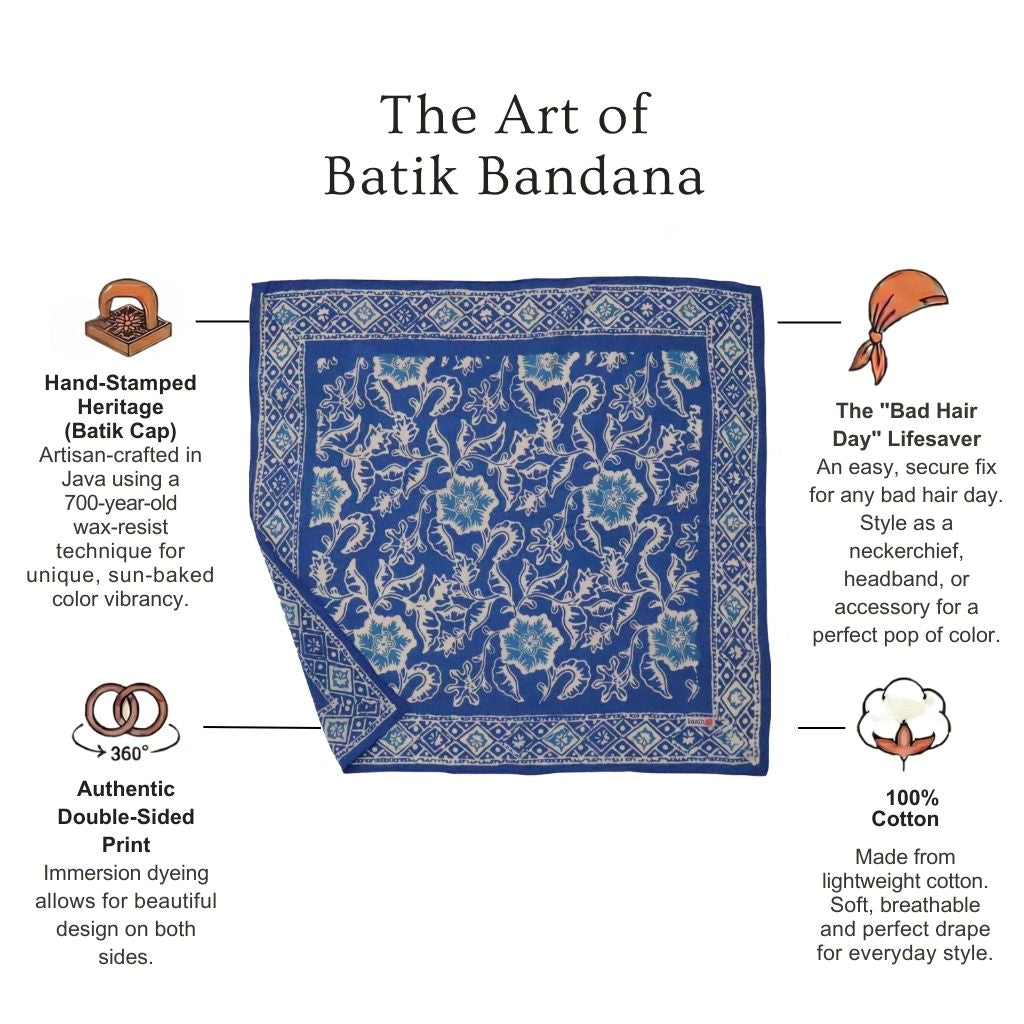
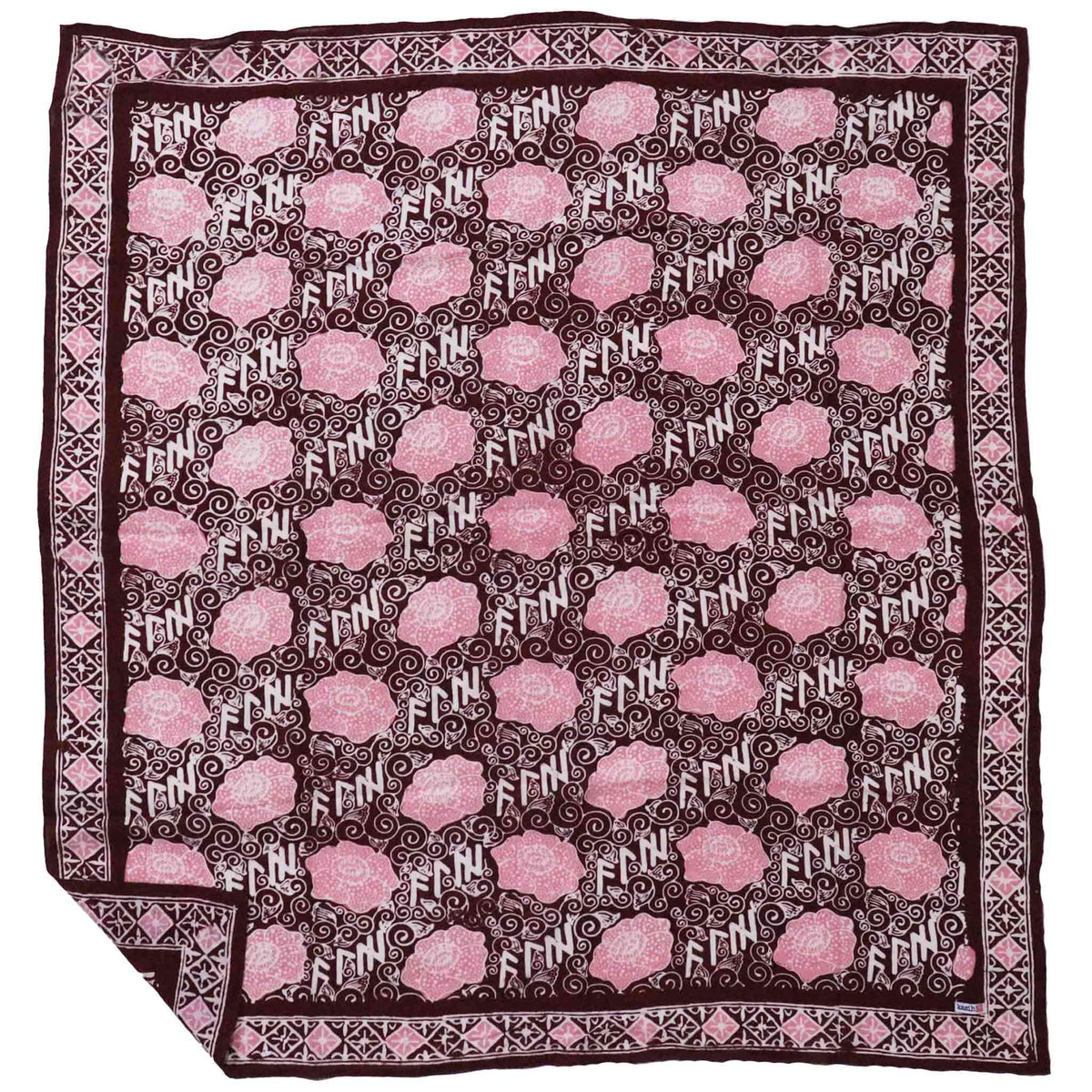
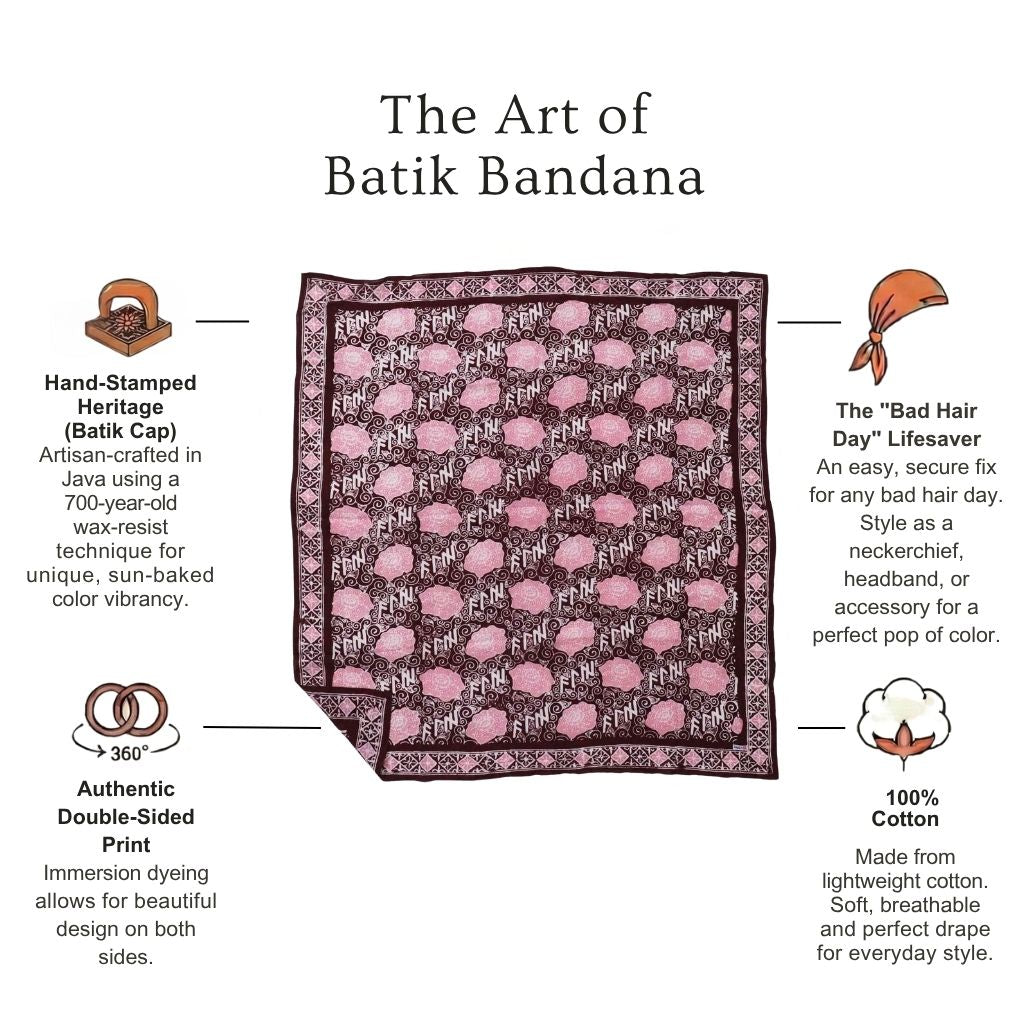
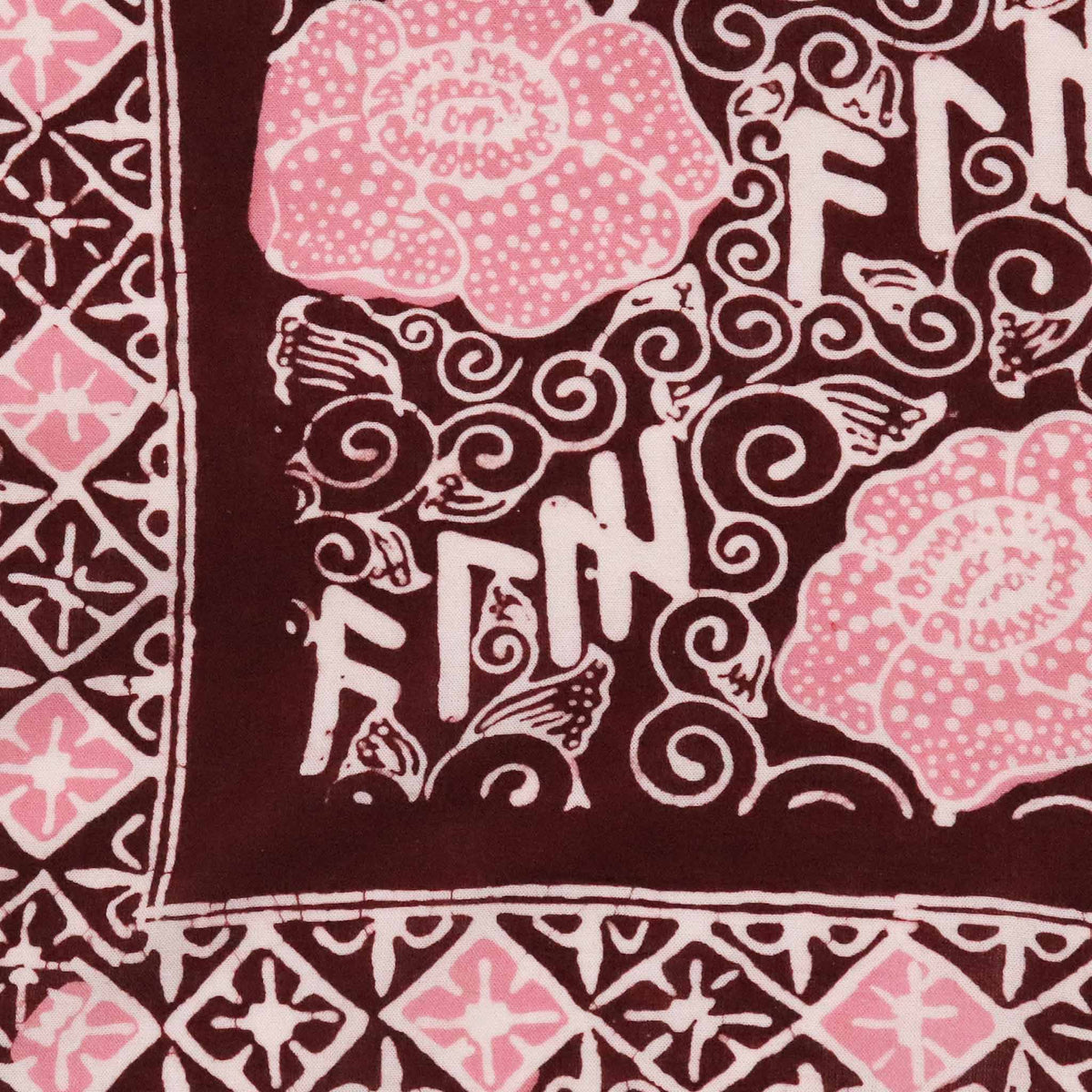
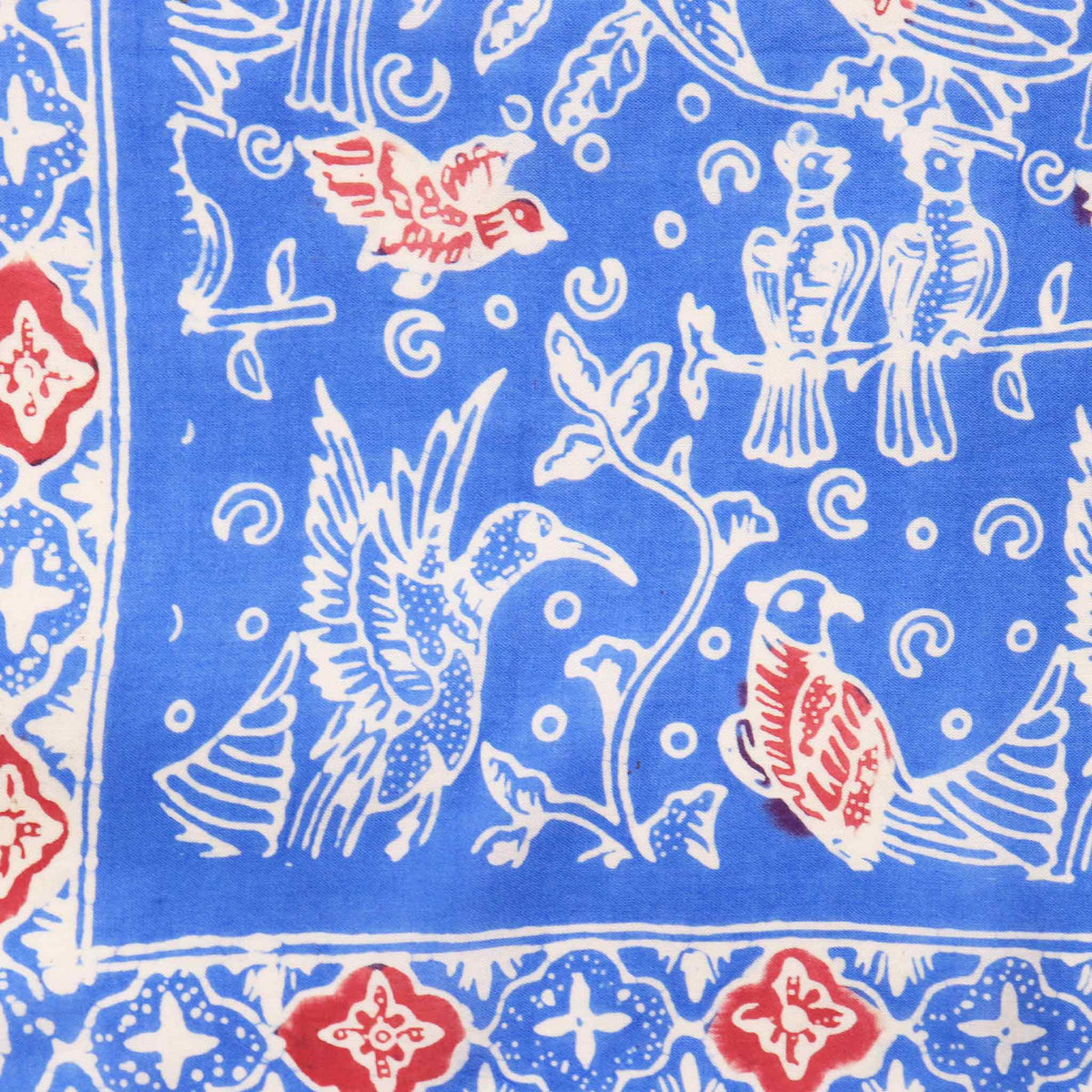
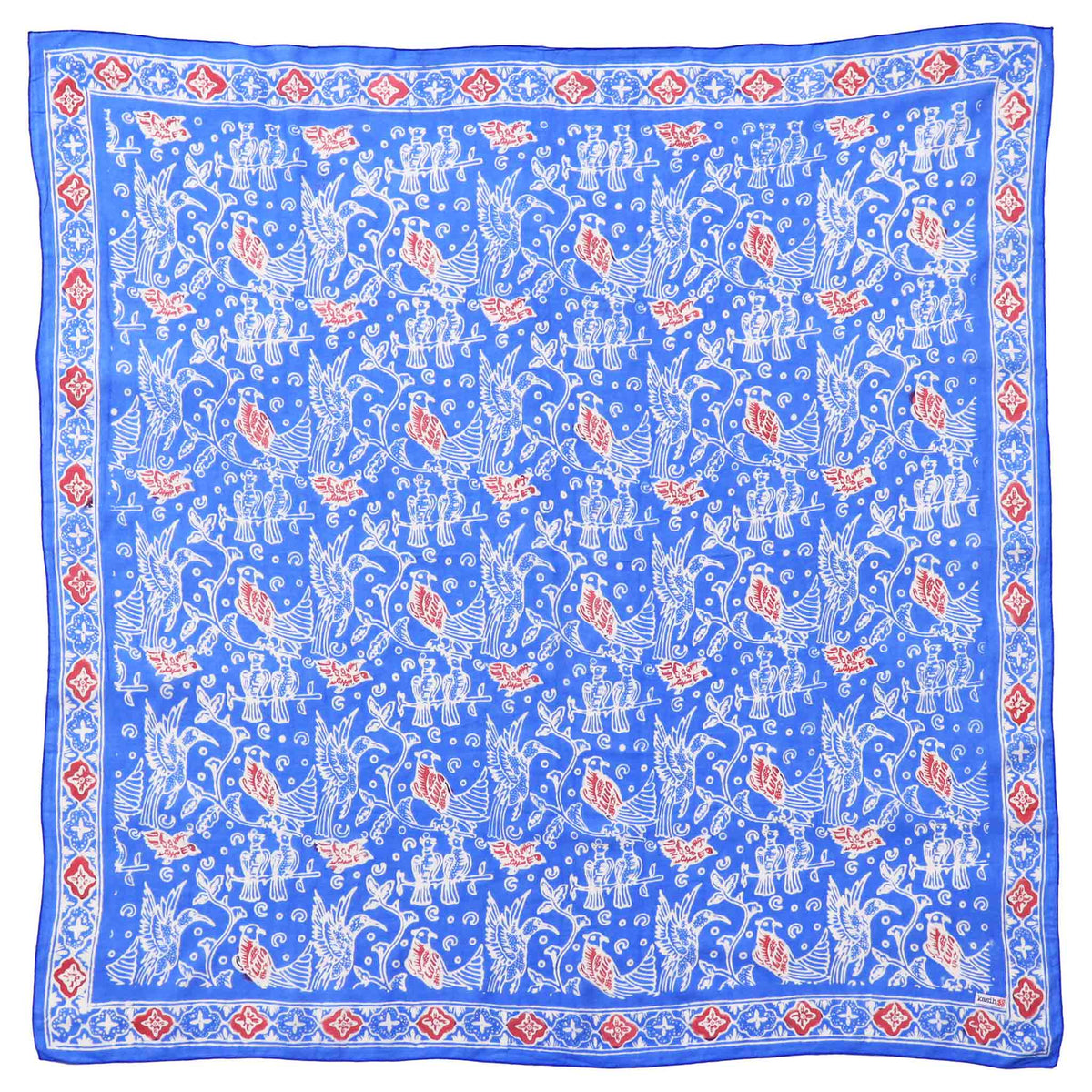
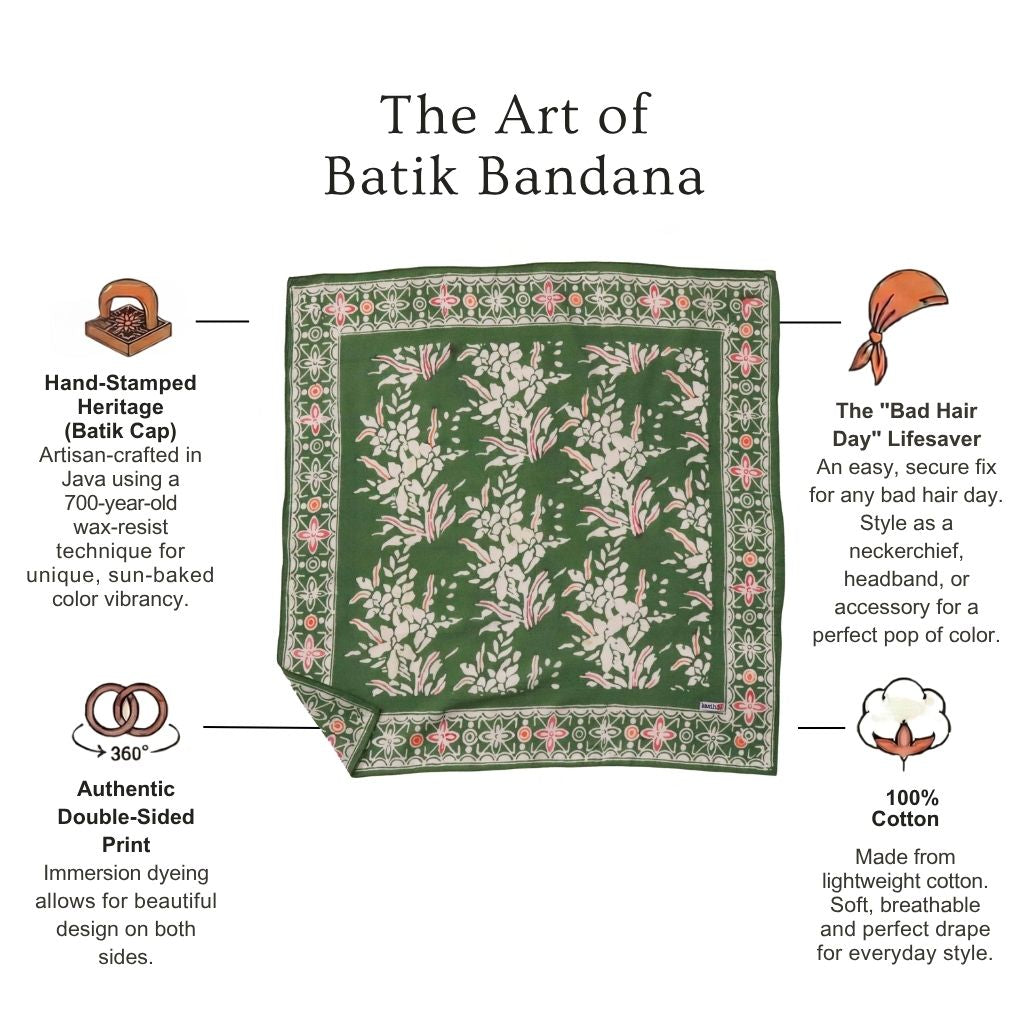
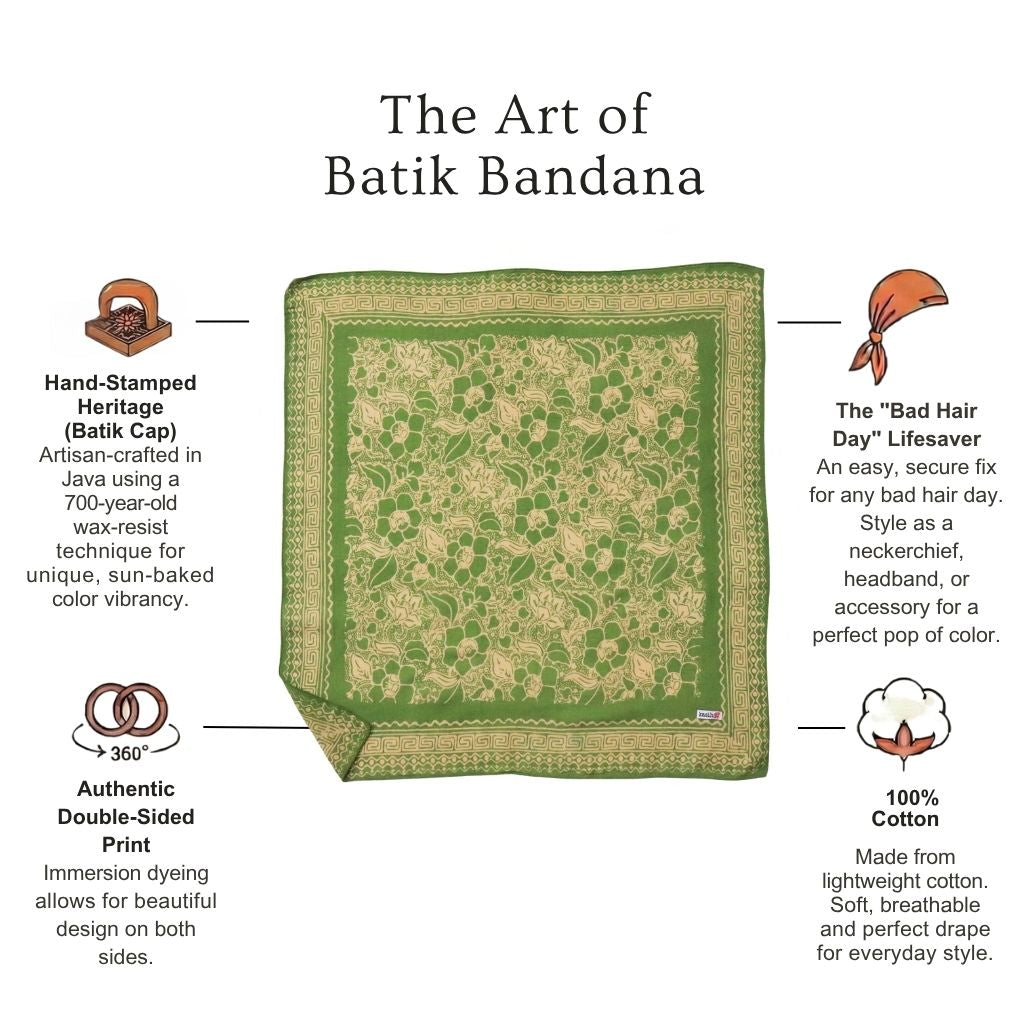
Batik starts with wax. A blend of beeswax and paraffin is melted and applied to the fabric using a canting (a small handheld tool) or a copper stamp called a cap. The wax acts as a resist, it blocks the dye from reaching certain parts of the fabric, which is how the pattern is created.

Beeswax has a warm, faintly sweet smell. It's the same stuff in candles and lip balm. When it gets worked into cotton fibers at high heat, it leaves a trace — subtle but real. Even after the wax is boiled off at the end of the process, a ghost of it stays in the cloth.
That slight waxy warmth you're noticing? That's the beeswax saying hi.
The Dye
Synthetic fabric dye, the kind used in mass-produced textiles, smells like chemicals, because it is chemicals. Azo dyes, formaldehyde fixatives, optical brighteners. The "new clothes smell" you've probably noticed your whole life is largely that.
Natural dye is different. Indigo comes from a plant. Soga brown comes from the bark of the mahogany tree. Red can come from the roots of the mengkudu plant. These are materials that grew in the ground, and they carry the smell of that origin — earthy, organic, a little raw.
Not every batik uses purely natural dyes (and we'll always be upfront about ours), but even synthetic dyes used in small-batch hand dyeing smell different from industrial fast fashion. Less sharp. More complex.
The Workshop
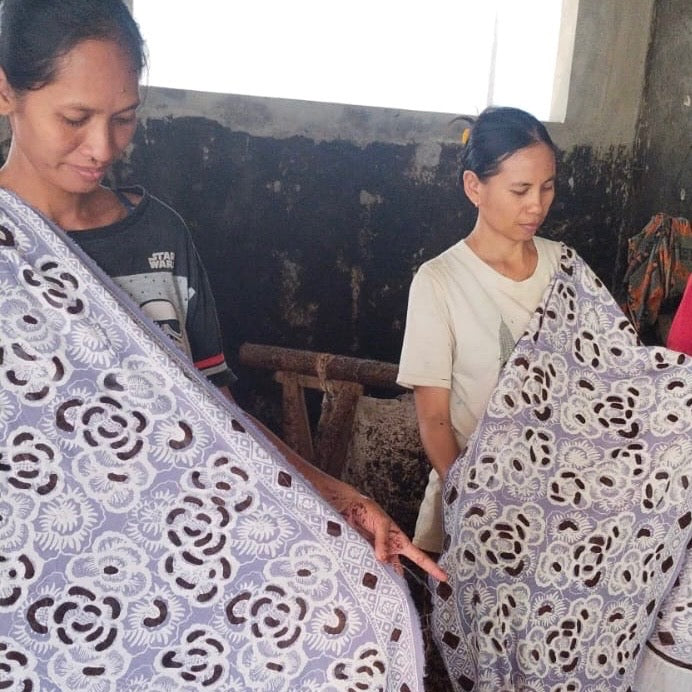
Here's the thing about authentic batik workshops in Indonesia, they're not sterile factories. They're open-air spaces, often in someone's home compound, with wood fires heating the wax pots, the smell of dye baths steaming in the air, and fabric hanging in the sun to dry.
That environment leaves its mark on the cloth. A little smoke. A little humidity. A little of whatever was blooming outside that day.
You can't replicate that in a printing machine. And you definitely can't fake that smell.
Compare That to Synthetic "Batik"
Machine-printed batik, the kind that mimics the look of real batik but has none of the process, smells like a fabric warehouse. Synthetic dye, sizing chemicals, and whatever coating was applied to make it look shiny on a store shelf.
It's not unpleasant, exactly. It's just empty. There's no story in it.
What To Do With the Smell
It fades. Wash your bandana once with a gentle detergent and the strongest notes will mellow out. What stays is a clean, faintly natural scent that most people end up loving once they know what it is.
Some people don't wash it at all for a while, they want to keep that fresh-from-the-workshop feeling. That's valid too.
What we'd suggest: before you wash it, just sit with it for a second. That smell is the closest you're going to get to being in the workshop where it was made — the wax pot bubbling, the dye bath steaming, someone's hands guiding the canting across the cloth.
It's not weird. It's just real.
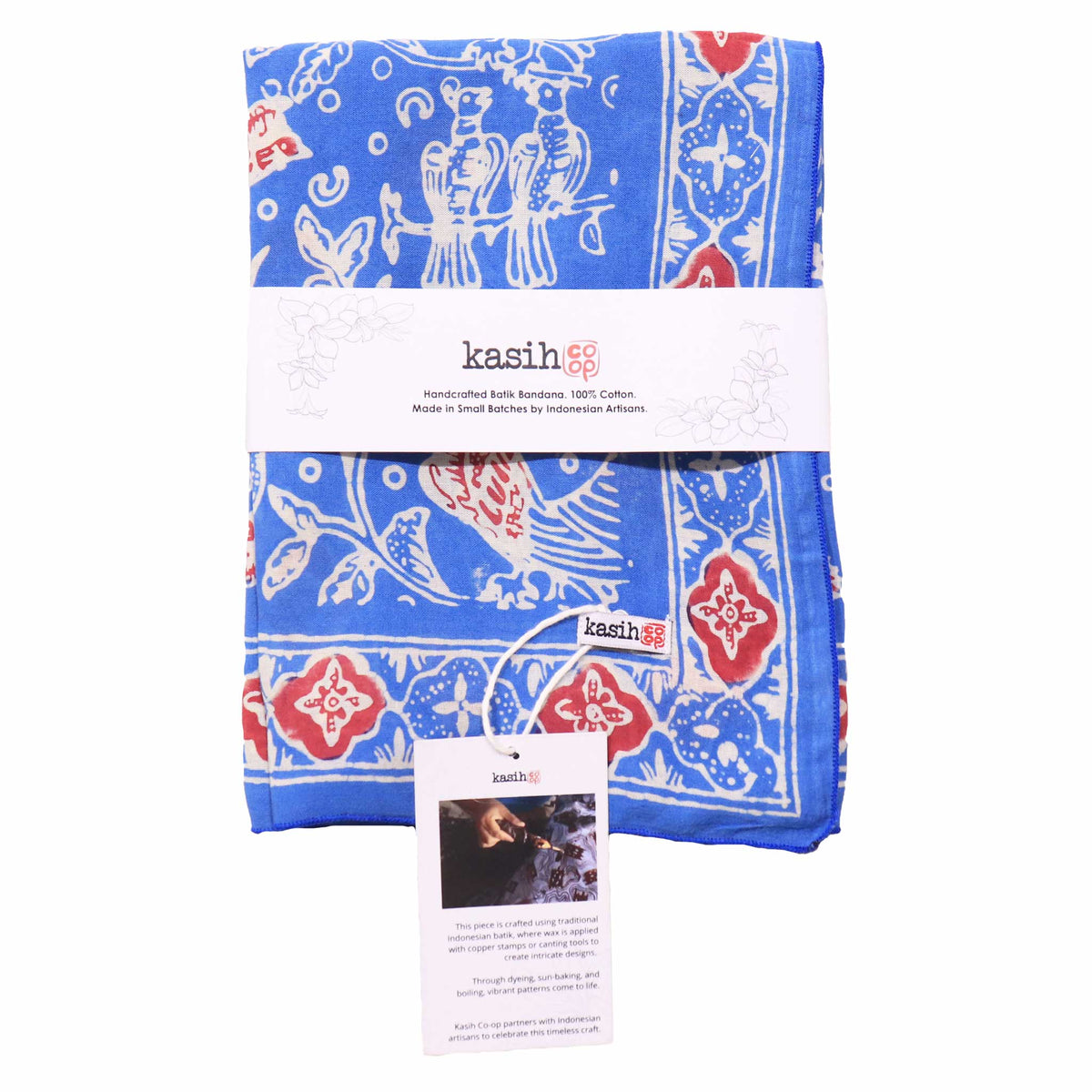
All Kasih Co-op bandanas are handmade by artisan cooperatives in Indonesia using traditional batik techniques. Verified Fair Trade Federation member since April 2026.