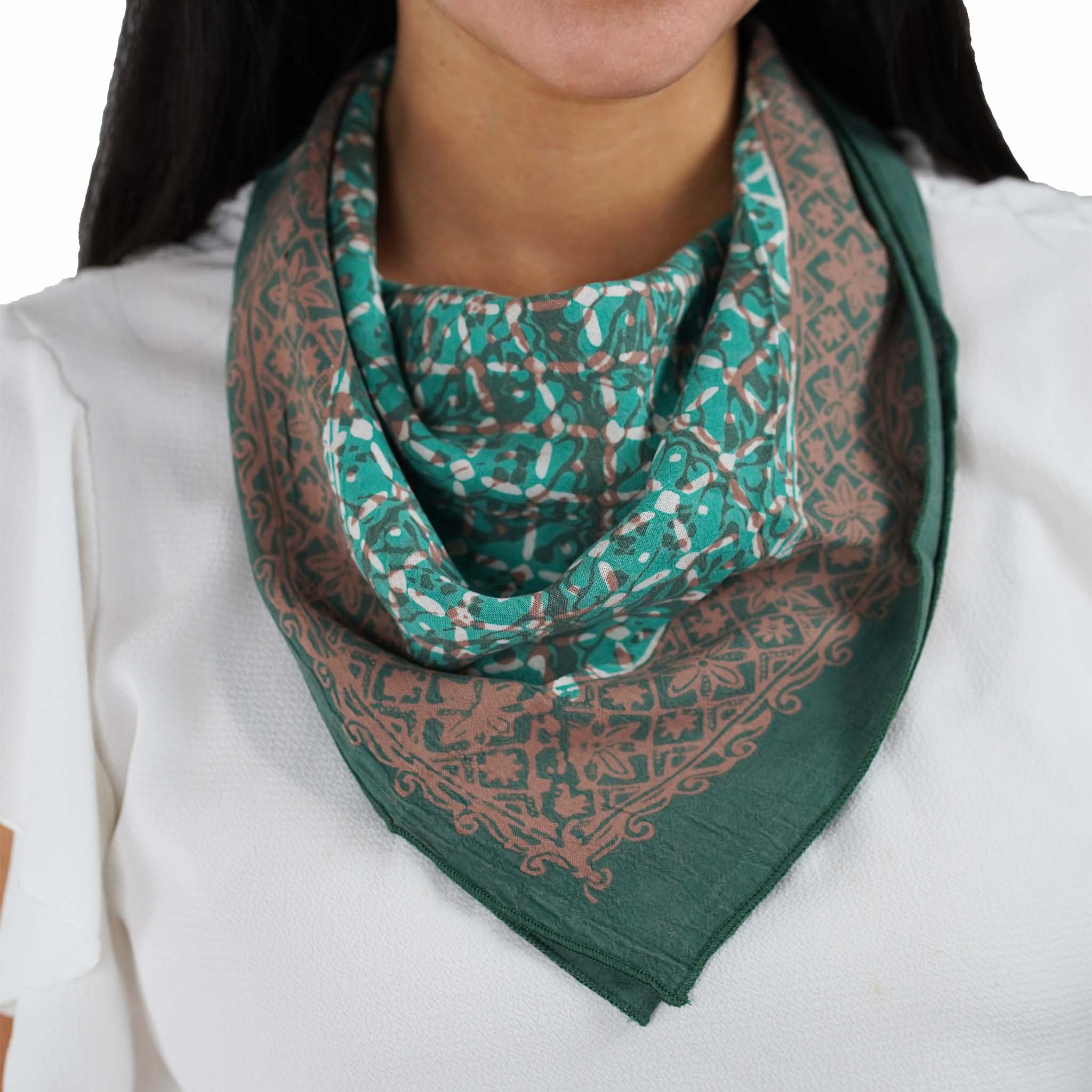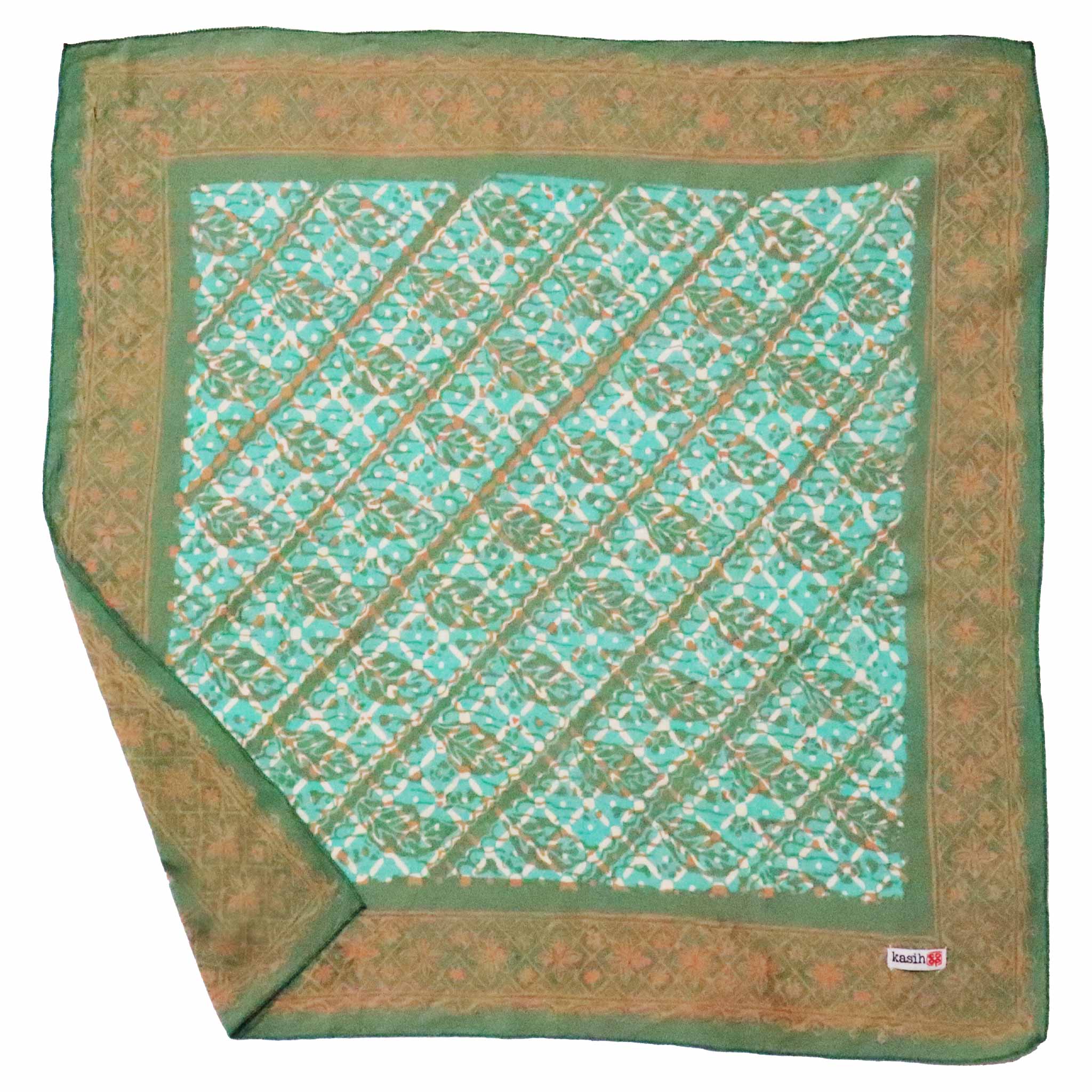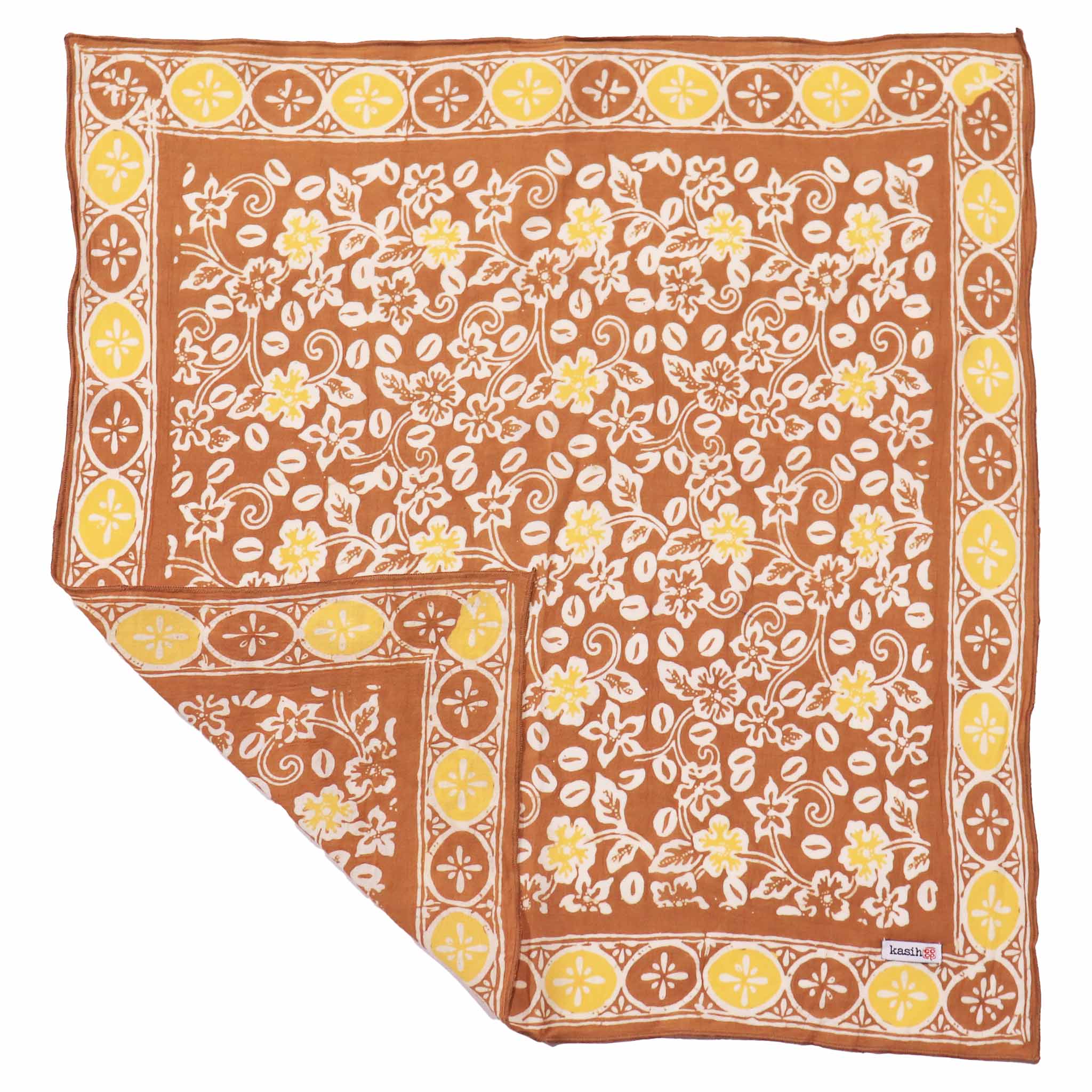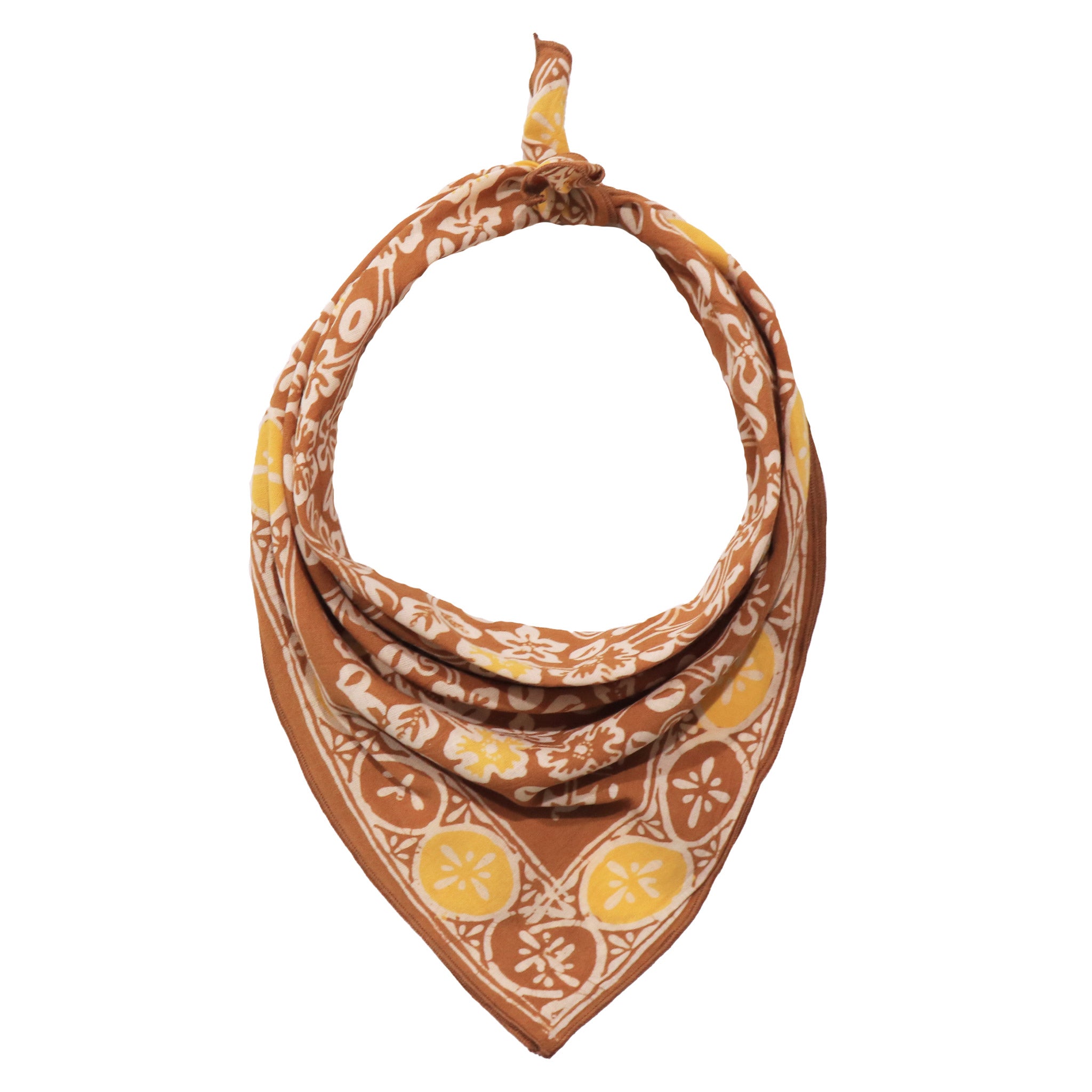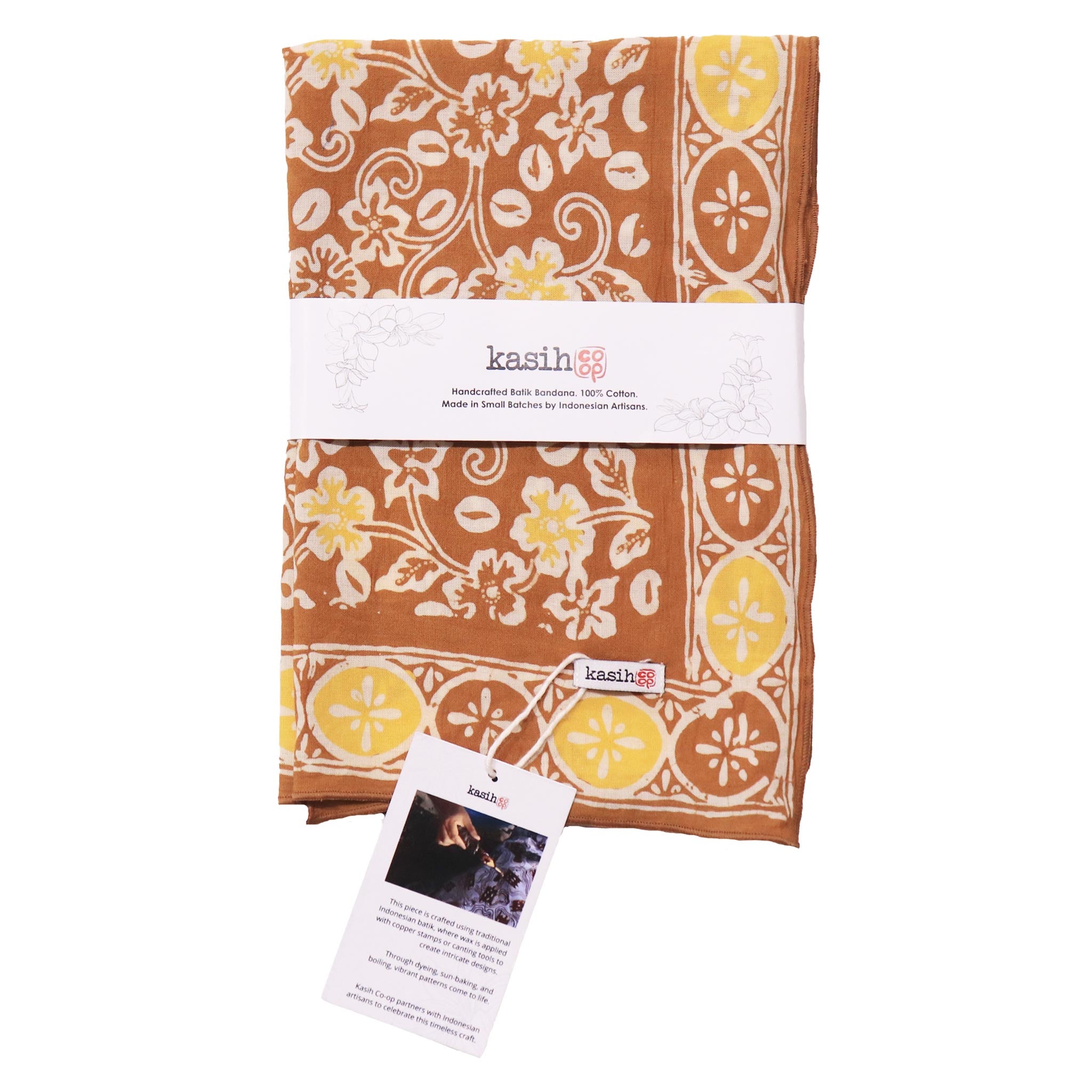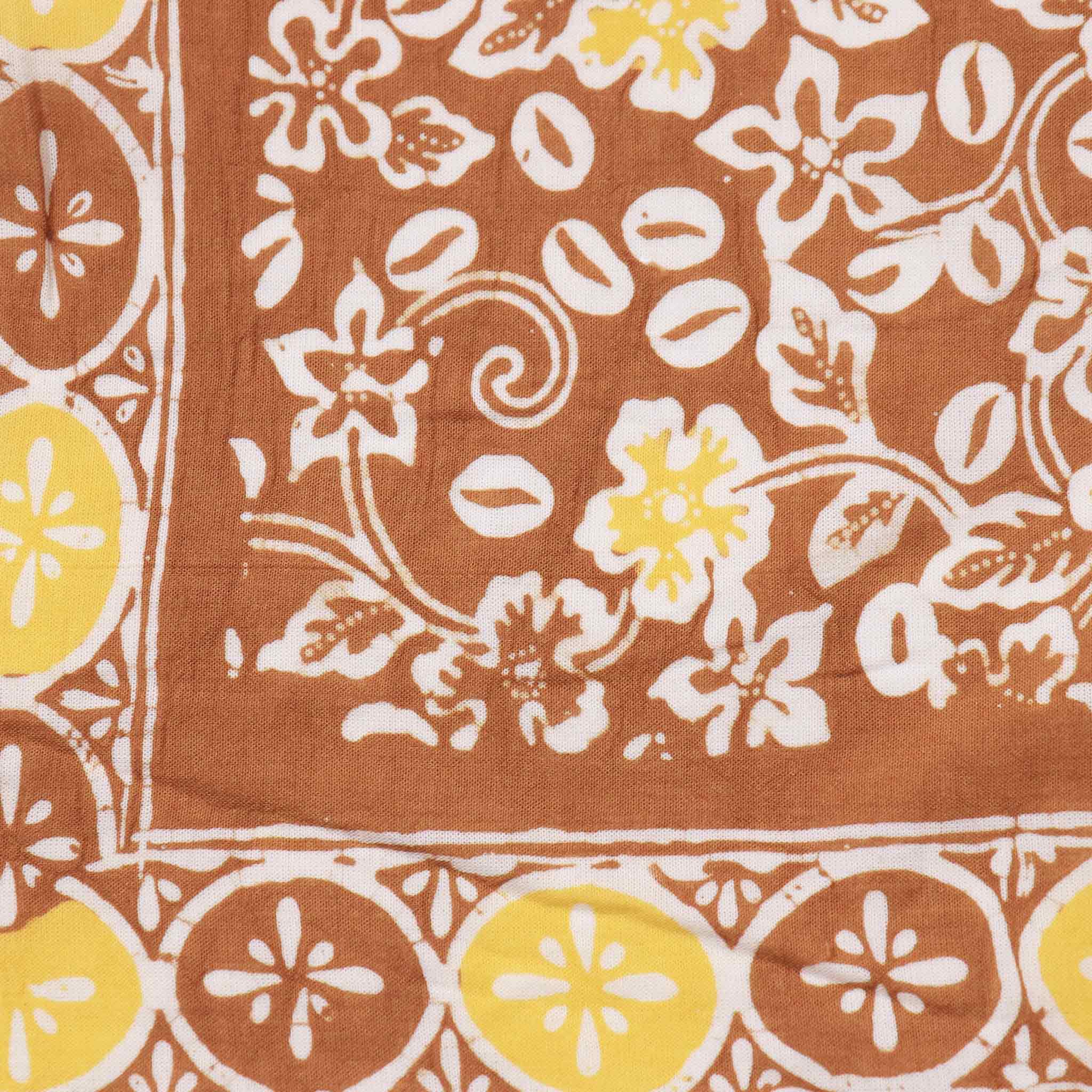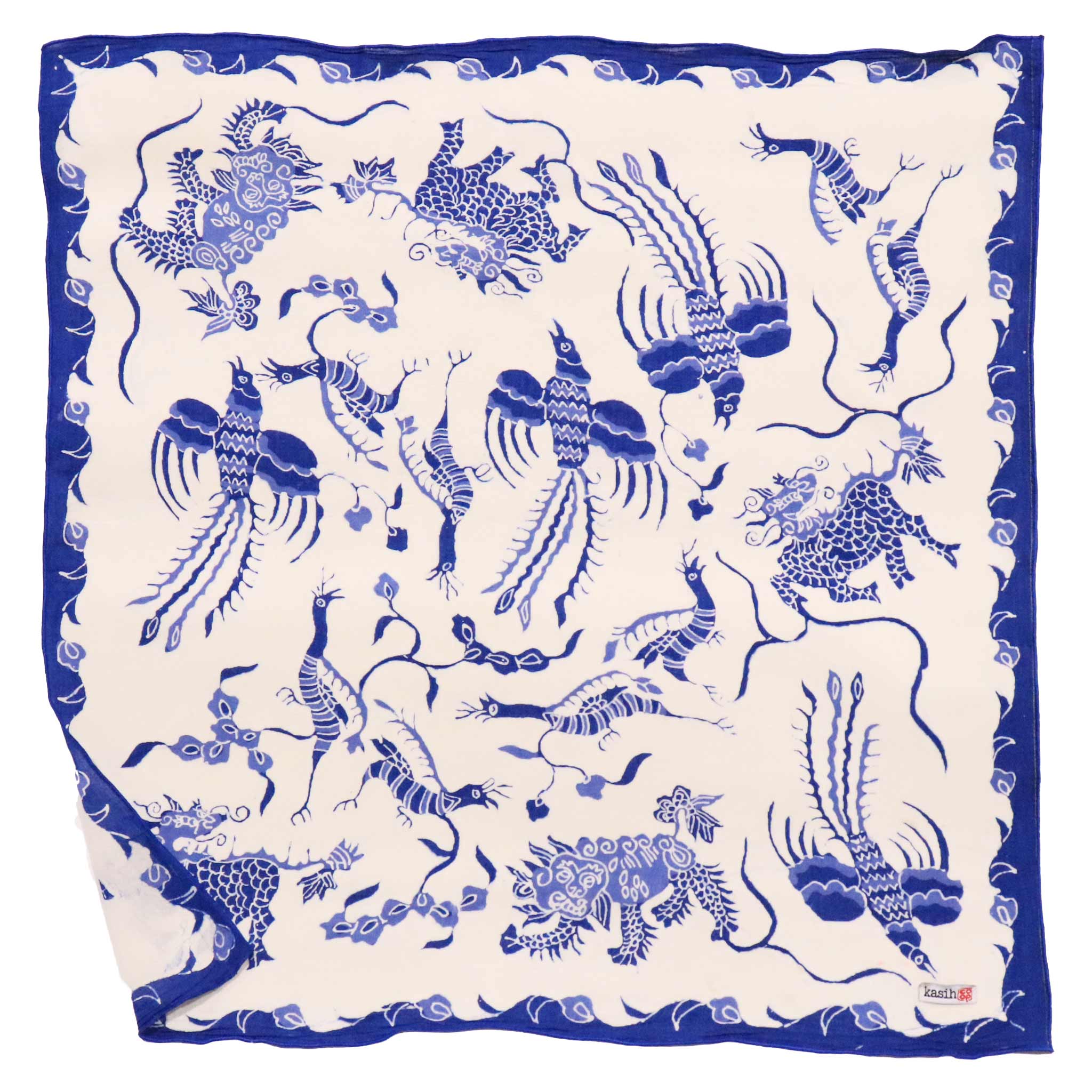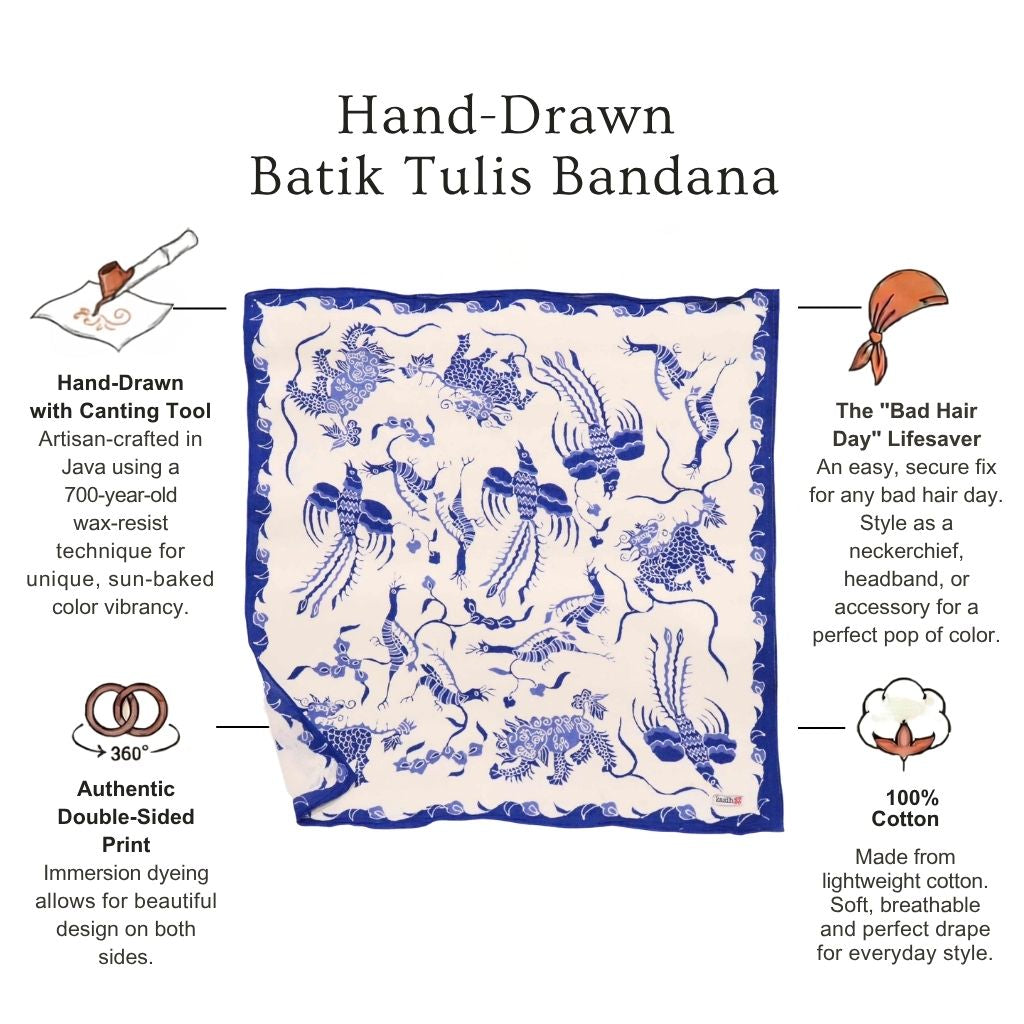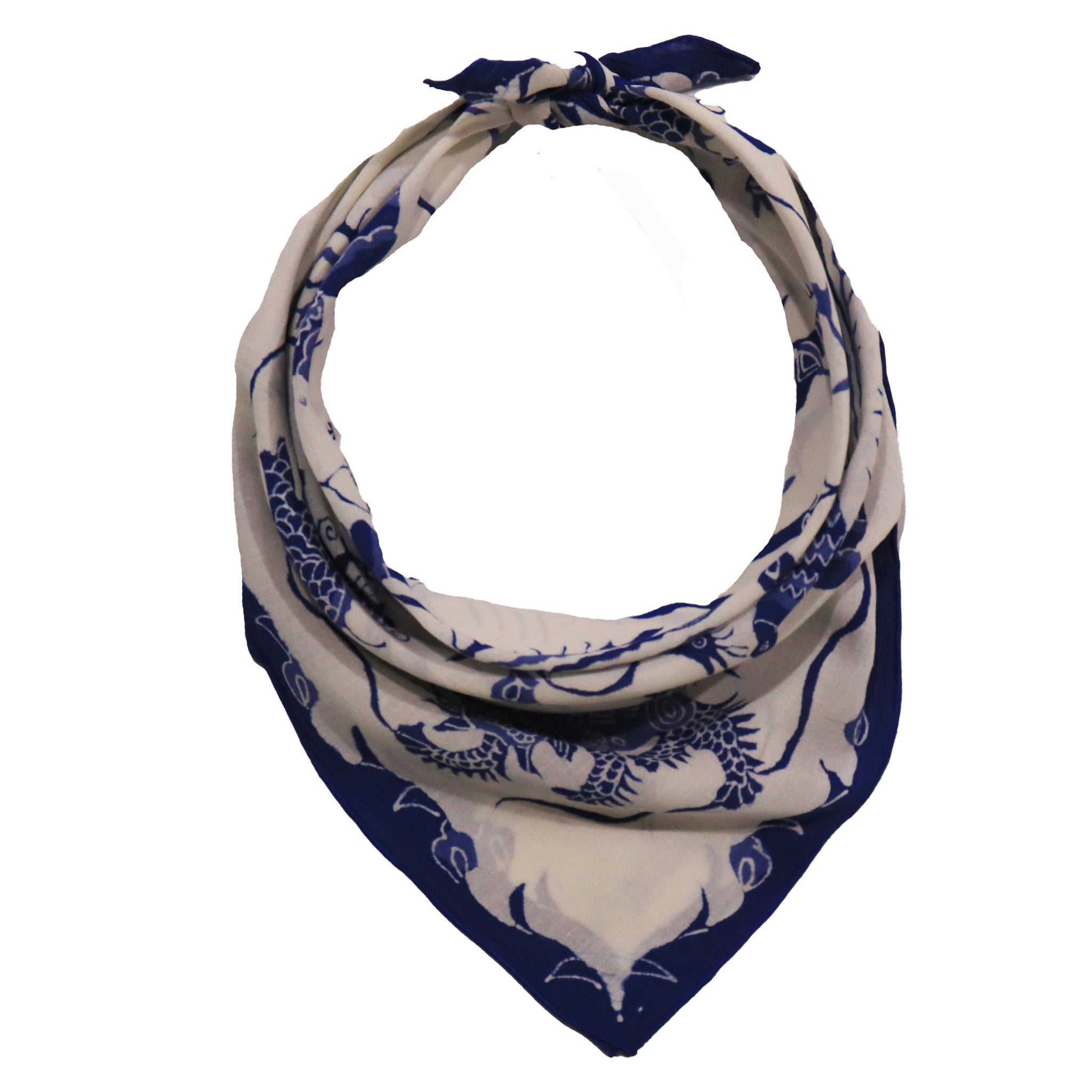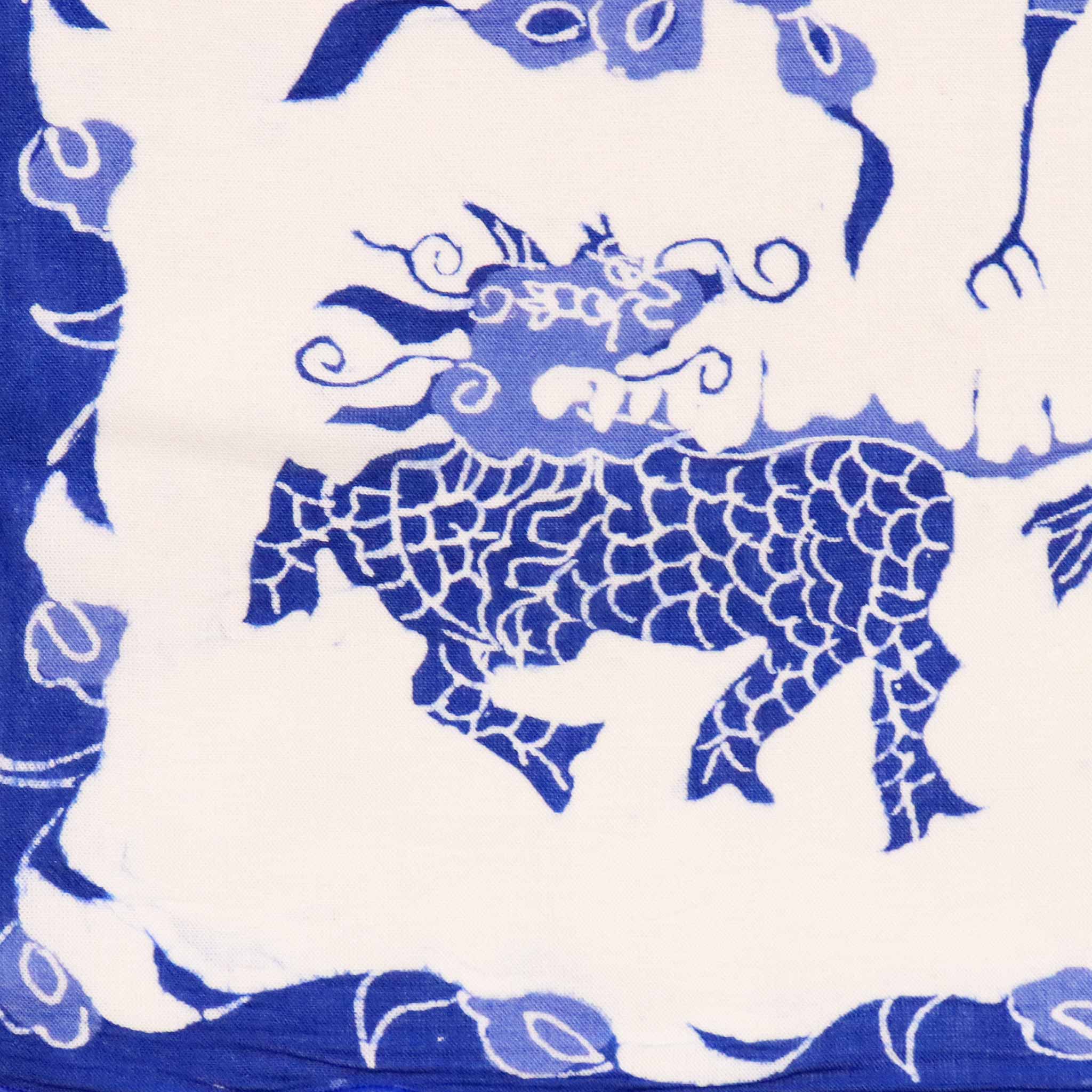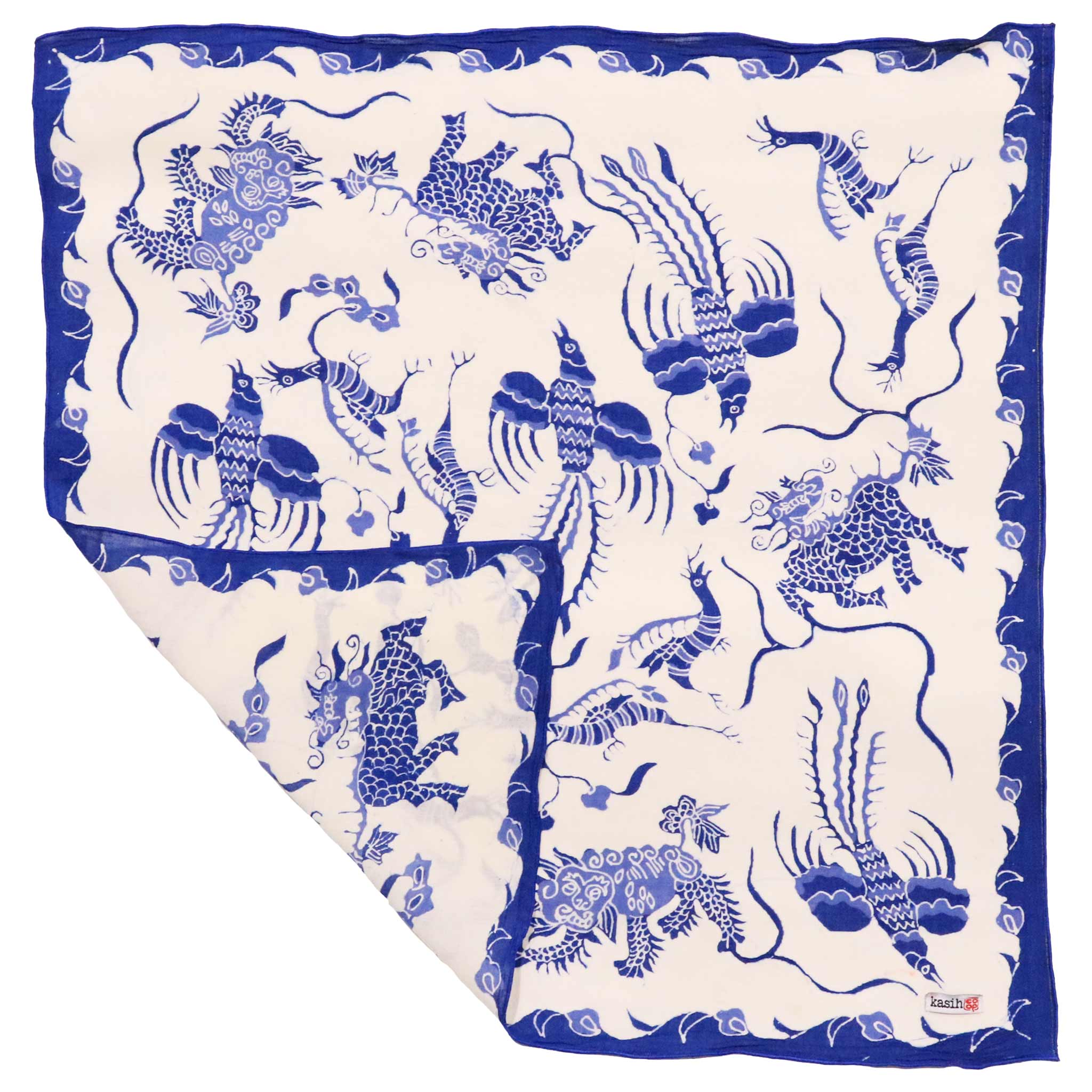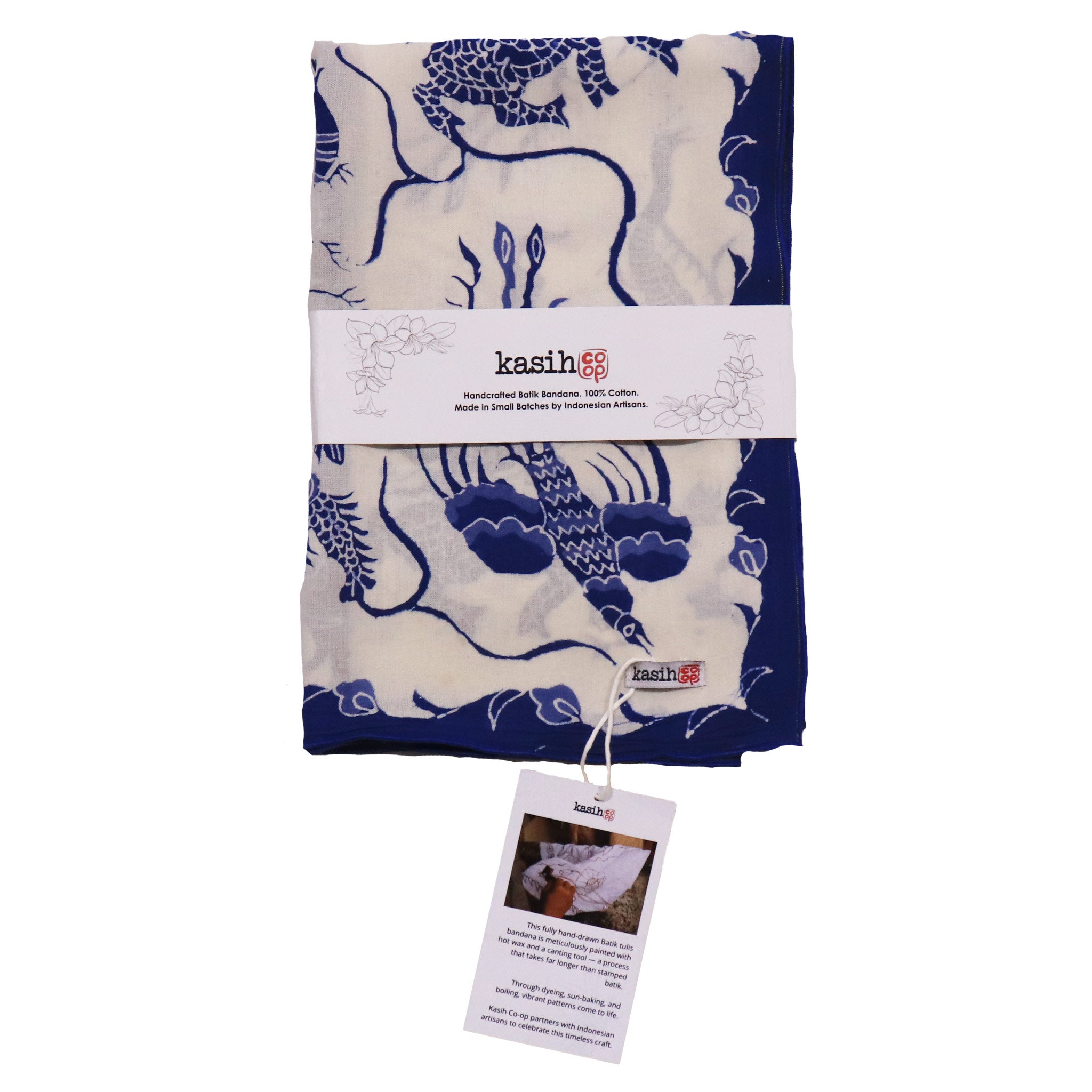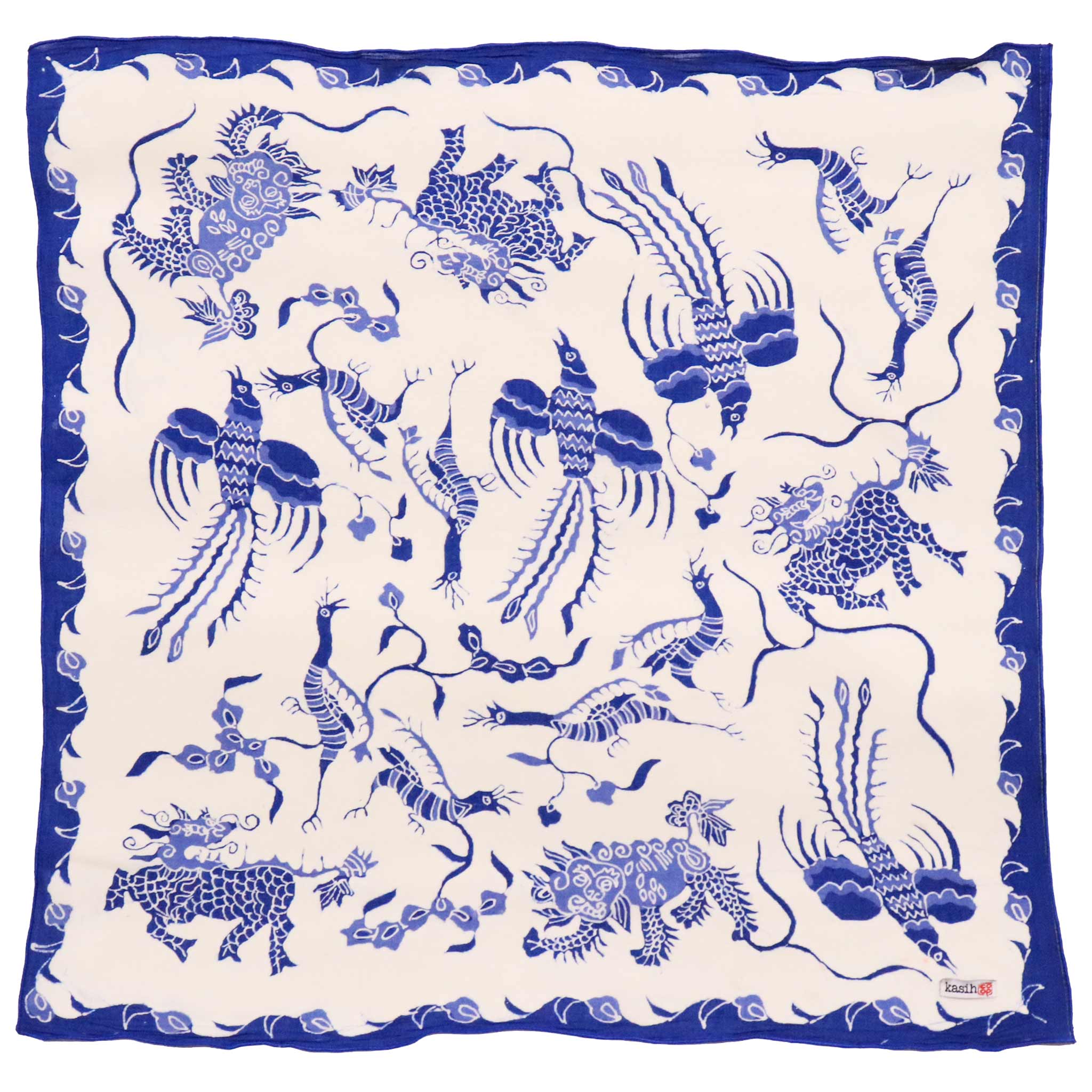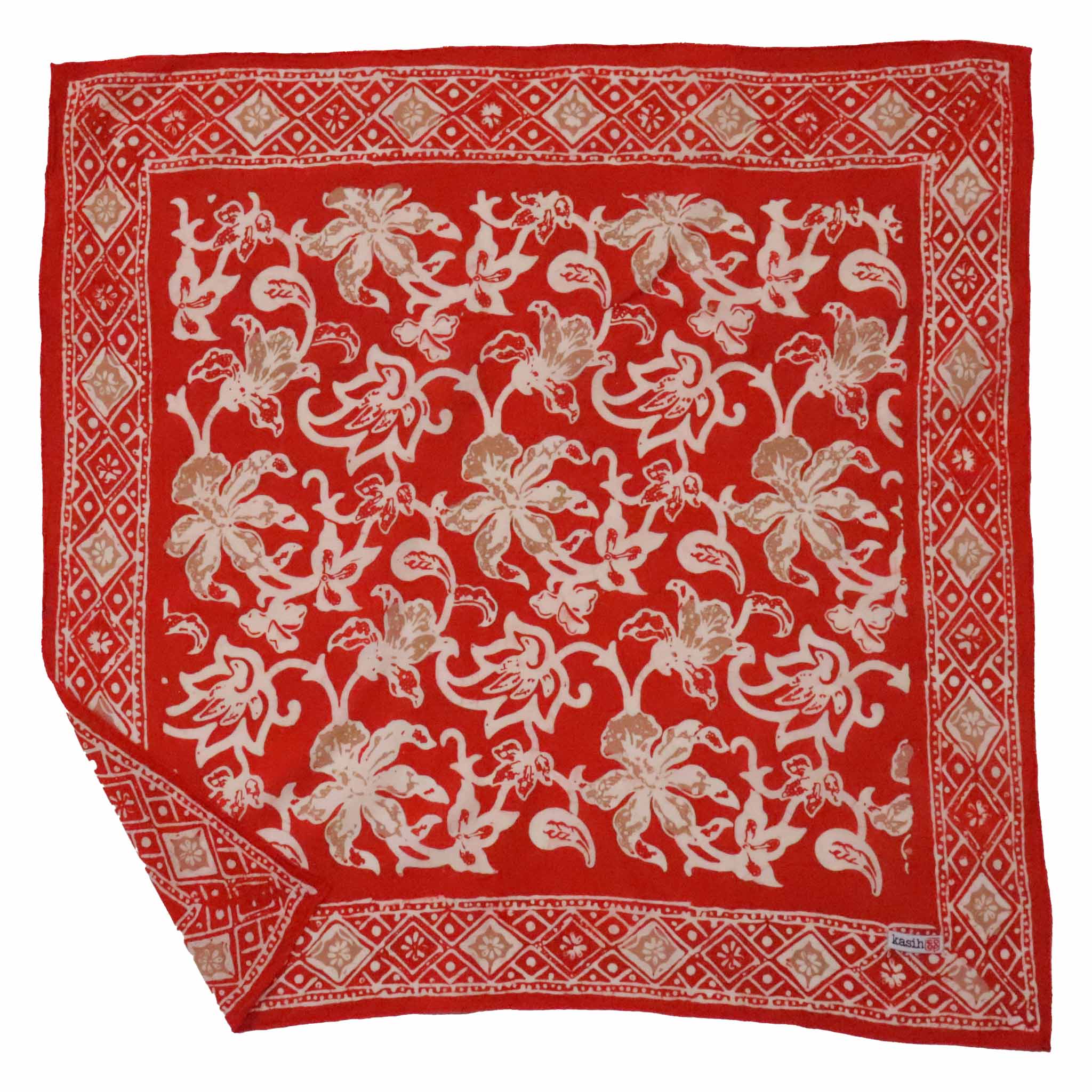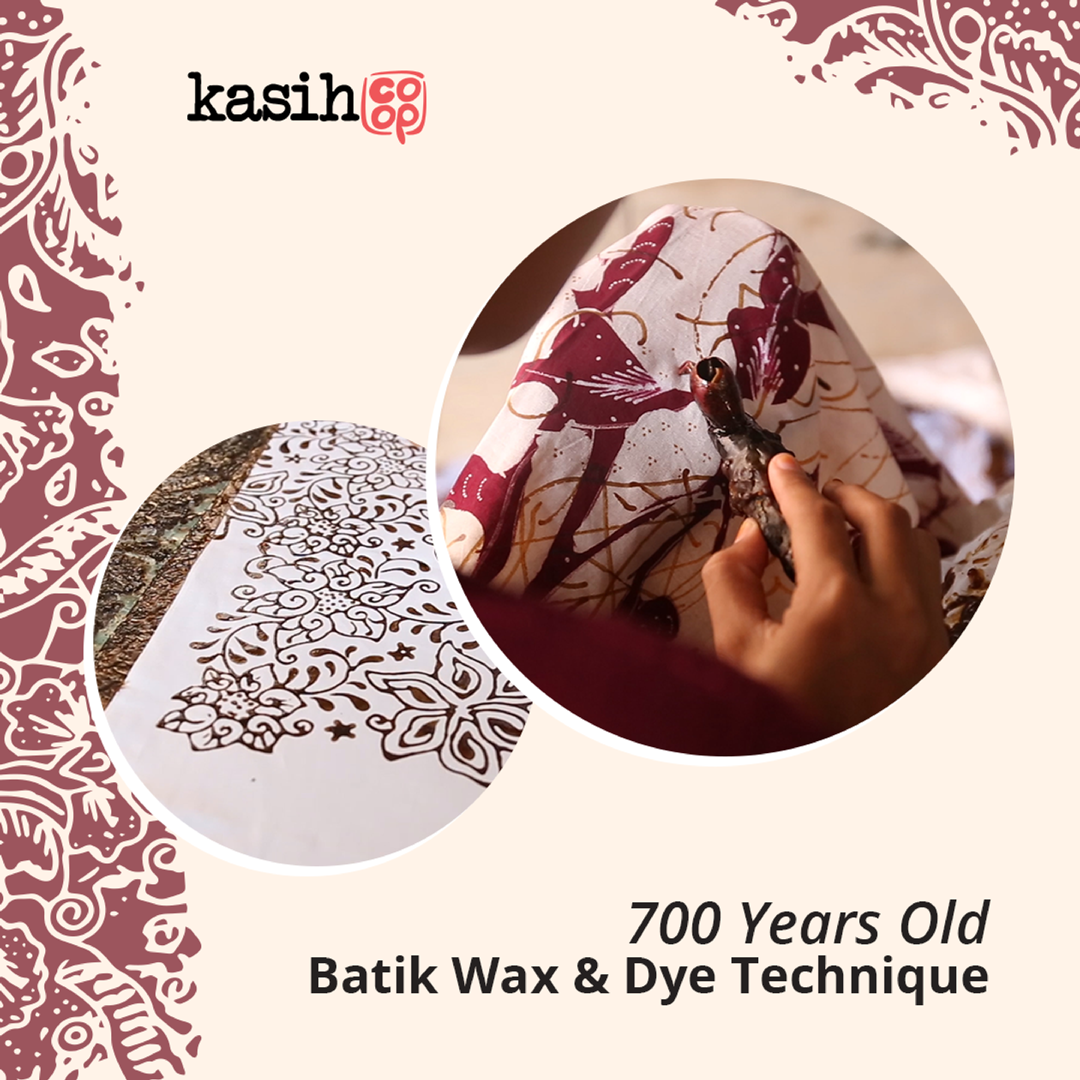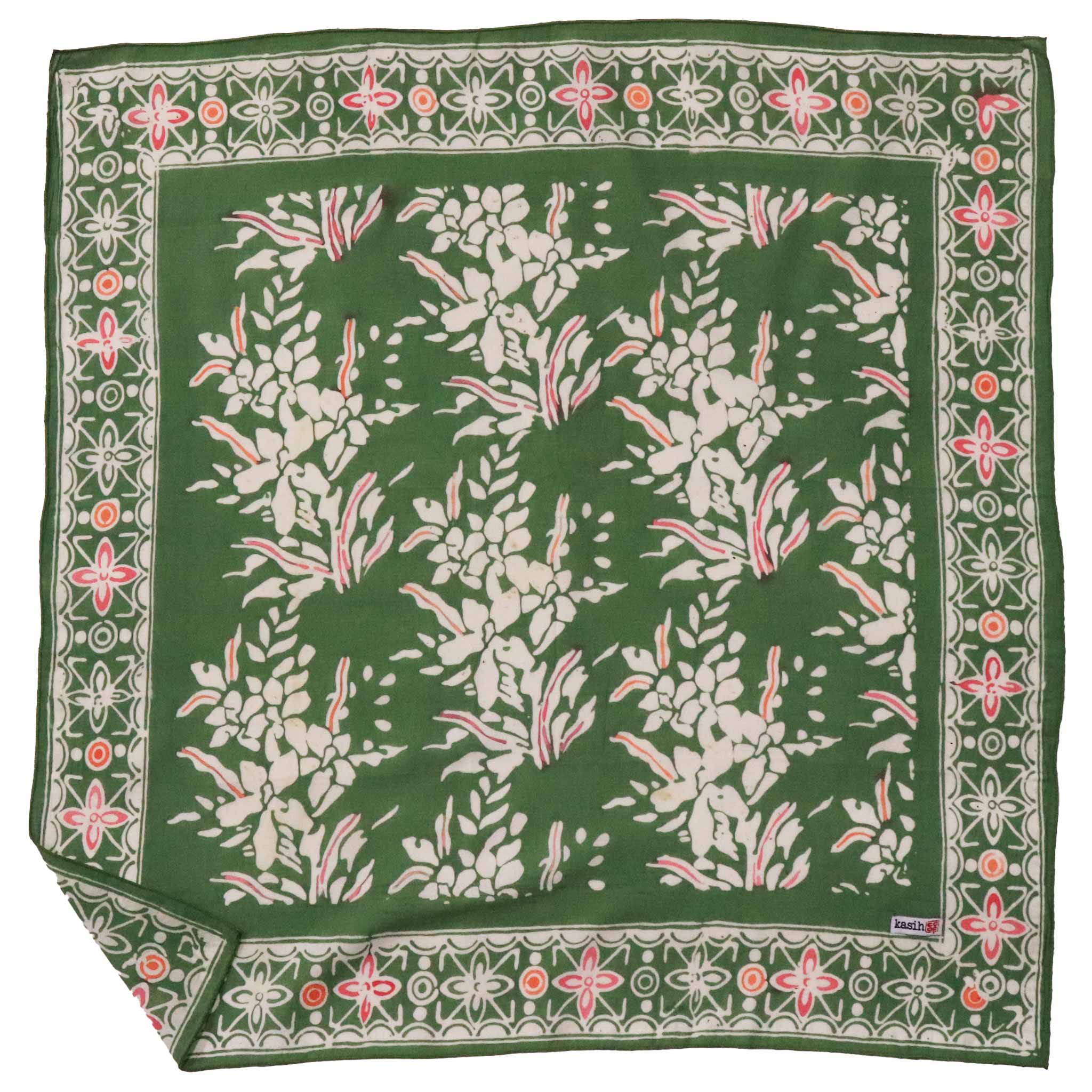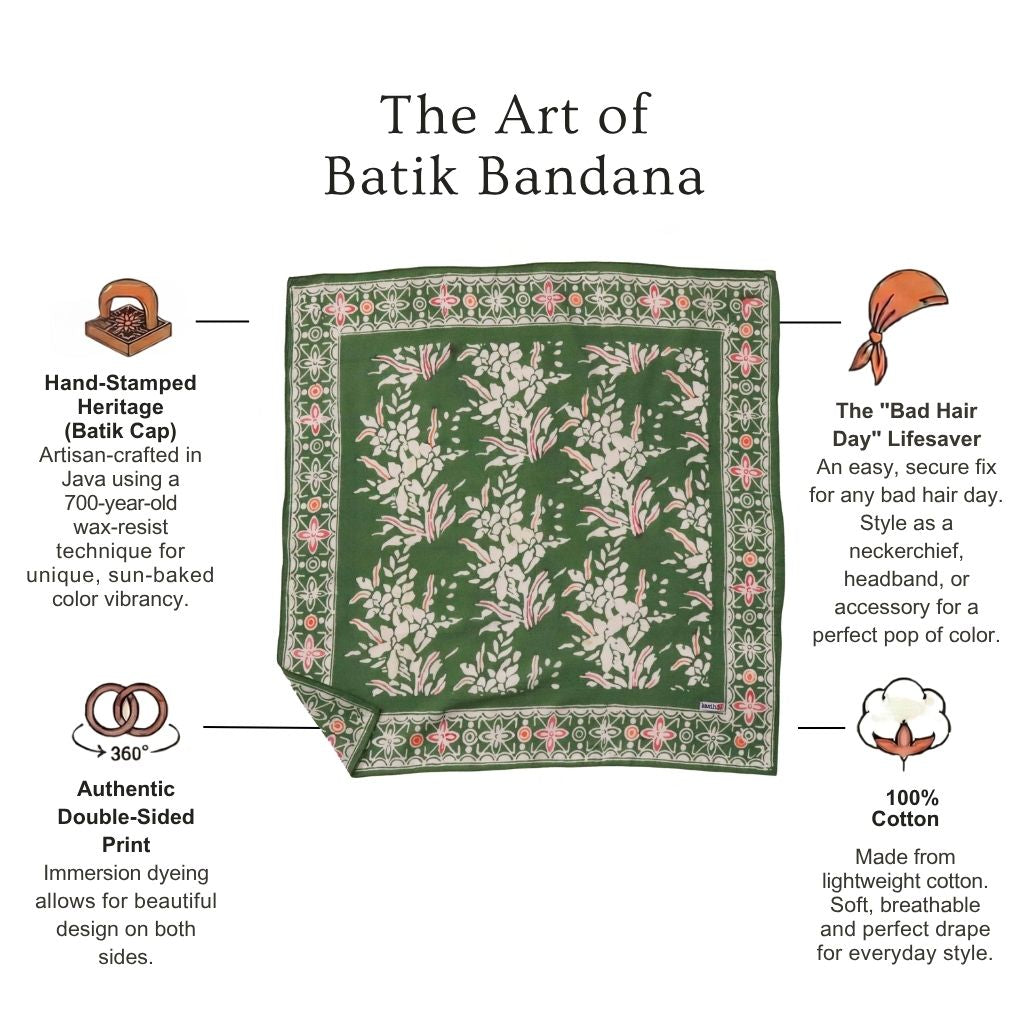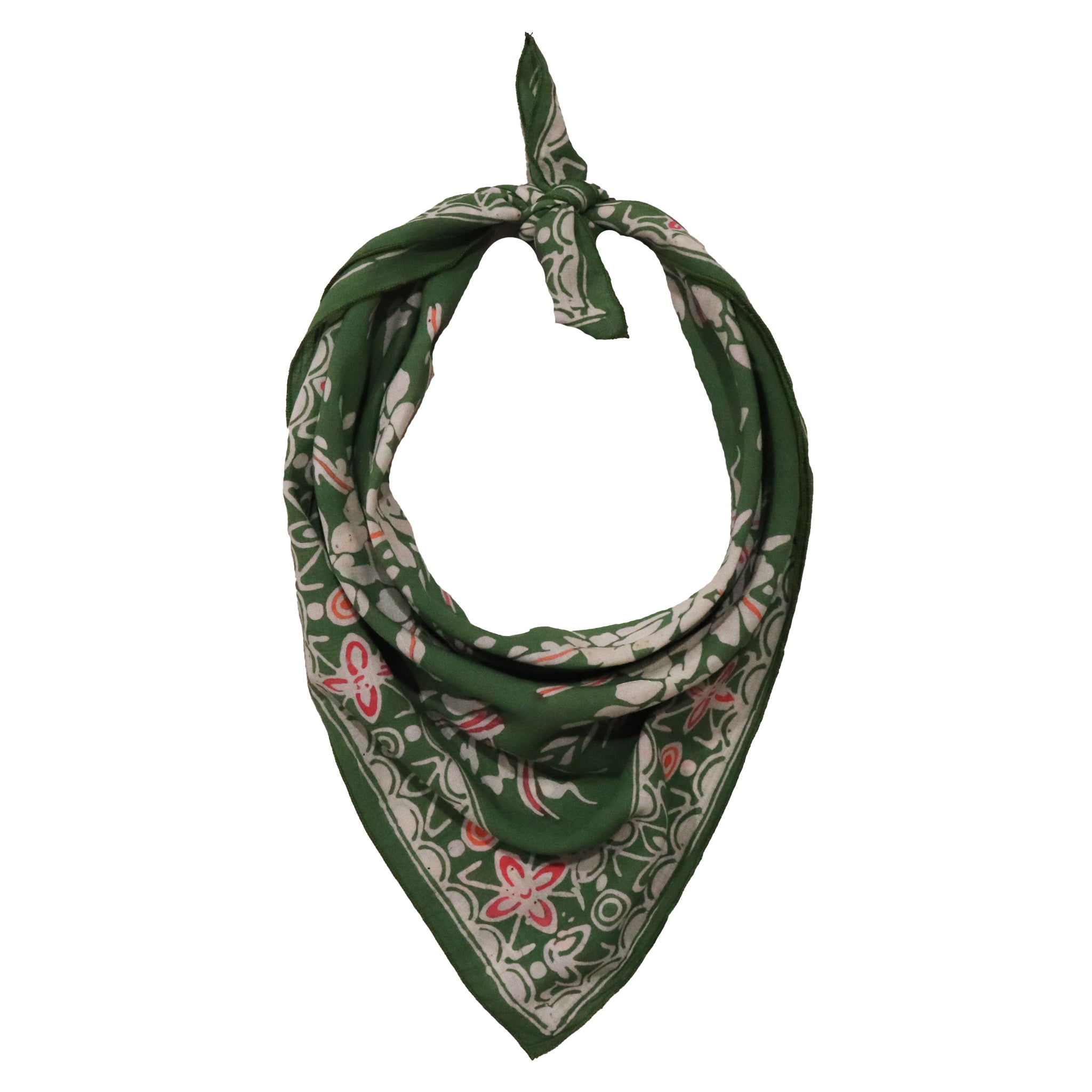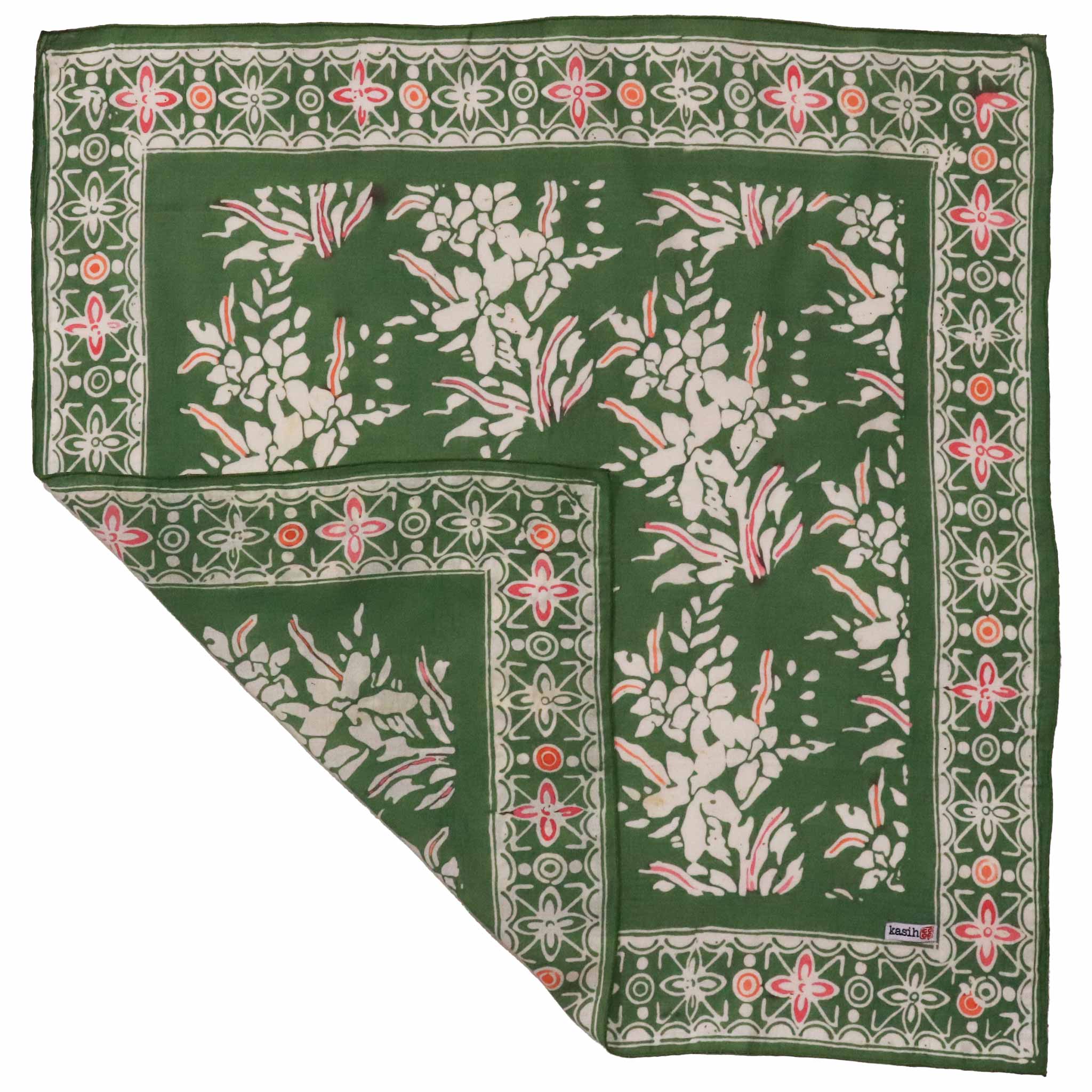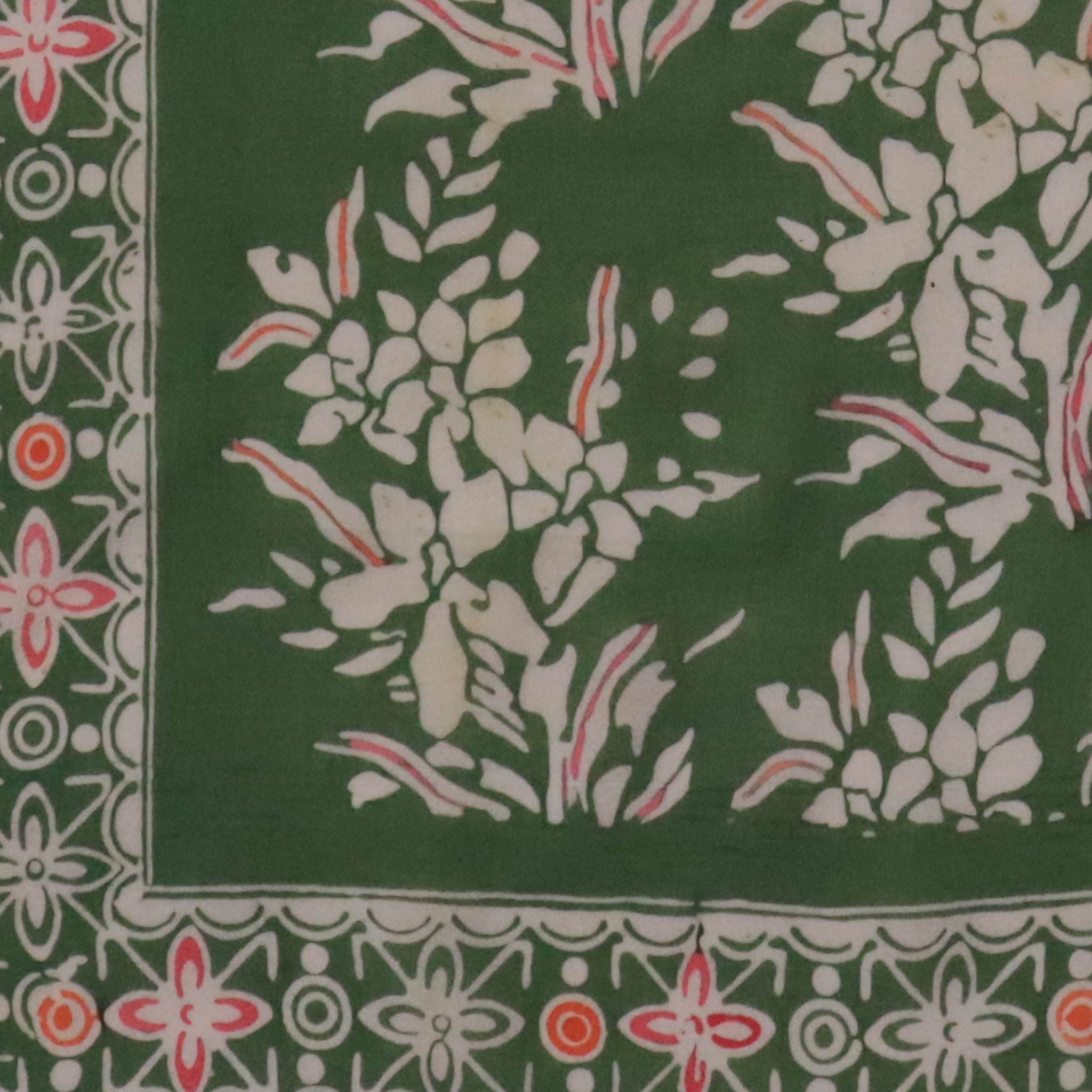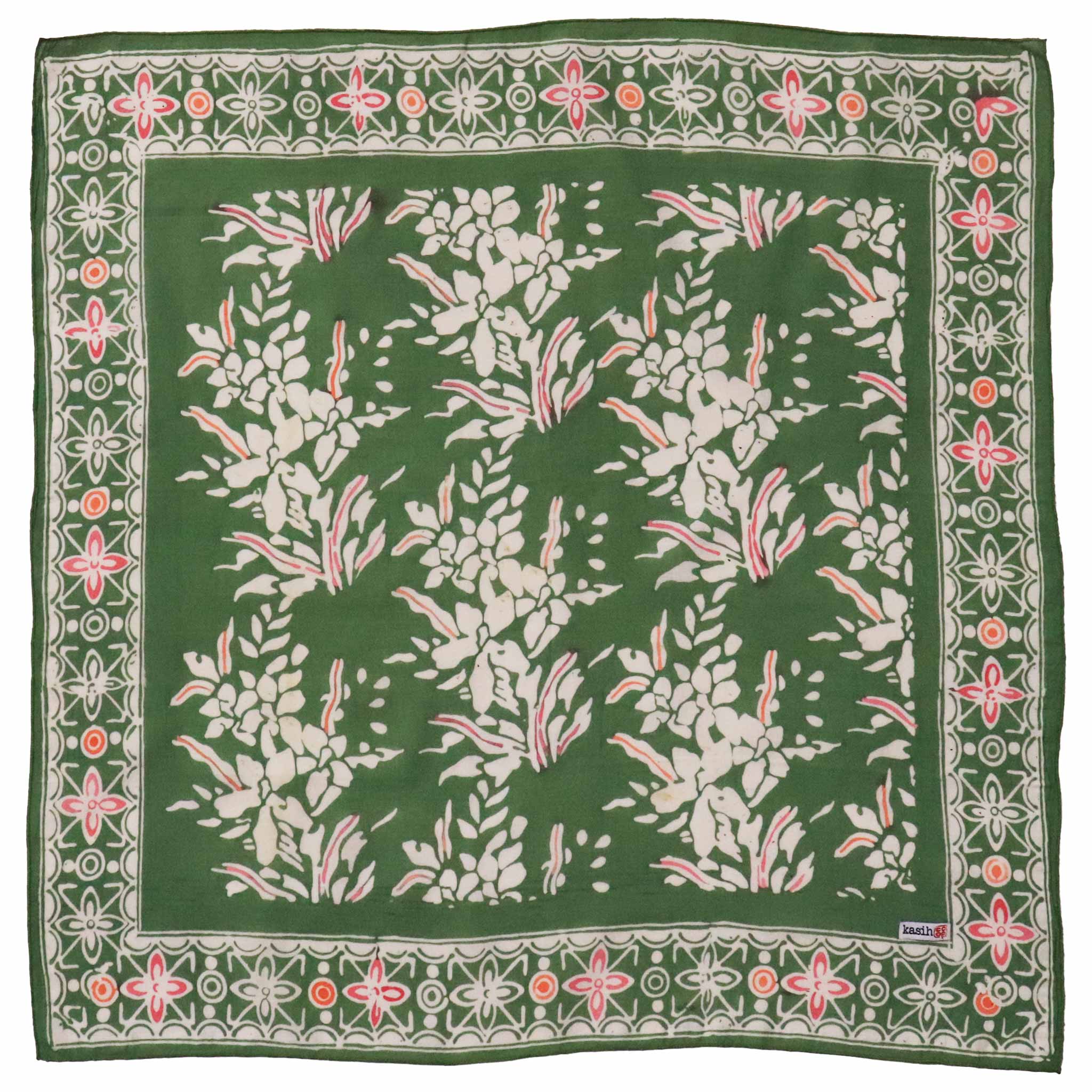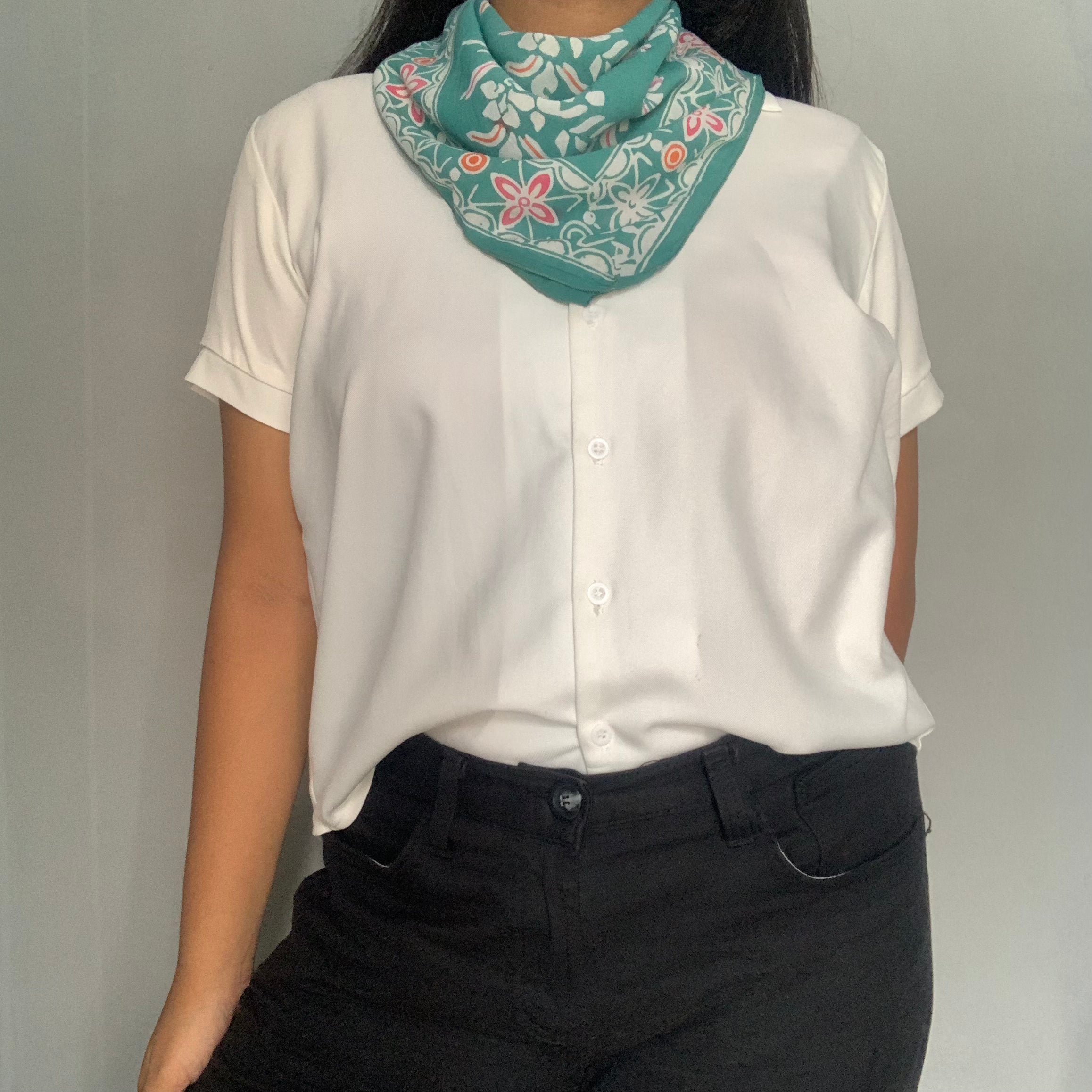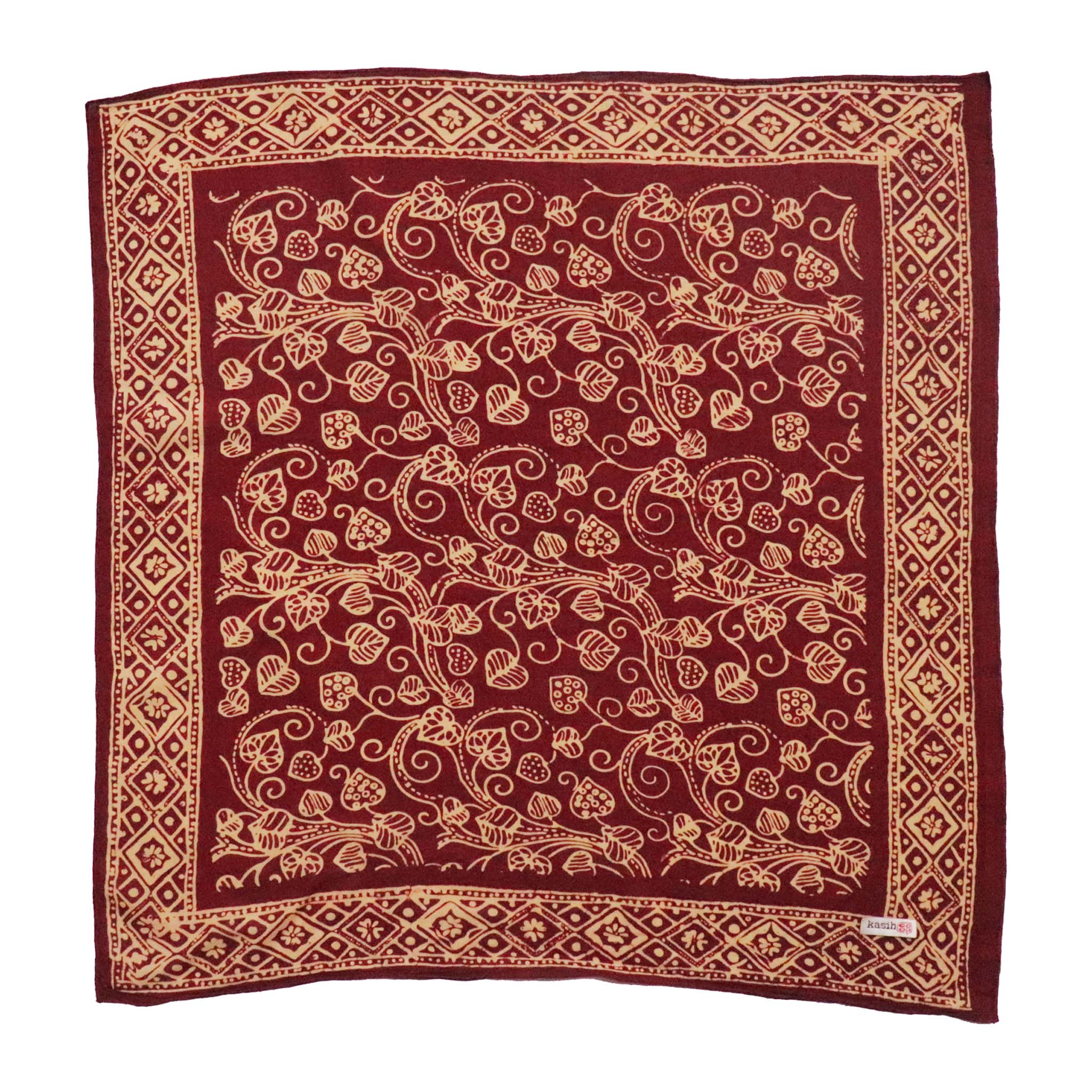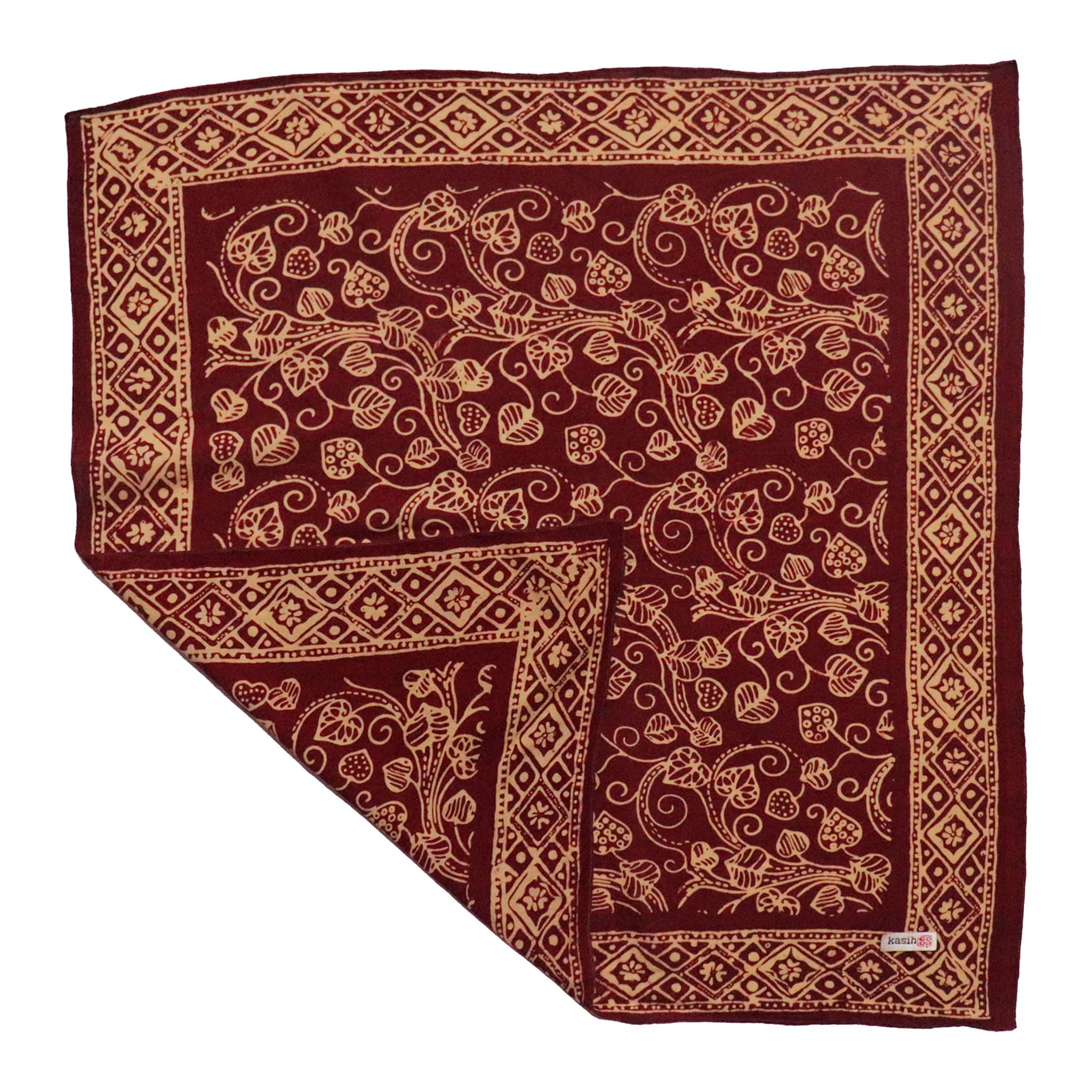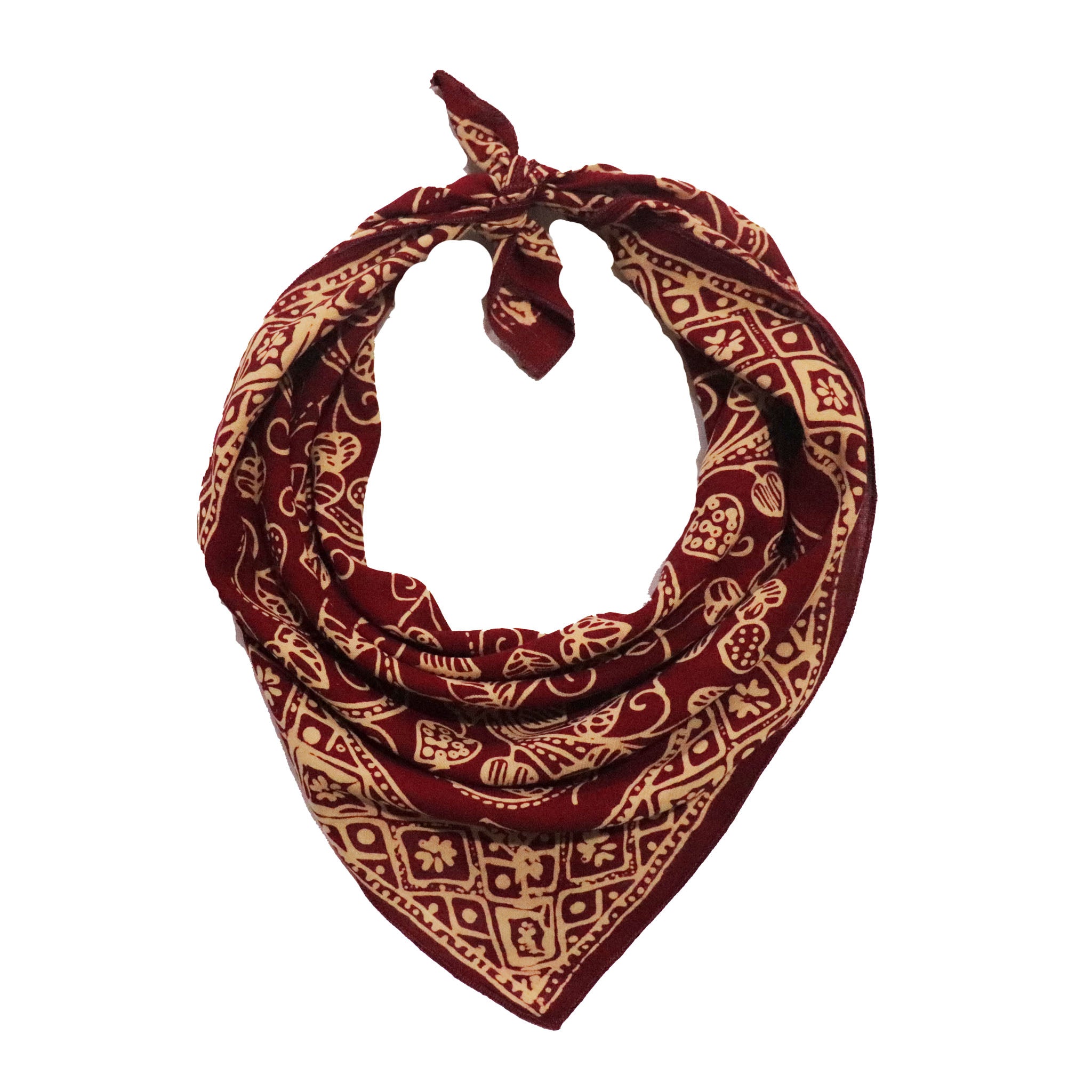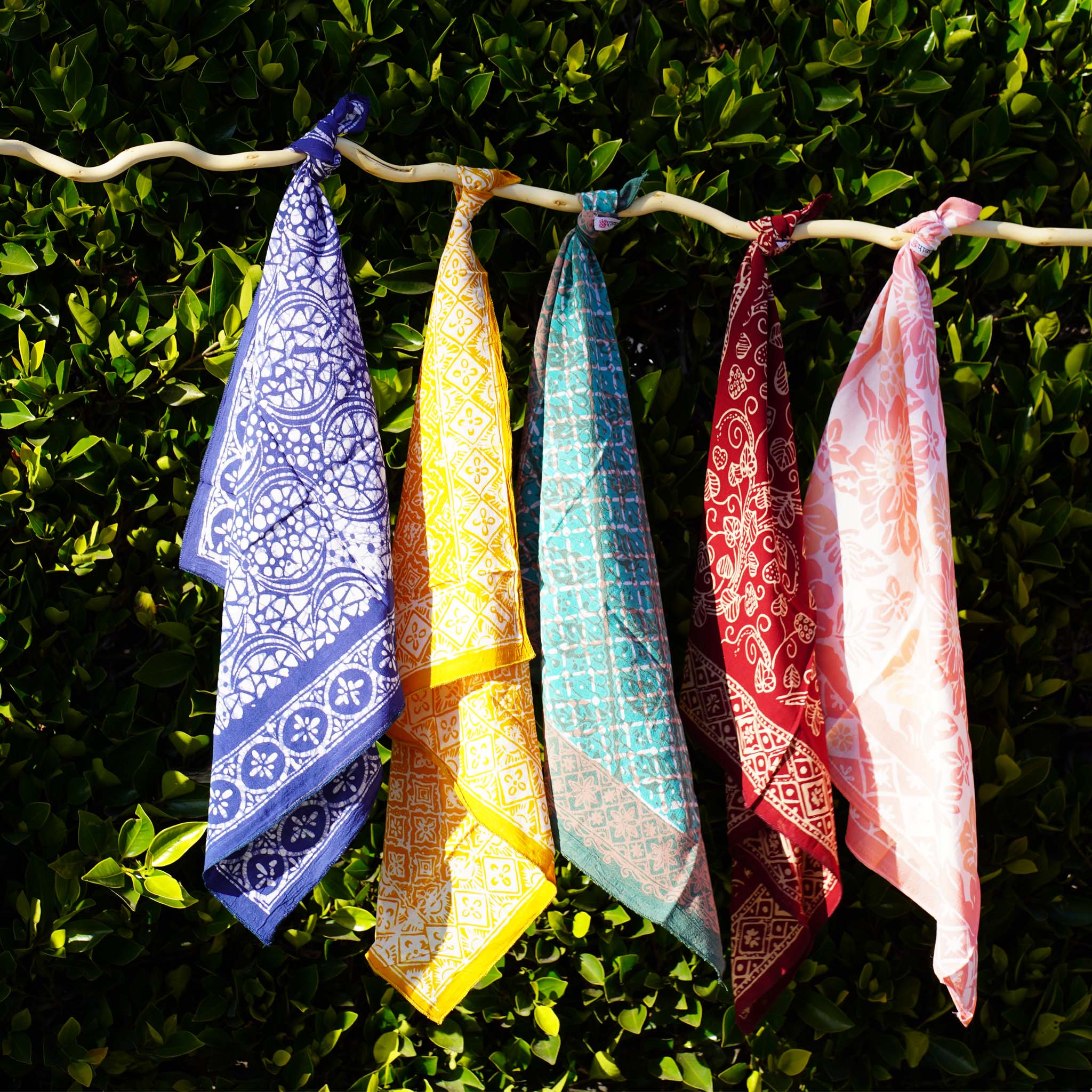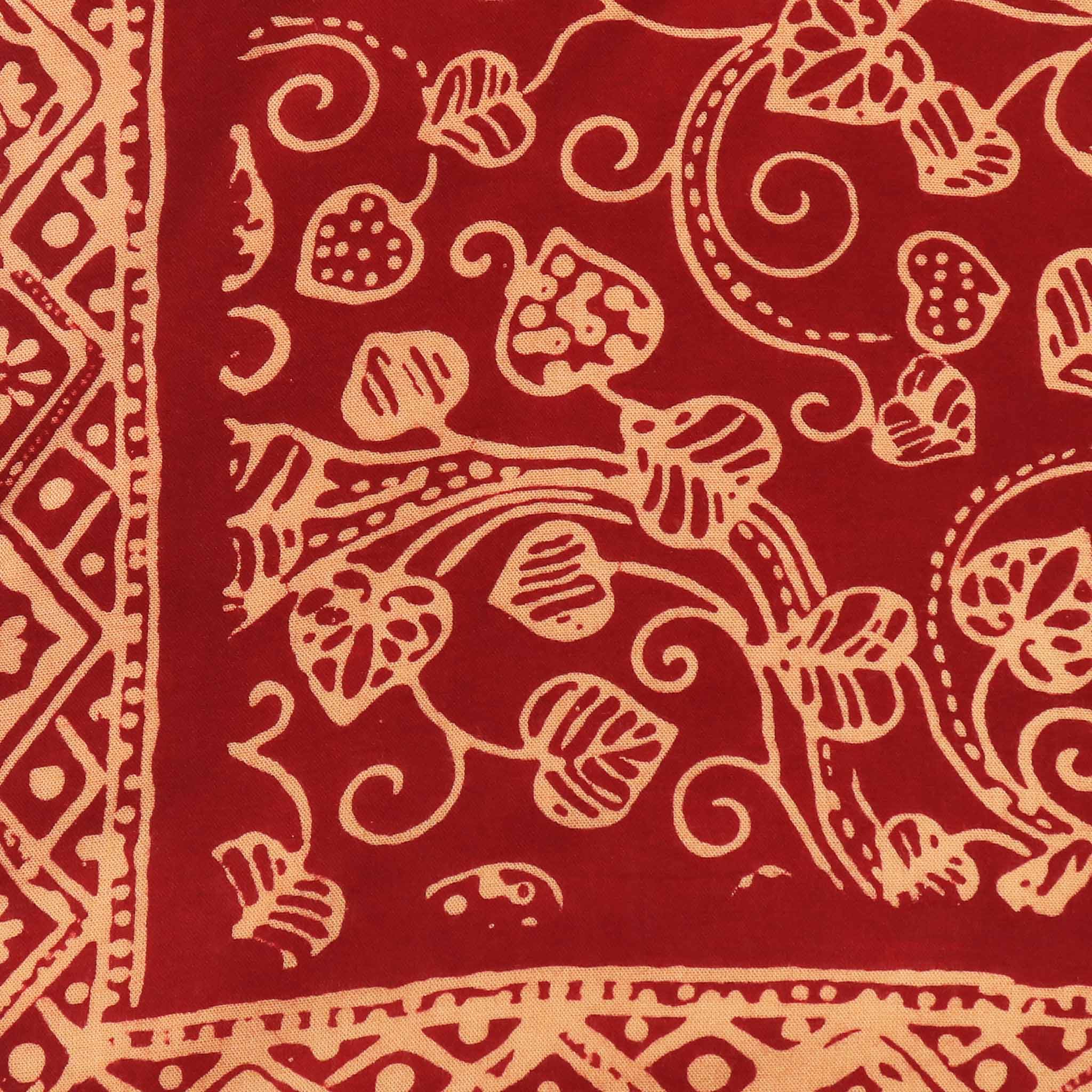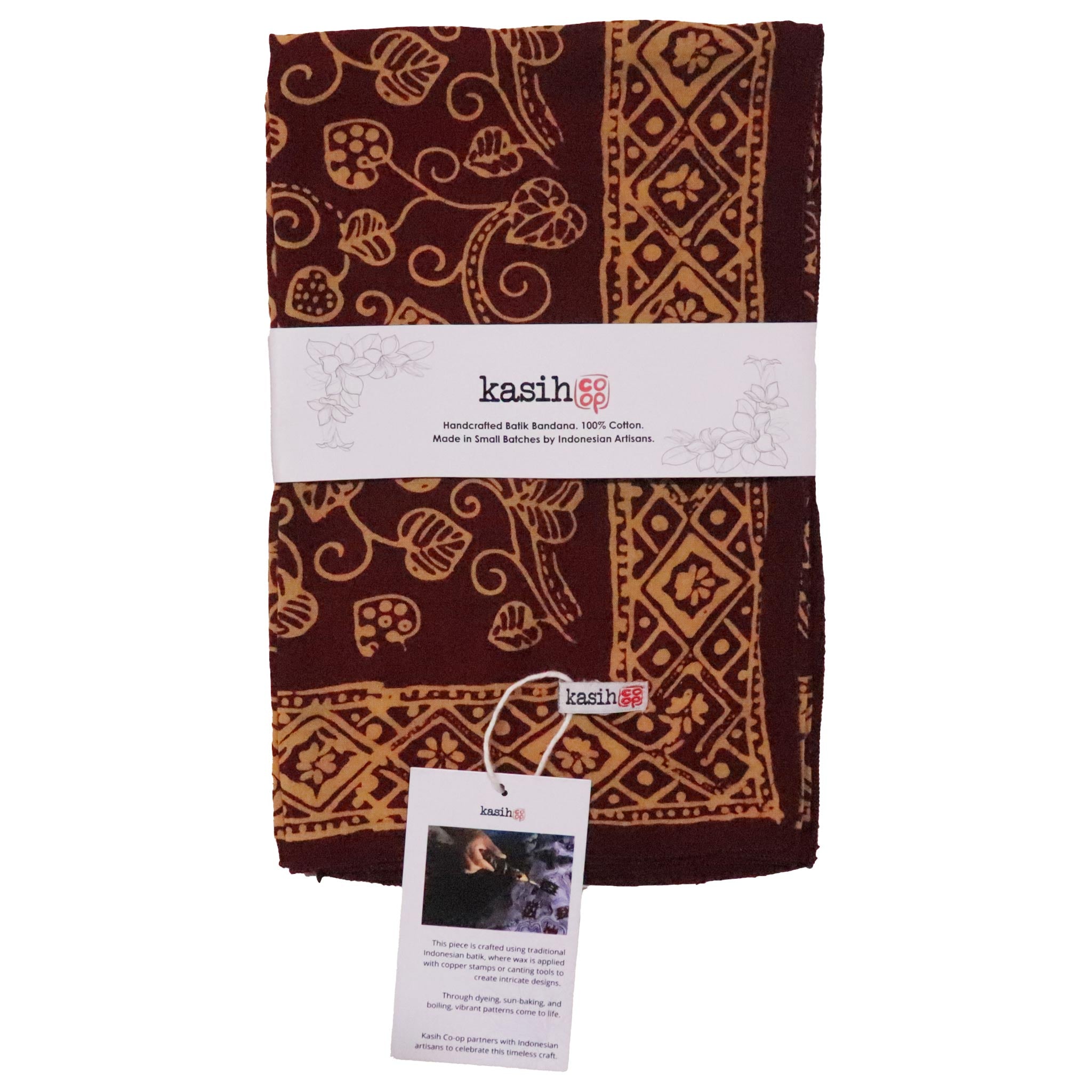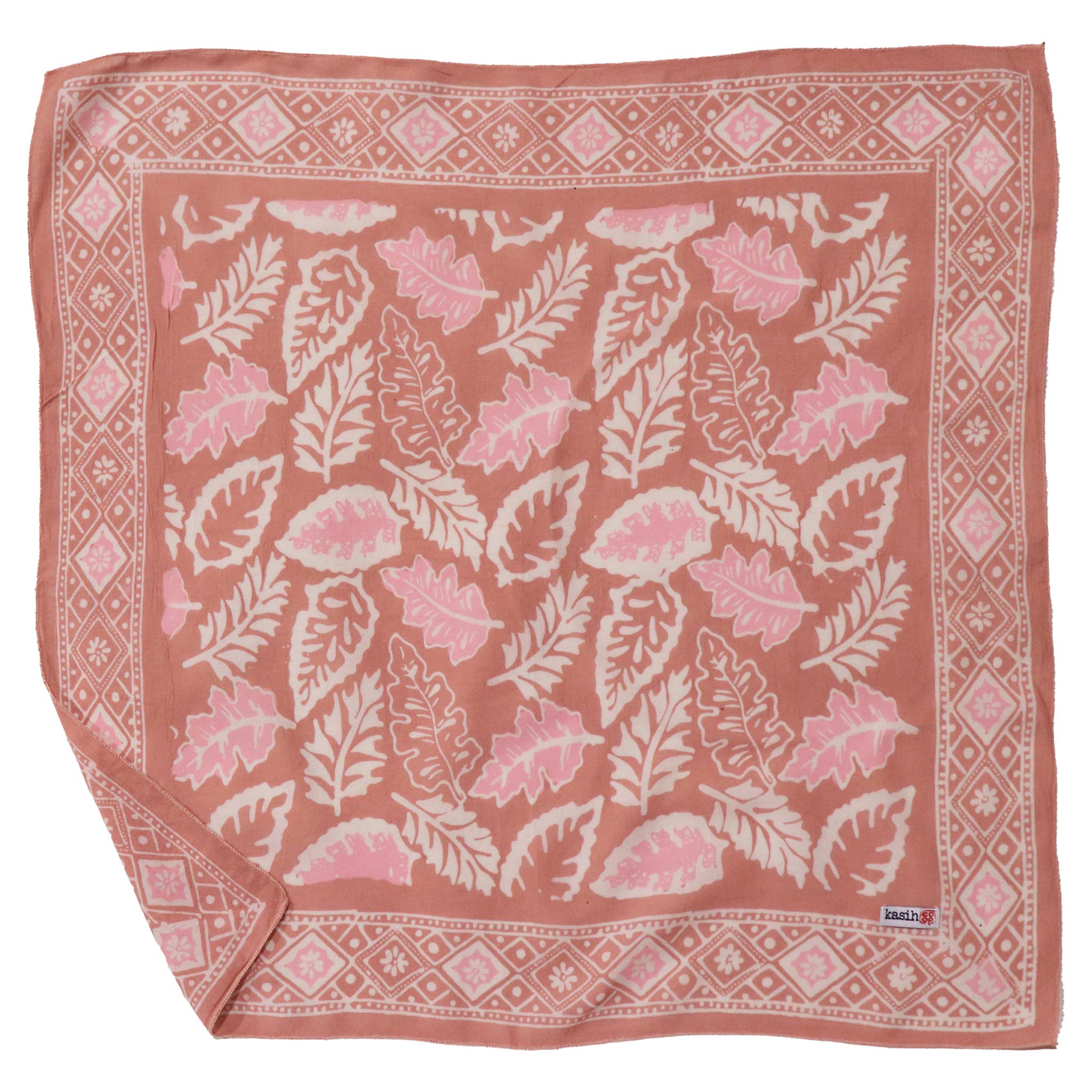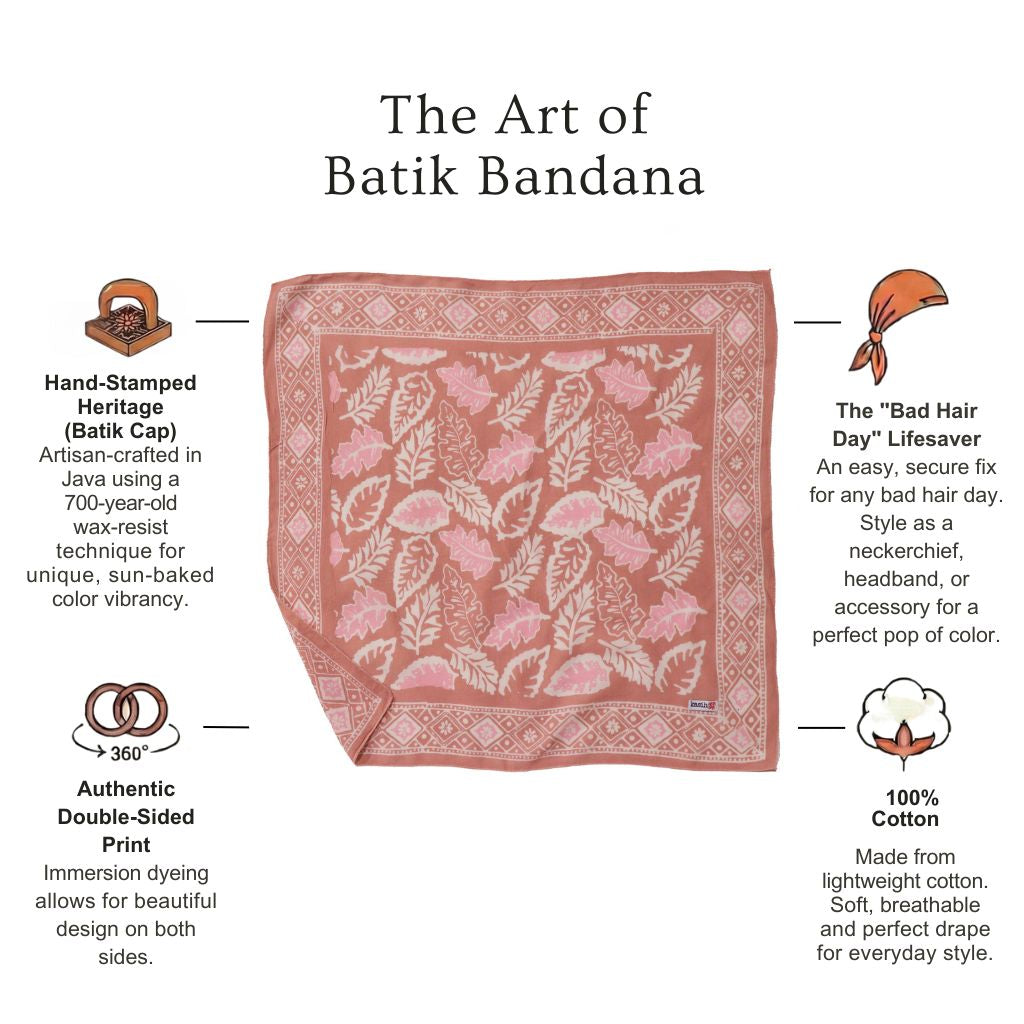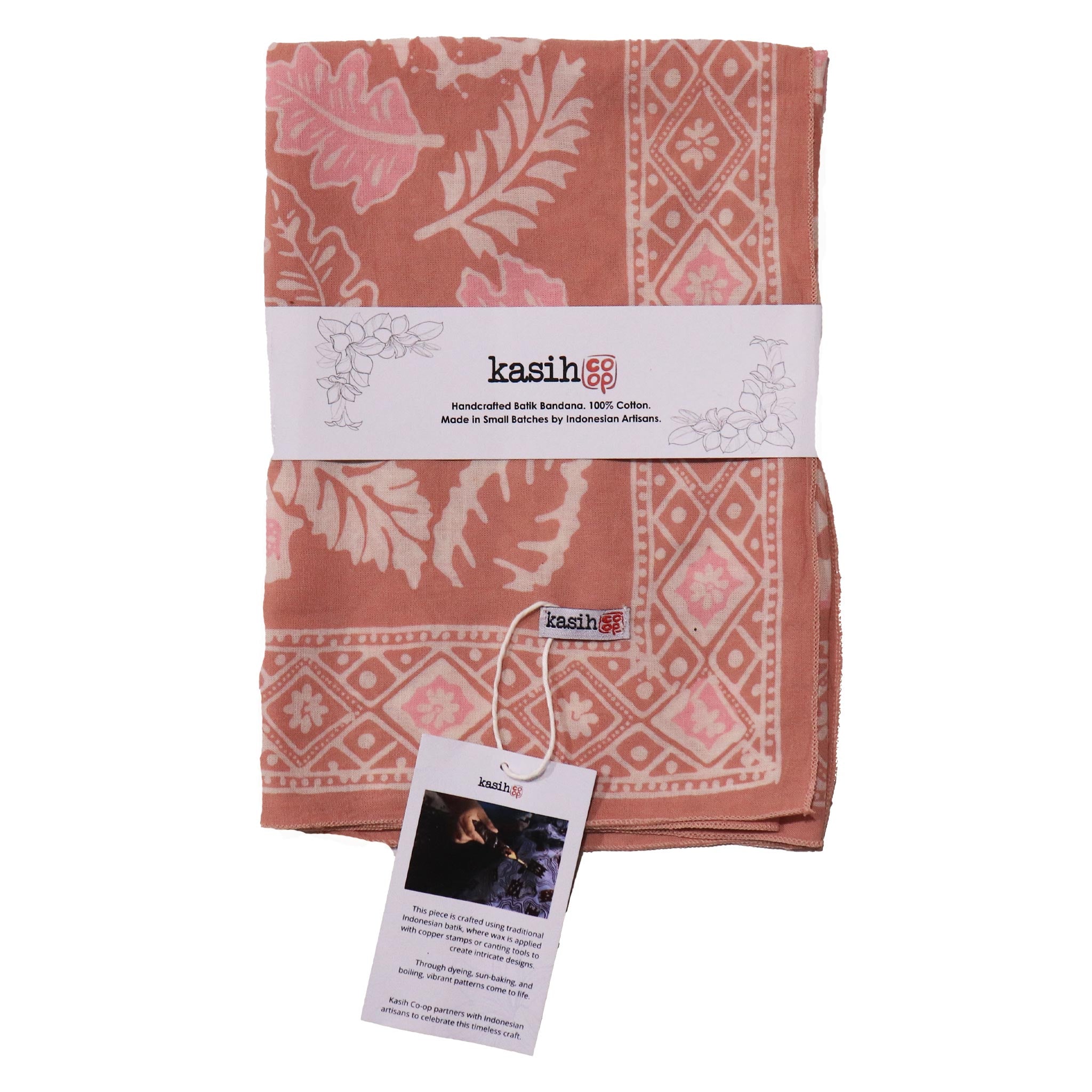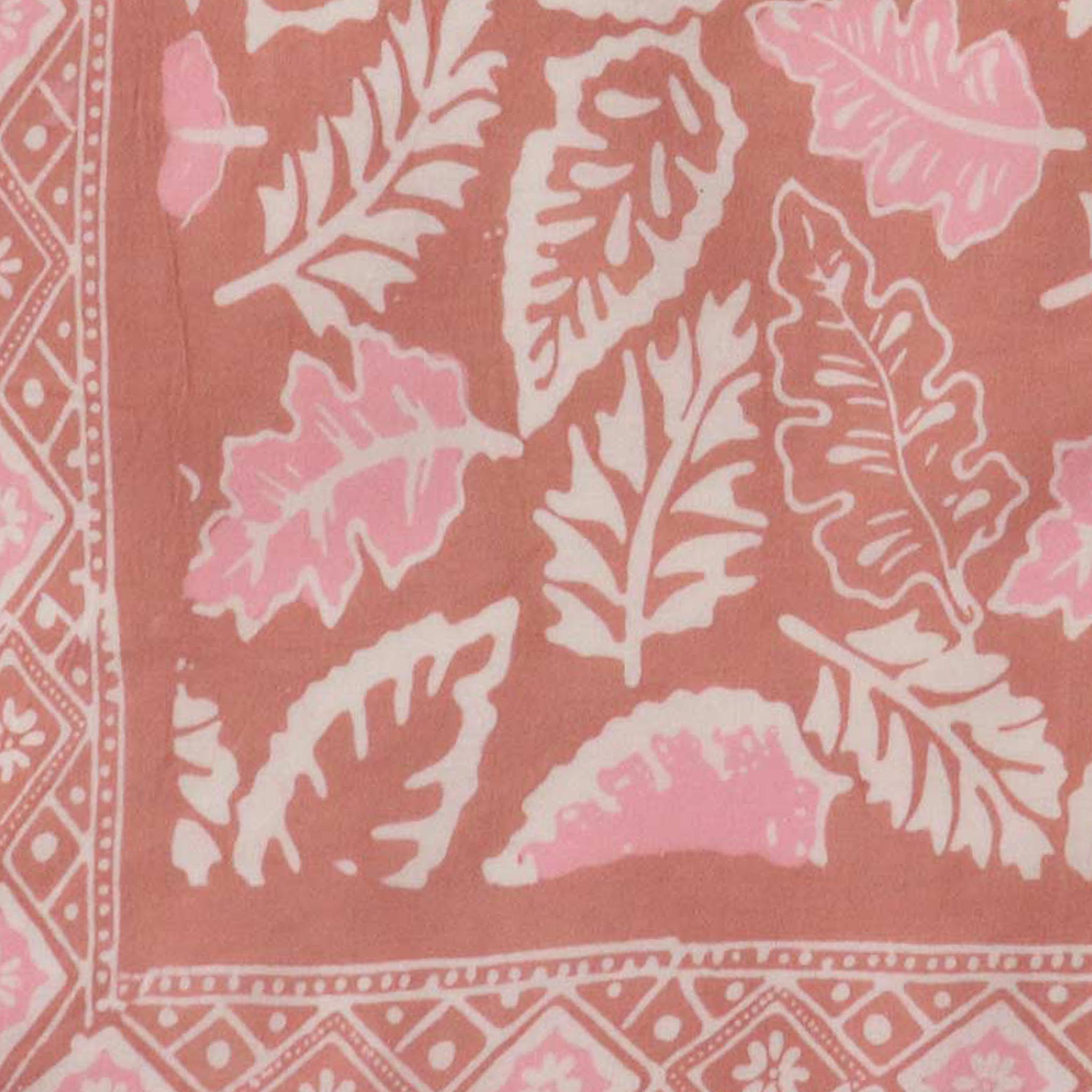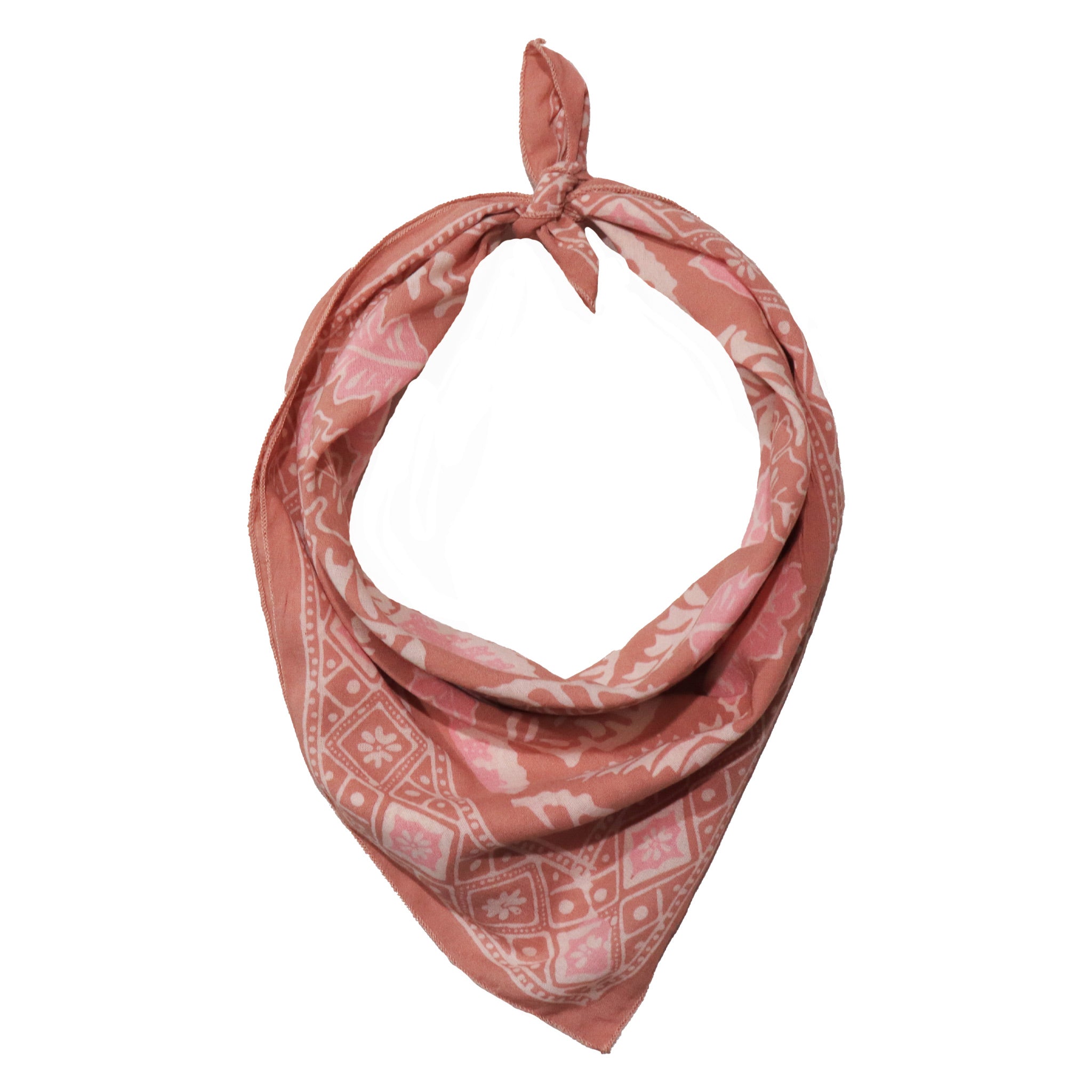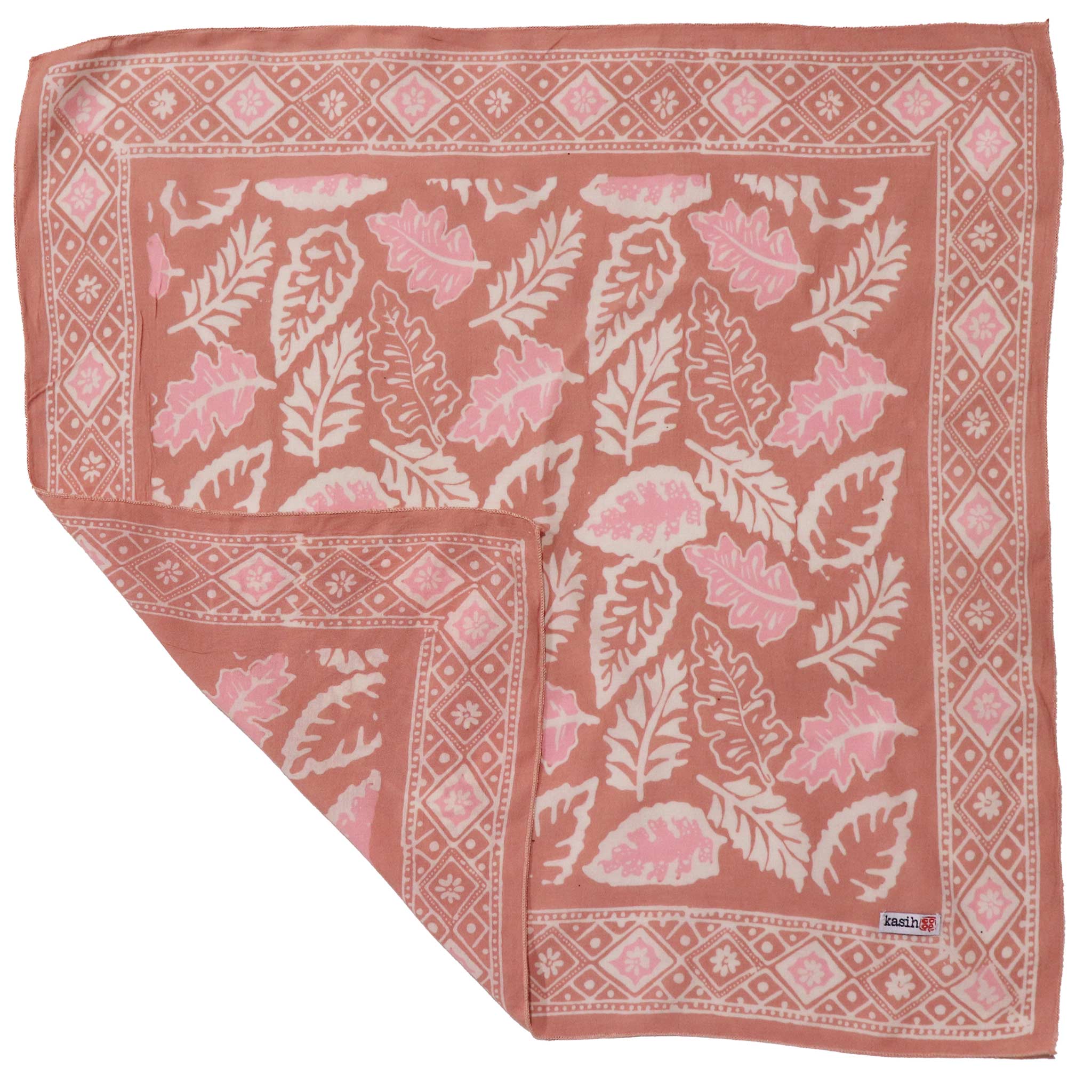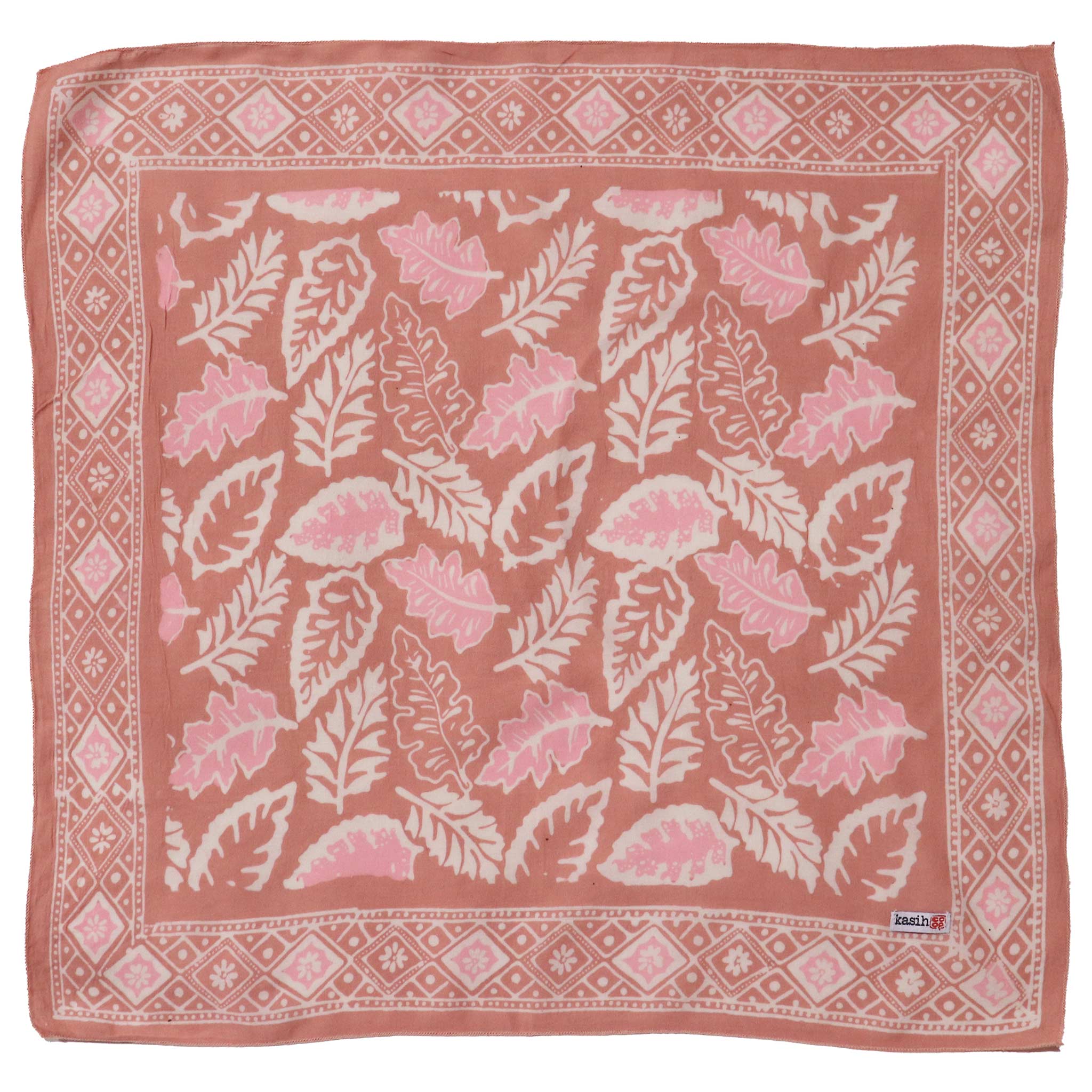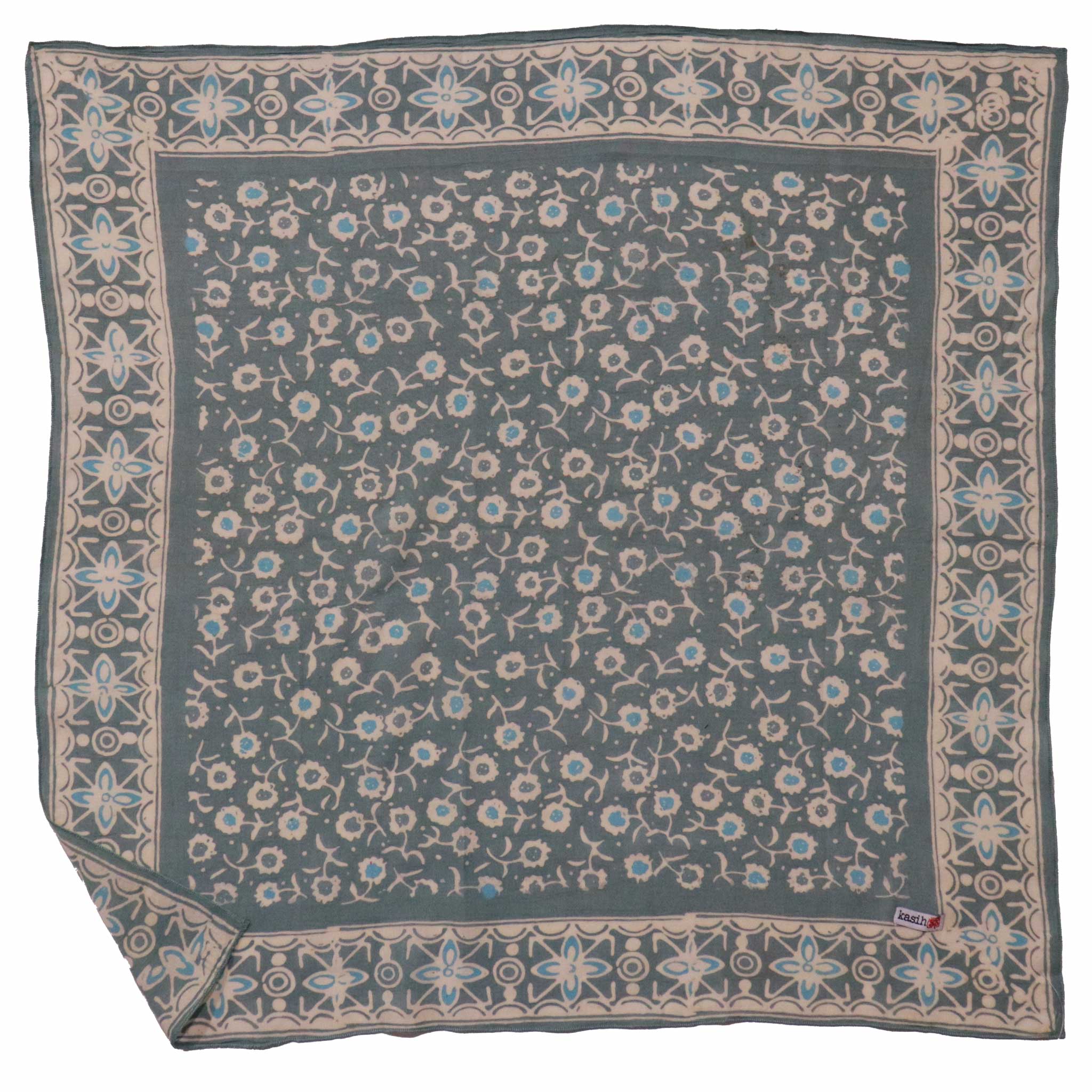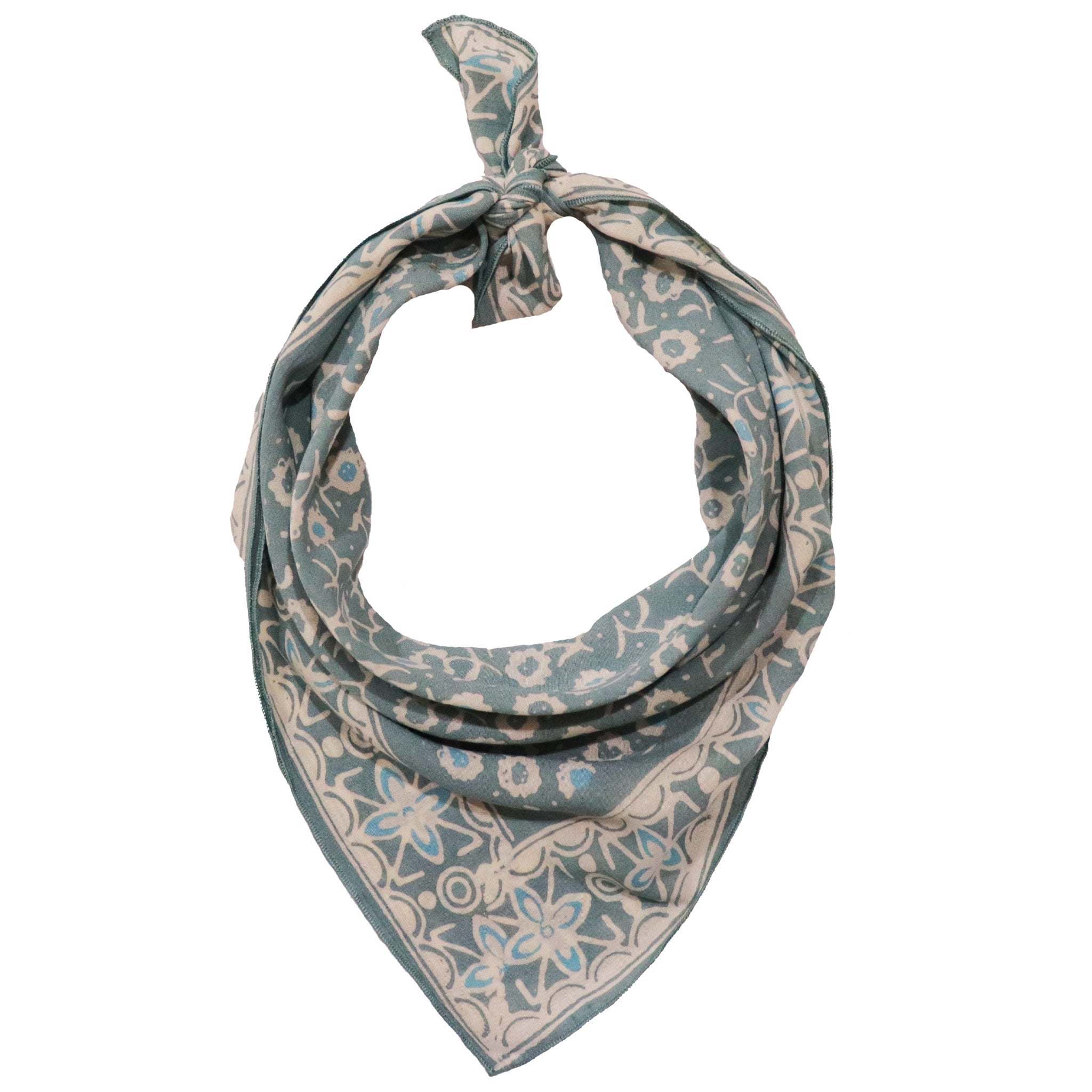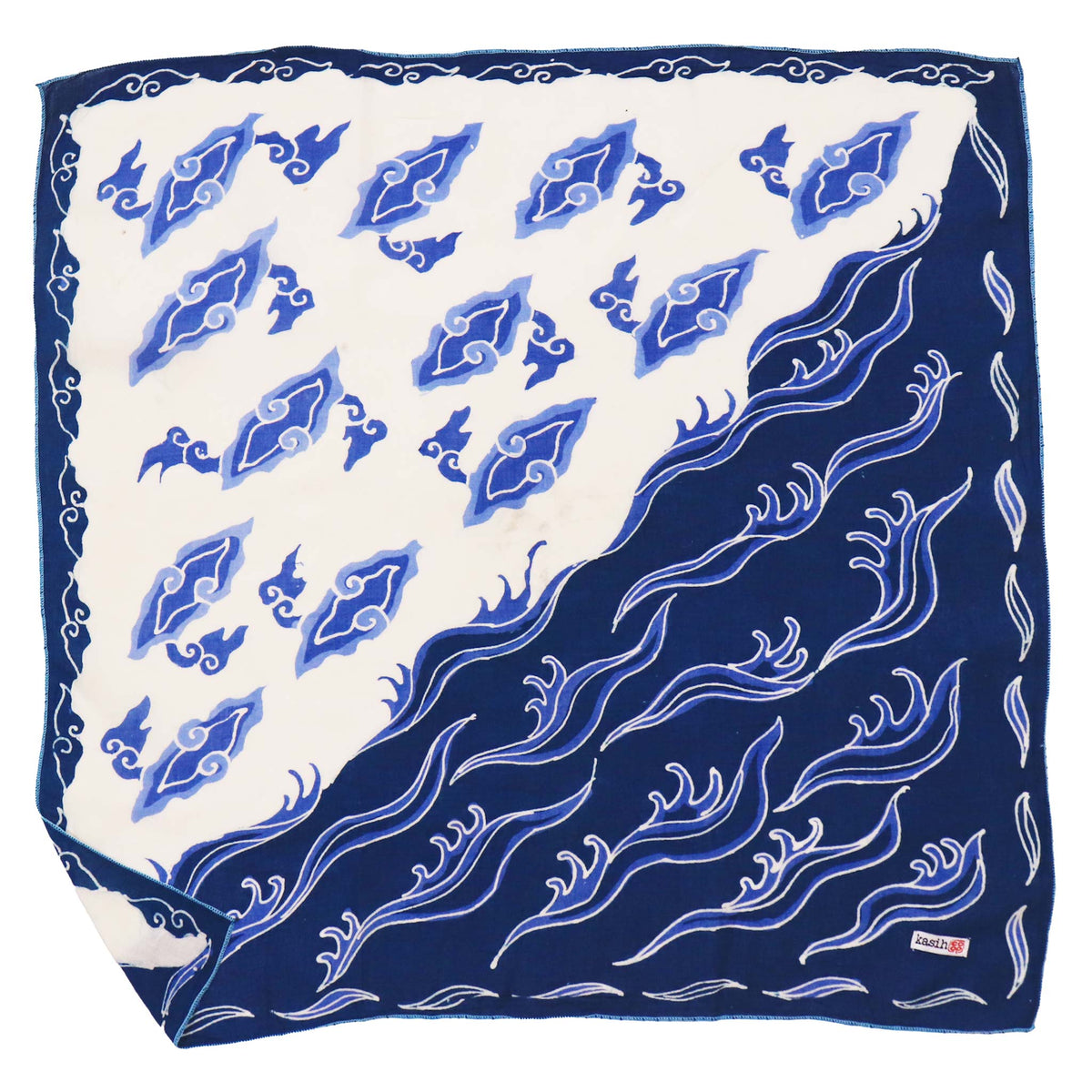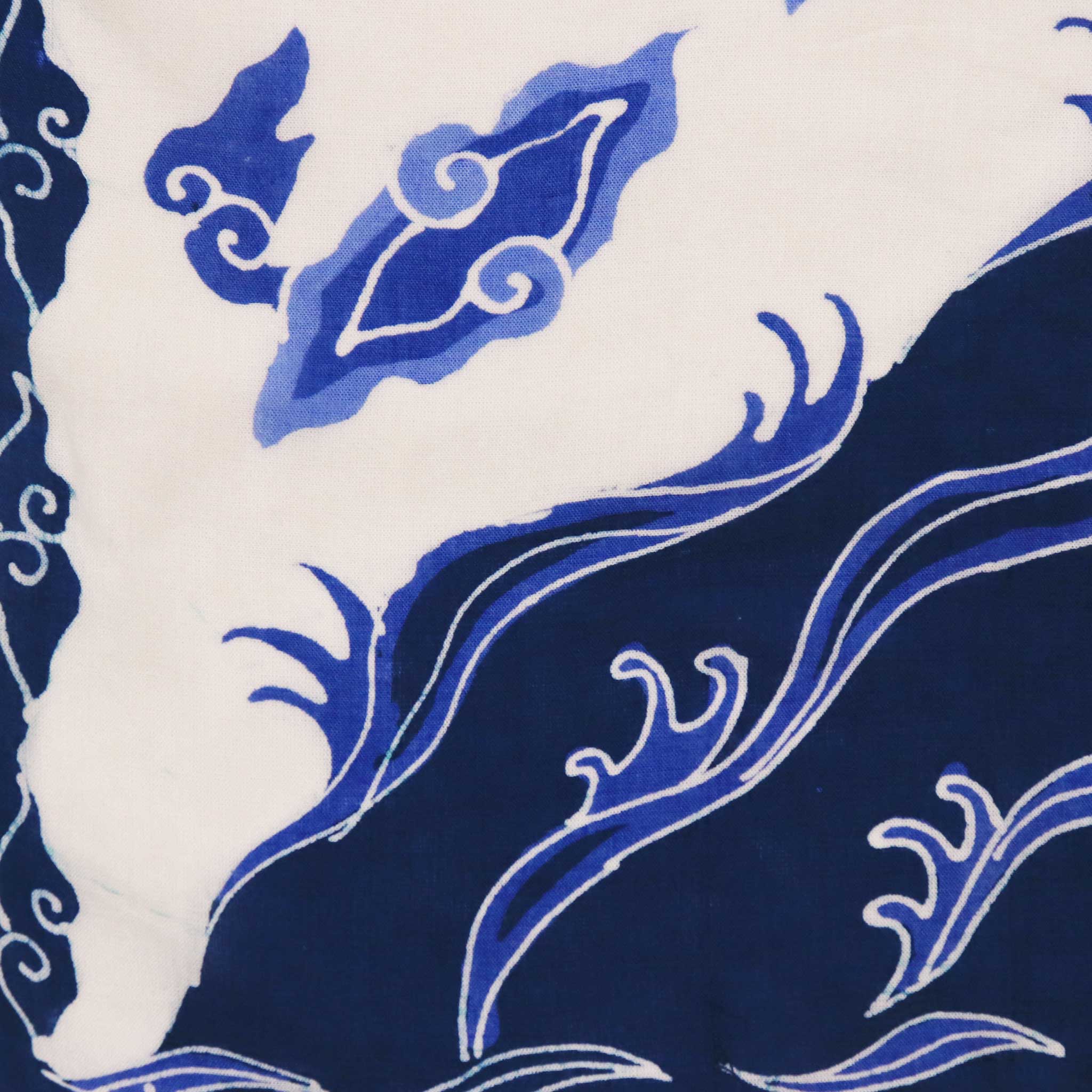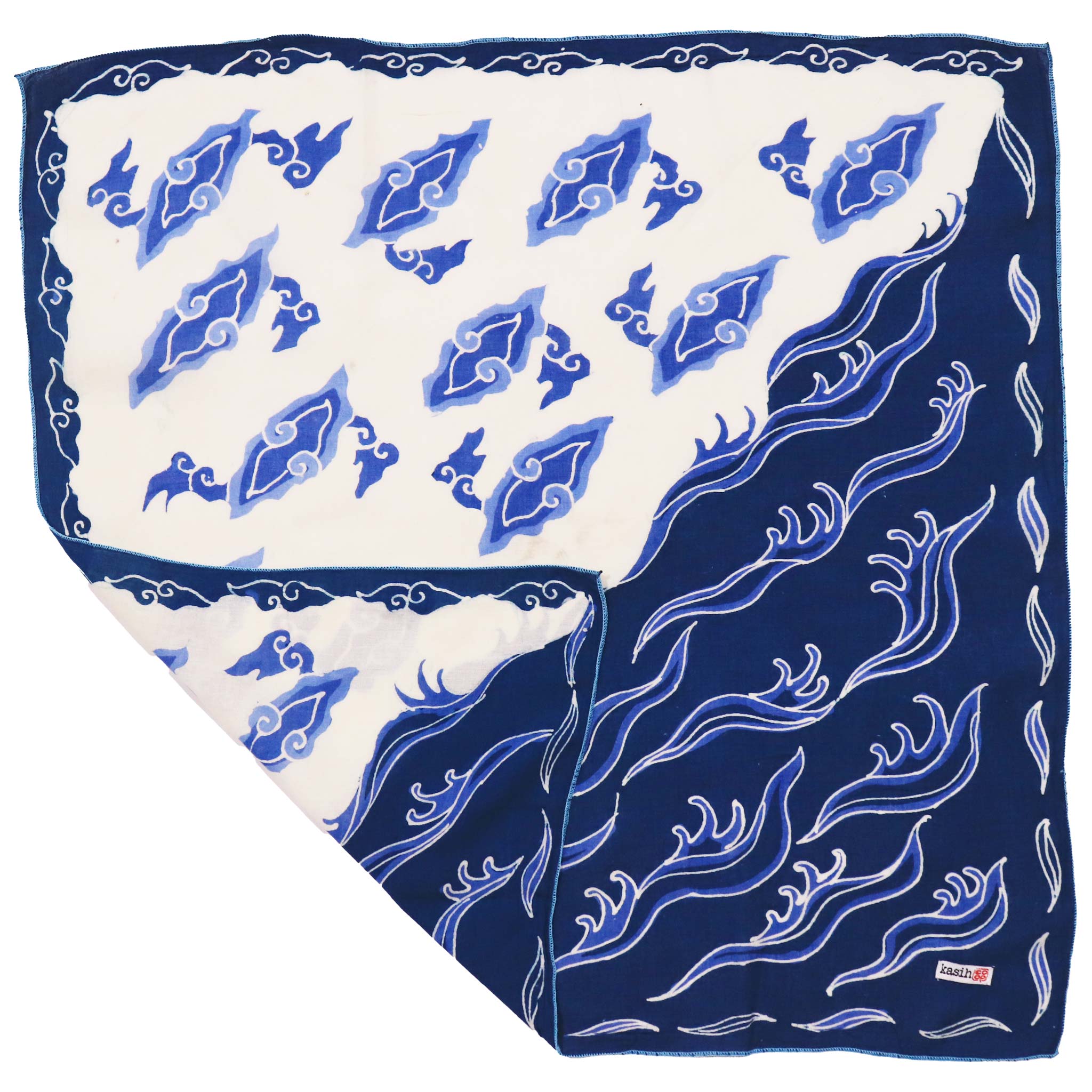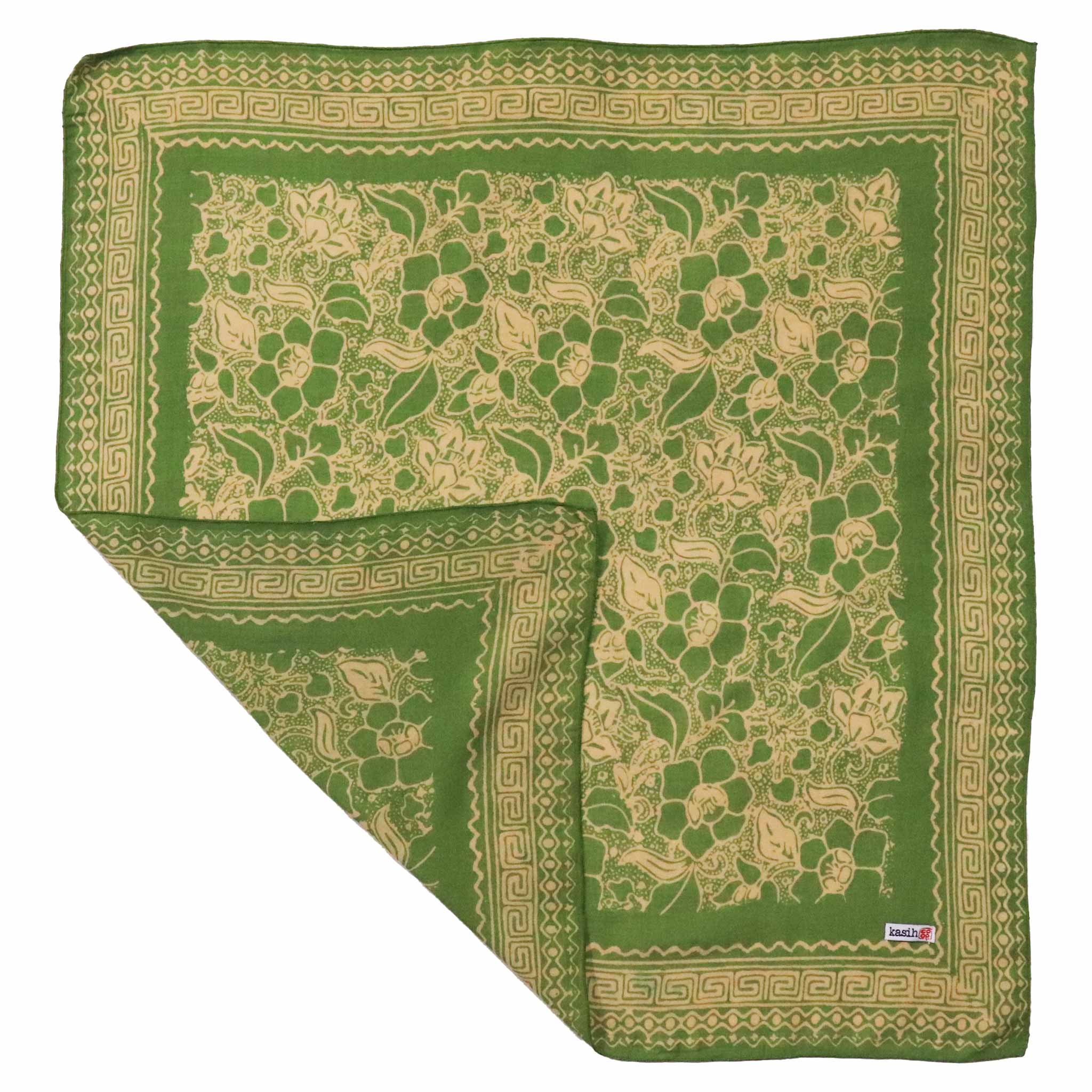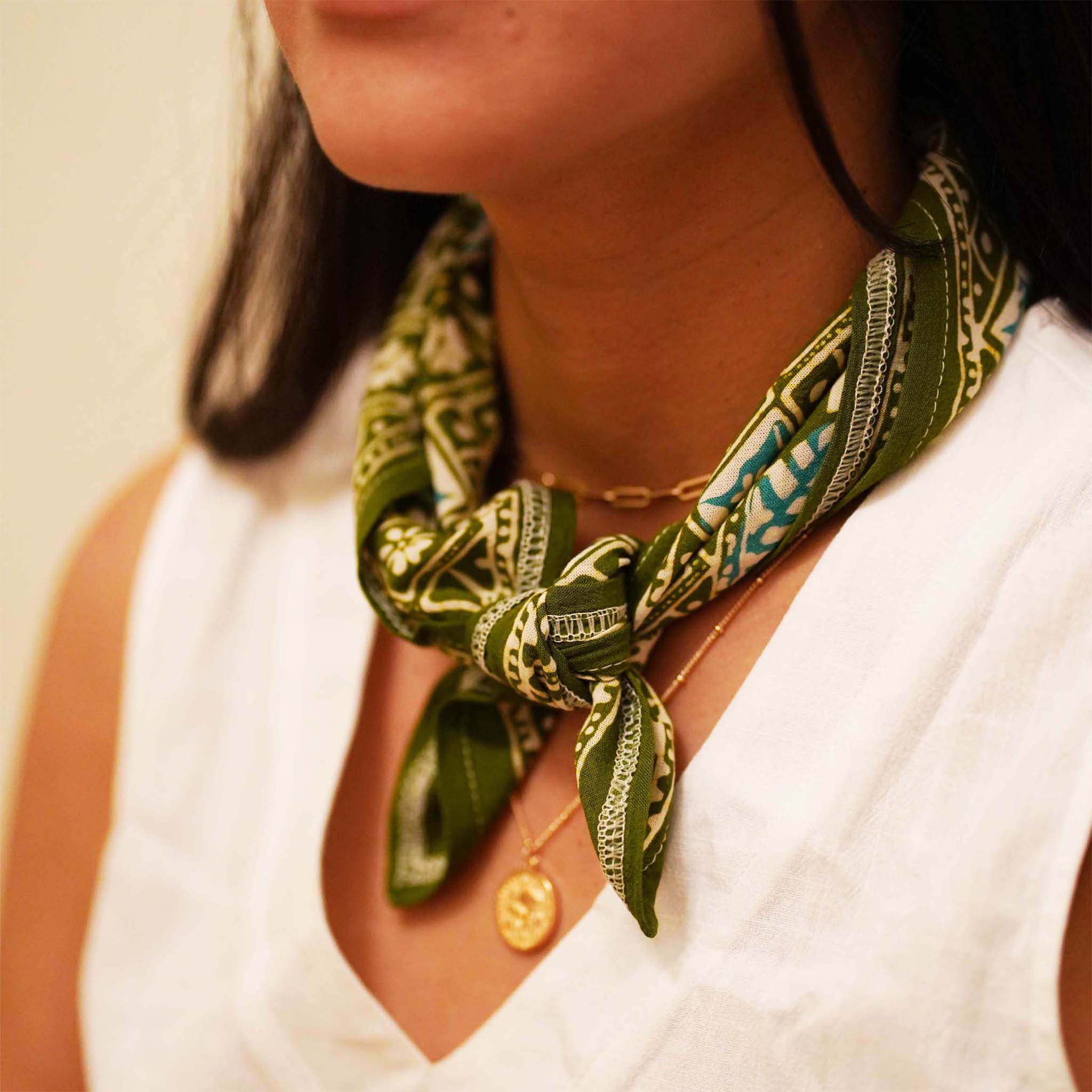
Lorsque vous choisissez un bandana en batik Kasih Co-op, vous ne choisissez pas seulement une couleur ou un imprimé. Vous choisissez une histoire, une histoire qui peut être vieille de centaines d'années. Voici la signification des motifs de nos bandanas.
Dans la culture indonésienne, le batik n'est jamais une simple décoration. Chaque motif a une signification, enracinée dans la philosophie javanaise, le monde naturel, les cours royales et la vie quotidienne. Certains motifs étaient autrefois réservés à la noblesse. D'autres étaient portés lors des mariages, des naissances et des funérailles. Tous étaient faits à la main, par des personnes qui comprenaient exactement ce qu'elles dessinaient.
Chez Kasih Co-op, nous nommons nos bandanas comme nous le faisons parce que chaque motif est inspiré par quelque chose de réel — un motif traditionnel, une plante, une créature, un sentiment auquel la culture indonésienne a donné un nom. Voici un aperçu de certains de nos motifs les plus appréciés et de la signification qu'ils renferment.
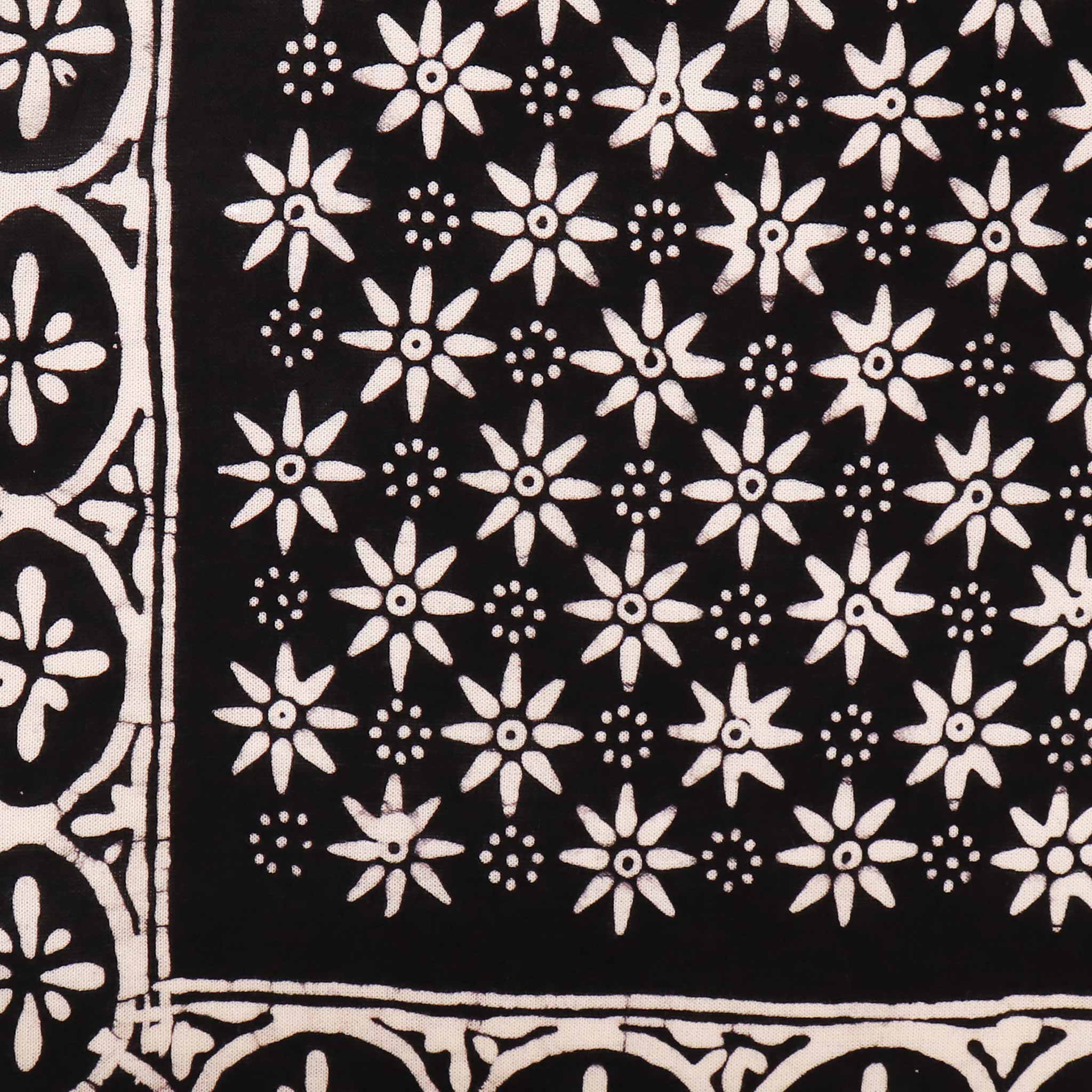
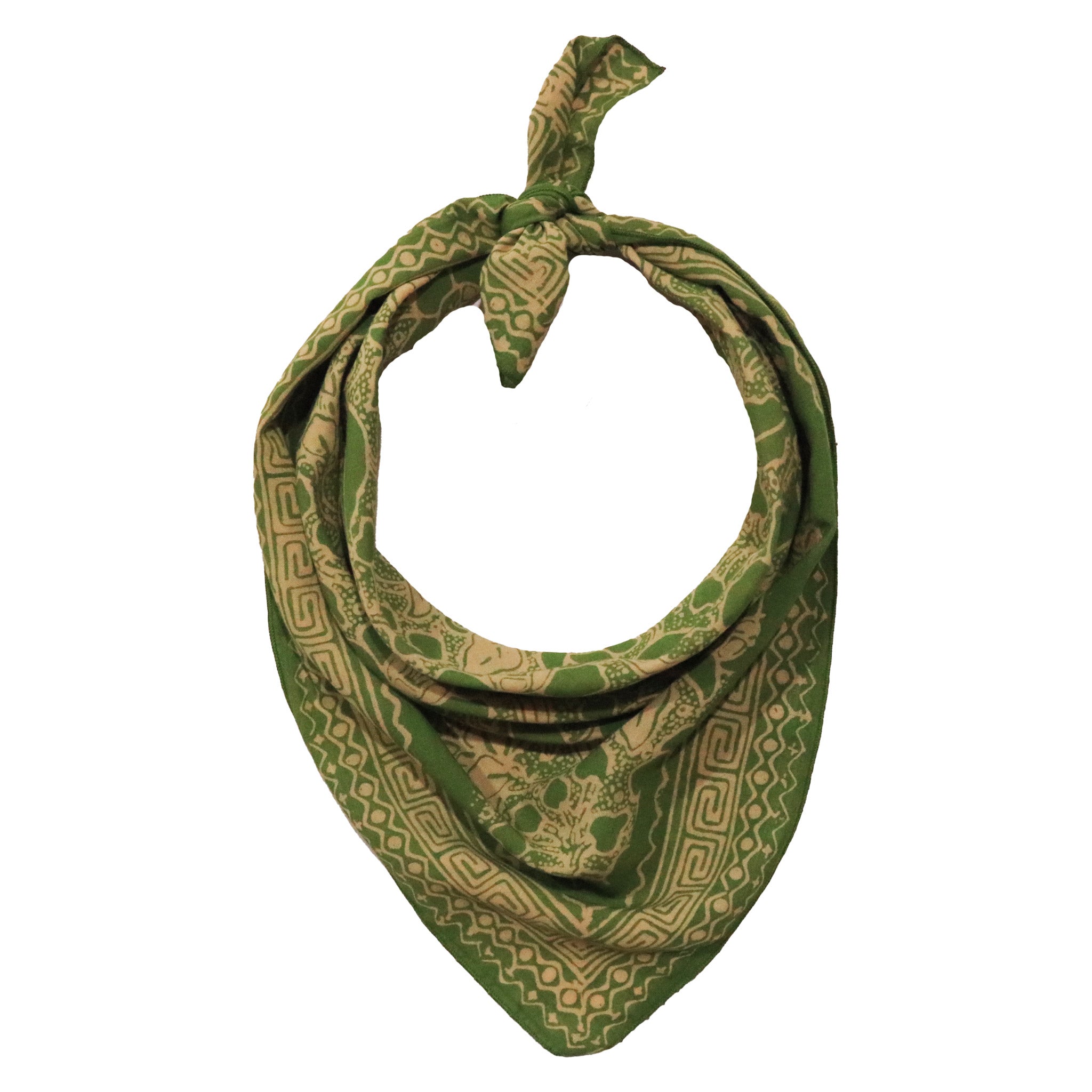
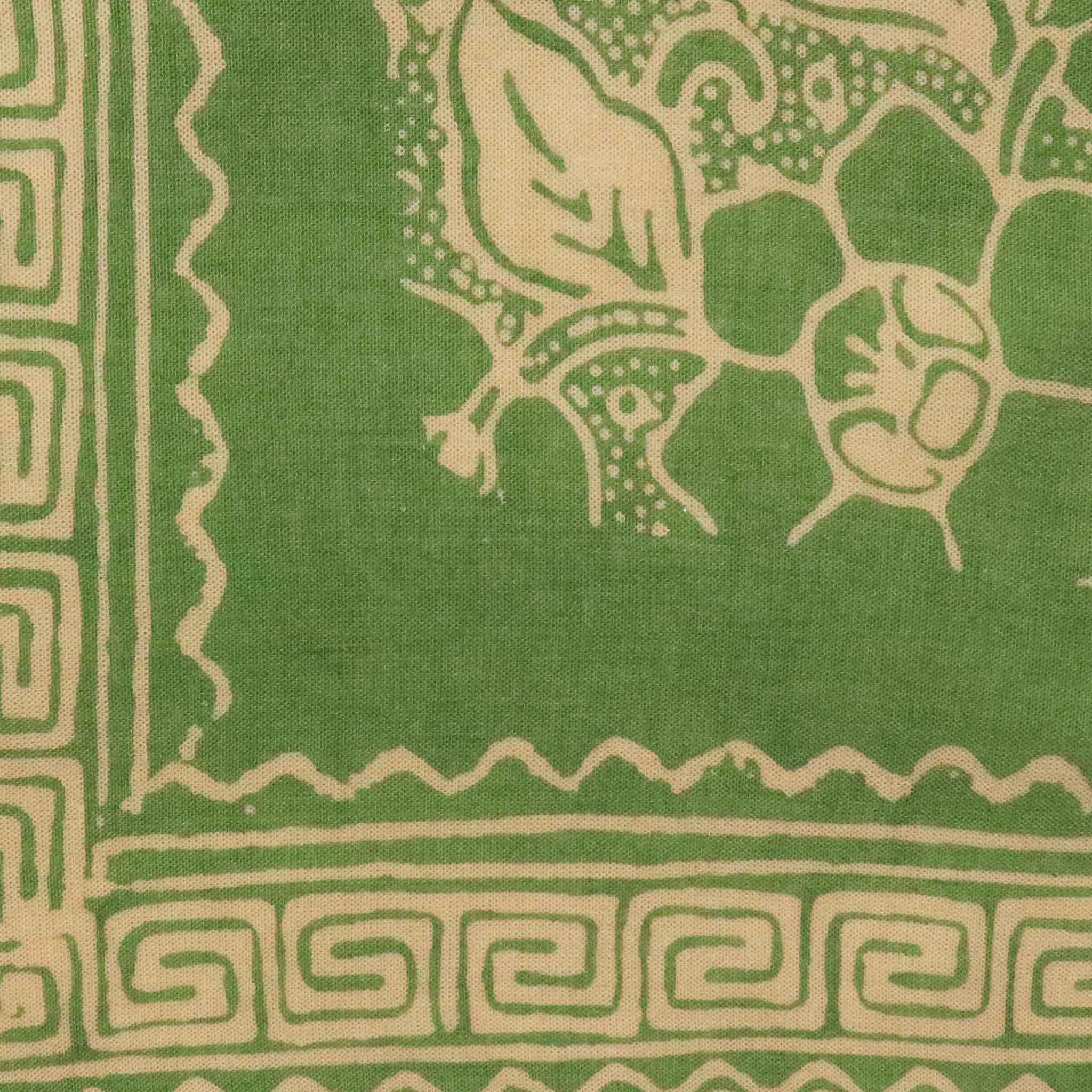
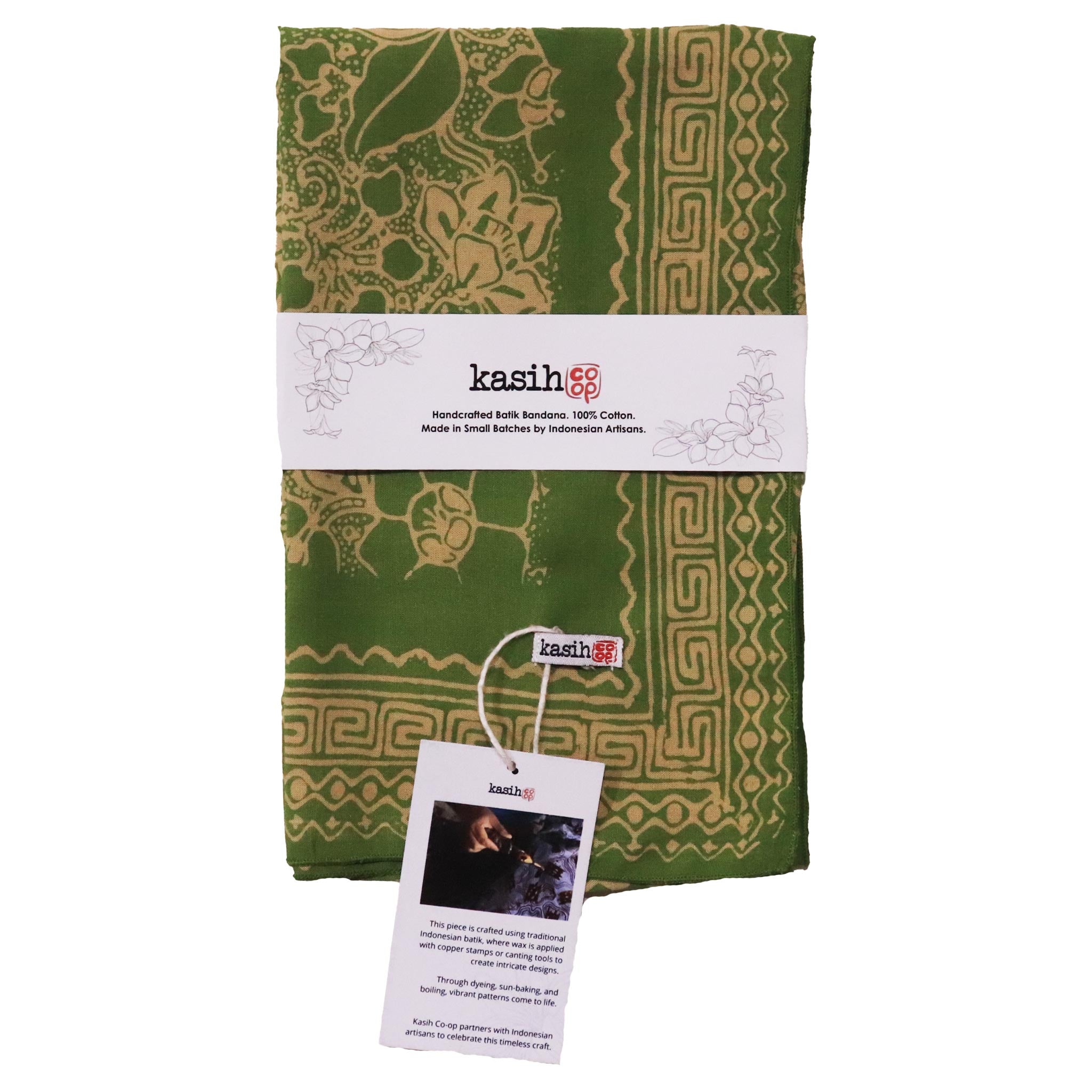
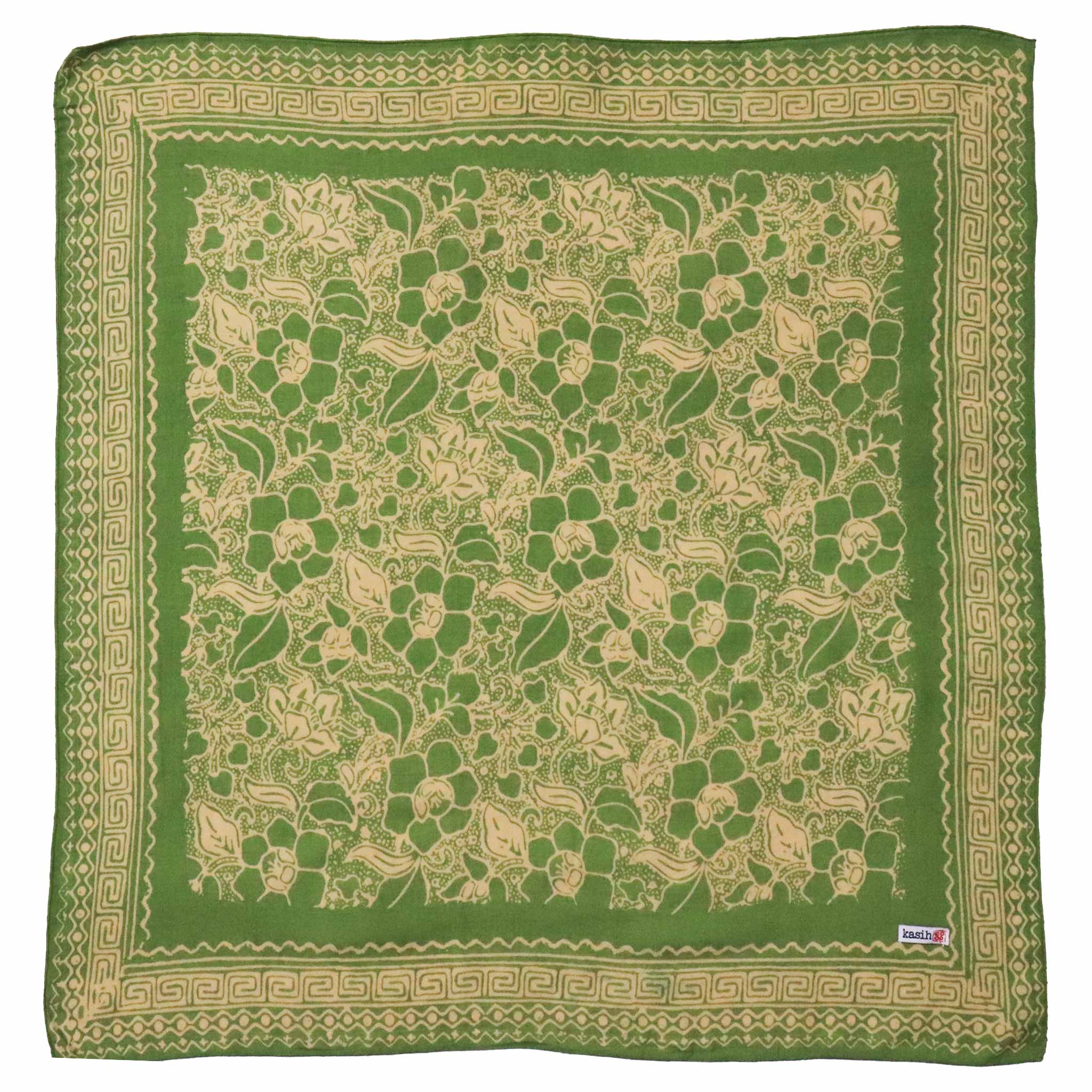
Motif en vedette n° 1 — Black Mirage
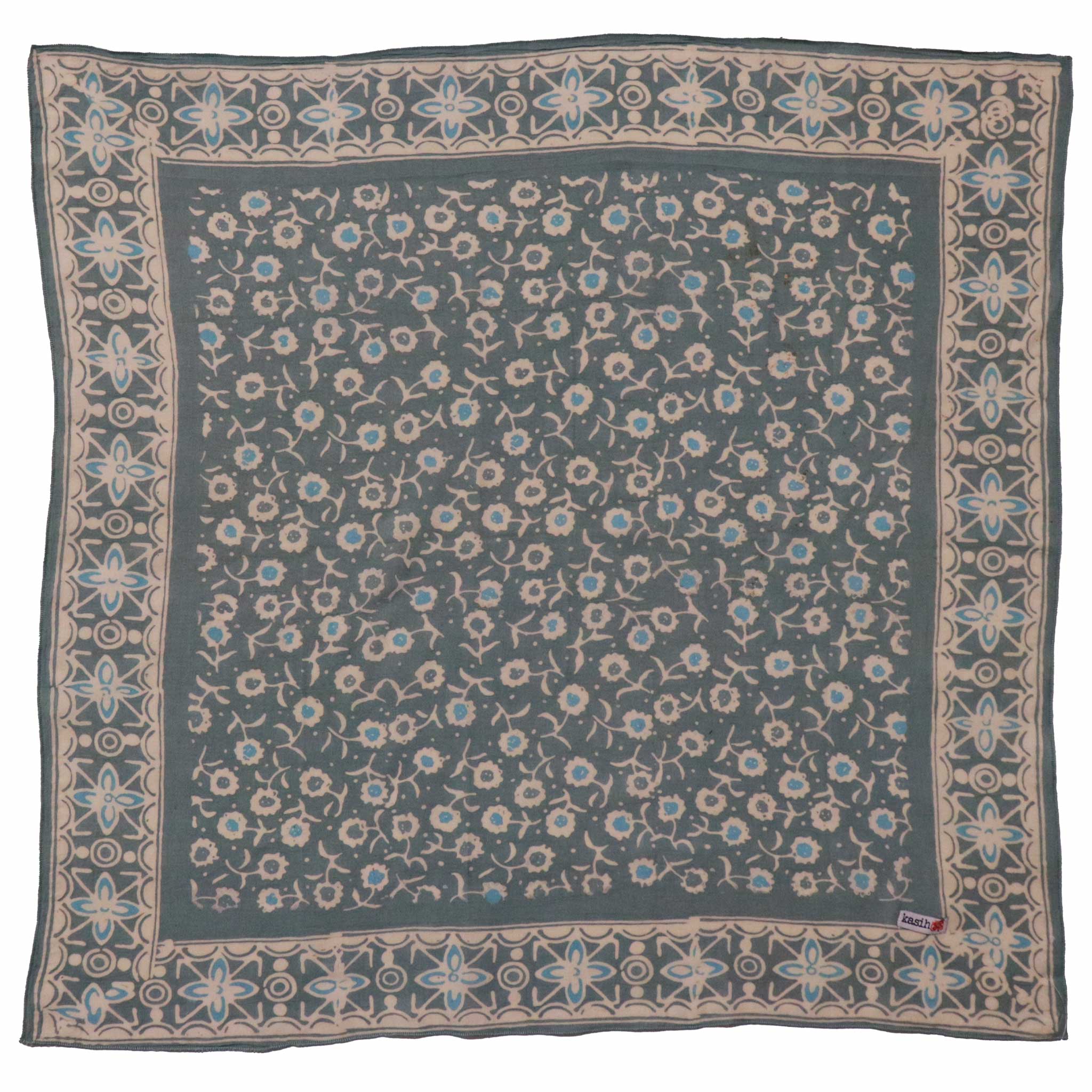
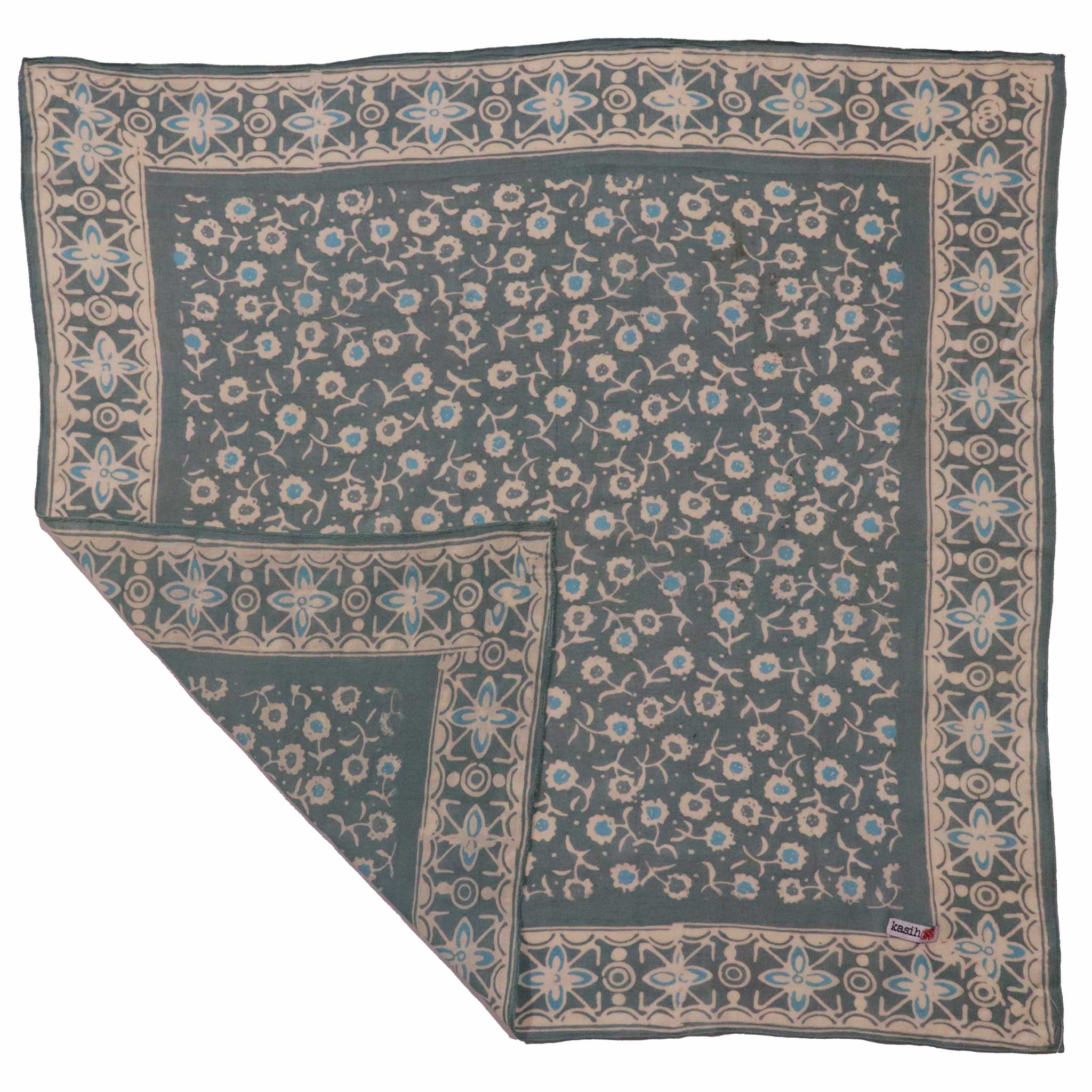
Motif traditionnel : Truntum

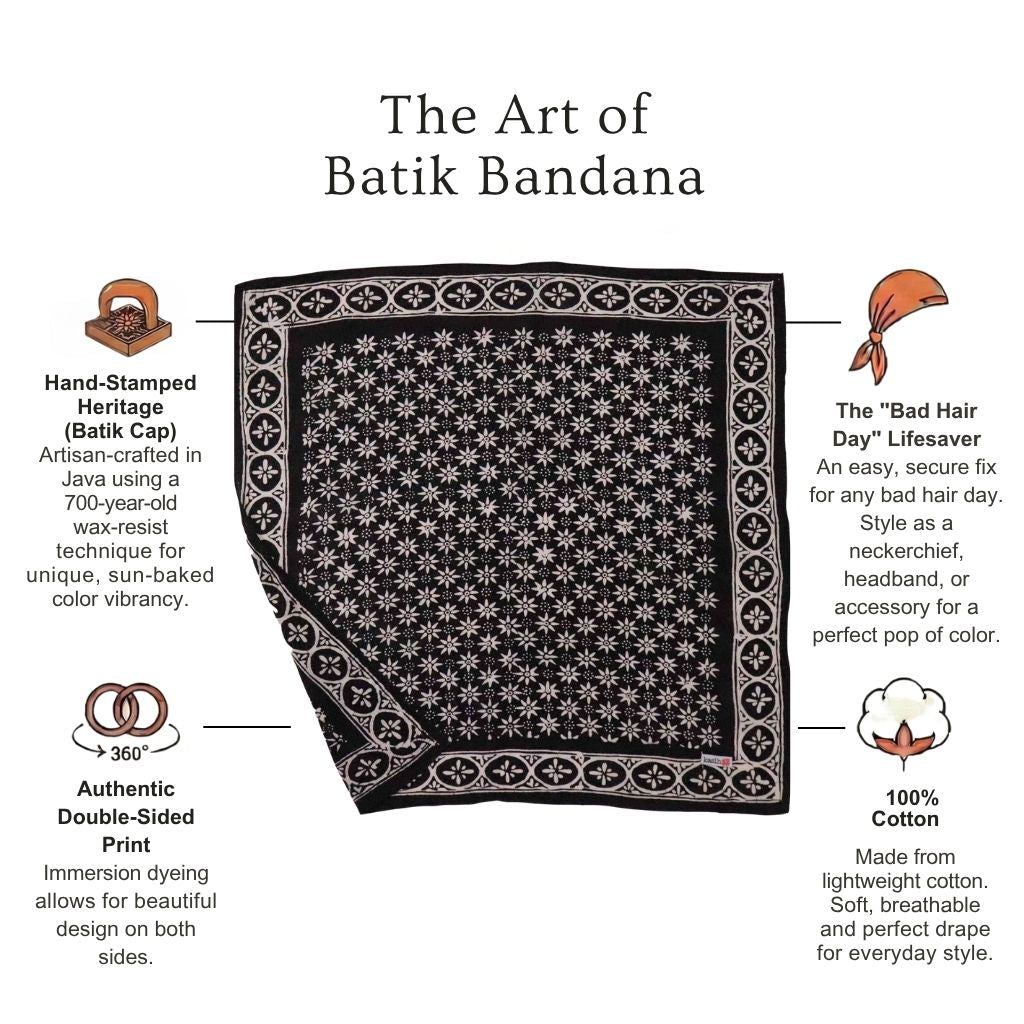
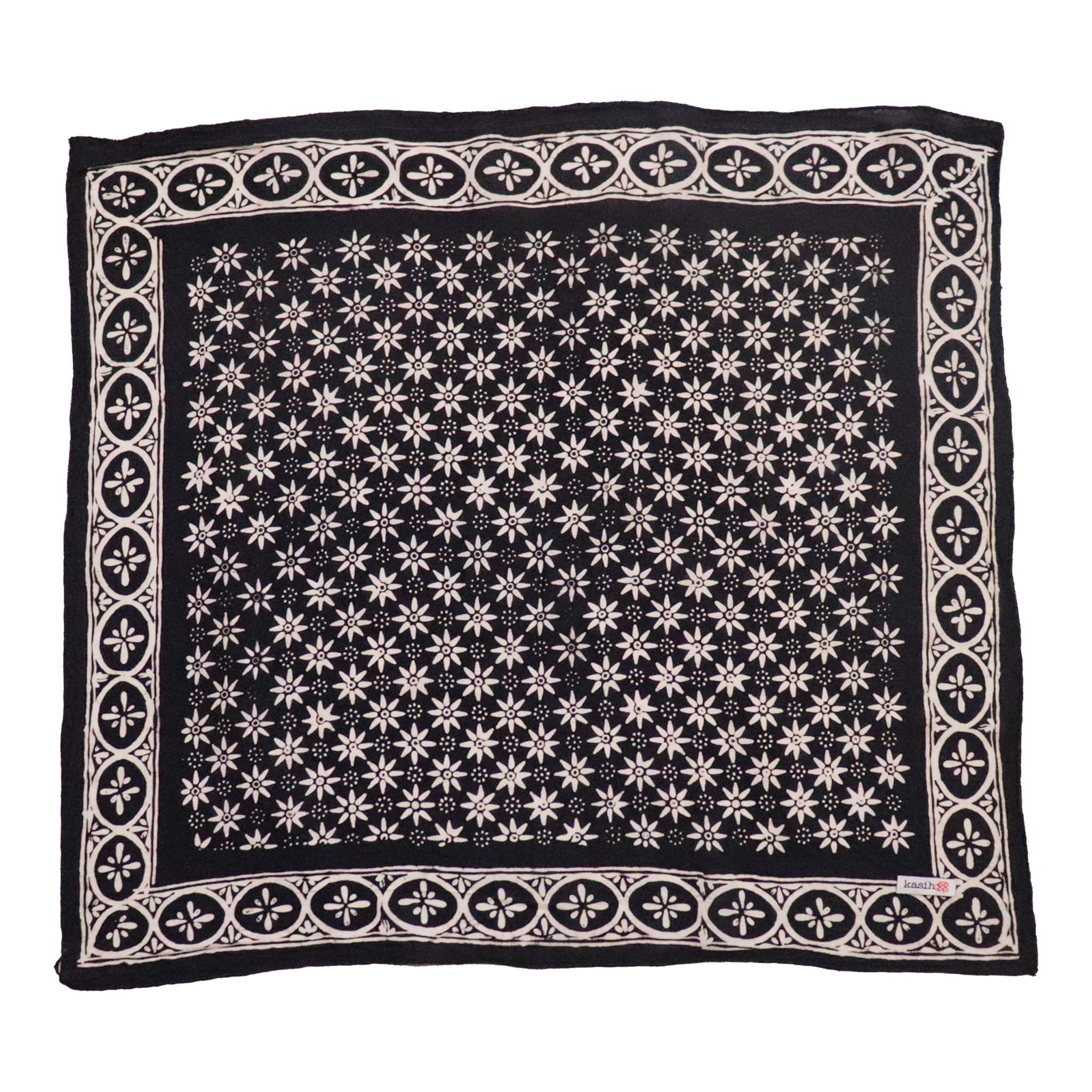
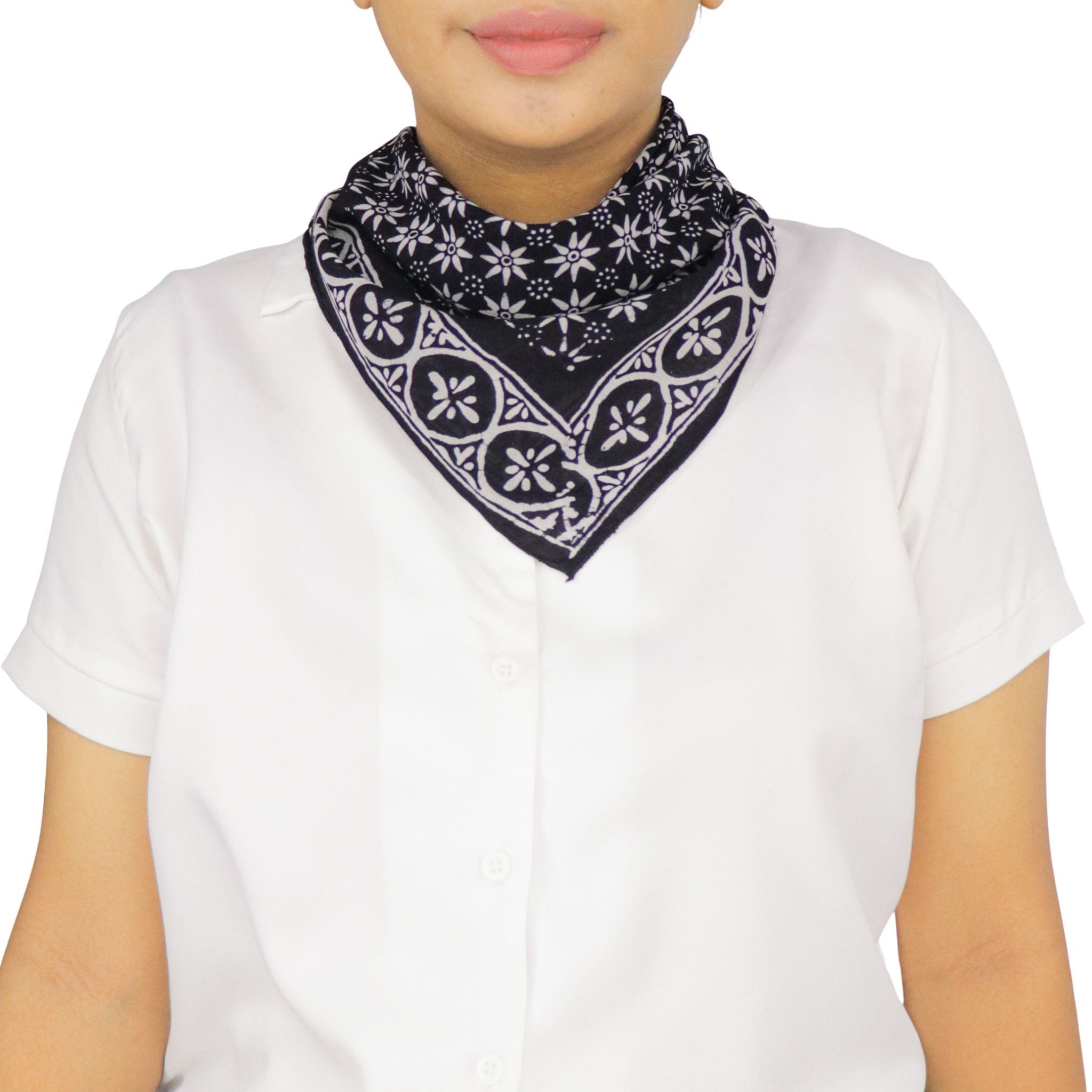
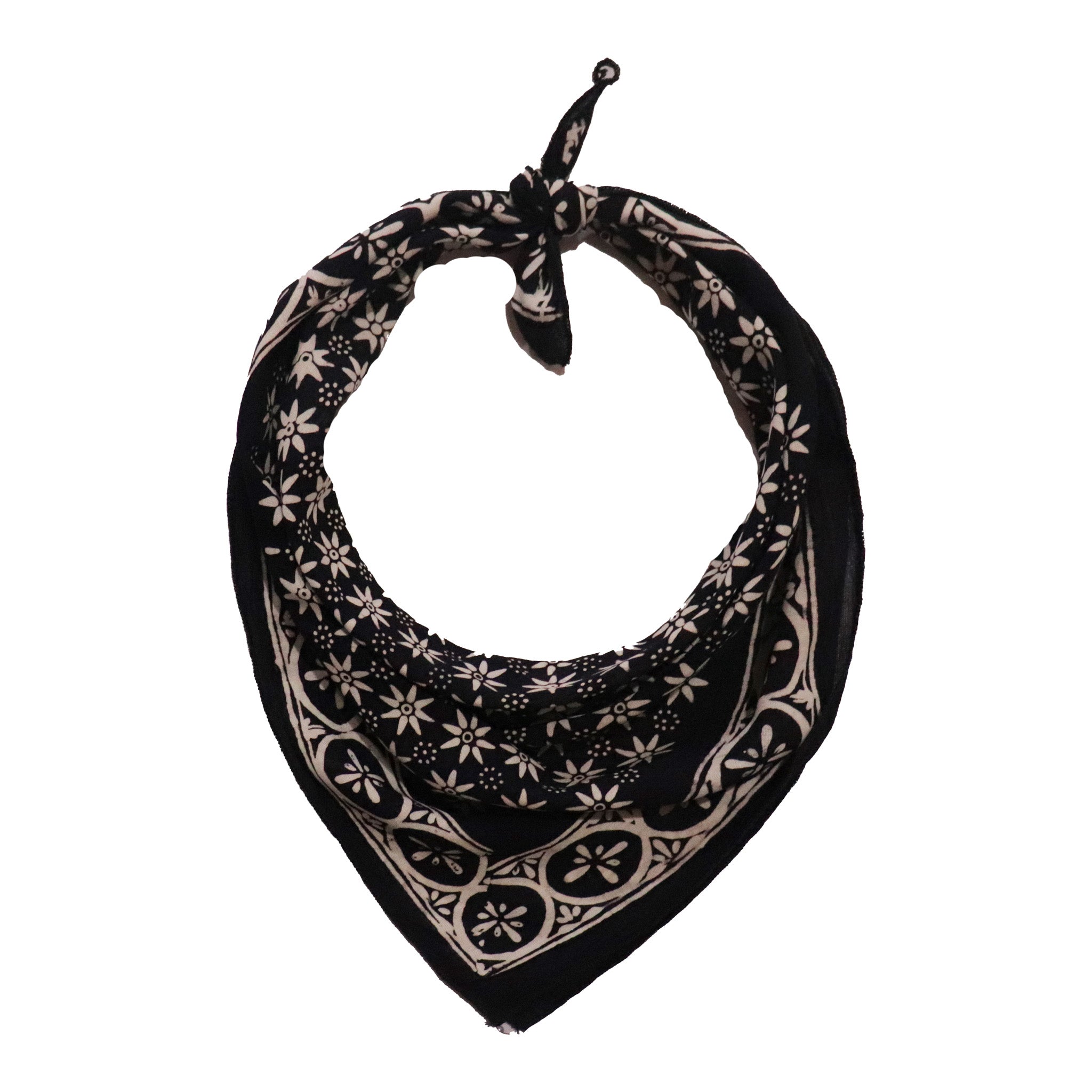
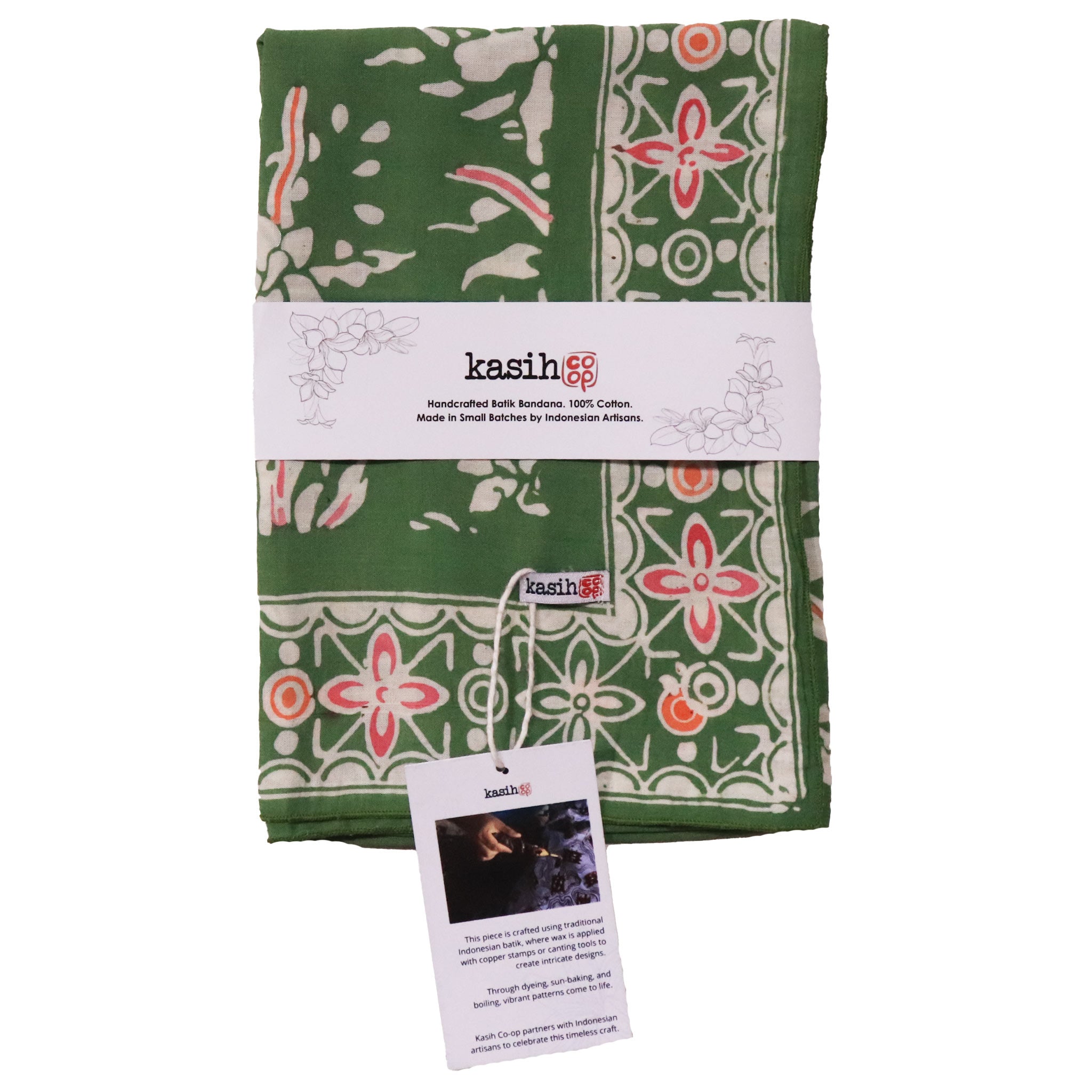
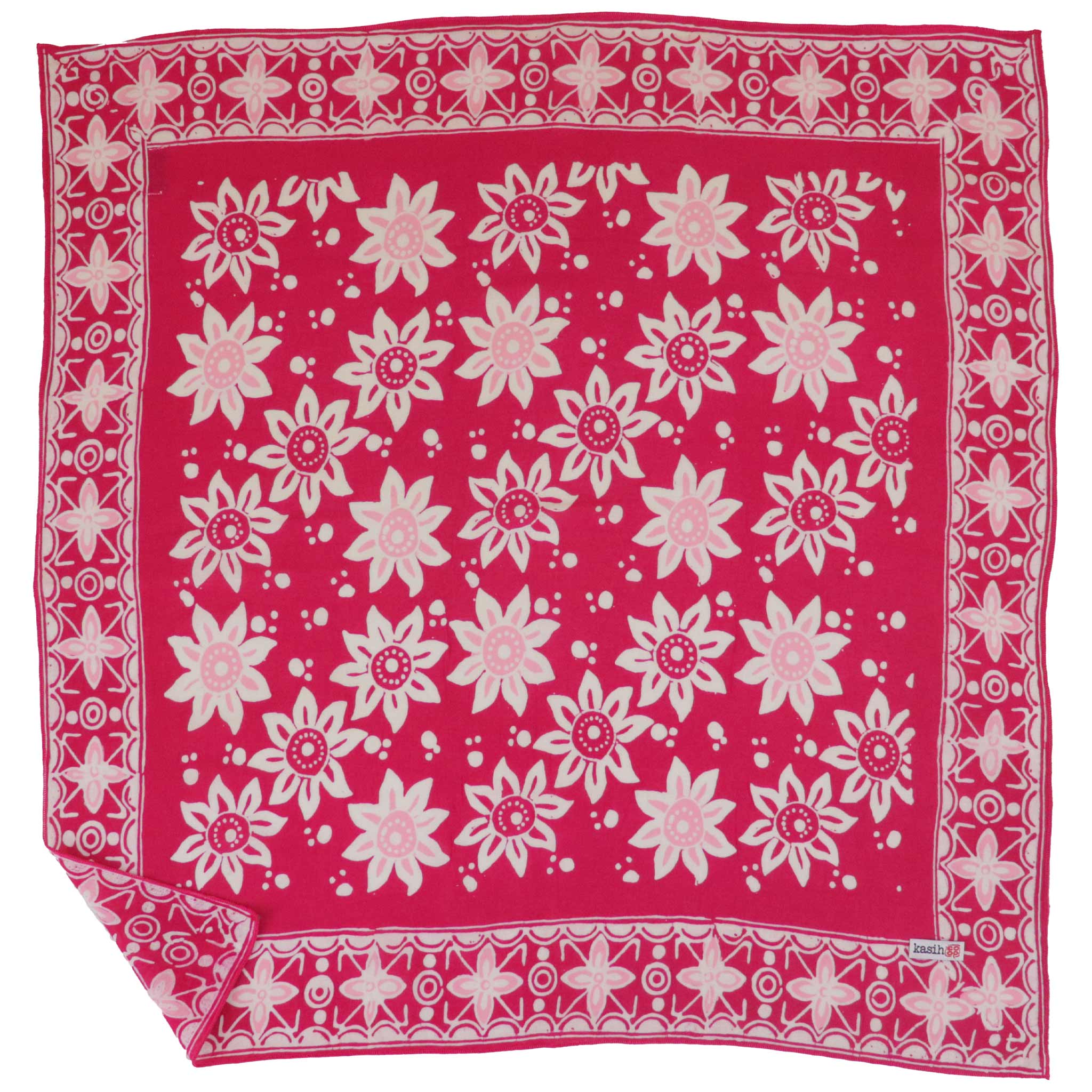
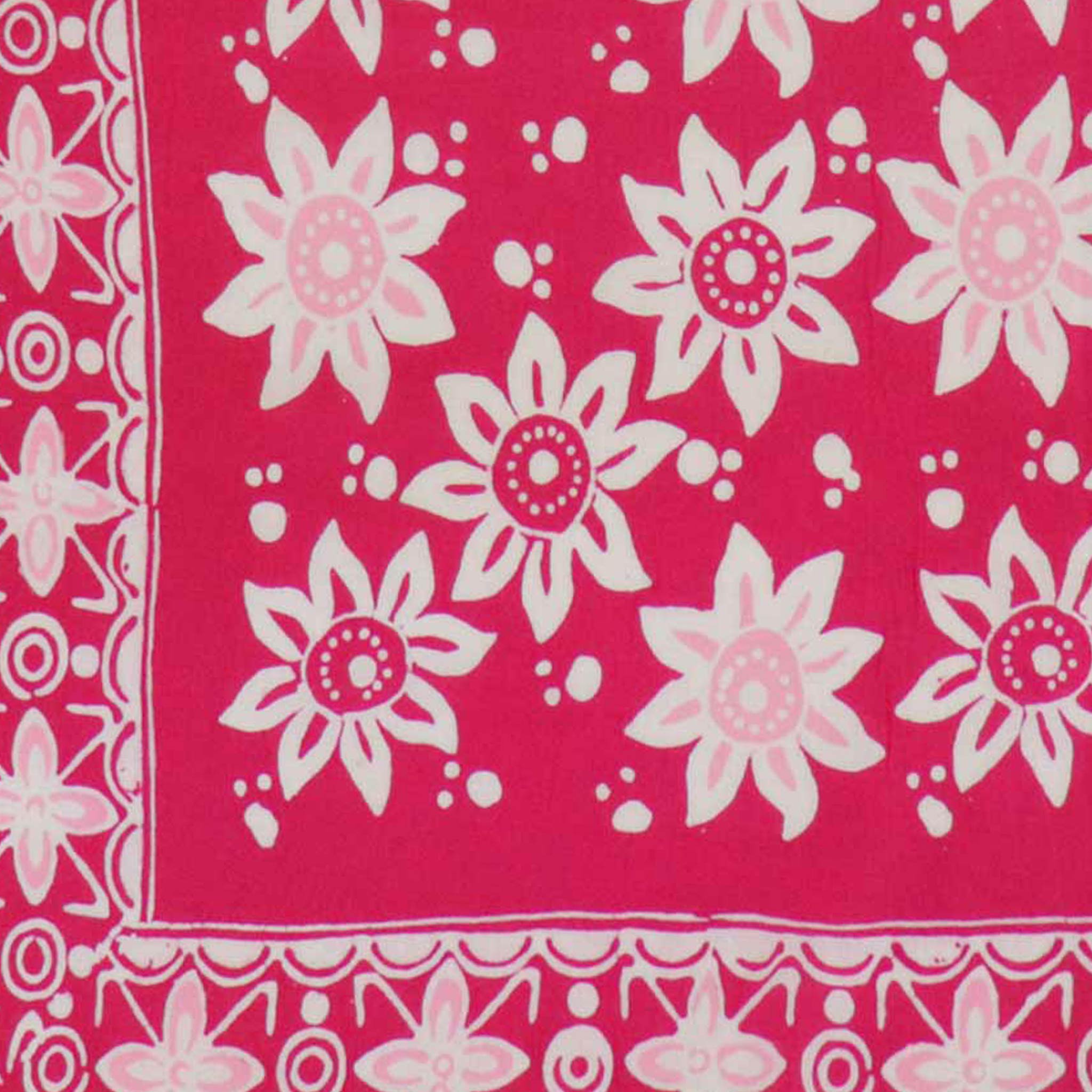
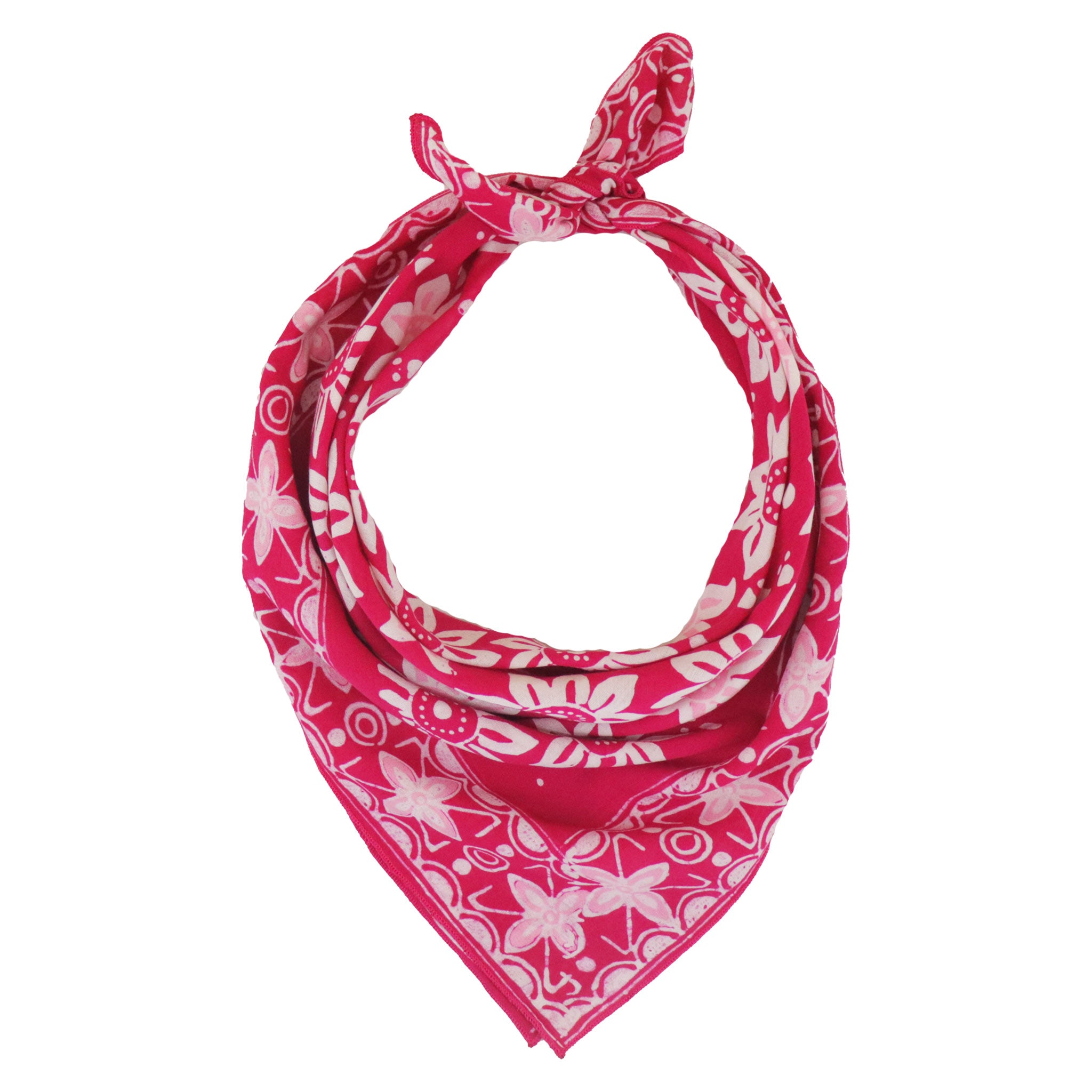
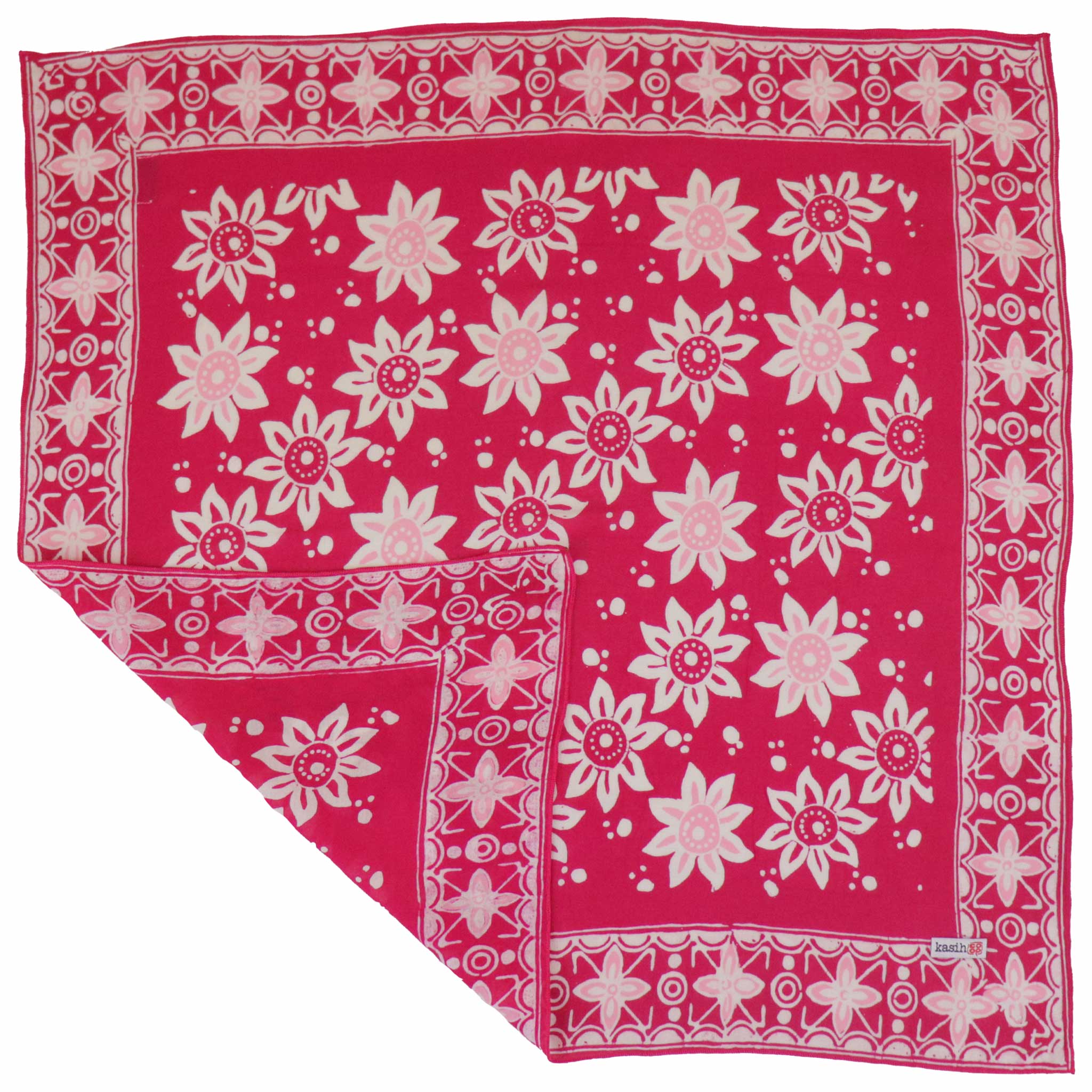
Les petites fleurs étoilées éparpillées sur ce bandana sont un motif classique de truntum — l'un des motifs les plus appréciés du batik javanais. Le mot truntum vient du javanais, signifiant « guider » ou « repousser ».
Selon la tradition, le truntum a été créé à l'origine par une reine qui a dessiné le motif à la main pendant une période de distance émotionnelle avec son mari, versant son désir et sa patience dans chaque petite fleur. Le roi fut si ému que cela ralluma leur amour. Aujourd'hui, le truntum est considéré comme un symbole d'amour durable, de conseils et de l'entretien patient des relations. Il est traditionnellement porté par les parents des mariés lors des mariages javanais — un souhait que leur amour guide le nouveau couple.
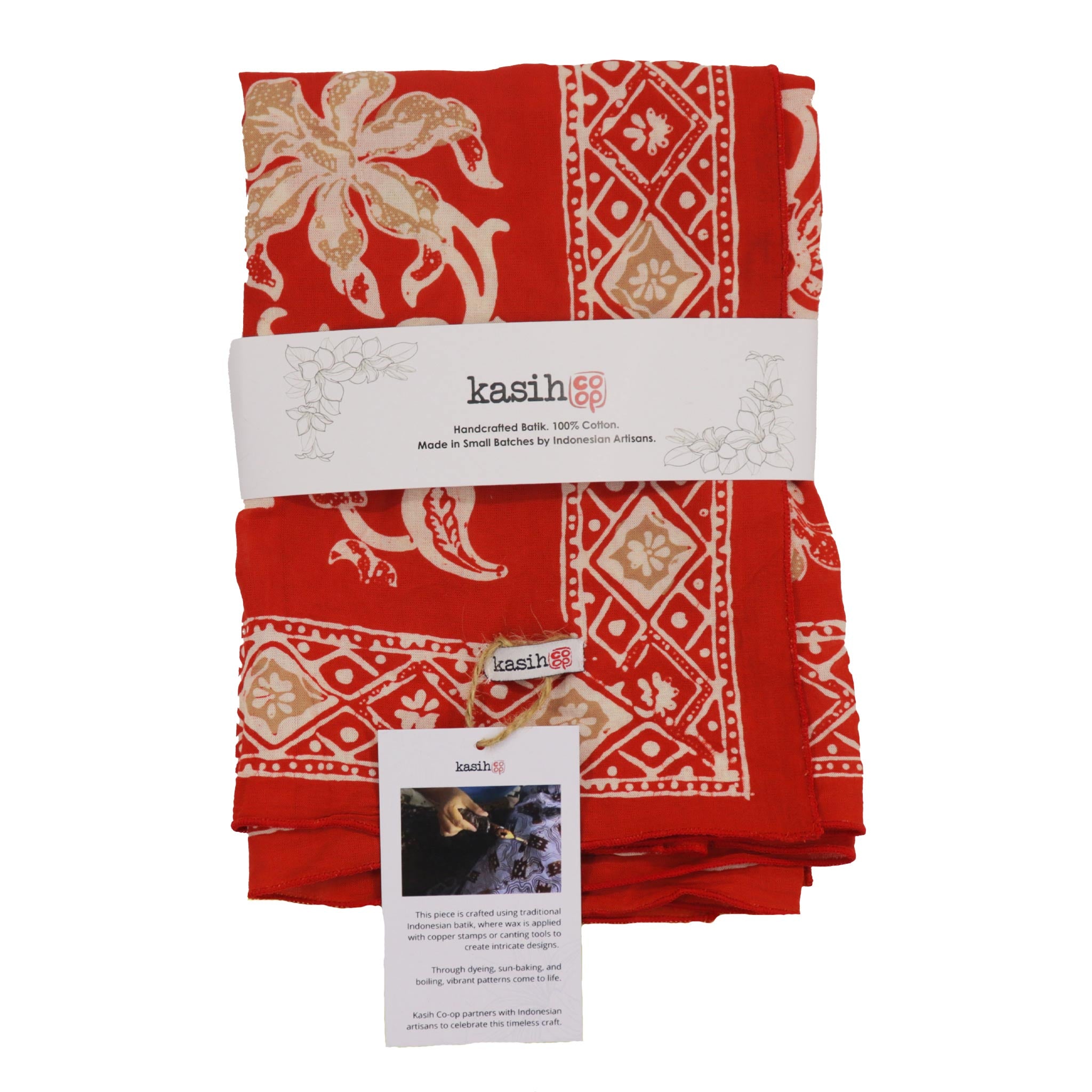
Motif en vedette n° 2 — Sultan's Crest
Motif traditionnel : Parang / Batik de la cour royale

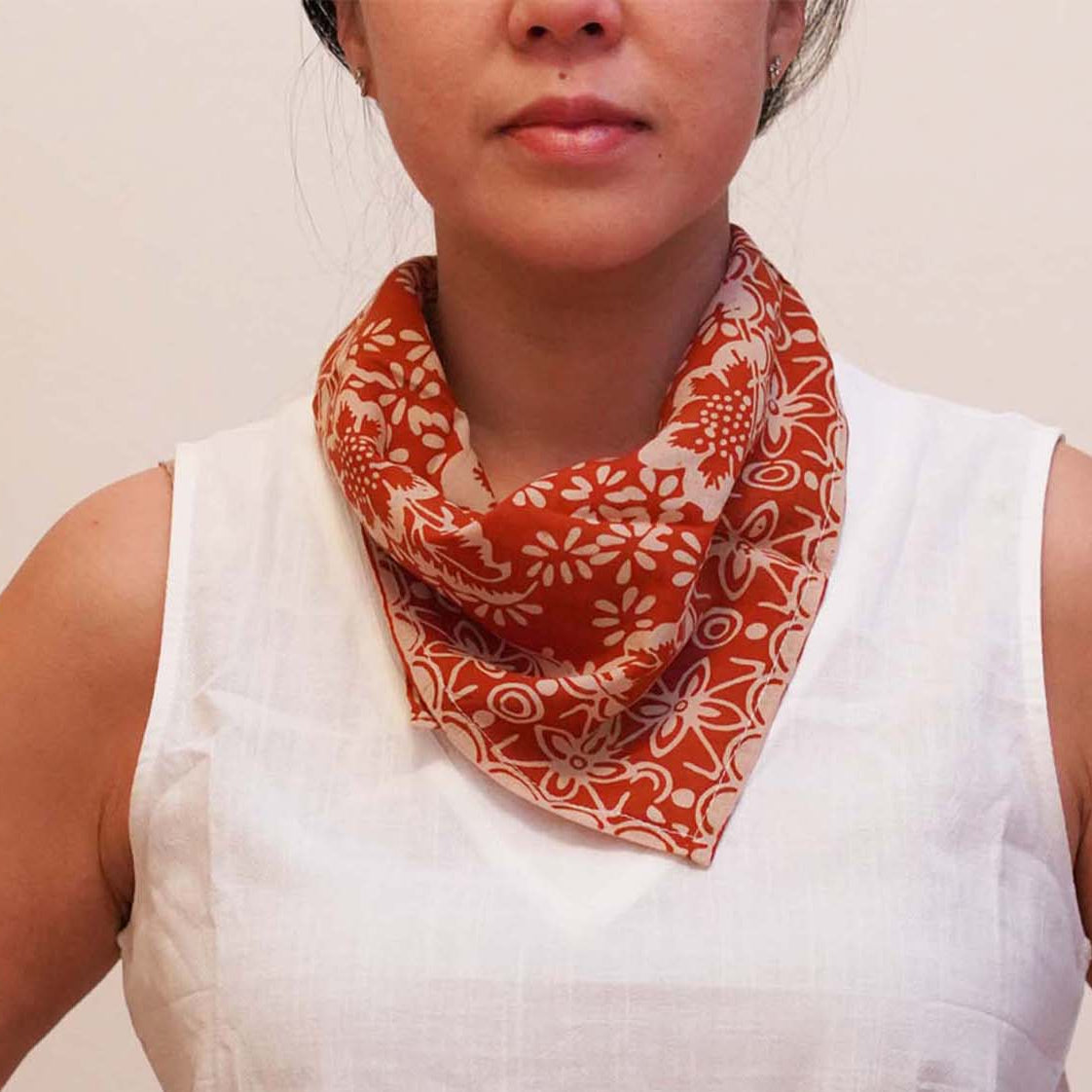
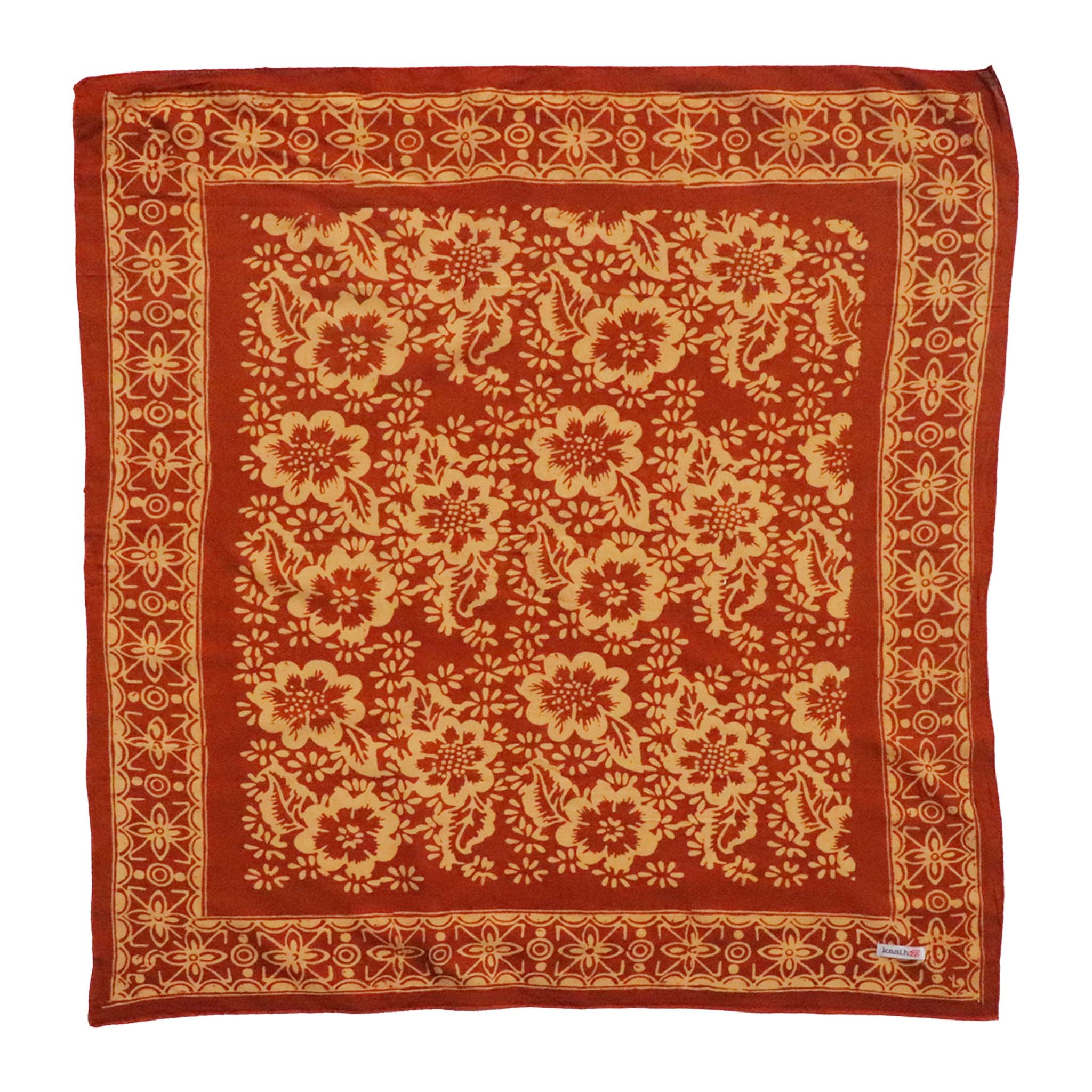
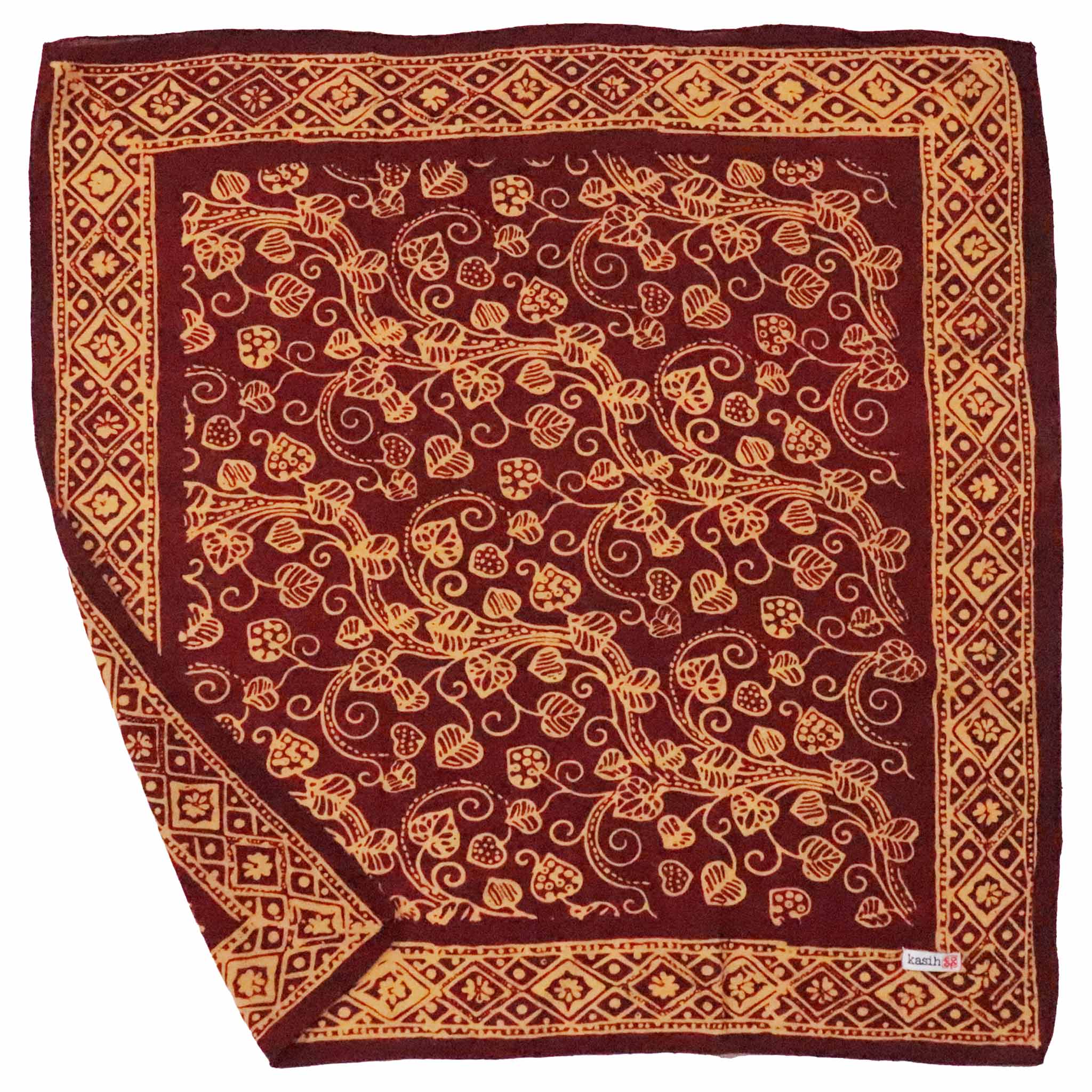
Audacieuse, structurée et profondément enracinée dans la royauté javanaise, la famille de motifs parang est l'une des plus anciennes et des plus vénérées du batik indonésien. Les lignes diagonales entrelacées représentent une chaîne ininterrompue de force, de continuité et de pouvoir. Dans les cours royales de Java, certains motifs parang étaient exclusivement portés par le sultan et les membres de la famille royale. Le porter était, littéralement, un privilège.
Notre Sultan's Crest capture cette énergie royale dans des tons chauds de rouge et d'or, des couleurs traditionnellement associées au courage et à la prospérité dans la culture indonésienne. C'est un bandana qui porte l'autorité avec légèreté.
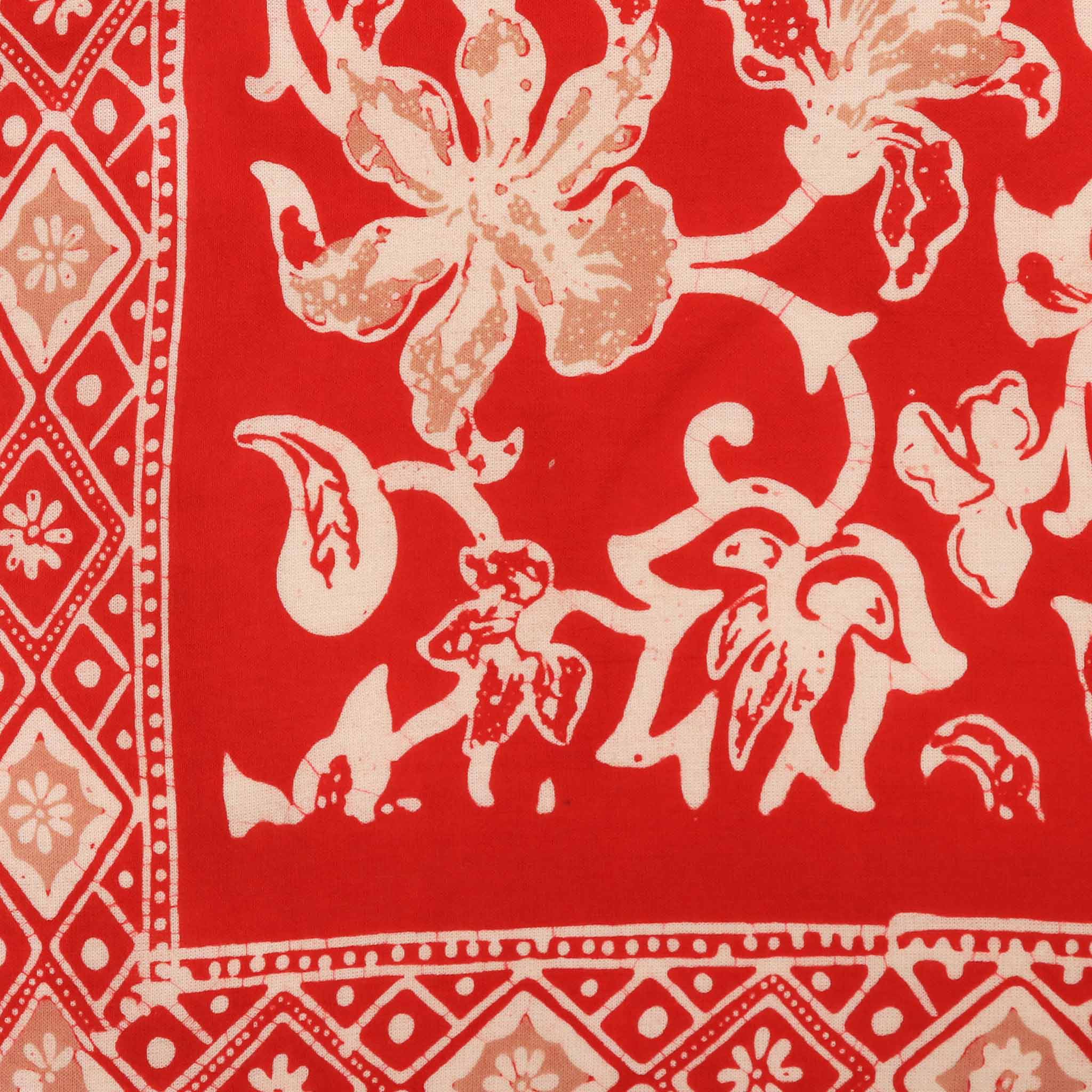
Motif en vedette n° 3 — Giant Padma
Inspiré par : Rafflesia Arnoldii — la plus grande fleur du monde

La Rafflesia arnoldii ne se trouve que dans les forêts tropicales de Sumatra et de Bornéo. Elle produit la plus grande fleur individuelle du monde — jusqu'à un mètre de diamètre — et est entièrement parasite, ce qui signifie qu'elle n'a ni racines, ni tiges, ni feuilles propres. Elle existe entièrement à l'intérieur d'une autre plante, invisible, jusqu'au moment où elle fleurit.
Dans le symbolisme indonésien, la Rafflesia (padma raksasa) représente la beauté rare, la résilience et l'inattendu. Quelque chose d'extraordinaire apparaissant là où personne ne s'y attendait. Ce bandana est destiné aux personnes qui ont plus de profondeur qu'elles ne le montrent.
« Dans le batik, rien n'est accidentel. Le motif qu'une personne porte parle avant elle. » — dicton javanais traditionnel
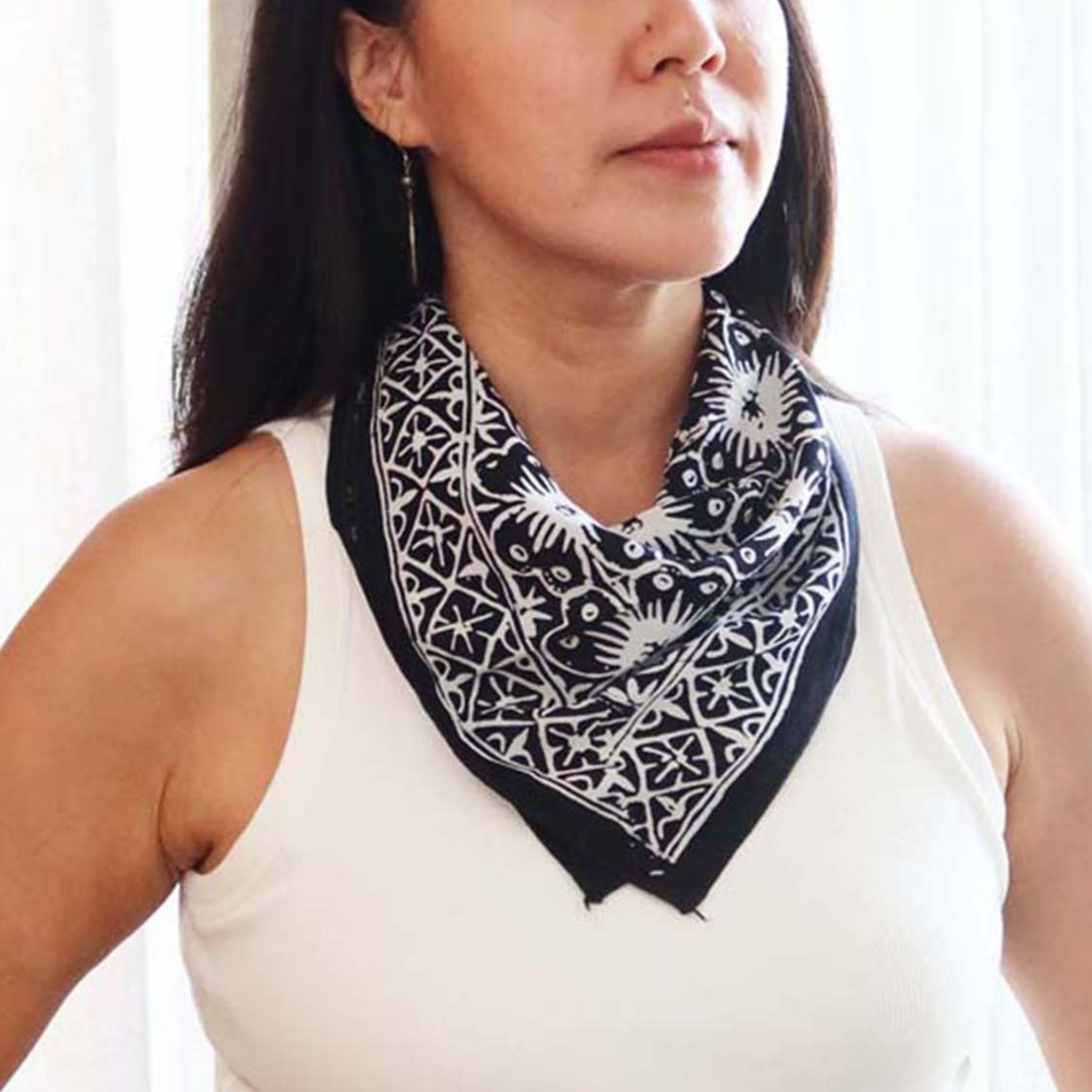
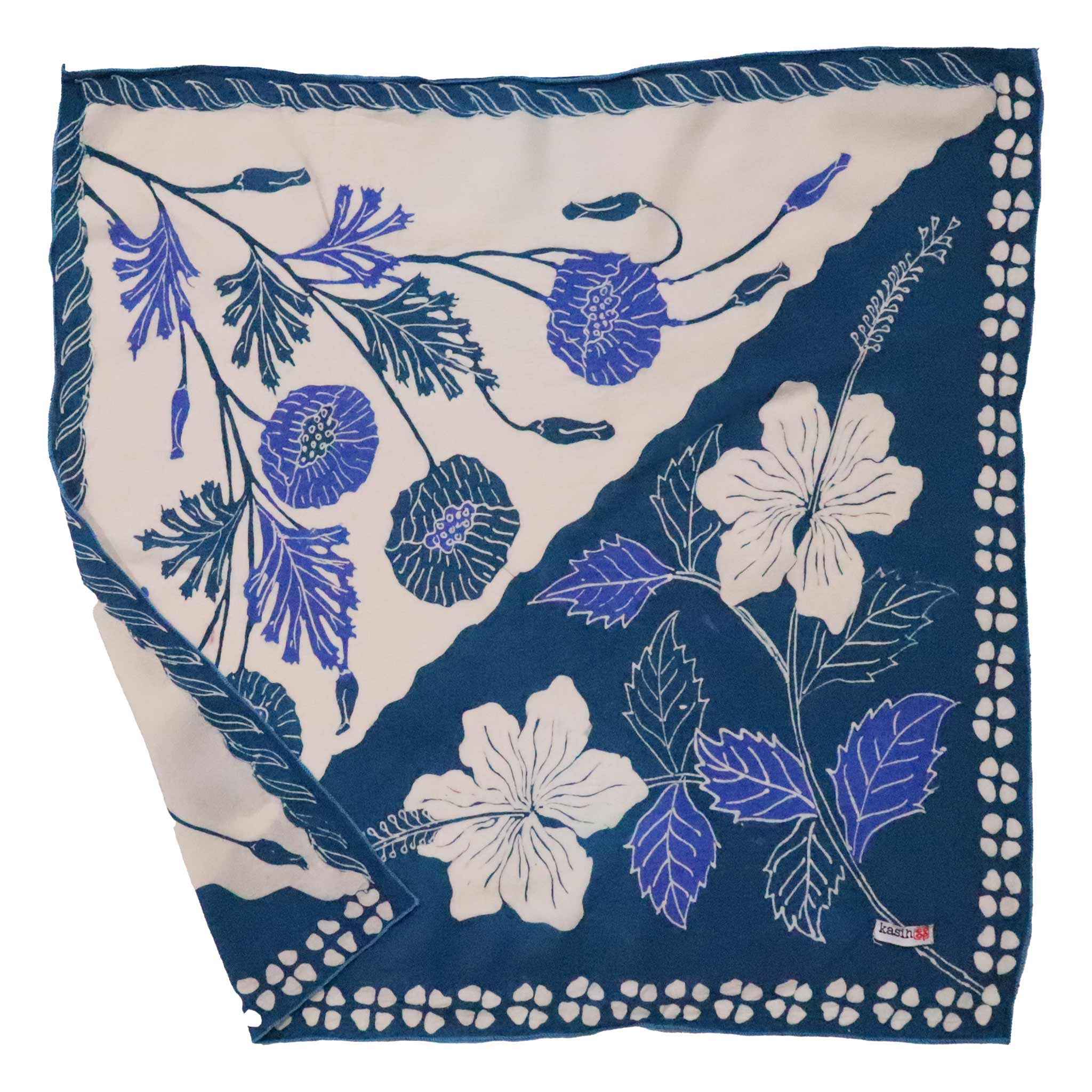
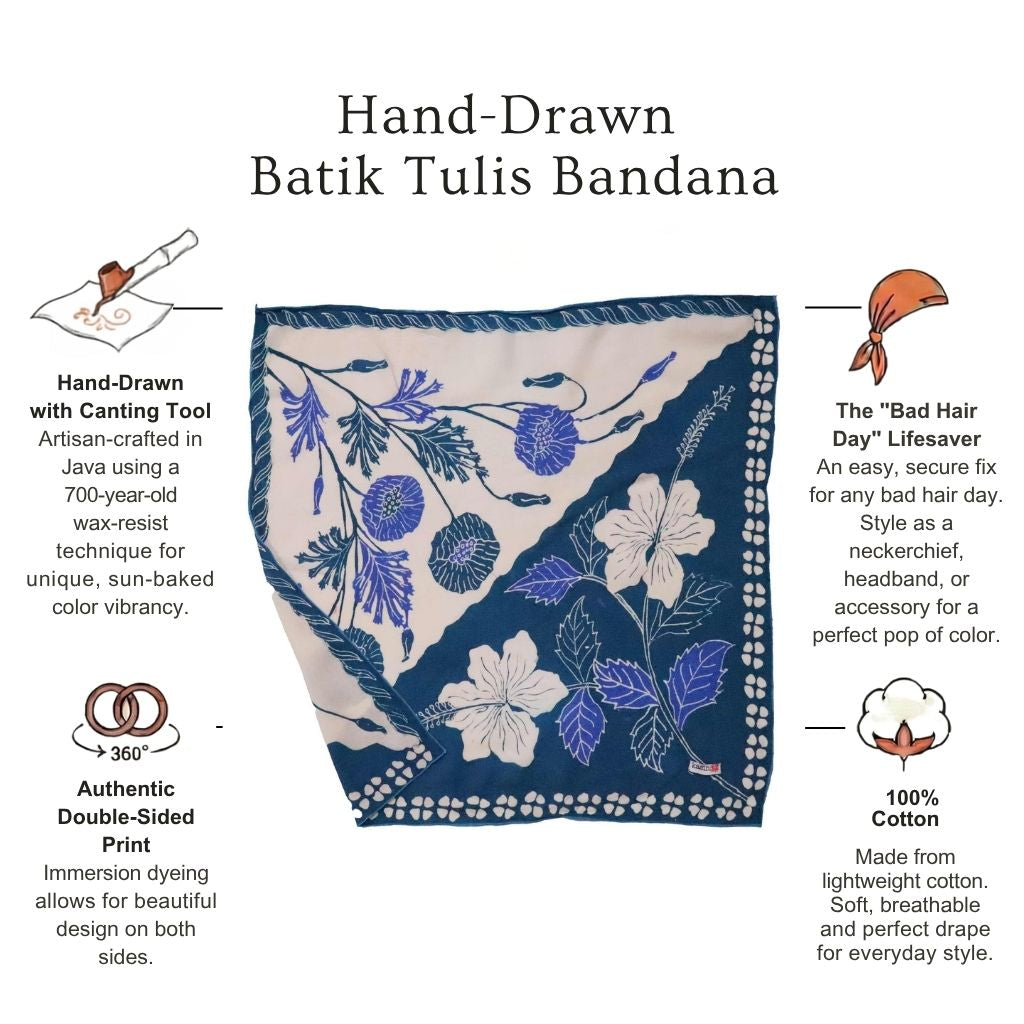
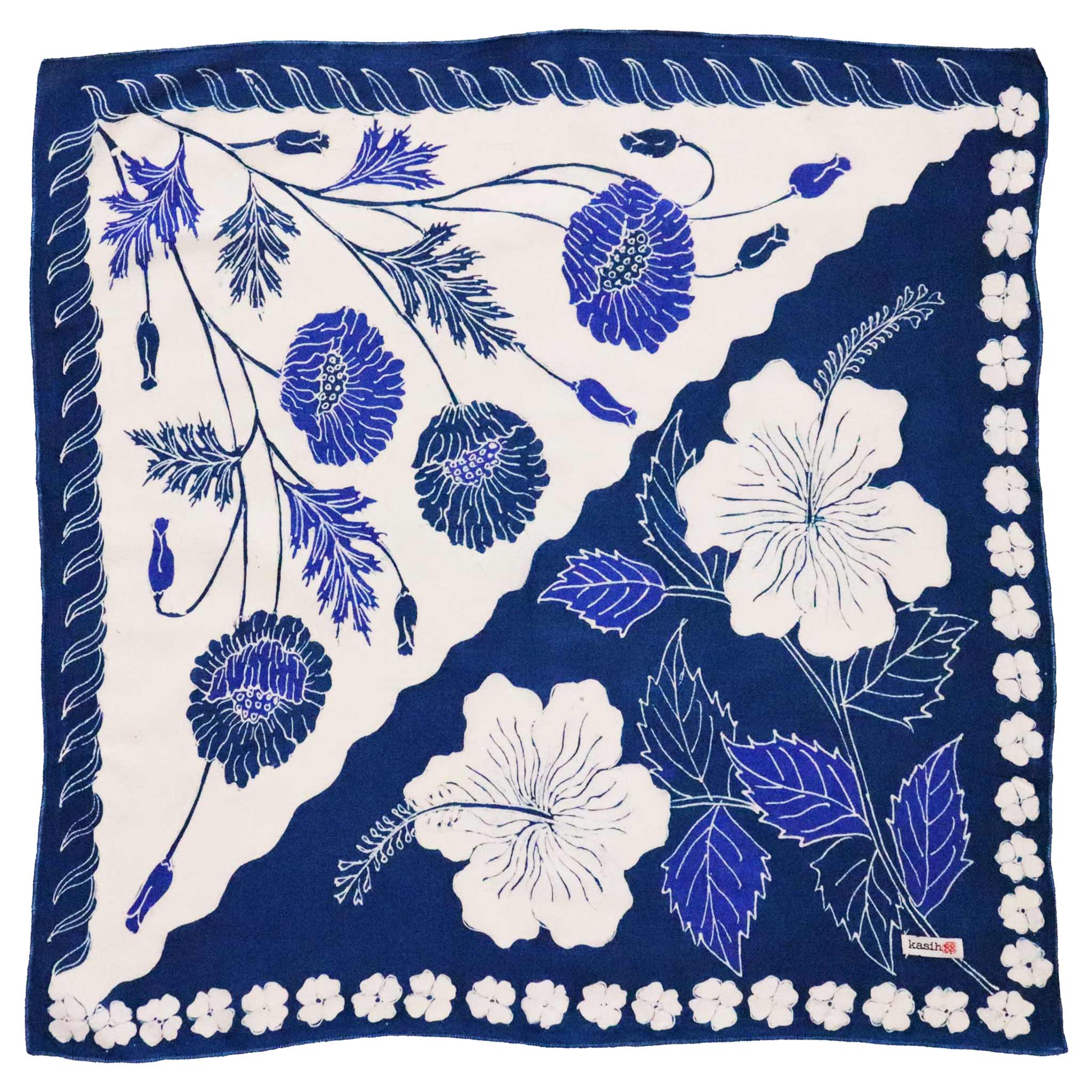
Motif en vedette n° 4 — Hibiscus
Inspiré par : Kembang Sepatu

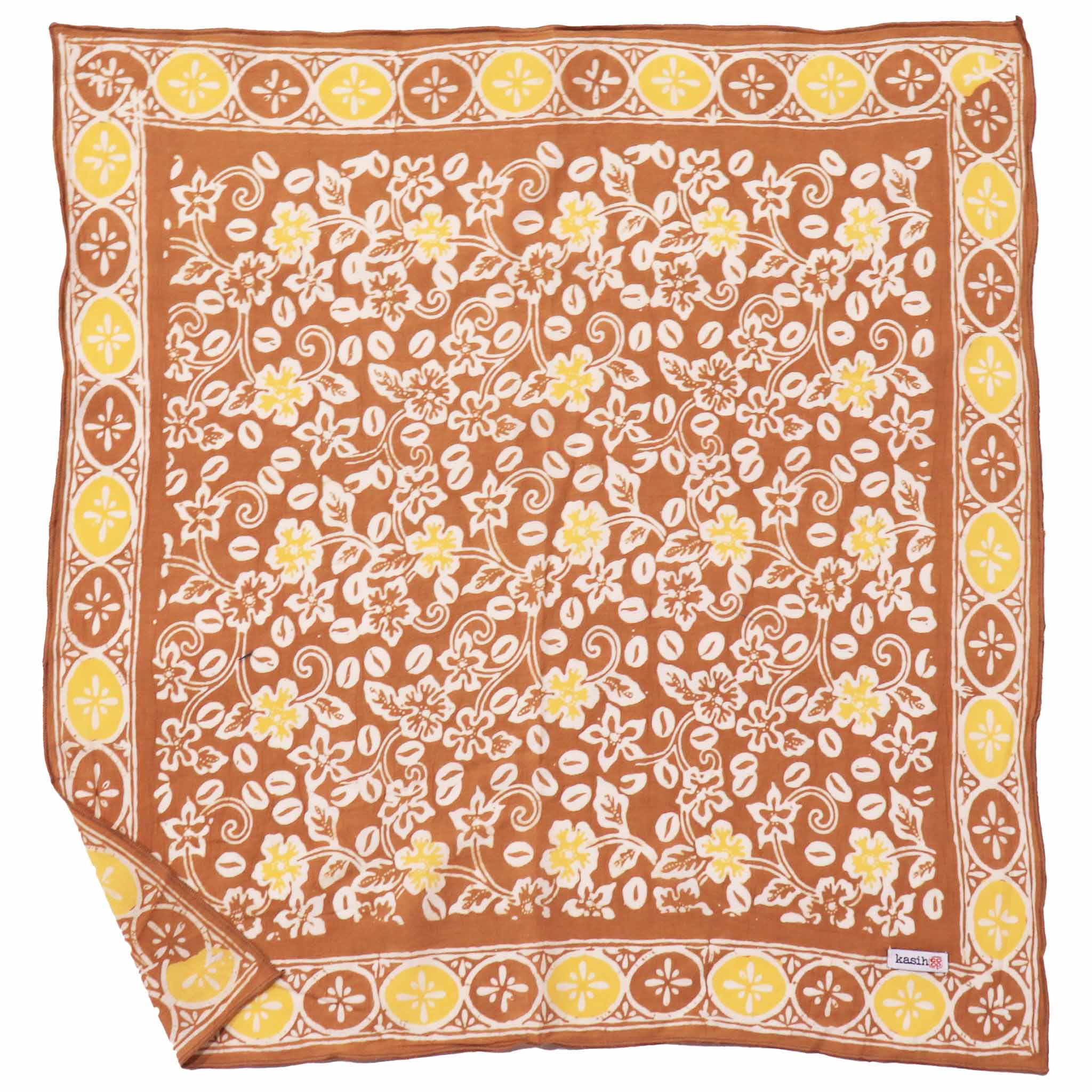
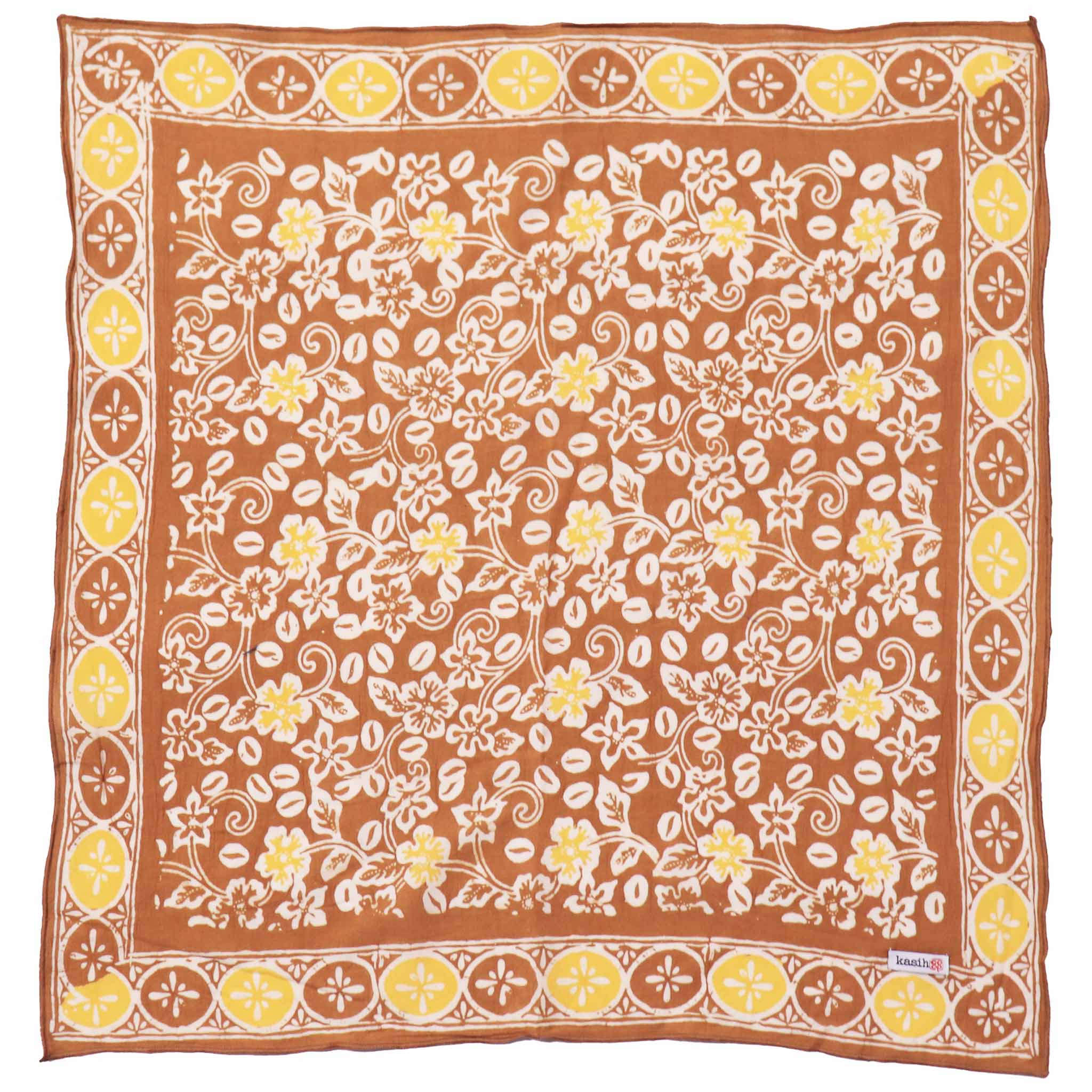
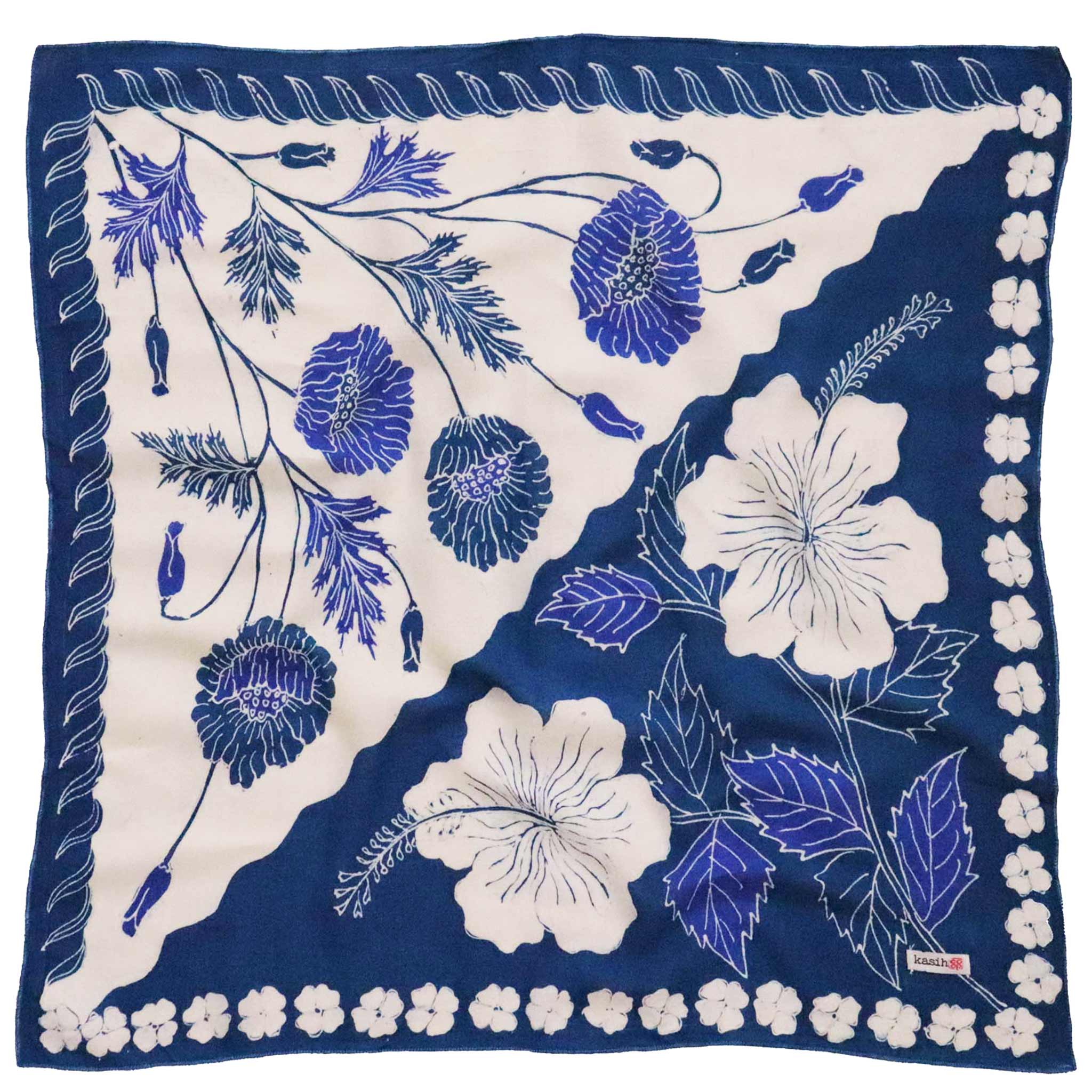
L'hibiscus — connu à travers l'Indonésie sous le nom de kembang sepatu, littéralement « fleur de chaussure » — est l'une des fleurs les plus familières de l'archipel. Il pousse dans presque tous les jardins, utilisé dans les rituels de beauté traditionnels, les offrandes et la vie quotidienne depuis des générations.
Dans la tradition du batik, les motifs floraux comme l'hibiscus symbolisent la croissance, l'ouverture et la grâce féminine. La fleur ne fleurit qu'un seul jour — un rappel silencieux dans la philosophie javanaise d'être pleinement présent dans l'instant. Ce bandana, blanc éclatant sur noir profond, porte tout cela en toute discrétion.
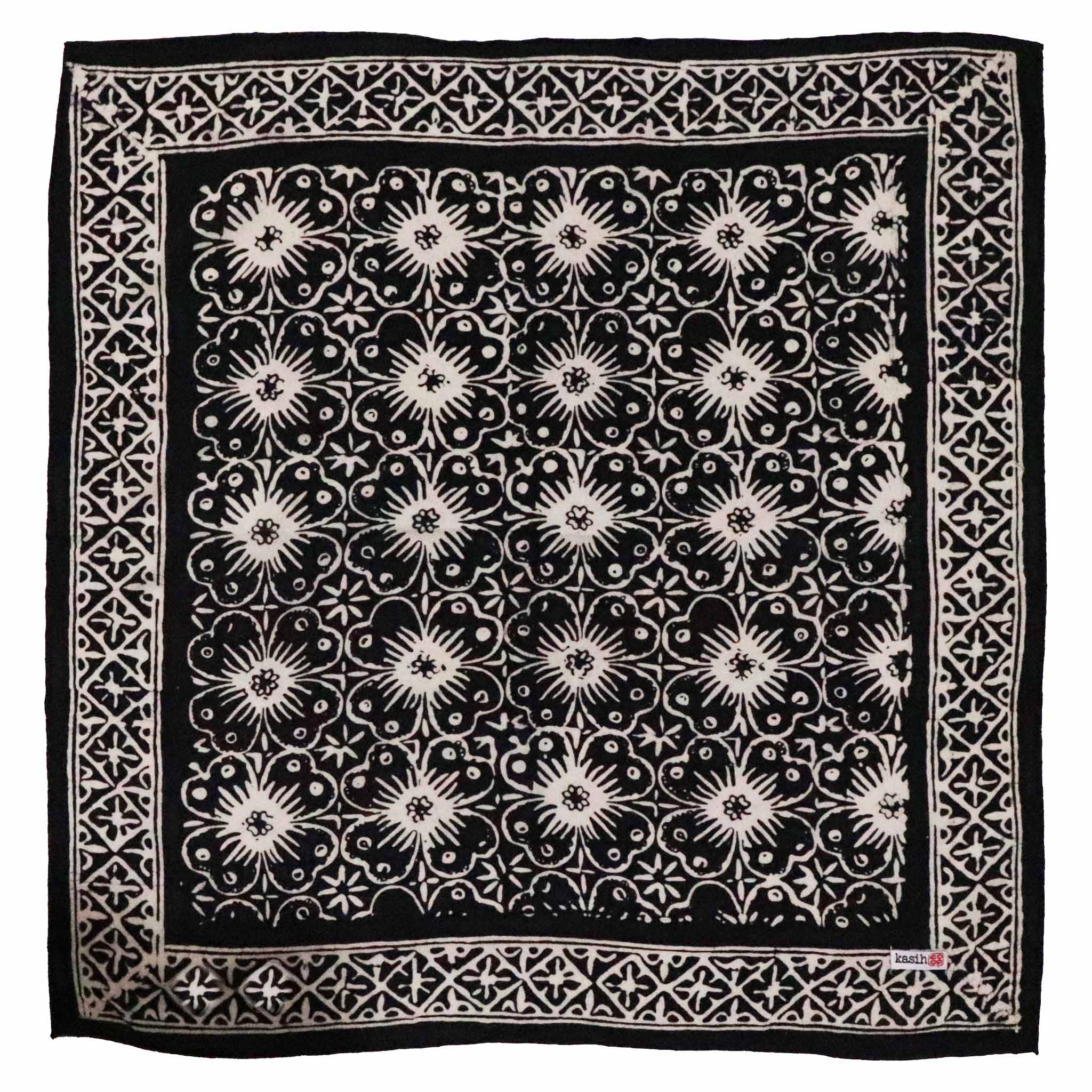
Motif en vedette n° 5 — Charcoal Gray
Motif traditionnel : Kawung

Afficher l'image Les formes géométriques en moulin à vent de ce bandana remontent à l'un des plus anciens motifs de batik de Java : le kawung. Le motif — quatre formes ovales ou circulaires disposées autour d'un point central — est censé représenter le fruit du palmier aren, la fleur de lotus, ou même les quatre points cardinaux.
Le kawung est un motif profondément philosophique. Dans la pensée javanaise, il symbolise la pureté, l'ordre cosmique et l'équilibre de la vie intérieure et extérieure. Comme le truntum, il était historiquement réservé à la royauté javanaise. Porter le kawung était une affirmation de maîtrise de soi et de raffinement spirituel. En noir et blanc éclatant, notre Onyx Pinwheel fait cette déclaration simplement et puissamment.
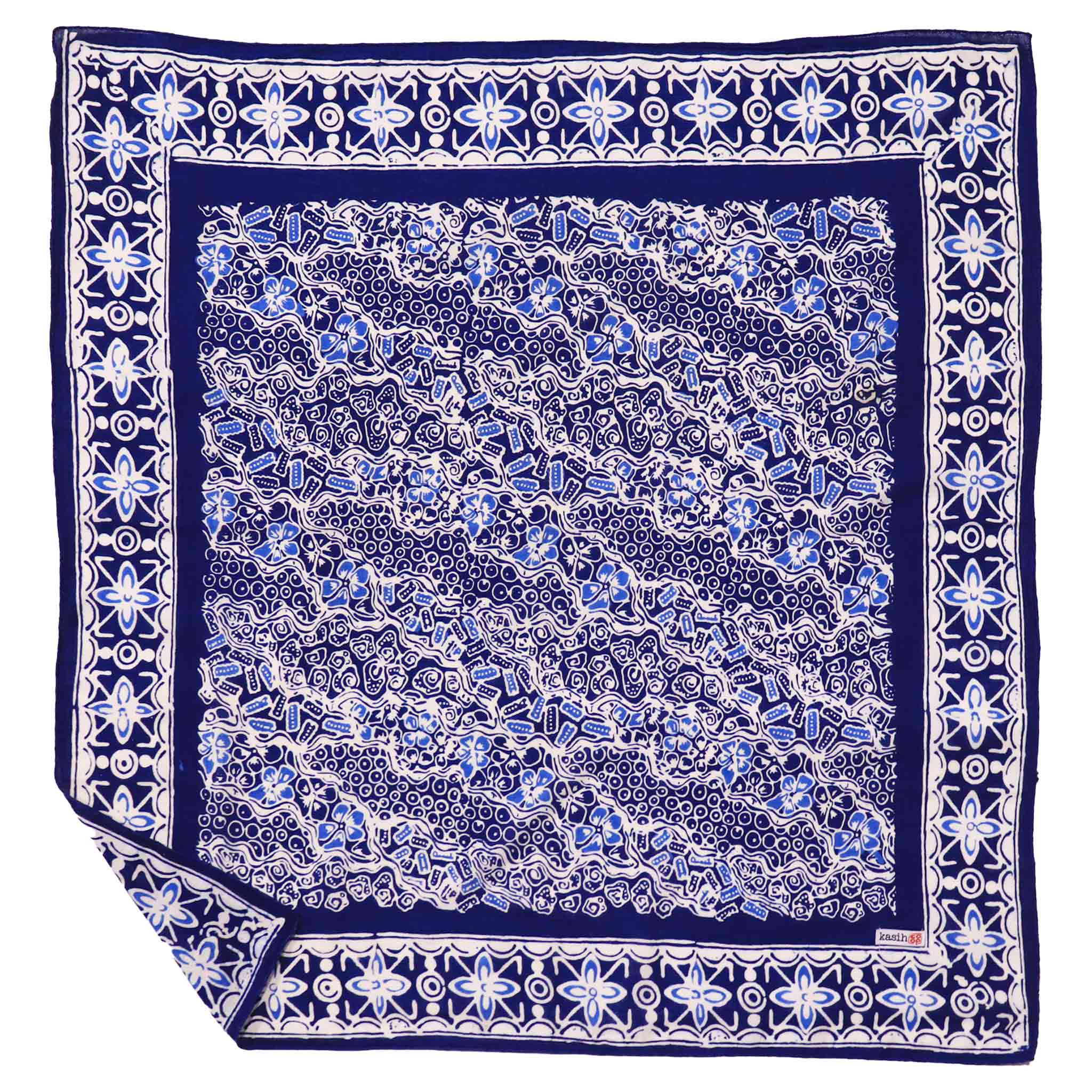
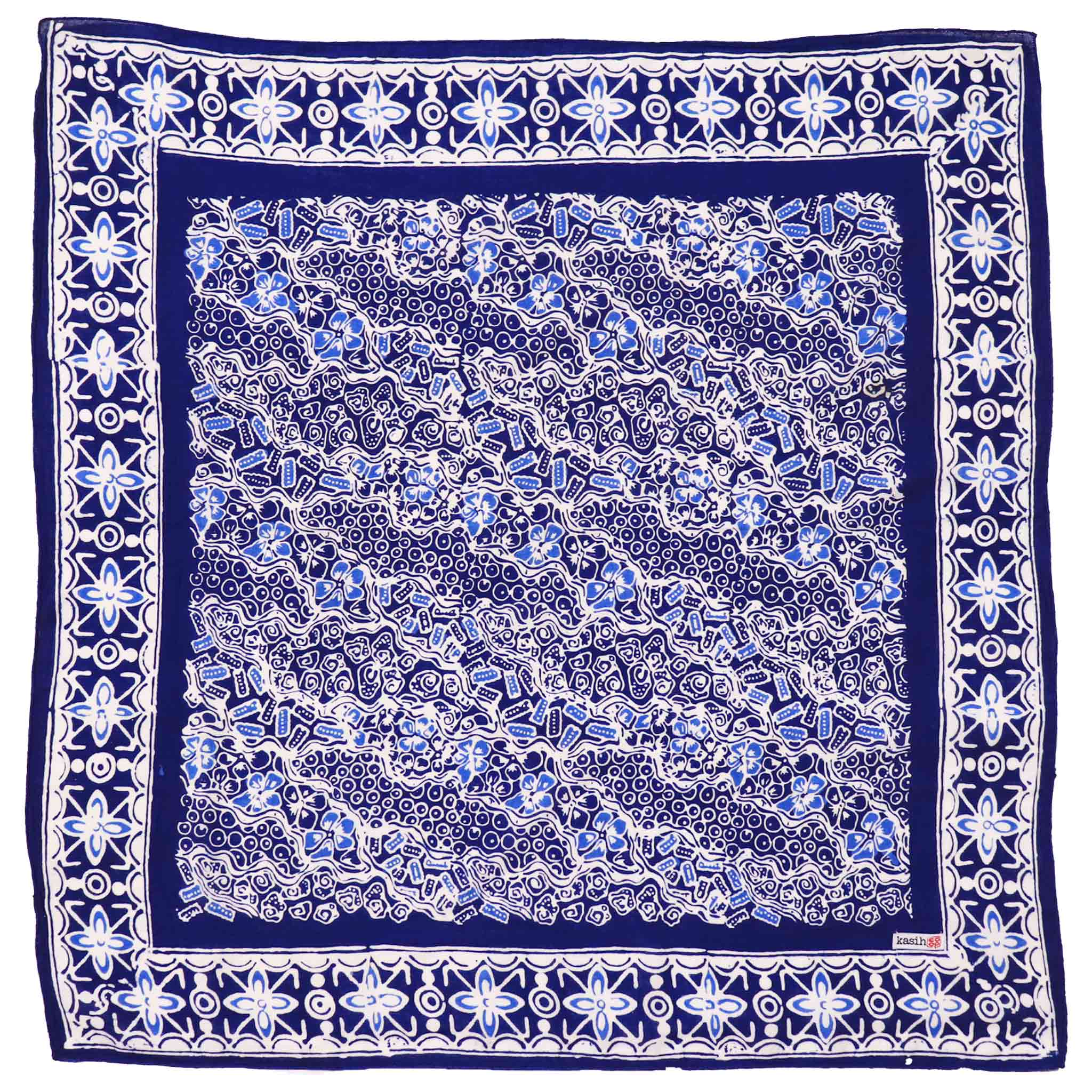
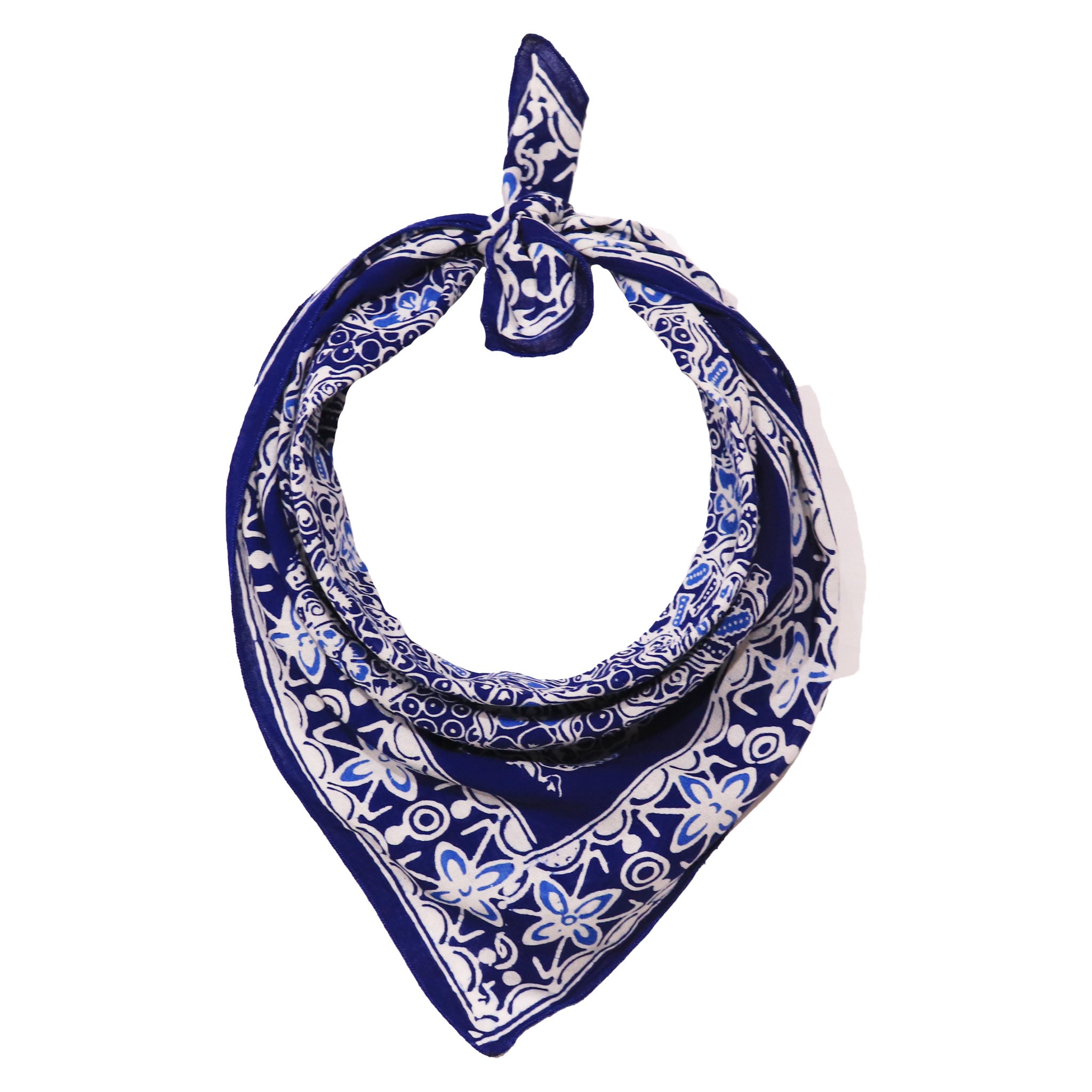
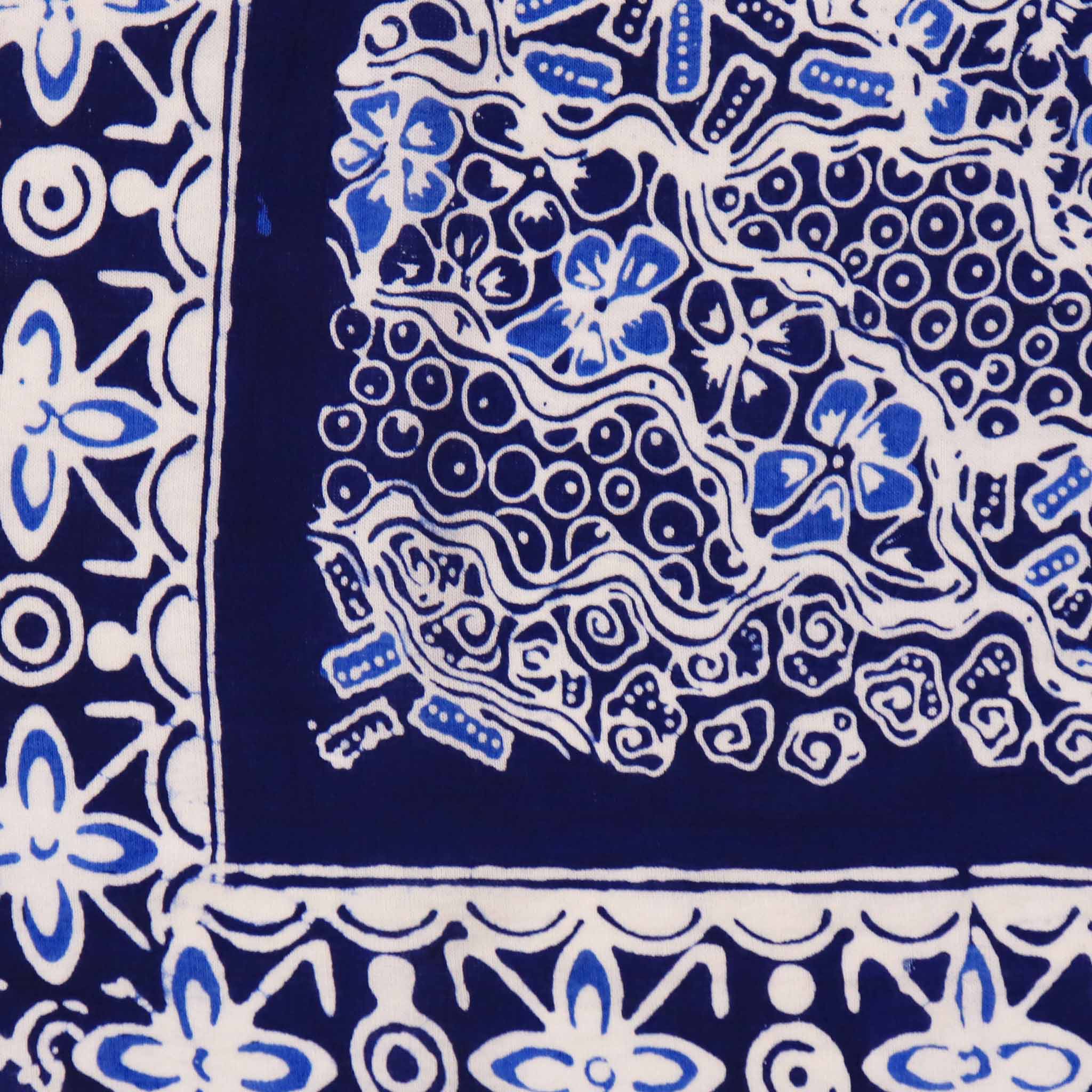
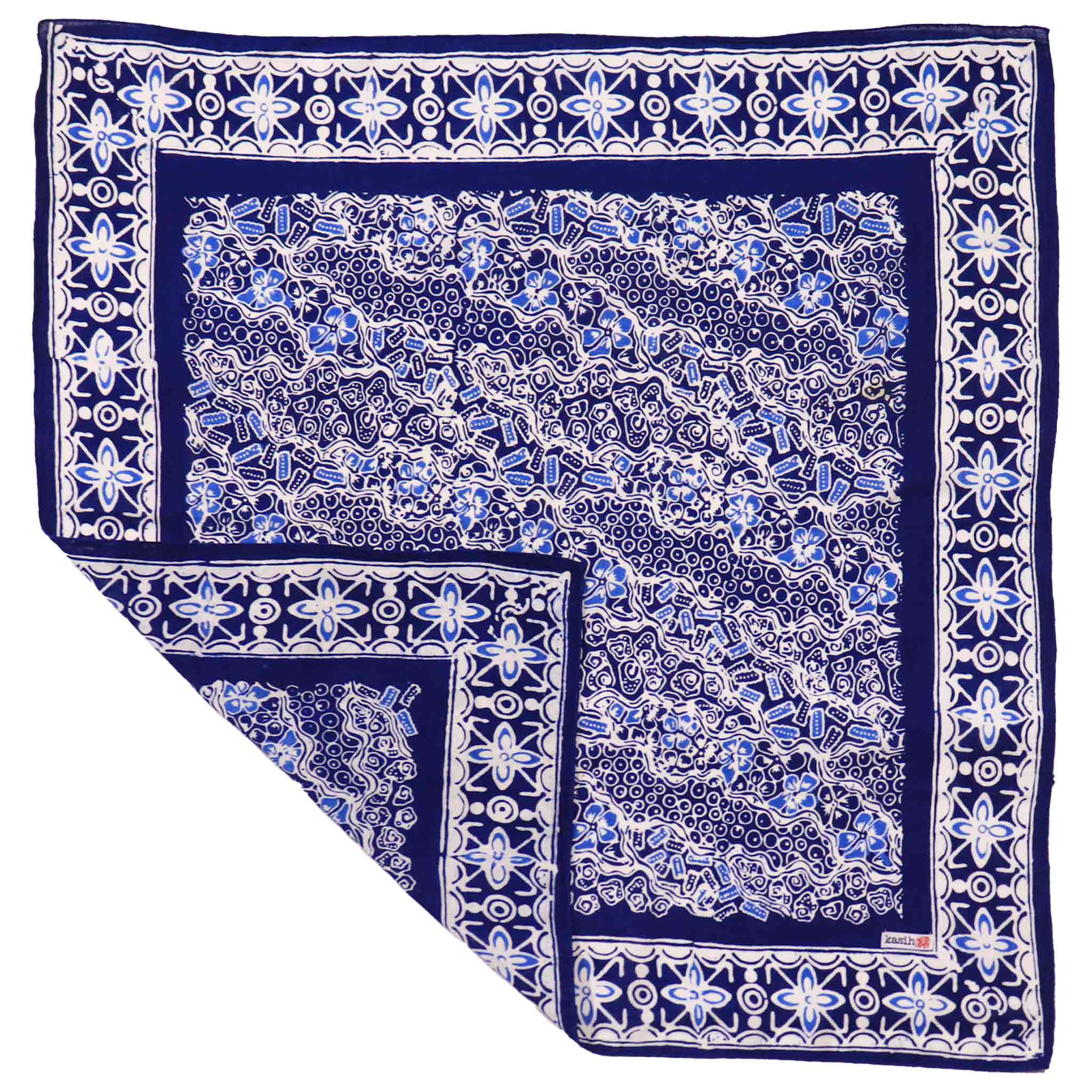
Motif en vedette n° 6 — Indigo Butterfly (Batik Tulis)
Technique : Batik Tulis entièrement dessiné à la main · Teinture naturelle à l'indigo

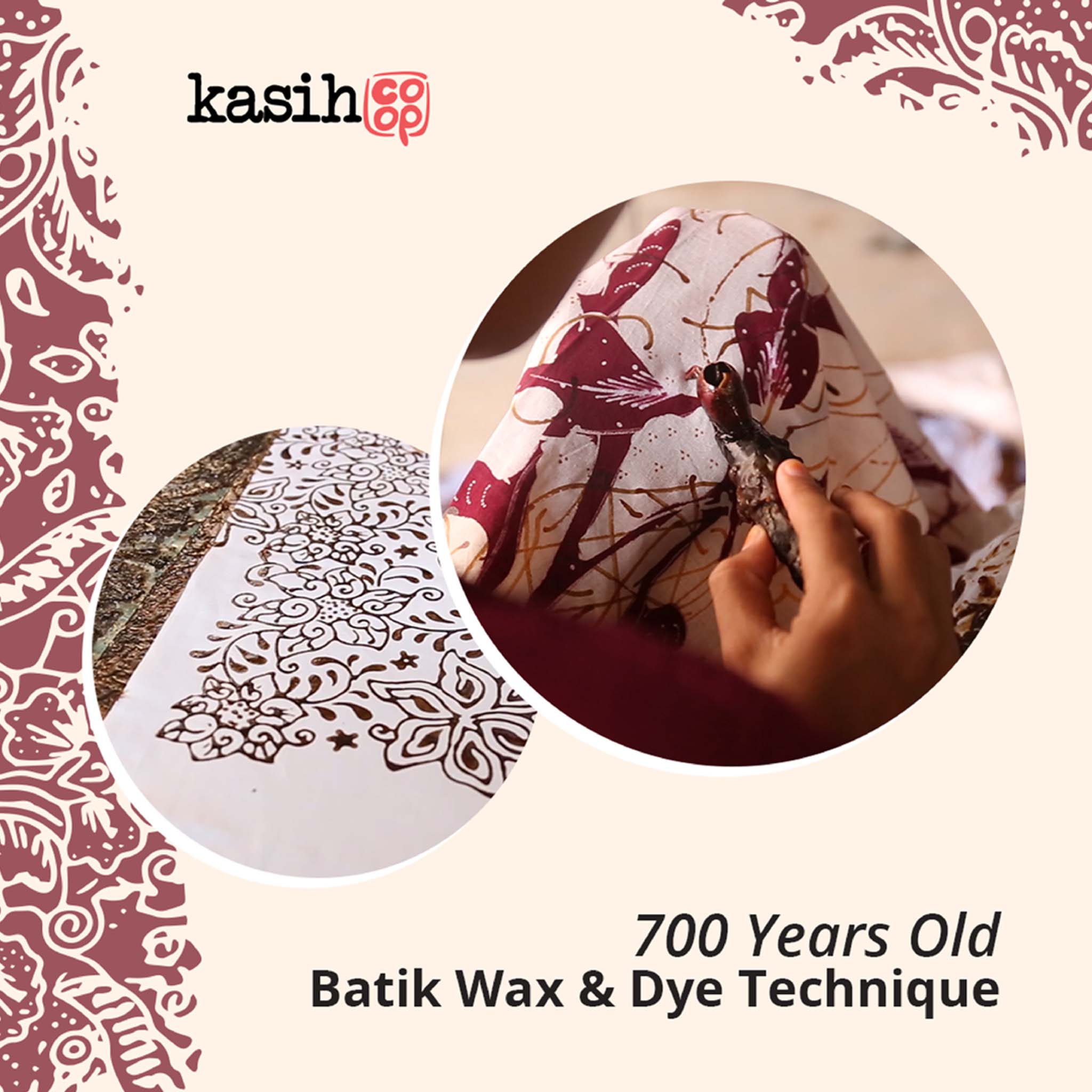
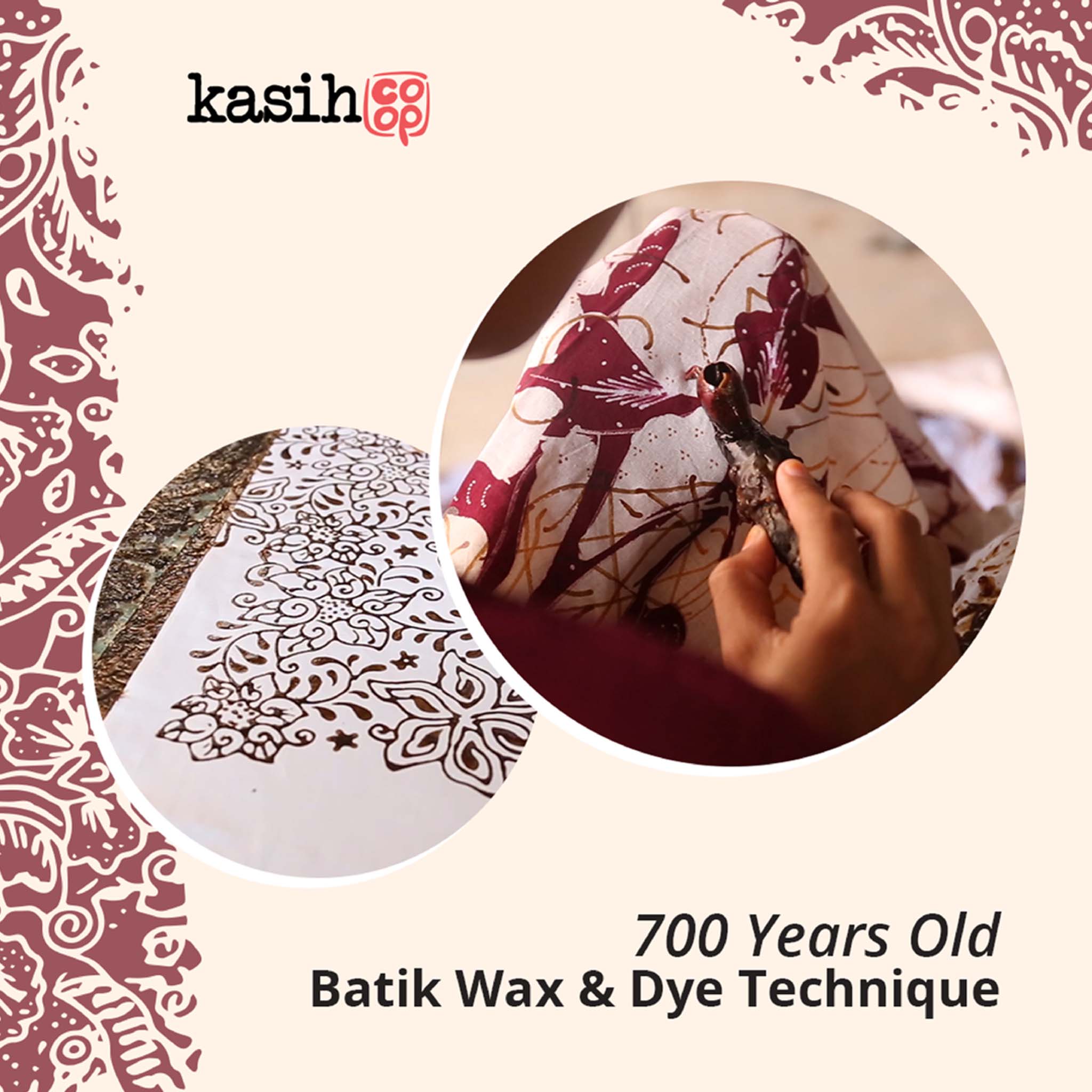
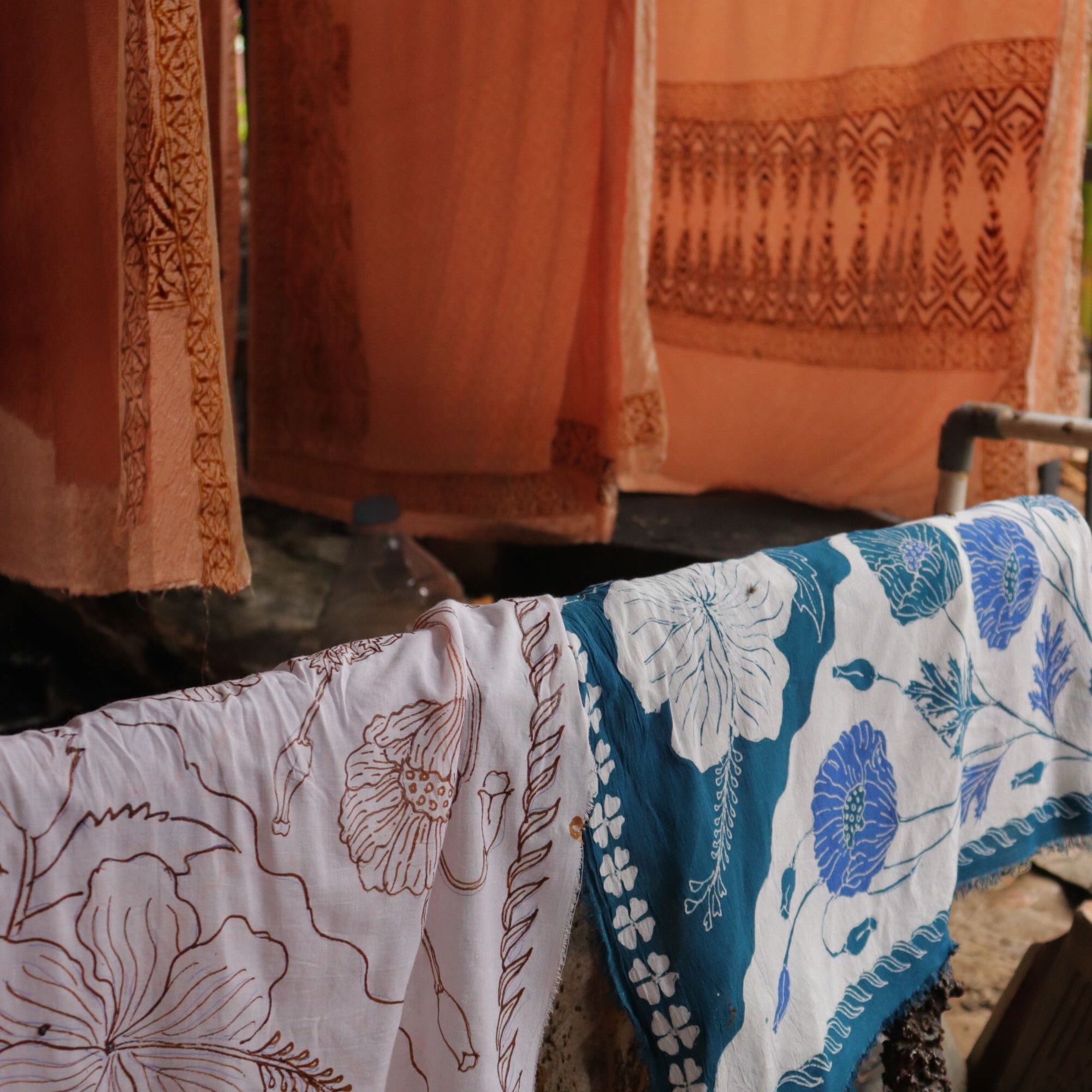
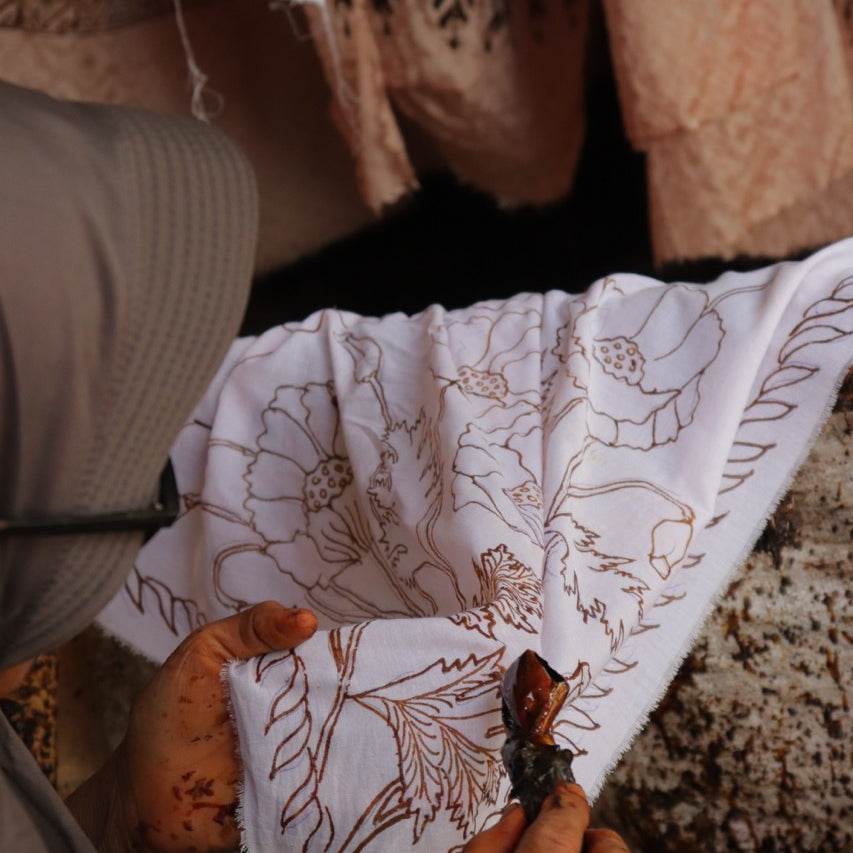
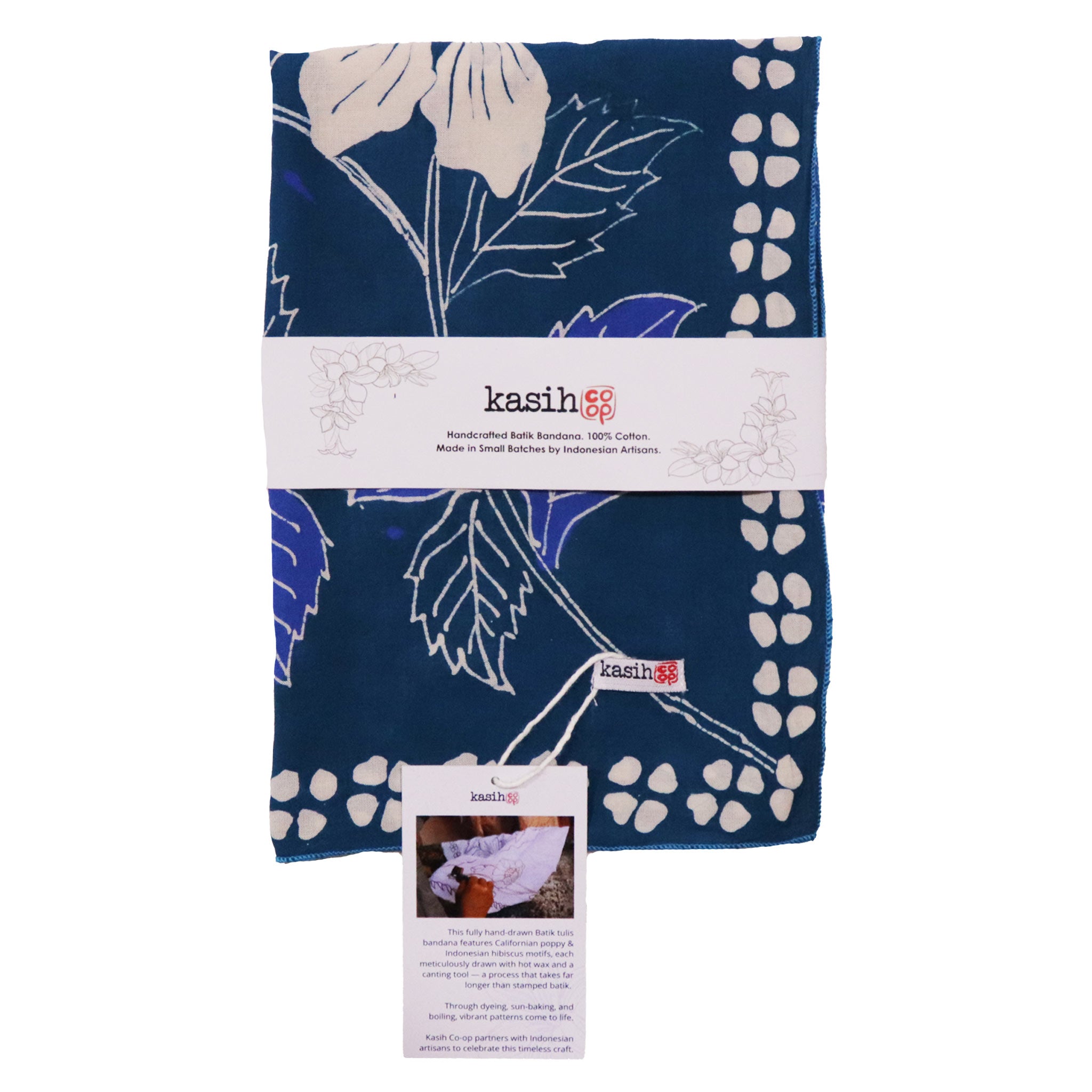
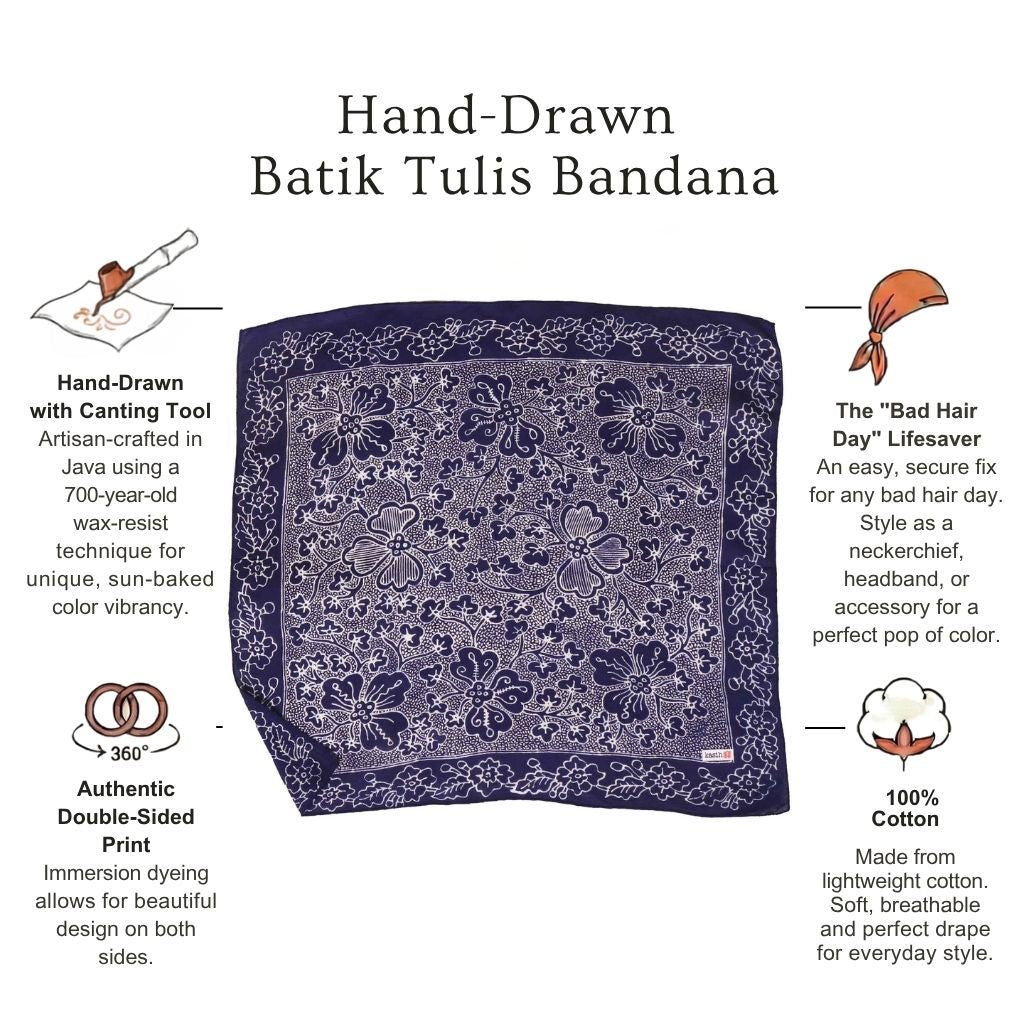
C'est notre bandana le plus spécial. Chaque ligne de cette pièce a été tracée à la main à l'aide d'un canting — un petit stylo à pointe de cuivre rempli de cire chaude. Pas de tampons. Pas de raccourcis. Juste un artisan, une main ferme et des heures de travail patient. C'est le batik tulis : la forme la plus élevée de l'artisanat.
La teinture indigo provient de la plante Indigofera tinctoria, une source botanique naturelle utilisée dans les textiles indonésiens depuis des siècles. Dans la culture indonésienne, le papillon symbolise la transformation, le voyage de l'âme et la beauté de l'impermanence. Le bleu indigo profond — la couleur du ciel nocturne, des eaux profondes — amplifie cette signification calme et introspective.
À 55 $, c'est celui à offrir lorsqu'un cadeau doit vraiment avoir une signification.
Pourquoi le motif que vous choisissez est important
En Indonésie, les gens n'achètent pas seulement du batik. Ils le choisissent — comme vous choisissez ce que vous voulez dire. Une grand-mère choisit un motif truntum pour le mariage de son petit-enfant parce qu'elle connaît la signification des fleurs. Une jeune femme choisit un parang parce qu'elle veut porter un peu de force avec elle ce jour-là. Un homme porte le kawung parce qu'il est attiré par ce qu'il représente.
C'est une belle façon de penser à s'habiller. Pas seulement « qu'est-ce qui me va bien ? » mais « qu'est-ce que je veux porter avec moi aujourd'hui ? »
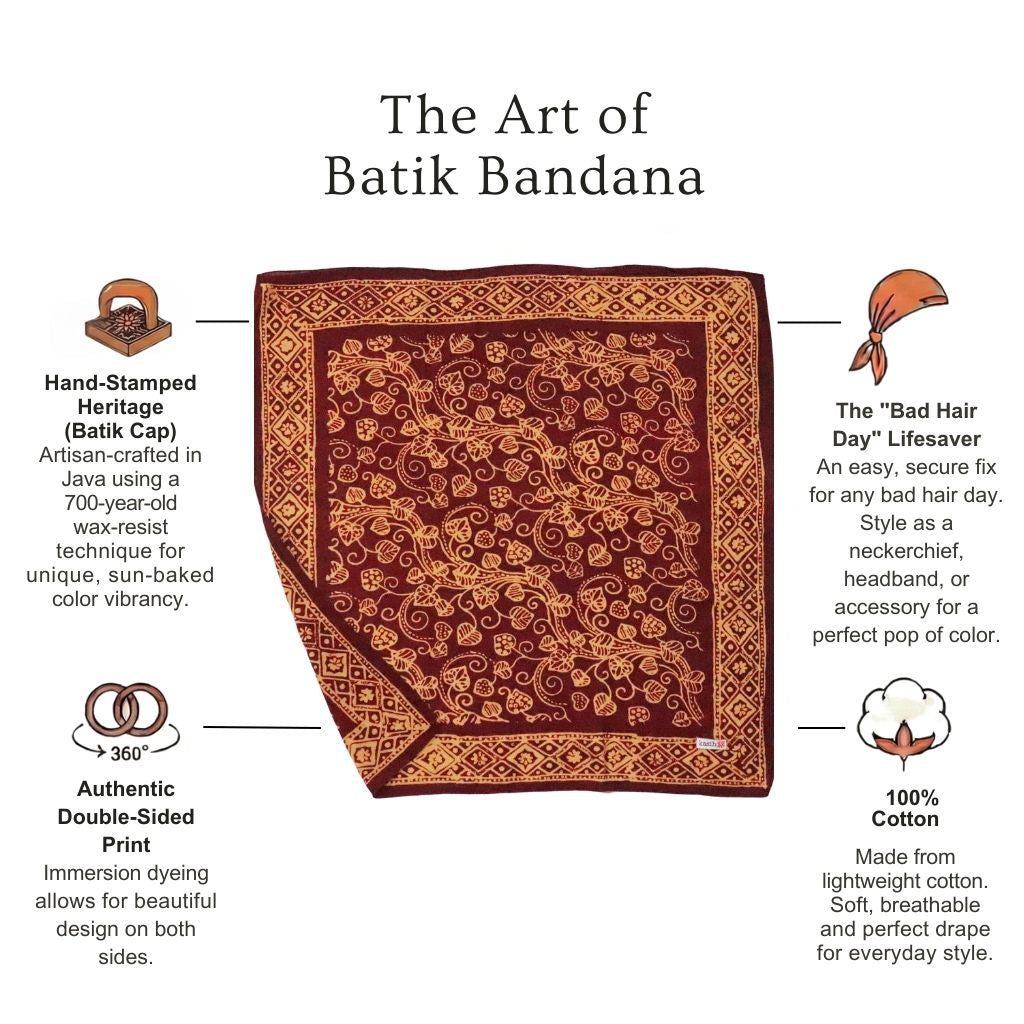
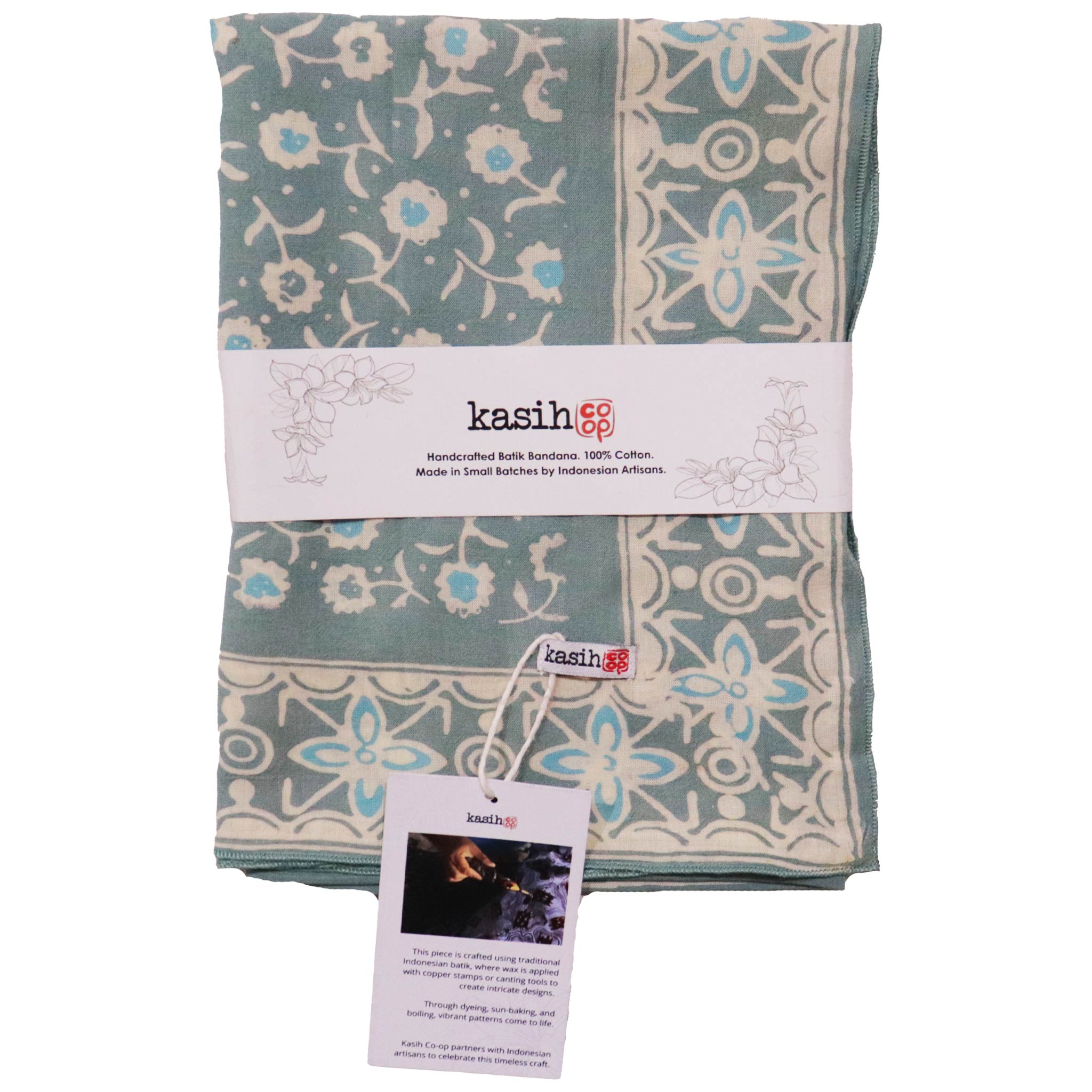
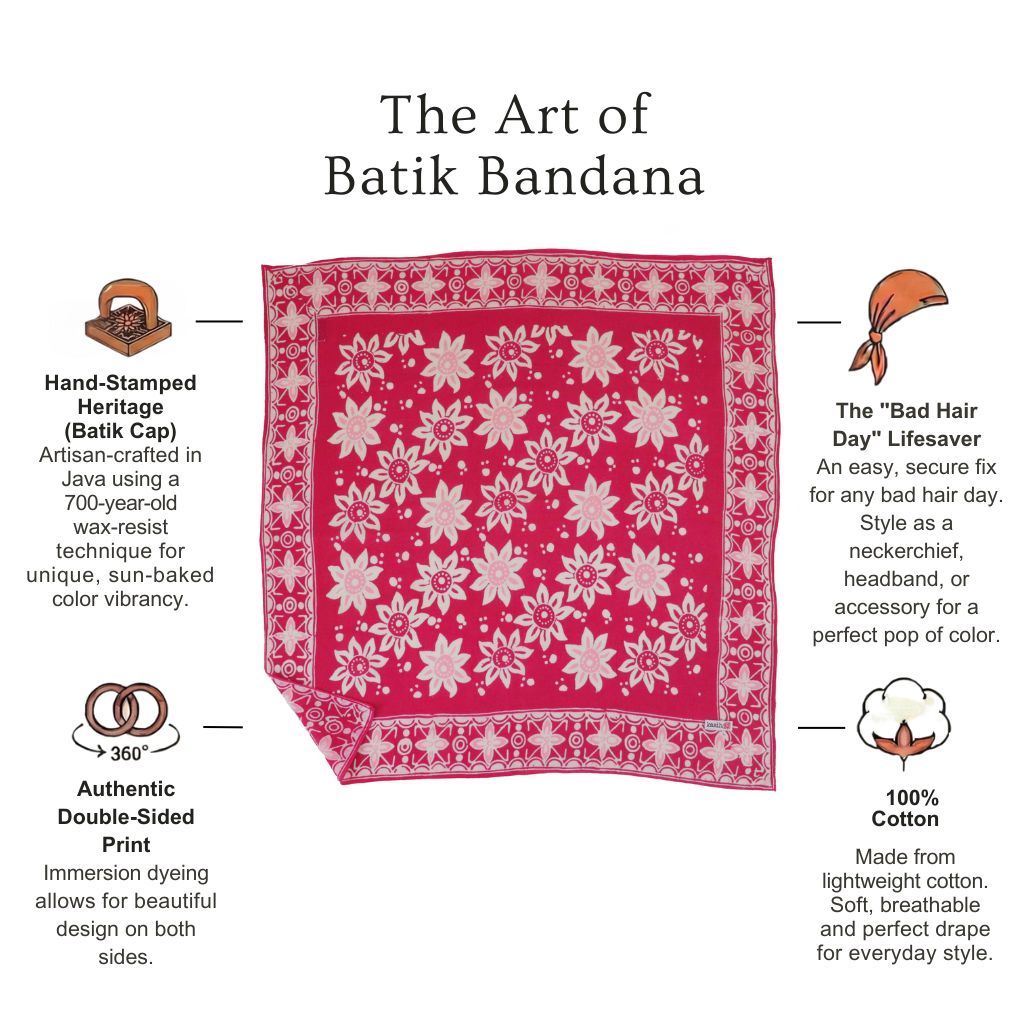
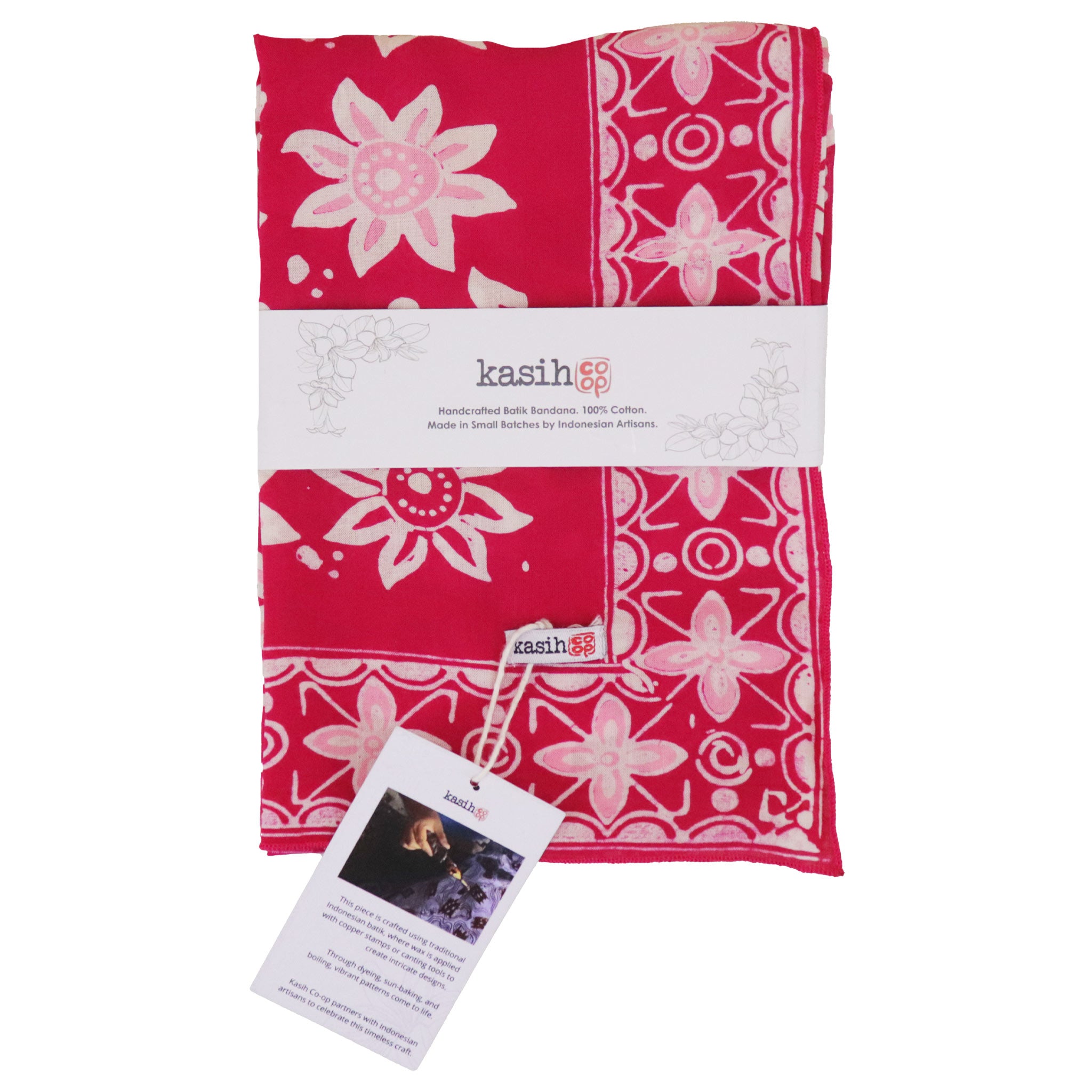
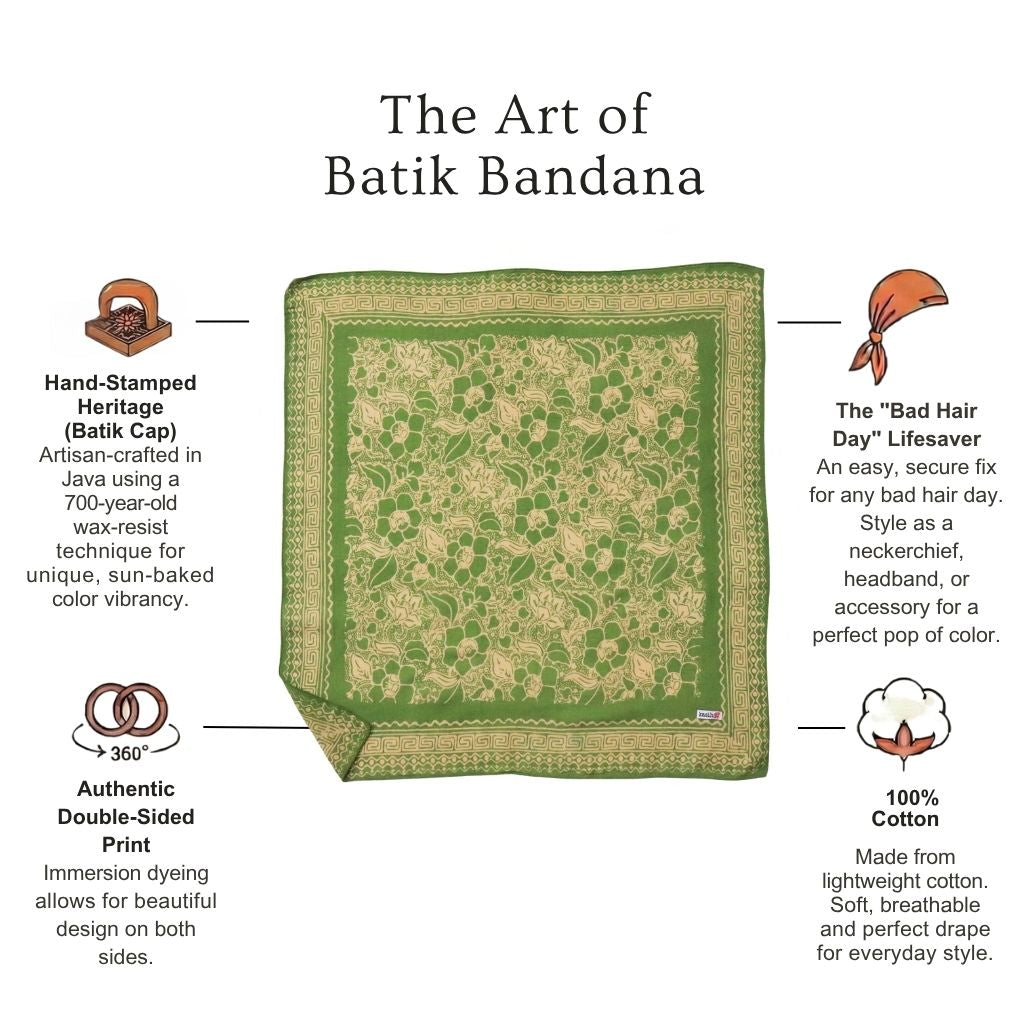
Chaque bandana Kasih Co-op est en 100 % coton doux, teint à la main par des artisans indonésiens, et fabriqué sans raccourcis. Mais maintenant vous savez qu'ils portent un peu plus que cela.