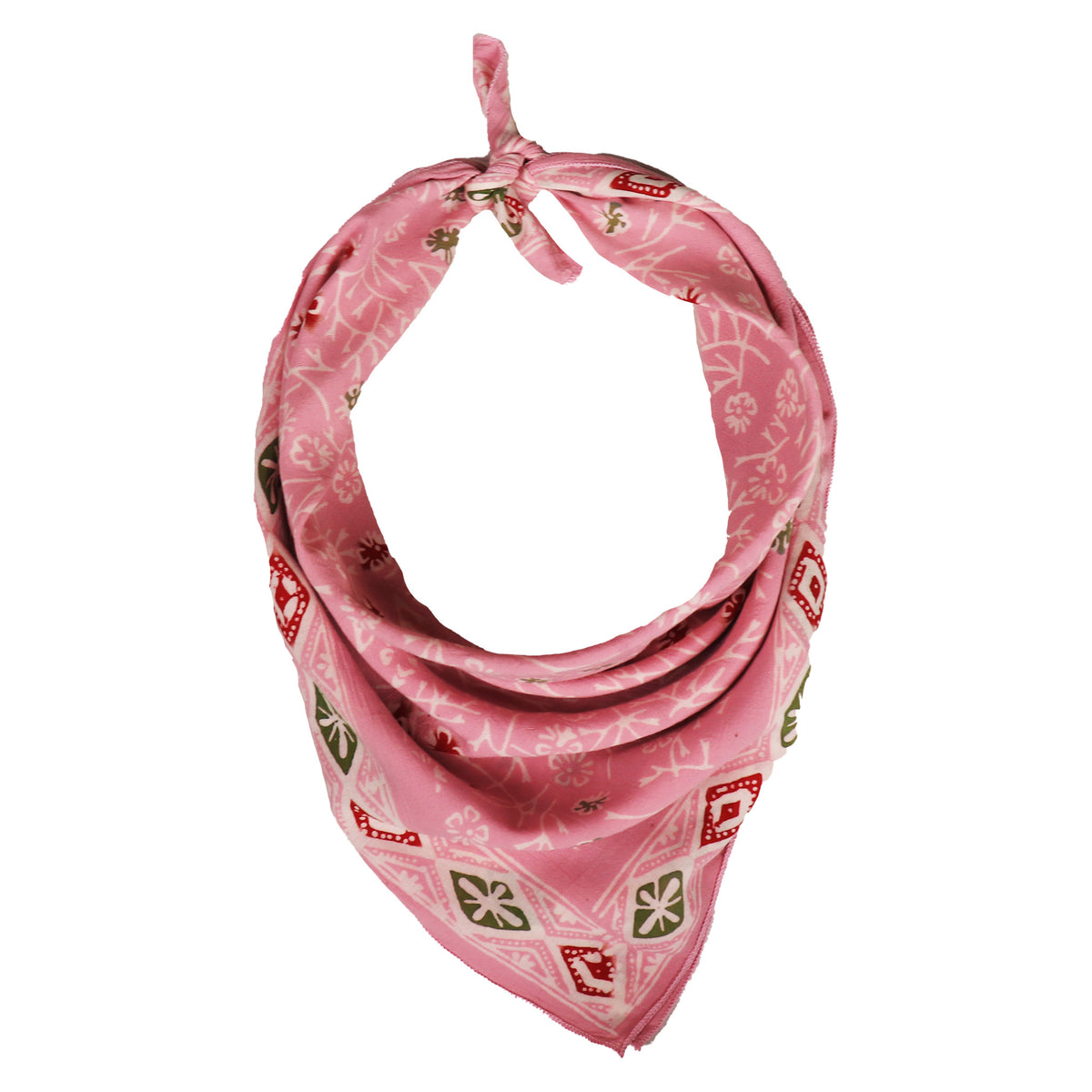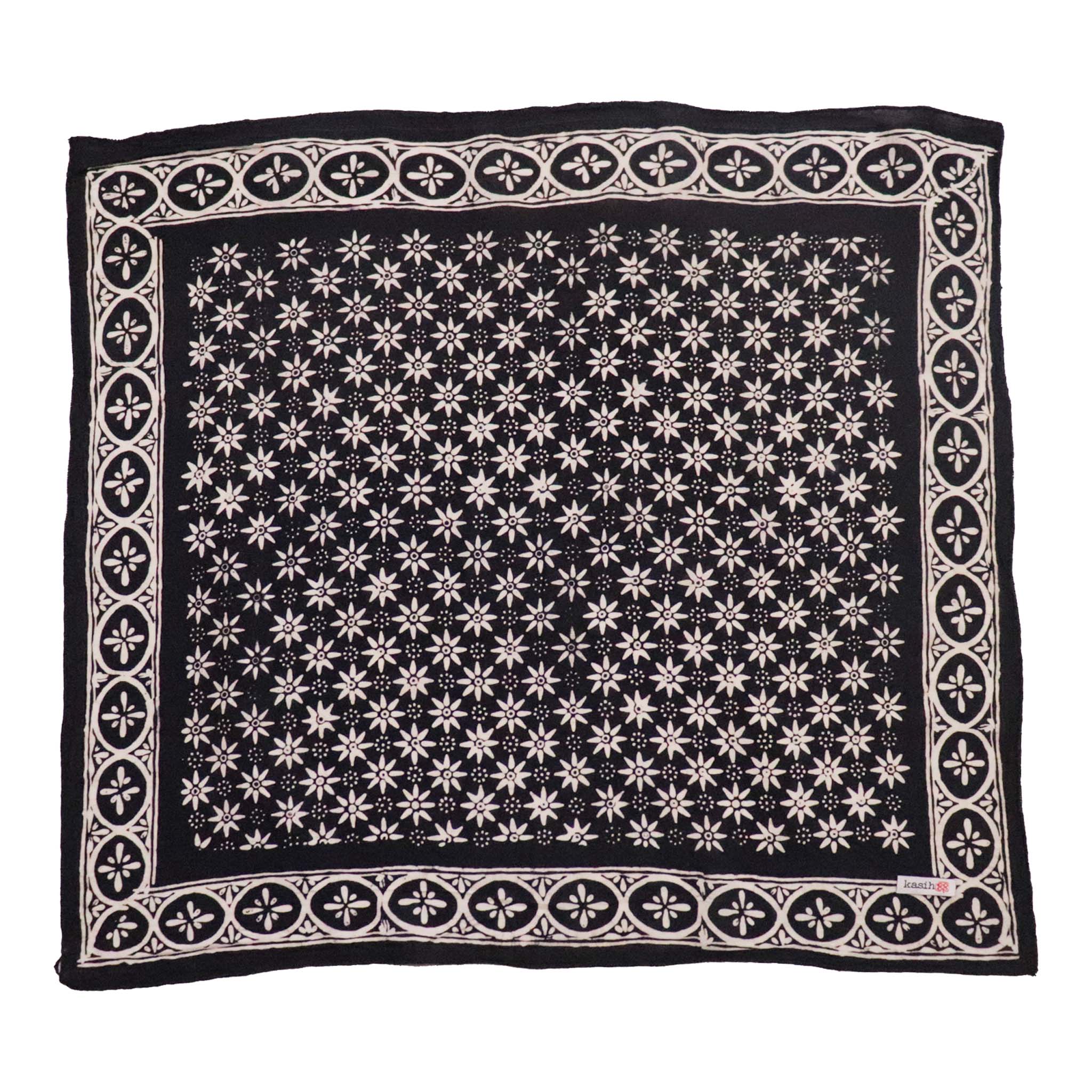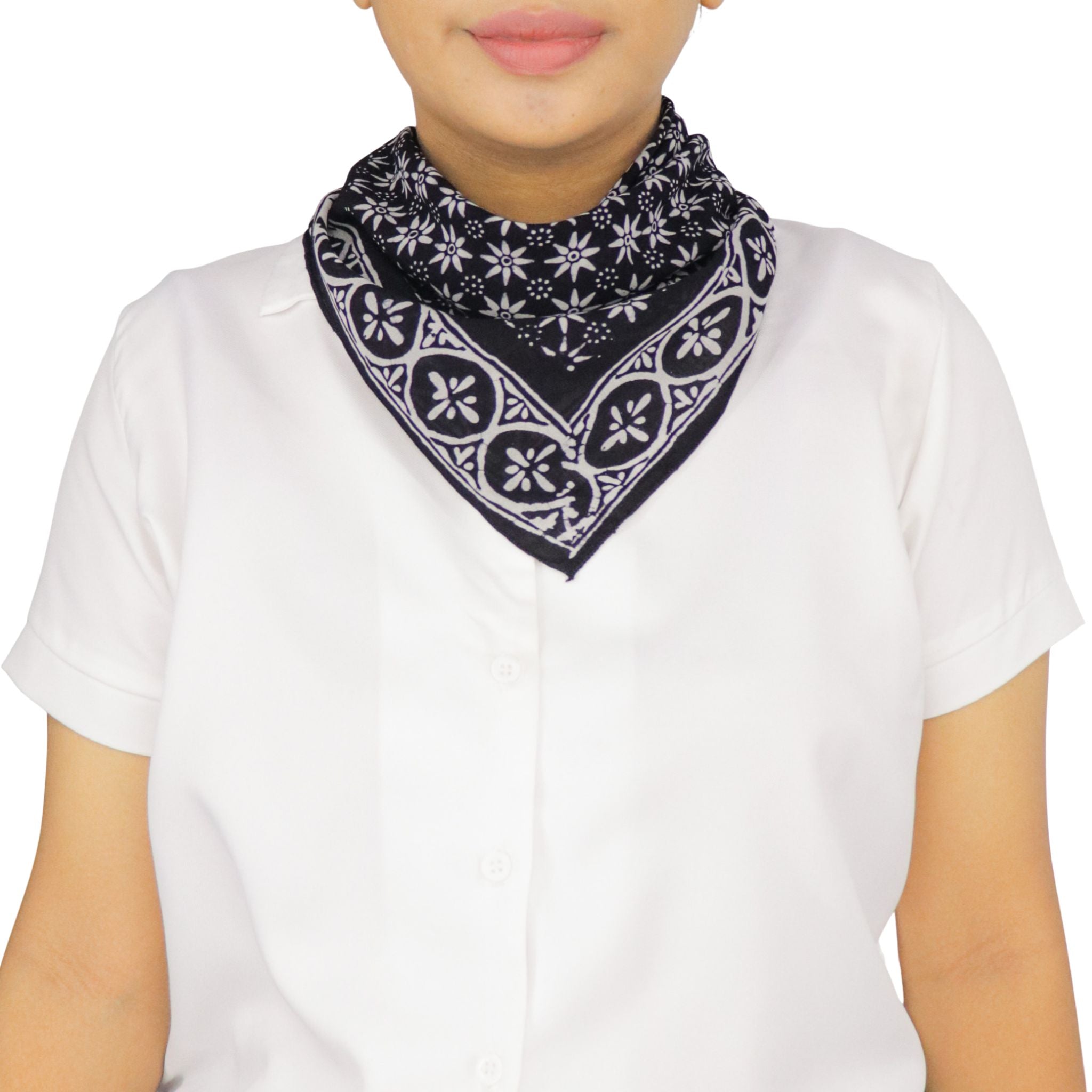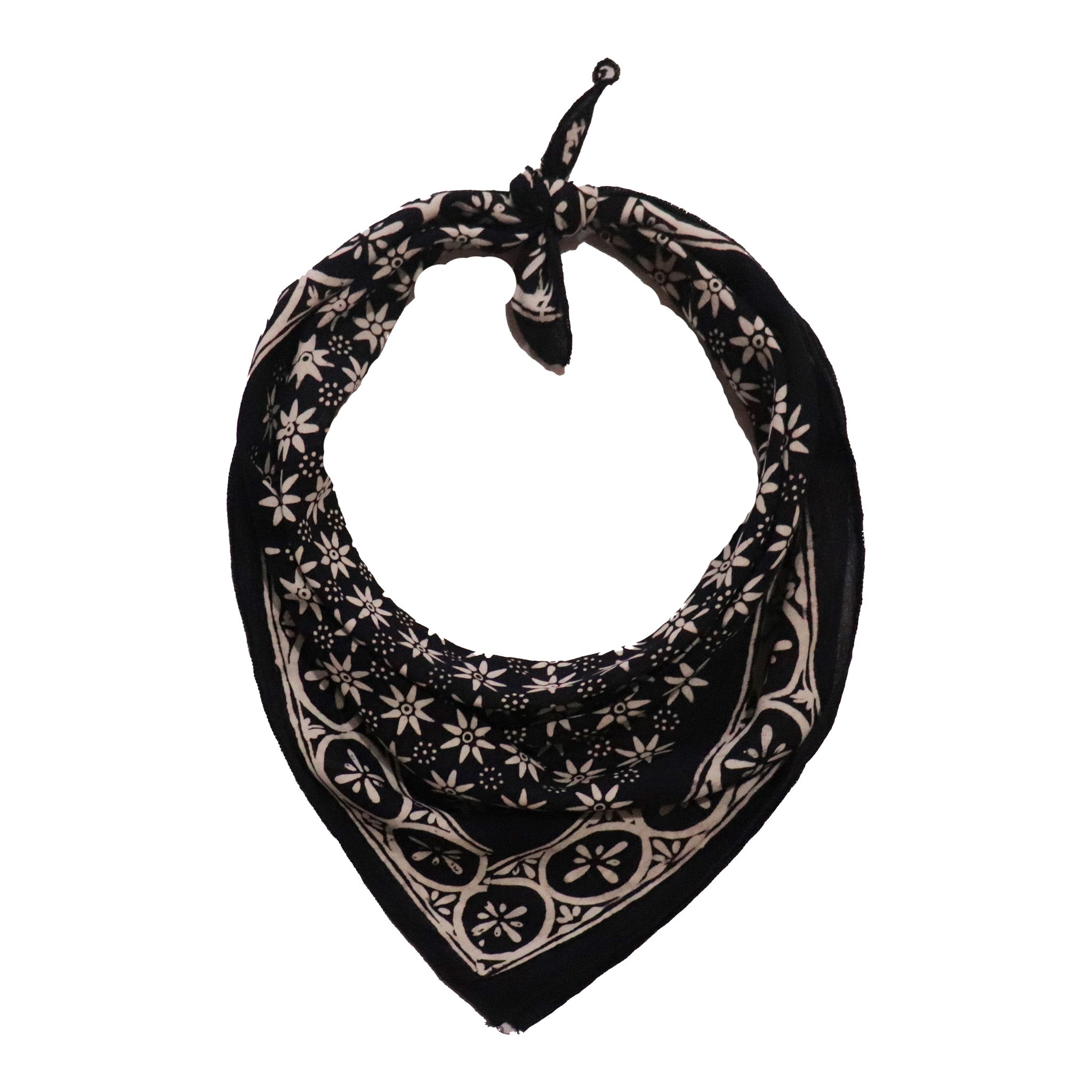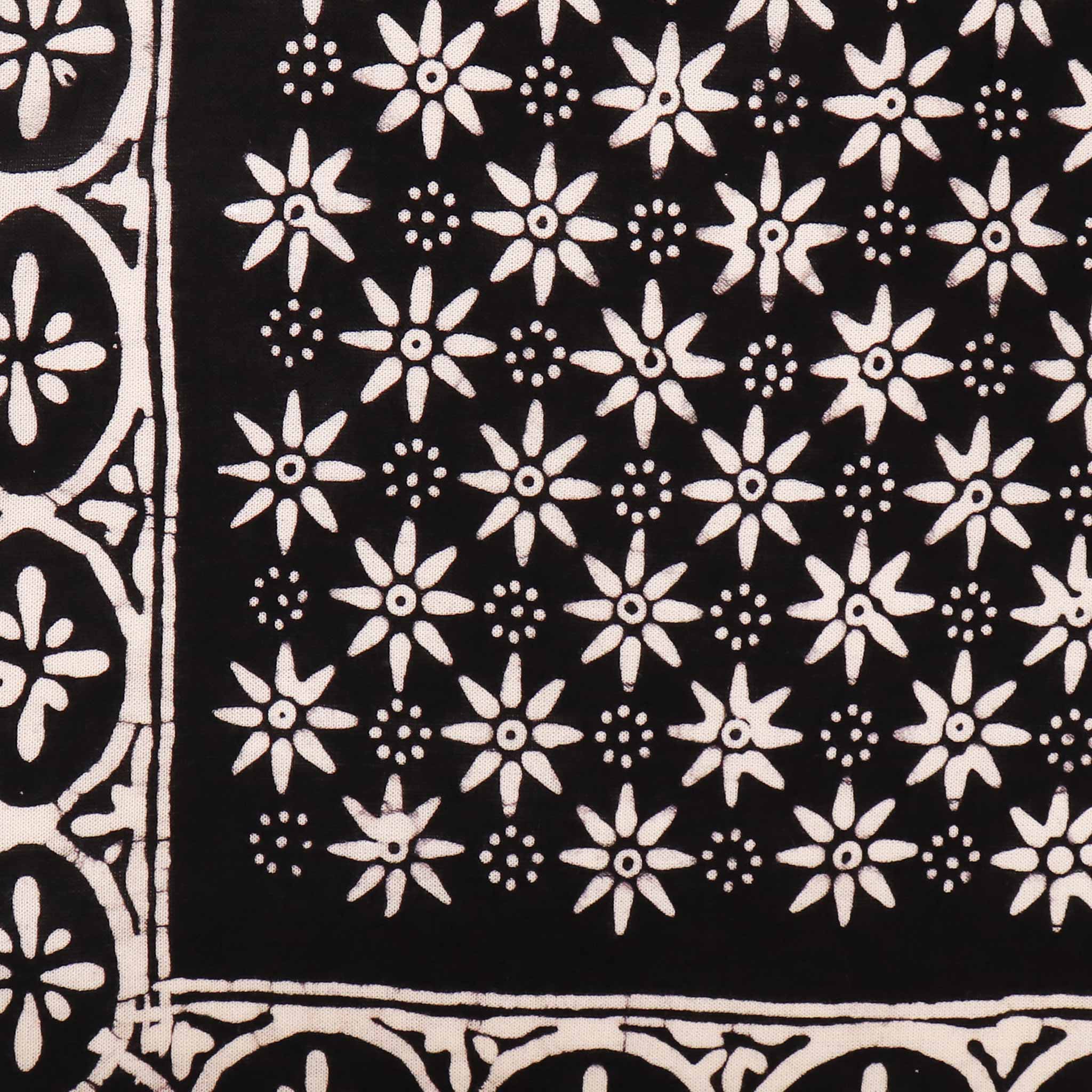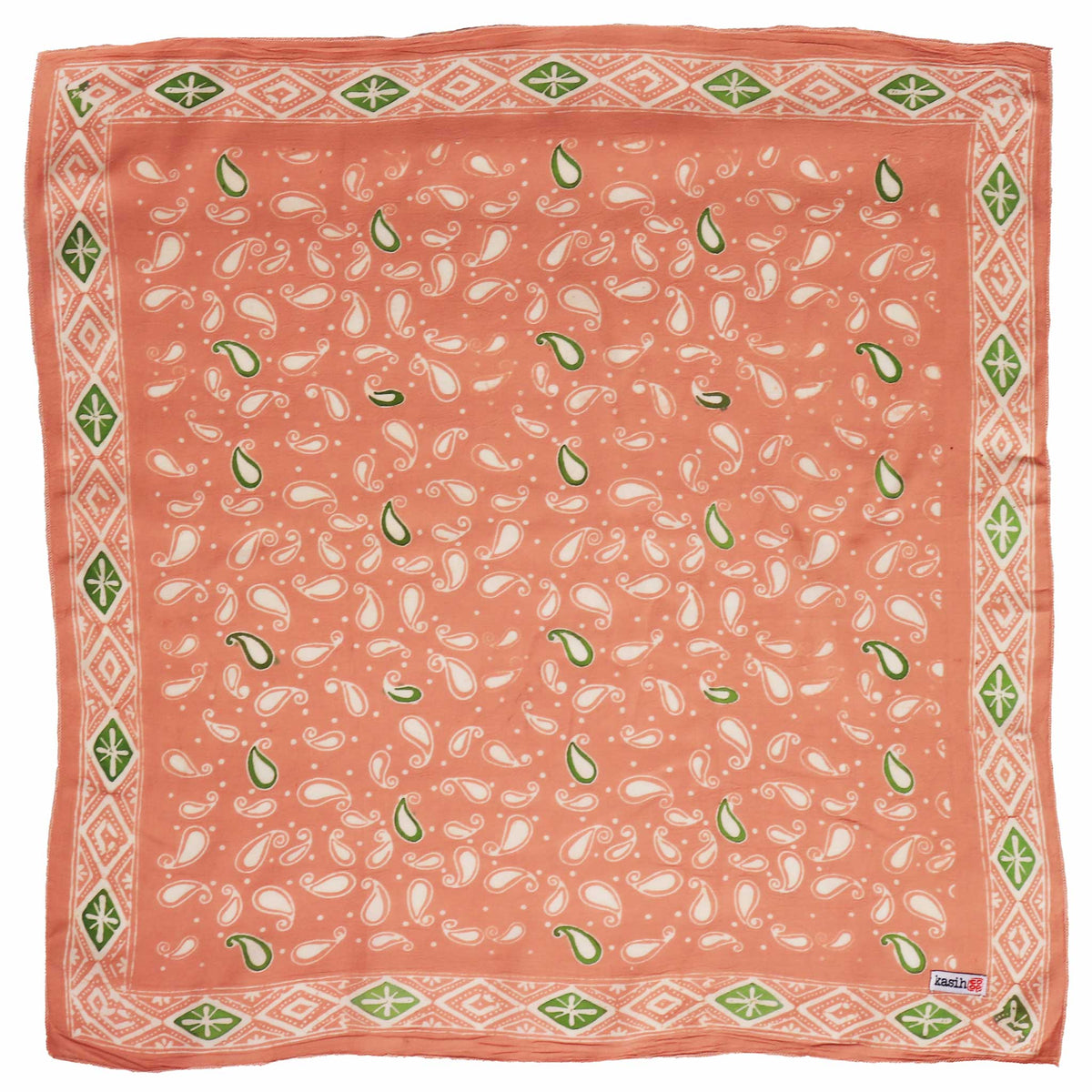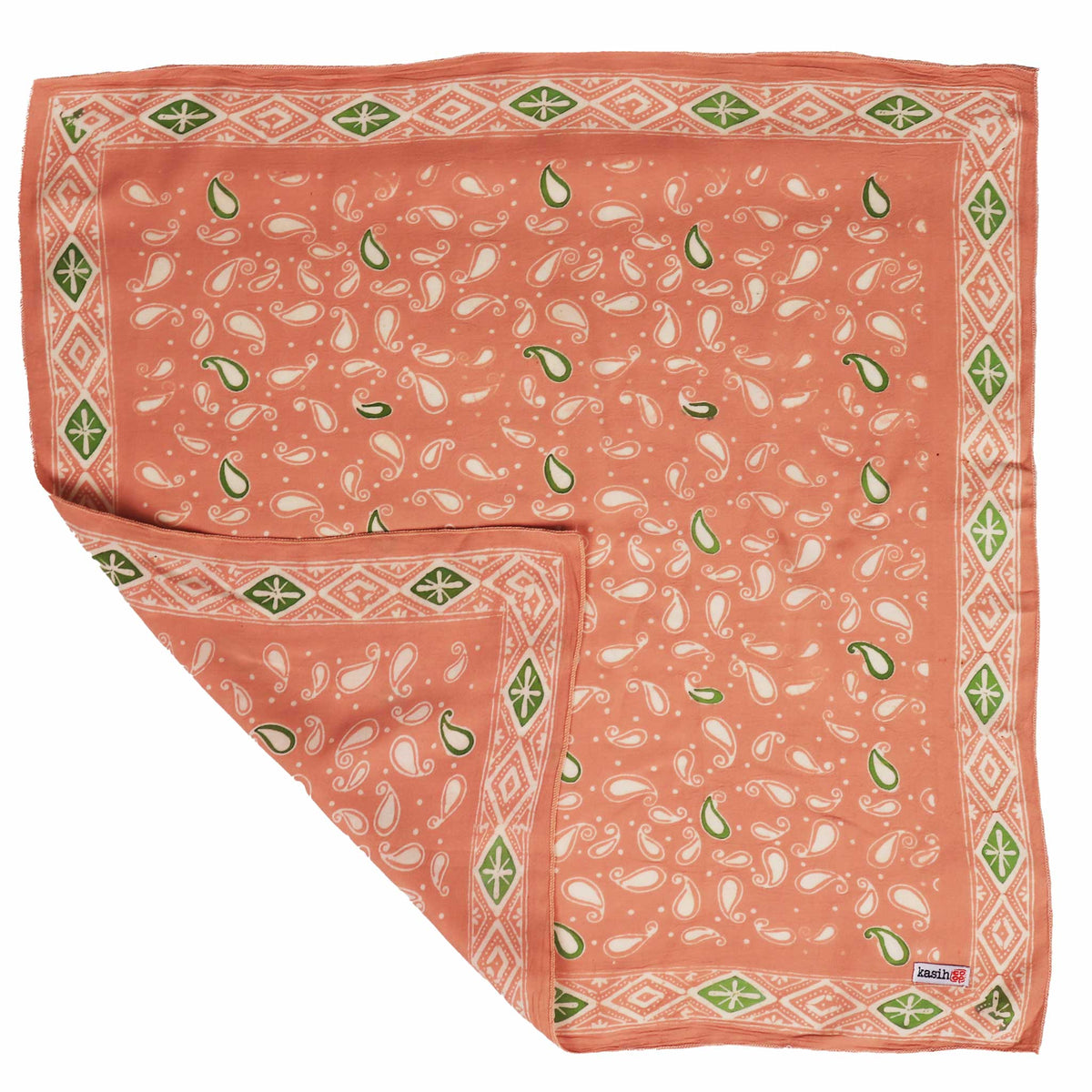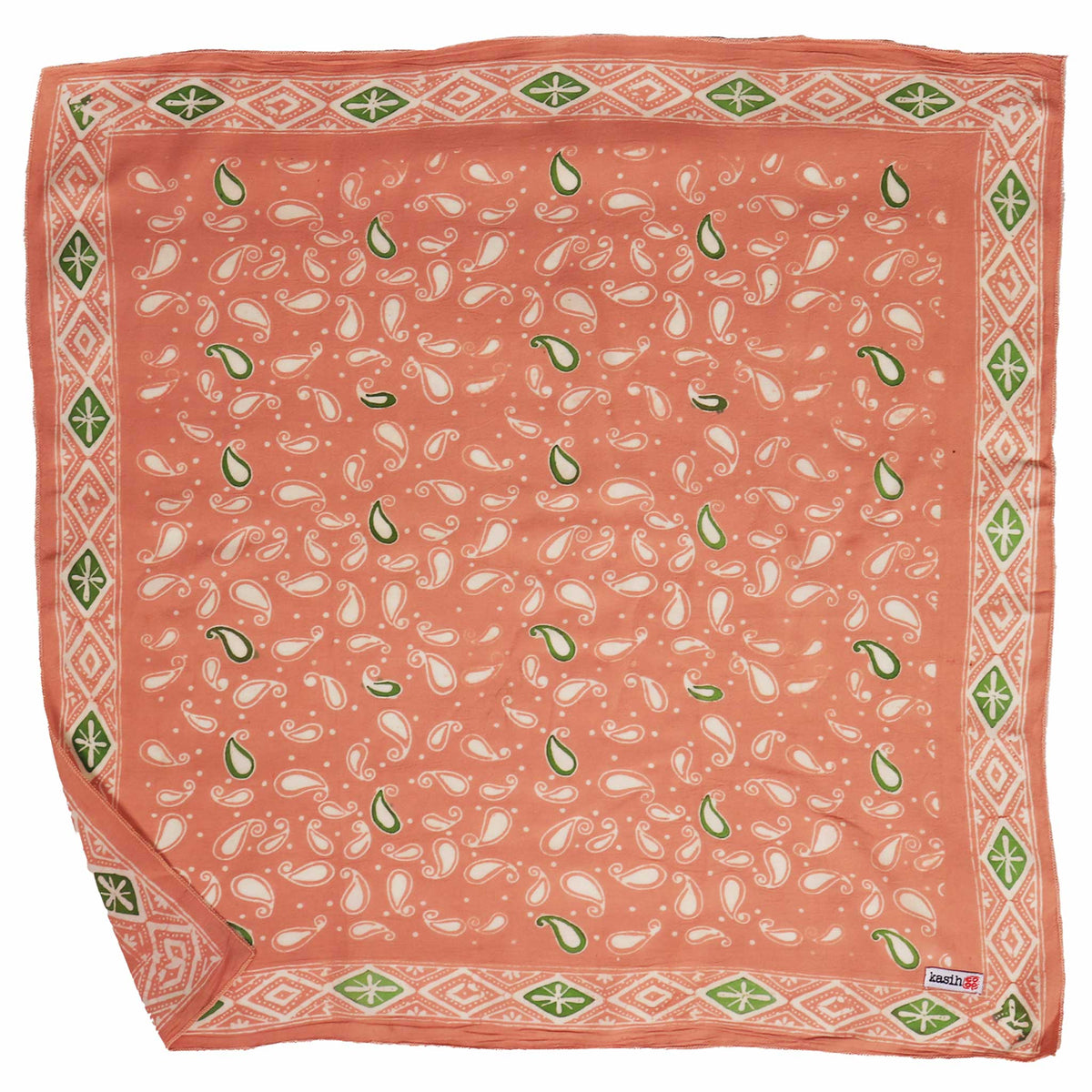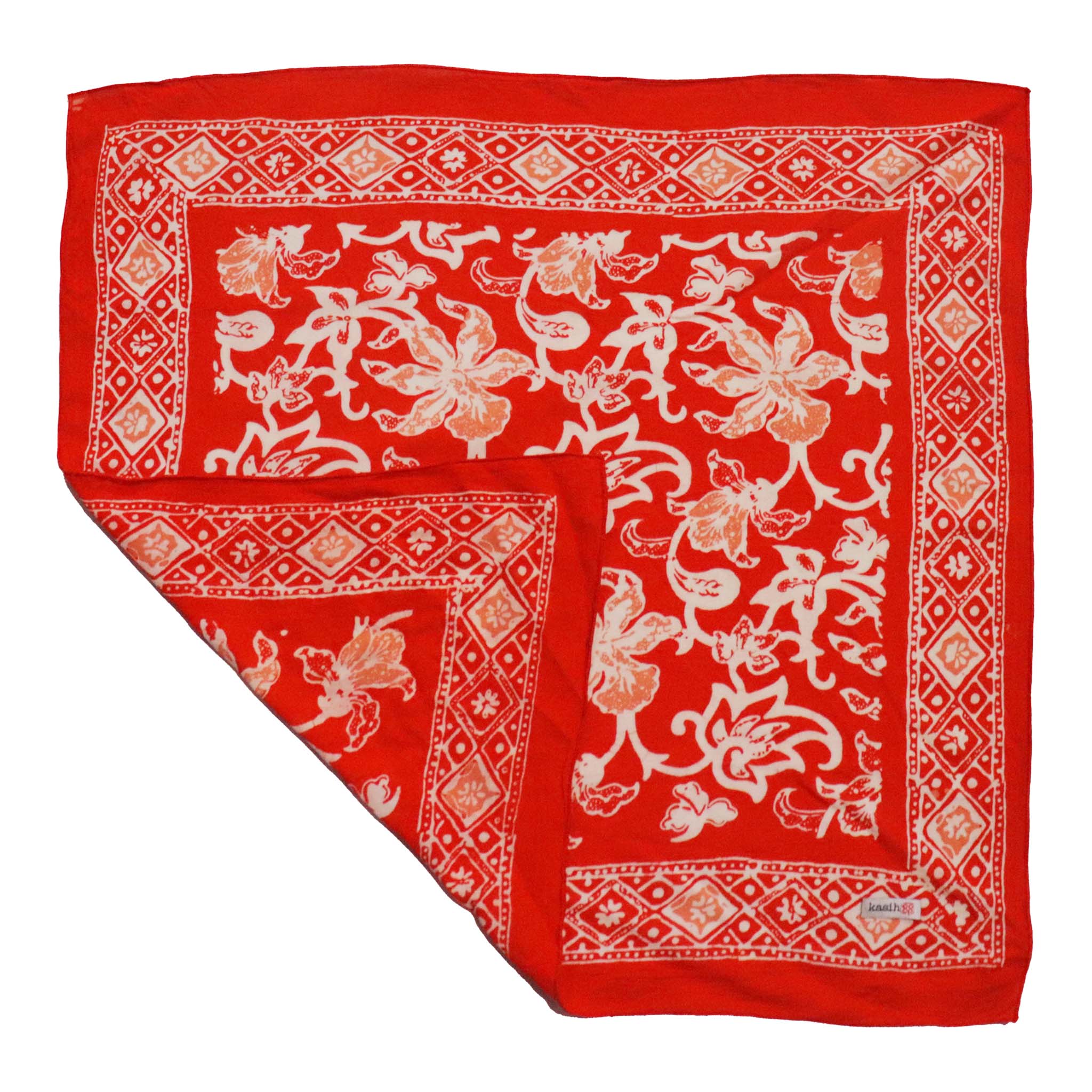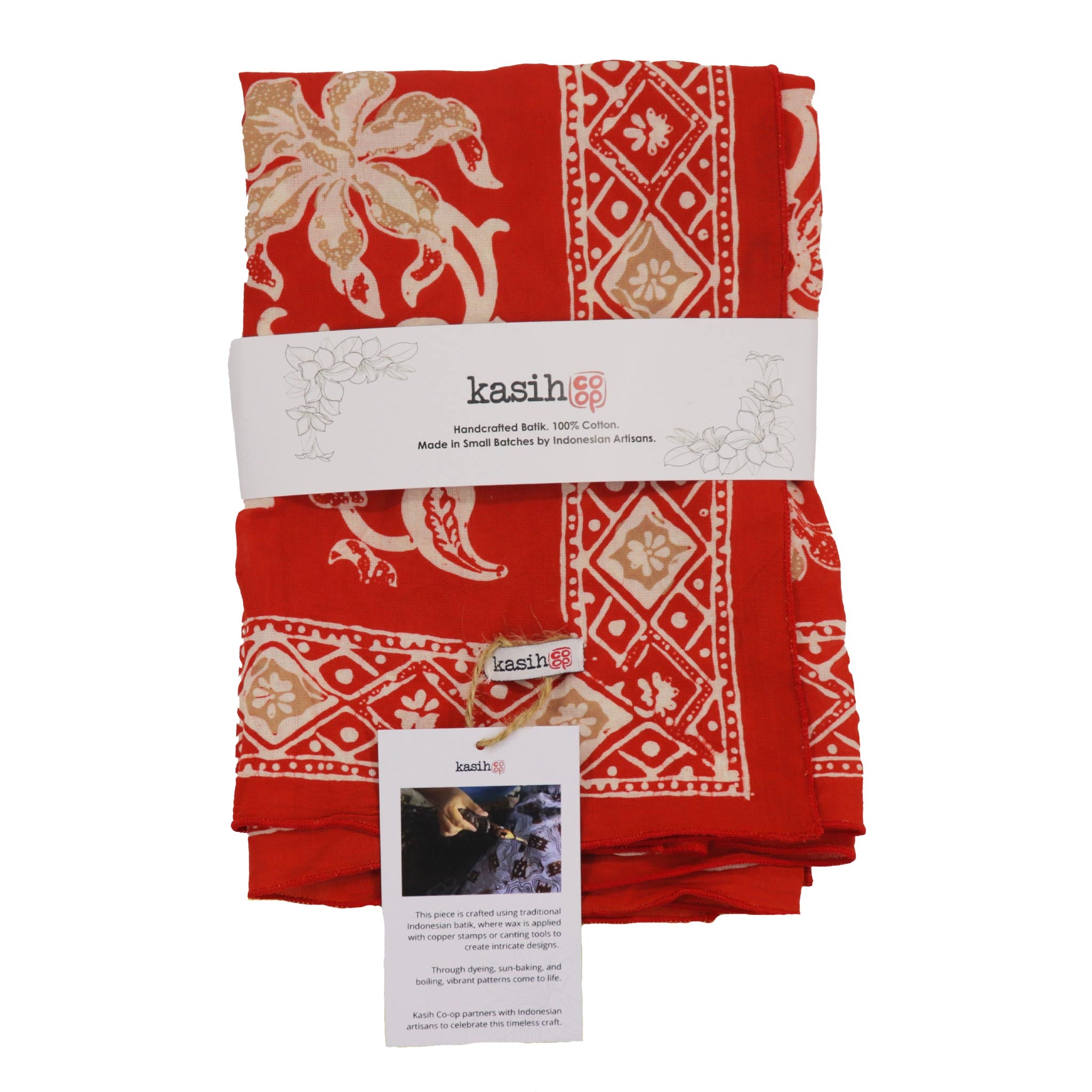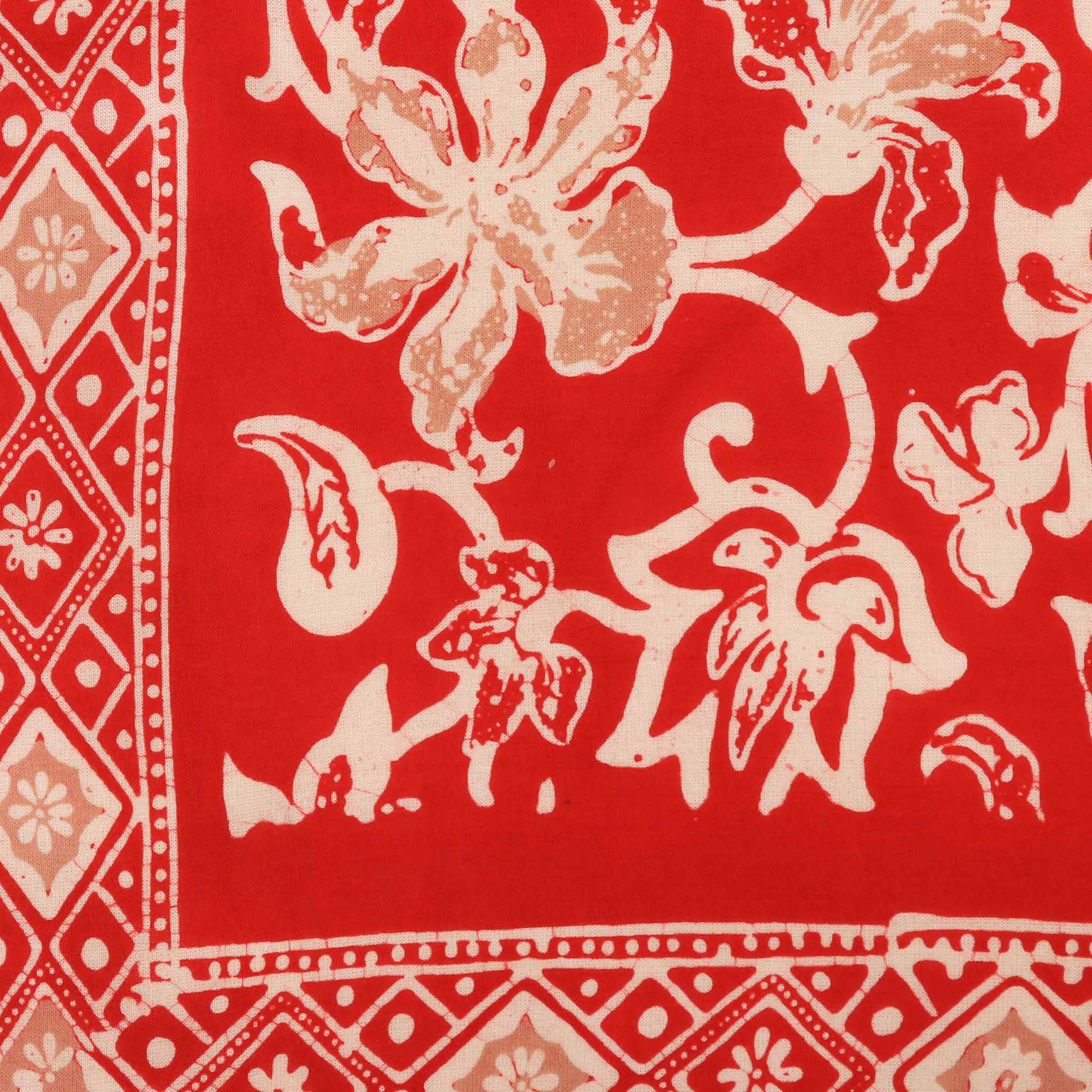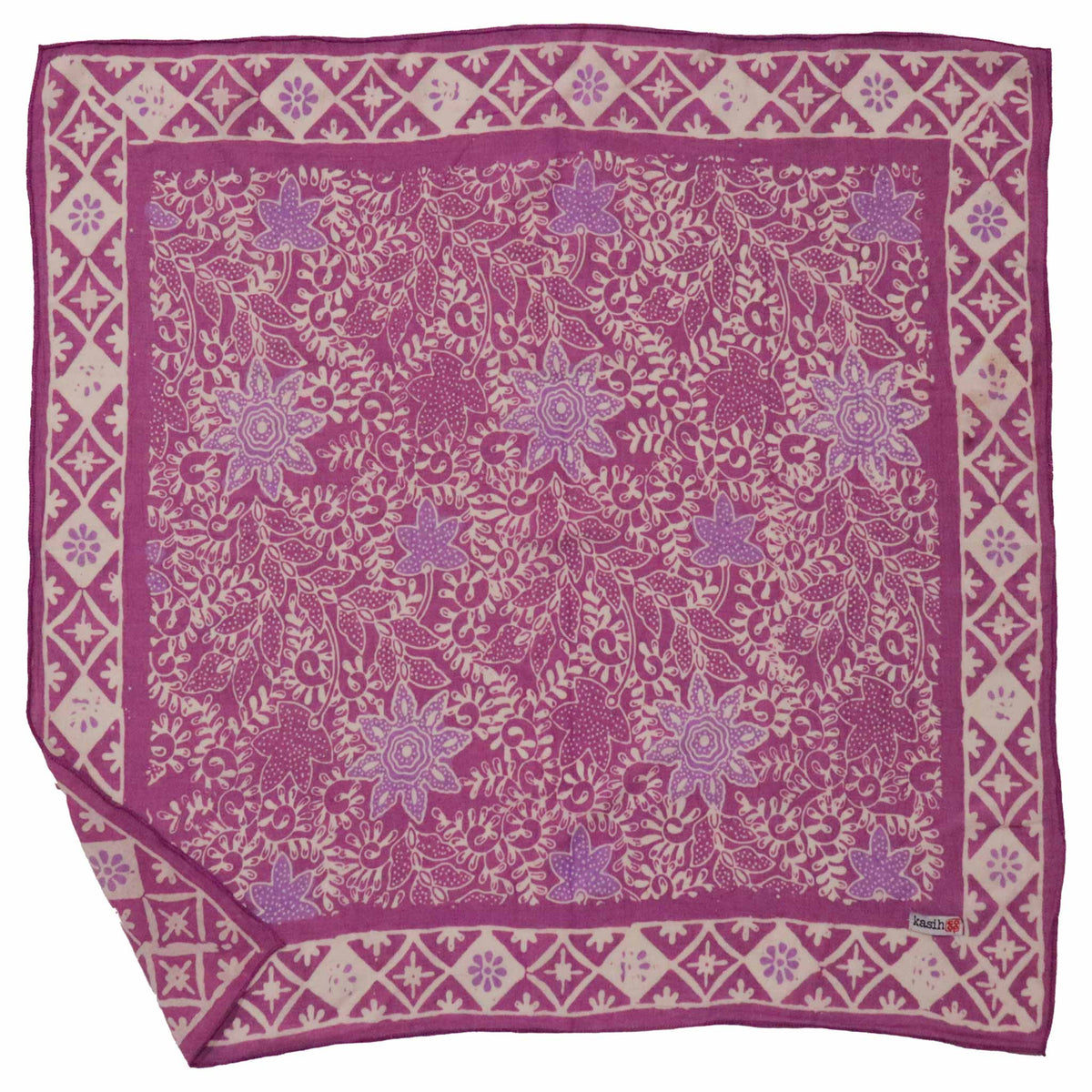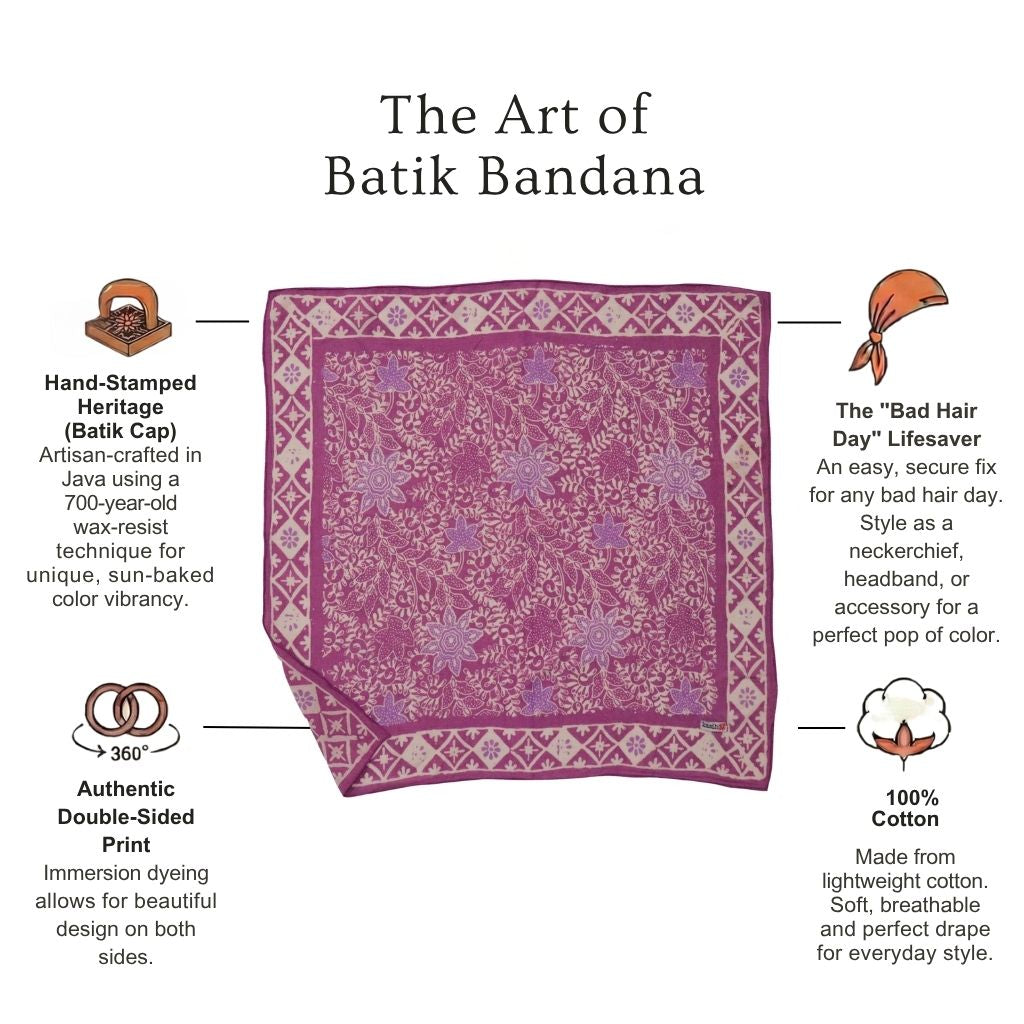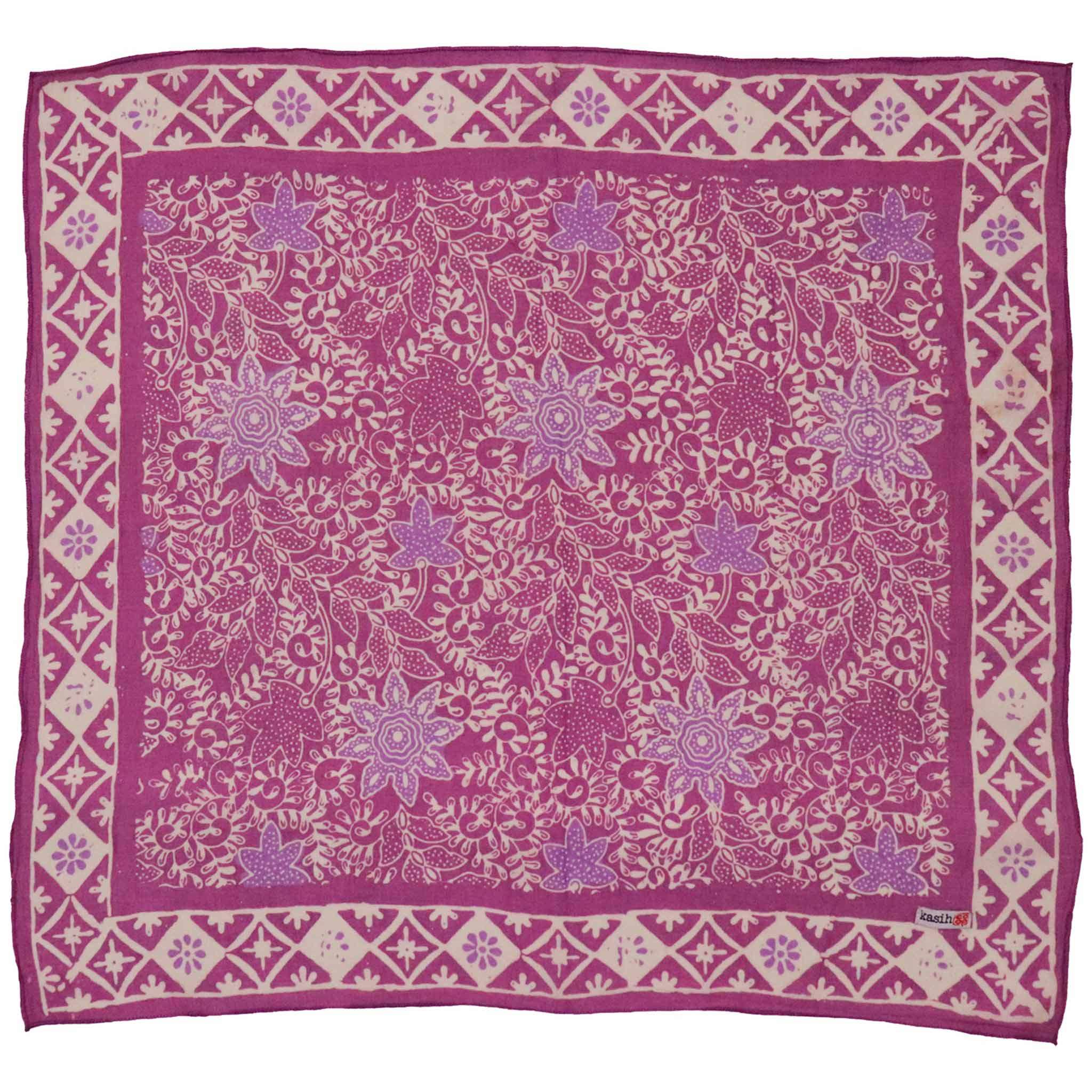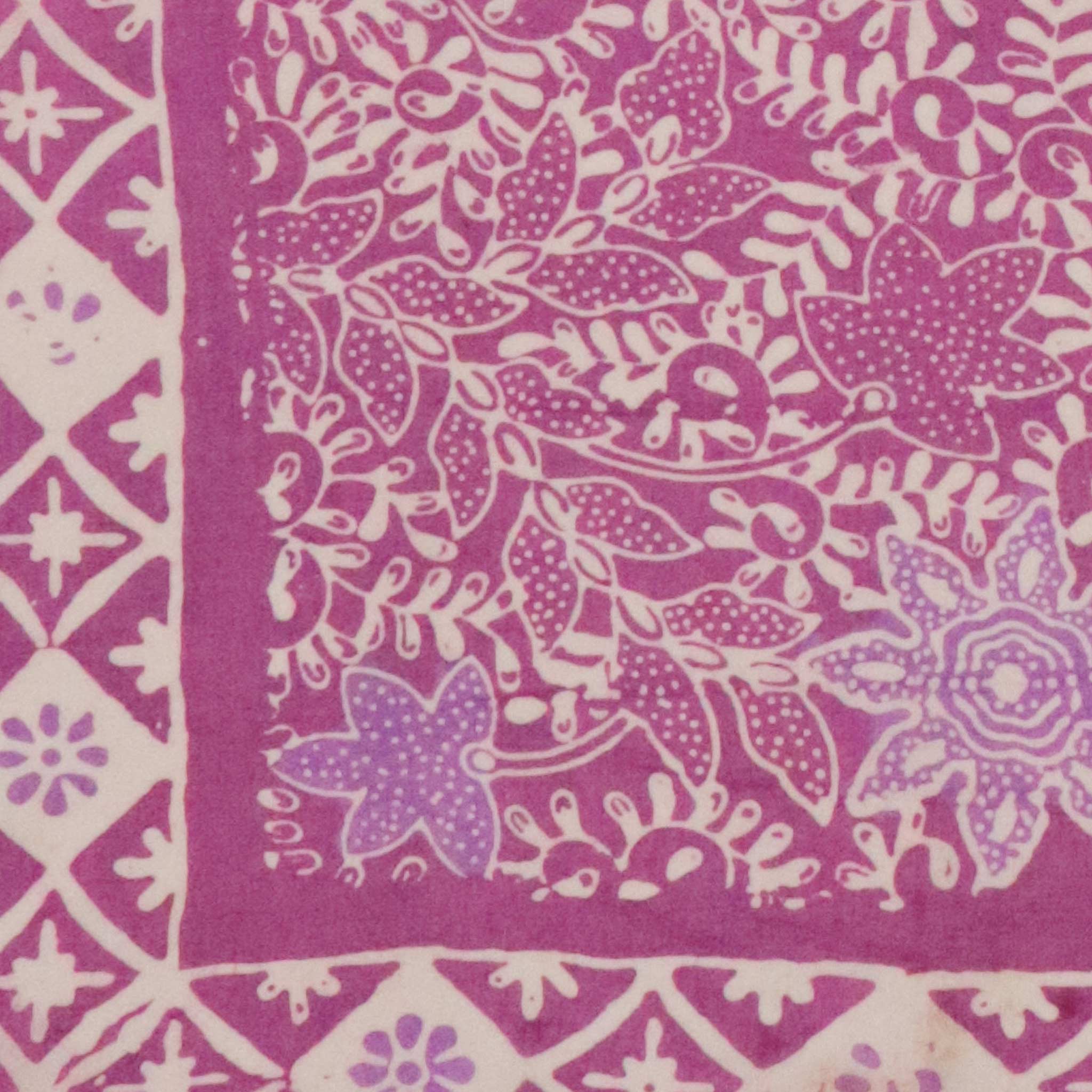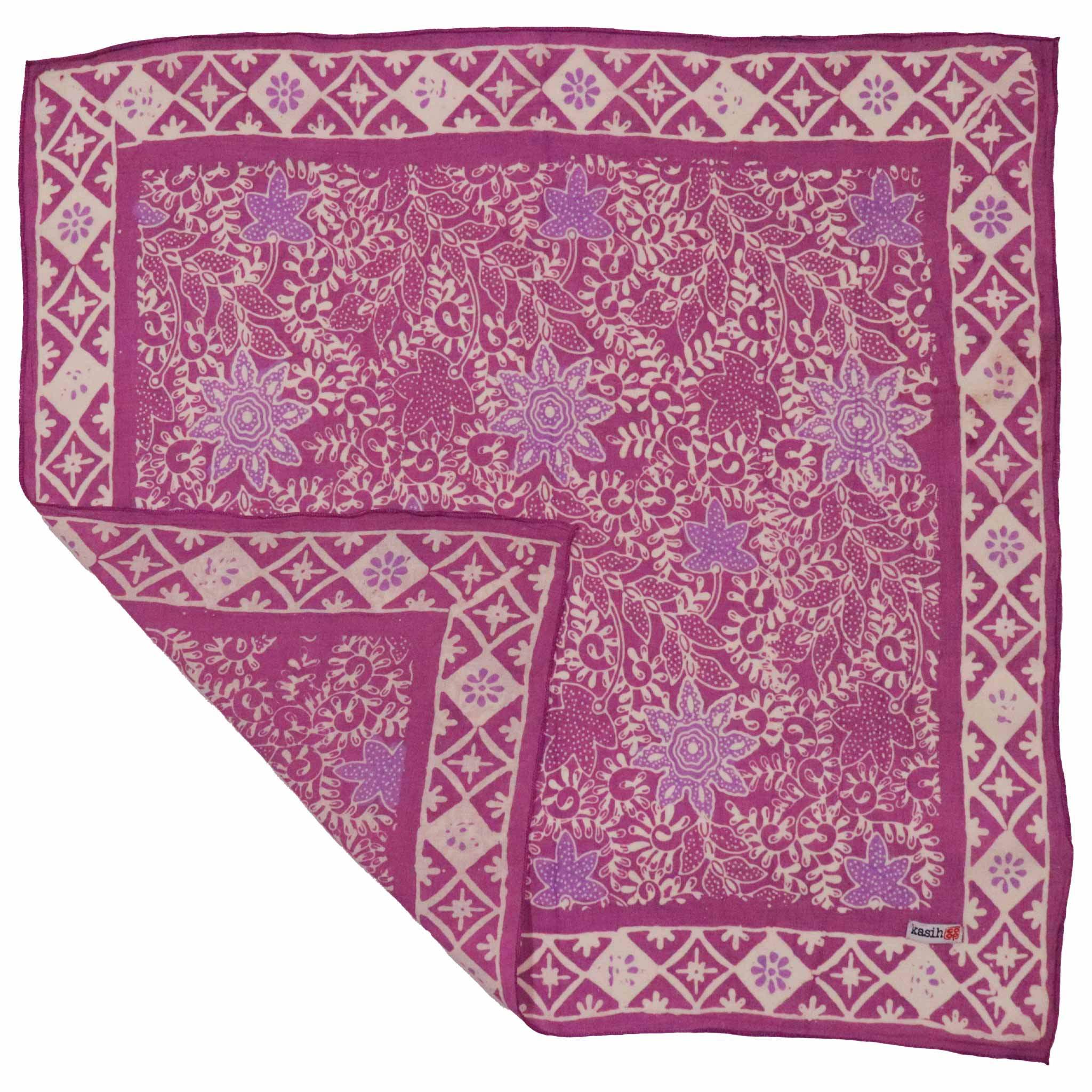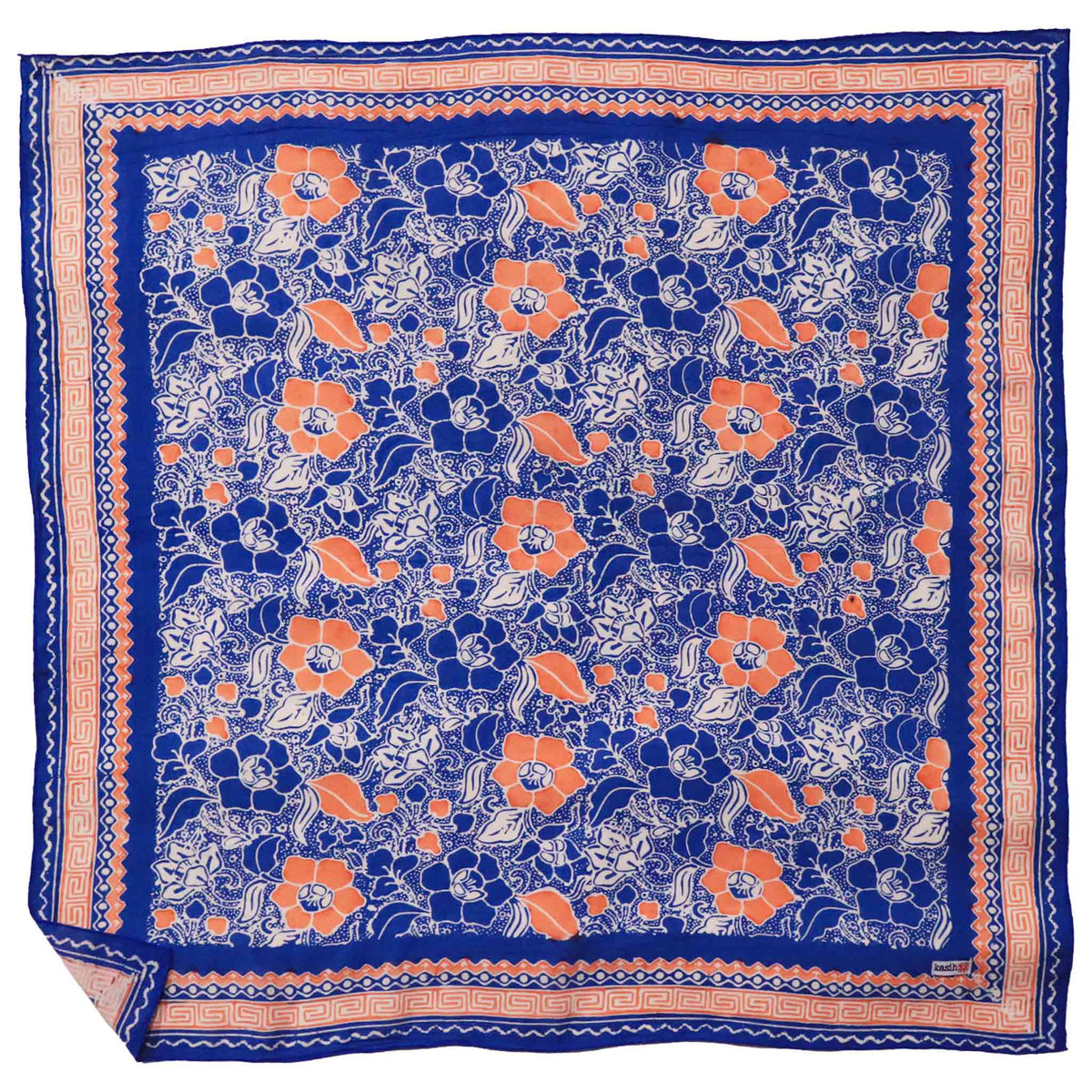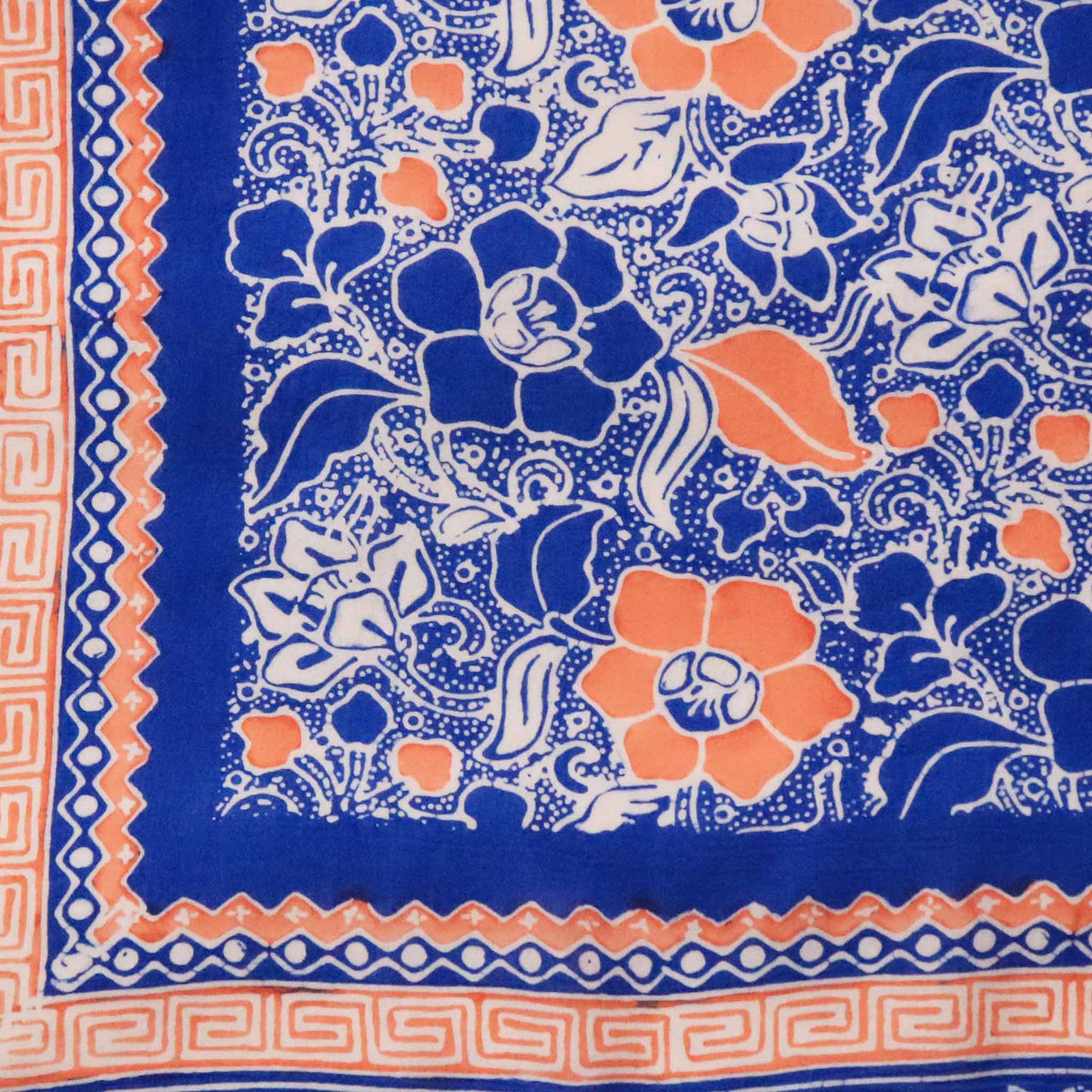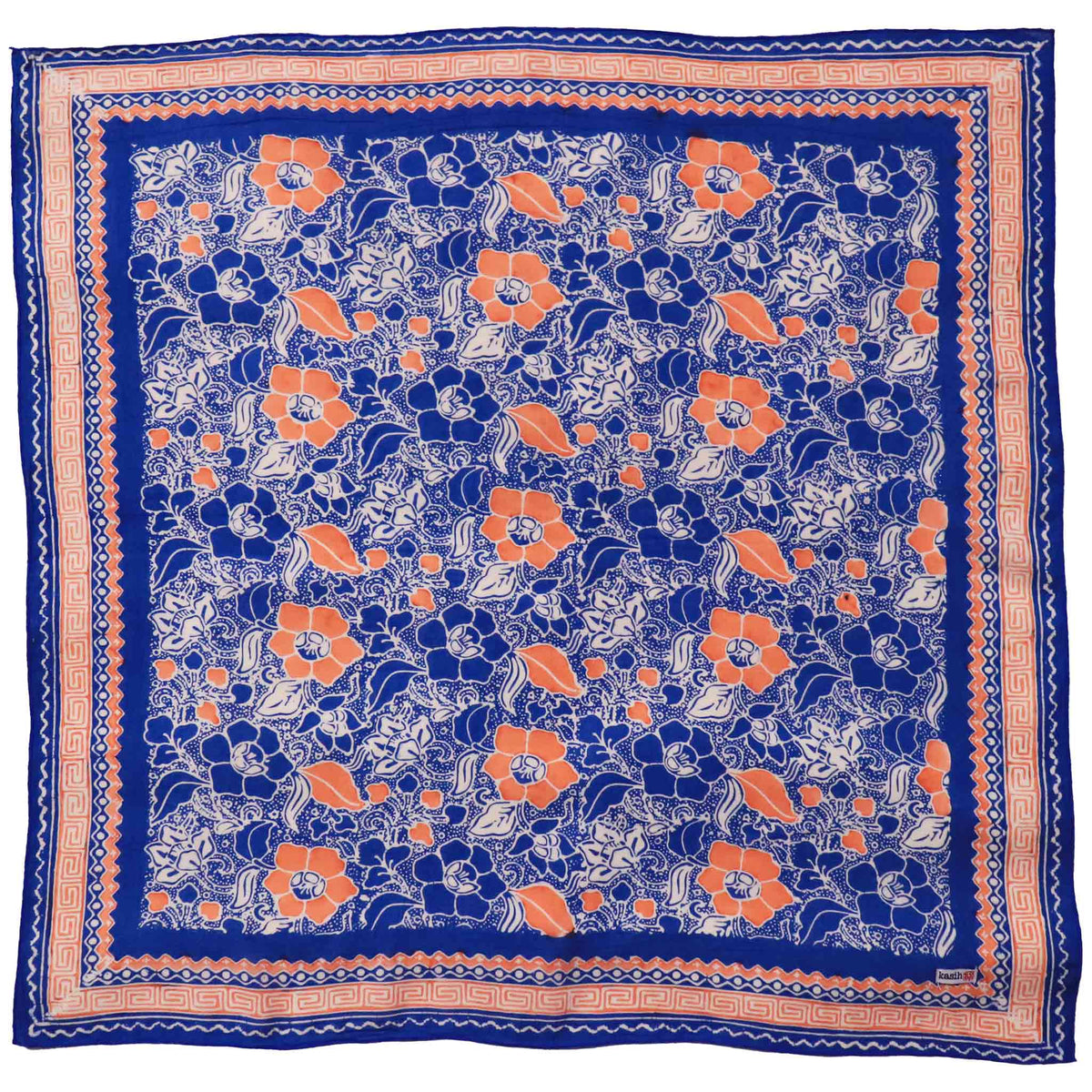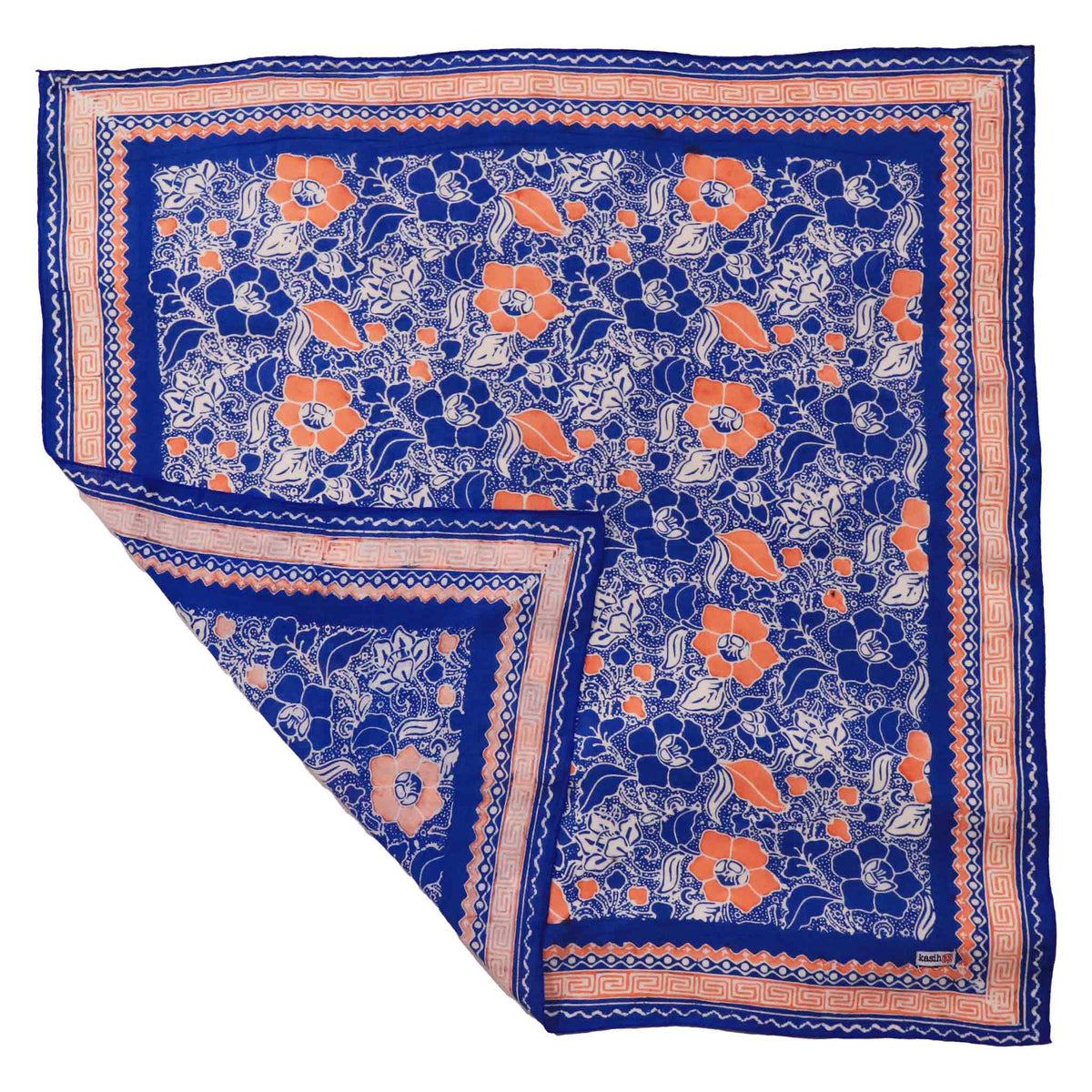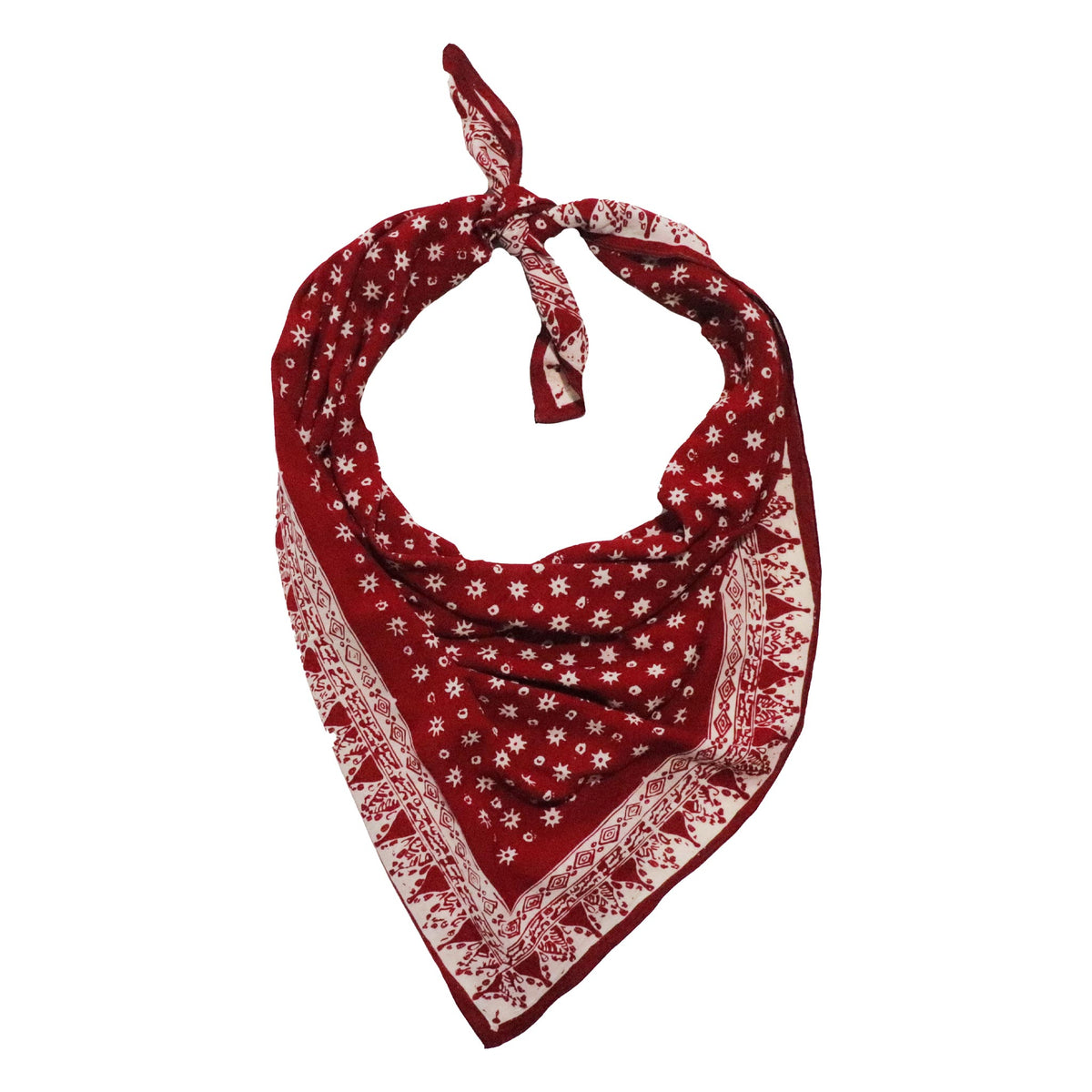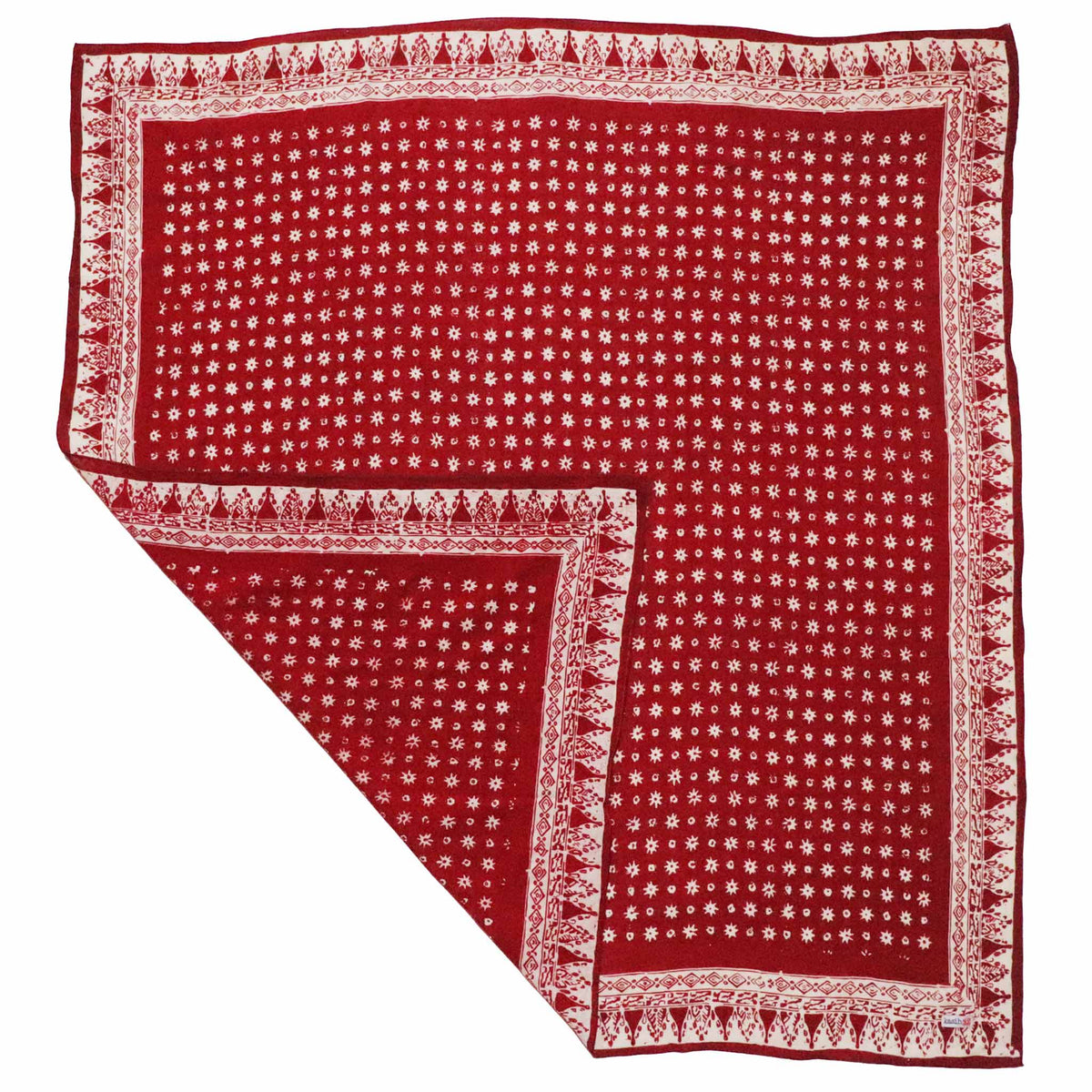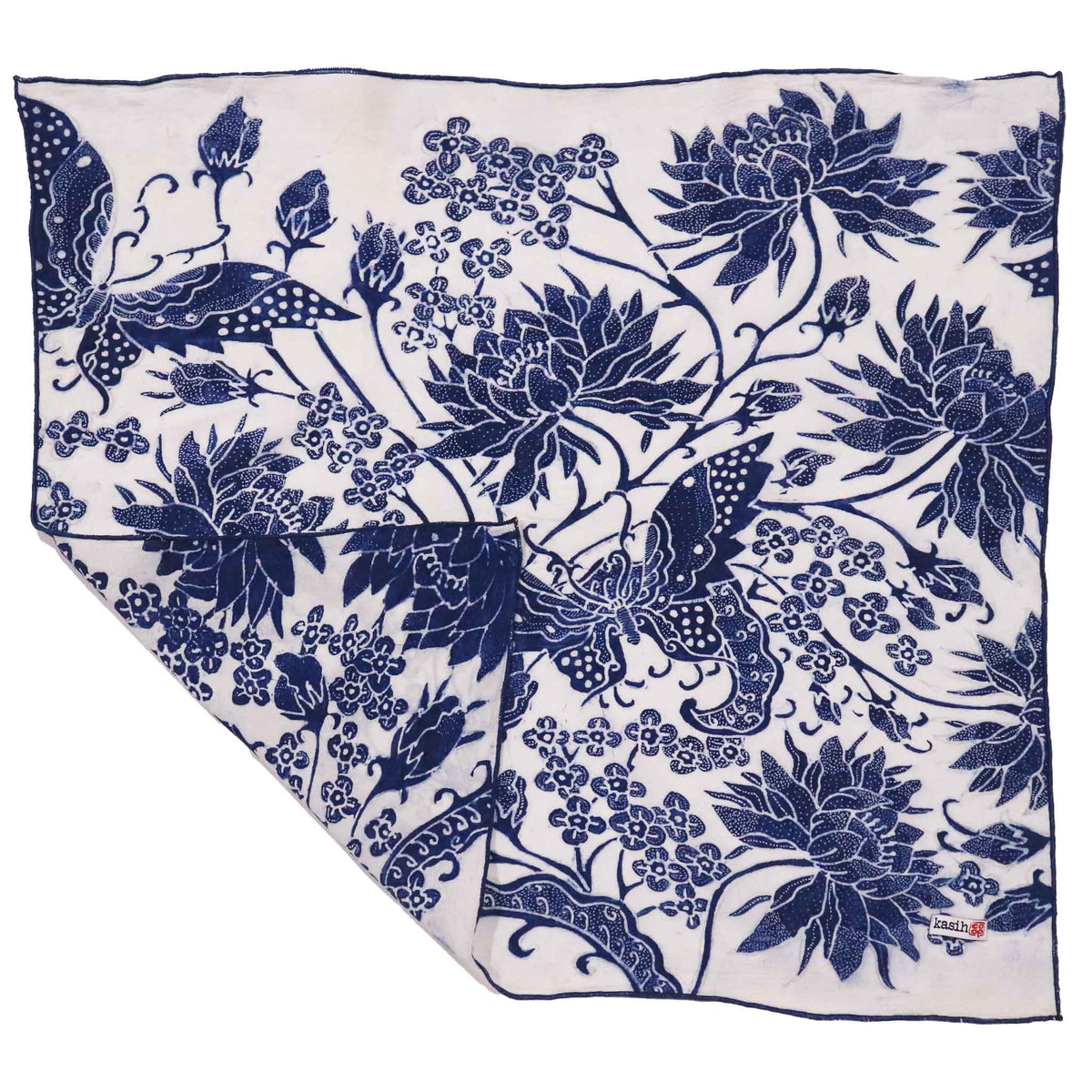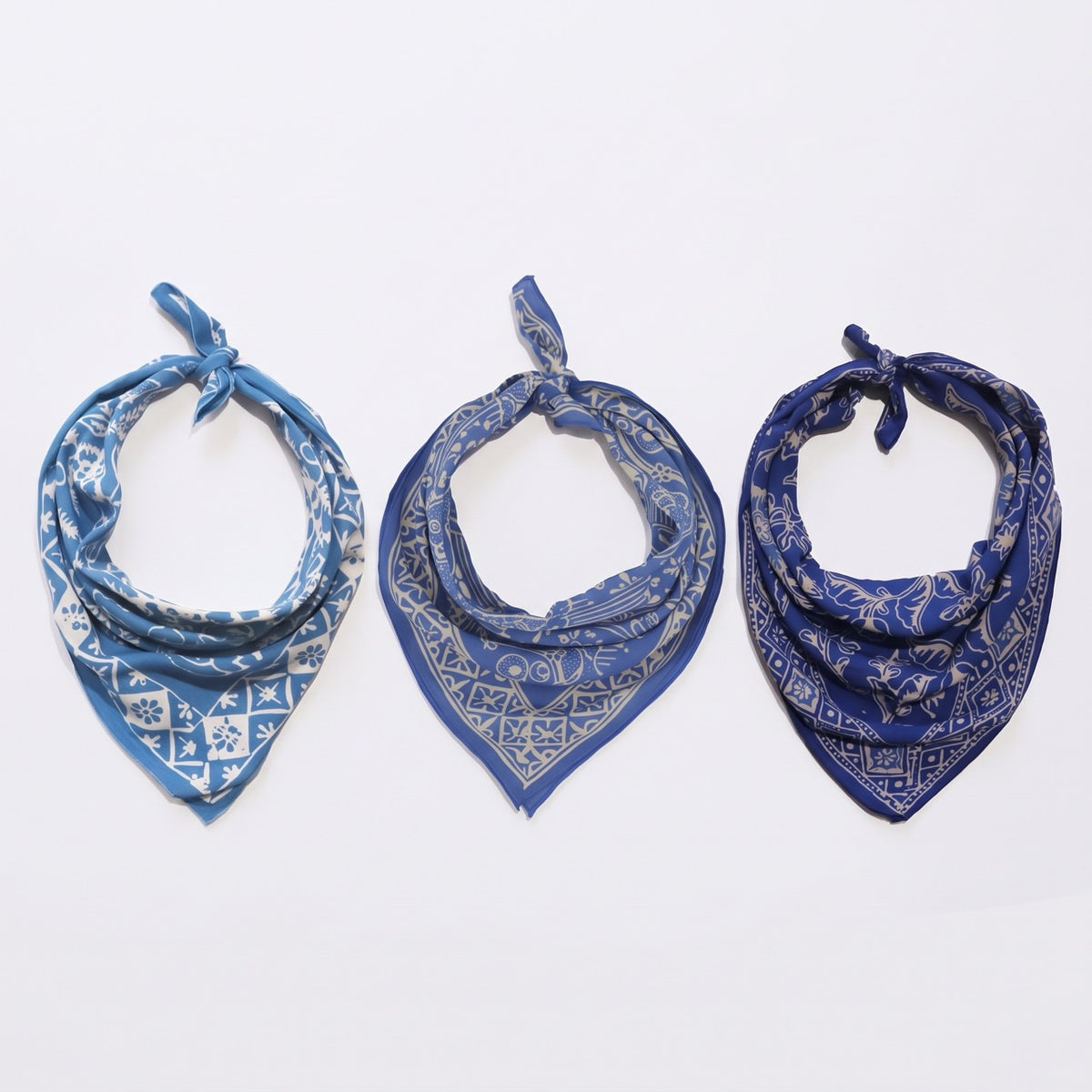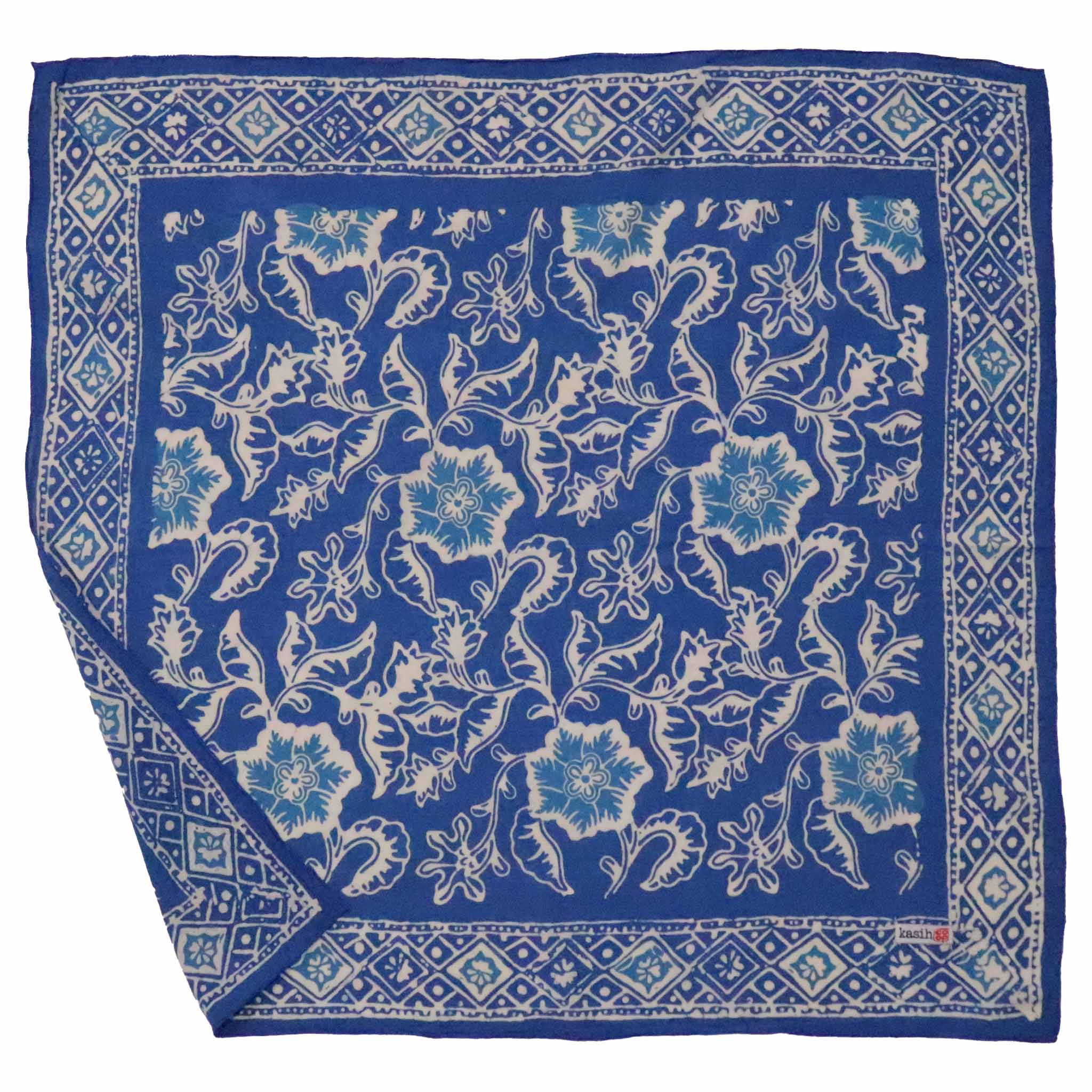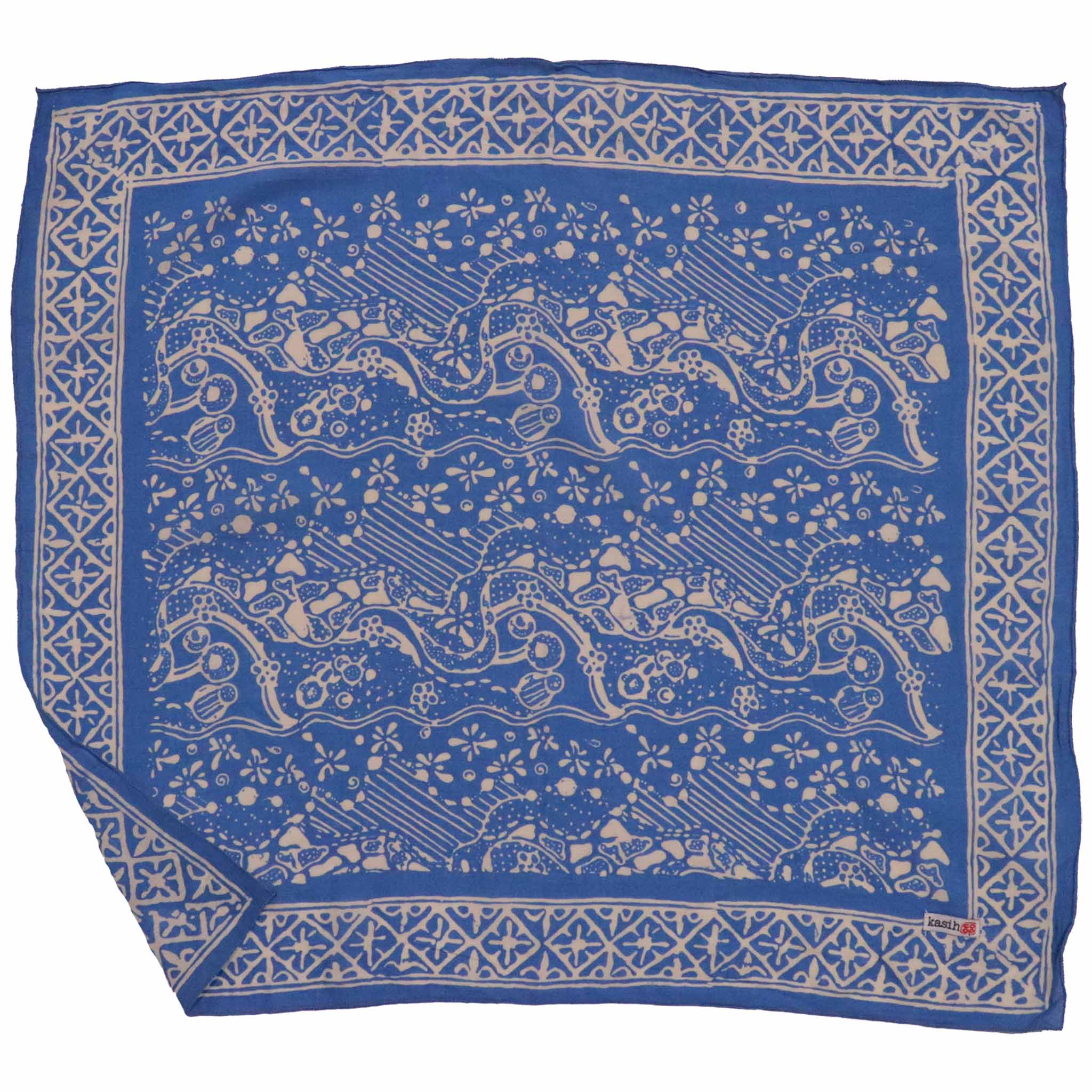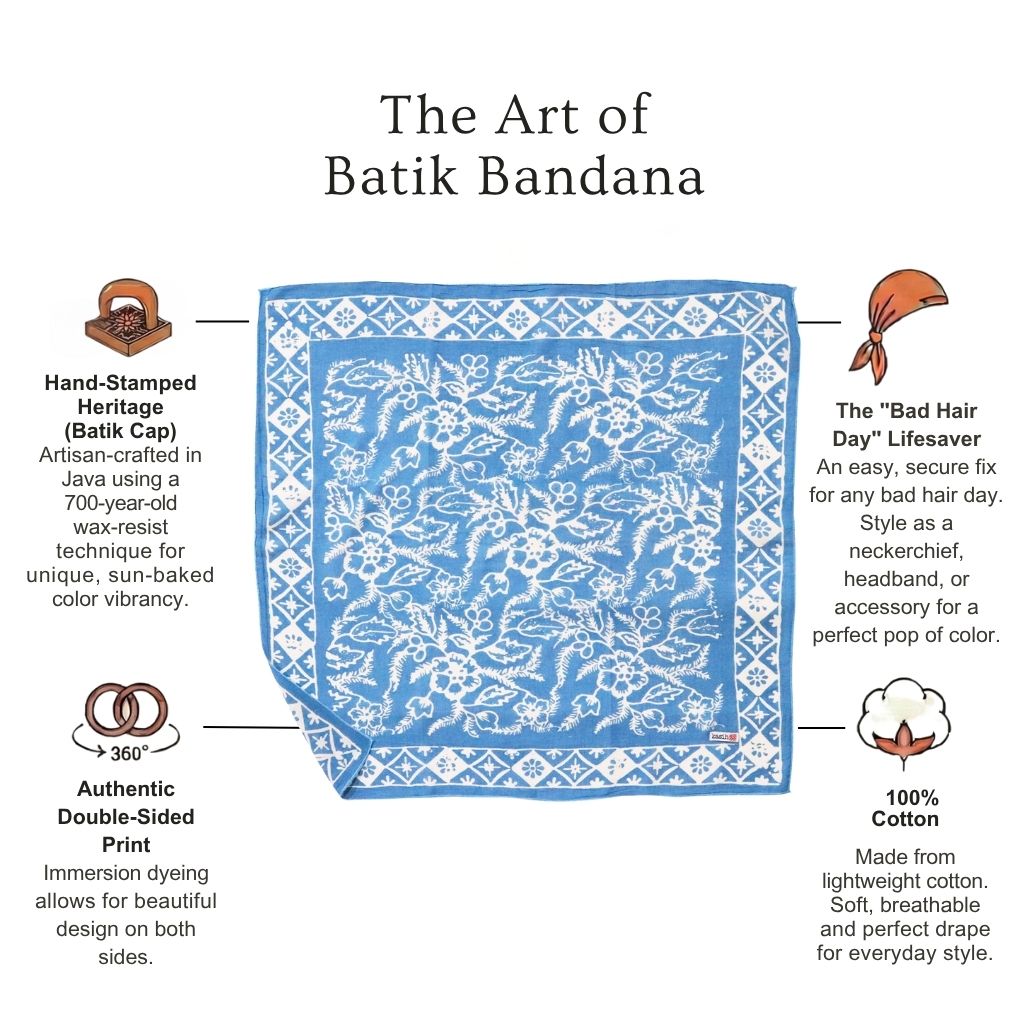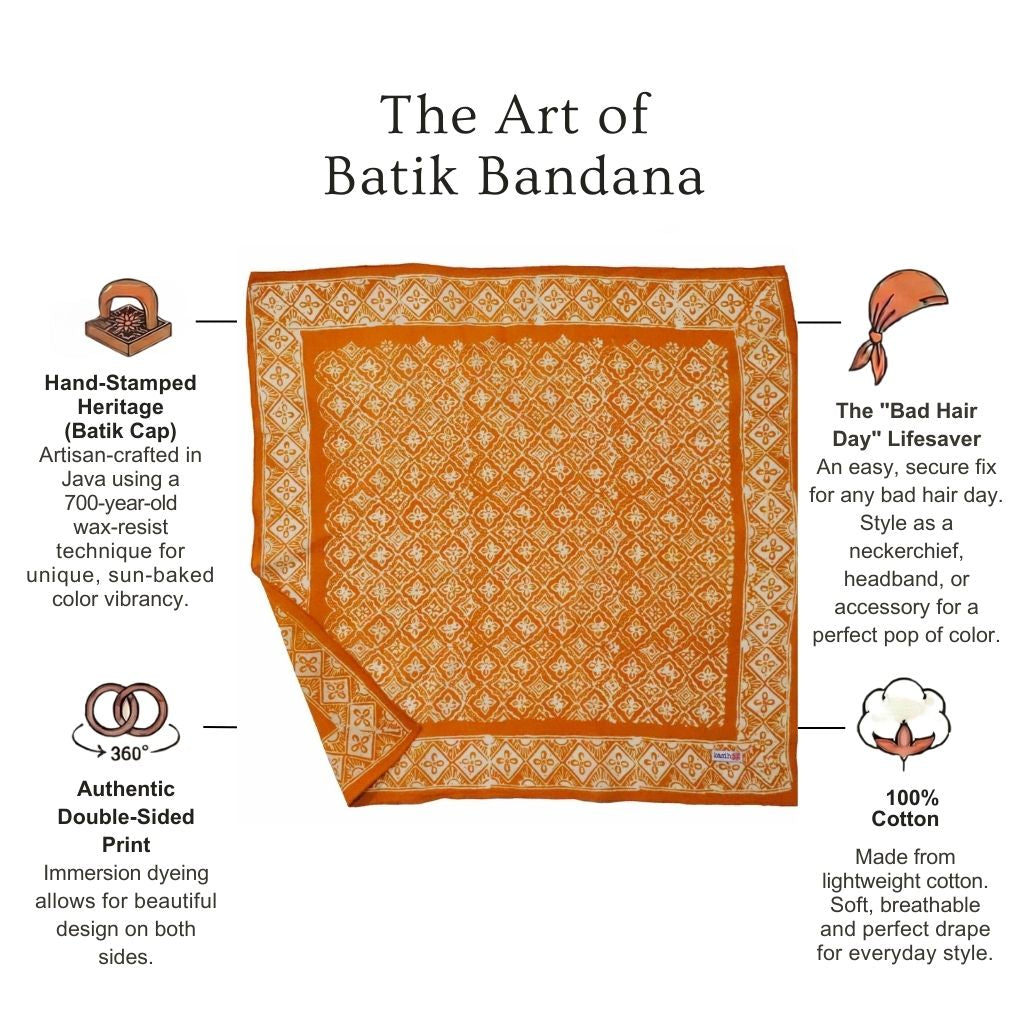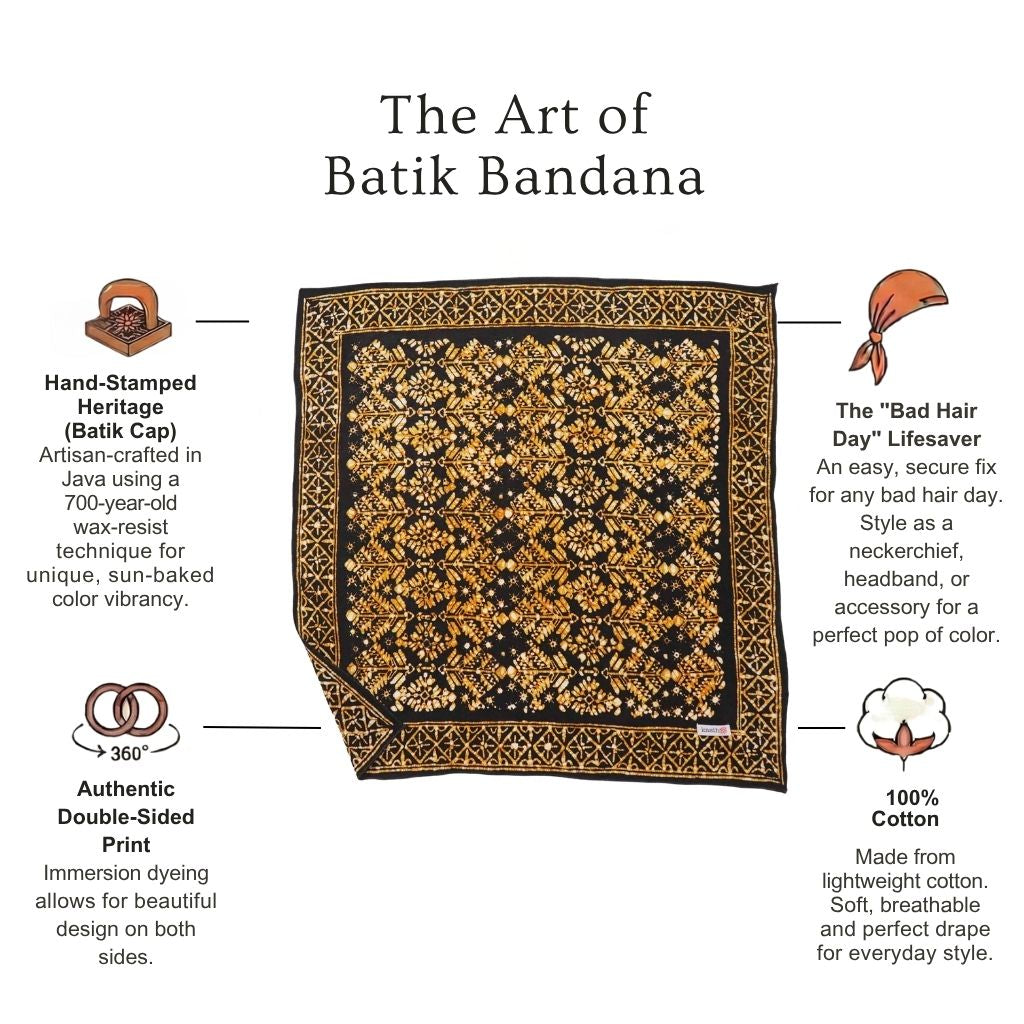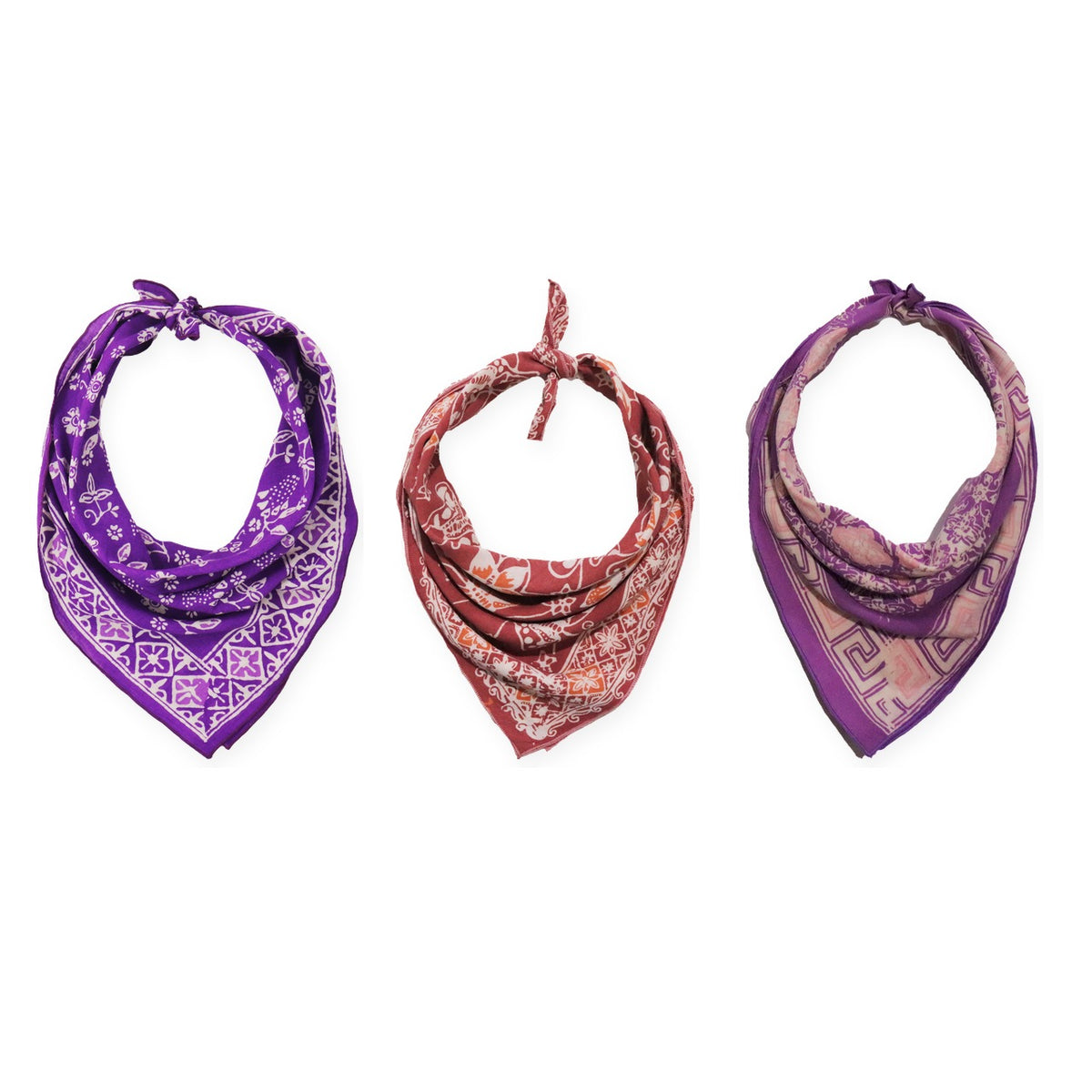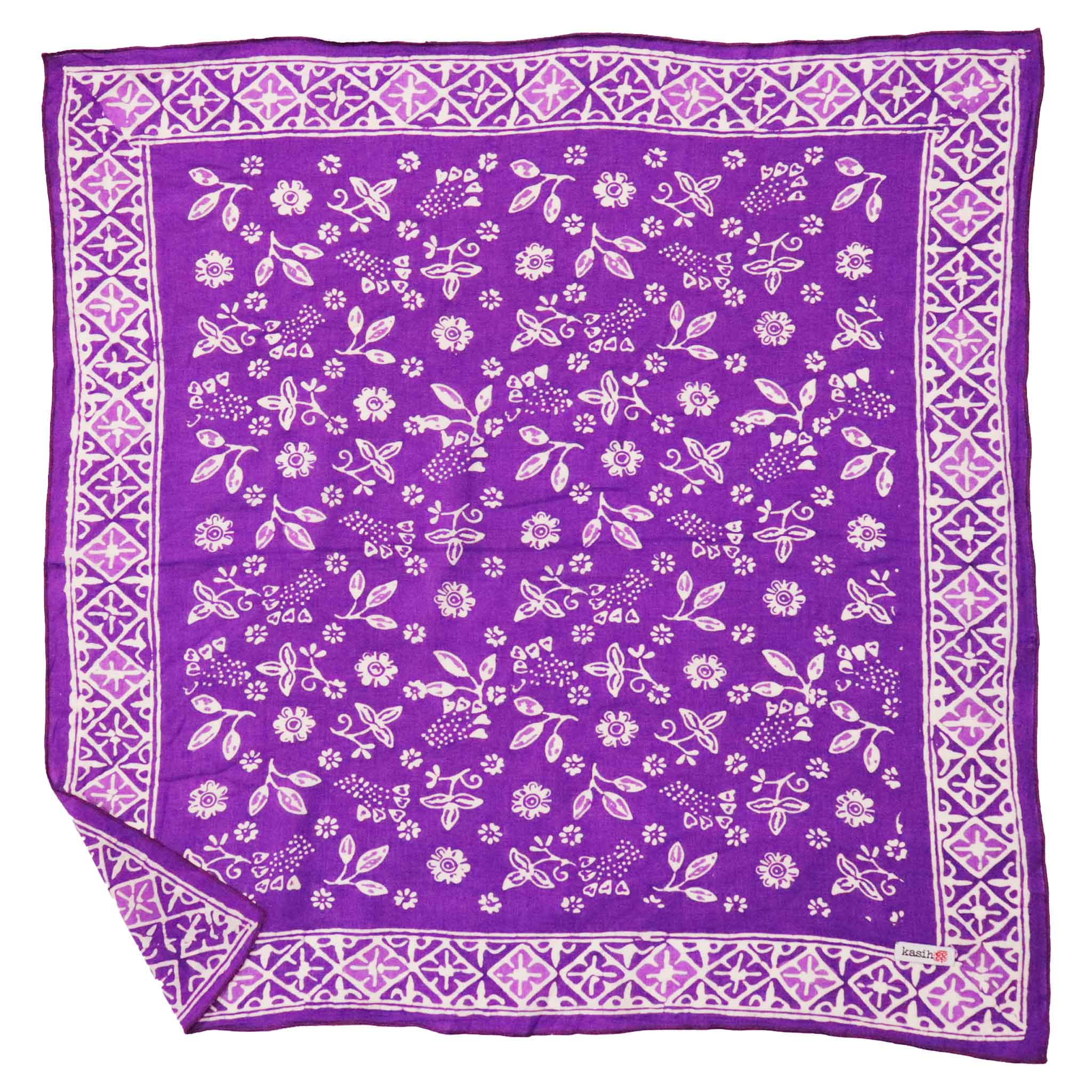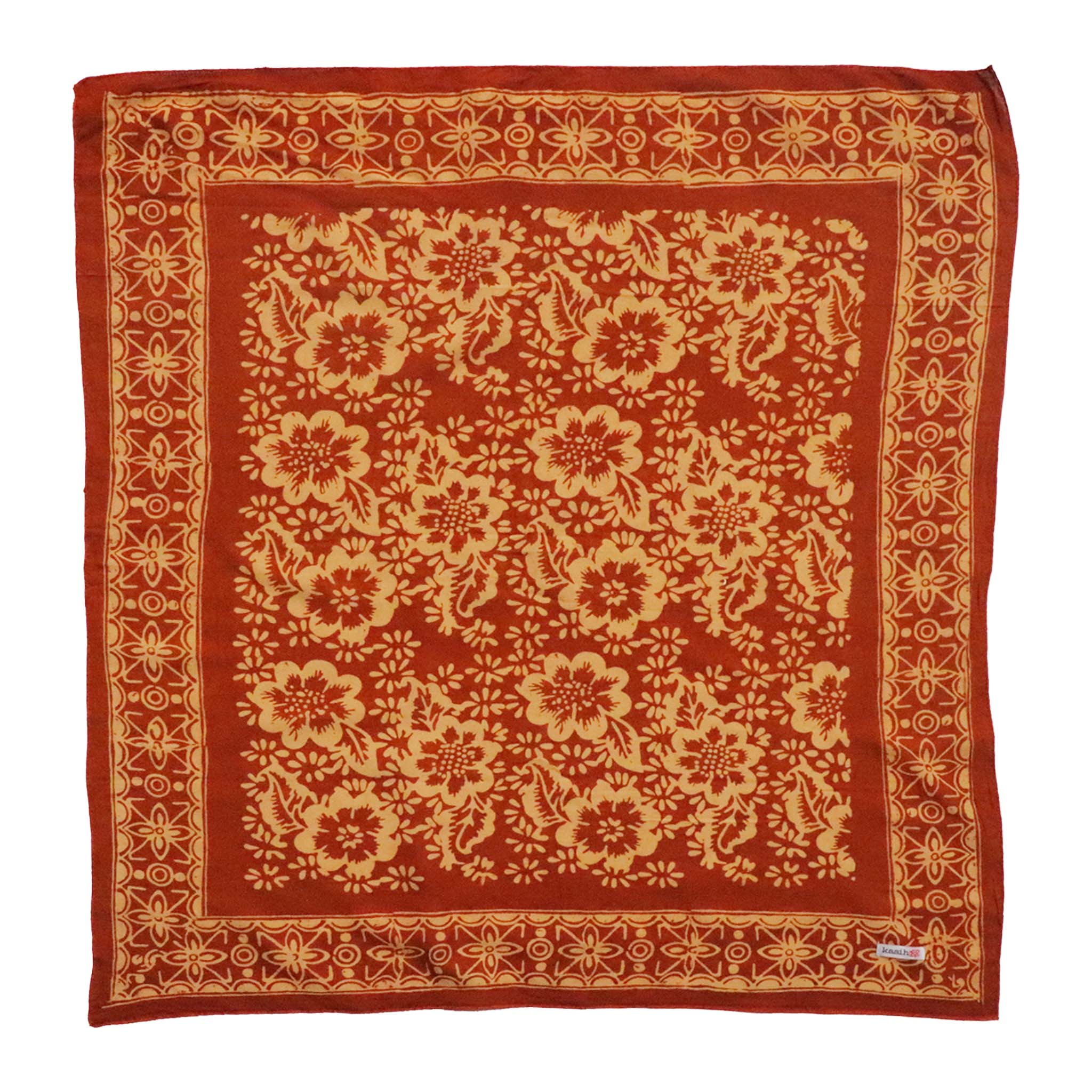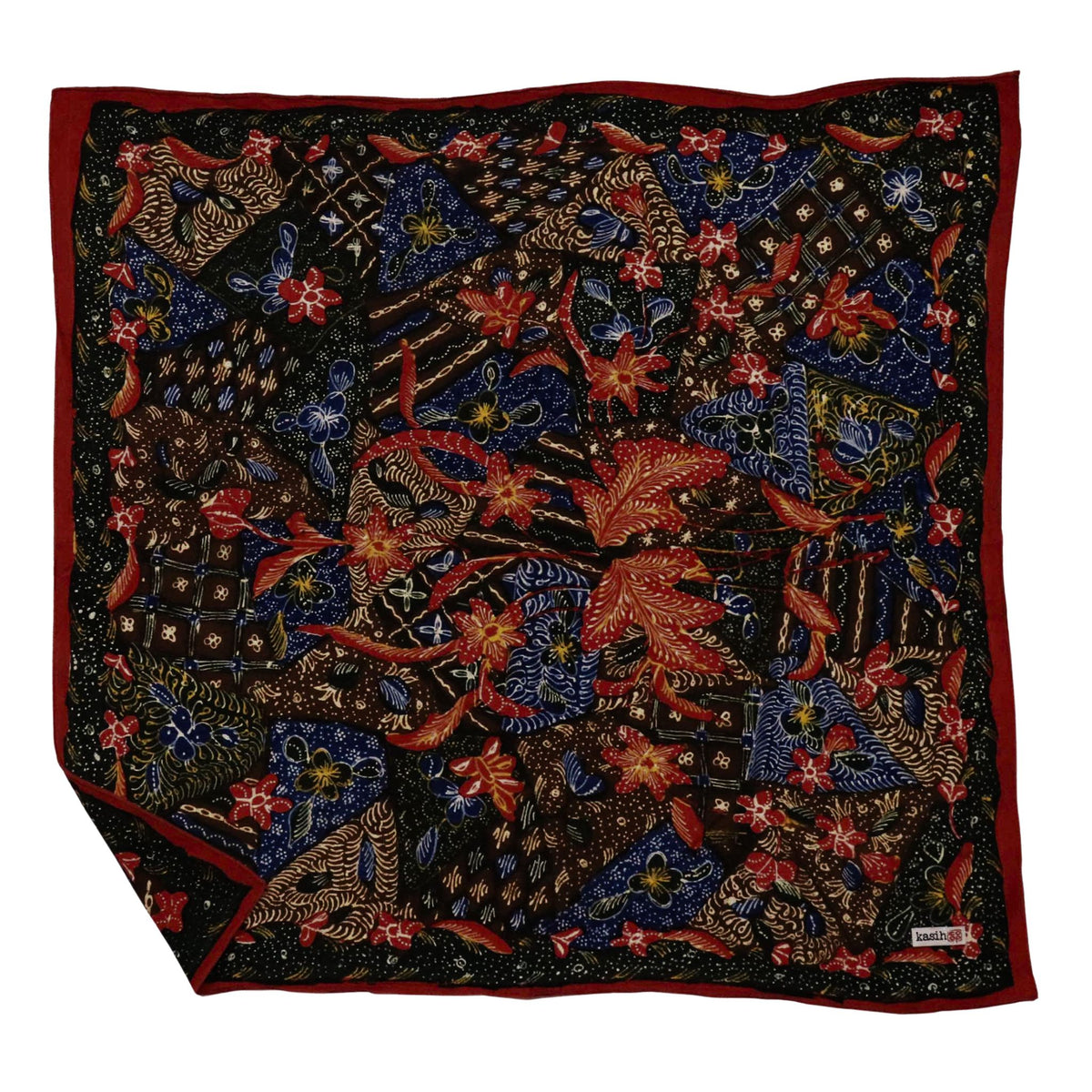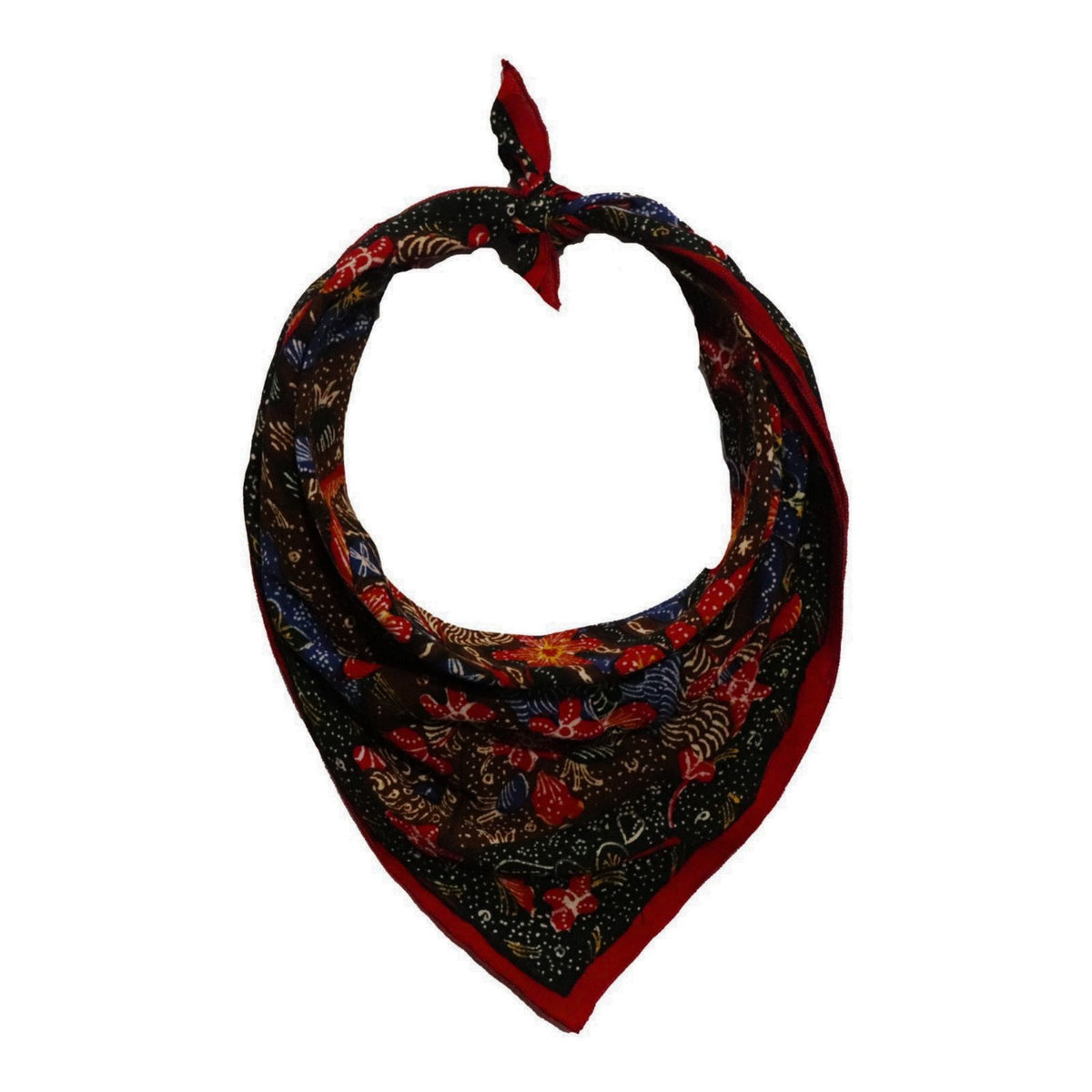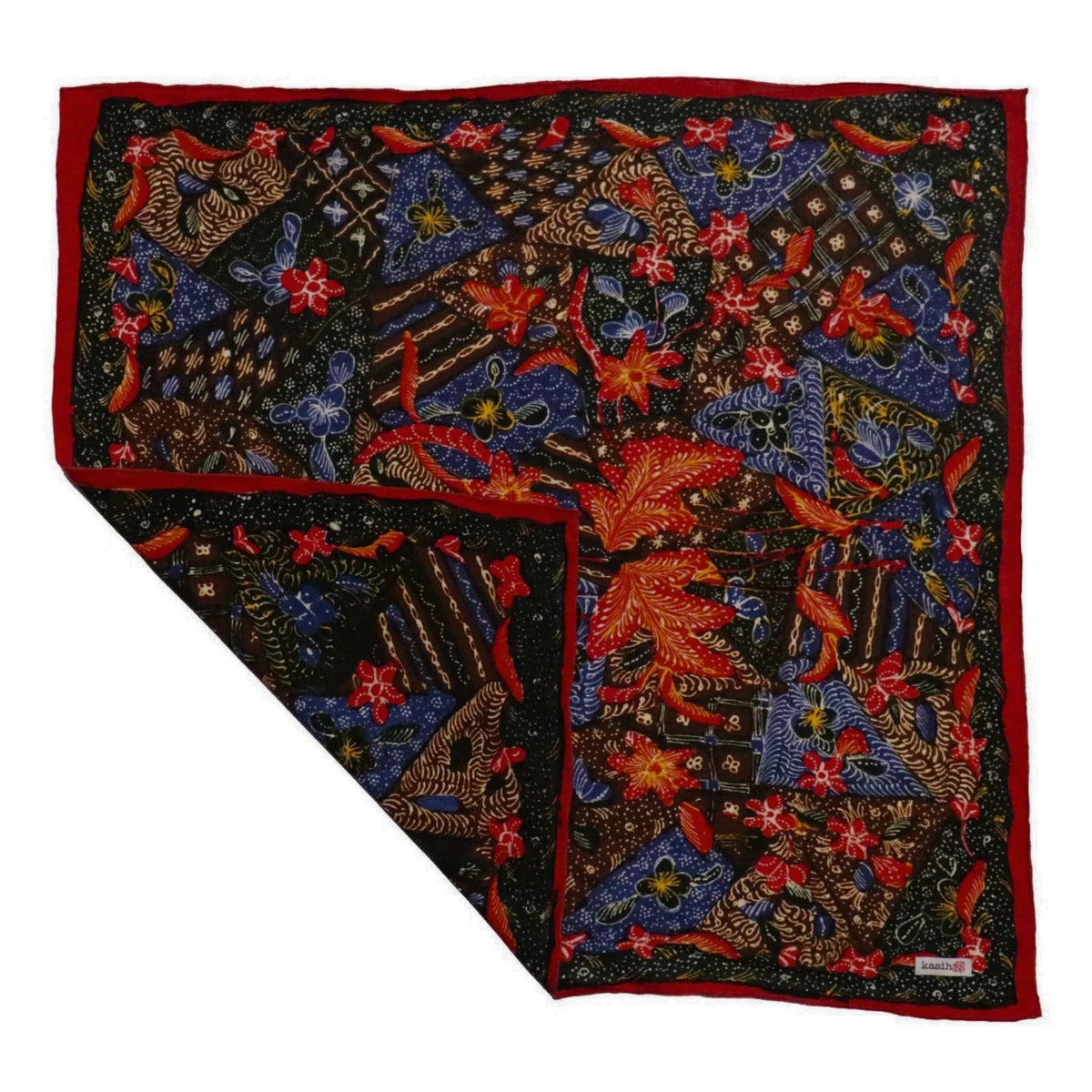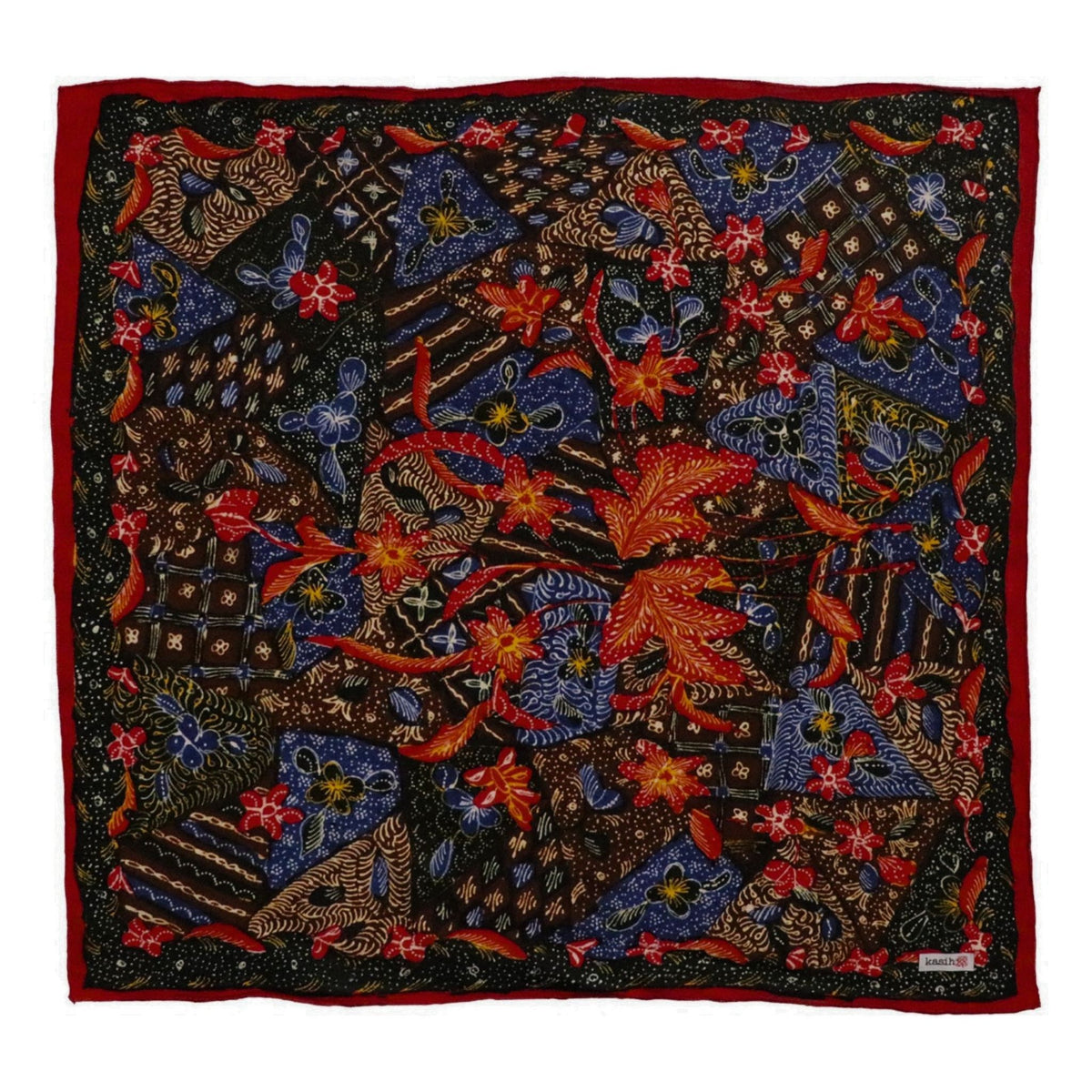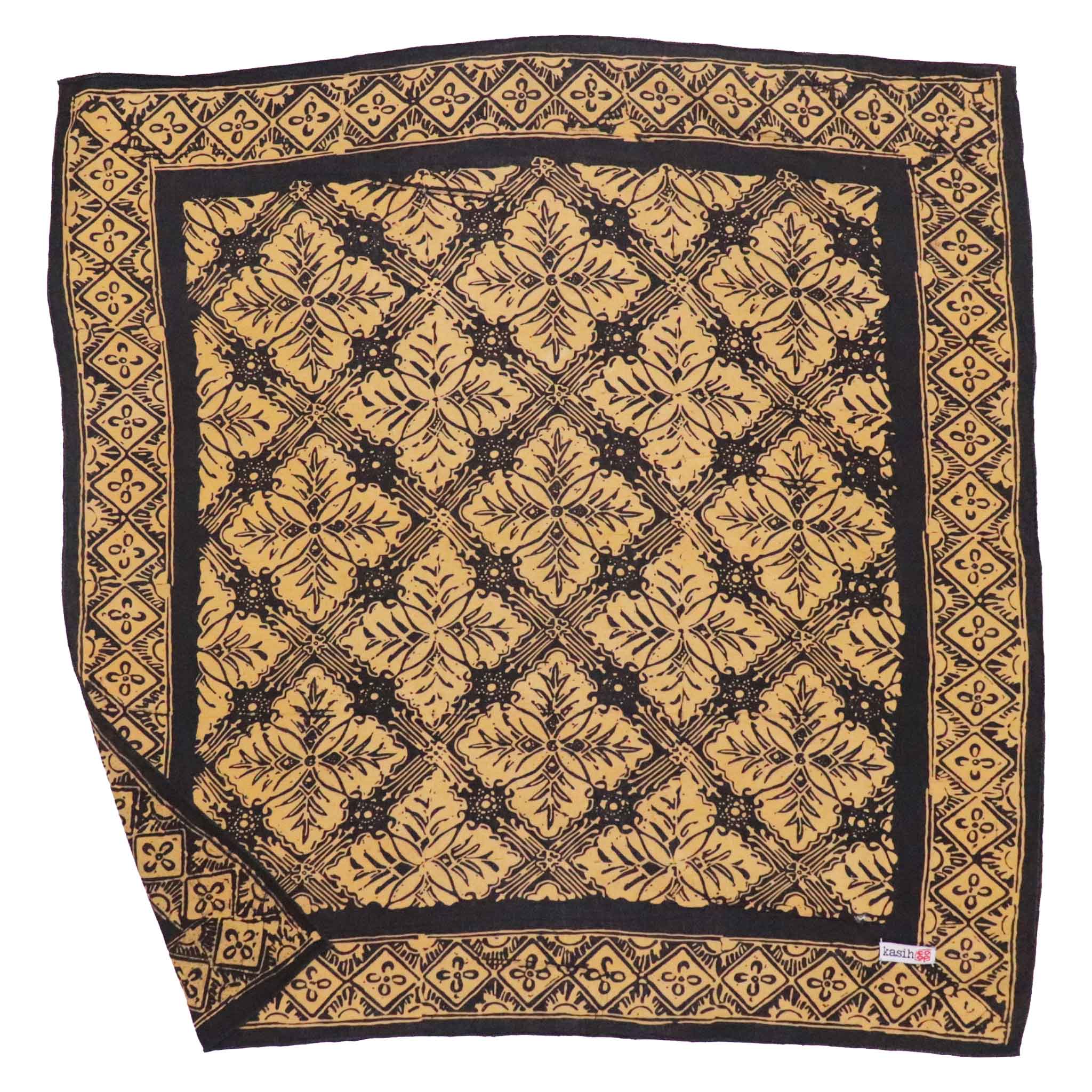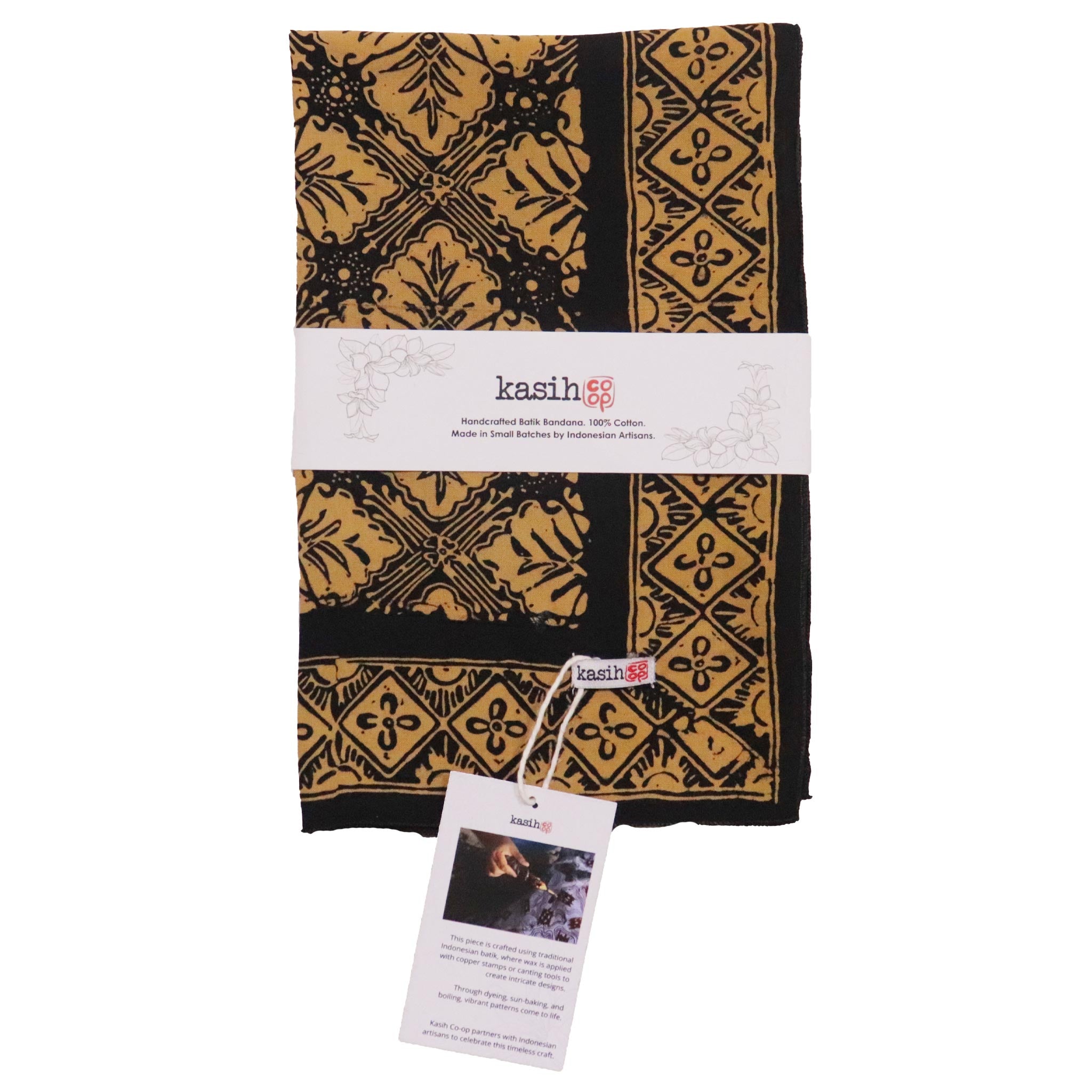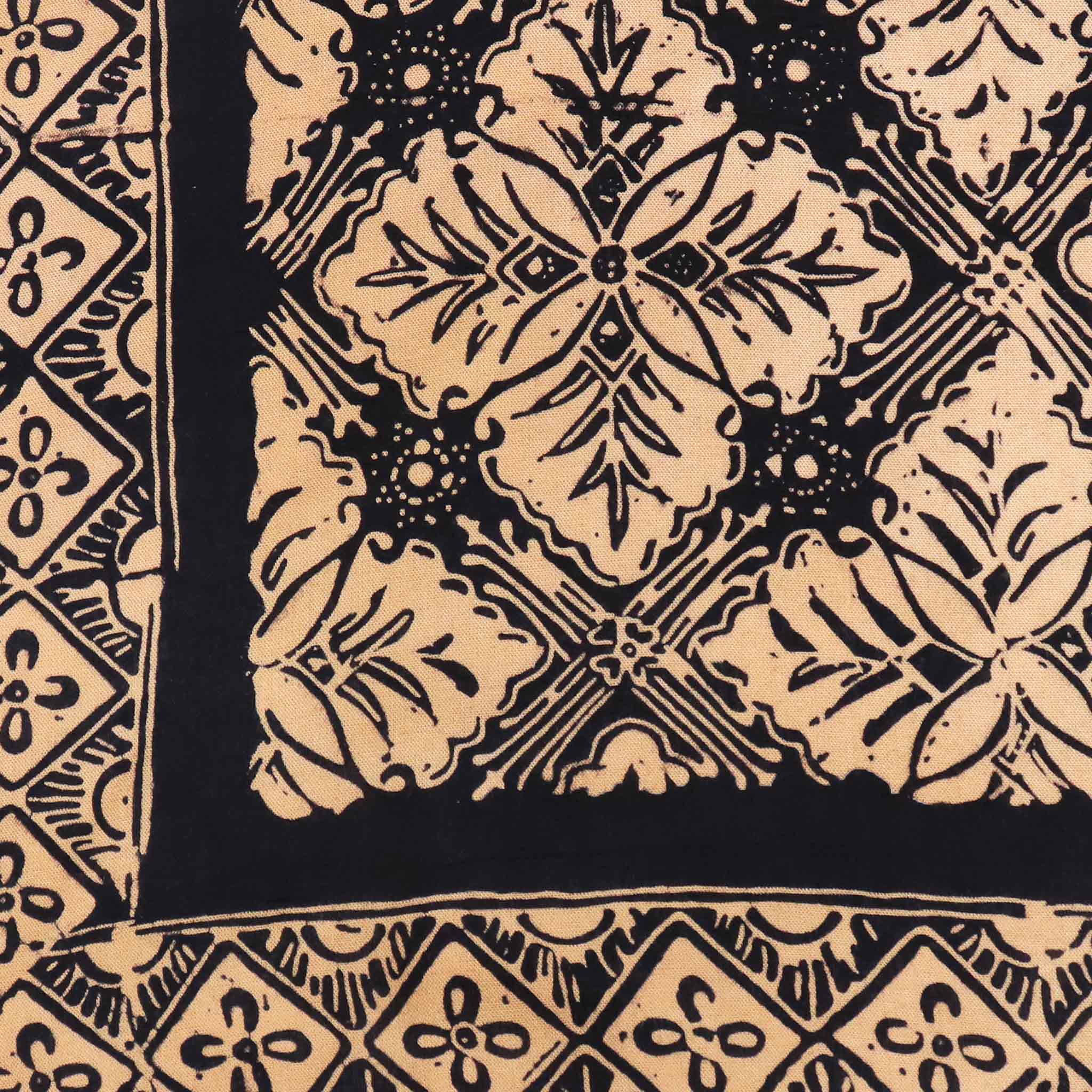
Short answer: Flip it over. Real batik is dyed after wax is applied, so the pattern and color go all the way through the cotton and look nearly the same on the back. A printed "batik-style" bandana is noticeably paler on the back, because the ink sits on top of the fabric. Below are seven checks, plus the difference between the two kinds of real batik.
Search "bandana" and you'll get a wall of identical paisley squares, often in a polyester-cotton blend from a factory run of thousands. Many "batik" bandanas are printed too: a batik-looking pattern, no wax involved. Here's how to tell the difference.
7 Ways to Tell Real Batik From Printed
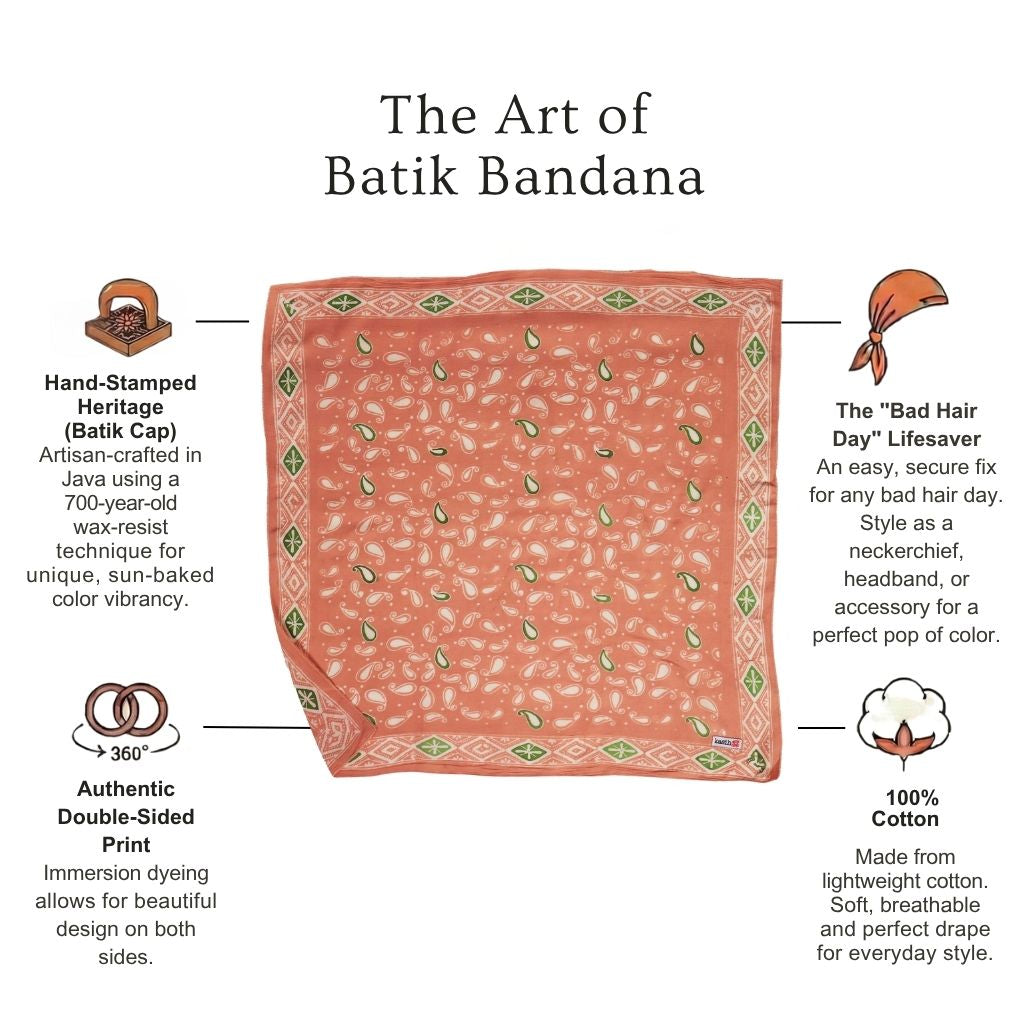
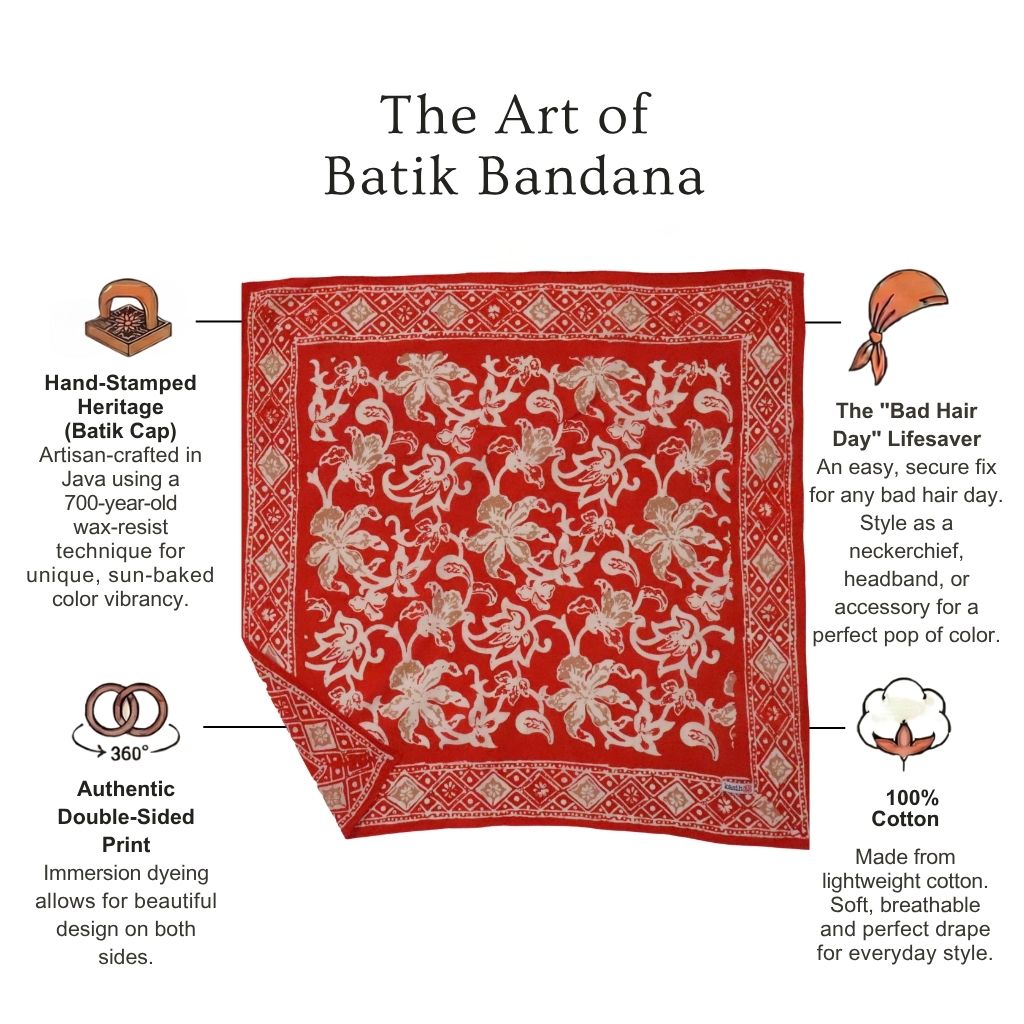
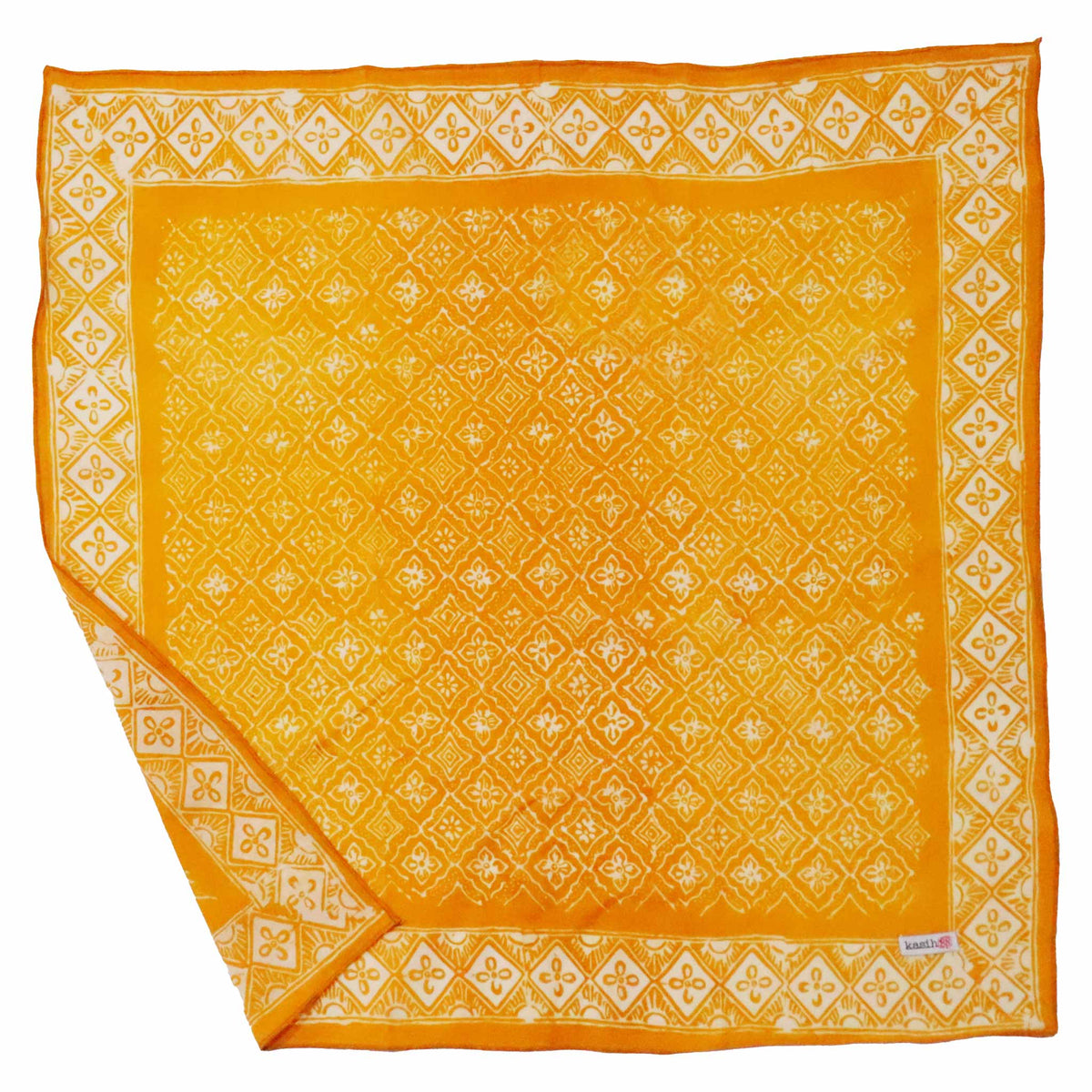
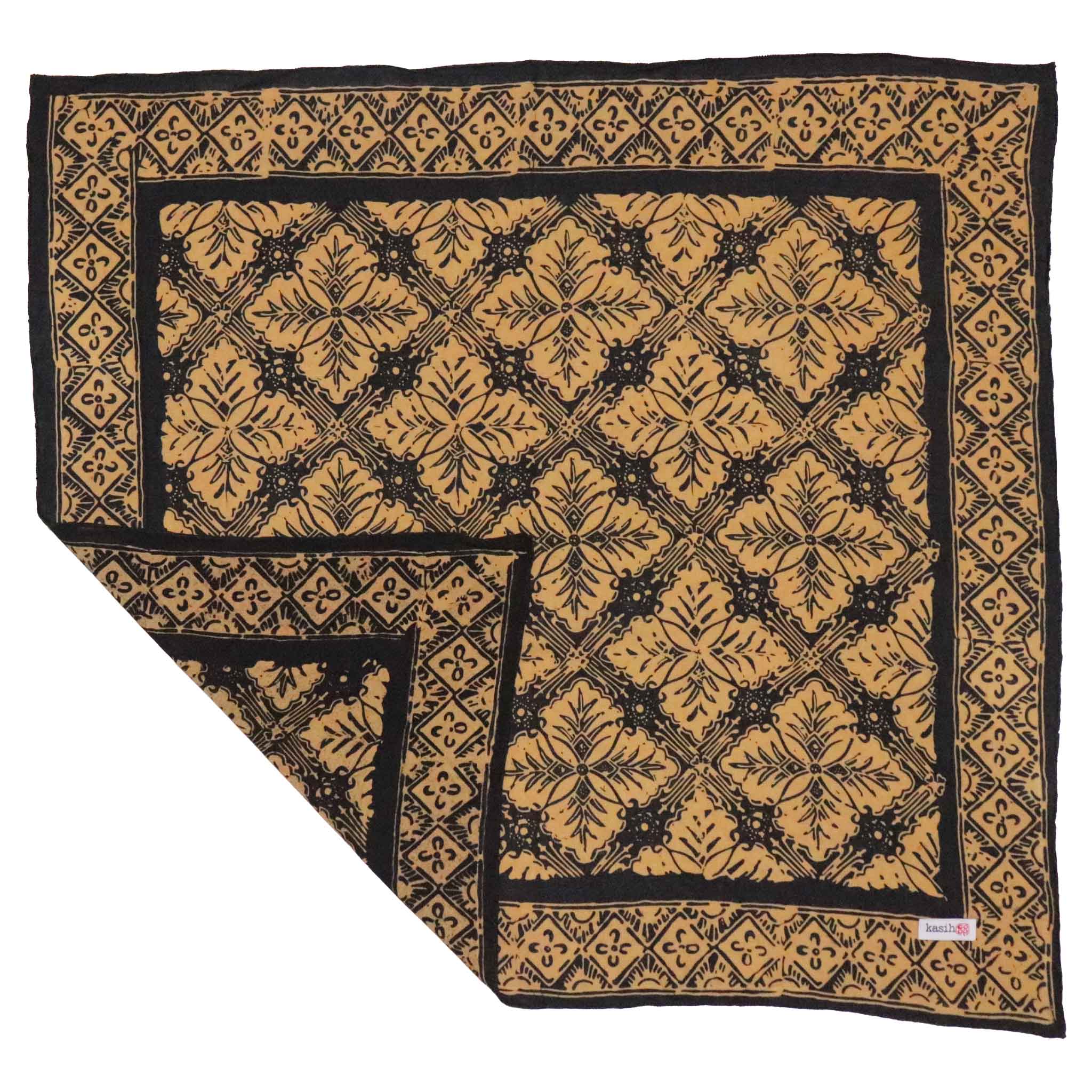
- Flip it over. Real batik shows the pattern and color nearly equally on both sides. Printed fabric is pale or blank on the back.
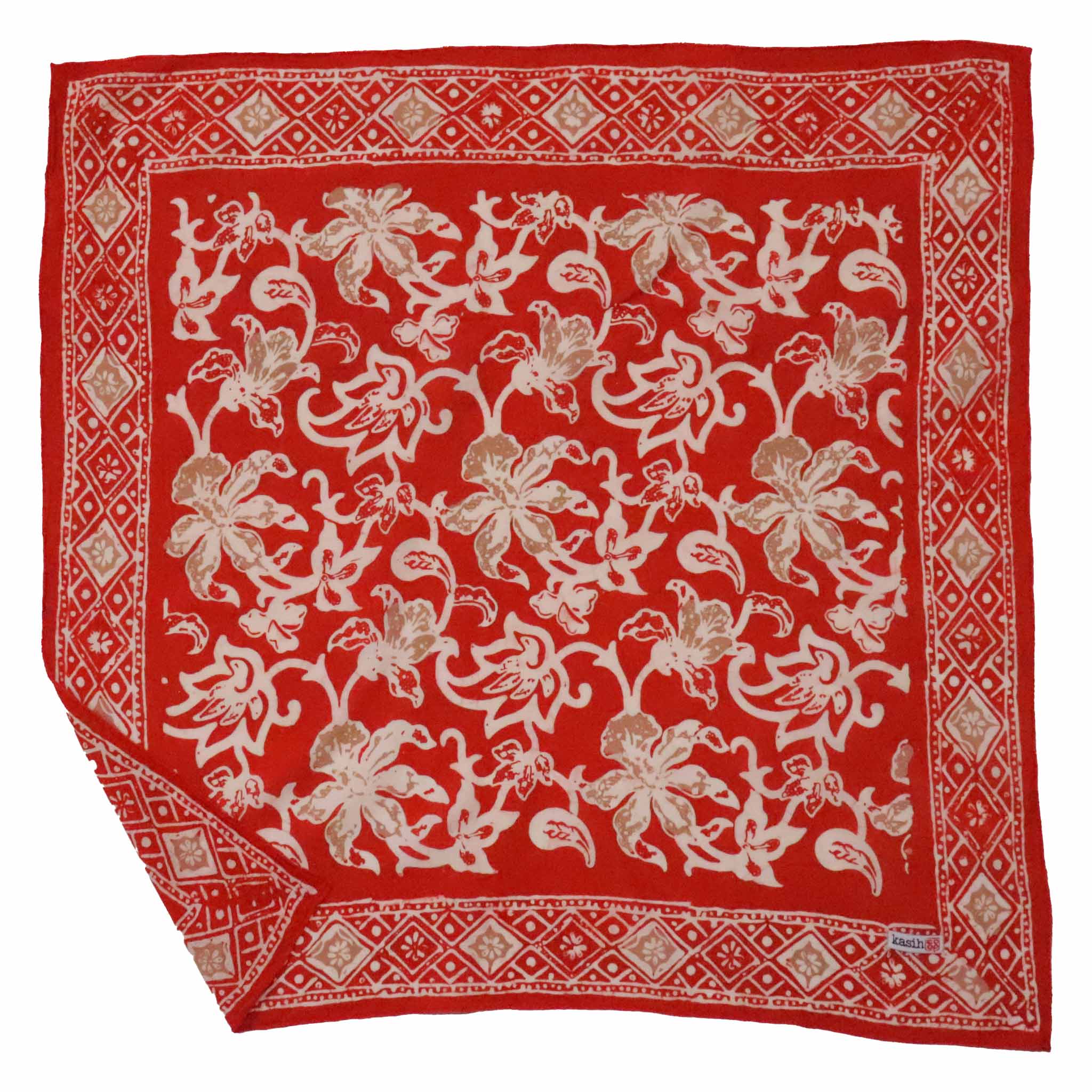
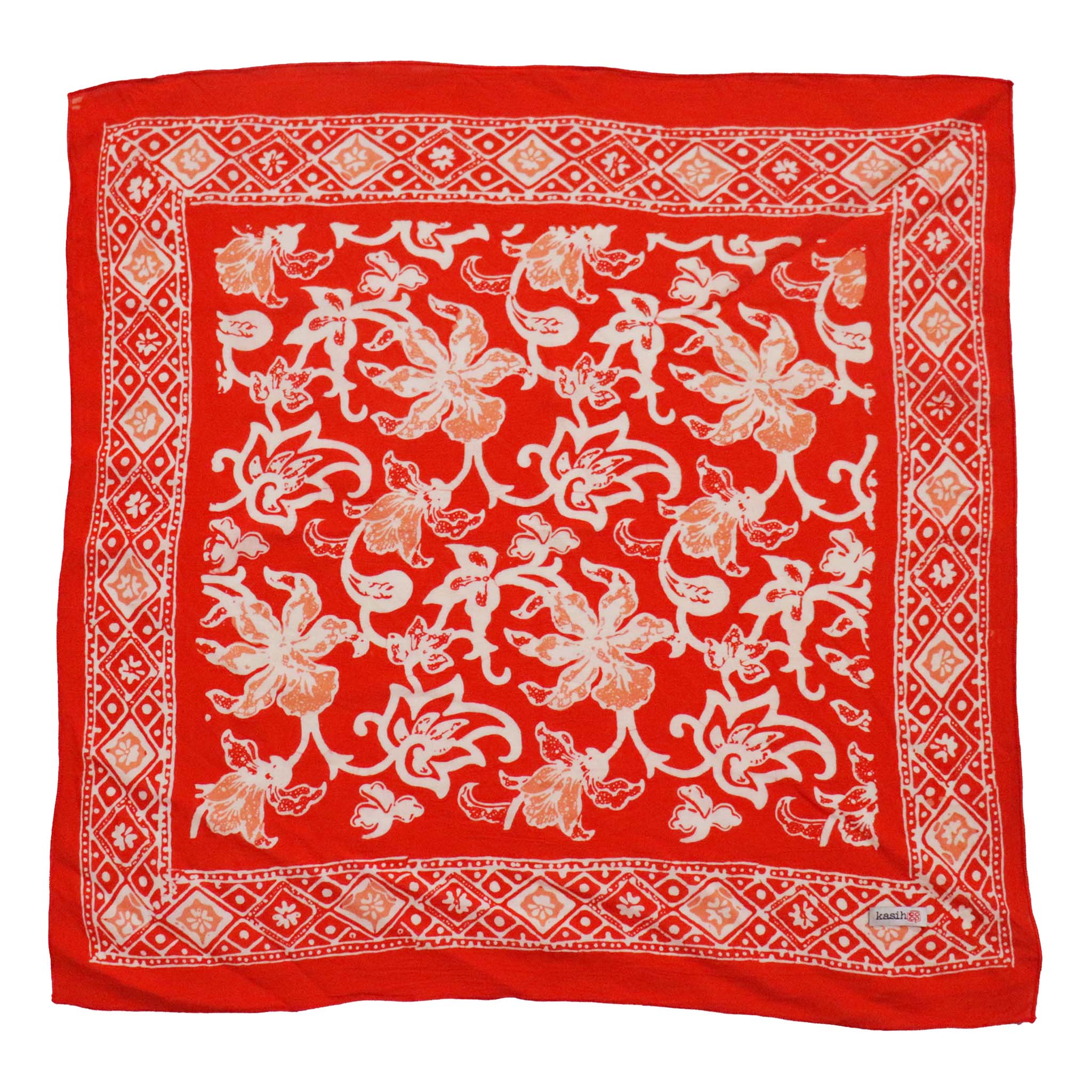
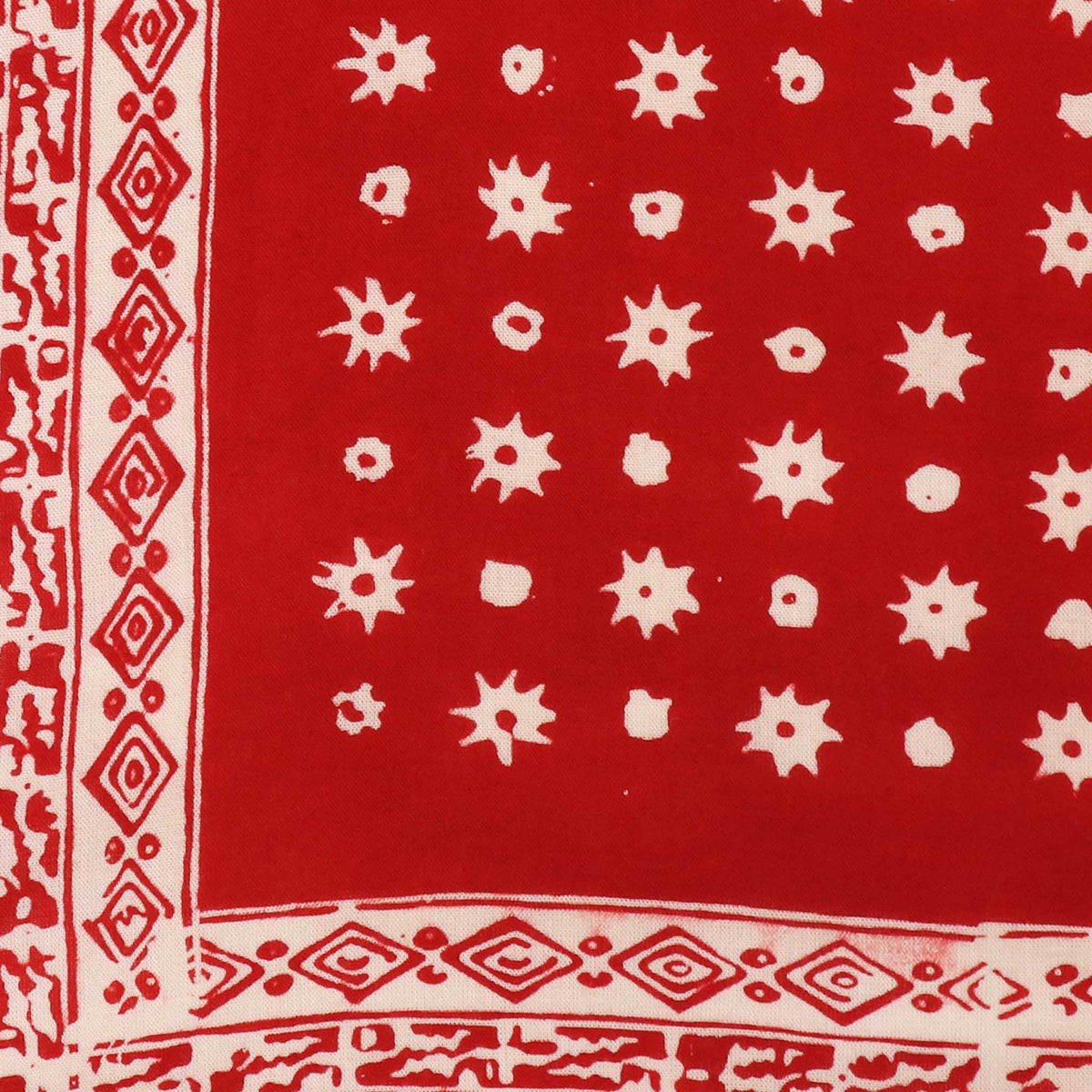
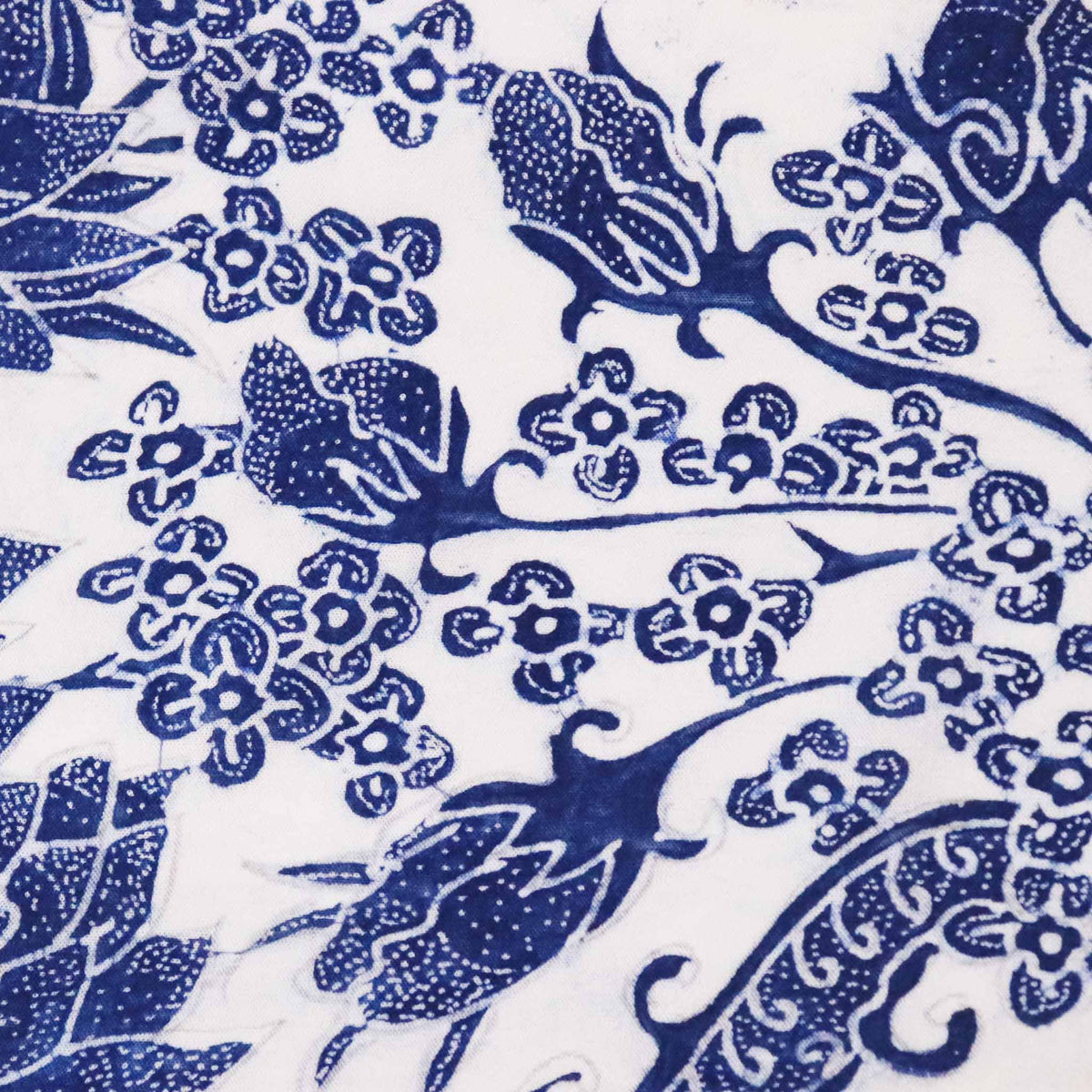
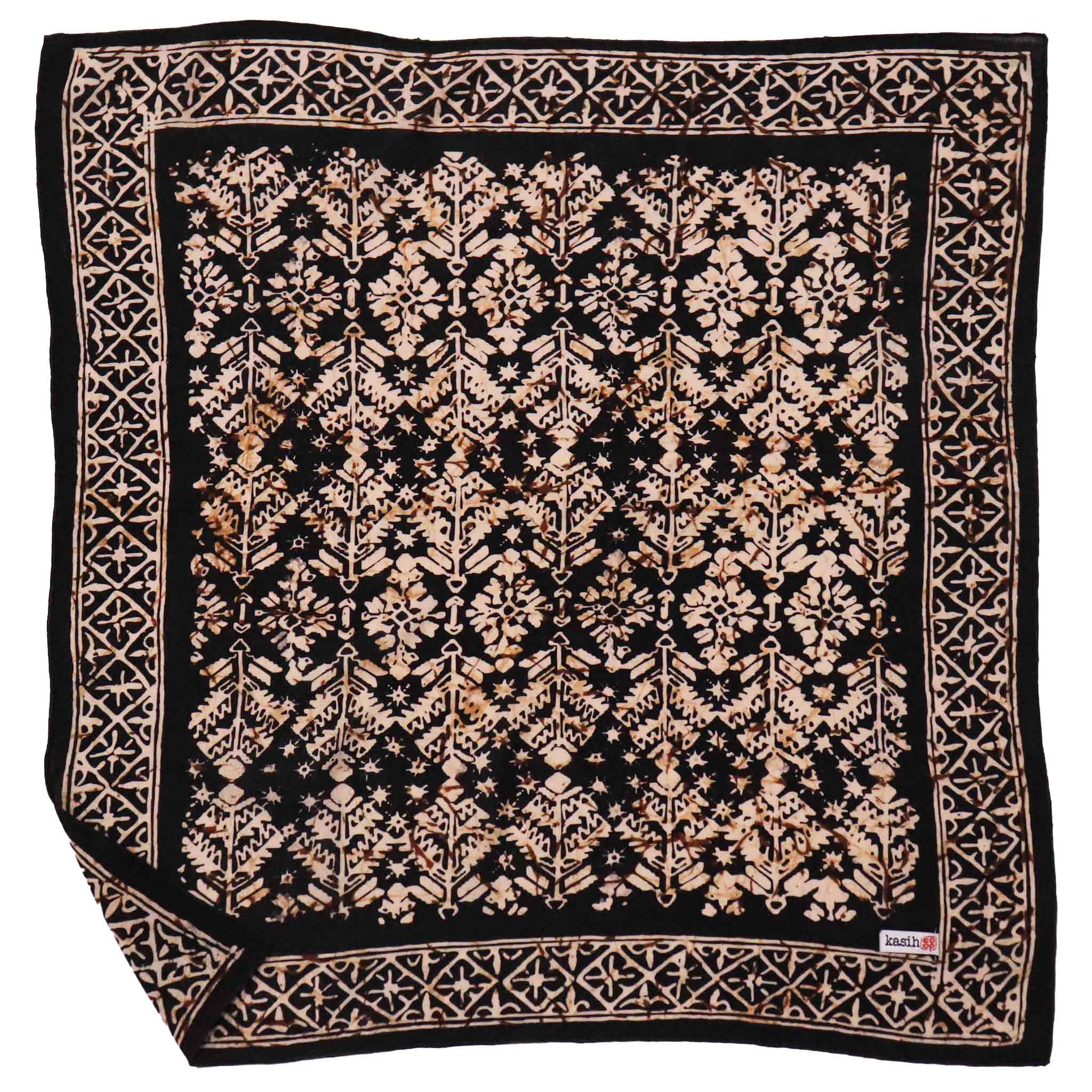
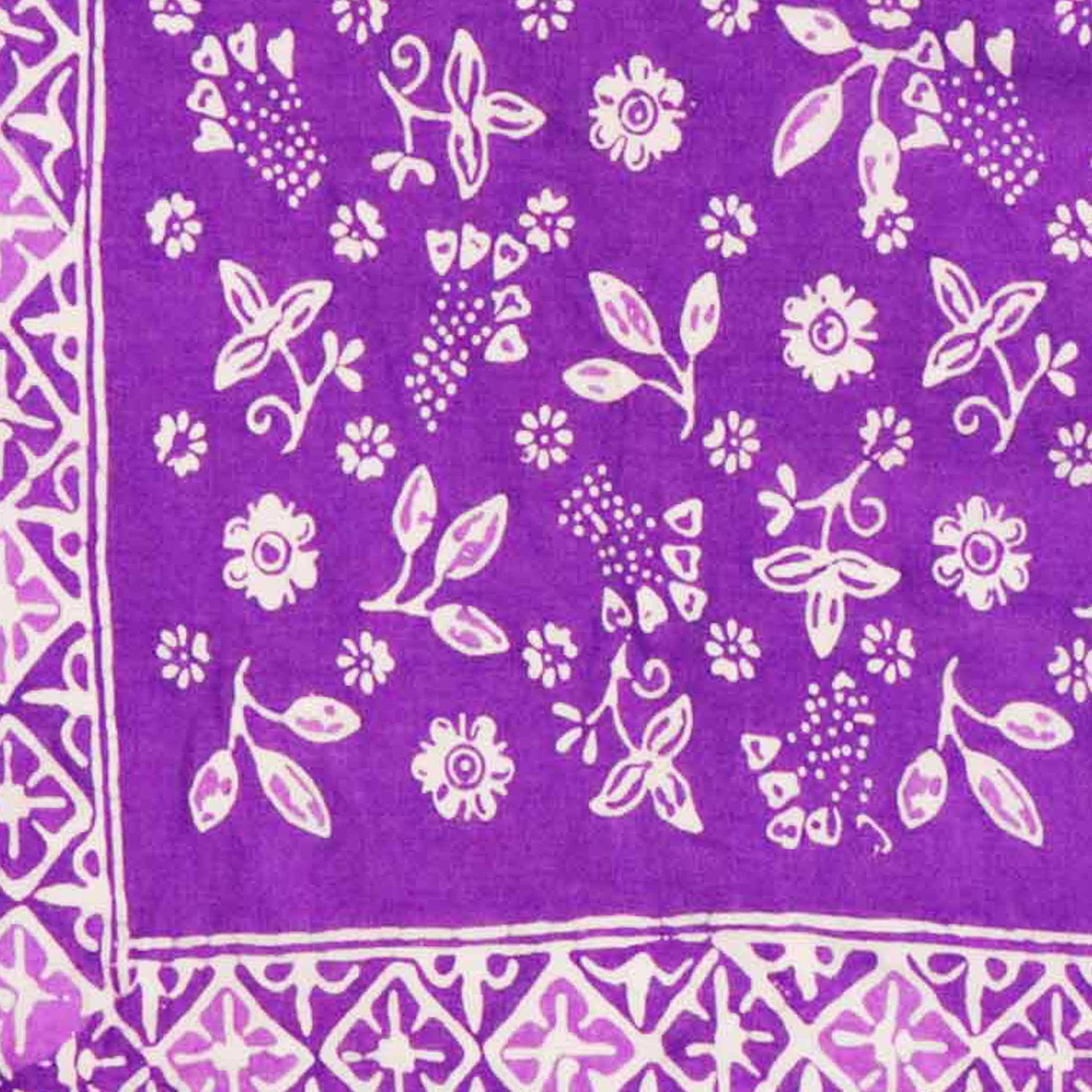
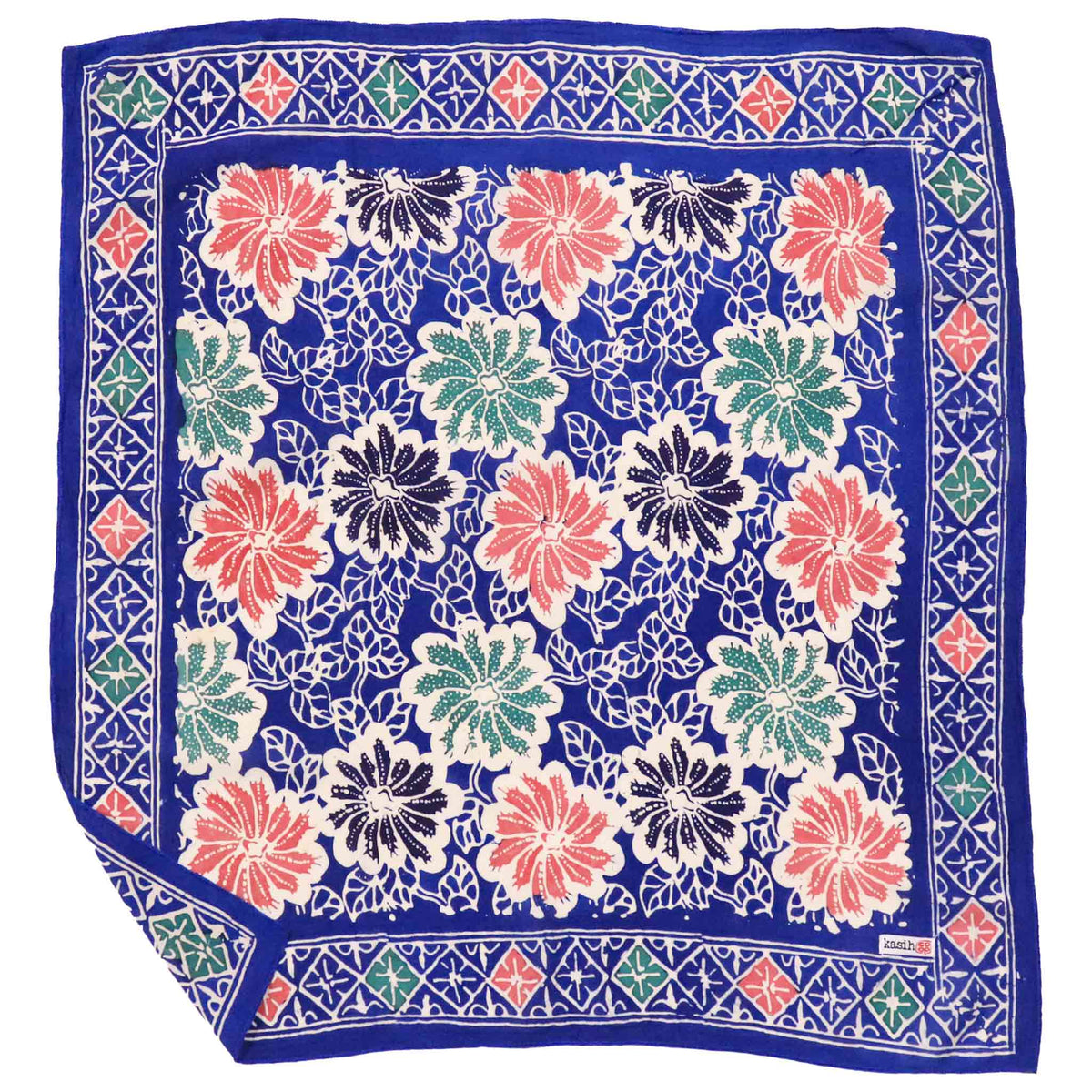
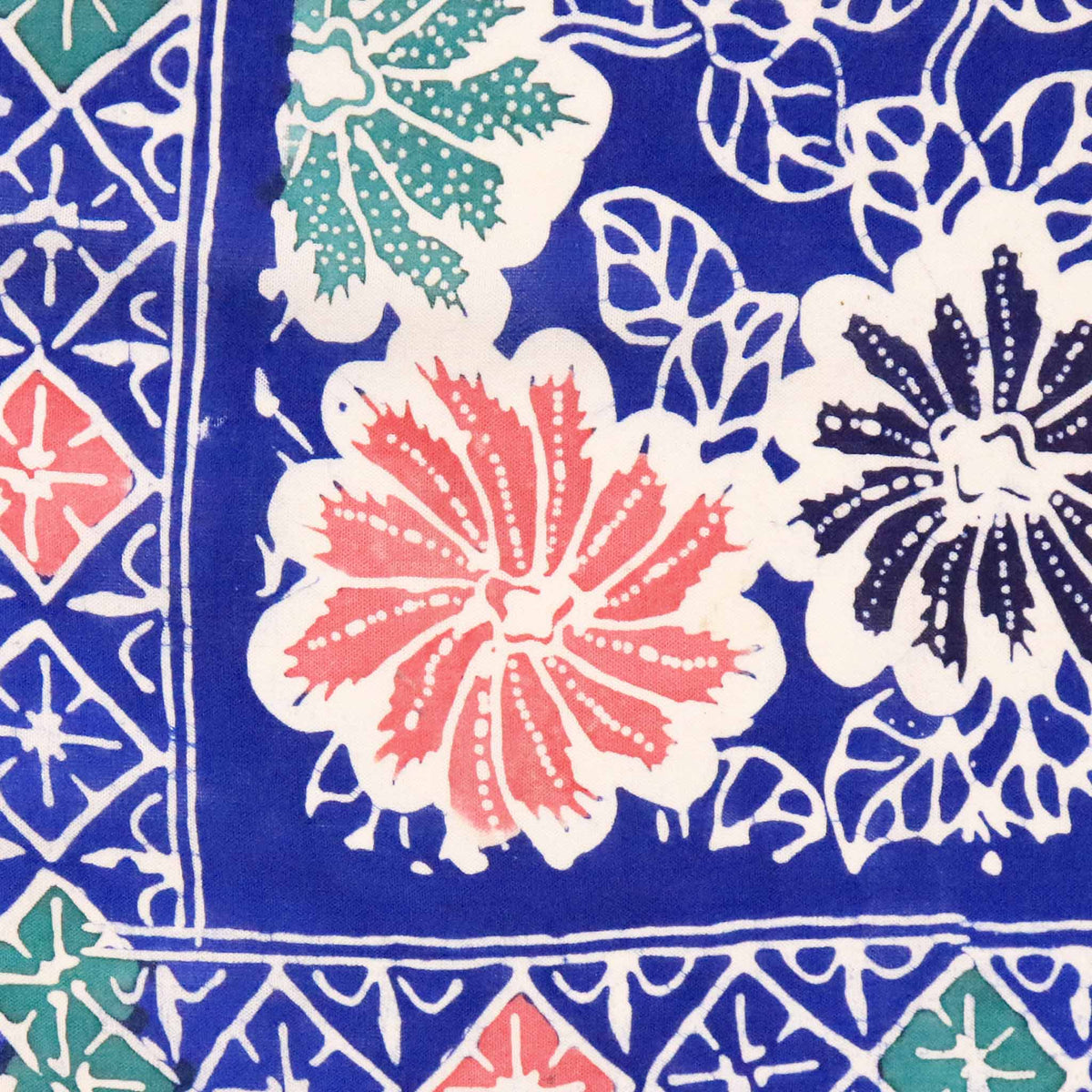
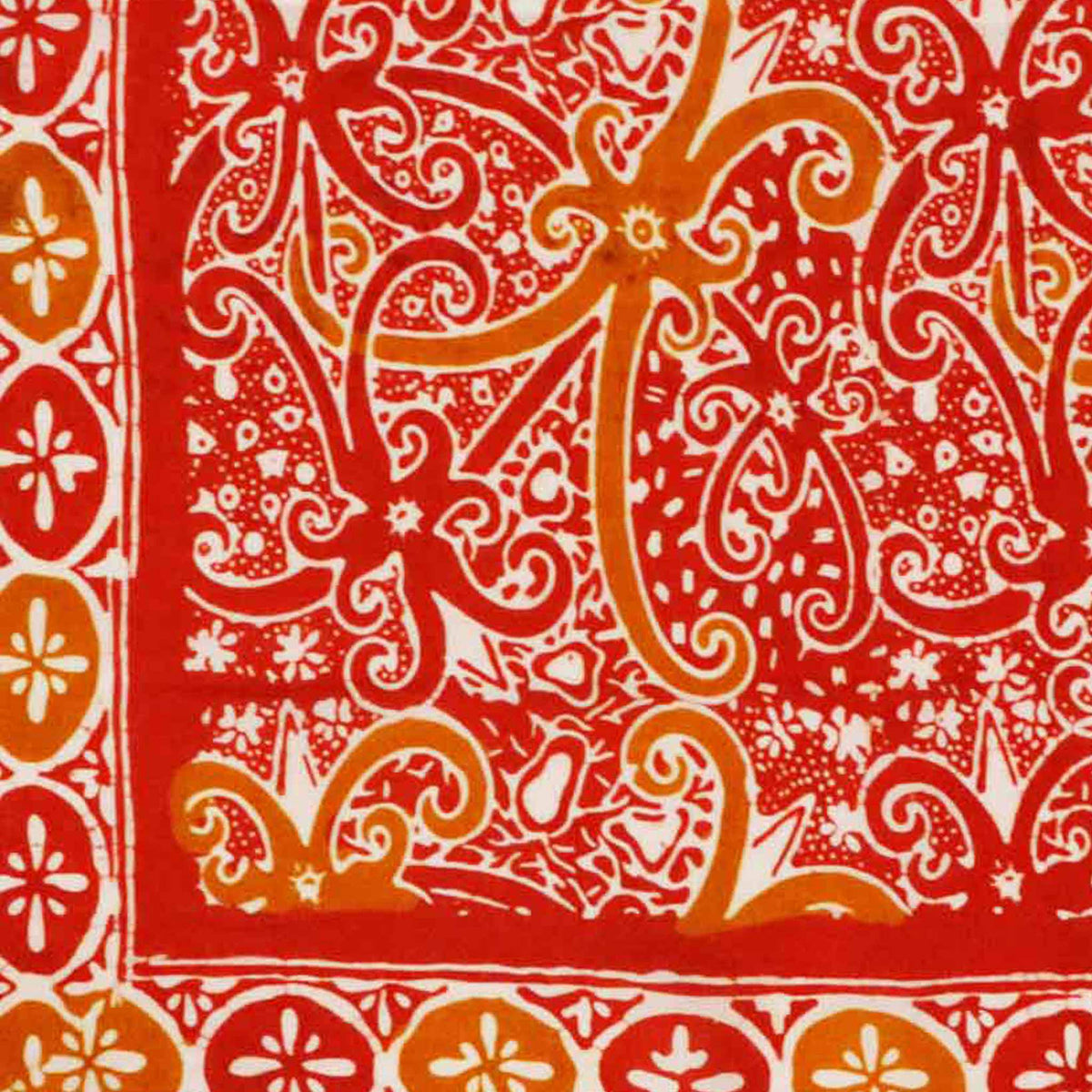
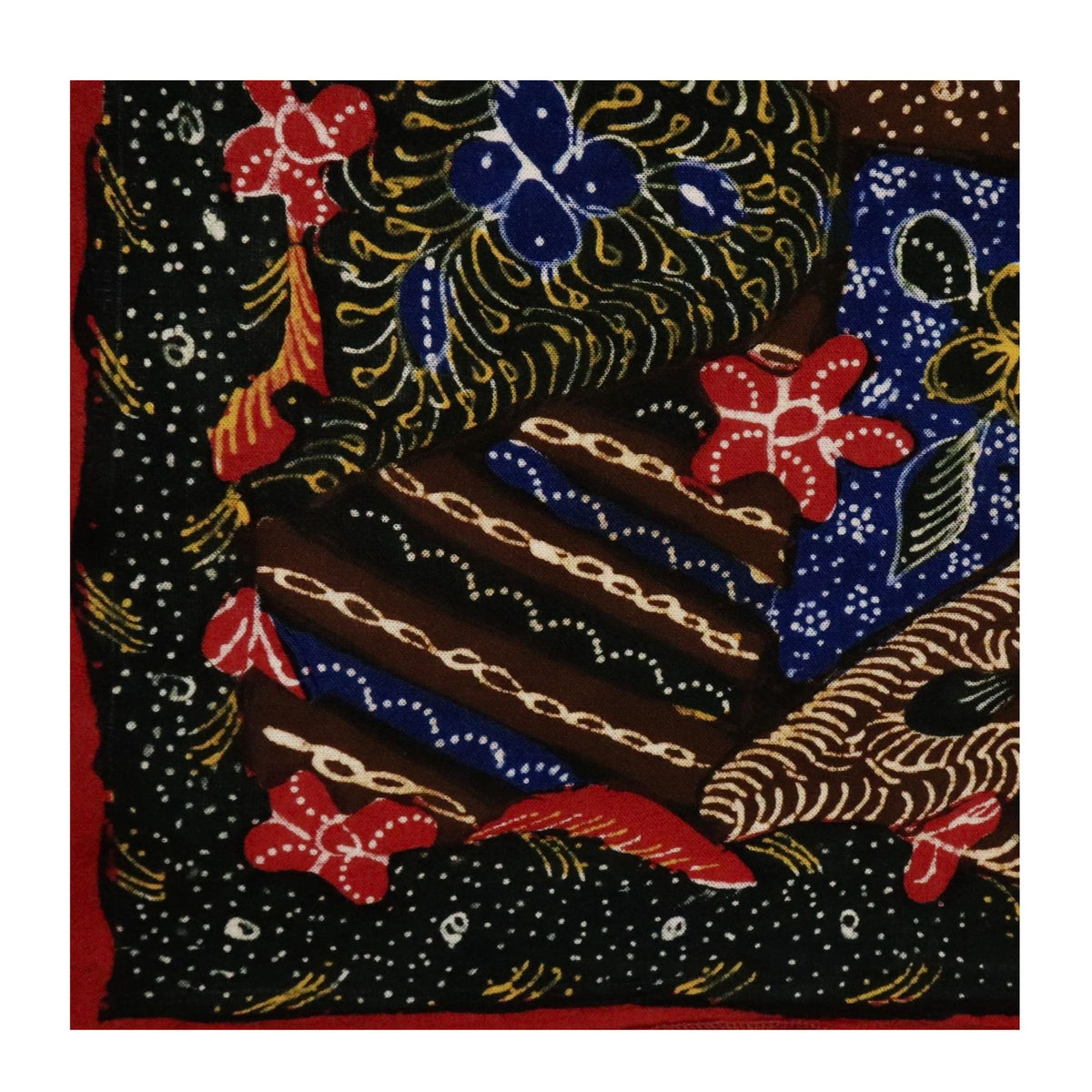
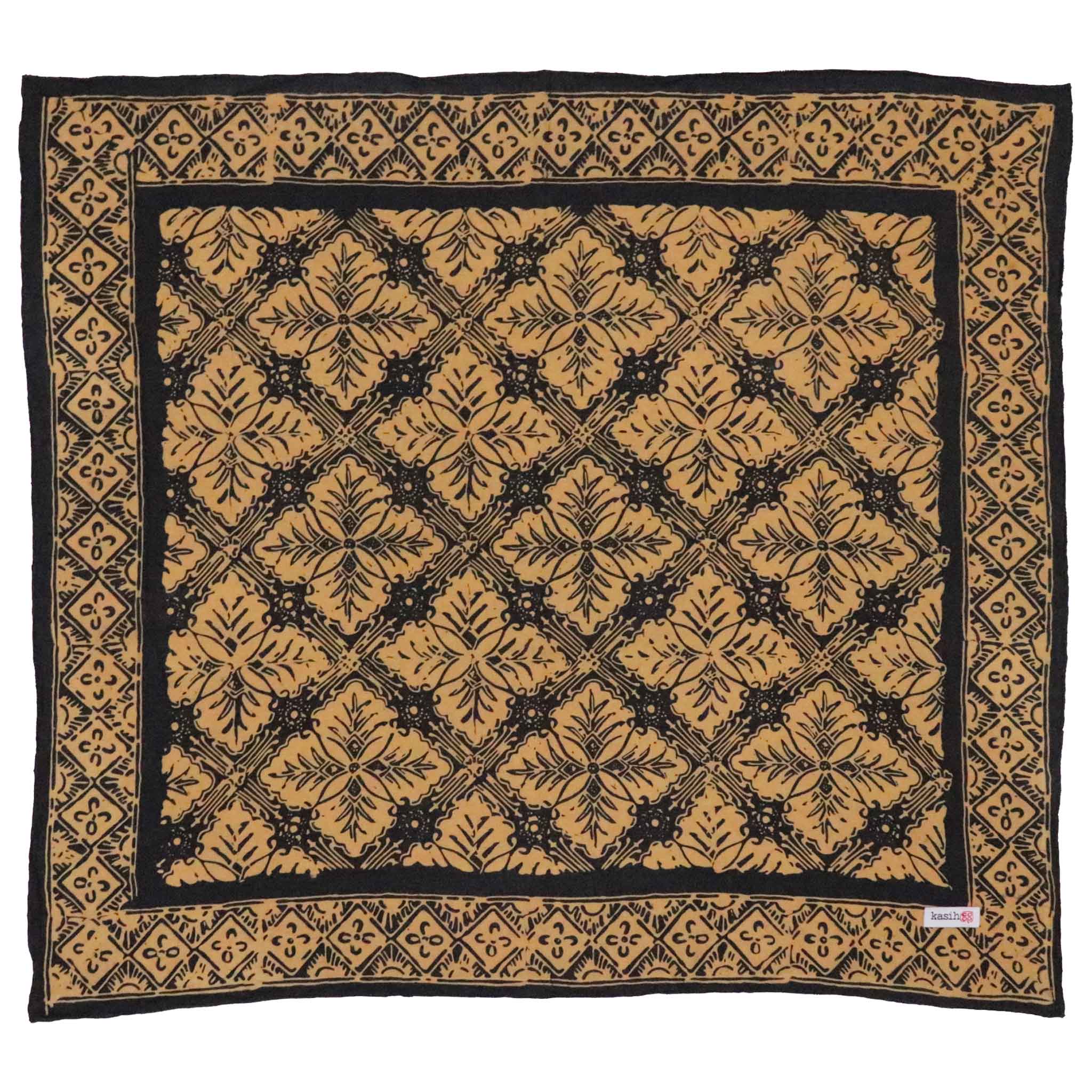
- Look for small irregularities. Hand-stamped batik has slight shifts where one stamp meets the next; hand-drawn batik has lines and dots that vary a little in thickness. A perfectly uniform repeat usually means a machine print.
- Look for crackle lines. When the wax cracks in the dye bath, fine hairline "veins" of color appear in the pattern, and they show on both sides. Printed fabric can imitate crackle on the front, but not on the back.
- Smell it. A new batik piece often has a faint, natural wax scent from the wax-resist process. It fades after a wash or two. Printed fabric doesn't have it.
- Check the edges of the design. In real batik, color sometimes creeps softly into the edges of the waxed areas. Printed patterns have crisp, flat edges.
- Read the label carefully. "Batik print," "batik-style," "batik pattern," or "batik design" usually means printed. Look for "hand-stamped (cap)," "hand-drawn (tulis)," or "wax-resist."
- Check the price. A handmade batik bandana takes real skilled labor. If it costs less than a printed paisley bandana, be skeptical. See our batik bandana price guide.
The Two Kinds of Real Batik: Cap and Tulis
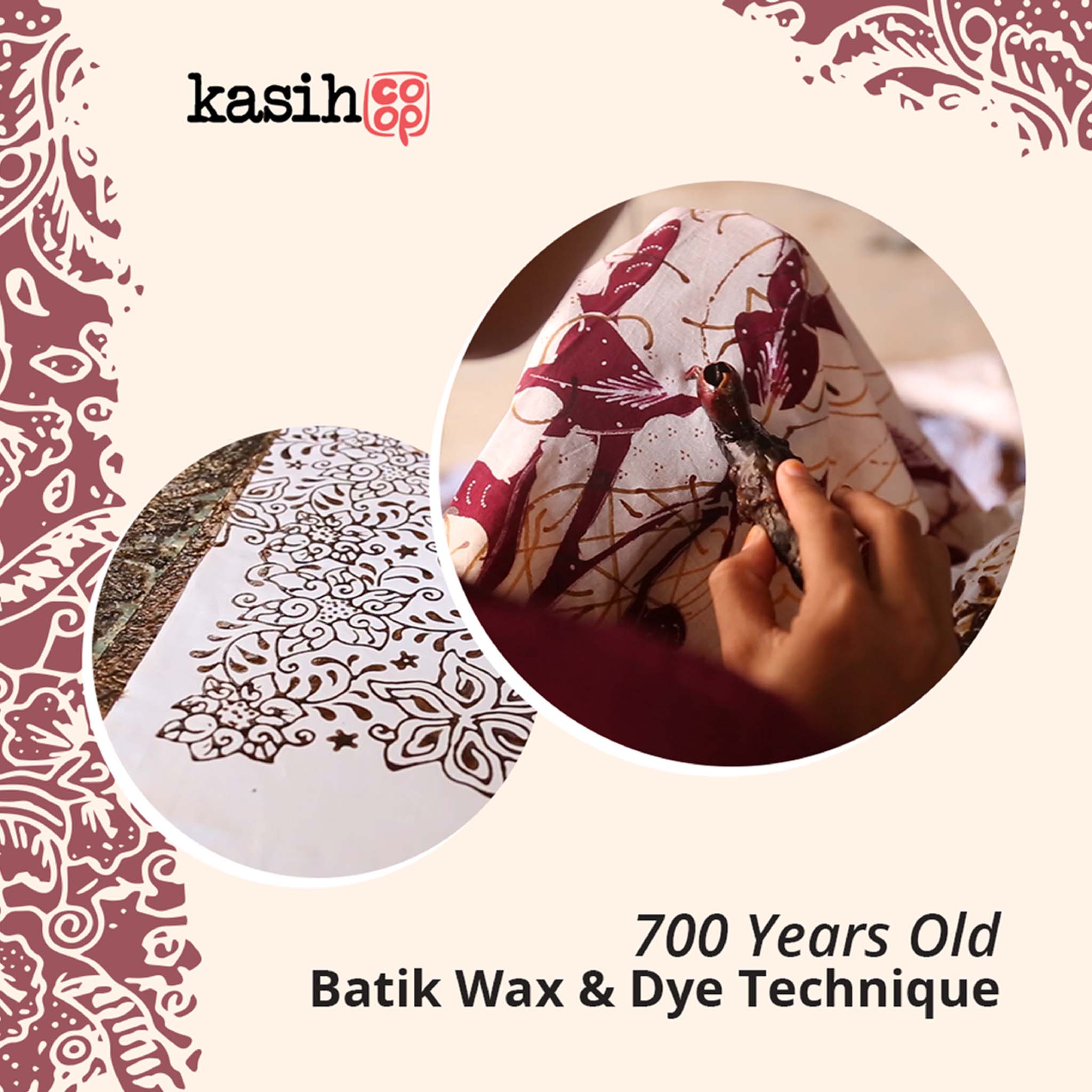
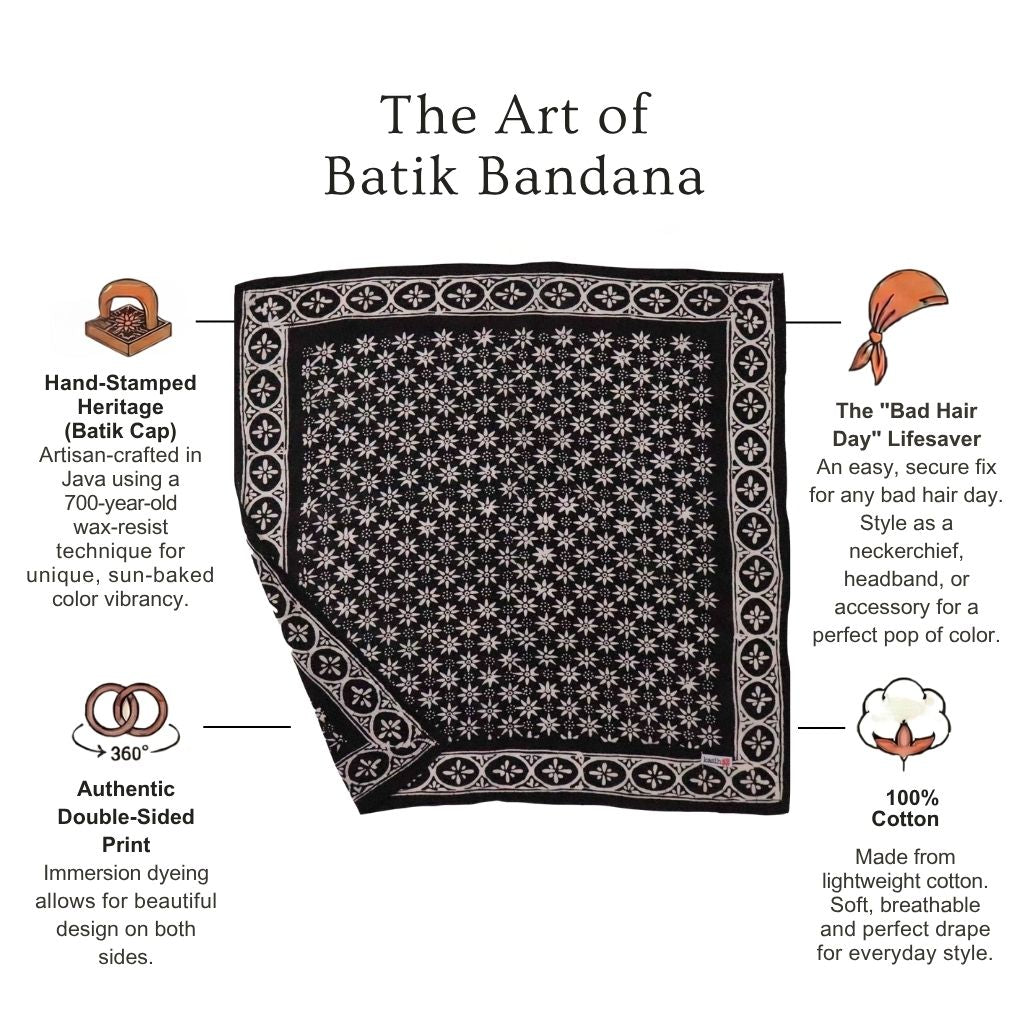
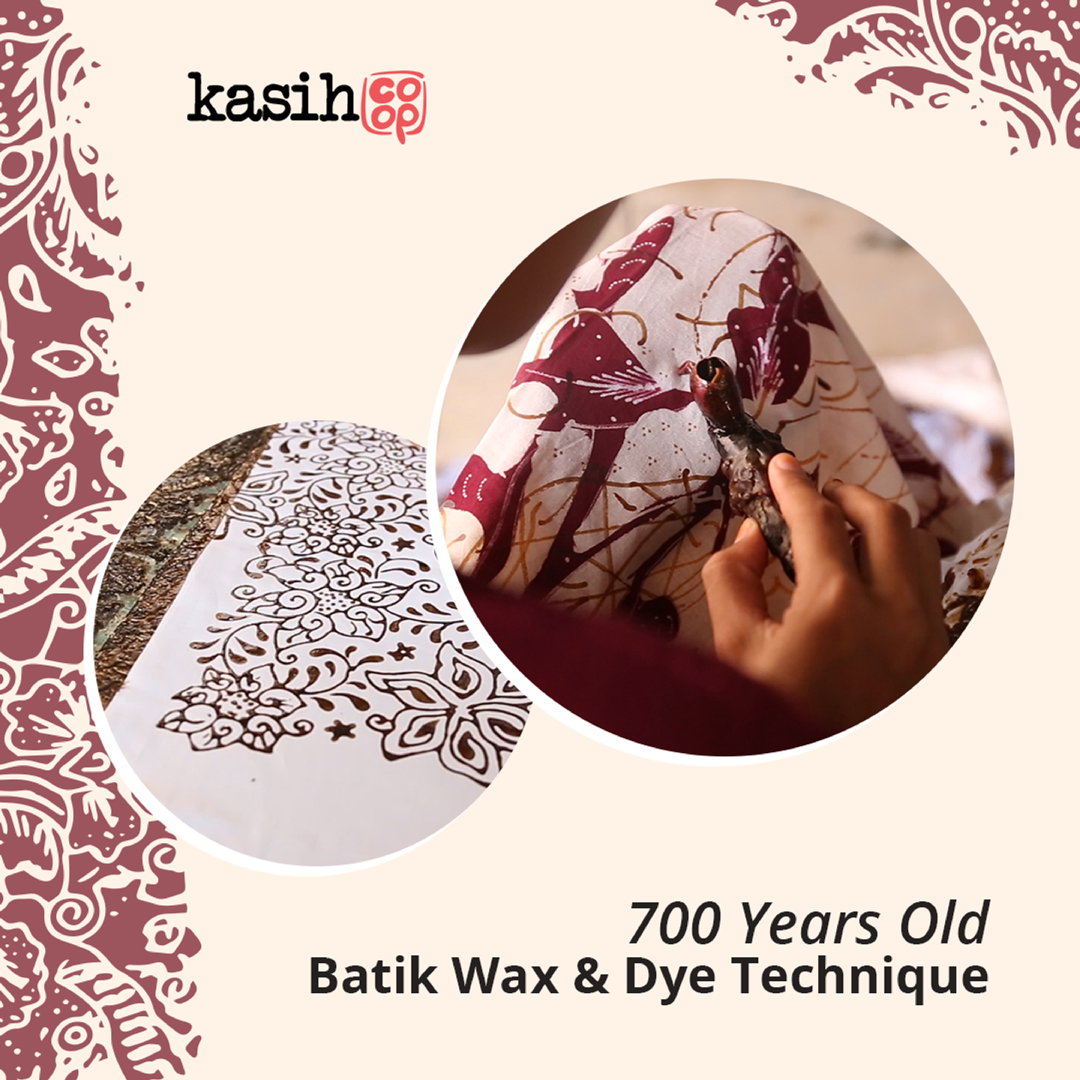
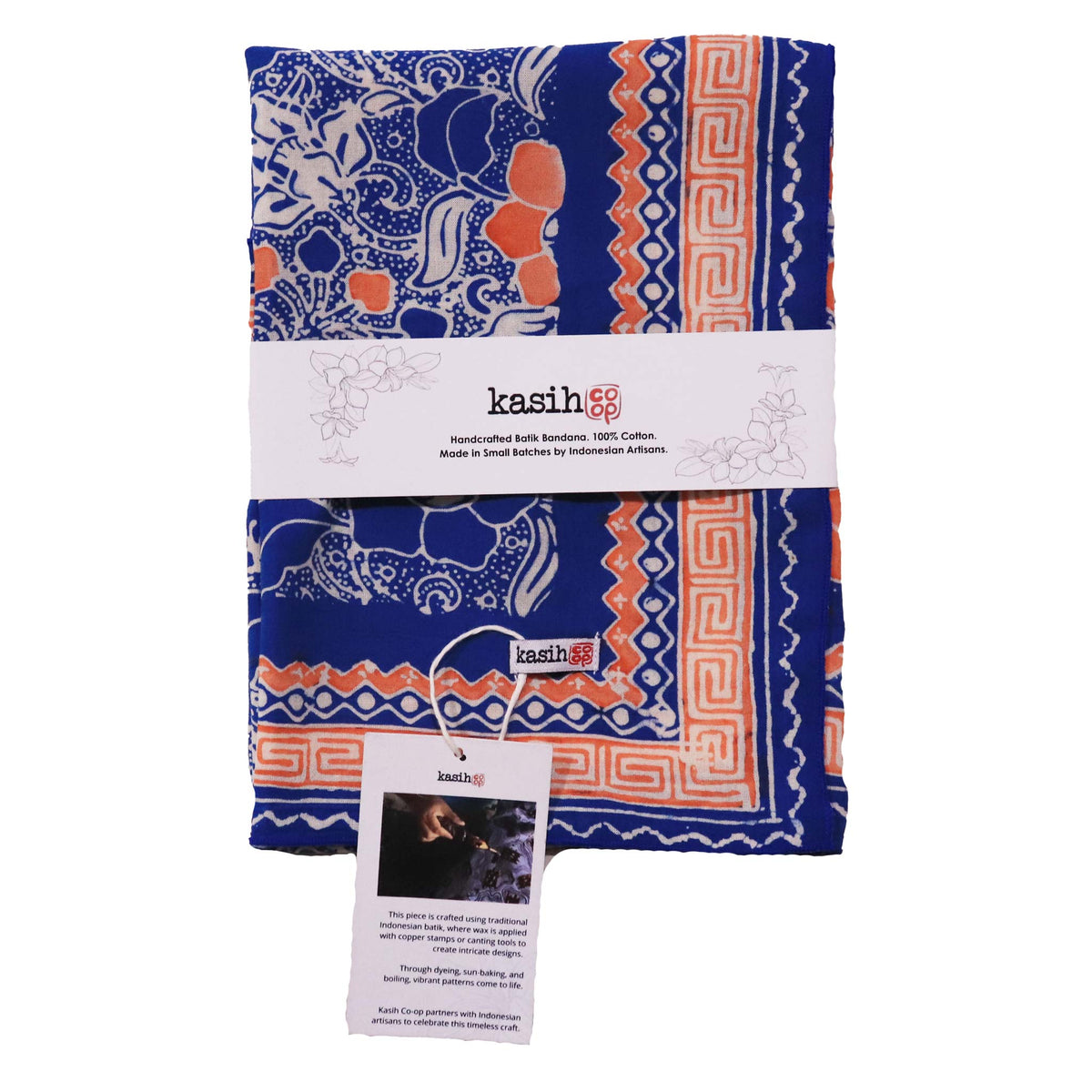
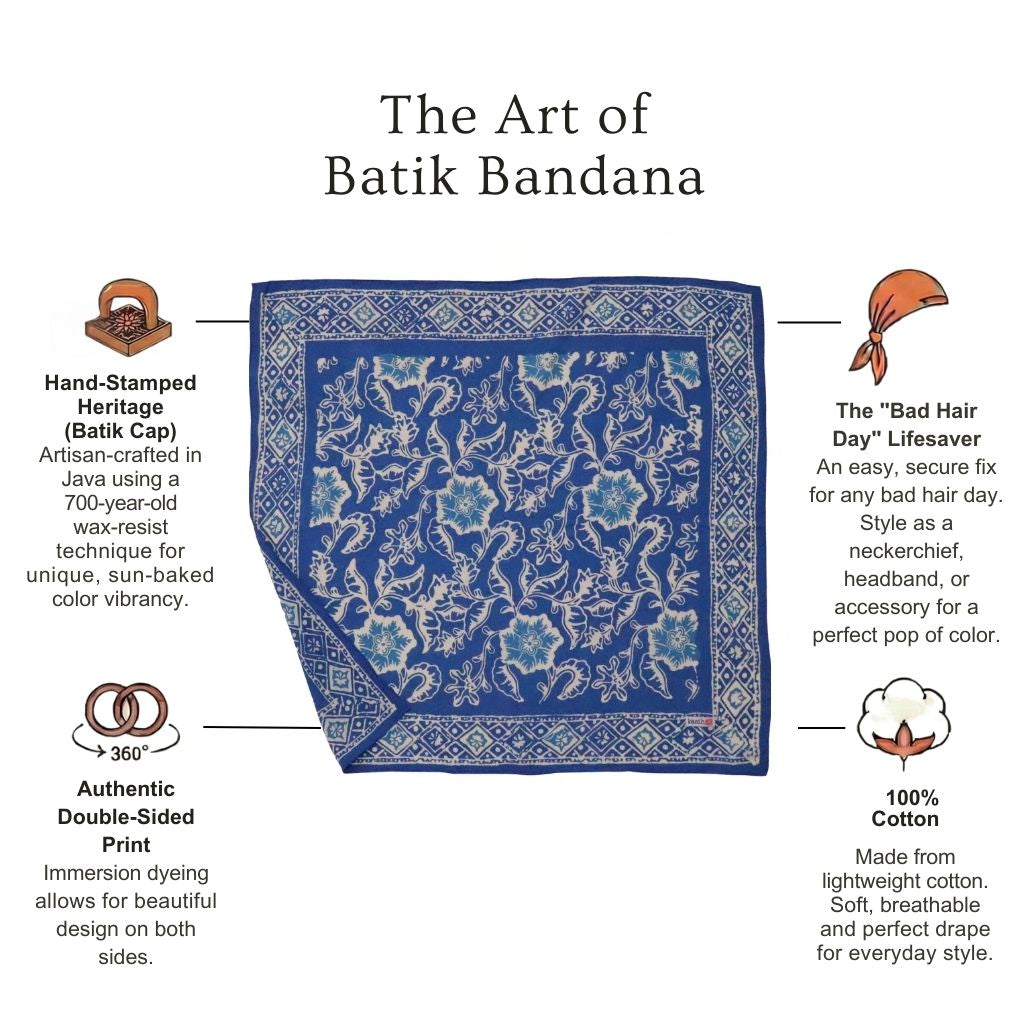
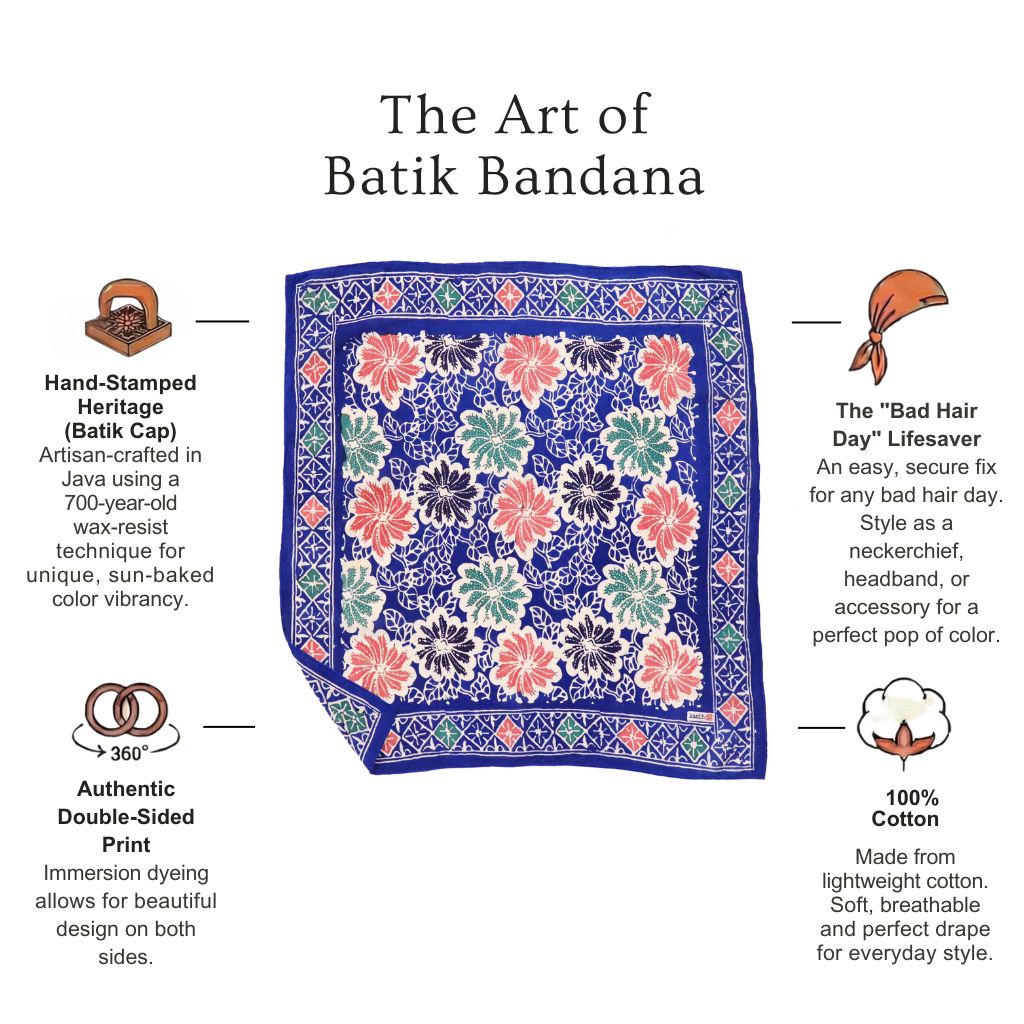
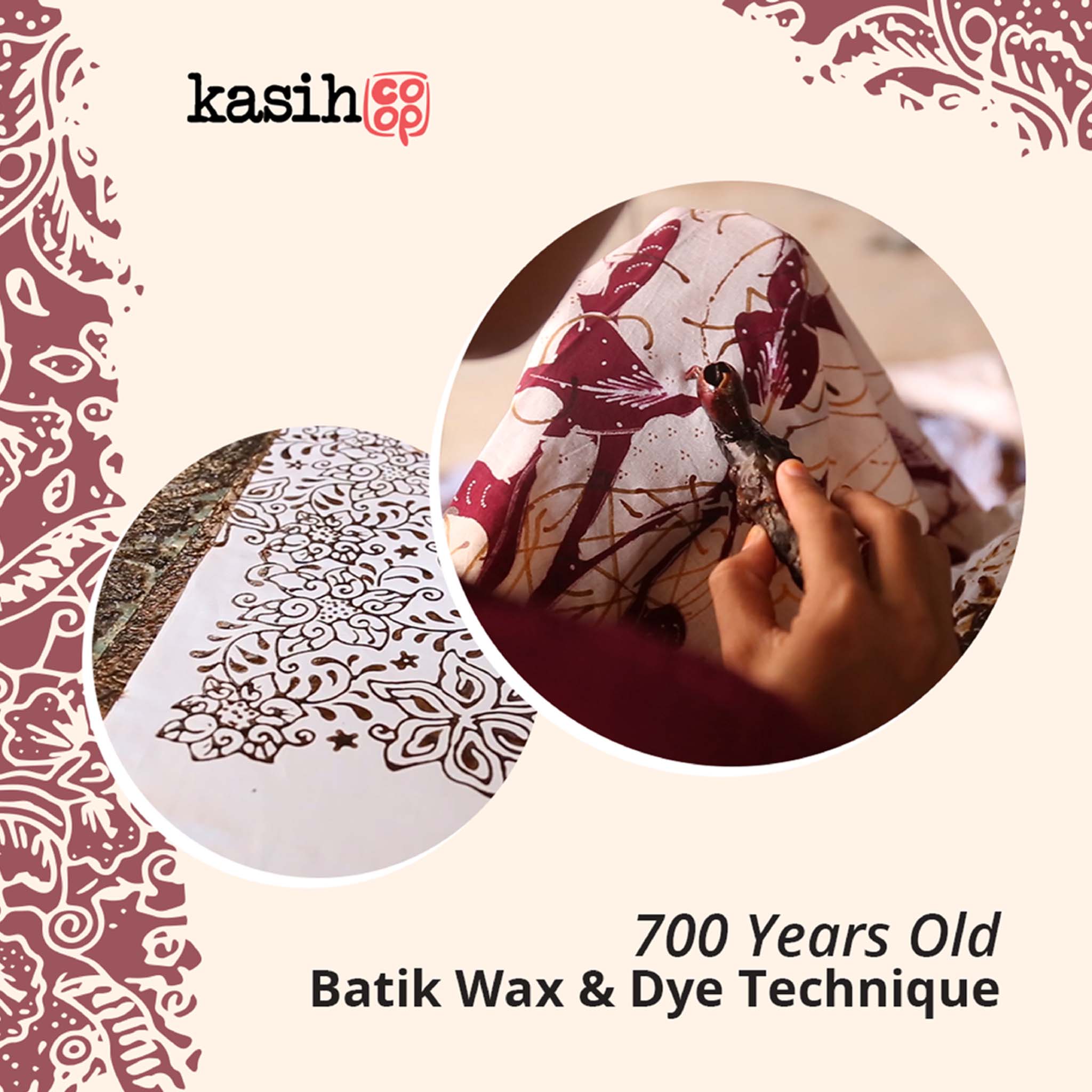
Batik is a wax-resist dyeing technique practiced in Indonesia for centuries. Wax is applied to 100% cotton, the cloth is dyed, and the waxed areas resist the dye. The wax is then boiled away, revealing the pattern. There are two main ways to apply the wax:
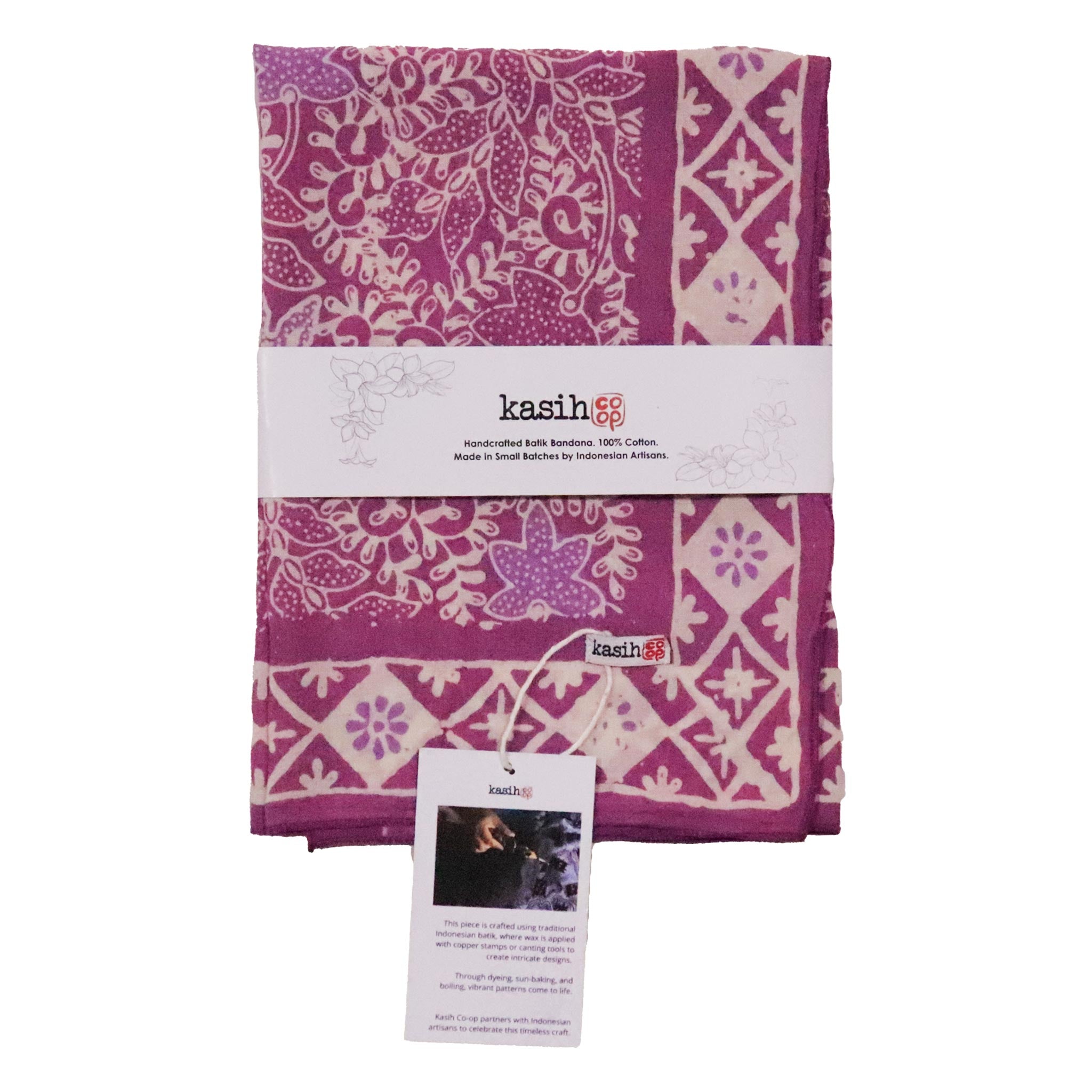
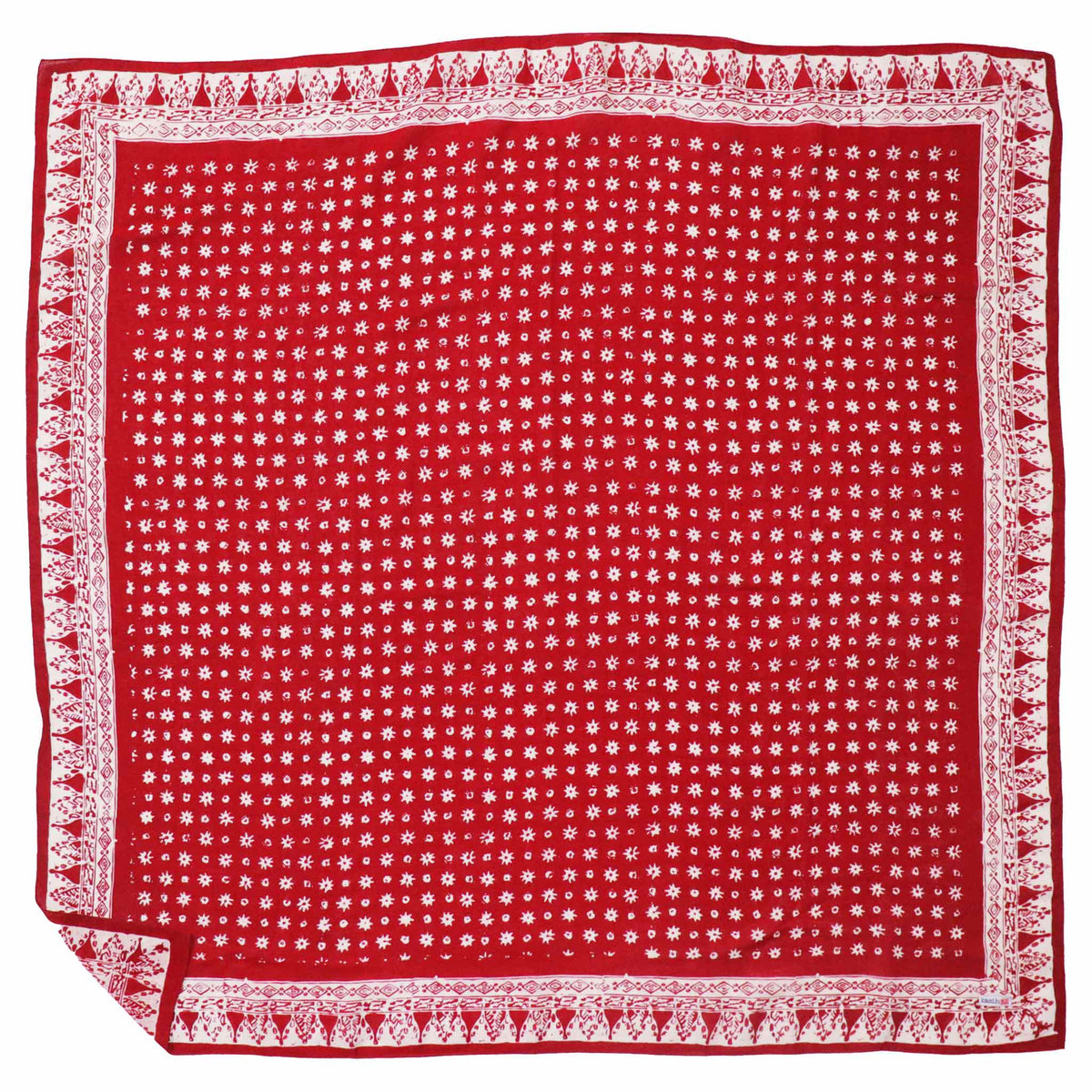
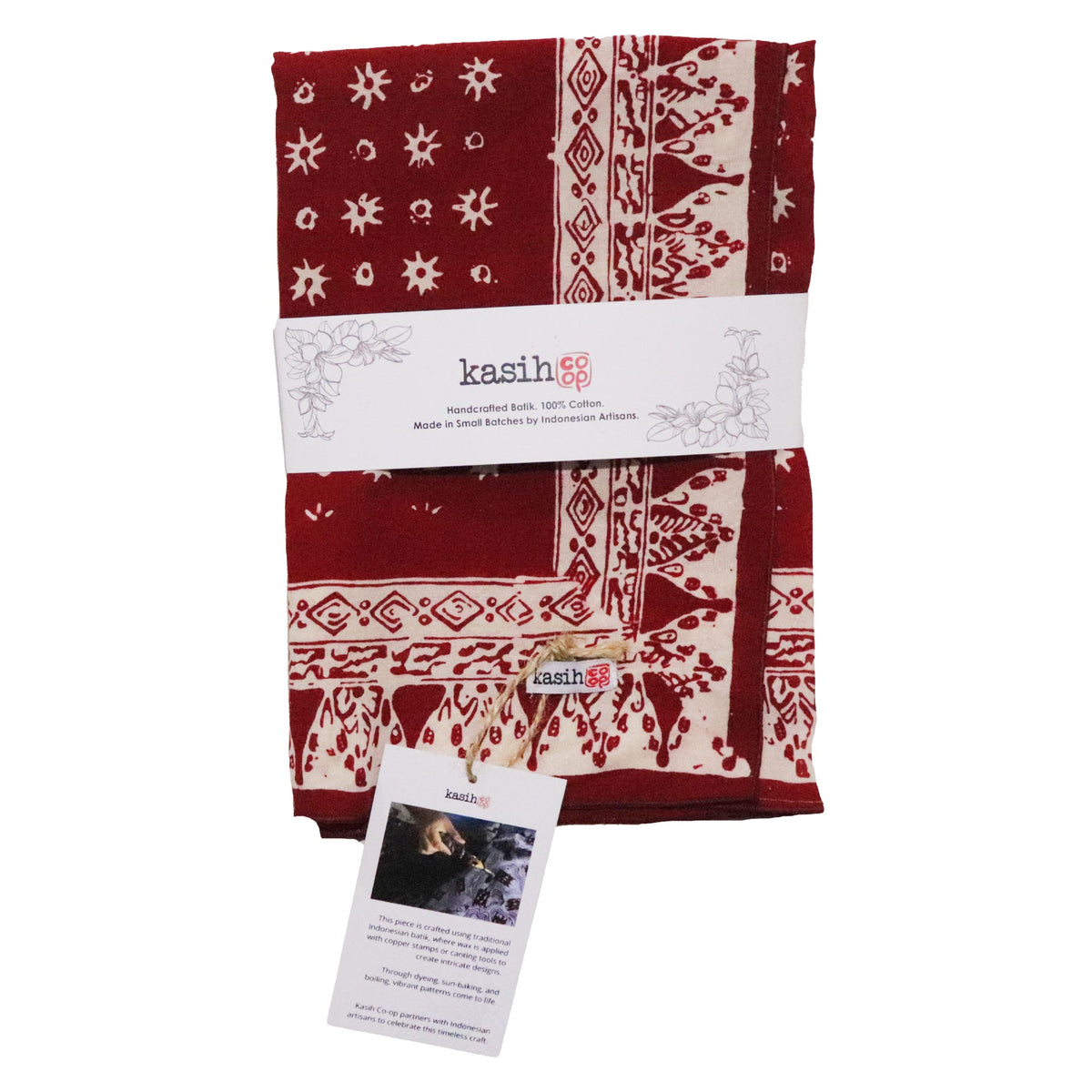
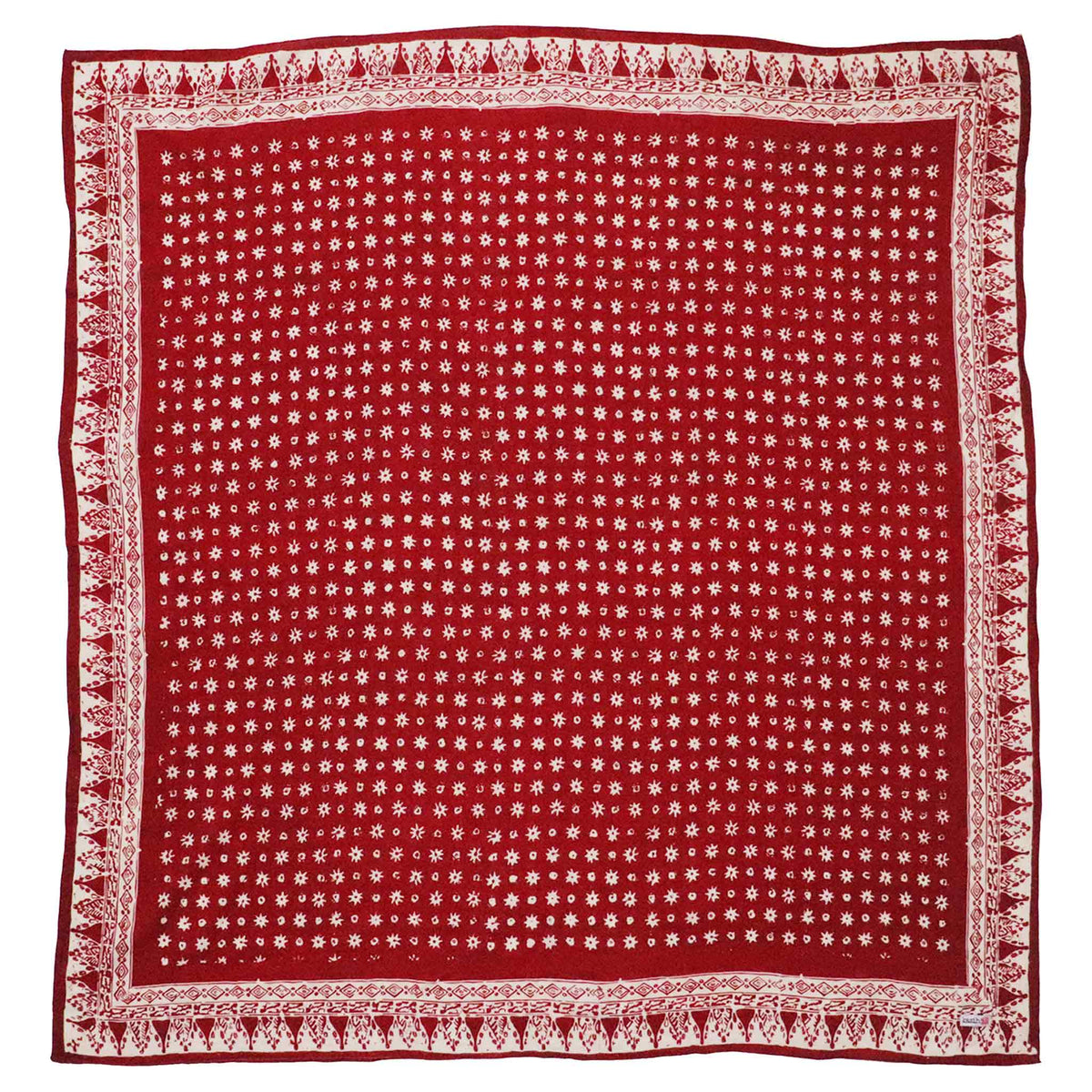
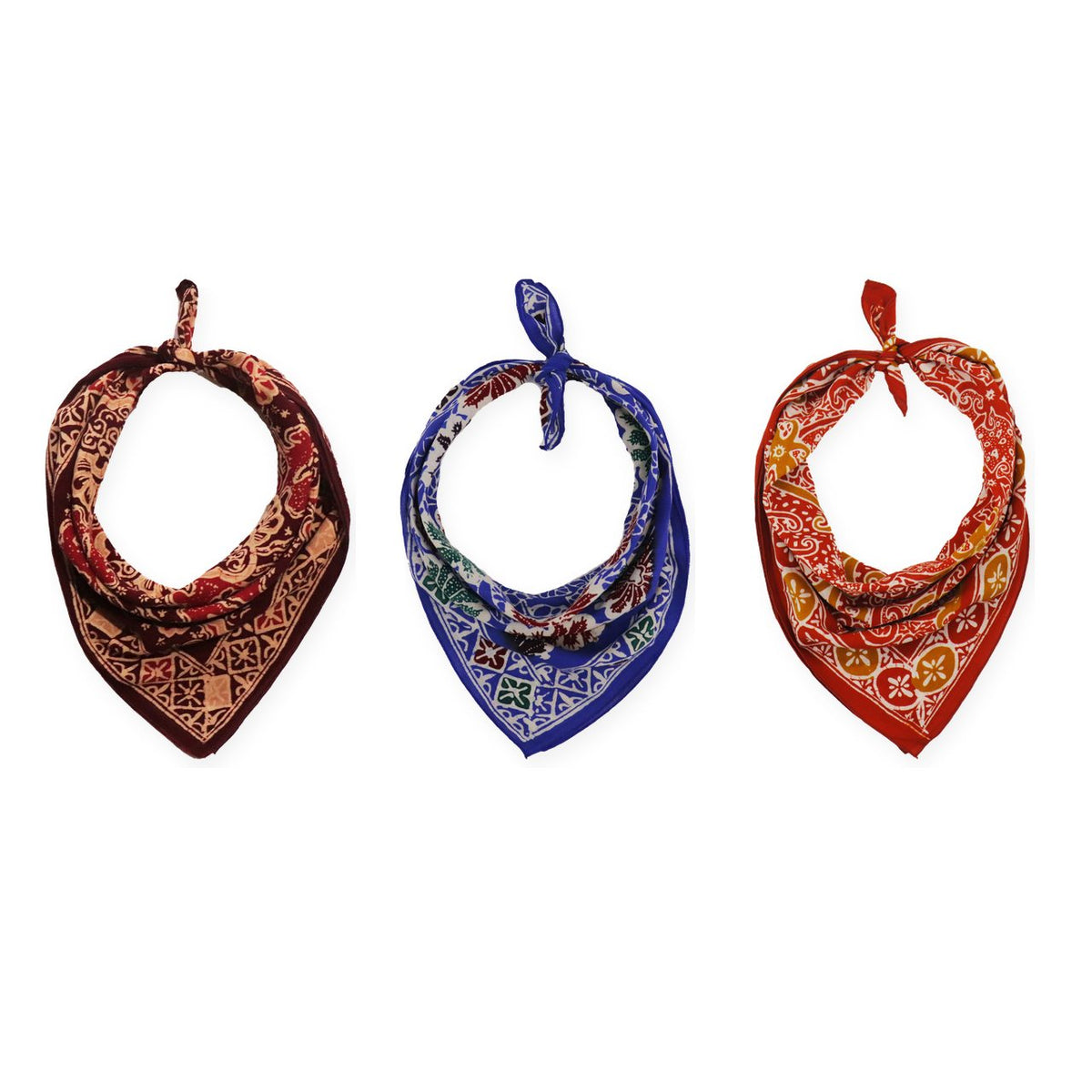
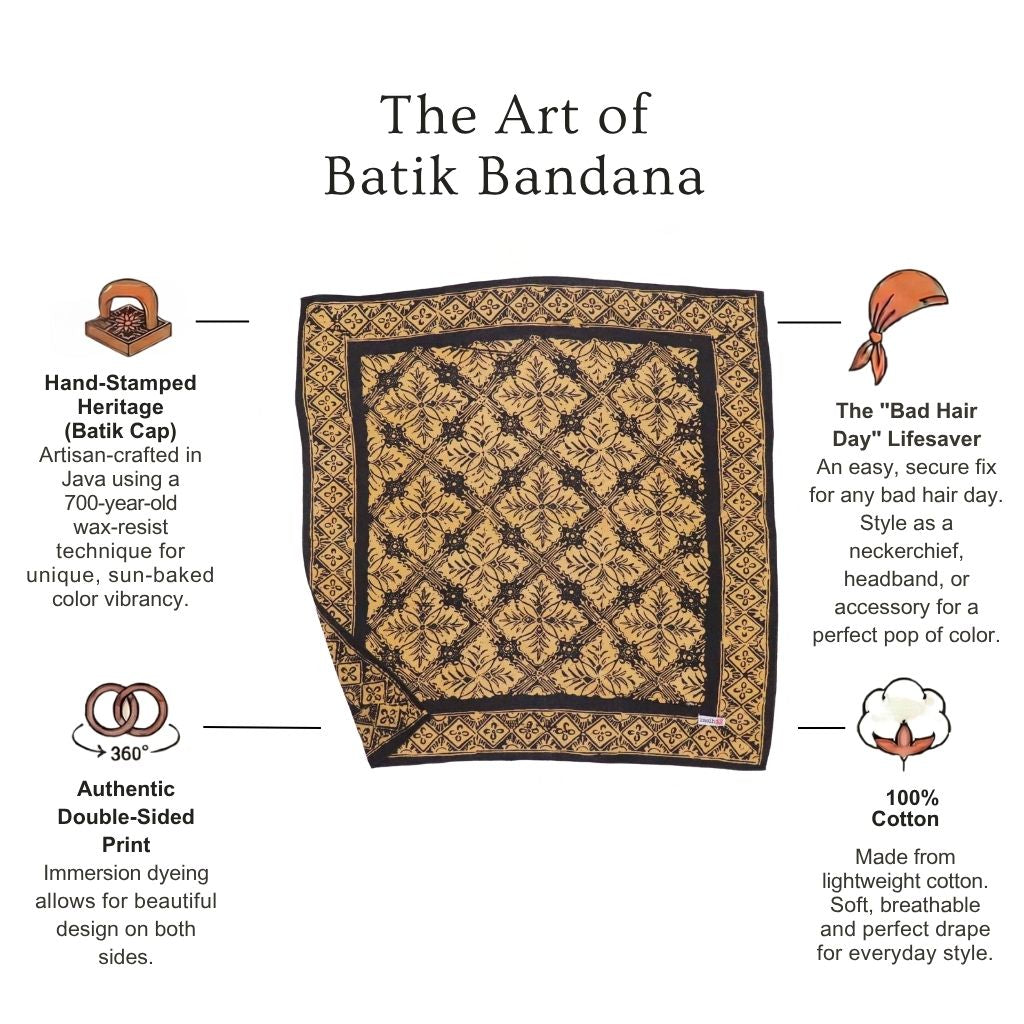
- Batik cap (hand-stamped). An artisan dips a hand-made copper stamp (cap, pronounced "chop") into hot wax and presses it onto the cloth, repeating the motif. Still handmade and dyed the same way, but faster, which keeps the price accessible. Most Kasih Co-op bandanas are batik cap.
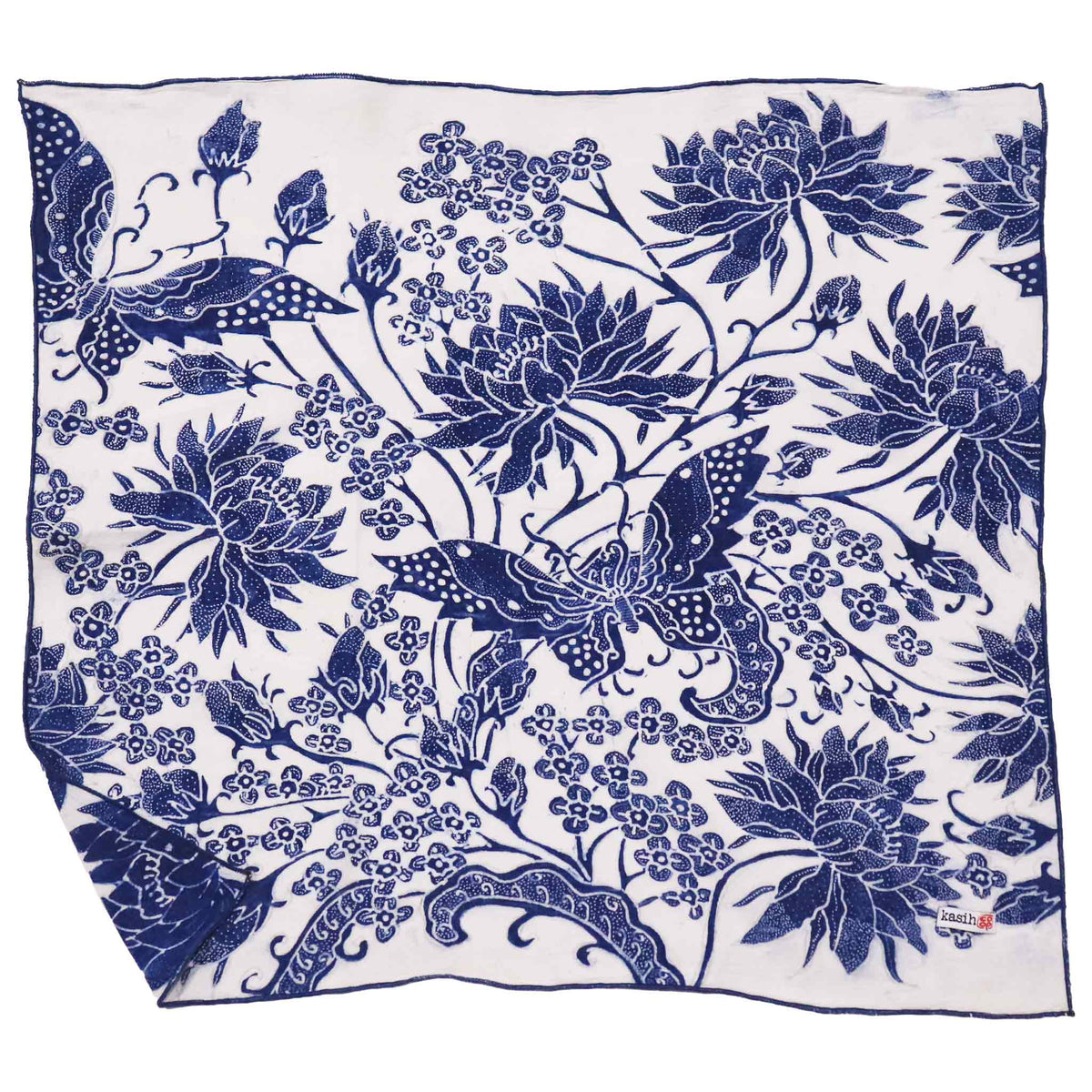
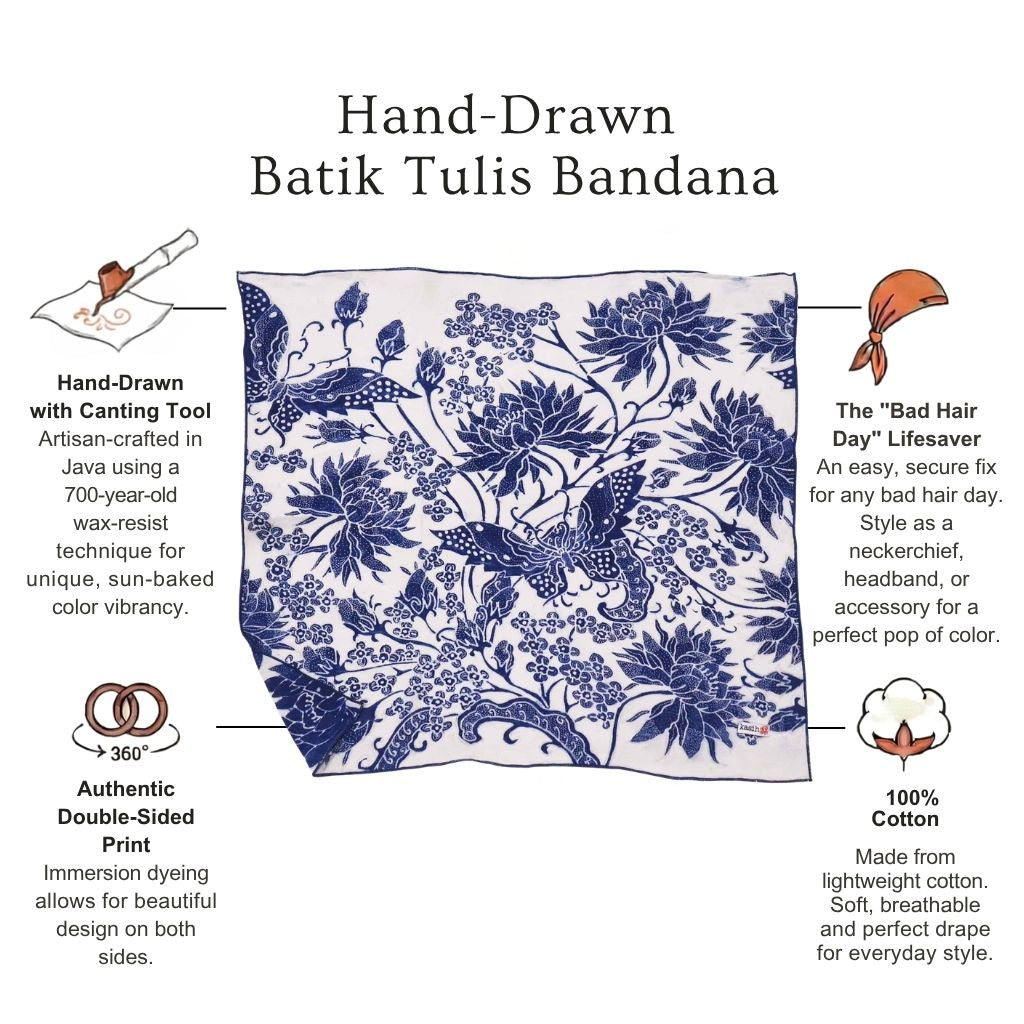
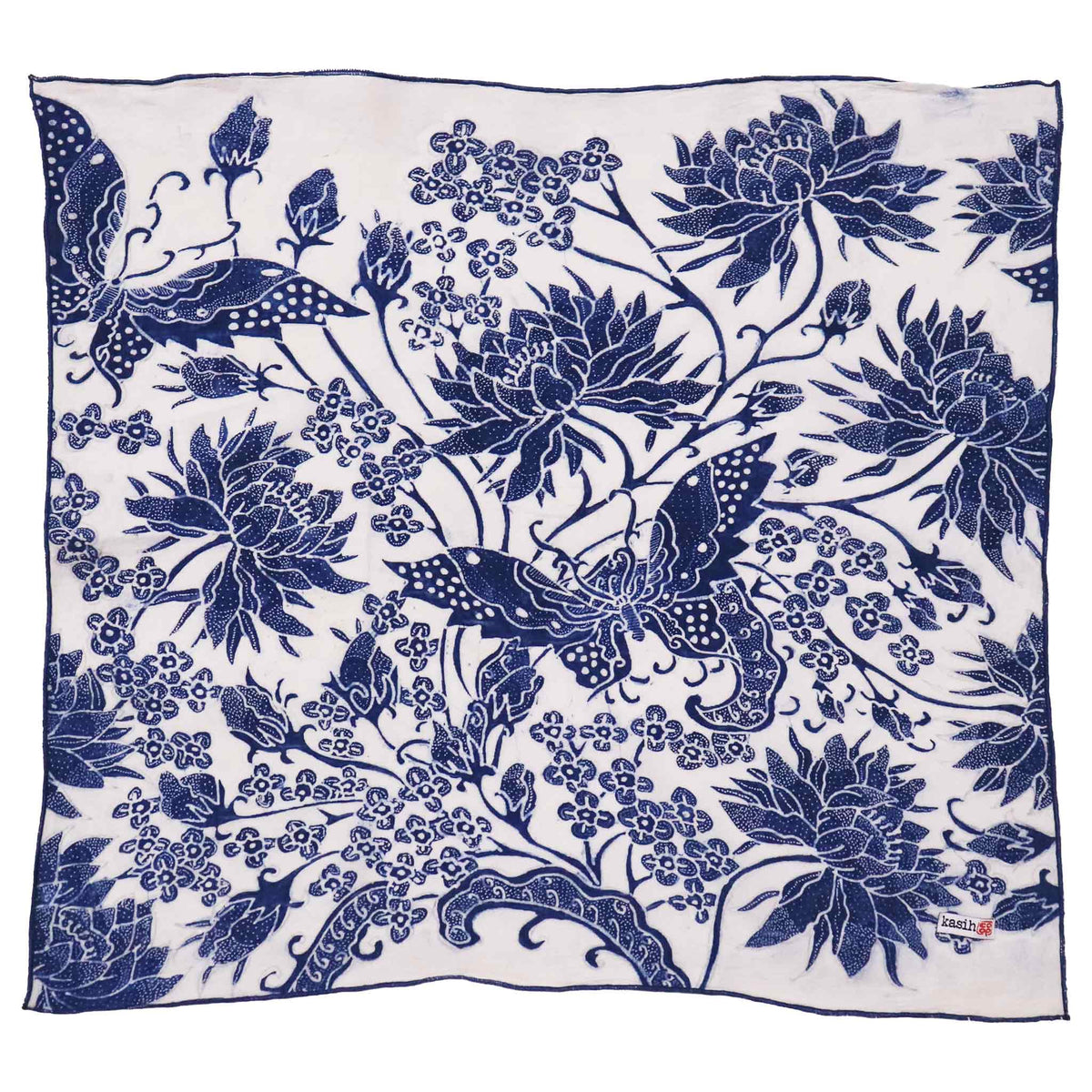
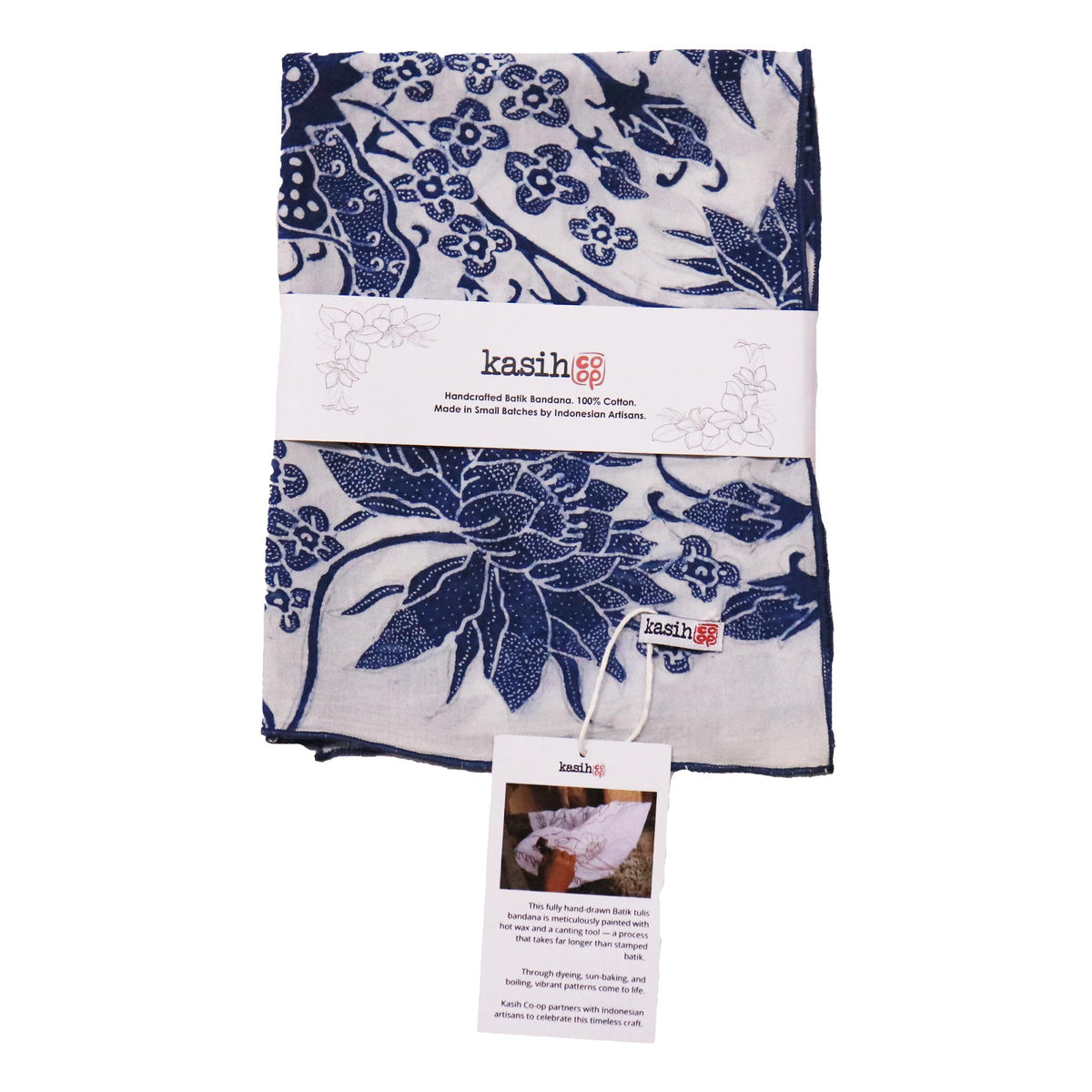
- Batik tulis (hand-drawn). An artisan "writes" every line of wax by hand with a canting, a small copper pen. One of our batik tulis bandanas takes about 10 hours of drawing, dyeing and wax removal, so no two are alike.
- Combination (kombinasi). Some pieces mix stamped and hand-drawn wax in one design.
Side-by-Side Comparison
| Printed "batik" or regular bandana | Batik cap (hand-stamped) | Batik tulis (hand-drawn) | |
|---|---|---|---|
| How the pattern is made | Ink printed by machine or screen | Hot wax stamped with a copper block, then hand-dyed | Hot wax drawn by hand with a canting, then hand-dyed |
| Back of the fabric | Pale or blank | Nearly identical to the front | Nearly identical to the front |
| Pattern | Perfectly uniform | Repeating, slight shifts between stamps | One of a kind |
| Scent when new | None | Faint natural wax scent | Faint natural wax scent |
| Material | Often cotton-poly blend | 100% cotton | 100% cotton |
| Feel over time | Stays the same or stiffens | Softens with every wash | Softens with every wash |
| Typical Kasih Co-op price | We don't make these | $23–$27 (standard), $46 (39") | $48–$65 |

Is the Upgrade Worth It?
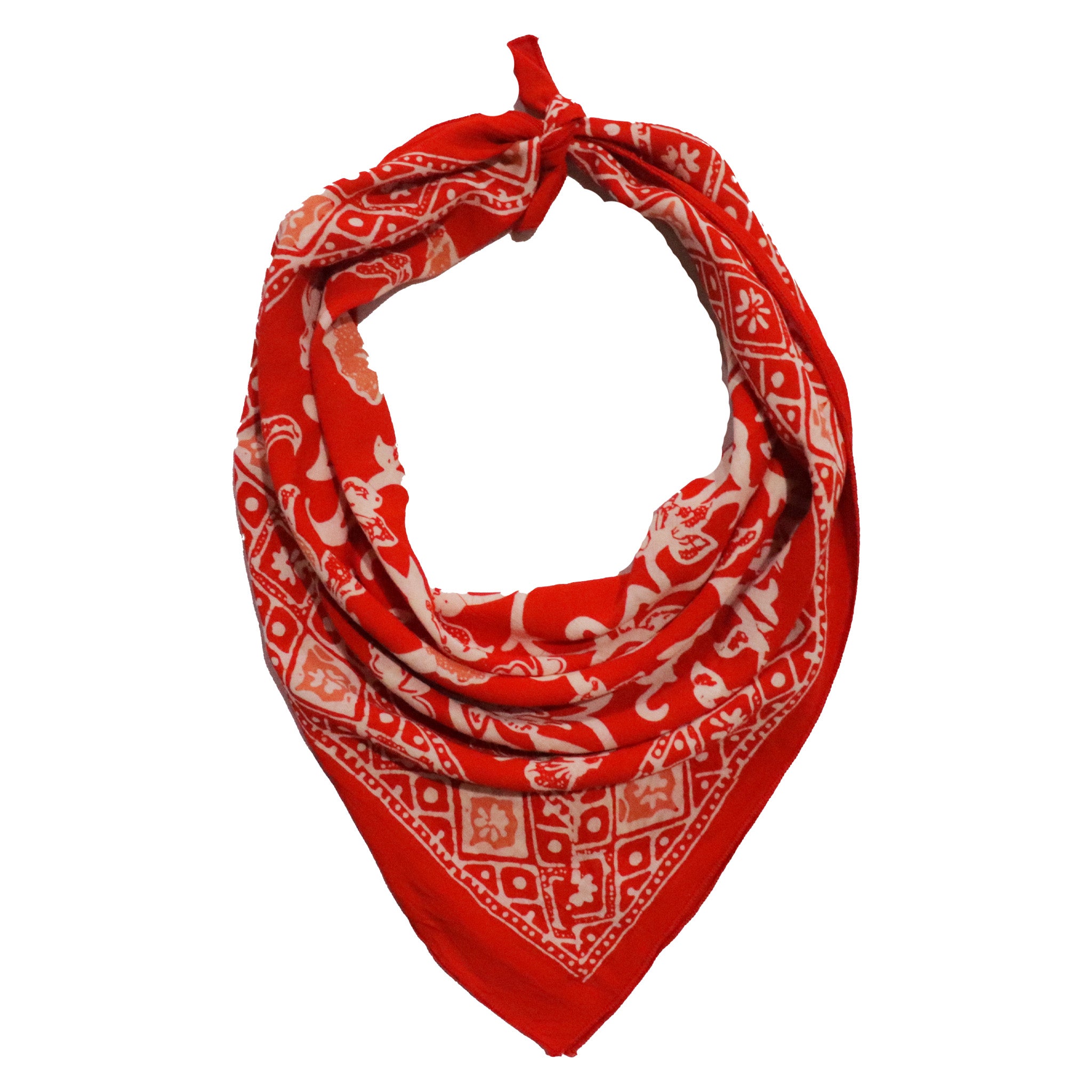
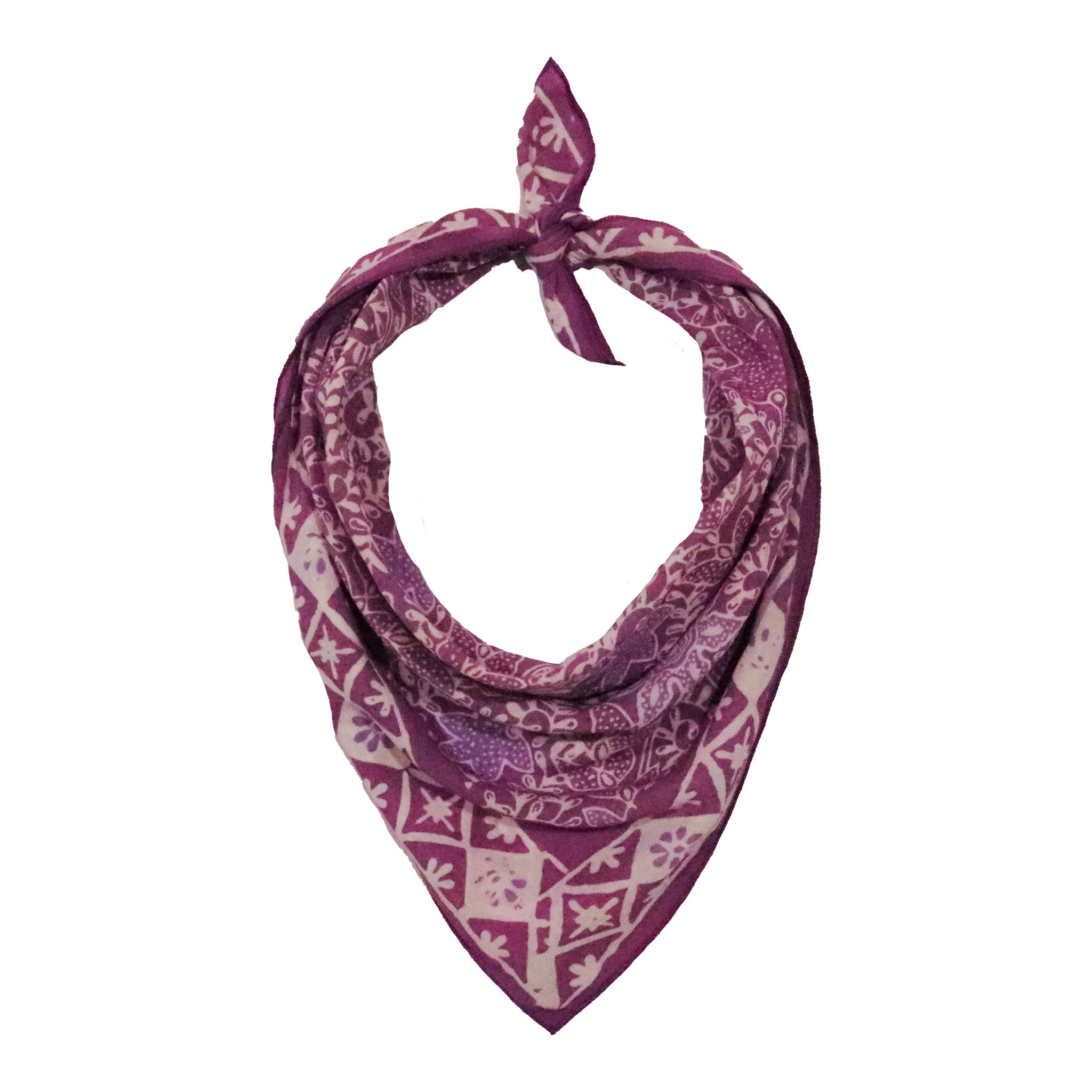
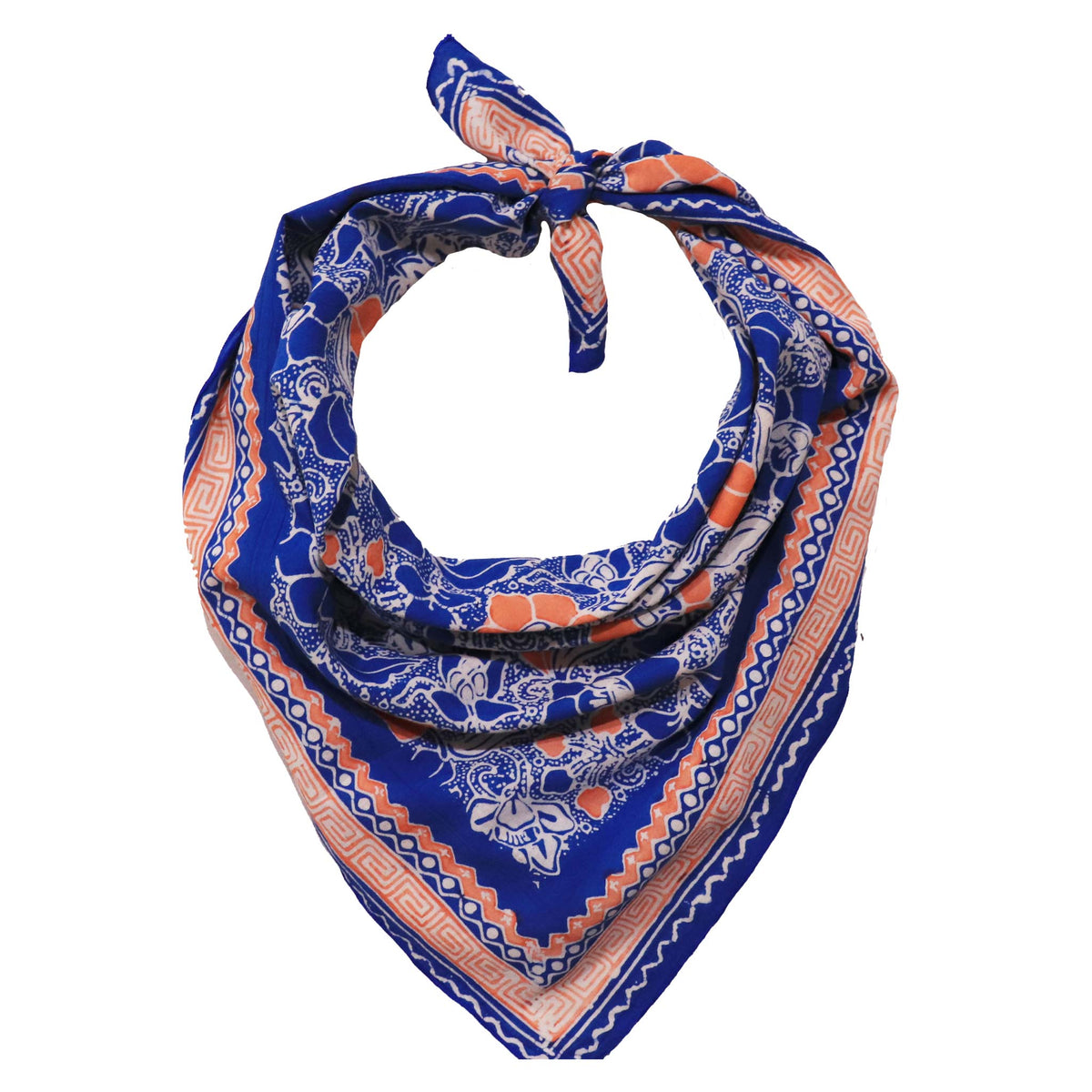
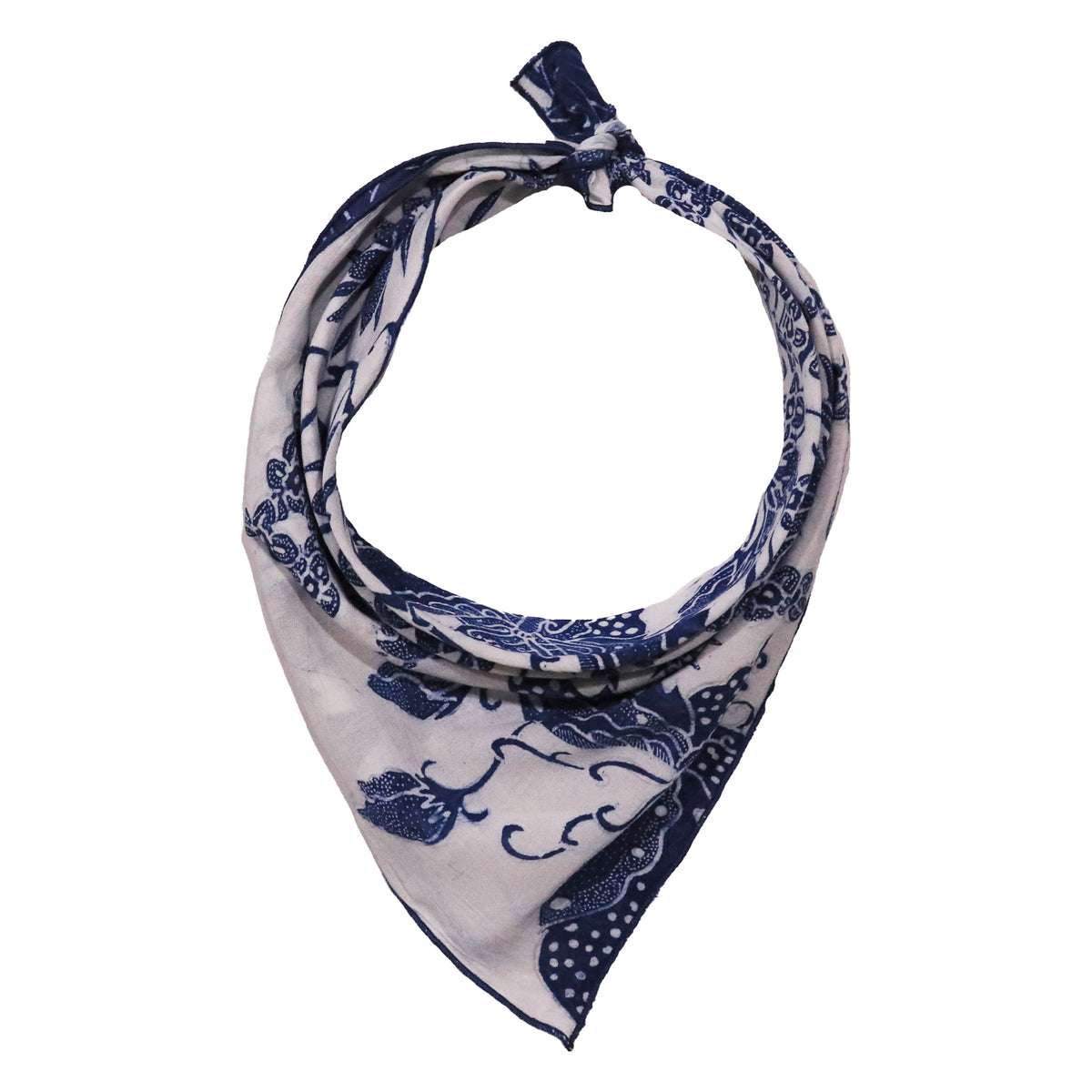
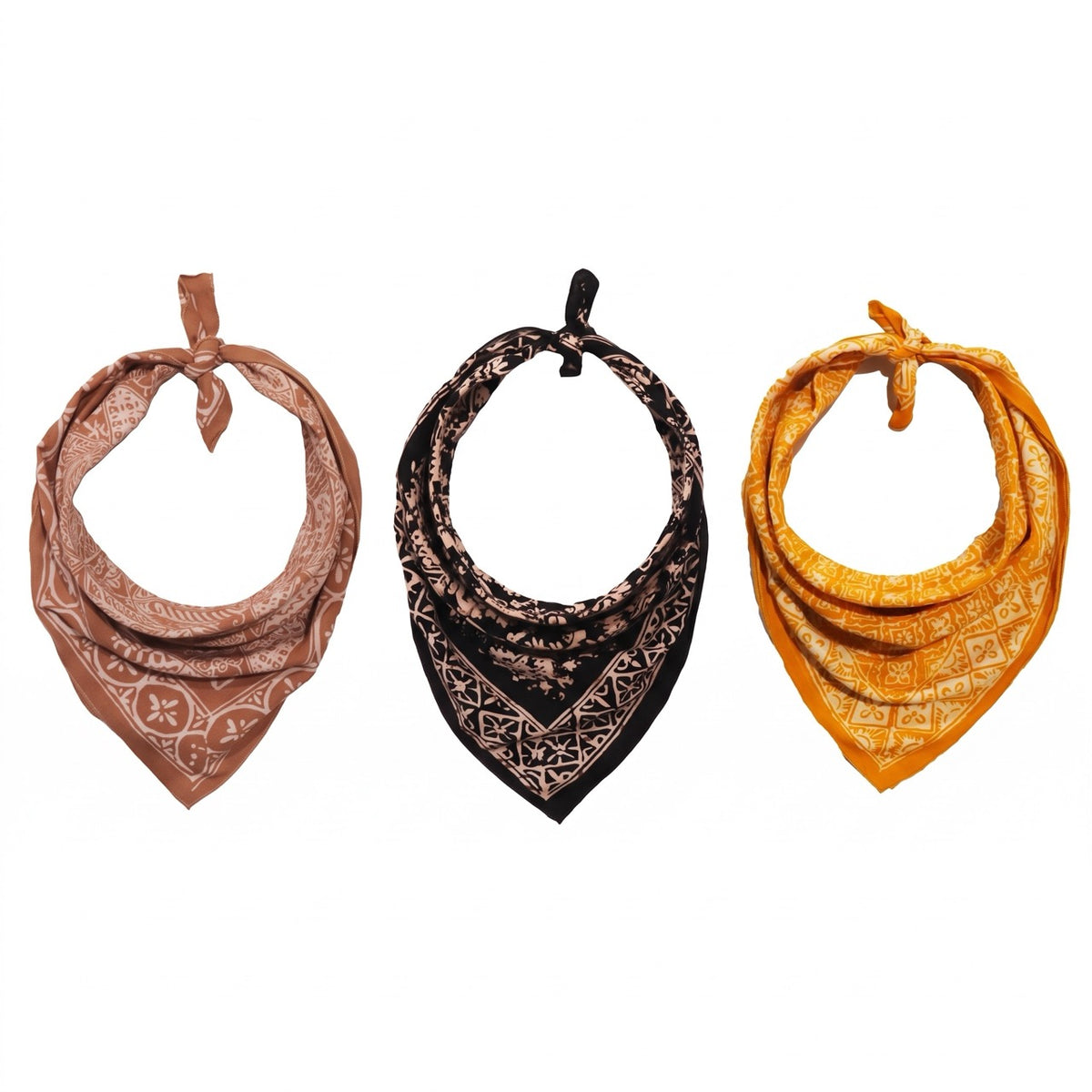
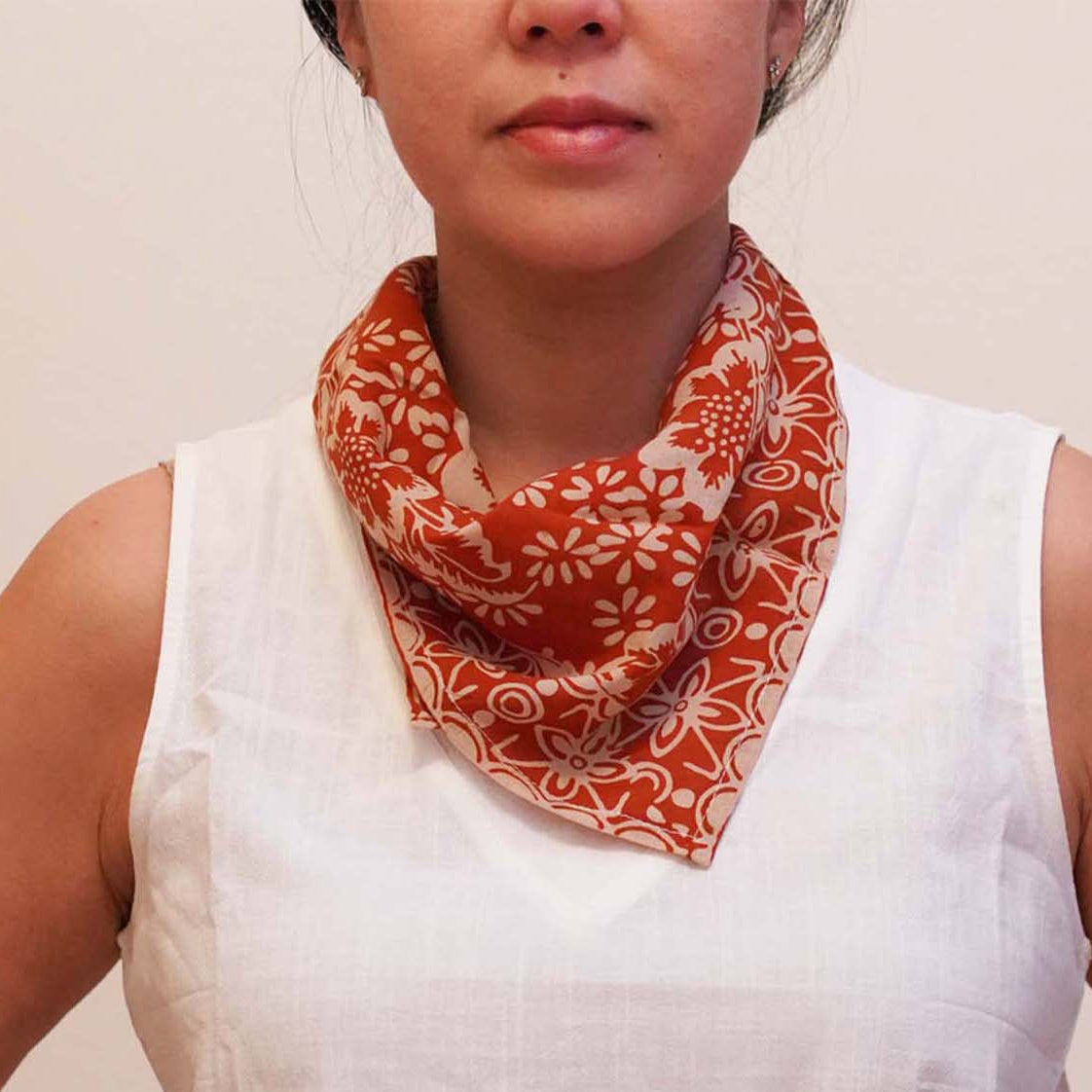
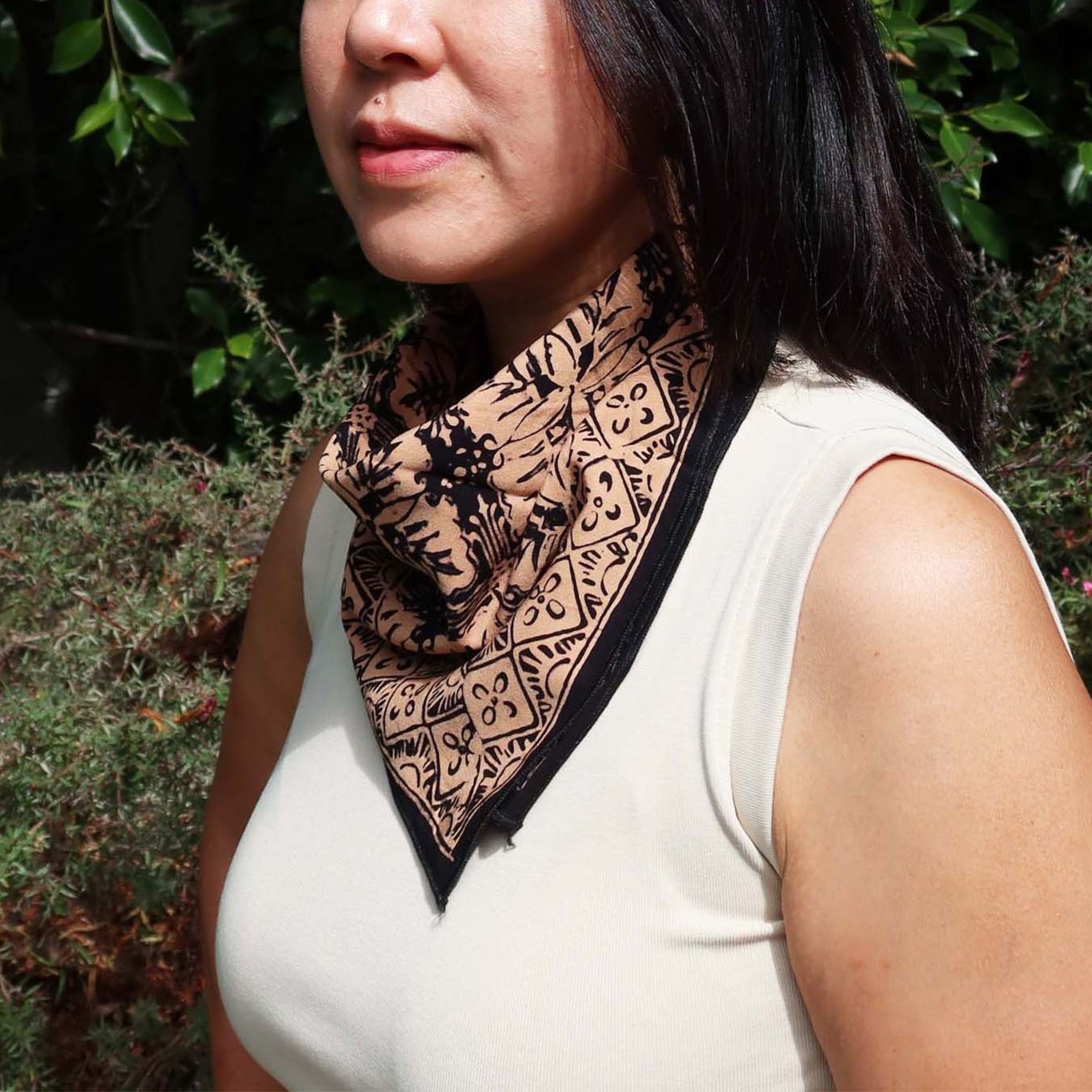
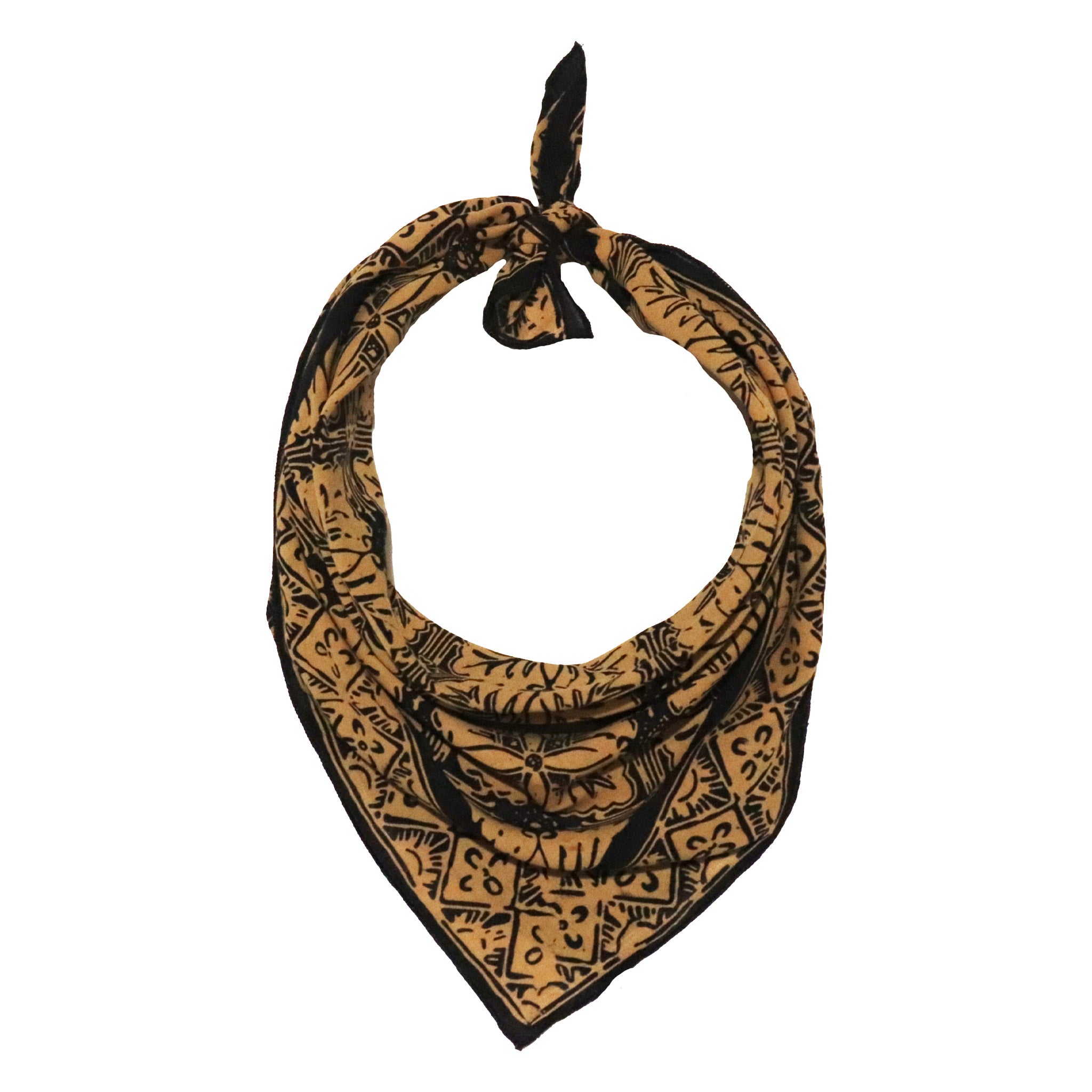
If you need a cheap square of fabric for a costume or one-time use, a printed bandana is fine. If you'll actually wear it, as a hair wrap, neck scarf or head scarf, real batik does more for you: breathable 100% cotton that softens over time, a pattern dyed into the fiber so it won't crack or peel, and a craft and a person behind it.
FAQ
How can I tell if a batik bandana is real or printed?
Turn it over. Real batik shows the pattern nearly equally on both sides; printed fabric is pale on the back.
Why does my new batik bandana smell like wax?
That faint scent comes from the wax-resist process and is a sign of real batik. It fades after a wash or two.
Is hand-stamped batik real batik?
Yes. Batik cap uses hand-applied wax and hand-dyeing just like batik tulis. Only the way the wax is applied differs.
Are Kasih Co-op bandanas printed?
No. Every Kasih Co-op bandana is genuine batik cap or batik tulis on 100% cotton, made by artisan partners in Java.
Why does real batik sometimes release dye in the first wash?
Because the color is dyed into the cotton by hand, a little excess dye can release at first, especially in reds and blacks. Wash it separately in cold water the first few times.
See the difference for yourself: browse our hand-dyed batik bandanas, our 39" large batik bandanas, or our fully hand-drawn batik tulis bandanas.